High Protein Indian Diet Plan: 7-Day Family Meal Plan with Affordable Protein Foods
Discover a high protein Indian diet plan for families with a 7-day meal plan, affordable foods, and nutrition tips for kids, women, and working adults.
Reviewed by Bibhu Ranjan Mund, MPH (Public Health Expert) with experience in maternal, infant, child, and adolescent health programs. Content is based on evidence-informed guidelines aligned with organizations such as the World Health Organization, UNICEF, Centers for Disease Control and Prevention, and National Institutes of Health.
Medical Disclaimer: This content is for informational and educational purposes only and is not intended as medical advice, diagnosis, or treatment. Always seek the advice of a qualified healthcare professional regarding any medical condition or concerns.
Introduction:
During my 18 years of work in maternal care, child health and adolescent health programs under National Health Mission in Odisha, I have observed that many rural and urban Indian families are still struggling with practical nutrition choices rather than unavailability of health awareness. This article combines the evidence based guidance including practical challenges that I have observed in different communities of Odisha. There, I have observed that families consume enough calories through rice and wheat-based meals, but still lack protein intake.
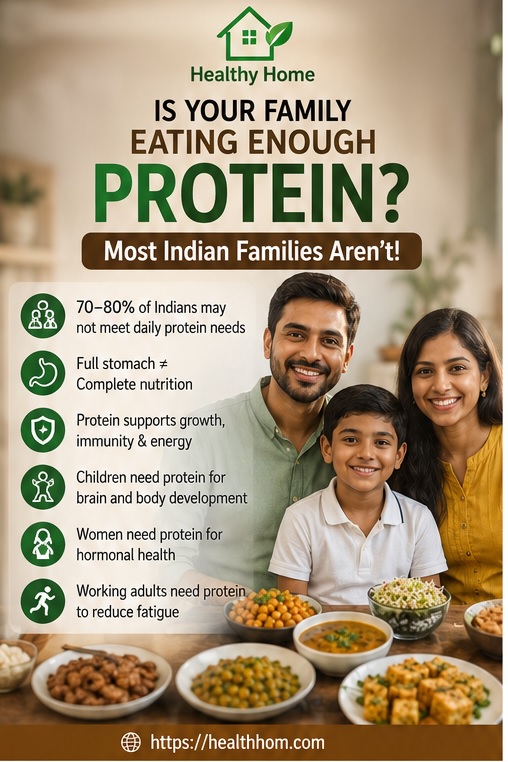
As per the report of the Indian Council of Medical Research (ICMR, 2020), about 70-80% of Indians may not meet their daily protein level. It can affect the children’s growth, hormonal health of women, daily energy levels of working adults.
So, you don’t need to buy any expensive supplements to overcome this problem. Simple and affordable foods like dal, eggs, peanuts, curd, paneer can help the families to meet the daily protein needs.
What I Learnt from Families During Nutrition Programs?
In rural & urban areas of Odisha, I have observed an interesting pattern. Most of the families are well concerned about the advantage of vitamins, immunity, consequence of weight gain, but only few discuss about the protein intake.
Many Indian parents think that if a child is eating sufficient rice, roti or snacks is able to get adequate nutrition. But during discussion they expressed their daily meal pattern and its clear that they are missing the protein rich food or taking occasionally.
One mother from Koraput informed that her son is frequently complaining tiredness even if eating full meals. Hence, after a simple changes like adding boiled eggs, roasted chana and curd for several times a week, the mother informed the improvements in energy levels and appetite.
Such types of experience shows that nutrition doesn’t require any costly food and daily small good habit can make the difference.
What is a High Protein Indian Diet?
A high-protein Indian diet plan is to add many protein rich foods like soy, legumes, dal, paneer etc. in the meals. It generally supports the growth of muscles, immunity development, hormone balance and overall health of the family.
We are also ignoring the high protein Indian diet and giving importance of spicy, tasty and packed staple food. Also, the food we eat like rice, roti & potatoes sometimes lack protein which really helps our growth, immunity and well-being. So that instead of taking the proper nutritional value like protein, we are consuming the carbohydrates unknowingly.
Like protein, a balanced diet is equally important. You can explore our detailed guide on balanced daily meal plan for families to know how to combine nutrients effectively.
You may think that, protein is helpful for bodybuilders only, but it is very much essential for growth of children, hormonal balance of women, adequate energy levels of adults. It is also seen that the protein deficiency is a common issue in Indian household, especially who are not following the proper nutritional food in everyday diet schedule.
You can prepare a balanced, affordable and high-protein Indian diet plan for the entire family at home.
In this detail guide, you will find:
- Age group wise analysis of essentiality of protein
- Requirement of protein in day-to-day life especially for Indian families
- Suggestion of protein rich foods with budget-friendly
- 7-day high-protein Indian diet plan in all completeness
- Major focus to kids, women, and working professionals
Quick Summary
- For growth of individuals, development of immunity and energy levels, protein is an essential nutrient
- Many Indians are taking the diets with low proteins.
- Dal, paneer, and eggs are the most affordable foods which can meet needs of daily proteins in the body
- Not only lunch or dinner, you should include protein in every meal.
- With a structured & balanced weekly plan, it can improve the overall family health.
Protein Deficiency in India: Key Statistics
| Indicator | Data | Source | Year |
|---|---|---|---|
| Population not meeting protein intake | ~70–80% Indians | ICMR / National Nutrition Survey | 2020 |
| Average protein intake (India) | ~0.6–0.8 g/kg/day | ICMR | 2020 |
| Recommended protein intake | 0.8–1.0 g/kg/day | WHO | 2023 |
| Child malnutrition linked to protein deficiency | Significant contributor | UNICEF | 2022 |
70–80% Indians may not be able to meet their protein requirements, which highlights that in many Indian household, most of the family members are consuming the enough calorie through rice or wheat or other carbs, but not fulfilling the essential amino acids which actually needed for the growth, immunity and muscle repair.
According to ICMR recommended protein intake for Indians, a huge proportion of the Indian population does not meet the daily protein requirements. The World Health Organization – WHO protein intake guidelines suggest that around 0.8–1 gm per kilogram of body weight per day is required for a healthy audult.

Why Protein is Important for Your Family?
Carbohydrates and fats are the major macronutrients and like these, protein is such a major one. The key role of the protein is to support in proper functioning of the body.
For improving gut health along with protein intake, read our guide on best Fermented Foods for Families.
1. Support in Growth of Children
In many Indian households, children are usually taking a full plate of rice, but still deficit of nutrition due to lacking of protein rich foods. These deficits are always being unnoticed by parents as they think their children have eaten and are in full stomach.
Maximum Children need protein for the followings:
- Development of the Muscle tissues
- Growth of the Brain
- Strengthening of the bones with tissues etc.
If protein is in-sufficient for a child, it may lead to :
- Poor growth
- Weaken the immunity
- Low energy levels
Protein is essential in the growth and development of every children. According to child nutrition and malnutrition data, inadequate protein intake is also one of the key contributors for the growth and immunity problems in children.
A Situation Many Parents May Recognize
Once a father informed me during my school health session that “My daughter takes a total packet of chips after school hour but not taking dal and vegetables.”
Such type of concern may be a common thing in many Indian houses. Children are attracted to colorful packaging and flavors. The real challenge for a parent to create a healthier choice at home.
By providing boiled corn, roasted peanuts, local fruit chaat, homemade sandwiches may change their preferences.
2. Helps the Women to Maintain the Hormonal Balance:
For women, Protein is essential especially:
- During the pregnancy period
- While breastfeeding to infants
- To support the hormonal health
It also helps in:
- Regulating the hormones in body
- May support in hair and skin health
- Maintaining a good & healthy metabolism
3. Boosts the Energy Levels and Muscles Health in Adults:
Person who are working, needs Protein to:
- Reduces fatigue
- Improves muscle strength
- Supporting the weight management
4. Strengthen the Immunity
Protein may supports in building the antibodies and may fight against the infections. If a family is taking protein-rich diet regularly, somehow the family ensure the healthy environment.

Daily Protein Requirements Specially for Indian Families
Recommended protein requirements for Indian Families on daily basis as follows:
Standard Requirement:
- 0.8–1.0 g protein per kg body weight per day (WHO)
Example Calculation:
| Person | Weight | Daily Protein Need |
|---|---|---|
| Child (8 yrs) | 25 kg | ~20–25 g |
| Adult Woman | 55 kg | ~44–50 g |
| Adult Man | 65 kg | ~52–60 g |
Special Needs:
- Pregnancy: +15–25 g/day
- Active individuals: Up to 1.2 g/kg
Note: Not only lunch or dinner, but you should also try to include protein in your every meal. Protein requirements may vary based on body weight, activity level, and health condition.
As per the WHO protein intake guidelines, adequate intake is essential for maintaining muscle mass, immunity, and general health.

Signs of Low Protein Intake:
- Frequent fatigue
- Hair fall Slow recovery
- Muscle weakness
- Frequent illness
- Poor concentration in children
Warning Signs Parents Often Ignore
Parents should look for any serious illness before becoming an issue. Mild protein deficiency may appear through everyday signs like:
- Child becoming tired easily
- Reduced interest in outdoor play
- Frequent minor illnesses
- Slow recovery from sickness
- Poor concentration during study
- Increased dependence on packaged snacks
These signs may be for more than one cause, but nutrition is one of the factor for these.
Best High-Protein Indian Foods (Budget-Friendly)
You don’t need to purchase any costly foods to meet the protein demand. Here we are discussing some of the cost effective and affordable Indian foods:
The best example for a family who is residing inside Odisha State or in any rural India may be able to improve the protein intake with low cost by just combination of Dal at lunch, during evening snacks roasted chana can be taken, at dinner curd may be added. These are very low cost as compared to other costly supplements.
Vegetarian Protein Sources are as follows:
- Lentils (Dal) – Moong, masoor, toor etc.
- Chickpeas (Chana)
- Kidney Beans (Rajma)
- Soybean & Soya Chunks (very high protein)
- Paneer (Cottage Cheese)
- Milk & Curd
- Peanuts & Groundnuts
- Sprouts (Moong, Chana)
Non-Vegetarian Protein Sources are:
- Eggs
- Chicken
- Fish
- Mutton (in moderation)
High-Protein Grains & Millets
- Quinoa (optional)
- Ragi (Finger Millet)
- Bajra
- Oats
Quick Protein Boosters
- Roasted chana
- Peanut butter
- Protein-rich laddoos (homemade)
For a complete nutrition strategy, explore our Healthy Nutrition Guide for Families.

Protein Planning in Indian Households
In the day to day Indian houses, meal decisions are not made by a single person. Grandparent prefer their traditional foods, children need packaged snacks, but working parents have no sufficient time to meet each need.
So in reality, planning for protein intake should be practical. Instead of preparing the separate meals for everyone, family can add protein by:
- Adding extra dal
- Serving curd daily
- Including roasted chana as snacks
- Using paneer in vegetables
- Including eggs where acceptable
Small modifications sometimes work better than complicated diet plans.
Protein Content in Common Indian Foods
| Food | Protein (per 100g) |
|---|---|
| Soya chunks | ~50–52g |
| Lentils (Dal) | ~22–25g |
| Chickpeas | ~18–20g |
| Paneer | ~18–20g |
| Egg | ~12–13g |
| Milk | ~3.2–3.4g |
Source: Indian Food Composition Tables (IFCT), ICMR-NIN (2017); USDA FoodData Central (2023)
As per the study published by the National Institutes of Health (NIH), it suggests that the adequate protein intake supports the muscle maintenance, metabolic function, and also in long-term health outcomes.
Knowing the food sources is helpful, but many families still ask how to combine them into everyday meals. The following sample plan provides one practical example.
7-Day High-Protein Indian Diet Plan
This 7-day meal plan is prepared for the Indian family by suggesting the foods from the available sources and cost effective.
Day 1 (~55–60g)
Breakfast: Vegetable oats + boiled eggs / sprouts (15g protein)
Lunch: Dal + brown rice + salad (18g protein)
Snack: Roasted chana (6g protein)
Dinner: Paneer curry + roti (20g protein)
Day 2 (~50–55g)
Breakfast: Besan chilla + curd (12gm)
Lunch: Rajma + rice (18gm)
Snack: Peanut chikki (6gm)
Dinner: Vegetable khichdi + curd (15gm)
Day 3 (~55–60g)
Breakfast: Moong dal dosa + chutney (14gm)
Lunch: Chole + roti (18gm)
Snack: Sprouts salad (8gm)
Dinner: Egg curry / paneer bhurji (20gm)
Day 4
Breakfast: Ragi porridge + nuts (10-12 gm)
Lunch: Sambar + idli (12-15gm)
Snack: Buttermilk + peanuts (8-10gm)
Dinner: Soybean curry + roti (22-25gm)
Total day-4 – ~52–62g protein
Day 5
Breakfast: Peanut butter sandwich + milk (14-18gm)
Lunch: Dal + roti + sabzi (15-18gm)
Snack: Boiled corn + chana (8-10gm)
Dinner: Chicken curry (22-25gm)/ paneer curry (18-20gm)
Total (Day 5): ~60–70g protein
Day 6
Breakfast: Upma + sprouts (10–12g)
Lunch: Fish curry + rice (20–22g protein OR Rajma + rice → 16–18g)
Snack: Fruit + nuts (5–7g)
Dinner: Khichdi + curd (12–15g)
Total (Day 6): ~45–55g protein
Day 7
- Breakfast: Poha with peanuts (8–10g)
- Lunch: Chole + rice (15–18g)
- Snack: Roasted makhana (5–6g)
- Dinner: Paneer tikka + salad (20–22g)
Total (Day 7): ~48–56g protein
You can combine this plan with a structured weekly routine from our Weekly Meal Plan for Indian Families.

Special Diet Tips for Different Family Members
For Children Focusing on Growth
During my community health programme visit, I have seen that under School Health Programme, sometimes children consume enough food quantity, but experience low energy and poor concentration. This may be due to non-addition of the protein rich foods in daily meals i.e. lacking a balanced meal.
- Daily milk, paneer, and eggs to be included
- Adding of protein to snacks like peanuts, chana
- To maximum avoid junk food replacing the proper meals
Example: You can add the grated paneer to paratha.
When a child is coming from school, usually eating biscuits or any other packaged snacks. It may stop hungry temporarily, but may not be able to get enough protein for growth and concentration.
You can also check our complete Child Health and Development Guide for growth, immunity, and nutrition tips.
For Women aimed to Hormonal Balance
Most of working women have no time to cook breakfast due to job schedule or own household responsibilities and so skip their breakfast. It may reduce the daily protein intake and may lead to fatigue later throughout the day.
- Women’s should include iron with protein like a combo foods
- Having frequent and small meals
- Curd and sprouts should be added daily
For Working Adults
Most of the working adults during their busy working schedule take tea, biscuits, rice heavily which may increase the risk of fatigue and reduce the satisfaction entire day.
- Breakfast mustn’t be skipped
- You should carry snacks added with protein intake to office
- Including Carbs, protein to be taken in dinner
If your goal is weight management, read our guide on Obesity Prevention Lifestyle Habits.
For Weight Loss
- Aim to reduce the refined carbohydrates and take sufficient protein items
- Boiled eggs or sprouts to be eaten in breakfast
- Maximum sugary snacks to be avoided
Protein is also an important nutrient required for building and repairing the many tissues, enzymes and hormones in the body. As recommended in the importance of protein for health, sufficient protein intake likely to support the energy levels, metabolism and immune function of the body.
Budget-Friendly Protein Plan (Indian Families)
Indian family can meet the daily protein needs within a low daily budget:
- 1 bowl dal : ~8–10g protein
- 50g peanuts : ~12g protein
- 1 glass milk : ~6–8g protein
Combining the above will give 25–30g protein.
In India, the Approximate Cost of Food Vs its Protein Quanity
| Food | Approx Cost | Protein |
|---|---|---|
| 1 Egg | ₹6–8 | 6g |
| 1 Bowl Dal | ₹10–15 | 8–10g |
| 50g Peanuts | ₹8–10 | 12g |
Simple Protein Hacks for Indian Kitchens:
- Protein Rotation Method : One most appropriate method for nutrient diversification is that every kitchen should rotate their daily same protein sources. Rotation may be foods like dal, chana, curd, paneer, eggs and sprouts throughout the week.
- Protein Pairing Tip : Except carbohydrates like Rice or Roti, it should be combined with other cereals like chana & pulses which may improve the overall protein quantity of the meal.
- Tea Timing Tip: Also immediately after taking protein rich meals, one shouldn’t drink tea because tannins may reduce the iron absorption from the plant based foods you eat.
- Child-Friendly Tip: To attract the children for taste along-with protein intake, powered roasted peanuts or chana may be mixed with homemade laddoos, paratha or chutney which may be great alternative for daily protein requirement.
These changes may appear small, but they are sometimes easier to maintain the major protein intake.
Practical Family Scenarios:
1. School Child:
Case Example: Lovely, an 8 year old girl child only eating noodles, biscuits and white rice and feeling tired during her school activities. So, evening snacks was replaced with eating sprouts chaat or boiled eggs gradually improved her satisfaction including energy level.
2. Pregnant Woman:
Case Example: Labanya is a pregnant women who was always take tea with light snacks and thus didn’t meet daily protein requirements. By adding curd, dal, paneer and roasted chana throughout the day, her dietary quality improved a lot.
3. Office Worker:
Case Example: Souma who is a working professional in a multi-national company was always skipping breakfast due to tight schedule and also in a habit of late night dinners and experiencing fatigue with overeating throughout the day. After changing his protein rich breakfast like besan chilla or eggs, he improved his energy level a lot.
Even families try to eat healthy, sometimes they make small mistakes which unintentionally reduce the protein intake.
Common Mistakes to Avoid
1. Regularly Eating Carb-Based Meals only:
Meals like rice and potato curry lacks protein.
2. Skipping Protein at Breakfast
Breakfast may be considered with:
- Eggs
- Besan
- Sprouts
3. Always depending on Supplements
Our easily available natural foods are better than protein powders for most of the people.
Protein powder may help to the athletes, elderly people with poor appetite or any people who is unable to meet the daily needs through diet. However, most of the healthy families can meet protein requirements through their balanced meals.
4. Ignoring the actual Portion Size
Sufficient quantity of protein should be taken regularly as small quantity won’t help, even if you eat healthy one.
Many lifestyle habits also impact nutrition. Learn more in our Healthy Living Guide: Nutrition, Sleep & Mindfulness.
How to Add More Protein to Daily Meals?
Find some simple hacks:
- Adding the roasted peanuts to poha
- Mixing of the sprouts in salad and taken together
- Paneer to be added with vegetables
- Always “dal” to be taken alongwith other items in multiple meals
- Besan roti may be replaced with plain roti occasionally
Sample High-Protein Indian Breakfast Ideas
- Besan chilla with paneer filling
- Moong dal dosa
- Oats with milk and nuts
- Boiled eggs with toast
- Sprouts chaat
Scientific research also supports the role of protein in maintaining the good health. According to the protein and human health research, protein intake is a major factor for muscle repair, metabolic function, and long-term health outcomes.
Protein-Rich Snacks for Families
To prevent from junk foods, healthy snacks may be replaced as:
- Roasted chana
- Peanut laddoos
- Boiled eggs
- Sprouts salad
- Makhana
Who Should Follow This High-Protein Indian Diet?
It is ideal for:
- Children & teenagers : May supports the growth, brain development, immunity
- Women (pregnant & breastfeeding) : helps the fetal growth, production of milk, hormonal balance
- Working adults : May improves energy, strengthen the muscle tissues, also reduces fatigue
- Vegetarians : helps to balance the low-protein level in the body, and also for high-carb diets
- Weight management seekers : It may increase the satiety with reduction of cravings
- Elderly individuals : support in maintaining the muscle mass, may prevents the weakness
Need Caution & Attention:
- Kidney disease patients
- Liver disorders
- Medically restricted diets
- Metabolic conditions
Note : Consult a healthcare professional if not sure.
When to Consult a Doctor:
- Kidney problems : As high protein may strain the kidneys
- Liver disease : Due to protein metabolism may be affected
- Diabetes or chronic illness : It may require planning of a proper balanced diet
- Digestive issues : Like bloating, discomfort after having protein foods
- High-risk pregnancy : They actually needs a personalized diet
- Sudden diet change : If wanting to shift a high protein quickly
Quick Tips to Increase Protein Intake
- You should add peanuts or chana in daily snacks
- Curd or milk may be added in every meal
- Occasionally, besan or soya flour may be used while preparing the roti
- Paneer may be added in all the vegetables
- Protein-rich breakfast should not be avoided

5 Common Protein Mistakes I See in Indian Families
Mistake-1
Children eat enough calories but very little protein.
Mistake-2
Breakfast is mostly tea and biscuits.
Mistake-3
Parents assume protein powders are necessary.
Mistake-4
Protein-rich foods are served only occasionally.
Mistake-5
School snacks replace proper meals.
My Personal View as a Public Health Professional
After my working with families for more than 18 years in Odisha, I have observed that proper nutrition advice may seems complicated in some cases. Many people feel that healthy eating means costly food or imported supplements which they can’t afford.
Some of the nutritious foods are already available in Indian kitchens. Like dal, curd, eggs, roasted chana, peanuts, seasonally available foods are able to provide protein for the families from past generations.
Out goal is not be perfect, but to be consistent.
FAQs:
You are able to find helpful answers in our Health Quiz and Wellness Tools to assess your health status.
1. How to get sufficient protein for a vegetarian Indian?
2. Is dal enough for protein intake?
3. What are the cost effective & readily available protein sources in India?
4. Can I build my muscle with taking Indian food?
5. Are always protein powders necessary to increase protein ?
6. How much protein does an average Indian need daily?
To track your health progress, try our BMI Calculator and Health Tools.
Did You Know?
Most of the Indian diets provide more carbohydrates but lack sufficient protein, which affects the energy level and developing the and immunity.

Concluding Points:
Foods with high-protein is not complicated at all and it is also not so costly. It’s very simple to choose from available natural source which are easily available in the surroundings particularly the most seasonal foods.
Eating healthy begins from home and with proper and consistent protein intake, it is possible to build strong, energetic and healthy families in India.
If, you are a healthy individual, involved in feeding a growing child, a working professionals, supporting to a pregnant women etc., always you require the protein for health & wellbeing.
You should start today:
- Adding of protein in every meal
- Affordable and easily available options to be chosen
- Structured 7-day healthy high-protein plan may be followed
key note:
- Health and wellness begins from the healthy kitchen.
- Protein is not just another nutrient on a nutrition chart.
- For a growing child, it supports the development.
- For a pregnant woman, it supports both mother and baby.
- For a working adult, it helps to maintain energy and productivity.
- For older family members, it helps to preserve strength and independence.
That is why protein requires a place in every family meal.
Healthy Home.
Share this article with your family and help them to build healthier eating habits.
Related Health Articles from Healthy Home :
- Antenatal Iron Supplementation – Importance & Guidelines
Explains why iron supplements are essential during pregnancy and how they prevent maternal anemia. - Iron Supplementation – Types, Benefits & Dosage
Overview of iron supplement forms, recommended intake, and absorption tips. - Impact of Anaemia in Adolescents – Long-Term Risks of Malnutrition
Discusses the health, growth, and cognitive risks of adolescent anemia and nutrient deficiencies. - What Is a Balanced Daily Meal Plan?
Evidence-based meal planning guide for healthy eating and daily nutrition balance. - Healthy Millet Recipe – Nutritious & Easy to Prepare
Step-by-step millet recipe offering high fiber, minerals, and pregnancy-friendly nutrition.
Trusted References and Research Sources:Healthy Nutrition Guide for Families : Balanced Diet, Gut Health and Weekly Meal PlanHealthy Living Guide for Families : Nutrition, Sleep and Daily Wellness Habits11 Iron Rich Foods During Pregnancy : Benefits and Healthy Meal IdeasWhat is a balanced daily meal plan? Nutrition Guide and 7-Day Diet Plan5 Science-Backed Benefits of Reducing Salt and Sugar (WHO Guide)
- Download the official Indian Dietary Guidelines 2024 (NIN PDF) for detailed nutrition recommendations.
- Read scientific evidence on protein intake in this research article on protein and health outcomes (NIH/PMC) .
- Explore a practical approach in this Indian diet plan for healthy weight management .
- Refer to the WHO healthy diet guidelines for India for global nutrition standards.
- Download a sample meal plan from high-protein diet plan PDF (Mayo Clinic) for reference.
- Explore a practical approach in this Indian diet plan for healthy weight management .