Substance Abuse in Adolescent : Causes, Warning Signs and Prevention
Learn early warning signs, causes, and proven prevention strategies for substance abuse in adolescent. A complete guide for parents and educators.
Reviewed by Bibhu Ranjan Mund, MPH (Public Health Expert) with experience in maternal, infant, child, and adolescent health programs. Content is based on evidence-informed guidelines aligned with organizations such as the World Health Organization, UNICEF, Centers for Disease Control and Prevention, and National Institutes of Health.
Medical Disclaimer: This content is for informational and educational purposes only and is not intended as medical advice, diagnosis, or treatment. Always seek the advice of a qualified healthcare professional regarding any medical condition or concerns.
Introduction:
As per the research published in World Health Organization (2023), it shows that about 1 in 4 adolescents worldwide taking alcohol and early early exposure is increasing the risk of addiction in later life. The peer pressure or curiosity is taking the key role which directly linked into serious substance abuse causing the mental health issues and future complications.
Todays world should think the substance abuse not just a risky behavior but as a growing public health concern. Teenage period is a stage of developing brain and such condition is more vulnerable in poor decision making & addiction which may lead to long-term health consequences.
In this article, you will find-out:
- The early warning signs most parents overlook
- Common risk factors and causes of teen substance use
- Practical, evidence-based prevention strategies that actually work
Because the earlier you will identify the problem, easier will be to protect the teens.
Adolescence is a sensitive phase where lifestyle habits form, learn more about overall wellbeing in Healthy Lifestyle in Adolescents: Tips, Habits & Health Promotion.
Why This Topic Became Personal for Me?
During my working under Adolescent Health and community programs, I have interacted with many parents who were so much worried about the starting of tobacco or alcohol by their teenagers. So, the initially the parents were assumed that their teens will leave the habit and now just a behavior of adolescent age.
After conversation, one father who was worried about his 15 year old son had suddenly became distant. The boy stopped to take meals with his family members, spent more time outside his house and remained with friends and also irritated to answer the causes.
First, the parents assumed that it is just a normal teenage behavior. But, after few months they found that son is involved in taking the tobacco products along-with some friends.
The actual warning signs appeared much earlier, but the parents couldn’t recognize it and not given importance to solve the issue.
Such type of experiences actually remind us the importance of awareness.
Quick Facts Table
| Key Fact | Insight |
|---|---|
| Adolescence is a critical developmental stage | Habits formed during this period may influence adulthood |
| Early experimentation increases risk | Prevention and education are essential |
| Family and school support matters | Strong support systems reduce risk behaviors |
Source: WHO Adolescent Health Fact Sheet 2023
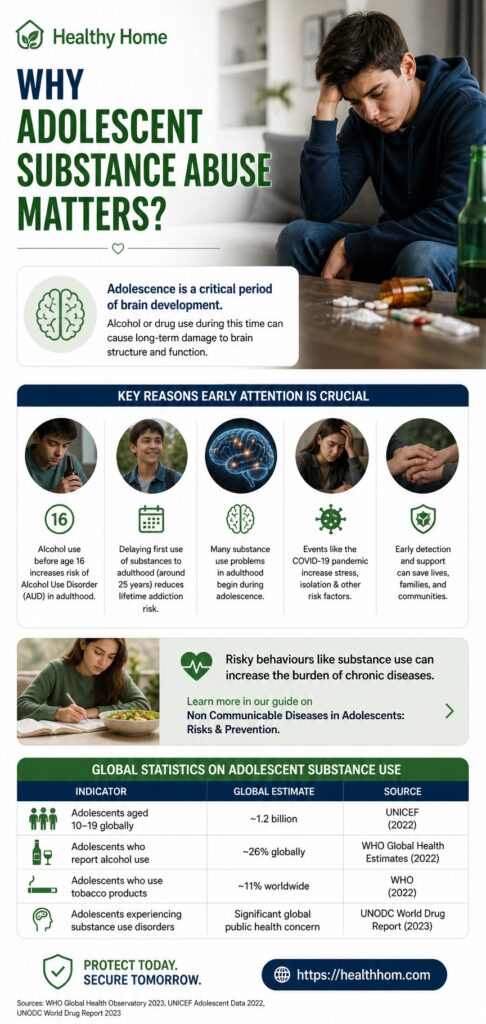
Why Adolescent Substance Abuse Matters?
Adolescence is the time of a quick brain development. The brain is particularly vulnerable to the damaging effects of harmful substances during this period and constant exposure of alcohol or drugs may have long-term structural and functional effects.
The principal causes of early attention are:
- Teens who enter into alcohol consumption prior to the age of 16 years are at a very high risk of developing Alcohol Use Disorder (AUD) in adulthood.
- Postponing the initial use of substances to adulthood (preferably, to approximately 25 years) helps to significantly decrease the risk of addiction throughout the lifetime.
- The problems concerning substances that manifest themselves in adulthood are often initiated during adolescence.
- Adolescents have become more vulnerable because of events like the COVID-19 pandemic which have resulted in stress, isolation, and disrupted education.
Early detection and intervention can save people, families, communities and healthcare systems massive damage in the long run.
Risky behaviours like substance use can also increase the burden of chronic diseases, read more in Non Communicable Diseases in Adolescents: Risks & Prevention.
Global Statistics on Adolescent Substance Use
| Indicator | Global Estimate | Source |
|---|---|---|
| Adolescents aged 10–19 globally | ~1.2 billion | UNICEF |
| Adolescents who report alcohol use | ~26% globally | WHO Global Health Estimates |
| Adolescents who use tobacco products | ~11% worldwide | WHO |
| Adolescents experiencing substance use disorders | Significant global public health concern | UNODC |
Source: WHO Global Health Observatory 2023, UNICEF Adolescent Data 2022, UNODC World Drug Report 2023.
What These Statistics Mean for Parents:
Such global statistics are usually helpful, but some parents think that the above problem affects the teens of other families.
In reality, the substance use starts gradually. A teenager in a habit or abuse not in one day and the entire process starts with curiosity, experiments or to manage stress.
The research findings are not be panic, but to give attention in changing the behavior of teens with open minded communication from parents.
Why Many Indian Families Miss the Early Signs:
In many of the Indian houses, family members are not comfortable to discuss about alcohol, tobacco or drugs among their teens. But, they only focus on academic career and think that if one is performing well in study is not in the risk of substance abuse.
However, substance use can occur among all the socioeconomic backgrounds throughout the country. Few adolescents experiences due to peer pressure and many also use due to academic pressure, stress, sleepiness, relationship issues or any social media influences.
Also, in so many urban areas it is easier to find the products of alcohol and is a new challenge for the community. But, in rural communities the more use of tobacco products due to readily availability and also socially accepted sometimes.
It many be rural or urban, parents should openly communicate the cons of substance use among their teens so as to enable a strong protective factor.
What Parents Often Tell Me During Community Programs:
During my awareness sessions at community, parent sometimes say that:
“My child is a good student and why substance use may be a concern?”
And, we have never any addiction issues in our present and pas family members. He spends most of his time at home and so, I am not worried about his unhealthy behavior.
Such assumptions are normal, but in reality the substance use doesn’t affect a single type of teenagers. In my experience, I have seen the addiction in the high performer teens in academic career, adolescents from supportive families also.
The common factor of substance abuse may not a poor character, but it may also linked with stress, curiosity, peer pressure etc.
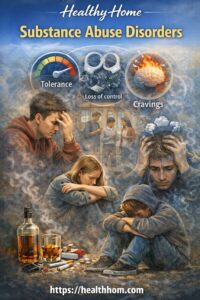
Substance Abuse Disorders
Substance Use Disorders can be described as a pattern of substance use which continues till it becomes harmful. Common features include:
- Tolerance: Requirement of more and more amounts of a substance to acquire the same effect.
- Withdrawal: When an individual deters of a substance use, physical or mental symptoms may be displayed.
- Loss of control : Taking more to use substances than intended.
- Persistent use despite harm: This is the persistent use of substances even with the awareness of the harmful effects.
- Impaired functioning: Difficulty in performing responsibilities at school, home or in social situations.
- Cravings: Powerful cravings of substances.
Comparison Table: Substance Use vs Substance Use Disorder
| Feature | Substance Use | Substance Use Disorder |
|---|---|---|
| Definition | Occasional or experimental use of substances | Repeated harmful pattern of substance use |
| Frequency | Infrequent or social | Persistent or compulsive |
| Control | Usually controlled | Loss of control over use |
| Impact | Limited short-term effects | Significant personal or social consequences |
| Need for intervention | Education and prevention | Professional support may be required |
Source: National Institute on Drug Abuse (NIDA) 2022
The Continuum of Substance Use
The use of substances in adolescents usually follows phases:
- Experimentation: Using drugs because they are curious or because their friends are using.
- Occasional use: Sociocultural use of substances which are occasionally used or not frequently used after trial.
- Regular or dependent usage: It acquires a compulsive nature and loss of control and growing destructiveness.
Intervention at the earliest stage is very vital in preventing further down this continuum.
Stages of Substance Use in Adolescents
| Stage | Description |
|---|---|
| Experimentation | Trying substances out of curiosity or peer influence |
| Occasional use | Infrequent or social consumption |
| Regular use | Increasing frequency of use |
| Dependence | Compulsive use with difficulty stopping |
Source: National Institute on Drug Abuse 2021
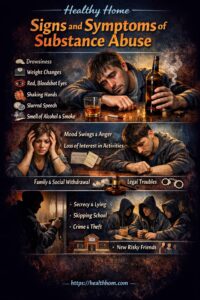
Signs and Symptoms of Substance Abuse in Adolescent
Physical:
- Sudden weight changes
- Red or watery eyes
- Tremors or shaking
- Slurred speech
- Lack of co-ordination or walking a straight line.
- Smell of alcohol or smoke
Emotional and Behavioral Signs:
- Acute mood swings or aggravated.
- The inability to take pleasure in activities that they once enjoyed.
- Problem in living normal lives.
- Legal issues and school failure.
- Family and social withdrawal.
Social signs :
- Secrecy or often locking doors.
- Unaccounted school absenteeism.
- Committal of crimes or theft.
- Wasting too much time with new peer groups, who are linked to substance use.
Behavioural changes can also be linked to excessive screen exposure, understand more in Social Media Addiction in Adolescents: Causes, Effects & Prevention.
Warning Signs of Substance Use
| Category | Possible Indicators |
|---|---|
| Physical | Red eyes, fatigue, sudden weight change |
| Emotional | Mood swings, irritability |
| Behavioral | Declining school performance |
| Social | Withdrawal from family or friends |
Source: American Psychological Association 2024
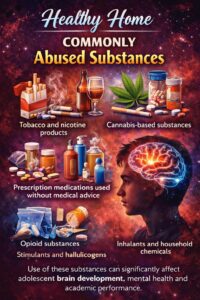
Commonly Abused Substances
- Tobacco and nicotine products
- Alcoholic beverages
- Cannabis-based substances
- Prescription medications used without medical advice
- Opioid substances
- Stimulants and hallucinogens
- Inhalants and household chemicals
Use of these substances can significantly affect adolescent brain development, mental health and academic performance.
Mental health plays a critical role in preventing substance misuse, explore coping strategies in Mindfulness Techniques for ADHD Management in Children and Adolescents
Source: UNODC World Drug Report 2023
Poor dietary habits and unhealthy lifestyles often coexist with substance use, learn healthy choices in Healthy Food Choices for Families: Balanced Diet Tips for All Ages.
Hidden Causes of Substance Abuse That Parents Often Overlook:
1. Academic Pressure:
Many teenagers are not using substances for pleasure, but actually they are trying to escape from the study pressure. A teenager whos is preparing for board examinations may feel pressure from school, coaching classes, family expectations and competition with friends. Some adolescents also experiment with substances with a believe that it can reduce the stress or help them to fit in socially.
2. Emotional Loneliness
Some adolescents live in busy households but still feel emotionally not connected. Not every lonely teenager lives alone. Some adolescents may have loving families but still feel nobody understands their worries, fears or emotions.
3. Social Media Influence
Due to Ads of substance related content may also lead to a risky behavior. Repeated exposure to positive videos, celebrity culture or influencer suggestions may reduce the habit of taking alcohol or smoking by teens.
4. Poor Sleep
Regular lacking of sleeps can affect the decision making and mental ability.
5. Unresolved Mental Health Issues
Anxiety, depression, Attention Deficit Hyperactive Disorder (ADHD) and trauma may exist along-with substance use.
6. Need for Social Acceptance
Many adolescents fear about the negative consequences, but fit with their friends.
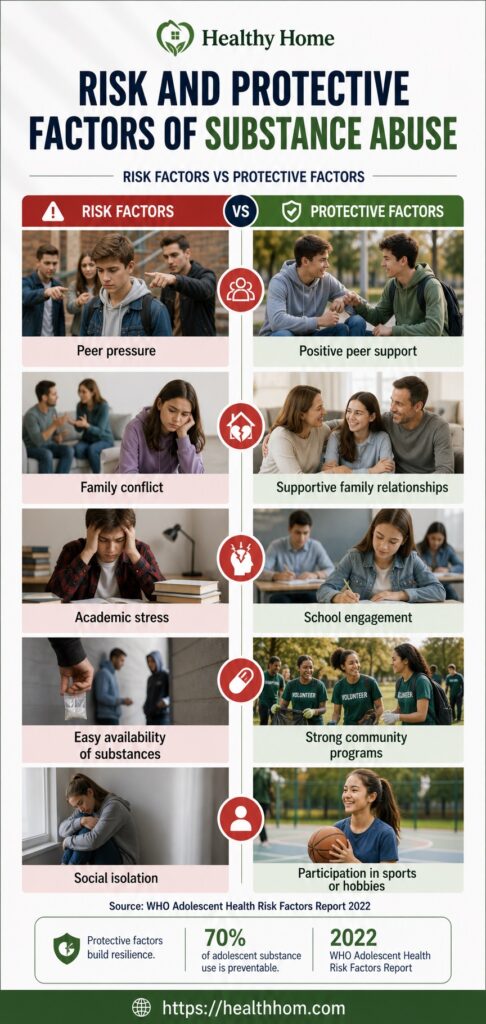
Risk and Protective Factors:
Factors that protect
- Intellectual and physical maturity.
- Good self-esteem and sociable.
- Favorable family background.
- Positive school engagement
- Healthy peer relationships
- Availability of recreational and cultural activity.
Factors at Risk:
- Genetic predisposition or inborn problems.
- Poor nutrition
- The availability of substances is easy.
- Sexual neglect, abuse or violence.
- Family discord or incompatible care giving.
- School failure or victimization.
- Community disorganization, stigma or discrimination.
Poor hygiene and infections can also affect adolescent health, explore prevention tips in How to Minimize the Risk of Worm Infestation: Causes, Symptoms & Prevention.
Source: WHO Adolescent Health Risk Factors Report 2022
Nutritional deficiencies can worsen physical and mental health risks, read about this in Impact of Anaemia in Adolescents: Long-Term Health Risks of Malnutrition.
Public Health Observation:
I have noticed during my community health programs, that the adolescents who actually get well connected with their families, schools and communities are less in risky substance abuse.
The adolescents who have at least one trusted adult person in their lives, are not in a risk of abnormal behavior. The trusted adult may be their parents, teacher, coach, counsellor or any older family member.
By just giving one counselling, prevention is not enough. For this regular support, proper listening, positive guidance, consistency matters a lot.
Social media addiction in adolescents can increase vulnerability to substance misuse.
The Prevention and Early Intervention Strategies
The prevention process includes open communication and skills development:
- Honestly and without being judgmental, have non-judgmental discussions with the adolescents regarding substance use.
- Demonstrate clearly the short-term and long-term effects of substance misuse.
- Promote goal-setting and assist the adolescents to define risk-enhancing situations.
- Educate the ability to avoid and choose.
Building healthy daily habits is one of the most effective prevention strategies, learn more in Healthy Lifestyle in Adolescents: Promotion Strategies.
Real Life Parenting Situations and Better Responses:
Situation-1:
Parent Response – “You are ruining your future.”
Better Response: “I’ve noticed some changes recently with you. Is there something stressful happening that you would like to talk about with me?”
Situation-2:
Parent Response – “You are lying to me.”
Better Response: “I am concerned about you, because I care about your wellbeing. Help me to understand what is going on.”
Situation-3:
Parent Response – Immediate punishment without discussion.
Better Response: Calm conversation along-with appropriate action and required support if needed.
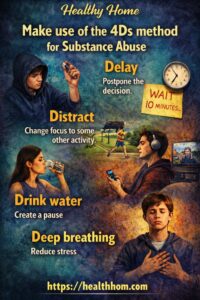
Make use of the 4Ds method:
| 4D | Uses |
| Delay | Postpone the decision |
| Distract | Change focus to some other activity. |
| Drink water | Create a pause |
| Deep breathing effectiveness | Reduce stress. |
Prevention Strategies
| Prevention Strategy | Example Actions |
|---|---|
| Family communication | Open discussions about substance risks |
| School education | Awareness programs and counseling |
| Community programs | Youth clubs and sports activities |
| Skill development | Decision-making and refusal skills |
| Positive role models | Mentorship and peer support |
Source: American Psychological Association Prevention Guidelines 2024
10 Small Daily Habits That Protect Teens:
- Eat at least one family meal together daily.
- Spend 10 minutes talking without discussing academics.
- Know your child’s closest friends.
- Encourage sports or creative hobbies.
- Monitor sleep schedules.
- Discuss social media content openly.
- Teach stress-management techniques.
- Celebrate effort, not only achievement.
- Maintain family routines.
- Seek help early when concerns arise.
Development of a Supportive System
A good support system is vital in prevention and recovery. This can involve parents, teachers, seniors, peers, counselors, health practitioners, mentors and community groups.
Encourage adolescents to:
- Designed personal safety programs.
- Participate in good community work.
- Ask others without being ashamed.
They should be patient, encouraging and supportive. Even minor advances must be rewarded and supported.
Managing stress effectively reduces the risk of substance abuse, discover practical methods in How Food Affects Mental Health in Children & Teenagers.
Role of Stakeholders in Prevention
| Stakeholder | Role in Prevention |
|---|---|
| Parents | Provide guidance and emotional support |
| Teachers | Identify early warning signs |
| Schools | Implement awareness programs |
| Community organizations | Offer youth engagement activities |
| Healthcare professionals | Provide counseling and referral services |
Source: WHO Community-Based Prevention Framework 2021
People and external factors
- Places
- Occurrences
- Circumstances
- peer pressure
Internal elements:
- Adverse emotional mood.
- hunger
- negative thoughts
- discomfort in the body
- fond memories of substance use
Various strategies: Increase your skills of saying no:
People should beware about the frequent use of pressure strategies by social groups.
- pleading
- comforting
- challenging
- threatening
- Anger
The examples when a person who practices assertiveness and rejection behavior can be found:
- My alcohol habit is final and I have broken it severally
- Since I am on medication that does not allow me to do so.
- I was about to go
- I had a headache
- Something necessary, and which can only be fulfilled by rising early.
Different assertiveness and refusal techniques to be ensured.
- Young people’s friendships shape them a lot
- Help youth understand various pressure situations
- They might also do these activities by pretending to be in the moment.
- Idea generation about challenging circumstances involves participants to collaborate on responses they will utilize during such situations.
A Teenager’s Journey to Recovery:
A 16 year old student was started to take nicotine products with his friends after the school time and firstly it was harmless to him. Subsequently, the nicotine was the only way to manage his stress before exam time.
The parents noticed about the irritability and not interested in sports activity in school, but they thought that their son is simply busy with studies and behaving for academic pressure.
But when the issue become serious, the family didn’t blame their son rather support through counselling, healthier coping skills and always in contact with him. So that gradually, his teen stopped using the nicotine products.
So, it is clear from above that only the early intervention by the families may be able to keep distance from worse situation.
Everyday Situations That Can Increase Risk:
Urban Setting
- Unsupervised parties
- Easy access to vaping products
- Late-night social gatherings
Rural Setting
- Social acceptance of chewing tobacco
- Family members using tobacco
- Easy access through local shops
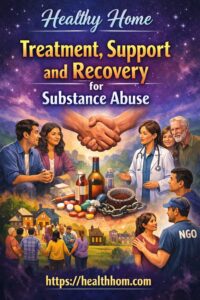
Treatment, Support and Recovery
- In addition to its other jobs, many NGOs help in the prevention of substance abuse.
- The support system may include: Parents, teachers, elders, friends, relatives, peers, counseling people, mentors, medical practitioners, and non-governmental organizations.
- Let the teenagers develop their own method for keeping safe.
Be engaged with nearby Communities, Families & friend.
For the purpose of preventing substance abuse
- An abnormal coping style in behavior or mood
- Getting to know parents while learning to speak clearly and teaching children discipline marks the essential elements of proper education.
For the control of drug abuse
- Encourage them to: Attach blame no moral failing to substance abuse.
- Attention needs for their day to day needs viz. health, medicine and nutrition.
- Show the teenager patience.
- Encouragement may be done for any little progress even it may tiny.
When Should Parents Seek Professional Help?
Seek help immediately if:
- Repeated intoxication occurs.
- Sudden personality changes develop.
- Self-harm thoughts are present.
- School attendance drops significantly.
- Theft or risky behaviors begin.
- Withdrawal symptoms appear.
Possible Sources of Support
- Pediatricians
- Adolescent medicine specialists
- Psychologists
- Psychiatrists
- School counselors
- Community mental health services
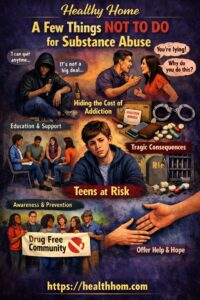
A Few Things Not To Do
- Focus on excuses for using drugs or choose to hide what the addiction is costing.
- Convey other regarding past substance abuse matters & issues.
- Keep harping on their faults, bicker and keep questioning their loyalty.
Helping people to learn about the damaging consequences
- Addiction is more common in teenagers.
- Give information to people about why substance abuse causes negative consequences.
- Give information for any misconceptions or untruths/unreal and un-biased regarding substance usage.
- Motivate community members to live away from drugs and keep them away from drug sources. Different types of outreach initiatives & session may be conducted to commemorate health days with adolescent people and school authorities/stakeholders to increase awareness.
- Required support may be provided with necessary encouragement to be done in the environment where people who are struggling with substance abuse.
Engaging in positive activities supports both physical and emotional health, read more in Best Foods to Heal Your Gut Naturally.
My Perspective as a Public Health Professional:
I have worked about 18+ years in maternal, child and adolescent health programs and I believe that the most misconceptions about the substance abuse is that it only affect the troubled adolescents.
In reality, the use of substance products can affect the teens from supportive families, students with high performance and youth who are socially more active.
The important protective factor may not be the strict and discipline guide from parents. But the aim should be to build a healthy & trusting relationship with them so that teens can feel safe while discussing about the challenges of substance abuse.
So, preventive measure to be taken by parents prior to beginning of any substance use.
Small Warning Signs That Families Often Miss:
- Suddenly using excessive perfume or deodorant
- Frequent requests for extra money
- Changes in sleeping patterns
- Declining interest in sports
- Increased irritability after returning from social gatherings
- New friend groups with little explanation
None of the above signs alone prove the substance use. But, multiple changes if occurs together, you may encourage a supportive conversation.
Key Points:
The actual substance abuse in adolescents start with a very small and may be due to peer pressure.
As per the report published by the National Institute on Drug Abuse (2022), it shows that early identification of cause with prevention supported by family members can be able to reduce the risk of long-term substance dependence. Still many adolescents are using unhealthy substances only due to lack of awareness and no harmful symptoms in the beginning.
But the important thing is that prevention is possible, if adolescents will be supported with:
- Open and non-judgmental communication
- Strong family and school connections
- Healthy coping skills and life goals
- Early intervention when warning signs appear
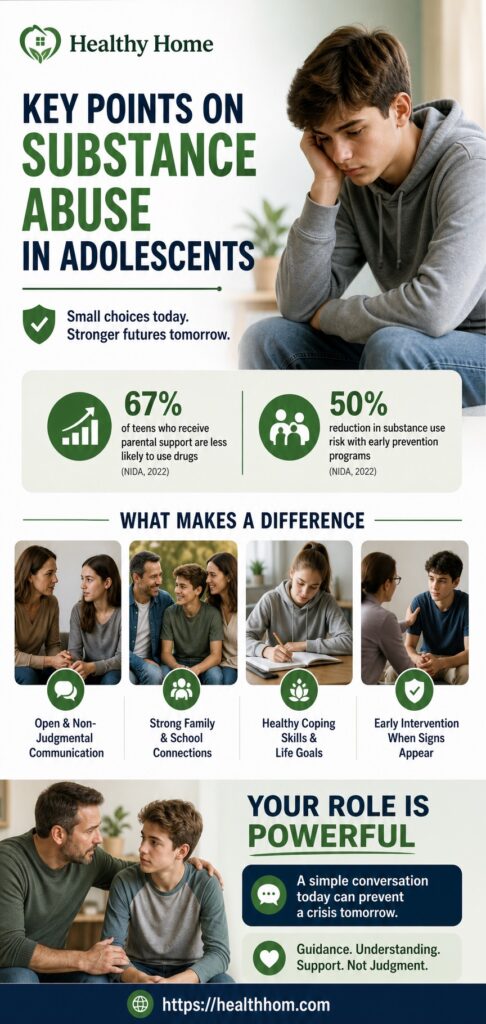
You may be a parent, caregiver, teacher, you role is very much important is shaping future of a teen.
- The brain of an adolescent is extremely flexible and susceptible to negative things.
- The use of substances may start as early as adolescence, and may develop very fast.
- Early use raises the chances of addiction in the long-term and health issues.
- Biological mechanisms that support substance dependence are tolerance and withdrawal.
- There must be effective family, school and community connections towards prevention and healing.
A small video from youtube on this topic is as mentioned below: https://www.youtube.com/embed/aMCXQ__c3F0?si=BmgagND_z3SBITis
10 Questions Parents Should Ask Themselves
- Has my child become unusually secretive?
- Have their friends changed recently?
- Have I noticed mood swings?
- Are they avoiding family activities?
- Has school performance changed?
- Do they have sleep problems?
- Do they appear stressed frequently?
- Have they lost interest in hobbies?
- Do we talk openly without judgment?
- Would my child feel comfortable asking for help?
FAQs:
Q1. What does adolescent substance abuse mean?
Q2. Why are teenagers more susceptible to drug abuse?
Q3. How early teenagers show signs of substance abuse?
Q4. What are the best ways to prevent substance abuse among teens?
Q5. At what age is substance abuse prevention should start?
Q6. What can the schools do to prevent drug abuse among students?
Q7. What is the parental role in the prevention of substance abuse?
Q8. Are peers a factor in the use of substances by adolescents?
Related Health Articles from Healthy Home:
- Social Media Addiction in Adolescents: Causes, Effects & Prevention
https://healthhom.com/social-media-addiction/ - Mindfulness Techniques for ADHD Management in Children and Adolescents
https://healthhom.com/mindfulness-and-adhd/ - How to Minimize the Risk of Worm Infestation: Causes, Symptoms & Prevention
https://healthhom.com/how-to-minimize-the-risk-of-worm-infestation/ - Impact of Anaemia in Adolescents: Long-Term Health Risks of Malnutrition
https://healthhom.com/impact-of-anaemia-in-adolescents-long-term-risks-of-malnutrition/ - Healthy Food Choices for Families: Balanced Diet Tips for All Ages
https://healthhom.com/healthy-food/
Trusted References and Research Sources:
How We Selected the Evidence:
This article is based on evidence from WHO, UNICEF, UNODC, APA, NIDA, peer-reviewed medical literature and public health prevention frameworks. Preference was given to recent evidence and adolescent focused research published between 2021 and 2026.
- WHO-Aligned Evidence on Mental Health, Brain Health, and Substance Use Disorders
Mental Health, Brain Health and Substance Use – Peer-Reviewed Article (PMC)
https://pmc.ncbi.nlm.nih.gov/articles/PMC11003516/ - New Approaches to Preventing Youth Substance Misuse
American Psychological Association (APA) – Evidence-Based Strategies for Adolescent Substance Abuse Prevention
https://www.apa.org/monitor/2024/03/new-approaches-youth-substance-misuse - How Drugs Affect the Brain and Lead to Addiction
National Institute on Drug Abuse (NIDA) – Drugs, Brain, and Behavior: The Science of Addiction
https://nida.nih.gov/publications/drugs-brains-behavior-science-addiction/references - Global Public Health Research on Substance Use and Mental Health
The Lancet Public Health – Substance Use, Brain Development, and Population Health Impact
https://www.thelancet.com/journals/lanpub/article/PIIS2468-2667(25)00115-X/fulltext - Academic Perspectives on Addiction, Brain Health, and Public Policy
Oxford Academic – Scholarly Research on Substance Use and Mental Health Interventions
https://academic.oup.com/edited-volume/34487
This article is intended for parents, teachers, adolescents, counselors, and public health professionals seeking evidence-based information on preventing substance abuse among adolescents.
If an adolescent shows persistent behavioral changes, withdrawal symptoms or declining academic performance, professional evaluation by a healthcare provider or counselor is strongly advised.