Last Updated on June 13, 2026 by Bibhu Ranjan Mund, MPH
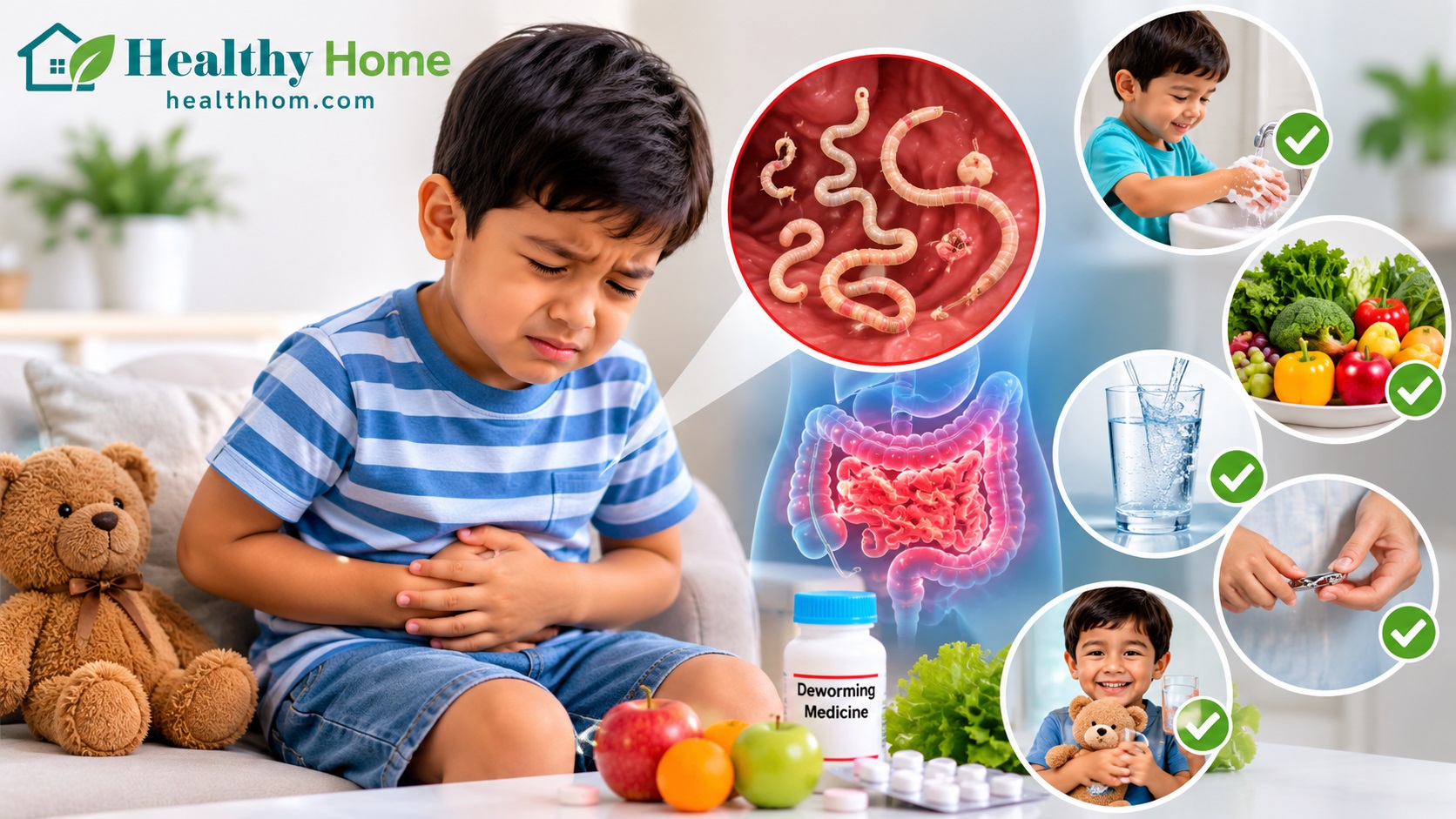
Worm Infestation in children: symptoms, reasons, prevention strategies, good hygiene methods and safe deworming methods as a parent.
Reviewed by Bibhu Ranjan Mund, MPH (Public Health Expert) with experience in maternal, infant, child, and adolescent health programs. Content is based on evidence-informed guidelines aligned with organizations such as the World Health Organization, UNICEF, Centers for Disease Control and Prevention, and National Institutes of Health.
Medical Disclaimer: This content is for informational and educational purposes only and is not intended as medical advice, diagnosis, or treatment. Always seek the advice of a qualified healthcare professional regarding any medical condition or concerns.
Introduction
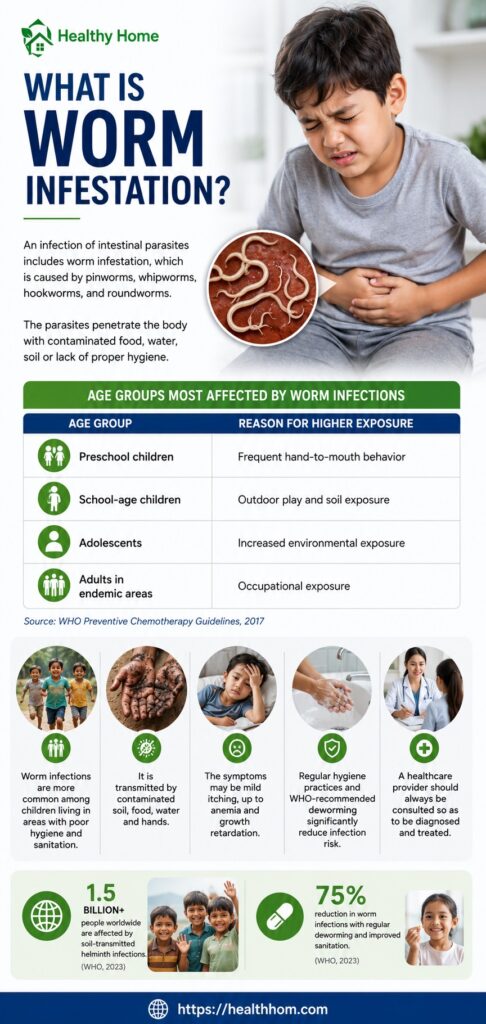
As per the research published by World Health Organization (2023), it shows that about 1.5 billion people globally are affected by the intestinal worm infections and among them children are most vulnerable. Parents sometimes miss it, as the early signs are so mild and gradually affect the growth, learning ability and immunity of children.
Worm infestation in children doesn’t only a hygiene issue, but it’s also a hidden health challenge which can silently impact the overall nutrition and development.
But, the important point is that it is completely preventable & treatable, just only by awareness, early identification, hygiene habits with timely deworming.
In this article, you will find-out the different early warning signs, the actual cause and also practical prevention strategies, so that parents can be able to protect their children at an early stage.
Worm infections can significantly affect a child’s growth and development, especially in early years. Learn more about overall child development in our guide on Early Childhood Development in India (0–6 Years).
Global Burden of Intestinal Worm Infections
| Indicator | Estimated Value |
|---|---|
| People affected by soil-transmitted helminths worldwide | ~1.5 billion |
| Children requiring preventive treatment globally | ~568 million |
| School-age children at risk worldwide | ~870 million |
| Population living in endemic areas | Mainly tropical and subtropical regions |
Source: WHO Soil-Transmitted Helminth Infections Report, 2023
Quick Summary
- Worm infections are more common among children living in areas with poor hygiene and sanitation.
- It is transmitted by contaminated soil, food, water and hands.
- The symptoms may be mild itching, up to anemia and growth retardation.
- Regular hygiene practices and WHO-recommended deworming significantly reduce infection risk.
- A healthcare provider should always be consulted so as to be diagnosed and treated.
What Is Worm Infestation?
An infection of intestinal parasites includes worm infestation, which is caused by pinworms, whipworms, hookworms, and roundworms. The parasites penetrate the body with contaminated food, water, soil or lack of proper hygiene.
Age Groups Most Affected by Worm Infections
| Age Group | Reason for Higher Exposure |
|---|---|
| Preschool children | Frequent hand-to-mouth behavior |
| School-age children | Outdoor play and soil exposure |
| Adolescents | Increased environmental exposure |
| Adults in endemic areas | Occupational exposure |
Source: WHO Preventive Chemotherapy Guidelines, 2017
Poor nutrient absorption due to worm infections can also lead to conditions like anemia. Discover in Iron Deficiency Anemia: Causes, Symptoms & Treatment.
How Worm Infestation Spread in Children?
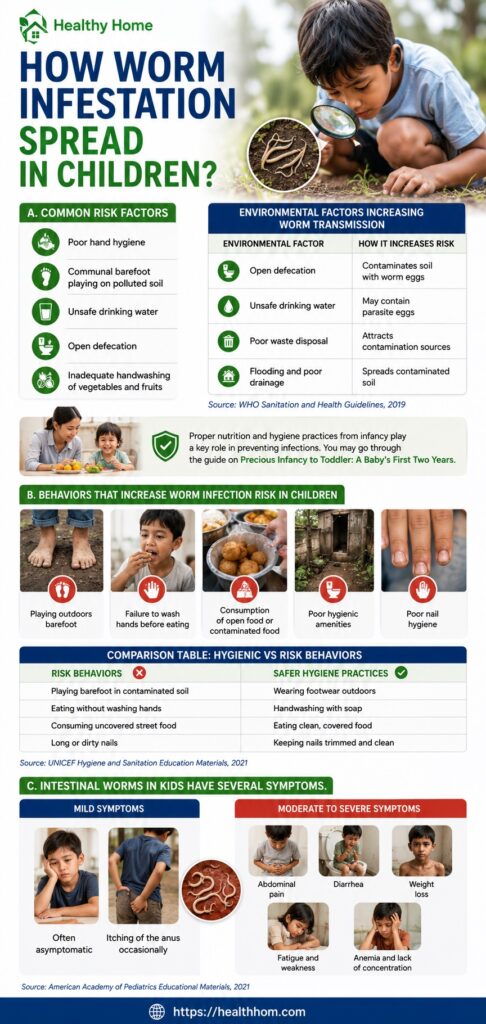
Following are few ways that the worm infestation spread in children:
- Contaminated Soil
- Unsafe Food and Water
- Poor Hand Hygiene
- Person-to-Person Transmission
- Open Defecation and Poor Sanitation
- Poor Personal Hygiene Habits
A. Common Risk Factors
- Poor hand hygiene
- Communal barefoot playing on polluted soil.
- Unsafe drinking water
- Open defecation
- Inadequate handwashing of vegetables and fruits.
Source: WHO Sanitation and Health Guidelines, 2019
Proper nutrition and hygiene practices from infancy play a key role in preventing infections. You may go through the guide on Precious Infancy to Toddler: A Baby’s First Two Years.
B. Behaviors That Increase Worm Infection Risk in Children
- Playing outdoors barefoot
- Failure to wash hands before eating.
- Consumption of open food or contaminated food.
- Poor hygienic amenities.
- Poor nail hygiene
Comparison Table: Hygienic vs Risk Behaviors
| Risk Behaviors | Safer Hygiene Practices |
|---|---|
| Playing barefoot in contaminated soil | Wearing footwear outdoors |
| Eating without washing hands | Handwashing with soap |
| Consuming uncovered street food | Eating clean, covered food |
| Long or dirty nails | Keeping nails trimmed and clean |
Source: UNICEF Hygiene and Sanitation Education Materials, 2021
C. Intestinal worms in kids have several symptoms.
Mild Symptoms
- Often asymptomatic
- Itching of the anus occasionally.
Moderate to Severe Symptoms
- Abdominal pain
- Diarrhea
- Weight loss
- Fatigue and weakness
- Anemia and lack of concentration.
Source: American Academy of Pediatrics Educational Materials, 2021
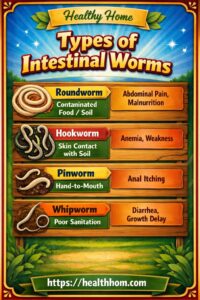
Types of Intestinal Worm:
| Worm Type | Mode of Transmission | Common Symptoms |
|---|---|---|
| Roundworm | Contaminated food/soil | Abdominal pain, malnutrition |
| Hookworm | Skin contact with soil | Anemia, weakness |
| Pinworm | Hand-to-mouth | Anal itching |
| Whipworm | Poor sanitation | Diarrhea, growth delay |
Worm Transmission Cycle
Step-by-step lifecycle:
- The child who is infected spreads feces onto the soil containing eggs.
- Soil Eggs hatch into larvae.
- Larvae penetrate through another child through the skin or mouth.
- The larvae mature into adult worms inside the intestines and the process repeats itself.
Source: WHO Soil-Transmitted Helminths Factsheet, 2023
Prevention of Worm Infection in Children
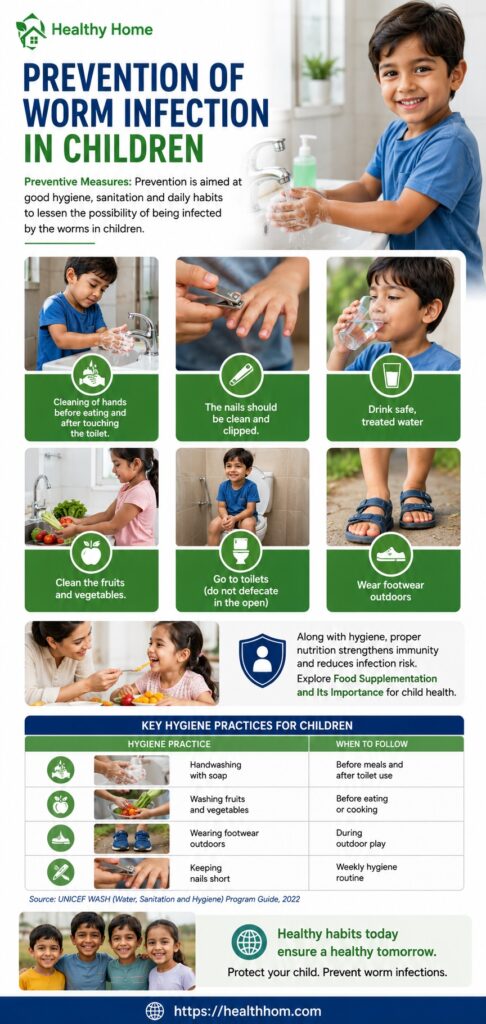
Preventive Measures: Prevention is aimed at good hygiene, sanitation and daily habits to lessen the possibility of being infected by the worms in children.
- Cleaning of hands before eating and after touching the toilet.
- The nails should be clean and clipped.
- Drink safe, treated water
- Clean the fruits and vegetables.
- Go to toilets (do not defecate in the open)
- Wear footwear outdoors
Along with hygiene, proper nutrition strengthens immunity and reduces infection risk. Explore Food Supplementation and Its Importance for child health.
Key Hygiene Practices for Children
| Hygiene Practice | When to Follow |
|---|---|
| Handwashing with soap | Before meals and after toilet use |
| Washing fruits and vegetables | Before eating or cooking |
| Wearing footwear outdoors | During outdoor play |
| Keeping nails short | Weekly hygiene routine |
Source: UNICEF WASH (Water, Sanitation and Hygiene) Program Guide, 2022
A balanced diet rich in essential nutrients helps prevent both infections and deficiencies. Read more in Iron Deficiency Anemia: Causes & Prevention.
The advantages of Periodic Deworming
Direct Benefits
- Reduces anemia
- Increase the absorption of nutrients.
Indirect Benefits
- Strengthens immunity
- Enhances attendance in schools and concentration.
- Lessens the rates of infection within the community.
Preventive healthcare measures like vaccination and deworming together help build strong immunity. Learn more in Comprehensive Vaccination Schedule for Children (India Guide).
Worm Infestation Treatment.
Antiparasitic medications are prescribed by doctors based on the type of worm infection. When combined with the right place of hygiene and diet, treatment is effective.
Public Health Programs Addressing Worm Infections
| Program | Country/Organization | Objective |
|---|---|---|
| National Deworming Day | Government of India | Reduce worm infections in children |
| WASH Program | UNICEF | Improve sanitation and hygiene |
| Soil-Transmitted Helminth Control Program | WHO | Prevent and control worm infections globally |
Source: Ministry of Health & Family Welfare (India) & WHO Reports, 2022
Early prevention through hygiene, nutrition, and awareness is key to healthy childhood development. For a complete overview, read Early Childhood Development in India (0–6 Years).
Concluding Points:
Worm Infestation is most common in children that the parents should realize and act to prevent it till becomes a long-term issue.
Very simple daily habits can be practiced like proper handwashing, safe food eating, timely deworming etc. can reduce the Worm Infestation. If it is not prevented or treated early, it may leads to other health condition like anemia, poor growth, lack of energy level.
As the Global health publications like WHO strongly suggests that prevention and awareness are the most useful tools to protect the children from worm infestation.
As discussed in the article, if any parent notice any type of symptoms, they should seek the medical advice as the small step today can build the healthier and stronger future of your child.
This article reflects practical insights gained from community-based maternal and child health programs.
FAQs:
Q1. Why are children infested with worms?
Children become infested with worms when they ingest worm eggs through contaminated food, water, soil, or unwashed hands. Poor hygiene and sanitation increase the risk of infection
Q2. What are the modes of infection of the children with the intestinal worms?
Infection may occur in kids when they play in contaminated earth, consume untested fruits or vegetables, consume impure water, or move their hands inadequately.
Q3. What are some ways of parents avoiding the infestation of worms in children?
Frequent washing of hands, consumption of safe water, sanitation, proper washing of food items, footwearing, and nail hygiene will prevent infections.
Q4. What is the frequency of deworming of children?
WHO recommends deworming of children living in high-risk areas twice in a year. Never ignore the instructions of a medical practitioner.
Q5. Are deworming drugs safe among the children?
Deworming medicines can be safe and effective when prescribed by a medical professional when used by children.
Q6. Does infection of the worms grow within a family?
Yes, family members share the same environment and practice hygiene which means that worm infestation can propagate. Physicians can recommend the treatment of close contacts.
Q7. In which instances do parents need a doctor with the worm infection?
When the symptoms do not disappear and improve, or when the child has worms in his or her stool, the parents are advised to seek the advice of a doctor.
Related Health Articles from Healthy Home
- Understand how food affects mental health and well-being
https://healthhom.com/how-food-affects-mental-health/ - Milestone Development of a Child – Track Growth Effectively
A complete guide to tracking your child’s developmental milestones from infancy through early years. - Vaccination of Child – Complete Immunization Schedule
Learn about the importance of child vaccination, recommended schedules, and protection against preventable diseases. - Precious Infancy to Toddler – Nurturing Every Step
Explore how to support your baby’s transition from infancy to toddlerhood with care, nutrition, and developmental play. - Why Is a Human Child So Unique and What Makes Us Human?
Understand what makes human development distinct and the biological and emotional aspects of being human.
Trusted References and Research Sources:Child Health and Development Guide: Growth Milestones, Immunity and Daily CareHealthy Living Guide for Families : Nutrition, Sleep and Daily Wellness Habits5 Benefits of Reducing Salt and Sugar : Health Effects and Practical Tips
- https://www.who.int/tools/elena/interventions/deworming
- Deworming in children (who.int)
- Worm Infections in Children – PubMed (nih.gov)
- Worm Infestation: Diagnosis, Treatment and Prevention – PubMed (nih.gov)
- Worm infestations and development of autoimmunity in children – The ABIS study – PMC (nih.gov)
- Soil-transmitted helminth infections (who.int)
- Worm Infestation: Diagnosis, Treatment and Prevention – PubMed (nih.gov)


About the Author – “Bibhu Ranjan Mund”, Master in Public Health (MPH) from IIHMR University, Jaipur (Rajasthan) has more than 18 years of experience in Public Health activities in maternal health, child health, adolescent health, nutrition and community wellness programs under National Health Mission, Health & Family Welfare Department, Odisha. He is the founder of “Healthy Home” and translates the evidence based public health information into a practical source so that families may able to apply in everyday life. All the information are for educational purposes only and not replaces the professional medical advice. ORCID Researcher ID – 0009-0003-0158-4992. Connect LinkedIn – https://www.linkedin.com/in/bibhu-ranjan-mund-b72171358/