Last Updated on June 13, 2026 by Bibhu Ranjan Mund, MPH
Discover healthy food for adolescents, balanced diet tips, key nutrients, and expert advice to prevent malnutrition and boost teen health.
Reviewed by Bibhu Ranjan Mund, MPH (Public Health Expert) with experience in maternal, infant, child, and adolescent health programs. Content is based on evidence-informed guidelines aligned with organizations such as the World Health Organization, UNICEF, Centers for Disease Control and Prevention, and National Institutes of Health.
Medical Disclaimer: This content is for informational and educational purposes only and is not intended as medical advice, diagnosis, or treatment. Always seek the advice of a qualified healthcare professional regarding any medical condition or concerns.
Affiliate Disclosure: This article contains affiliate links. If you purchase through these links, we may earn a small commission at no extra cost to you.
Introduction:
Today, so many adolescents feel tired, weak or lack of concentration even if they are eating enough.
The simple answer is due to what they eat, not how much.
As per the publication of World Health Organization (2023), it shows that more than 30% of adolescents worldwide are suffering from malnutrition including anemia, micronutrient deficiencies resulting in obesity. In India, the situation is more alarming that millions of teenagers are being affected by poor diet quality and improper nutritional level.
The period of adolescent is a phase for rapid growth in both physically and mentally. They need the proper balanced nutrients to support the height gain, development of brain, hormonal changes, immunity and for girl is future reproduction.
But the matter of concern is today’s lifestyle which includes the fast food, irregular meals, over screen time, academic press, mental stress which are delaying the healthy eating habits.
This article will provide you the healthy food for adolescent which may help you in :
- Understand what your body really needs
- Identify hidden nutrition gaps
- Build a simple, balanced diet to prevent malnutrition
Because the food choices made today will build health, energy and success subsequently.
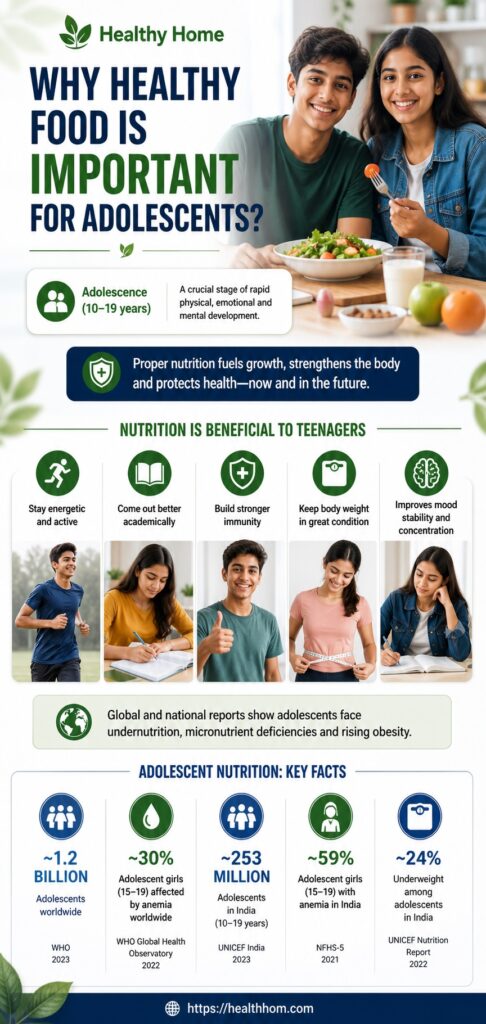
Why Healthy Food is Important for Adolescents?
Adolescence (10-19 years) refers to the time when an individual enjoys a rapid physical, emotional and mental development. At this age, the body needs proper nutrition to help in increasing the development of the muscles, good bones, development of the brain, hormonal stability and the body should have fine immune system. Eating well in the teenage years helps in minimizing infections, anemia, obesity and most of the health issues in the future.
Adolescence builds on earlier childhood growth, understand this foundation in our guide on Early Childhood Development in India (0–6 Years).
Nutrition is beneficial to teenagers:
- Stay energetic and active
- Come out better academically.
- Build stronger immunity
- Keep body weight in great condition.
- Improves mood stability and concentration.
Proper nutrition during adolescence also helps prevent long-term developmental issues—learn more in Global Developmental Delay in Children.
Global and national reports have indicated that adolescents have various nutritional problems such as under nutrition, deficiency of micronutrients and increasing obesity.
| Indicator | Global / India Estimate | Source | Publication Year |
|---|---|---|---|
| Adolescents worldwide | ~1.2 billion individuals | WHO | 2023 |
| Adolescents affected by anemia globally | ~30% of girls aged 15–19 | WHO Global Health Observatory | 2022 |
| Adolescents in India (10–19 years) | ~253 million | UNICEF India | 2023 |
| Adolescents with anemia in India | ~59% girls (15–19 years) | NFHS-5 | 2021 |
| Underweight among adolescents in India | ~24% | UNICEF Nutrition Report | 2022 |
What is Malnutrition?
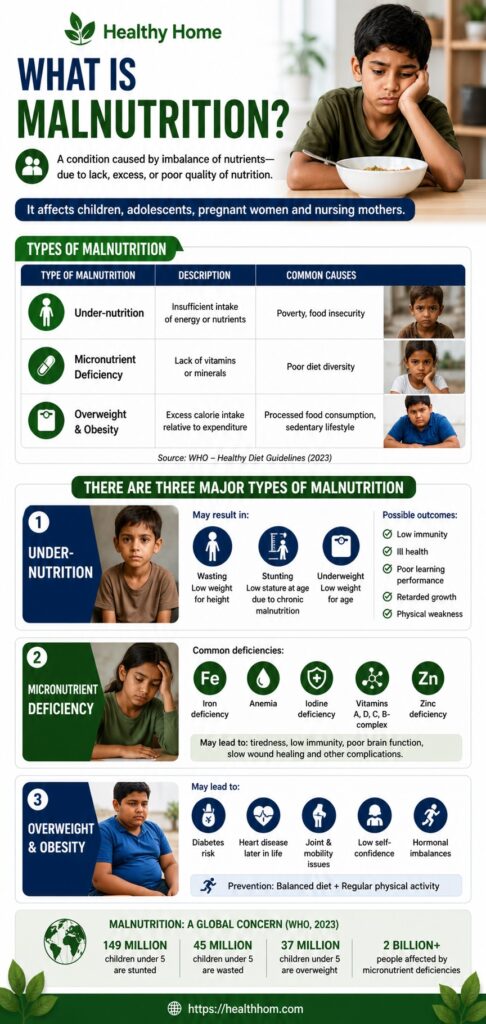
Malnutrition is the lacking of balance of nutrients in the body- malnutrition may be in the form of less, excess, or low quality of nutrition. It is common among children, adolescents, pregnant women and nursing mothers.
Types of Malnutrition
| Type of Malnutrition | Description | Common Causes |
|---|---|---|
| Under-nutrition | Insufficient intake of energy or nutrients | Poverty, food insecurity |
| Micronutrient Deficiency | Lack of vitamins or minerals | Poor diet diversity |
| Overweight & Obesity | Excess calorie intake relative to expenditure | Processed food consumption, sedentary lifestyle |
Source: WHO – Healthy Diet Guidelines (2023)
Malnutrition affects all age groups from infants to teenagers, read about early nutrition in Right Food Supplementation for Babies After 6 Months.
There are three major types of Malnutrition:
1. Under-nutrition
This is brought about by the lack of sufficient nutrients in the body. It may result in:
- Wasting: low weight for height
- Stunting Low stature at age owing to chronic malnutrition.
- Underweight: Low weight for age
The result of under-nutrition may be low immunity, ill health, lack of learning performance, retarded growth and physical weakness.
2. Micronutrient Deficiency
This occurs in cases where the body does not have essential vitamins or minerals. Some of the most frequent shortcomings are:
- Iron deficiency – Check in Amazon
- Anemia – Check in Amazon
- Iodine deficiency
- Deficiency of vitamin A, D, C and B-complex. – Check in Amazon
- Zinc deficiency
These can lead to tiredness, immuno-suppression, impaired brain performance, slow wound recovery among other complications.
Iron deficiency is one of the most common nutritional problems, explore causes and treatment in Iron Deficiency Anemia: Causes, Symptoms & Treatment.
3. Overweight & Obesity:
Over-nutrition is gradually growing more prevalent in the adolescent population particularly the low-income and urban nations. Over-nutrition occurs when calorie intake is higher than calorie expenditure. It may lead to:
- Risk of diabetes
- Heart disease later in life
- Joint and mobility issues
- Low self-confidence
- Hormonal imbalances
It is necessary to prevent it by balanced diets and physical exercises.
The Vitamins, Minerals Your Teenager Should Have
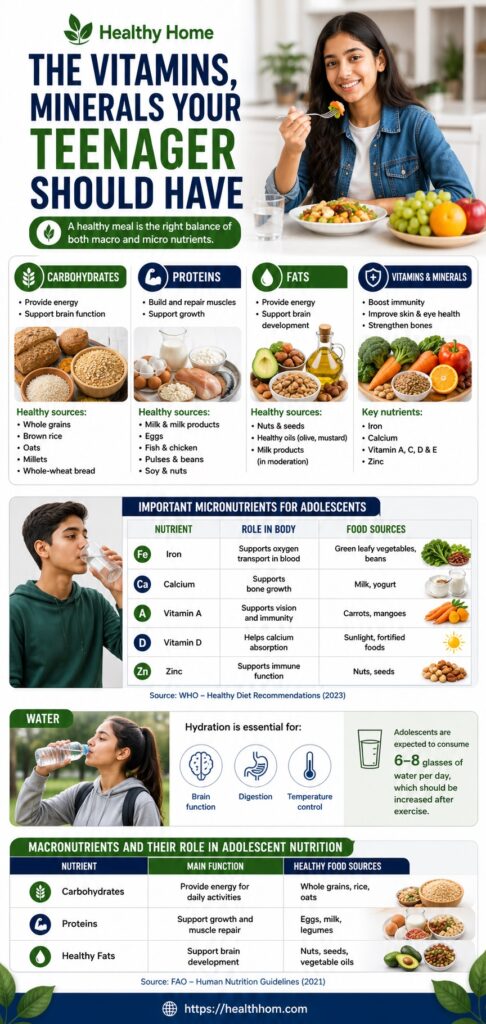
A healthy meal is the appropriate proportion of both macro and micro nutrients.
Carbohydrates
- Provide energy
- Support brain function
- Healthy sources:
- Whole grains
- Brown rice
- Oats
- Millets
- Whole-wheat bread
Proteins
- Build and repair muscles
- Support growth
- Healthy sources:
- Milk & milk products
- Eggs
- Fish & chicken
- Pulses & beans
- Soy & nuts
Fats:
- Provide energy
- Support brain development
- Healthy sources:
- Nuts & seeds
- Healthy oils (olive, mustard)
- Milk products (in moderation)
Vitamins & Minerals
- Boost immunity
- Improve skin & eye health
- Strengthen bones
Key nutrients:
- Iron
- Calcium
- Vitamin A, C, D & E
- Zinc
Important Micronutrients for Adolescents
| Nutrient | Role in Body | Food Sources |
|---|---|---|
| Iron | Supports oxygen transport in blood | Green leafy vegetables, beans |
| Calcium | Supports bone growth | Milk, yogurt |
| Vitamin A | Supports vision and immunity | Carrots, mangoes |
| Vitamin D | Helps calcium absorption | Sunlight, fortified foods |
| Zinc | Supports immune function | Nuts, seeds |
Source: WHO – Healthy Diet Recommendations (2023)
Nutrient deficiencies during adolescence can significantly affect immunity and overall health, see how infections impact nutrition in Worm Infestation in Children.
Water
Hydration is essential for:
- Brain function
- Digestion
- Temperature control
Adolescents are expected to consume 6-8 glasses of water per day, which should be increased after exercise.
Macronutrients and Their Role in Adolescent Nutrition
| Nutrient | Main Function | Healthy Food Sources |
|---|---|---|
| Carbohydrates | Provide energy for daily activities | Whole grains, rice, oats |
| Proteins | Support growth and muscle repair | Eggs, milk, legumes |
| Healthy Fats | Support brain development | Nuts, seeds, vegetable oils |
Source: FAO – Human Nutrition Guidelines (2021)
Balanced nutrition also supports disease prevention, learn how vaccines protect health in Comprehensive Vaccination Schedule for Children in India.
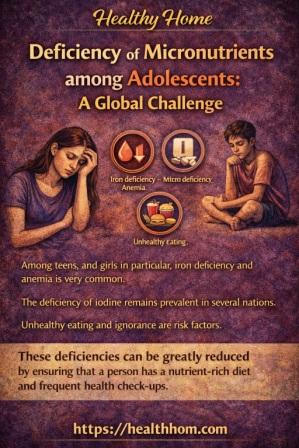
Deficiency of Micronutrients among Adolescents: A Global Challenge
- Among teens, and girls in particular, iron deficiency and anemia is very common.
- The deficiency of iodine remains prevalent in several nations.
- Unhealthy eating and ignorance are risk factors.
These deficiencies can be greatly reduced by ensuring that a person has a nutrient-rich diet and frequent health check-ups.
Common Micronutrient Deficiencies Among Adolescents
| Nutrient Deficiency | Estimated Global Prevalence | Source | Year |
|---|---|---|---|
| Iron deficiency anemia | ~30% adolescent girls | WHO | 2022 |
| Iodine deficiency | ~2 billion people at risk | UNICEF | 2021 |
| Vitamin A deficiency | ~190 million children globally | WHO | 2022 |
| Zinc deficiency risk | ~17% of global population | FAO | 2020 |
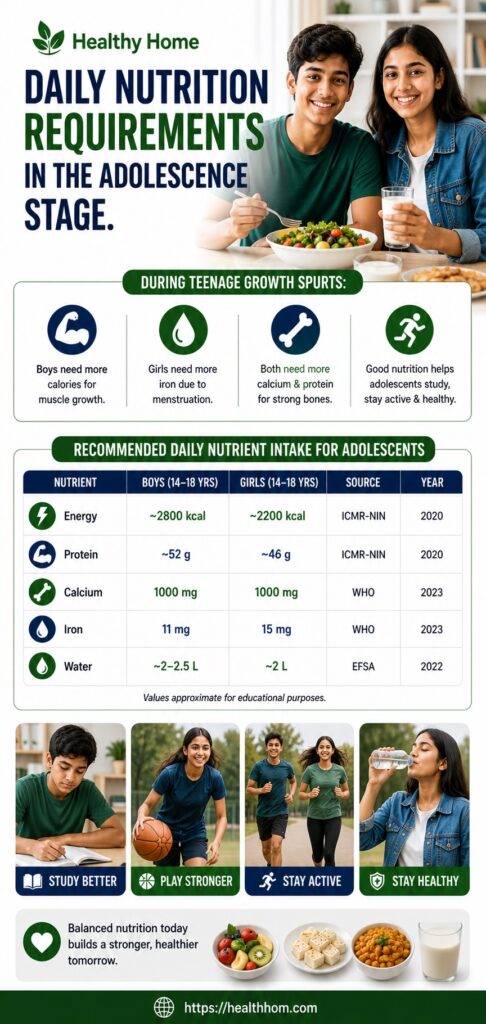
Daily nutrition requirements in the adolescence stage.
In the course of teenage development spurts:
- Boys require more calories to make muscle development.
- The girls require increased iron because of menstruation.
- The two require increased intake of calcium and proteins to help in bone growth.
Adequate nutrition enables adolescents to study, participate in sports, be active, and have good health.
Recommended Daily Nutrient Intake for Adolescents
| Nutrient | Boys (14–18 yrs) | Girls (14–18 yrs) | Source | |
|---|---|---|---|---|
| Energy | ~2800 kcal | ~2200 kcal | ICMR-NIN | 2020 |
| Protein | ~52 g | ~46 g | ICMR-NIN | 2020 |
| Calcium | 1000 mg | 1000 mg | WHO | 2023 |
| Iron | 11 mg | 15 mg | WHO | 2023 |
| Water | ~2–2.5 L | ~2 L | EFSA | 2022 |
Values approximate for educational purposes.
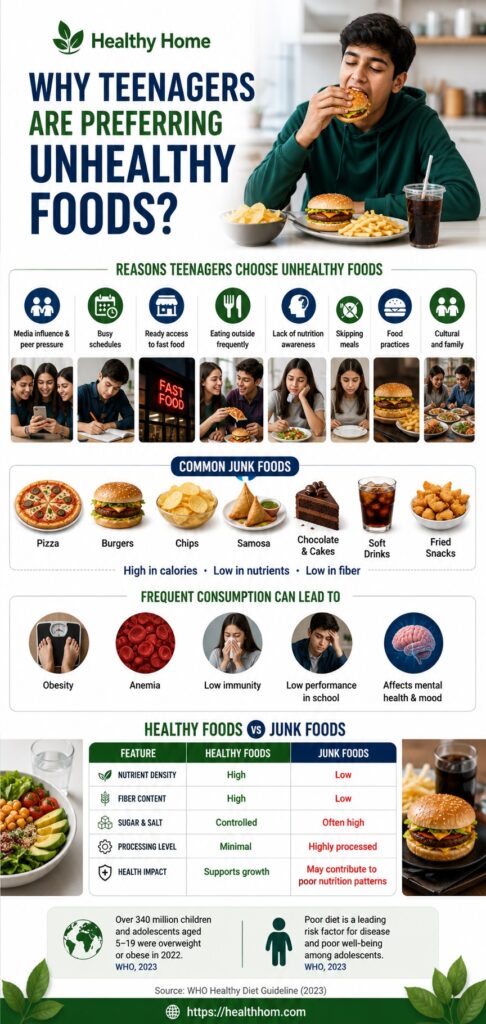
Why teenagers are preferring unhealthy foods?
The teenagers have a tendency to be attracted to junk and fast foods because of:
- Media influence & peer pressure.
- Busy schedules
- The ready access to fast food.
- Eating outside frequently
- Lack of nutrition awareness
- Skipping meals
- Food practices
- Cultural and family
Examples of common junk foods that contain high amounts of calories and few levels of nutrients are: Pizza, burgers, chips, samosa, chocolate and cakes, soft drinks, and fried snacks.
Its frequent consumption can cause obesity, anemia, low immunity, and low performance in school.
Poor dietary habits can also affect mental health and mood, read more in How Food Affects Mental Health & Well-being.
Healthy Foods vs Junk Foods
| Feature | Healthy Foods | Junk Foods |
|---|---|---|
| Nutrient Density | High | Low |
| Fiber Content | High | Low |
| Sugar & Salt | Controlled | Often high |
| Processing Level | Minimal | Highly processed |
| Health Impact | Supports growth | May contribute to poor nutrition patterns |
Source: WHO Healthy Diet Guideline (2023)
Healthy habits should begin early, explore how to build strong foundations in Infancy to Toddler Development Guide.
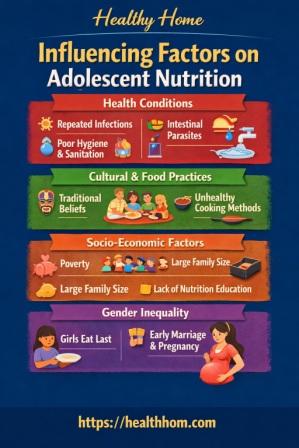
Influencing Factors on Adolescent Nutrition.
1. Health Conditions
- Repeated infections
- Intestinal parasites
- Poor hygiene and sanitation have the potential to aggravate nutritional health.
2. Cultural & Food Practices
- Traditional beliefs
- Family eating habits
- Food preparation techniques such as deep-frying are capable of lowering food nutrition.
3. Socio-Economic Factors
- Poverty
- Large family size
- Ignorance on how to eat cheaply and nutritiously
4. Gender Inequality
- Girls are last to eat or eat food of lesser nutritional value.
- Nutritional health is aggravated by early marriage and pregnancy.
- Enhancing gender equality contributes to the enhancement of the nutrition of adolescents.
Source: UNICEF Adolescent Nutrition Report (2022)
The Healthy Eating Habits of Parents.
Parents can make significant contributions by:
- Serving balanced meals
- Promoting mealtime in the family.
- Educating the children on how to read food labels.
- Offering healthy snacks
- Eliminating the availability of junk food always.
- Engaging teenagers in food preparation and lunch/dinner planning.
Source: WHO – Healthy Diet Key Recommendations (2023)

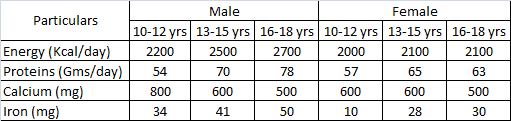
Many recommendations for Daily Allowance of Nutrients for Adolescents :
Major Nutrition Programs Supporting Adolescents in India
| Program | Focus | Target Group |
|---|---|---|
| POSHAN Abhiyaan | Improve nutrition outcomes | Women & adolescents |
| Weekly Iron Folic Acid Supplementation (WIFS) | Prevent anemia | School adolescents |
| Mid-Day Meal Scheme | Improve nutrition in students | School children |
| Rashtriya Kishor Swasthya Karyakram (RKSK) | Adolescent health services | Adolescents |
Source: Ministry of Health & Family Welfare India (2023)
For a complete family health approach, also read our guides on Child Health and Development and Balanced Nutrition for All Age Groups.
Concluding Points:
Healthy eating means not to reduce the junk food, but its actual meaning is to build a strong foundation for lifelong health.
Due to today’s poor nutrition, it may affect the weak immunity, fatigue, poor academic performances and increased risk of many lifestyle diseases in the later life. But the important point that it can be prevented just by changing some simple daily habits.
Such as regular eating pattern, adequate hydration, a balanced meal including awareness can make a difference.
As per the data of UNICEF (2022) and World Health Organization, they show that if you focus on adolescent nutrition, it will lead to a healthy society in future.
FAQs:
Q1. What is the reason why healthy eating is a concern to adolescents?
Healthy food promotes quick growth, brain maturation, good bones, resistance, and malnutrition is prevented.
Q2. What is the most essential nutrient of teenagers?
Proteins, Iron, Calcium, Vitamin D, Vitamin A, Vitamin C, Vitamin E and Zinc.
Q3. What are the foods that teenagers should have in their daily meals?
They should have fruits, vegetables, whole grains, milk products, lean proteins, nuts and seeds as well as a lot of water.
Q4. Is it possible to have fast food on the menu of a teenager?
The occasional consumption is alright, substituting balanced food with junk food is not healthy.
Q5. What are the ways to diagnose malnutrition among adolescents?
Loss (or excessive gain) of weight, Fatigue Frequent infections, Poor concentration, Hair fall or dry skin etc.
Q6. Is breakfast important to teenagers?
It is true that breakfast leads to better school performance, energy, and weight.
Q7. What is the recommended amount of water that teenagers are supposed to drink on a daily basis?
Approximately 1.5- 2 liters daily, increased in the event of exercise.
Q8. Does adolescent malnutrition affect adult life?
Yes, it can lead to weak bones, chronic illnesses, low immunity and less physical capacity in old age.
Related Health Articles from Healthy Home:
- Anemia in Adolescents – Symptoms, Causes & Prevention
- Non-Communicable Diseases in Adolescents – Risks & Prevention
- Healthy Lifestyle in Adolescents – Promotion Tips & Strategies
- How Food Affects Mental Health – Nutrition & Brain Health
- Best Foods to Heal Your Gut Naturally – Gut Health Guide
A small video from youtube on this topic is as mentioned below:
https://www.yo utube.com/embed/tG4b3eU1Nzc?si=gd-591rczQK5JLor
Trusted References and Research Sources:
- WHO – Global Accelerated Action for Adolescent Health (AA-HA!) Guidance
- UNICEF – Adolescents’ Diets and Nutrition Report (India)
- WHO – Adolescent Health Overview
- UNICEF – Food and Me: Adolescents’ Nutrition & Well-Being
- WHO – Adolescents’ Health Risks and Solutions
- WHO – Healthy Diet: Key Recommendations
- UNICEF India – Policy Brief on Adolescent Nutrition & Food Security


About the Author – “Bibhu Ranjan Mund”, Master in Public Health (MPH) from IIHMR University, Jaipur (Rajasthan) has more than 18 years of experience in Public Health activities in maternal health, child health, adolescent health, nutrition and community wellness programs under National Health Mission, Health & Family Welfare Department, Odisha. He is the founder of “Healthy Home” and translates the evidence based public health information into a practical source so that families may able to apply in everyday life. All the information are for educational purposes only and not replaces the professional medical advice. ORCID Researcher ID – 0009-0003-0158-4992. Connect LinkedIn – https://www.linkedin.com/in/bibhu-ranjan-mund-b72171358/