Social Media Addiction : Symptoms, Health Effects and Ways to Reduce Screen Time
Learn the signs, causes and health effects of social media addiction. Discover 10 science-backed digital detox tips to build healthy screen habits.
Reviewed by Bibhu Ranjan Mund, MPH (Public Health Expert) with experience in maternal, infant, child, and adolescent health programs. Content is based on evidence-informed guidelines aligned with organizations such as the World Health Organization, UNICEF, Centers for Disease Control and Prevention, and National Institutes of Health.
Medical Disclaimer: This content is for informational and educational purposes only and is not intended as medical advice, diagnosis, or treatment. Always seek the advice of a qualified healthcare professional regarding any medical condition or concerns.
Introduction:
Have you ever noticed that, you have opened your phone for only 5 minutes and its suddenly spent one hour?
As per the study of DataReportal Global Digital Report (2025), now-a-days on an average a person is spending about 2 hours 23 minutes daily on different social media platforms, while teenagers are crossing it to 3-5 hours. Also the study of Common Sense Media, 2023 says that many users check their mobile phones just within 5 minutes of wake-up which is a concern for the society.
Dopamine based reward mechanisms in different social media apps may contribute the repetitive use patterns.
In the real life situation, I have seen that many students are losing their focus on study, parents are now struggling for family time, many professionals are having sleep disturbances etc. only due to they are not able to disconnect the Social Media.
Excessive social media use may begin to influence time management, sleep, mood and daily habits.
In this article, you’ll find:
- Actual symptoms that most of people ignore.
- The un-noticed health effects as proved by research
- Also, 10 proven and science-based strategies to maintain its control without leaving the social media completely.
Because the main goal isn’t to disconnect from the world, but to reconnect with your life.
A Situation Many Families Will Recognize
A mother from Bhawanipatna, during dinner time noticed that her teenage son is holding his mobile in one hand and eating with the other. Also the TV is running in-front of dinner table and the conversation between the families become shorter then as usual before.
I have seen many parents observes such situation in their daily life. Children are playing video games, teenagers are checking notifications frequently and also adults are sending messages till late-night.
In today’s world, screen time not not limited to one age group only. In reality, it is now affecting the students for preparing the examinations, working professionals handling the offices, parents in balancing the family life.
The real challenge is not the new technology, but how to implement with proper knowledge and control not affecting the sleep, relationship and daily routines.
Recommended read on Screen Time in Children and Adolescents, health Effects, WHO Guidelines & Practical Parenting Tips.
What is social media addiction?
Now, the Social Media is an essential part of day-to-day life of children, teenagers, adults & also older people in the present digital world. Facebook, Instagram, YouTube, WhatsApp and Tik Tok are some of the platforms which ensure we are digitally connected, informed about the current on-goings and also entertain us. Although, these sites have so many advantages, they are becoming a concern which is generally known as “social media addiction”.
In present context, not only the youth, but also it affects the working adults, parenting, teaching, health care practitioners by the excessive use of screens. In the long-run, which may impact on their mental health, sleep disturbance, work outcome, family problems and self physical health.
To better understand emotional effects, explore our guide on mental well-being in adolescents.

Quick Summary:
- Social media addiction refers to the uncontrolled and excessive use of digital platforms even after knowing this usage has adverse impacts on everyday life.
- It can impact sleep and mental health, productivity and relationships.
- The symptoms are the overuse of the screen and lack of concentration.
- Dopamine-driven reward loops and FOMO may increase the addictive behavior.
- It can be controlled by few simple lifestyle habits such as screen time restrictions, digital detox and engaged in offline activities.
- Good digital behavior enhances emotional balance, sleep quality and wellbeing.
- Family practices and conscious use are a better preventive measure than prohibition.
You can also explore social media addiction statistics 2026 to understand global trends and prevalence.
Quick Self-Test: Are You Addicted?
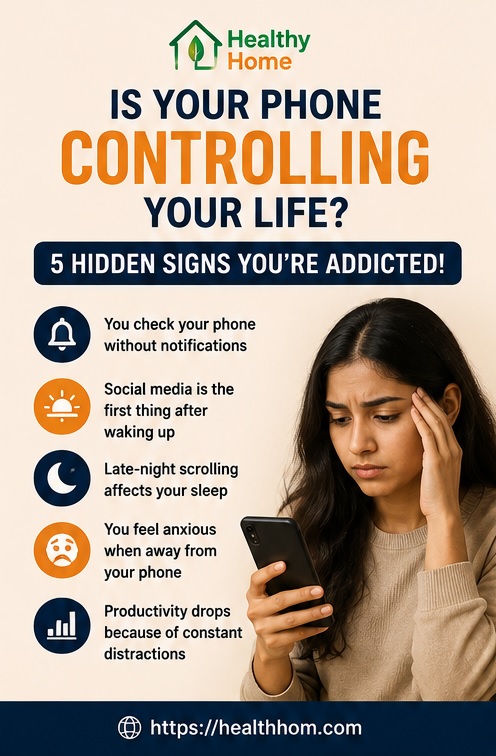
- Do you check your phone without notification?
- Do you feel anxious without it?
- Do you scroll before sleep?
Why social media is addictive?
The addiction to social media is the compulsive or uncontrolled use even knowing about the adverse effects. Professionals do not define it as a clinical disorder but says to be a type of behavioural addiction, which is comparable with gaming addiction.
Social media feels addictive because of the following reasons.
- Instant reward system or likes, comments and notifications activate dopamine which provides a loop of reward.
- Fear of missing out (FOMO): people are afraid of missing news or trends or updates.
- Endless scrolling- The algorithms have been so developed to have users spend more time continuously.
- Social approval – It increases self esteem making people use it more.
- Accessibility at convenience and also easily accessible to all
- Smartphones ensure the availability of social media 24×7.
When such behaviours are continued, they may disrupt normal routines like school work, working schedule, sleep and relationships etc.
Interestingly, research shows how food affects mental health, which also influences emotional responses to digital habits.
A. Behavioral Symptoms
- Checking phone even without any notification several times.
- Uncomfortable without social media.
- Wasting an excessive amount of time on the internet.
- Endless, mindless scrolling
- Can’t remain out of cyberspace at work or study.
B. Physical Symptoms
- Browsing at midnight
- Strain on the eyelids, headache or neck pains (text neck).
- Exhaustion and decreased physical exercise.
C. Emotional Symptoms
- Comparing your life with the online lives.
- After using social media, they feel lonely, sad or angry.
- Reduced memory and concentration.
The identification of such signs is the initial step towards positive changes. Social media addiction is a relatively recent subject whose effects on health remain unclear.
What I Have Observed in Community and Adolescent Health Programs
During the adolescent health awareness activities including school health programs in Rayagada (Odisha), I have repeatedly observe a common pattern that many teens don’t realize the time spent by them in mobile.
Students sometimes say regarding lack of concentration in study hours. Some teens complain about poor sleep but don’t link it with their late-night scrolling.
The issue is not the awareness, as many know about the consequences of more screen uses. But the real challenge is to turn the knowledge into daily habits.
Many small changes like keeping phone away during meal time, no device at bathroom, limit the notifications may be a good result.
Health Effects of Social Media Addiction
It affects children, adolescents and working professionals as follows:
1. May contribute to stress or low mood.
Excessive use can increase:
- Stress
- Low mood
- Negative self-image
- Reduced attention span
Online comparisons, cyberbullying and edited content tend to give false expectations. For severe concerns, consult a professional.

2. Sleep Disruption
Screen blue light stops secretion of melatonin and disturbs sleep patterns. The result of scrolling at the end of the day is likely to shorten total sleep time, which results in:
- Daytime tiredness
- Low concentration
- Low academic or working performance.
Following proper sleep optimization strategies can improve sleep quality affected by late-night scrolling.
A Real-Life Example
Let us think an example of a student of class-10 who is preparing for CBSE Board examination. He plans to sleep at 10.30 PM, but started to spend time for just 10 minutes in checking social media. But 10 minutes of small session turns into nearly one hour for viewing videos, messages etc.
In the next morning, he wakes up tired and struggles to concentrate in class, but difficult to complete the homework. Such cycle of everyday night may leads to poor sleep, decreasing academic ability and become a problem.
This small example show that the social media habits can also indirectly affect the learning, memory and productivity.
3. Lifestyle Diseases
Prolonged sedentary screen use may increase risk factors associated with obesity and metabolic concerns like:
- Obesity
- High blood pressure
- Insulin resistance
- Back pain
- Low stamina
Prolonged inactivity is also linked to non-communicable diseases in adolescents and adults.

4. Reduced Social Interaction
This can impact people with preference of virtual over traditional communication:
- Family bonding
- Friendships
- Emotional resilience
The Rising Social Media Addiction.
There are a number of lifestyle and environmental causes of increased due to reliance on digital platforms:
1. Convenient and uninterrupted accessibility
Social apps are the default behavior, as smartphones are always accessible.
2. Algorithm-driven content
Feeds are personalised through platform and this makes the content less leaveable.
3. Lack of offline activities
The decreased outdoor play, reading and sports activity results in increased screen time.
4. Work & study dependence
The digital tools are frequently required in schools, universities and offices, which raises the amount of time spent at the screen.
5. Stress & Emotional Escape
Most users rely on social media to deal with:
- Boredom
- Stress
- Loneliness
- Emotional discomfort
This is a fast getaway and not a healthy solution in the long run.

Why Complete Social Media Bans Usually Fail
Many Indian families suggest to strictly ban the more screen use, but this may reduce the screen time temporarily, It may creates frustration among the adolescents.
Public health studies and behavior change programs show that the sustainable habits can be built gradually not at once by restrictions. So, the families may get benefit from:
- Clear screen-time boundaries
- Device-free family activities
- Healthy alternatives such as sports, hobbies, reading or outdoor play
- Positive role modelling by parents
Best social media addiction solutions – Healthy lifestyle habits.
Overcoming addiction to social media does not imply shutting down all the activities on the internet. Rather, it aims at establishing an equal, wholesome digital lifestyle.
The most effective solutions with underlying science are:
1. Social media time constraints:
Rather than not using social media at all, draw social media limits, that may be
- 30–45 minutes in the morning
- 30–45 minutes in the evening
Screen time utilisation can be observed with the help of built-in phone tools, such as Digital Wellbeing or Screen Time.
Tips
- Turn off app notifications.
- Apps must be used at regular intervals.
- Cell phone off on working days/studying.
2. Adhere to a Digital Detox Routine
There is no need to have an extreme digital detox.
Examples
- First hour after waking up no phones.
- No social media during meals.
- Provide so-called no-screen zones at home.
- Social movement during weekend breaks.
Healthier habits can be formed by means of a weekly Screen-Free Sunday.
3. Offline activities:
Substituting online time with engaging in other works, so that it will help to get flipped of online stimulation.
Try:
- Walking
- Yoga
- Music
- Reading
- Gardening
- Cooking
- Indoor games
- Drawing or craft activities
The more rewarding you are to the offline activities, the less you rely on online platforms.
Adopting a healthy lifestyle in adolescents encourages reduced screen time and better daily routines.
4. Improve Sleep Hygiene
Sleep problems have a close association with the excessive use of phones. The healthy night time routines suggests:
- Have a break, do not use your screens at least 1 hour before going to sleep.
- Avoid use of phone in the bedroom.
- Listen to soft and easy music to calm down.
- Adhere to regular sleep-wake pattern.
Having a clearer mind decreases the desire to scroll towards the end of the night.

5. Multitasking on social media reduces focus
Social media distracts concentration during study, work or conversation.
To improve productivity:
- Keep phone on silent mode
- Choose an option of Focus Mode in order to block distracting applications.
- Complete all the significant activities and then go to social media.
It supports in the establishment of discipline and dependence on screen will be discouraged.
6. Learn to be sensitive and self-conscious.
Mindfulness will teach you to be aware of emotional activations that cause excessive use of the screen.
Ask yourself:
- Why am I opening this app now?
- Am I bored, stressed up or evading something?
- Does this contribute towards my health or harm it?
The presence of mindfulness breaks automatic scrolling.
7. Develop effective personal relationships offline
Spend quality time with:
- Family
- Friends
- Colleagues
- Neighbors
Face to face communication increases:
- Emotional bonding
- Confidence
- Stress relief
8. Educate young children on the topic of Healthy Digital use at a tender age.
Parents should:
- Set screen-time rules
- Encourage outdoor play
- Monitor content
- Do not take mobile during meals or before going to bed.
- Teach good digital behaviour.
Children do not listen to what their parents say but what they do.
Parents should also understand cyber security for adolescents to ensure safe and responsible digital use.
What Works Better Than Rules Alone?
Parents sometimes tell to their children:
- Put your phone away.
- Stop watching videos.
- Study first.
But, generally the children actually copy the behavior of adults more than instructions. If a child sees that parents are checking phones during meals, conversations and family gatherings, then they may also view that same behavior.

9. Organize your digital space
An organized phone interface limits the redundant use.
Try:
- Deleting social applications on the home screen.
- Keeping only essential apps
- Log-out after each use
Addictive behaviour is reduced when the access is slightly difficult.
10. Positive affective adaptive style.
As an alternative to rely on social media and to get away with stress, attempt:
- Deep breathing exercises
- Meditation
- Journaling
- Talking to a trusted person
- Engaging in hobbies
Positive coping makes the emotions less avoid the constant scrolling.
Healthy coping strategies also play a role in substance abuse prevention in adolescents.

In some cases, social media addiction is critical and it needs professional counseling. See a psychologist or counsellor watch out in case you observe:
- A weak performance at school or in the workplace.
- Social withdrawal
- Sleep disturbances
- Decrease in interest in offline activities.
- Annoyance at being barred on phone.
Balance can be restored using professional behavioral therapy. Family members will learn to choose healthy online habits and lifestyles through a healthy digital lifestyle
An approach of family-oriented is the most appropriate. Here are simple routines: The family members will spend time together without electronic devices every day.
- Mobile phone-free shared meal.
- Weekend outdoor activity
- Reading hour before bedtime
Premeditated: Group activities (cooking, gardening, walking etc.) are to be encouraged. This enhances interaction and makes screen addiction a natural phenomenon. Prevention is better than cure. The best solution to social media addiction is to exclude bad habits.
Indian Family Perspective
In many Indian households, now smartphones are the primary source of entertainment, communication, education, shopping and working schedule also. Such convenience has more advantages, but also creates few challenges.
Parents have to balance the schedule of online classes, online educational apps, entertainment content and social media use by their teens. Grandparents who were loved to stay in joint family, now may feel disconnected during the family meal time when everyone is engaged in mobile use.
So, without complete deny to new technology, you should create a simple routine of sharing meals, evening walk, prayer time, reading time, weekend relaxation etc. can help a face to face conversation.
Health promotion and disease prevention
- Build strong daily routines
- Promote physical activity
- Maintain nutritious diet
- Prioritize sleep
- Limit junk information
- Devices: Keep devices in distant place during emotional stress.
A healthy way of living automatically declines the desire in digital.

Comparison Table: Healthy Social Media Use vs Social Media Addiction
| Factor | Healthy Social Media Use | Social Media Addiction Pattern |
|---|---|---|
| Daily Screen Time | 30–60 minutes with clear purpose | More hours of uncontrolled scrolling |
| Emotional State | Neutral or positive mood after use | Anxiety, irritability, or low mood when offline |
| Sleep Quality | Regular sleep schedule | Late-night scrolling & disturbed sleep |
| Productivity | Tasks completed on time | Frequent distractions & reduced focus |
| Physical Health | Balanced activity and regular movement | Sedentary behavior, neck/back pain, eye strain |
| Relationships | Healthy offline communication | Reduced face-to-face bonding |
| Purpose of Use | Learning, communication, inspiration | Escaping stress, boredom, or loneliness |
| Self-Control | Able to log off easily | Compulsive checking without notification |

Screen Time Statistics (2026 Data)
1. Global Screen Time Statistics
According to recent studies, the use of social media is still on the increase within the world.
- According to the 2025 Global Digital Report by DataReportal, the average person spends over 2 hours and 20 minutes per day on social media.
- The daily usage among teenagers in some of the countries is reported to be 3-5 hours.
- Over 60 percent of teenagers visit social media within 5 minutes of awake from bed (data on behavioral surveys).
Reducing emotional distress with excessive daily use (3 or more hours/day) has been observed in numerous studies.
2. Research Results Brain and Dopamine Findings:
The studies of neuroscience indicate that social media stimulates the reward system of the brain.
According to a study of cognitive neuroscience, published in the ScienceDirect, the findings were as follows:
- Notifications and likes activate the dopamine reward system and to do other behavioral reinforcement patterns.
- Habit loops can be reinforced by repeated exposure.
- Compulsive checking is encouraged by anticipation of rewards.
This should not imply that social media is same as substance addiction but that they have some behavioral traits.

3. Sleep & Mental Health Data
Studies that have been found in PubMed Central show:
- The more likely the adolescents are to report:
- Shorten the sleep duration
- Delayed sleep onset
- Daytime fatigue
- The heavy social media users report increased levels of:
- Anxiety symptoms
- Depressive mood
- Reduced concentration
Exposure to blue light can slow down the production of melatonin, which has an impact on the natural sleep patterns.
Practicing mindfulness exercises for kids and teens can help reduce stress linked to excessive screen use.
4. Expert Opinion
In the field of public health, till date experts opinion is limited who actually the complete abstinence.
You can’t deny the digital tools but you should to make them thoughtful, intentional & premises which has been suggested by the ResearchGate systematic reviews of behavioral health researchers.
Experts recommend:
- Computerized screen schedules.
- Device-free routines
- Fostering offline interaction.

Comparison Table: Screen Time and Patterns per Day.
| Daily Social Media Use | Observed Pattern |
|---|---|
| 30–60 minutes | Informational & controlled use |
| 1–2 hours | Mixed impact depending on purpose |
| 3+ hours | Higher risk of emotional fatigue & sleep disruption |
| 5+ hours | Associated with compulsive behavior patterns |
5. Behavioral Trends in Adolescents (Research Overview)
Spending more time on the screen is associated with less physical activity outdoors.
- Self esteem may be influenced by higher online comparison behavior.
- Problematic digital use can be limited by establishing the family routines.
- This holds preventive interventions based on balance in healthy lifestyle having no rigid prohibition.
Global Social Media Usage Trends
| Indicator | Estimated Value | Source |
|---|---|---|
| Average daily social media use | 2 hours 23 minutes | DataReportal Digital Report, 2025 |
| Global social media users | 5 billion+ | DataReportal, 2025 |
| Teenagers using social media daily | ~90% | Pew Research Center, 2024 |
| Teens checking phone within 5 minutes of waking | ~60% | Common Sense Media, 2023 |
| Users reporting sleep disturbance linked to night scrolling | ~40% | Sleep Foundation Review, 2022 |

7-Day Digital Detox Evidence Plan
Day 1: Awareness & Baseline Measurement
Goal: Learn about your present screen time.
Inbuilt features, such as Screen Time / Digital Wellbeing.
Record:
- Total daily screen time
- Most-used apps
- Night-time usage
Write down how you feel after prolonged use.
Note the effects of the long-term use.
Evidence Insight: Self-monitoring enhances the success rates of behavior change in cognitive-behavioral models.
Day 2: Notification Detox
Purpose: Decrease dopamine induced disruption.
- Discarding the unnecessary notifications.
- Switch off vibration notification of social apps.
- Remove app badges.
Research Insight: Compulsive checking patterns are supported by the additional stimulation of anticipatory reward responses provided by frequent notifications.
Day 3: Create Tech-Free Zones
Goal: Shatter environmental provocation.
- No phone during meals.
- No device in bedroom.
- Store phone outside of desk of study/work.
Environmental restructuring refers to an effective method of behavioral modification in the habit reversal therapy.
Day 4: Improve Sleep Hygiene
Goal: Reset melatonin rhythm.
- No phone 60 minutes before sleeping.
- Turn on black mode or blue-lights at an earlier time in the evening.
- It should be the reading or the relaxing music instead of scrolling.
The studies offered by PubMed Central indicate that less night-time screen enhances sleep onset and duration.
Day 5: Replace, Don’t Remove
Target: Replace to offline rewards.
Choose one:
- 30-minute walk
- Yoga or stretching
- Reading Journaling
- Gardening or cooking
Replacement habits are more viable than deprivation as revealed by behavioral science.
Day 6: Planned Social Media time.
Goal: Regain control.
Instead of random use:
- 30 minutes morning
- 30 minutes evening
- No scrolling out that window.
This develops deliberate usage and not instinctive conduct.
Day 7: Reflection & Reset
Aim: Assess changes of emotions and body.
Ask yourself:
- Did sleep improve?
- Was concentration better?
- Did mood stabilize?
- Was productivity higher?
Decide:
- What did you believe, were some sustainable changes?
- What are the boundaries that should be maintained weekly?
This recommendation is offered in many behavioral change programs, to reinforce the maintenance of habits.
The Benefits to be expected in 7 days.
Though there may be a variations in the results of individuals, studies show that temporary online limitation could be enhanced:
- Sleep quality
- Attention span
- Emotional stability
- Reduced stress perception
- Heightened off line interaction.
Even a small decrease in screen time can lead to a better psychological state of adolescents and adults.
Long-term Result Maintenance.
Once the 7 days reset is done:
- Keep 1 Screen-Free Day per week.
- Maintain tech-free meals.
- Keep bedroom device-free.
- Review screen time monthly.
Consistency matters more than intensity.

Building strong family nutrition and healthy habits supports overall well-being alongside digital balance.
Expert Insight by Bibhu Ranjan Mund, MPH
During my work under adolescent and school health programs in Odisha, I have frequently observed that the frequent use of mobiles affect the daily routines and people don’t realize it as a problem.
Students sometimes complaints regarding the lack of concentration during study time, parents share the limited family conversations, adolescents struggle the quality sleep due to late-night phone use.
So, instead of complete ban to social media, people should focus on device free meals, early bedtime, outdoor play and dedicated family time. In my field experience, daily healthy routines is the key to success.
Concluding Points:
If Social media will be used as a conscious user, it will never be an enemy.
The study from PubMed Central (2023() and DataReportal (2025) consistently says that excessive screen time particularly above 3 hours per day is linked with poor sleep, reduced focus including increased emotional stress.
The truth is : even small step like limiting the screen time, improving the sleep habits, focusing on outdoor activity excluding device free work may significantly improve the overall well-being within a few period.
In real life example, the families who succeed didn’t quit using the social media completely but have used it intentionally. So instead of asking, should I stop social media, you should ask yourself that how can I use it for a good cause without loosing my control.
Try the 7-day detox plan below and observe your mood changes.
FAQs:
1. What is the meaning of social media addiction?
2. What are the major symptoms of social media addiction?
3. What are some of the ways of minimizing my time on the screen?
4. What is a digital detox and what is the advantage of them?
5. What is the impact of social media dependency on mental health?
6. What is the actual duration of healthy use of social media per day?
7. Are lifestyle habits able to diminish the addiction to social media?
Related Health Articles from Healthy Home :
- Cyber security: Advocating in daily life of Adolescents – secure them
- Nurturing Mental Well-being in Adolescents this time
- Substance Abuse in Adolescent with Best Prevention
- Gender equality issues in Adolescent people – best example
- How to know your Cholesterol level, BMI & BMR? – Healthy Home
Evidence & Research Note
The information in this article is based on:
- Behavioral health research
- Public health studies
- Digital wellbeing reports
The aim is for education and awareness, not diagnosis or treatment.
Trusted References and Research Sources:
1. ScienceDirect – Study Article Source:
https://www.sciencedirect.com/science/article/abs/pii/S0736585323000321
2. ResearchGate – Social Media Addiction Study Source:
https://www.researchgate.net/publication/368378729_The_Causes_Effects_and_Interventions_of_Social_Media_Addiction
3. ResearchGate – Systematic Review Source:
https://www.researchgate.net/publication/343523958_SOCIAL_MEDIA_ADDICTION_AND_YOUNG_PEOPLE_A_SYSTEMATIC_REVIEW_OF_LITERATURE
4. IJIP Journal – Full PDF Study Source:
https://ijip.in/wp-content/uploads/2023/12/18.01.231.20231104.pdf
5. ResearchGate – Cognitive-Behavior Model Study Source:
https://www.researchgate.net/publication/348548390_Social_Media_Addiction_A_Systematic_Review_through_Cognitive-Behavior_Model_of_Pathological_Use