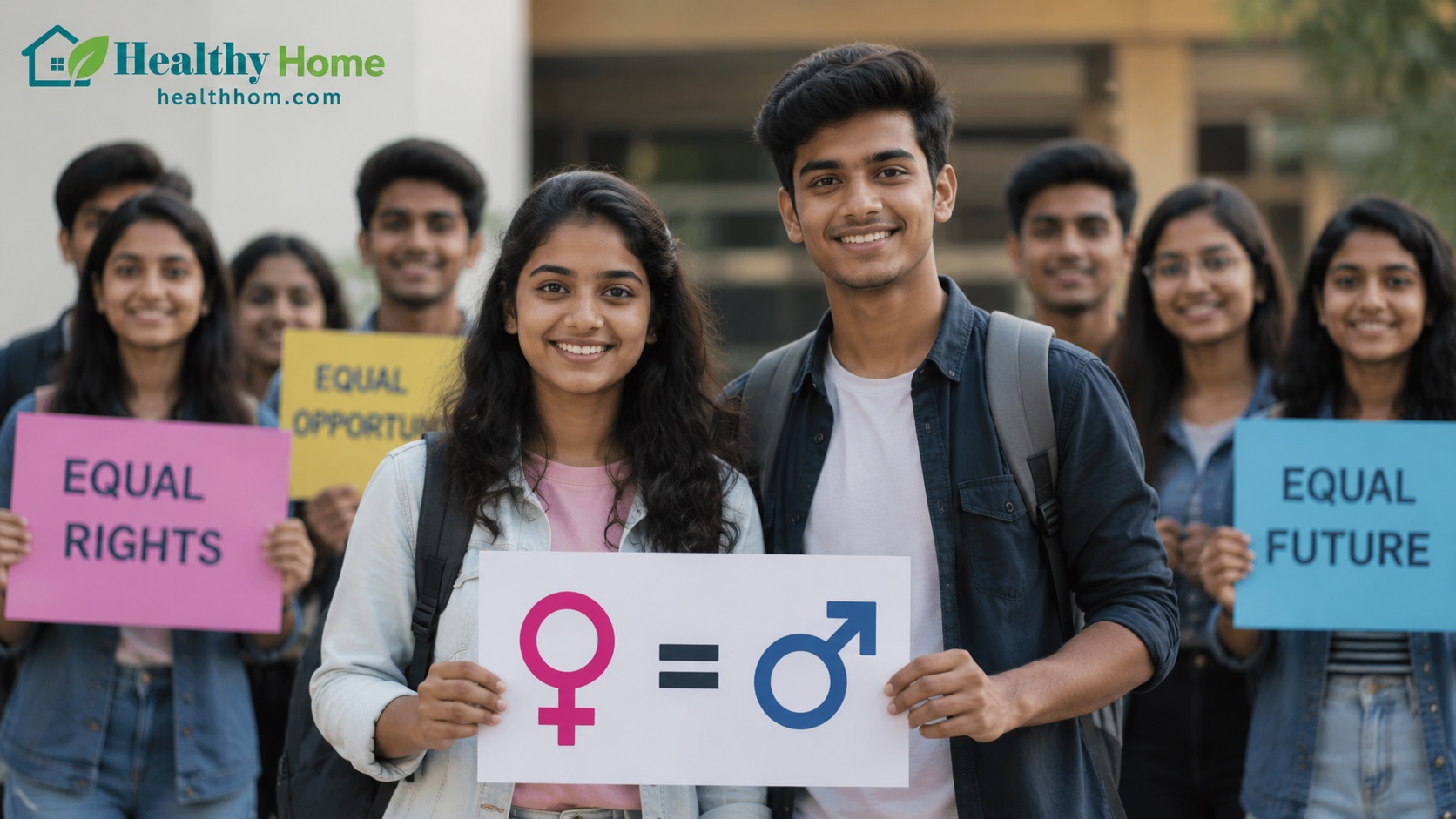
Last Updated on June 13, 2026 by Bibhu Ranjan Mund, MPH
Gender equality issues in adolescents explained with causes, real-life examples & solutions. Learn how inequality affects teens and how to fix it.
Reviewed by Bibhu Ranjan Mund, MPH (Public Health Expert) with experience in maternal, infant, child, and adolescent health programs. Content is based on evidence-informed guidelines aligned with organizations such as the World Health Organization, UNICEF, Centers for Disease Control and Prevention, and National Institutes of Health.
Medical Disclaimer: This content is for informational and educational purposes only and is not intended as medical advice, diagnosis, or treatment. Always seek the advice of a qualified healthcare professional regarding any medical condition or concerns.
Introduction:
According to the publication of UNESCO (2023), about 129 millions of girls globally are still out of school and so many boys are facing pressure to hide their emotions & conform to rigid roles.
The Gender inequality issues doesn’t begin at adulthood, rather it starts from the teenage years. The important concern is how to incorporate these gender biases for the teenager’s future, mental health and other opportunities?
Gender inequality are affecting the adolescents like unequal education, silent emotional struggles, harmful stereotypes, early marriages etc. and even they may be overlooked by the society.
In this article, you will find-out the real Gender Equality Issues in adolescents with practical examples and solutions that the families, schools and society can be able to apply.
What are gender equality issues in adolescents?
Gender equality issues in adolescents means the unequal access to education, opportunities, rights and social participation based on gender, sometimes influenced by many stereotypes, cultural norms and discrimination.
Gender equality plays a crucial role in emotional health, learn more about mental well-being in adolescents and how social factors influence it.
Global Gender Equality Indicators
| Indicator | Global Insight | Source |
|---|---|---|
| Girls out of school worldwide | About 129 million girls are out of school | UNESCO Global Education Monitoring Report 2023 |
| Women in global workforce | Around 47% participation compared to 72% for men | World Bank |
| Countries with laws addressing domestic violence | Over 140 countries | UN Women Gender Equality Report 2022 |
| Adolescents experiencing gender-based violence | Significant concern globally | WHO Violence Prevention Report 2023 |
Quick Summary
- The adolescent gender equality has effects on education, mental health and social development.
- Disparity in gender roles enhances stereotypes and risk of violence.
- The policies, schools, families and media contribute to equality.
- Education at a tender age generates respectful, inclusive societies.
Equal opportunities also contribute to overall development, explore how a healthy lifestyle in adolescents supports physical and mental well-being.
Quick Facts Table
| Key Fact | Insight |
|---|---|
| Gender attitudes develop early | Adolescence shapes long-term beliefs |
| Education promotes equality | Inclusive education reduces stereotypes |
| Shared responsibilities improve relationships | Cooperation strengthens families |
Source: UNICEF Adolescent Development Report 2023
Social inequalities can increase long-term health risks, understand more about non-communicable diseases in adolescents and their prevention.
Discussions on Gender & Sex:
Sex is defined as biological identity like chromosomes and reproductive anatomy which are normally assigned at birth. Gender is however a socially and culturally constructed concept, which is associated with the manner in which human beings define themselves and take their roles, behaviors and identities in society.
The gender identity can be formed and changed in the course of time and may differ in different cultures, societies, historical periods. This difference is important to make adolescents develop respect, empathy, and inclusivity towards individuals of any gender identity.
The topics addressed in the next section are relevant for understanding gender and sex.
- What are the symptoms of different gender roles in our everyday schedule?
- Are gender stereotypes changeable subsequently? If yes, what are few gender stereotypes that you may like to change
- Should transgender individuals be entitled to equal rights?
Understanding identity and acceptance is essential, learn about emotional development in adolescents.
Comparison Table: Sex vs Gender
| Aspect | Sex | Gender |
|---|---|---|
| Definition | Biological characteristics | Social and cultural roles |
| Determination | Assigned at birth | Shaped by society and culture |
| Examples | Male, female biological traits | Gender roles, identities and expectations |
| Variability | Mostly biological | Varies across cultures and time |
Source: WHO Gender and Health Framework 2022
Key Concepts
- Sex is determined biologically whereas gender is determined by social, cultural and personal experience.
- The way of expressing gender can vary in people and societies.
- Gender diversity is important in that it fosters wellbeing and social harmony in adolescents.
Key Concepts of Gender Diversity
| Concept | Explanation |
|---|---|
| Gender identity | Personal sense of one’s gender |
| Gender expression | How a person presents gender externally |
| Gender roles | Social expectations based on gender |
| Gender equality | Equal rights and opportunities |
Source: UNICEF Adolescent Development Toolkit 2021

What is gender equality?
As discussed earlier, gender equality ensures equal rights and opportunities for all genders.
Gender equality refers to providing equality in rights, duties and opportunities to girls and boys as well as to those of all gender identities. It fosters equality in education, health, working and social participation, not on the basis of gender.
Equal opportunities at the adolescent stage enable youth to become confident, acquire skills and be independent, not to mention mutual respect and cooperation.
Gender Equality vs Gender Inequality
| Dimension | Gender Equality | Gender Inequality |
|---|---|---|
| Education | Equal access to schooling | Unequal educational opportunities |
| Employment | Equal job opportunities | Wage gaps and limited leadership roles |
| Social participation | Equal voice in decisions | Restricted participation |
| Rights | Equal legal rights | Discriminatory laws |
Source: UNDP Gender Equality Overview 2022
Equal opportunities support holistic growth, learn more about adolescent growth and development.

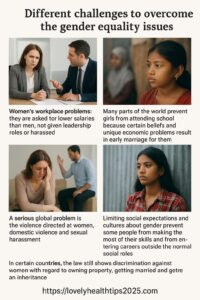
Different challenges to overcome the gender equality issues:
- Women’s workplace problems: they are asked for lower salaries than men, not given leadership roles or harassed.
- Many parts of the world prevent girls from attending school because certain beliefs and unique economic problems result in early marriage for them.
- A serious global problem is the violence directed at women, domestic violence and sexual harassment.
- Limiting social expectations and cultures about gender prevent some people from making the most of their skills and from entering careers outside the normal social roles.
- In certain countries, the law still shows discrimination against women with regard to owning property, getting married and getting an inheritance.
Many of these challenges relate to safety risks, explore adolescent safety and protection from violence and injuries.
Common Gender Equality Challenges in Adolescence
| Challenge | Example Situation |
|---|---|
| Education inequality | Girls leaving school early |
| Economic barriers | Limited job opportunities |
| Gender stereotypes | Restrictive social expectations |
| Gender-based violence | Harassment or abuse |
| Legal inequalities | Restrictions in rights or property ownership |
Gender based violence & Adolescents:
Gender-based violence is the action that creates harm to people due to their gender. These may impact adversely on the physical health, emotional wellbeing and academic performance of adolescents. Gender-based violence can be prevented by being aware, educated and having access to support systems.
The adolescents must feel free to consult the help of adults they trust or teachers and relatives or the relevant authorities. Practicing dignity, respect and equality aids in establishing safer surroundings to all.
Effects of Gender Inequality on Adolescents
| Area | Possible Impact |
|---|---|
| Education | Reduced access to schooling |
| Emotional well-being | Increased stress and insecurity |
| Social participation | Limited community involvement |
| Economic opportunity | Fewer employment prospects |
Source: WHO Gender Equality and Health Report 2022
Digital platforms can also contribute to harassment, learn about online safety for adolescents and cyber protection strategies.

Distribute the roles below to each gender:
Cooking, cleaning, education, caregiving and leisure activities are household and social duties that are usually divided according to the traditional gender division. Nevertheless, every person, no matter their gender, can do these tasks when given an equal opportunity.
The encouragement of shared responsibilities both at home and in society makes the reduction of the stereotypes easier, as well as enhancing fairness, cooperation and mutual respect.
Examples of Gender Stereotypes in Daily Life
| Stereotype Example | More Inclusive Perspective |
|---|---|
| Household chores mainly for girls | Shared responsibilities |
| Leadership roles mainly for boys | Equal leadership opportunities |
| Emotional expression discouraged for boys | Emotional expression encouraged for all |
| Certain careers linked to one gender | Careers open to everyone |
Source: UNESCO Gender Equality Education Report 2022
Breaking stereotypes also supports positive habits, read about healthy behavior development in adolescents.
In this situation, we can review how work is distributed among individuals considering various gender equality problems.
- Is the distribution equal? Who has to do more housework? Who has more leisure time? Distribution is acceptable or not? Why or why not?
- Do men, in general, do fewer household activities than women?
- In what respects is social discrimination against girls and women connected to gender roles?
- In front of our home, are women or men responsible for this work (what I described)?
- Making food in dhabas, hotels or in TV cooking shows
- Taking your clothes to a dry cleaning business
- Most of the men do not apply these antics to their own domestic life.
Comparison Table: Traditional vs Equal Role Distribution
| Household Task | Traditional View | Equal Responsibility Approach |
|---|---|---|
| Cooking | Mostly women | Shared by family members |
| Childcare | Mostly mothers | Shared parenting |
| Income earning | Mostly men | Equal opportunity |
| Household decisions | Male dominated | Joint decision-making |
Source: UN Women Household Equality Report 2021

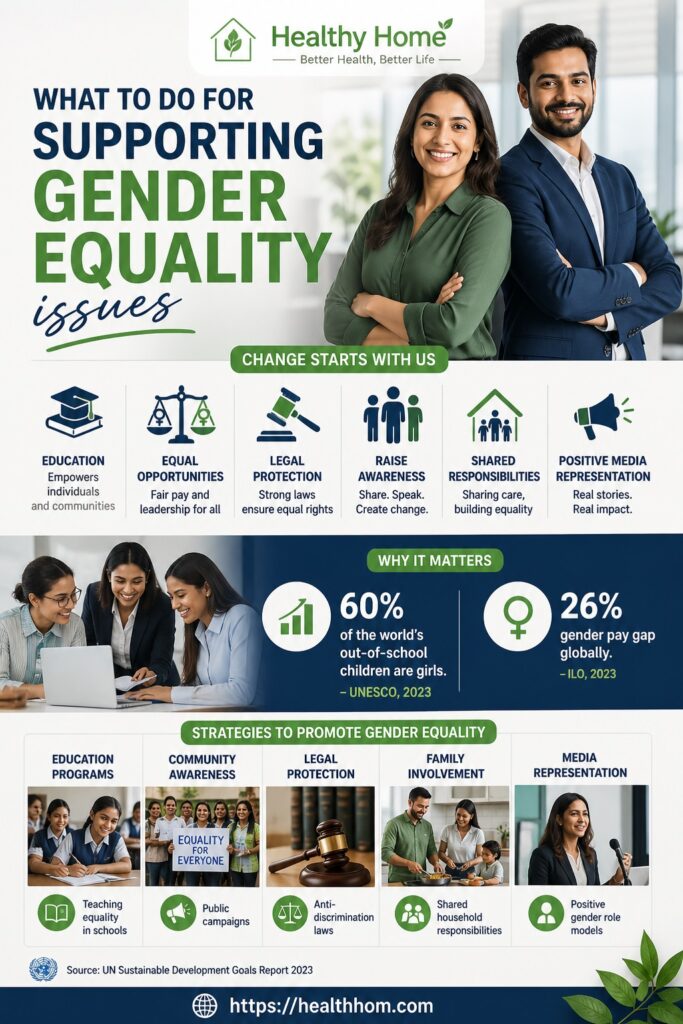
What to do for supporting Gender Equality issues :
It requires change at the individual and common level:
- Having an education ensures individuals and groups get better at what they do.
- Reducing the pay difference between men and women at work and making opportunities available to everyone.
- Legal matters to be solved based on reliable & accurate sources & law should be implemented in this regard.
- Sharing information about social problems can help many governments to tackle the deep gender bias that exists in their cultures.
- We may encourage the sharing & distribution of household activities and childcare may deconstruct gender stereotypes in our society.
Strategies to Promote Gender Equality
| Strategy | Example Action |
|---|---|
| Education programs | Teaching equality in schools |
| Community awareness | Public campaigns |
| Legal protection | Anti-discrimination laws |
| Family involvement | Shared household responsibilities |
| Media representation | Positive gender role models |
Source: UN Sustainable Development Goals Report 2023
Supportive environments also reduce risky behaviors—learn about substance abuse prevention in adolescents.
Essential point about Gender Equality Issues:
Gender equality does not work only on the problem of women but on the family, community and the entire society. Gender inequality in adolescence is an issue that is beneficial to address in order to promote healthy development, emotional stability, and stability.
In cases where adolescents are raised in settings that appreciate equality and respect, they tend to positively influence the society and help in the inclusive and sustainable development.
Role of Families, Schools and Society
| Stakeholder | Role in Promoting Gender Equality |
|---|---|
| Parents | Encourage equal opportunities at home |
| Schools | Promote inclusive education |
| Media | Challenge stereotypes |
| Communities | Support respectful relationships |
| Governments | Implement equality policies |
Source: UNICEF Gender Equality Action Plan 2022
Inclusive environments help build emotional resilience in adolescents and promote long-term well-being.
Key Takeaways:
Gender equality issues in adolescence is not only a social topic, but it starts from home. It directly impacts the mental health, education and future opportunities of each and every adolescents.
As per the report published in WHO and UNICEF (2023), they show that early exposure to inequality means the higher the risk of violence, stress and limited life choices.
But, the important point is that if you start with small step, the change can be seen gradually in the society.
It is the responsibility of each and every individual including schools and communities to allow an adolescent to grow with more confident, respectful and independent by giving proper inclusive education.
Your goal shouldn’t focus on early perfection, but changing a small one at at time can be a biggest impact.
Creating equality today means building a healthier, safer, and more balanced society for tomorrow.
- Gender equality promotes mental health and educational achievements.
- Adolescence is the time that is very important in the formation of attitudes.
- The role of families, schools and media is very crucial.
- Avoidance of stereotypes leads to the minimization of violence and discrimination.

This short video explains gender equality concepts in a simple and youth-friendly way : https://www.youtube.com/embed/SqFdiaGGAMA?si=noFiv1BhKNcZVUiL
Visual learning tools like videos help adolescents for better understand equality and respectful behavior.
This article reflects public health field experience in adolescent health promotion programs aligned with WHO and UNICEF guidelines.
Internal link from previous blog on NCD – Non Communicable Disease in Adolescent with its protection
FAQs:
1. What is gender equality among teenagers?
It is equal rights, opportunities and respect of all the genders in adolescents; that is, all teenagers should be offered equality in their rights, opportunities and respect in the teens, irrespective of the social and cultural norms.
2. What is the significance of gender equality at adolescence stage?
Formation of beliefs and behaviors occurs during adolescence. Fostering gender equality at an early age encourages mental health, self-esteem, as well as proper social interactions.
3. What are some of the prevalent problems in gender equality among adolescents?
Typical problems are the lack of equal education opportunities, gender stereotypes, social coercion, discrimination and a high probability of gender-based violence.
4. What are the impacts of gender stereotypes on teenagers?
Gender stereotypes restrain self-expression, career choices and have adverse effects on emotional health and self-esteem among adolescents.
5. What are the effects of gender inequality on teenage girls?
Gender inequity may be the cause of School dropouts, early marriages, less career options and more prone to physical and health hazards.
6. What are the effects of gender inequality among adolescent boys?
The teenage boys can be under pressure to match dangerous masculinity standards, repress their feelings and not seek mental health care.
7. What is the role played by schools in enhancing gender equality?
Gender equality can be achieved in schools in the form of inclusive curricula, elimination of bullying, facilitation of equal participation, and provision of a safe environment to discuss matters.
8. What can parents do to embrace gender equality in the family?
Parents are able to promote shared responsibilities, challenge stereotypes, attach importance to the interests of their children and demonstrate respectful behavior.
Related Health Articles from Healthy Home
- Social Media Addiction in Adolescents: Causes, Effects & Prevention
https://healthhom.com/social-media-addiction/ - Mindfulness Techniques for ADHD Management in Children and Adolescents
https://healthhom.com/mindfulness-and-adhd/ - How to Minimize the Risk of Worm Infestation: Causes, Symptoms & Prevention
https://healthhom.com/how-to-minimize-the-risk-of-worm-infestation/ - Impact of Anaemia in Adolescents: Long-Term Health Risks of Malnutrition
https://healthhom.com/impact-of-anaemia-in-adolescents-long-term-risks-of-malnutrition/ - Nurturing Mental Well-being in Adolescents: Causes, Risks & Prevention (healthhom.com)
Trusted References and Research Sources:
- Achieving Gender Equality Requires Placing Adolescents at the Center – PMC (nih.gov)
- Guide: Adolescents and gender equality | UNICEF Adolescent Kit for Expression and Innovation
- Adolescent girls at the fore: UNICEF’s Gender Action Plan – PMC (nih.gov)
- Gender equality and education | UNESCO
- Adolescent girls at the fore: UNICEF’s Gender Action Plan – The Lancet Child & Adolescent Health
- Fast Facts: Youth and Gender Equality | United Nations Development Programme (undp.org)
- Gender inequality in early adolescence must be addressed for health and well-being throughout life (who.int)
This article was last updated to reflect current adolescent health and gender equity guidelines.


About the Author – “Bibhu Ranjan Mund”, Master in Public Health (MPH) from IIHMR University, Jaipur (Rajasthan) has more than 18 years of experience in Public Health activities in maternal health, child health, adolescent health, nutrition and community wellness programs under National Health Mission, Health & Family Welfare Department, Odisha. He is the founder of “Healthy Home” and translates the evidence based public health information into a practical source so that families may able to apply in everyday life. All the information are for educational purposes only and not replaces the professional medical advice. ORCID Researcher ID – 0009-0003-0158-4992. Connect LinkedIn – https://www.linkedin.com/in/bibhu-ranjan-mund-b72171358/