
Last Updated on June 15, 2026 by Bibhu Ranjan Mund, MPH
Learn 20 evidence-based obesity prevention habits including diet, exercise, sleep, stress management and age-wise strategies. A complete 2026 guide reviewed by a Public Health expert.
Reviewed by Bibhu Ranjan Mund, MPH (Public Health Expert) with experience in maternal, infant, child, and adolescent health programs. Content is based on evidence-informed guidelines aligned with organizations such as the World Health Organization, UNICEF, Centers for Disease Control and Prevention, and National Institutes of Health.
Medical Disclaimer: This content is for informational and educational purposes only and is not intended as medical advice, diagnosis, or treatment. Always seek the advice of a qualified healthcare professional regarding any medical condition or concerns.
Introduction on Obesity prevention:
Obesity doesn’t appear suddenly, but it actually builds silently due to small daily irregular habits.
A Common Story I Have Seen in Public Health Practice:
During my community health program, I have met with many parents who had expressed their worry about the rapid weight gain by their child even with normal food habit.
In the present Indian families, many parents are full time job holders. So that their breakfast is either skipped or in hurried, children are in a habit of mobile games instead of outdoor play, late-night dinner simultaneously watching TV.
The effects are not noticed by anyone at first.
But, after several years, these small habits can gradually affect health. The parents initially thought it was just a phase. However, they later noticed that their son started avoiding the sports day activities as he became tired quickly and felt uncomfortable participating with friends.
For, only a single cause is not responsible. The weight gain is a result of multiple day-to-day irregular routines which gradually affects.
Many Indian families experience similar situations. Obesity may not develop overnight, but it grows steadily by repeated daily habits which seems harmless in the beginning.
In our modern society, maximum people are involved in the lifestyle like late-night snacks, not doing any daily workout, mental stress, sitting in office or at a place till long hour. These are the major causes of weight gain and becomes not easy to reverse.
As per the report of World Health Organization (2024), above 1 billion people globally are living with obesity. This number is increasing day-by-day among children, adolescents including adults. Also the study of PubMed Central (2023) says that once obesity develops, it is a further risk of metabolic and hormonal changes which make weight loss significantly harder.
But, the most important & good thing is that, obesity may be prevented.
It does not require any heavy dieting or fitness trends, but it is possible through a simple & sustainable lifestyle habits with consistent practice everyday.
This article discusses 20 evidence based habits suggested by global study with real public health experience. Also it covers diet, physical activity, sleep, stress and daily routines.
These strategies are designed to fit into the real life schedule of every people, it doesn’t matter whether you are a parent, student, teacher or any working professional.
Preventing the obesity is not a perfection, but it’s about the making of better choices consistently even a single habit at a time.
Obesity is closely linked with other conditions, making prevention of lifestyle diseases essential for overall long-term health.
Global Obesity Overview
| Indicator | Estimated Figures | Source |
|---|---|---|
| Adults overweight globally | ~2.5 billion | WHO Global Health Observatory 2024 |
| Adults living with obesity | ~890 million | WHO 2024 |
| Children under 5 overweight | ~35 million | WHO 2024 |
| Children & adolescents overweight (5–19 yrs) | ~390 million | WHO 2024 |
| Estimated economic burden by 2035 | $4.32 trillion | World Obesity Federation 2023 |
Source: WHO Global Health Observatory (2024)
What I Notice From These Research Findings:
As a public health profession, I have observed an important pattern throughout the obesity studies. Individuals who actually maintain a healthy routine regularly, have a long-term health outcomes than who only follow strict diets & left early.
All the research always remind that, sustainable habits matter a lot than a temporary encouragement.
Which Is the most effective Prevention of Obesity?
Obesity can be prevented by the initiation of a balanced diet that is mixed with whole foods, physical activity, sleep, stress management, screen time and preparing a regular daily routine. Short-term dieting is not much effective compared to daily small sustainable habits.
Summary: 5 Core Obesity Prevention Habits
- Eat whole foods
- Move daily
- Sleep 7–9 hours
- Reduce screen time
- Manage stress
Global Obesity Statistics (2024–2025 Update)
- 2.5 billion adults overweight (2022) including 890 million obese i.e. ~16 % obesity prevalence.
- 35 million children under 5 overweight (2024).
- 390 million children/adolescents (5–19) overweight, including 160 million obese.
- 188 million school-aged children obese globally i.e obesity now exceeds underweight.
- $4.32 trillion estimated global economic burden by the year ending 2035.
What These Numbers Actually Mean:
The above statistics may feel surprising, but these actually implies the real situation.
So, its clear that if obesity rates increases, the public healthcare systems see the higher rates of diabetes, hypertension, fatty liver, joint problems and also some mental health conditions.
Public health experts highlights that the above global figures suggests to take early lifestyle intervention strategies rather waiting to the disease.
Even a small and consistent preventive action if you start today, may reduce the further health risk.
1. Learning about Obesity : A lifestyle disease.
It is important to understand what obesity truly means & it’s prevention strategies.
1.A. What is Obesity?
When the body accumulates the excess fats due to imbalanced calorie intake in comparison to energy spending, it is termed as Obesity. In addition to look of body, it is also associated with :
- Type 2 diabetes
- High blood pressure
- Heart disease
- Hormonal imbalance
- Sleep issues
- Joint problems
- Poor mental health
The majority of obesity cases may be prevented by practicing the timely and regular lifestyle changes.
It is also a condition of abnormal body fat that impacts on health. It is generally measured in terms of Body Mass Index (BMI) through waist circumference.
- Overweight – BMI 25–29.9
- Obesity – BMI ≥ 30
- The central (Abdominal) Obesity-Extra fat around belly.
These figures can be used to categorize obesity, but its causes and dangers are more complicated.
Understanding your body metrics through tools like Cholesterol, BMI & BMR helps to assess the obesity risk early.
Obesity Is Not Always Obvious:
Many people think that obesity means the visible weight gain.
But, I have observed that many adults whose weight appears normal, but may carry excess abnormal fat due to less physical activity, poor sleep, stress.
In case of children, they may seem healthy as grow taller, but gradually their waist size increases and stamina reduces may be the warning signs.
So, obesity sometimes develops silently without any major health problems appear.
Hence, it is highly essential to monitor the regular weight & waist circumference including improving the sleep habits & doing physical activity.
1.B. Why Obesity is increasing?
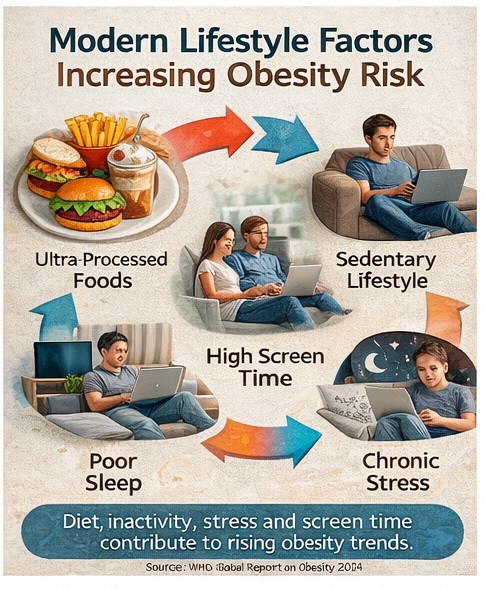
The modern society has been transformed dramatically within the past few decades:
- The most convenience foods contain large amounts of sugar, fat and salt.
- Machines, gadgets and transport have decreased the actual physical activity.
- The duration of screen time has grown excessively.
- Common problems are stress, lack of sleep and eating disorders.
- Portion sizes of food has increased.
Obesity is not only due to consumption of food in excess amounts, but also it is the unhealthy environment and sedentary lifestyle that promotes over eating and lacks physical activity.
Why Indian Families Are Facing Greater Obesity Risk Today:
Daily life schedule to most of the Indian houses have changed over the past decade.
Now-a-day, children are in a habit of playing with smartphones instead of playing cricket, football, cycling etc.
Due to Covid-19 pandemic, Work-from-Home culture has increased for which working adults are siting more often long hours.
Also one major changes in fast food delivery system, that actually increased high-calorie food within few minutes.
In India also, traditional meals are not prepared at home and gradually depended upon the packaged snacks, sugary drinks and fast foods.
Such lifestyle changes have created the suitable environment for weight gain even without eating much.
1.C. Prevention is better than treatment
- Prevention is always cheaper than treatment as this avoids expenses like medication and treatment costs (Taylor and Greene, 2015).
- When the obesity starts, it becomes not easy to lose weight because of the metabolic alteration, hormonal disorders and many behaviour patterns. Management of Obesity is less complicated and preventing the obesity is healthier.
A Public Health Observation:
I have observed that people are generally focus on weight loss activities only after a major weight gain.
They are not much conscious about the prevention techniques rather relying on costly treatment.
But, the families who actually maintain the regular Indian traditional meal schedule, performing outdoor activity, quality sleep timely may not experience severe weight related problems.
So, prevention may seem not effective quickly, but it is sometimes most effective one than expensive long-term weight-loss strategy.
1. D. Strategies of Obesity Prevention in Diet.
Weight management is based on healthy nutrition. Minor everyday changes can produce the long-term outcomes.
- Eat Whole, Natural Foods
- Daily meals should have fruits, vegetables, whole grains, millets, nuts and seeds as well as lean protein.
- The plate should be of different colors to be varied and filled for more attraction
- Eat Less Sugary and Ultra-Processed Food.
- Sugar-related products cause quick increase of blood sugar levels and cravings with much weight gain.
- Limit:
- Sugary drinks
- Packaged snacks
- Bakery items
- Processed meats
- Balance Portion Sizes
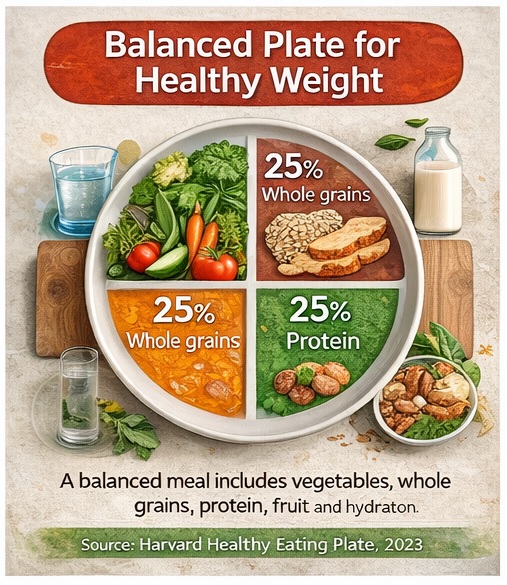
- Use the plate method
- ½ plate vegetables
- ¼ plate whole grains
- ¼ plate protein
Following a balanced daily meal plan is one of the most effective ways to maintain healthy weight and prevent obesity long-term.
It may be noted that, for many of the India houses, obesity prevention may not require the costly healthy foods to be purchased from outside.
The evergreen traditional meals like dal, green leafy vegetables, millets, curd, seasonal and locally available fruits, minimum quantity of rice may support the healthy weight management if it combines with daily some physical actity.
Risk Factors vs Protective Habits:
| Risk Factor | Protective Habit |
|---|---|
| Sugary drinks | Water & herbal tea |
| Sedentary work | 30-min walk |
| Late-night eating | Early light dinner |
| Screen snacking | Mindful eating |
2. Lifestyle Habits and Obesity Prevention.
These are well-known lifestyle habits effective in preventing obesity in all ages.
2.A. Preparing a healthy and nutritious meal.
- Eating a well-balanced and nutrient diet is important as it helps to obtain the nutrients required to enhance the efficiency of his or her body.
- The most significant obesity preventive pillar is diet. Rather than limiting diets and temporary ones, we need to focus on nutritious, regular and pleasant food choices.
2.B. Prioritize the Whole & Unprocessed Foods:
This means that the whole community should pay more emphasis on whole, unprocessed foods in their dietary choice.
Food may be included as natural as possible like:
- Fruits
- Vegetables
- Whole wheat and grains
- Low fat foods (legumes, eggs, fish, chicken)
- Nuts and seeds
- Dairy or dairy alternatives
These foods contain high levels of fibre, vitamins and minerals and antioxidants. They give satisfaction, hinder hunger and aid metabolism.
2.C. Restriction of the Processed and Ultra-Processed Food:
Avoid processed foods with high additives, especially foods that contain high carbohydrates and low proteins.
These include:
- Packaged snacks
- Sugary drinks
- Fast food
- Bakery items
- Flavoured cereals
- Frozen ready-made meals
They are full of calories, fats that are unhealthy, sugar and salt- resulting in rapid weight gain.

2.D. Increase Fibre Intake
Fibre makes one stay full, enhances digestion and controls blood sugar.
Good sources:
- Beans and lentils
- Vegetables
- Fruits
- Whole grains
Aim for 25–35 grams of fibre daily.

2.E. Eat Mindfully
Mindful eating helps to avoid excessive dining, it enhances the quality of the food consumed:
- Chew slowly
- Do not eat in front of TV or Mobile
- Separate the need of hunger and emotion.
- Eat till full not till you are stuffed.
Practicing mindful eating for kids helps to build lifelong habits that reduce overeating and obesity risk.

2.F. Control Quantity
Big quantities are subjected to overeating. Food weight reduction can be done by:
- Eating food in bowls instead of eating from the packets.
- Sharing a big meal into a smaller one and more frequently to be taken.
- Check the food labels of serving sizes.
2.G. Stay Hydrated
Thirst is mostly confused with hunger by many people. Drinking adequate water:
- Decreases the snacks you take frequently which are unnecessary.
- Improves metabolism
- Helps digestion
Adults should drink approximately 8–10 glasses of water daily.
A consistent hydration routine for better health helps to control appetite, improve metabolism, and reduce unnecessary snacking.

2.H. Balance Macros Wisely
The Healthy plate should consist of:
- 50% vegetables
- 25% whole grains
- 25% protein
- Low contents of added fats and sugars.
This helps in maintaining the balance of energy and control of weight.
2.I. Regular Physical Activity
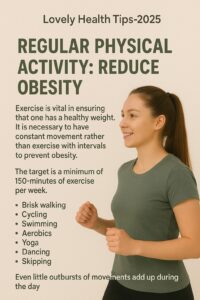
Exercise is vital for ensuring a healthy weight. It is necessary to have constant movement rather than exercise with intervals to prevent obesity.
The target is a minimum of 150-minutes of exercise per week.
This can be a combination of:
- Brisk walking
- Cycling
- Swimming
- Aerobics
- Yoga
- Dancing
- Skipping
Even little outbursts of movements add up during the day.
2. J. Include Strength Training
Strength-based exercises will develop muscle and increase metabolism, which will help to burn up more calories even when resting.
Examples:
- Exercises for the body weight like push-ups, squats etc.
- Resistance bands
- Dumbbells
- Pilates
Strength training 2-3 days in a week is more effective in preventing obesity as compared to cardio.
2. K. Reduce Sedentary Time
The long sitting hours have a close relationship with weight gain. Sedentary time is a factor that one should reduce as a part of being healthy and well. This is because prolonged sitting may lead to changes in posture, reduced energy levels and pre-disposition to lifestyle related conditions. The body should stay active by maintaining the short activity breaks in the day for proper circulation, flexibility and alertness of the mind.
To minimize sedentary behavior:
- Have short breaks after every 30 minutes.
- Stand during phone calls
- Stairs should be used instead of elevators.
- Use short walks rather than use a vehicle.
- Have a standing or an ergonomic desk.

2. L. Outdoor activities should be promoted, especially among children.
Outing is pleasant & efficient like:
- Hiking
- Gardening
- Sports
- Jogging in parks
They lessen the tension and enhance mobility.
2.M. Physical activity of children is encouraged.
The children require at least 60 minutes of moderate-vigorous physical exercises per day. Active children develop into healthy adults.
Risk Reduction Impact of Lifestyle Changes:
| Habit | Potential Benefit |
|---|---|
| Regular Exercise | Reduces weight gain risk |
| 7–9 hrs Sleep | Regulates hunger hormones |
| Reduced Sugary Drinks | Lowers excess calorie intake |
| Fiber-Rich Diet | Improves satiety |
| Strength Training | Increases metabolism |
3. Healthy Sleep Habits
One of the least known factors of obesity is poor sleep. Good quality sleep promotes memory and concentration, immunity and an overall energy level. It is possible to improve the quality of sleep by creating a regular sleeping schedule, ensuring the sleeping environment is conducive with no distractions and no screen time before sleep.
Other basic habits like, not eating heavy food at a late time in the night and engaging in a health work or play in the day time may also aid in better sleep. The habits should be practiced regularly to encourage more healthy sleeping patterns and contribute to long-term wellness.
Following a structured healthy sleep guide can regulate hunger hormones and significantly reduce obesity risk.
A Habit Many Families Not Taking Seriously:
In today’s busy schedule, I have seen that most of the children and adults are sleeping one or two hours less time of actual need.
Now, parents are giving importance of nutritious food, but overlook the benefit of quality sleep.
Due to poor sleep, it may leads to increase hunger, irritation, fatigue so that the healthy choice for the next may be difficult to maintain.
Many people may notice that once if they sleep for 7–9 hours regularly, late-night dinner and unnecessary snacks in the evening hour decrease naturally within a few months.
3.A. Why Sleep Matters?
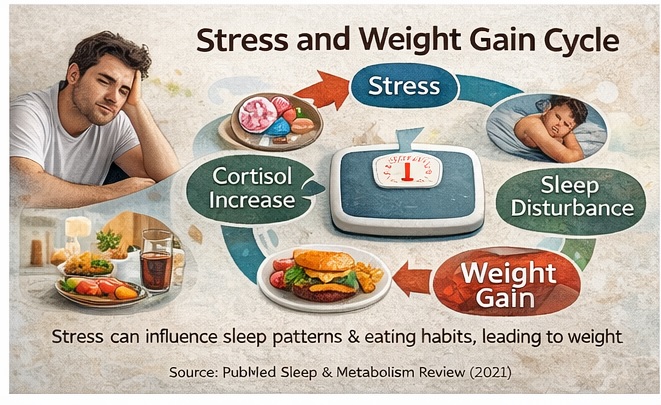
Lack of sleep causes:
- Increased hunger
- Decreased self-control over the consumption of sweetened foods.
- Slower metabolism
- Hormonal imbalance
- Tiredness decreasing physical exercise.
3.B. Optimal Sleep Duration
- Adults: 7–9 hours
- Teenagers: 8–10 hours
- Children: 9-12 hours: this is related to the age.

3.C. Improve Sleep Quality
- Have regular sleeping routines.
- No screen time before 01 hour of going to bed
- Limit the consumption of caffeine in the latter part of the day.
- Have a dark cool and silent sleeping environment.
- Don’t take heavy meals just before going to sleep.
It is an easy to use, effective prevention of obesity tool, good sleep.

3.D. Reducing the Stress and also Emotional Well-Being.
Demonstration of the practical use of this strategy.
Stress has a close relationship with obesity because of behavioural and hormonal alterations.
3.E. How Stress Causes Weight Gain
- Stress hormone
- Increases appetite
- Promotes belly fat storage
- Leads to emotional eating
- Lowers the desire to exercise.
3.F. Dealing & cope with stress.
- Yoga and meditation
- Breathing exercises
- Nature walks
- Music and hobbies
- Talking with friends/family

3.G. Avoid Emotional Eating
As an alternative to the emotional coping strategy of eating, it is possible to:
- Drink water
- Go for a walk
- Journal feelings
- Take slow deep breaths
Emotional resilience enhances the level of resilience against overeating.

3.H. Reducing Screen Time
Spending too much time on the screen is the cause of obesity because
- Reducing physical activity
- Mindless snacking.
- Affecting sleep
- Inappropriate advertisement of unhealthy food.
Reducing social media addiction and screen time control is crucial to prevent sedentary lifestyle and weight gain.

3.I. Recommended Screen Time
- Adults: No specific definition, but restrict the non-working screen time.
- Adolescents: less than 2 hours of recreation time on the screen.
- Children (5–12 years): 1–2 hours
- Below 5: Little screen exposure.
3. J. Practical Strategies
- No screens during meals
- Scheduled screen breaks
- Participate in physical, outdoor activities.
- Keep gadgets away from bed
3. K. Family Health & Social Environment
Family habits have an enormous impact on lifestyle diseases.
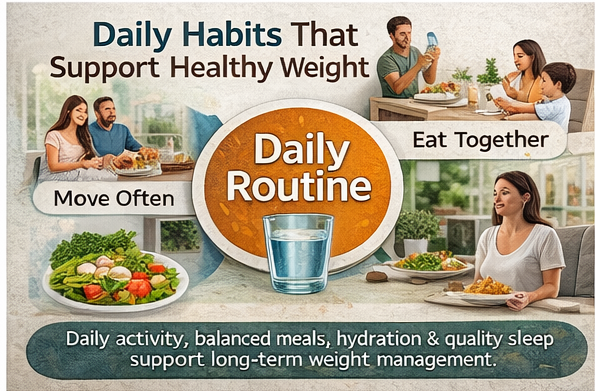
3. K. 1. Eat Together as a Family
- Healthier eating habits
- Better portion control
- Decreased intake of fast foods.
Adopting a healthy nutrition guide for families encourages better eating habits and prevents obesity across all age groups.
A Real Life Example of two families of “A” and “B” from Odisha:
The family members of “A” in a habit to eat dinner together without any TV or screens.
The family members of “B” sit separately during meal time watching TV and mobiles.
Subsequently, the family of “A” have a daily healthy routines including better control of overeating and healthier food choices.
But, the family of “B” in a habit to eat quickly, consume more processed and packaged foods including overeating.
The small difference may not feel quickly, but in long time it may influence the weight management.
3.K.2. Goals to have a healthy food environment at home.
Keep stock at home:
- Fruits
- Nuts
- Whole grains
- Healthy snacks
Restrict access to junk foods, which are not so appealing.
3.K.3. Model Healthy Behaviors
Parents should make children a daily habit of:
- Eating nutritious foods
- Exercise regularly
- Do not eat in bed or before any screen.

3. L. Minimising the Sugary Drinks and Empty Calories.
The sugary beverages are one of the largest causes of obesity.
3. L.1. Drinks to Reduce or Avoid
- Soft drinks
- Energy drinks
- Flavoured juices
- Sugary tea/coffee
- Sports drinks
3. L.2. Healthier Alternatives
- Lemon water
- Coconut water
- Unsweetened tea
- Fresh fruit infused water
- Buttermilk
- Herbal teas
The replacement of a single sugary beverage every day can greatly decrease weight gain per year.

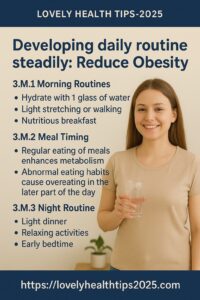
3. M. Developing daily routine steadily.
Consistency is more significant than intensity.
3.M.1 Morning Routines
- Hydrate with 1 glass of water
- Light stretching or walking
- Nutritious breakfast
3. M.2. Meal Timing
- Regular eating of meals enhances metabolism.
- Abnormal eating habits to be avoided
3. M. 3. Night Routine
- Light dinner
- Relaxing activities
- Early bedtime
3. N. Mindset and change of behavior
The right attitude is the starting point of healthy lifestyle.
3. N. 1. Set Realistic Goals
Rather than the fast loss of weight, concentrate on:
- Improving strength
- Feeling energetic
- Eating cleaner
- Reducing stress
3.N.2. Track Progress
Follow-up assists in keeping the awareness:
- Steps
- Sleep
- Water intake
- Meals
- Mood
3. N. 3. Celebrate Small Wins
Any good change is to be celebrated. Small success promotes motivation for higher one.
4. Different age groups – Obesity prevention
4.A. Children of school going
Obesity -an increasing issue among children who attend school.
- Promote sports and playing every day.
- Prepare balanced meals
- Limit junk food
- Eat as a family
- Reduce screen time
- Drink more water over soft drinks
Children who adopt healthy lifestyles at a young age are becoming a healthy adults.
What Parents Often Notice First:
Parents also sometimes inform me in the community that the first signs are not the weight gain. But they notice :
- Reduced interest in outdoor play
- Getting tired quickly
- Preference for screen based activities
- Frequent requests for packaged snacks
These early changes may appear for months or years before staring of obesity.
4.B. Adolescents
Reversal therapy can be used to reverse obesity in adolescents.
- Teach healthy body image
- Encourage balanced diet
- Encourage physical activities (dancing, sport) and yoga.
- Limit late-night screen use
- Social support and hobbies to act as stress coping mechanisms.
4.C. Preventing obesity among adults:
- Regular exercise routine
- Mindful eating
- Avoid emotional eating
- Adequate sleep
- Manage workplace stress
4.D. Obesity prevention in old-aged individuals.
- Non-intense aerobic (walking, yoga, bike riding).
- Protein-rich diet
- Adequate hydration
- Regular medical check-ups
- Maintain social activities
Early interventions highlighted in the child health and development guide play a key role in preventing childhood obesity.

5. Community level and Environmental Approaches.
The community is more effective in preventing obesity.
5.A. Schools
- Healthy lunch programs
- Daily physical activity
- Nutrition education
- Have junk food placed away around schools.
5.B. Workplaces
- Standing desks
- Wellness programs
- Healthy cafeteria options
- Walking meetings
5.C. Government Policies
- Awareness campaigns
- Food advertisement regulation.
- Providing physical activity spaces that are safe.
- Marketing the traditional and healthy foodstuffs.
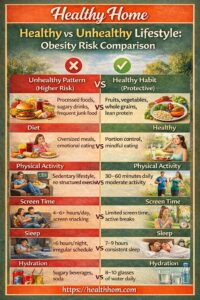
Healthy vs Unhealthy Lifestyle: Obesity Risk Comparison
| Lifestyle Factor | Unhealthy Pattern (Higher Risk) | Healthy Habit (Protective) |
|---|---|---|
| Diet | Processed foods, sugary drinks, frequent junk food | Fruits, vegetables, whole grains, lean protein |
| Portion Size | Oversized meals, emotional eating | Portion control, mindful eating |
| Physical Activity | Sedentary lifestyle, no structured exercise | 30–60 minutes daily moderate activity |
| Screen Time | 4–6+ hours/day, screen snacking | Limited screen time, active breaks |
| Sleep | <6 hours/night, irregular schedule | 7–9 hours consistent sleep |
| Stress Management | Emotional eating, chronic stress | Yoga, breathing exercises, walking |
| Hydration | Sugary beverages, soda | 8–10 glasses of water daily |
Simple techniques like sleep music for relaxation and stress relief can help to reduce emotional eating and improve mental balance.
Age-Wise Obesity Prevention Overview:
| Age Group | Main Risk | Activity Goal | Nutrition Focus | Sleep |
|---|---|---|---|---|
| Children (5–12 yrs) | Sugary snacks, screen time | 60 min daily play | Balanced meals, limit junk food | 9–11 hrs |
| Teens (13–18 yrs) | Fast food, late eating | 60 min daily exercise | Protein, fruits, whole grains | 8–10 hrs |
| Adults (19–59 yrs) | Sedentary lifestyle, stress | 150 min/week moderate activity | Portion control, high fiber | 7–9 hrs |
| Older Adults (60+) | Low metabolism, inactivity | Light activity + strength | Protein-rich, smaller meals | 7–8 hrs |

BMI Category vs Prevention Approach
| BMI Category | BMI Range (kg/m²) | Health Risk Level | Prevention / Management Approach |
|---|---|---|---|
| Underweight | < 18.5 | Nutritional deficiency risk | Balanced calorie-dense diet, strength training, medical evaluation if needed |
| Normal Weight | 18.5 – 24.9 | Low risk | Maintain balanced diet, 150 min/week activity, regular monitoring |
| Overweight | 25.0 – 29.9 | Moderate risk | Portion control, reduce sugary/processed foods, increase physical activity, lifestyle modification |
| Obesity (Class I) | 30.0 – 34.9 | High risk | Structured weight management plan, calorie control, exercise + behavioral therapy |
| Obesity (Class II & III) | ≥ 35.0 | Very high risk | Medical supervision, intensive lifestyle changes, possible clinical interventions |

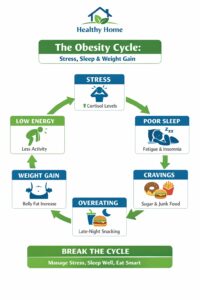
The Obesity Cycle: How Stress Leads to Weight Gain
Just overeating is not always the cause of obesity. It is often caused by a recurrent biological and behavioral cycle. This cycle can be broken through understanding.
Stress
↓
Increased Cortisol (Stress Hormone)
↓
Poor Sleep & Fatigue
↓
Increased Cravings (Sugar & Refined Carbs)
↓
Overeating & Late-Night Snacking
↓
Weight Gain (Especially Belly Fat)
↓
Low Energy & Reduced Physical Activity
↓
More Stress
↺ (Cycle Repeats)
Step-by-Step Breakdown
1. Stress
- Cortisol levels are elevated in case of chronic stress.
- Cortisol makes the body conserve its energy and also elevates appetite.
2. Poor Sleep
- Stress interferes with the quality of sleep.
- Sleep deprivation interferes with the state of hunger:
- Ghrelin (hunger hormone)
- Leptin (fullness hormone)
This enhances food cravings.
3. Cravings & Emotional Eating
Sleepless people have more cravings towards:
- Sugary foods
- Ultra-processed snacks
- High-fat comfort foods
The result is an over-consumption of calories.
4. Weight Gain
Too many calories and elevated levels of cortisol favor:
- Belly fat storage
- Insulin resistance
- Slower metabolism
5. Reduced Energy & Activity
The gain of weight leads to fatigue and lack of movements, which:
- Lowers calorie expenditure
- Increases stress
And the cycle continues.
How to Break the Obesity Cycle.
- Sleep 7 – 9 hours of quality sleep.
- Train stress management (yoga, breathing, walks in the nature)
- Avoid late-night snacking
- Minimize time in front of the screen before going to bed.
- Do physical exercises every day.
Simple habits can be broken even to stop this cycle.
What Usually Works Best in Real Life:
After knowing the research studies and observing the different community health programs, one common learning is that:
People rarely get success through extreme diets habits.
The people who maintain a healthy weight in long-term should:
- Walk consistently
- Sleep regularly
- Eat mostly home cooked meals
- Stay physically active throughout the day
- Make gradual improvements rather than dramatical changes
The sustainable habits of individual can consistently outperform the short-term motivation.
Common Mistakes That Make Obesity Prevention May Be Difficult:
Some habits which may make weight management difficult like:
- Skipping breakfast and overeating later
- Relying on weekend exercise only
- Drinking calories through sugary beverages
- Staying active for one week and stopping completely
- Using food to cope with stress
So, by avoiding the above common mistakes is an important option to adopt a healthy habits.
A Small Change That Made a Big Difference:
During a community awareness activity in Odisha, I had interacted with a family who were worry about increasing weight of their 12 year old son.
They followed just simple changes instead of a strict diet plan like:
- Family walks after dinner
- Reduced sugary drinks
- Fixed bedtime schedule
Within a few months, the child became more active, spent less time on screens and gradually developed his healthier eating habits.
The most important thing was that the family did not change everything at once and focused on only few realistic habits consistently.
Such type of sustainable obesity prevention strategies actually work in real life.
Early Warning Signs of Weight Gain
- Waist circumference increasing
- Frequent fatigue
- Reduced physical activity
- Poor sleep
- Breathlessness
Key Takeaways:
- Obesity prevention is based on consistent daily habits, not just short-term dieting
- A proper balanced diet included with whole foods helps to control weight naturally
- Regular physical activity (150 minutes/week) is recommended
- Sleep and stress management play a major role in weight control
- Reducing screen time helps to prevent sedentary behavior
- Small consistent changes are more effective than more efforts
Expert Insight by Bibhu Ranjan Mund, MPH:
I have worked in Public Health work since last two decades in maternal health, child health, adolescent wellness and community nutrition activities and observed that obesity rarely develops due to a single un-healthy behavior.
It actually occurs from a combination of small daily habits like less physical activity, irregular sleep pattern, long time screen, always processed food and emotional eating etc.
Also I have seen that many families who actually follow the simple daily routine like outdoor playing, proper sleep time, shared meals, traditional home cooked foods, have a better long-term health outcomes. Short-term weight loss solution are less working.
In my opinion, you should focus on prevention strategies before actual weight gain starts. So, health routines must be started from Childhood and adolescence period which may create the foundation of a long-term health.
Concluding Points :
Actual obesity prevention is not about a big decision, but it’s about following a small routine every day like:
* Choosing of water instead of many sugary drinks.
* Taking a short walk instead of sitting longer time in a place
* Sleeping in time instead of scrolling screen till late at night.
Individually, these above routine may feel like a small thins, but together they frame your health in a powerful way.
As per the research published by the World Obesity Federation (2023), it estimates that by the year ending 2035, obesity may cost the global economy to $4.32 trillion annually. This is a reminder for all that, it is not just a personal matter, but a fast growing global issue.
Till now, the solution is simple and within the reach.
You don’t need to have controlled diets or complicated daily routines, only you need the consistency.
Start with one daily habit:
- Improve your sleep
- Add daily movement
- Reduce sugary drinks
Slow & consistent will succeed in controlling the obesity.
As the prime goal is not just to control weight gain, it’s aim to create a healthy lifestyle that can support a long-term energy, confidence, and overall well-being.
In short, your future health can be built by what you do today.
FAQs:
1. Which lifestyle strategies will help prevent obesity?
The most appropriate habits are eating a healthy diet, exercising, limiting screen time and stress, sleeping well and controlling portions.
2. What role can diet play in avoiding obesity?
A healthy diet that is more in fruits and vegetables, whole grains, lean proteins and has low sugary and processed foods helps in the regulation of calories, and maintain healthy weight.
3. How much exercise is required to prevent obesity?
Minimum of 150 minutes of moderate exercise or 75 minutes of intensive exercise per week with daily body movement can be used to burn calories and sustain metabolism.
4. Will a decrease in screen time help to avoid obesity?
Yes. Sedentary behavior and overeating are the results of high screen time. Reduction in screen time promotes physical exercise and deliberate eating.
5. Does stress affect obesity?
Yes, stress in the long run raises the levels of hunger, emotional eating, and fat storage and in-turn affect obesity. Stress-relief activities such as yoga, deep breathing and walking can prevent weight gain.
6. What may be different effect of sleep on obesity?
Inadequate sleep interferes with hormones that actually regulate the appetite leading to craving and calorie consumption. Adults are expected to sleep at least 7-9 hours per day in order to keep their weight healthy.
7. What are the simple everyday practices that decrease the risk of obesity?
Consume enough water, avoid sweetened beverages, eat at a slow speed, keeping a journal, post-dining walk, consume less junk food and regular meal timing.
8. Is it possible to avoid obesity at home and naturally?
Yes. Obesity may be prevented effectively without medication by making healthy food choices, exercising, sleep, proper hydration and mindful eating.
Related Health Articles from Healthy Home :
- Know Your Cholesterol, BMI & BMR
Source: https://healthhom.com/how-to-know-your-cholesterol-level-bmi-bmr/ - Prevention of Lifestyle Diseases
Source: https://healthhom.com/prevention-of-lifestyle-diseases/ - Hydration Routine for Better Health
Source: https://healthhom.com/hydration-routine/ - Sleep Music for Relaxation & Stress Relief
Source: https://healthhom.com/sleep-music/ - Plan to Sleep Like a Baby (Healthy Sleep Guide)
Source: https://healthhom.com/plan-to-sleep-like-a-baby/
Trusted References and Research Sources:
- PubMed Central – Obesity and Lifestyle Factors
Source: https://pmc.ncbi.nlm.nih.gov/articles/PMC8313625/ - Harvard Nutrition Source – Preventing Obesity
Source: https://nutritionsource.hsph.harvard.edu/obesity/preventing-obesity/ - WHO – Everyday Actions for Better Health
Source: https://www.who.int/europe/news-room/fact-sheets/item/everyday-actions-for-better-health-who-recommendations - PubMed Central – Lifestyle Impact on Obesity (Research Study)
Source: https://pmc.ncbi.nlm.nih.gov/articles/PMC11843922/ - ScienceDirect – Global Factors Increasing Obesity
Source: https://www.sciencedirect.com/science/article/pii/S2589936825000313 - Cleveland Clinic – Weight Control & Obesity Overview
Source: https://my.clevelandclinic.org/health/diseases/11209-weight-control-and-obesity - American Heart Association – Obesity & Cardiovascular Risks
Source: https://www.ahajournals.org/doi/10.1161/circulationaha.108.189702 - Mayo Clinic – Obesity: Diagnosis & Treatment Guide
Source: https://www.mayoclinic.org/diseases-conditions/obesity/diagnosis-treatment/drc-20375749 - PubMed Central – Evidence Review on Obesity Prevention
Source: https://pmc.ncbi.nlm.nih.gov/articles/PMC3313649/ - Harvard Health Blog – Habits to Prevent Childhood Obesity
Source: https://www.health.harvard.edu/blog/5-habits-for-moms-that-help-prevent-childhood-obesity-2018071014219


About the Author – “Bibhu Ranjan Mund”, Master in Public Health (MPH) from IIHMR University, Jaipur (Rajasthan) has more than 18 years of experience in Public Health activities in maternal health, child health, adolescent health, nutrition and community wellness programs under National Health Mission, Health & Family Welfare Department, Odisha. He is the founder of “Healthy Home” and translates the evidence based public health information into a practical source so that families may able to apply in everyday life. All the information are for educational purposes only and not replaces the professional medical advice. ORCID Researcher ID – 0009-0003-0158-4992. Connect LinkedIn – https://www.linkedin.com/in/bibhu-ranjan-mund-b72171358/
1 thought on “Obesity Prevention: 20 Healthy Habits for Weight Management and Better Health”