Ultra-Processed Foods (UPFs): Hidden Health Risks & Healthy Indian Alternatives
Learn what ultra-processed foods are, their hidden health risks, and practical Indian alternatives to help your family make healthier everyday food choices.
Reviewed by Bibhu Ranjan Mund, MPH (Public Health Expert) with more than 18 years of experience in maternal, infant, child, and adolescent health programs. Content is based on evidence-informed guidelines aligned with organizations such as the World Health Organization, UNICEF, Centers for Disease Control and Prevention, and National Institutes of Health.
Research Archive
Mund, B. R. (2026). Ultra-Processed Foods (UPFs): Hidden Health Risks & Healthy Indian Alternatives (Version 1.0). Healthy Home (healthhom.com). https://doi.org/10.5281/zenodo.21317972
Medical Disclaimer: This content is for informational and educational purposes only and is not intended as medical advice, diagnosis, or treatment. Always seek the advice of a qualified healthcare professional regarding any medical condition or concerns.
What are Ultra-Processed Foods (UPFs)?
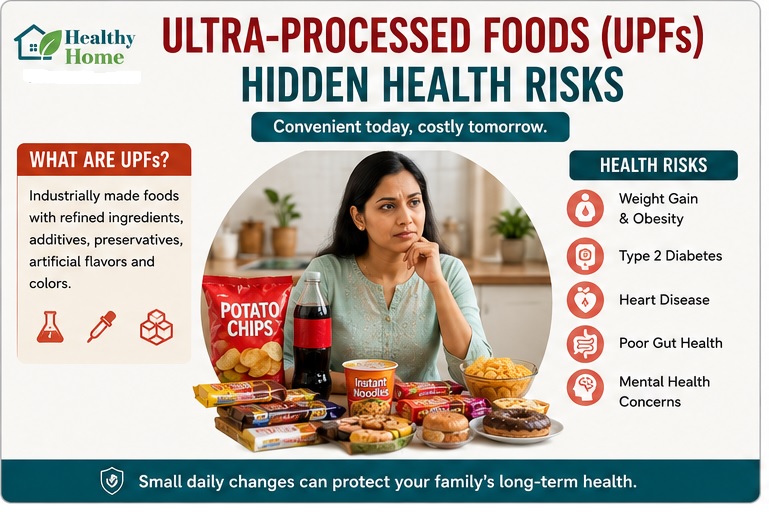
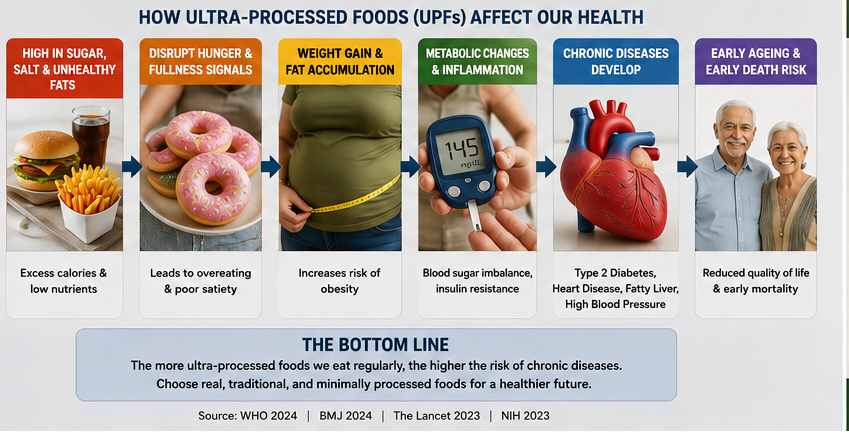
These are industrially manufactured products mostly made from refined ingredients, preservatives, unhealthy fats, artificial colors & flavors, additives, sweeteners etc. Whole foods are not used in these food products. If it is consumed regularly, it may be associated with increased risks of obesity, heart disease, diabetes and other chronic health conditions.
Quick Summary:
- These are generally manufactured products in industry mostly made from refined ingredients, preservatives, artificial colors & flavors, additives, sweeteners and emulsifiers.
- Many packaged foods like processed meats, ready-to-eat meals, instant noodles, sugary drinks, packaged snacks are the UPFs.
- The current researches show that if highly consume the UPFs, it may leads to heart disease, depression, type 2 diabetes and obesity etc.
- In India, so many healthier alternatives are traditionally available such as homemade poha, sprouts, roasted chana, locally and seasonally available fruits, curd, millet dishes, fresh coconut et.
- If small daily alternatives choose by the families without any strict restriction, it can improve the long-term health.
Introduction:
Imagine your child is returning from school, opens the chips packet & take, drink a soft drink from refrigerator and quarrel with mother to provide instant noodles in the evening. This may be everyday routine for many Indian families.
These foods are widely available, convenient, tasty and require no or less preparation time. But what many parents don’t realize that eating too often may gradually affect long-term health.
As a public health professional working with many children and families for about two decades in Odisha, I have noticed a common pattern in families that the Indian parents are actually want to provide a healthy food to their children. But only due to busy schedules and ready to availability, they choose these easiest choices.
These foods can be enjoyed occasionally as part of an overall balanced diet. But the real issue begins when ultra-processed foods are taken regularly avoiding the Indian traditional homemade foods.
So, if the hidden risks of UPFs can be understood, it will be easier to accept the smarter food choice without giving up taste.
Building healthy eating habits for families starts with small daily food choices rather than strict diets. Also following a balanced daily meal plan can reduce the dependence on packaged convenience foods.
Did You Know?
Many packaged foods which are available in the market as “healthy” may still be ultra-processed. So, it is wise to read the ingredient list is more useful than reading the marketing claims on the front of the package.
What Are Ultra-Processed Foods?
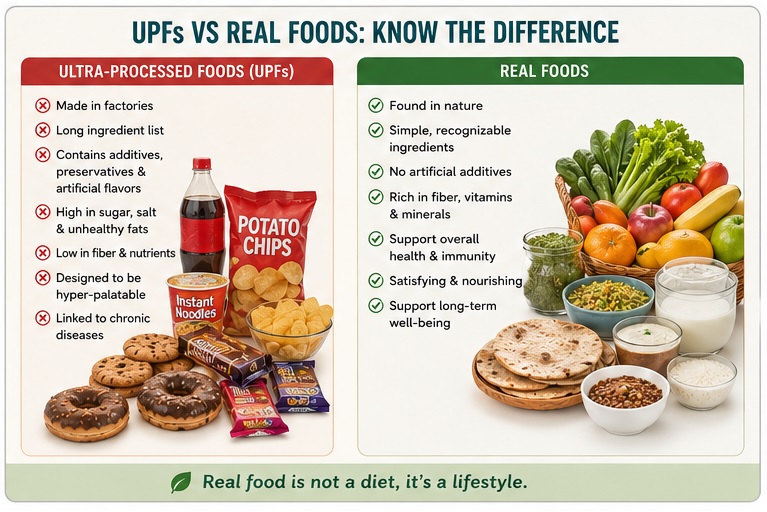
Ultra-processed foods (UPFs) are products manufactured in industries by using ingredients which are rarely found in home kitchens.
They usually contain:
- Refined flour
- Added sugars
- Refined vegetable oils
- Artificial colors
- Flavor enhancers
- Preservatives
- Emulsifiers
- Sweeteners
- Stabilizers
These foods are prepared as highly palatable, low-cost and have a long shelf life.
Examples are:
- Packaged chips and namkeen
- Soft drinks
- Instant noodles
- Frozen ready meals
- Sweetened breakfast cereals
- Chocolate bars
- Packaged cakes
- Processed meats
- Sugary flavored yogurt
- Energy drinks
- Cream biscuits
- Flavoured yogurt
- Frozen parathas
- Packaged fruit drinks
- Processed cheese slices
Why Are UPFs So Popular?
Several factors make UPFs attractive:
- Busy lifestyles
- Aggressive advertising
- Attractive packaging
- Long shelf life
- Easy availability
- Low preparation time
- Strong flavors that encourage repeated eating
Children are often influenced by colorful advertisements, social media marketing and celebrity endorsements.
Global Statistics on Ultra-Processed Foods:
| Statistics | Data | Source & Publication Year |
|---|---|---|
| Adults consuming more UPFs have higher overall mortality risk | Around 4% increase per 10% rise in UPF intake | BMJ, 2024 |
| UPFs are linked with over 30 adverse health outcomes | Umbrella Review | The BMJ, 2024 |
| Childhood obesity has increased dramatically worldwide since 1990 | WHO | 2024 |
| Poor diet is among the leading risk factors for non-communicable diseases globally | WHO | 2024 |
| India continues to see rising consumption of packaged processed foods in urban areas | ICRIER Food Processing Report | 2024 |
Expert Interpretation
The evidence does not show that taking occasional packet of chips or a soft drink will cause disease. Rather, the common issue is that these foods are gradually replacing the traditional diets which are rich in pulses, vegetables, fruits and whole grains. So, the long-term dietary shift is a worry factor for public health experts globally.
Hidden Health Risks of Ultra-Processed Foods
1. Weight Gain and Obesity
UPFs may contain high calories but with low fiber. So that, children and adults feel hungry again even after eating.
As per research from the U.S. National Institutes of Health showed that people who eat ultra-processed diets tend to consume more calories every day than those who take less processed foods.
Over time, such habits can contribute to excess weight, making obesity prevention an important family health goal.
2. Type 2 Diabetes
Many packaged foods contain hidden sugars. If the products are marketed as “healthy” can also contain large amounts of added sugar.
So, that the repeated increase in blood sugar may enhance the risk of insulin resistance subsequently.
Families should also be aware of the early warning signs of type 2 diabetes, particularly when unhealthy eating patterns continue for years.
3. Heart Disease
In the body if excess sodium, unhealthy fats and refined carbohydrates may leads to:
- High blood pressure
- High cholesterol
- Chronic inflammation
Above factors can also increase the cardiovascular disease risk in many cases.
4. Poor Gut Health
Our intestines contain trillions of beneficial bacteria. If we take diets which are rich in fiber, it nourishes these microbes.
But, the ultra-processed foods may sometimes lack fiber and also may contain additives which can negatively affect our gut health.
A diet rich in fiber supports the gut health and overall nutrition, which plays an important role in immunity and digestion.
5. Mental Health Concerns
Recent research suggests that diets high in UPFs may be associated with depression and anxiety.
Now the scientists in the globe are still studying the exact biological mechanisms, but inflammation and gut health appear to play important roles.
A Real-Life Example from Community Practice
During school health visits in Odisha, I have interacted with many parents who are concerned about that their child not interested in regular home-cooked meals.
This is not just because of lack of awareness by parents, but due to easy and convenience. Small changes like packing the roasted chana, boiled peanuts, vegetable poha etc. may help the children to have a healthier choice.
The healthcare providers including Health Workers, Anganwadi Workers, ASHAs encourage the families in Odisha to provide the home-made snacks to their children like roasted chana, seasonal fruits, boiled peanuts, vegetable phoa etc. In the Anganwadi Centres also there is a scheme by Govt. to provide the home-prepared “Chhatua” for the Adolescent Girls and Pregnant Women free of cost which are actually beneficial for a good health.
As every family is different, but if they choose the healthy Indian traditional methods of food preparation and sustain this, it may be a good alternative for a healthy human being.
Packing healthier snacks is easier with these healthy lunch box ideas for kids.
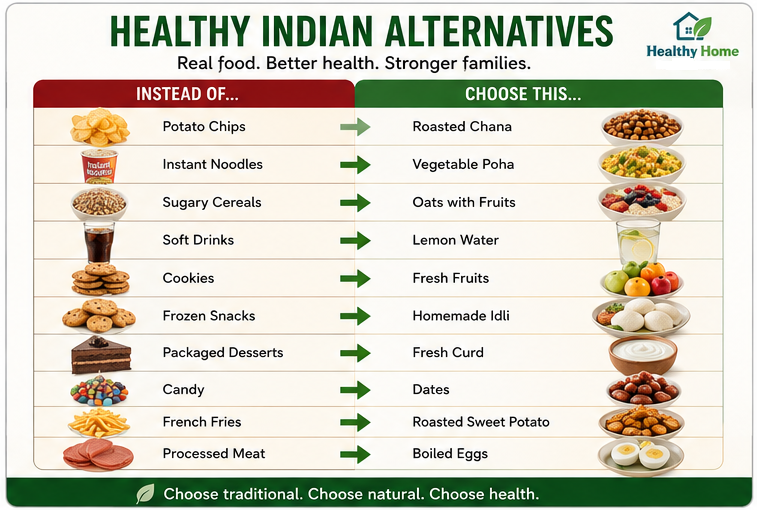
Healthy Indian Alternatives
| Instead of… | Choose… |
|---|---|
| Potato chips | Roasted chana |
| Instant noodles | Vegetable poha |
| Sugary cereals | Oats with fruits |
| Soft drinks | Lemon water |
| Cookies | Fresh fruits |
| Frozen snacks | Homemade idli |
| Packaged desserts | Fresh curd |
| Processed meat | Boiled eggs |
| Candy | Dates |
| French fries | Roasted sweet potato |
Families looking for more nutritious meals can also explore this high-protein Indian diet plan. Seasonal fruits such as papaya are nutritious choices and these health benefits of papaya make it an excellent addition to family meals.
Smart Tips for Indian Families
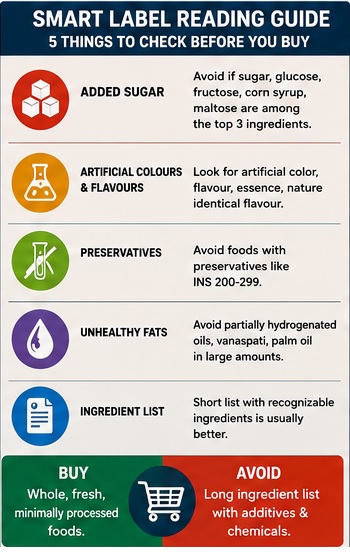
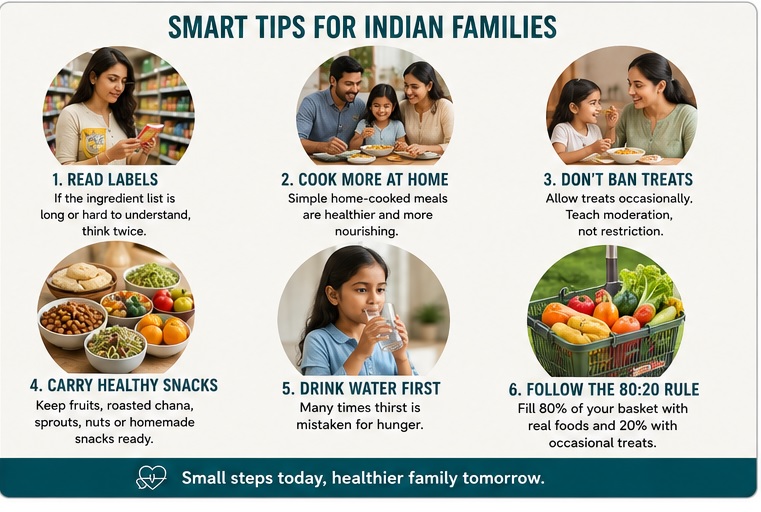
1. Read Ingredient Labels
If the ingredient list is very long or difficult to understand, you should think twice before buying.
Just a simple rule during shopping is : if the ingredient list contains several unfamiliar names or multiple preservatives, colours, sweeteners or flavour enhancers, it may likely to be ultra-processed. So, whenever possible, choose foods with fewer and more recognizable ingredients.
2. Cook More at Home
Simple daily traditional Indian meals is the healthiest alternative of UPFs.
Examples are:
- Dal-rice
- Khichdi
- Roti with vegetables
- Millet upma
- Vegetable pulao
Cooking simple homemade meals is one of the foundations of a healthy nutrition guide for families.
3. Don’t Restrict Always
You shouldn’t completely restrict the child to take the it. But try to teach them to take in moderation occasionally.
Always in limited quantity should be preferred for all.
4. Carry Healthy Snacks
Keep these ready in the school bags or lunch boxes:
- Fruits
- Roasted peanuts
- Sprouts
- Coconut pieces
- Homemade laddus
Nutritious snacks are very much important for child growth and development during school years.
5. Drink Water First
Many children don’t drink water as per the recommended quantity and when thirsty they eat something.
So, the role of every parents, guardians and teachers to encourage the children to take water before offering packaged snacks.
Practical Shopping Rule
A simple habit for many families may be helpful is the 80:20 rule.
It’s about to purchase about 80% of your shopping basket with fresh foods like vegetables, fruits, pulses, milk, eggs and whole grains. Rest 20% may be left for occasional treats. Such types of balanced approach is easier to maintain than trying to restrict every processed food.
Common Ultra-Processed Foods vs Better Indian Alternatives
| Ultra-Processed Food | Better Indian Choice |
|---|---|
| Potato chips | Roasted chana |
| Cream biscuits | Banana |
| Instant noodles | Vegetable poha |
| Cola | Lemon water |
| Packaged juice | Fresh fruit |
| Frozen fries | Boiled sweet potato |
| Sugary cereal | Oats with fruit |
| Chocolate spread | Peanut chutney |
Common Myths About Ultra-Processed Foods
1. Myth 1
All processed foods are unhealthy.
Fact: Milk, curd and frozen vegetables are processed but not ultra-processed.
2. Myth 2
Healthy-looking packaged foods are always healthy.
Fact: Always check ingredients and not just looking the marketing claims.
3. Myth 3
Children need packaged snacks every day.
Fact: Homemade snacks usually provide better nutrition with high-fiber.
Comparison of Ultra-Processed Foods With Home-made Foods
| Feature | Ultra Processed Food | Homemade Food |
|---|---|---|
| Fibre | Low | High |
| Additives | Many | Minimal |
| Sugar | High | Low |
| Cost | Moderate | Affordable |
| Satiety | Low | High |
| Vitamins | Lower | Higher |
Are all processed foods unhealthy?
Can children eat UPFs occasionally?
Are homemade Indian foods healthier?
Author’s Perspective
In my more than 18 years of public health work, I have deeply observed that the families don’t need a complex dietary pattern. Just to avoid to take one or two ultra-processed foods with healthier home-made alternatives everyday, so that it will be the first step for a sustainable and real health solution. The long-term health needs only consistent practice rather a short-term costly alternatives.
Concluding Points:
Healthy eating is not about a perfect and costly diet. In India every family may have busy schedule for day to day struggled life, But the the overall balanced eating pattern matters a lot. Every healthier choice like replacing a soft drink with lemon water, choosing roasted chana instead of chips may contribute a better health.
Traditional Indian kitchens have already many nutritious foods which are readily available, affordable, culturally familiar, satisfying in taste and quality. So, its important to choose a homemade meals, read the food labels before buying and educate the children in early age may be the difference.
In my field experience in public health with working with many Indian families, I have found that who consistently follow the simple daily habits may fit naturally into their life without any complicated rules. Small choices of Indian traditional food and many types of Millets can support a healthier children and adults tomorrow.
Choosing traditional foods is one of the simplest ways to build healthy living habits for the entire Indian family.
Key Takeaway
Recent evidence suggests to eat the minimally processed foods instead to restrict every processed product. So, the most families to follow a balanced and practical approach which are easy to follow daily and sustainable.
References:
- Hall, K. D., Ayuketah, A., Brychta, R., Cai, H., Cassimatis, T., Chen, K. Y., Chung, S. T., Costa, E., Courville, A., Darcey, V., Fletcher, L. A., Forde, C. G., Gharib, A. M., Guo, J., Howard, R., Joseph, P. V., McGehee, S., Ouwerkerk, R., Raisinger, K., … Zhou, M. (2019). Ultra-processed diets cause excess calorie intake and weight gain: An inpatient randomized controlled trial. Cell Metabolism, 30(1), 67–77.e3. https://doi.org/10.1016/j.cmet.2019.05.008
- Lane, M. M., Gamage, E., Du, S., Ashtree, D. N., McGuinness, A. J., Gauci, S., Baker, P., Lawrence, M., Rebholz, C. M., Srour, B., & Marx, W. (2024). Ultra-processed food exposure and adverse health outcomes: Umbrella review of epidemiological meta-analyses. The BMJ, 384, e077310. https://doi.org/10.1136/bmj-2023-077310
- World Health Organization. (2024). Healthy diet. https://www.who.int/news-room/fact-sheets/detail/healthy-diet
- Food and Agriculture Organization of the United Nations. (2024). Food-based dietary guidelines. https://www.fao.org/nutrition/education/food-dietary-guidelines
- Harvard T.H. Chan School of Public Health. (2024). The Nutrition Source: Processed foods. https://nutritionsource.hsph.harvard.edu/processed-foods/
- Indian Council of Medical Research, & National Institute of Nutrition. (2024). Dietary guidelines for Indians. https://www.nin.res.in/dietaryguidelines/
- National Institute of Nutrition. (2024). National Institute of Nutrition. https://www.nin.res.in/
- Monteiro, C. A., Cannon, G., Levy, R. B., Moubarac, J. C., Louzada, M. L. C., Rauber, F., Khandpur, N., Cediel, G., Neri, D., Martinez-Steele, E., Baraldi, L. G., & Jaime, P. C. (2019). Ultra-processed foods: What they are and how to identify them. Public Health Nutrition, 22(5), 936–941. https://doi.org/10.1017/S1368980018003762