Last Updated on June 15, 2026 by Bibhu Ranjan Mund, MPH
Discover 20 healthy lunch box ideas for kids with a ready 7-day plan, quick recipes & school-safe tips. Balanced, easy & kid-approved meals.
Reviewed by Bibhu Ranjan Mund, MPH (Public Health Expert) with experience in maternal, infant, child, and adolescent health programs. Content is based on evidence-informed guidelines aligned with organizations such as the World Health Organization, UNICEF, Centers for Disease Control and Prevention, and National Institutes of Health.
Medical Disclaimer: This content is for informational and educational purposes only and is not intended as medical advice, diagnosis, or treatment. Always seek the advice of a qualified healthcare professional regarding any medical condition or concerns.
Introduction:
Every morning, millions of parents globally pack lunch boxes with a hope that their children will finish their meals.
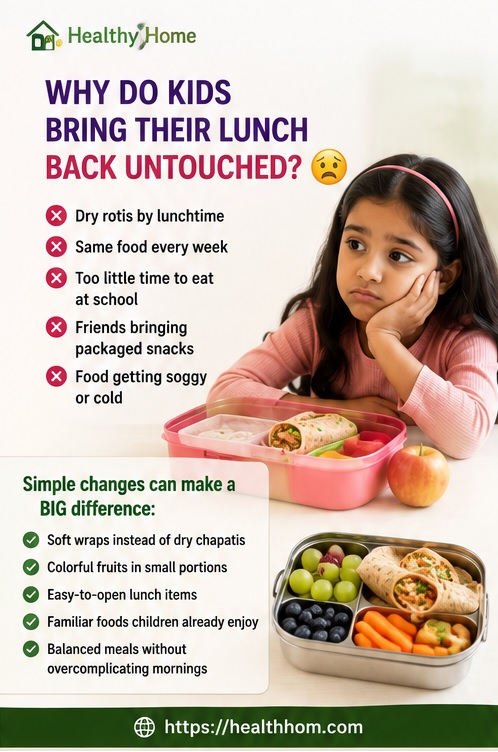
Many Indian parents know the above feeling very well. Parents wake up early, prepare the breakfast, pack the lunch box and finally this returns back home without eating by their children. Few children complain that the roti become dry during lunchtime, other friends bring noodles or dry processed foods and they feel the difference in carrying the homemade food. Packing a balanced tiffin every morning can become stressful and emotionally tiring for many working parents.
Busy schedules make it difficult for many Indian families to prepare healthy lunch boxes every day. These small daily food habits play an important role in shaping your child’s overall growth, focus and lifelong eating patterns.
As per the study report of Harvard T.H. Chan School of Public Health (2022), children who are consuming a balanced meal with different whole grains, protein, fruits and green leafy vegetables performs a better concentration, stable energy levels including improvement in their academic career during school time.
The actual challenges faced by many parents in daily life as:
- Limited time in the morning to prepare lunch box
- Kids are rejecting the “healthy” food
- Repeating the same meals every week
This guide is designed to help parents manage these real everyday challenges.
In this article, we will discuss about the 20 practical school friendly lunch box ideas including a ready to use 7-day plan with simple strategies for a family.
A healthy lunch box does not need to be perfect, but it’s about to prepare smartly with consistent choices which your child will enjoy eating on daily basis.
To plan better meals, explore our guide on a balanced daily meal plan for families.
What is a Healthy Lunch Box to Kids?
A healthy lunch box for kids should include the whole-grain base diet, many sources of protein, green leafy vegetables, fruits with sufficient fluid diet. This should provide about 30-40 percent of daily nutritional requirement of children, school friendly and easy to consume. A healthy lunch box for kids contains:
- Whole grains
- Protein-rich foods
- Fruits
- Vegetables
- Healthy snacks
- Water
It should provide approximately 30–40% of a child’s daily nutritional needs.
According to UNICEF and WHO reports:
- 149 million children globally experience stunting.
- Iron deficiency affects learning performance.
- School-age nutrition strongly influences academic outcomes.
School going children to be supported with balanced nutrition:
1. Physical Growth
Children between 4 and 15 years of age require adequate nutrition to support healthy growth and development. They need a good nutrition for their bones, muscles and brain. Hence the foods having calcium, protein, healthy fats, vitamins and minerals should be focused
Proper nutrition plays a key role in the child health and development guide for growing children.
2. Brain Progression & Accentuation.
For the betterment of cognitive ability and concentration during school time, some suggestive foods which can provide Omega-3s, iron, B-vitamins, antioxidants may be promoted along-with choline-rich foods.
Including choline-rich foods for kids may support in memory, focus, and learning ability of school going children.
3. Stable Energy Levels
Healthy lunchboxes may prevent :
- Mid-day hungry time of children
- Irritability a
- Poor classroom & academic performance
Balanced meals prepared with a healthy lifestyle in adolescents may improve daily energy level and their academic performance.
4. Healthy Eating Habits.
Children with balanced foods at early ages lead to have a low rate of:
- Obesity
- Type 2 diabetes
- Digestive issues
- Junk food addiction
Frequent junk food intake is linked to risks highlighted in non-communicable diseases prevention.
Why Balanced Lunch Matters:
Real School Lunch Challenges Parents Face:
In the real life, preparation of healthy food is not a joke. So many parents presently struggling with practical school-day problems the the nutrition charts not discusses such.
Common real-life lunch box challenges:
- Children refusing the vegetables after seeing packaged foods in classmates lunch boxes
- Food becoming cold by lunchtime
- Limited morning preparation time before arriving of school buses
- Seasonal heat causing curd rice or fruit to spoil faster than expectation
- Children preferring soft foods during exam stress
- Schools restricting nuts because of allergy concerns
- Picky eaters rejecting “mixed foods” like khichdi or upma
- Working parents relying on repetitive meals due to time pressure
In Odisha, parents sometimes repeat the same five to six lunch ideas due to they only these meals preparation and it is so normal. A real healthy lunch plan should focus on consistency, not the perfect one.
From a public health perspective, particularly in urban areas the school lunch habits are a trending topic. Now-a-days, many children are in a practice of consuming the packaged snacks, sugary drinks, ultra-processed foods. A balanced homemade lunch box can help to improve the overall diet quality.
| Nutrition Factor | Benefit for School Children |
|---|---|
| Protein foods | Supports the overall growth and muscle development |
| Whole grains | Provides sustained energy level |
| Fruits and vegetables | Provide vitamins and fiber |
| Healthy fats | Supports brain development |
Source: Harvard School of Public Health Nutrition Guide (2022)
Practicing mindful eating for kids helps to build long-term healthy food habits.
What Should an Ideal Kids’ Lunch Box?
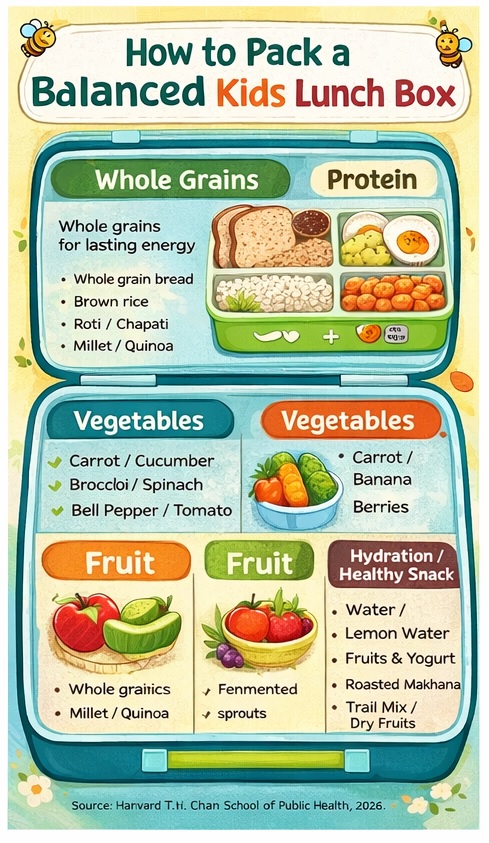
A balanced school lunch usually includes four important components.
1. Whole-Grain Based or Complex-Carbs.
These are the sources to maintain the long term energy level. For example:
- Millet roti
- Multigrain chapati
- Whole-wheat sandwiches
- Brown rice
- Quinoa
- Oats or poha
2. A Lean Protein Source
Protein helps the children to stay full longer and supports their growth & overall development. Examples:
- Egg
- Paneer
- Lentils (dal)
- Chickpeas / chole
- Sprouts
- Nut butters
3. Vegetable serving (coloured).
Vegetables are the sources of fiber and micronutrients. Examples:
- Carrot sticks
- Cucumbers
- Spinach
- Capsicum
- Cabbage
- Broccoli
4. A Healthy Snack
Children are supposed to take healthy meals like:
- Fruits
- Nuts & seeds (if school allows)
- Homemade muffins
- Yogurt
5. Hydrating Drink
Water must be the first option, also others may be:
- Coconut water
- Lemon water
- Butter milk kept in thermostatically controlled insulated bottle may be preferred.
Components of a Balanced Kids Lunch
| Component | Examples | Why It Matters |
|---|---|---|
| Whole Grain Base | Multigrain roti, brown rice, oats | Provides sustained energy |
| Protein Source | Eggs, paneer, dal, chickpeas | Supports growth and satiety |
| Vegetables | Carrot, cucumber, spinach | Adds fiber and micronutrients |
| Fruit | Apple, banana, orange | Natural vitamins and hydration |
| Healthy Snack | Yogurt, makhana, nuts | Keeps children satisfied |
Source: Harvard T.H. Chan School of Public Health, 2022
Now we understand about the balanced lunch, so let us look the practical meal combinations for busy school mornings.
20 Lunch boxes (Healthy, Simple and Balanced) with Kids in mind.
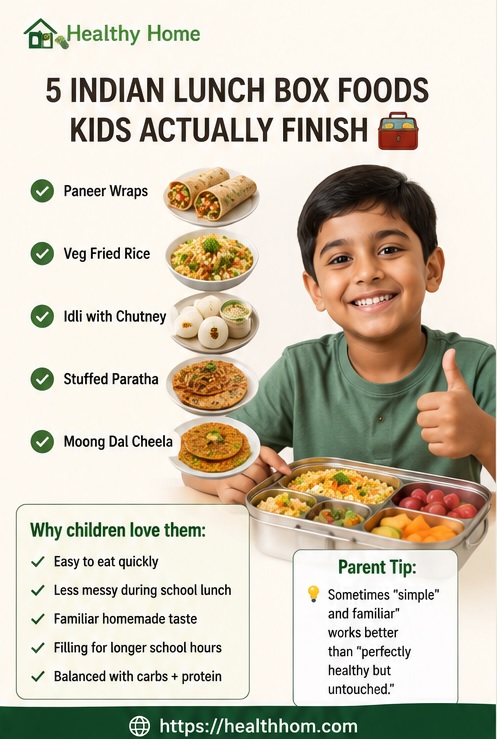
The following are 20 different practical and real life healthy lunch box ideas for kids that they love to eat.
1. Stuffed Paratha Vegetable + Curd + Apple Slices.
- Low fat, provides probiotics and sustained energy.
2. Southern Millet Upma + Boiled Egg + Banana.
- Ideal for children who enjoy savoury meals.
3. Full-Whole Veg Sandwich + Chana Roasted + Grapes.
- Quick, tasty and balanced.
4. Paneer Roll Multigrain Roti stuck in Cucumber.
- Protein-rich and filling.
5. Lemon Rice (i.e. Brown Rice) & Carrot Kosambari.
- Sunny and healthy in hot season.
6. Veg Fried Rice (low fat) + Sprouts Salad
- A colourful lunch, which children like. Veg fried rice works especially well for children who dislike plain vegetables because colorful vegetables mix naturally into the rice. Many parents also use leftover rice from dinner to save morning preparation time.
7. Poha and Peas + Jaggery Peanut Chikki.
- Light foods that are also invigorating.
8. Idli Coconut Chutney Orange wedges.
- Gut-friendly, soft and perfect for juniors. Soft idlis are easier for younger school children to finish quickly during short lunch breaks. In South Indian households, leftover idlis from breakfast are also commonly reused for lunch boxes to reduce food waste and save time.
9. Salad of Chickpea + Mini Chapatis.
- Rich in fiber and protein.
10. Whole grain Vegetable Pasta + Fruit Yogurt.
- A lunchbox favorite.
11. Vegetable Dosa Roll + Dates
- Crispy, fun and nutritious.
12. Quinoa Khichdi+ Cucumber Raita.
- High protein and gluten-free.
13. Egg Fried Rice + Kiwi Slices
- Optimal protein to carbs ratio.
14. Pizza (Homemade) Chapati Pizza + Fruit Cup.
- Healthy twist on pizza.
15. Beetroot Rice + Boiled Corn
- Colorful dishes enhance the appetite.
16. Sambar Rice + Salad Cucumber
- Conventional meals aid in the health of the gut.
17. Oats Chilla + Pomegranate
- High fiber meal.
18. Paneer Tikka Wrap + Apple
- Kids love the smoky flavor. Paneer wraps are practical for older children because they are less messy during school lunch periods and can provide longer time fullness.
19. Moong Dal Cheela + Banana
- Light yet satisfying.
20. Vegetable Thepla + Yogurt
- Healthy Gujarati lunch.
Snacks to Add in Every Lunch box of kids.
- Makhana (roasted)
- Dry fruit laddoo
- Carrot/cucumber sticks
- Watermelon slices
- Homemade granola bar
You can also explore a structured 7-day meal plan for families for easier weekly planning.
Seasonal changes also affect the type of foods the children enjoy and how safely foods remain fresh inside school bags.
Seasonal Indian Lunch Box Ideas for Kids:
Summer
- Lemon rice
- Curd rice (only in insulated containers)
- Watermelon cubes
- Coconut water
- Cucumber sticks
Monsoon
- Vegetable poha
- Stuffed paratha
- Roasted makhana
- Steamed idli
- Warm millet upma
Winter
- Vegetable thepla
- Sesame laddoo
- Egg rolls
- Beetroot paratha
- Sweet potato chaat
Seasonal foods are fresher, cheaper and more easily available in local Indian markets. They also help the children naturally to experience dietary variety throughout the year.
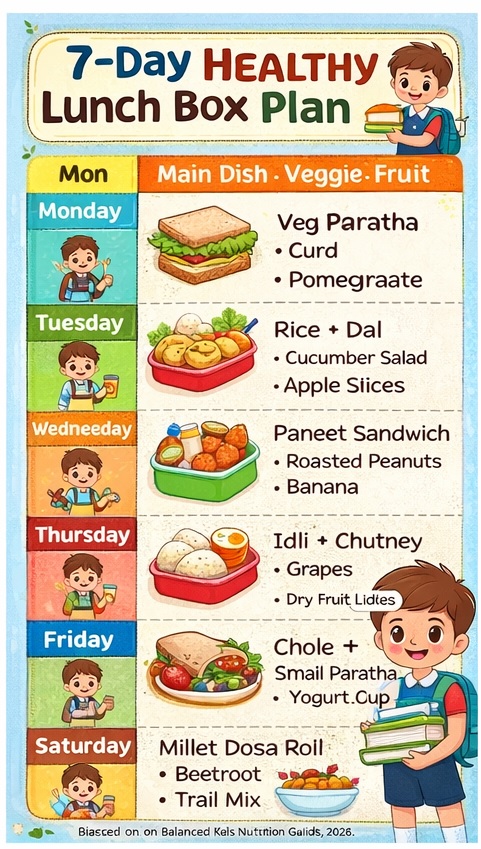
7-Day Healthy lunch box ideas for kids (Ready-to-use) Plan.
- Monday
- Veg paratha
- Curd
- Pomegranate
- Tuesday
- Rice + Dal
- Khichdi
- Cucumber salad
- Apple
- Wednesday
- Paneer sandwich
- Roasted peanuts
- Banana
- Thursday
- Idli + Chutney
- Grapes
- Friday
- Chole + Small paratha
- Orange slices
- Saturday
- Veg upma
- Boiled egg
- Kiwi
Some parents prefer quick homemade recipes that can be repeated during busy weekdays without any complicated preparation.
Healthy Lunch box Recipes for kids (Quick and Simple).
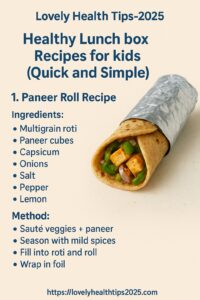
1. Paneer Roll Recipe
- Ingredients:
- Multigrain roti
- Paneer cubes
- Capsicum
- Onions Salt
- Pepper
- Lemon
- Method:
- Sauté veggies + paneer
- Season with mild spices
- Fill into roti and roll
- Wrap in foil
Parent Tip: Slightly dry fillings usually work better in school lunch boxes because watery fillings can make rotis soggy before lunchtime.
2. Veggie Stuffed Paratha
- Ingredients:
- Wheat flour
- Grated carrot
- Grated beetroot
- Mashed potato
- Salt
- Ajwain
- Method:
- Mix grated vegetables
- Fill and roll paratha
- Cook with minimal oil
Many parents mix beetroot or spinach into dough because children may accept vegetables more easily when they are less visible.

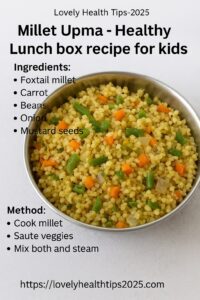
3. Millet Upma
- Ingredients:
- Foxtail millet
- Carrot
- Beans
- Onion
- Mustard seeds
- Method:
- Cook millet
- Saute veggies
- Mix both and steam
Foxtail millet stays filling for longer school hours and can be useful for highly active children who feel hungry before returning home.
The ways of keeping lunchbox of kids fresh and safe.
- Use lunch boxes which are made out of stainless steel.
- Hot foods should be packed in insulated boxes.
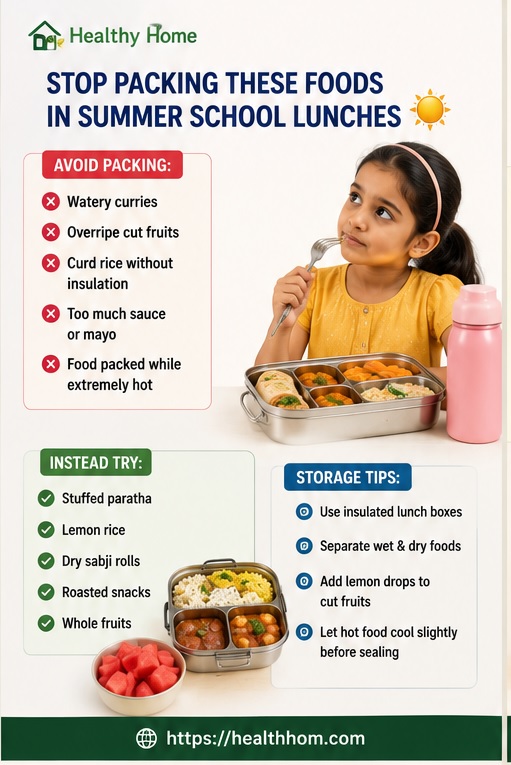
- Store wet and dry food-stuffs in different containers.
- Do not use excessive amount of liquids or sauce.
- Ice packs may be used in yogurt or fruits.
During Indian summer, the milk-based foods can spoil faster if the lunch boxes stay outside of classrooms for several hours. So, the parents should prefer the dry curry, stuffed paratha, lemon rice or roasted snacks.
Cut fruits like apples or bananas may become brown or soft before lunch. A few drops of lemon juice can help to reduce the discoloration.
Avoid packing extremely hot food directly into tightly sealed containers because trapped steam can make rotis soggy.
Tips to Make Kids Eat Better
- Encourage them for selecting the fruits/veggies as per their choice.
- Try to avoid repeat the same meals every day
- Change foods every week.
- You should cut fruits as fancies like stars, cubes, sticks etc. which will attract them to eat.
- Make different combinations of colors
- Children are more likely to eat visually appealing food
- Avoid very spicy foods.
- Eat snacks in case of an exam to eliminate stress.
During my field visits time and community interaction, one mother share her experience that her son is regularly returning the vegetables sandwiches always without eating. So, the lady instead of forcing, started some amount of grated carrot into the paneer rolls and parathas. After a few week, the child was more comfortable with eating the vegetables without any complaint. Small slow changes are sometimes plays a key role for success rather to strict restrictions.
School lunch periods may be very short, specially in urban private schools. Foods that are easy to open, less messy and quick to eat are usually more practical for younger children.
Some children avoid certain foods because they feel embarrassed eating due to smelling or unfamiliar meals around classmates. Parents may need to balance nutrition with social comfort during school years.
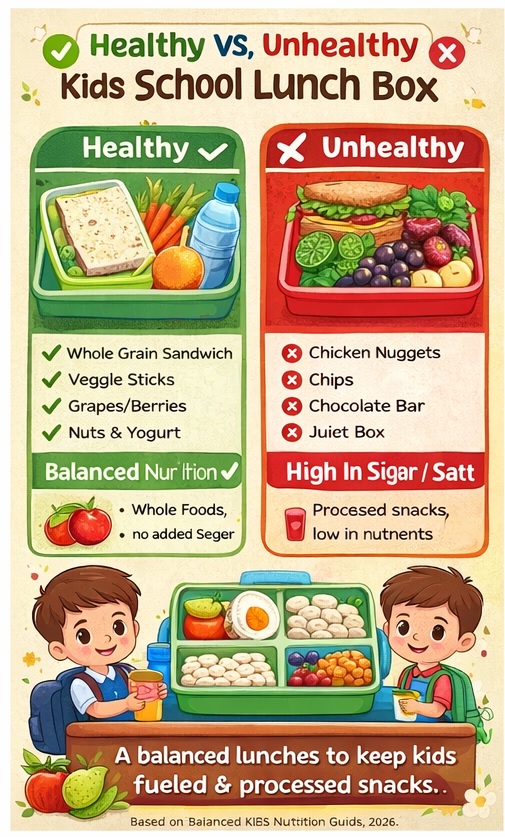
Lunch box for kids – Food to avoid
- Deep fried items
- Chocolates, candy
- Packaged juices
- Instant noodles
- Perishable foods (paneer gravy, curd rice during summer, etc.)
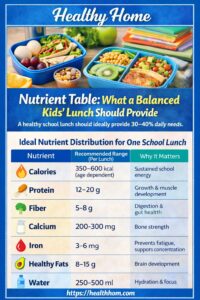
Nutrient Table: What a Balanced Kids’ Lunch Should Provide
A healthy school lunch should ideally provide 30–40% of daily nutrition needs.
Ideal Nutrient Distribution for One School Lunch
| Nutrient | Recommended Range (Per Lunch) | Why It Matters |
|---|---|---|
| Calories | 350–600 kcal (age dependent) | Sustained school energy |
| Protein | 12–20 g | Growth & muscle development |
| Fiber | 5–8 g | Digestion & gut health |
| Calcium | 200–300 mg | Bone strength |
| Iron | 3–6 mg | Prevents fatigue, supports concentration |
| Healthy Fats | 8–15 g | Brain development |
| Water | 250–500 ml | Hydration & focus |
Tip: Combine complex carbs + protein + vegetables + fruit for best balance.
Adding foods that heal your gut naturally can further improve digestion and immunity in children.
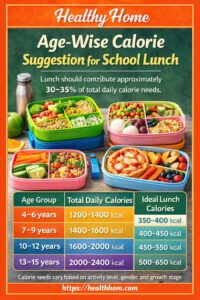
Age-Wise Calorie Suggestion for School Lunch
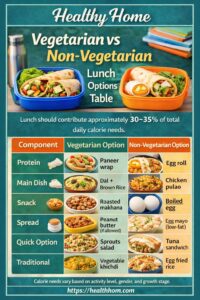
Lunch should contribute approximately 30–35% of total daily calorie needs.
| Age Group | Total Daily Calories | Ideal Lunch Calories |
|---|---|---|
| 4–6 years | 1200–1400 kcal | 350–400 kcal |
| 7–9 years | 1400–1600 kcal | 400–450 kcal |
| 10–12 years | 1600–2000 kcal | 450–550 kcal |
| 13–15 years | 2000–2400 kcal | 500–650 kcal |
Calorie needs vary based on activity level, gender, and growth stage.
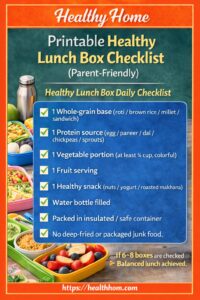
Printable Healthy Lunch Box Checklist (Parent-Friendly)
Healthy Lunch Box Daily Checklist
- Whole-grain base (roti / brown rice / millet / sandwich)
- Protein source (egg / paneer / dal / chickpeas / sprouts)
- Vegetable portion (at least ½ cup, colorful)
- One Fruit serving
- Healthy snack (nuts / yogurt / roasted makhana)
- Water bottle filled
- Packed in insulated or in a safe container
- No deep-fried or packaged junk food
If 6–8 boxes are checked then Balanced lunch achieved.
Parents can follow a healthy nutrition guide for families to build balanced lunchboxes easily.
Allergy Considerations in School Lunch Boxes:
With rising food allergies in children, lunch planning should be considered for safety purpose.
Common School Allergens:
- Peanuts
- Tree nuts
- Milk
- Eggs
- Soy
- Wheat
- Shellfish
Safety Tips for Parents:
- Check school allergy policy
- Avoid sharing food
- Label lunchbox if allergy exists
- Use alternative options:
| If Allergic To | Safe Alternatives |
|---|---|
| Peanut | Roasted chana, seeds mix |
| Milk | Soy milk / almond milk (if allowed) |
| Egg | Paneer, tofu, sprouts |
| Wheat | Millet roti, rice, quinoa |
Always consult pediatrician if child has diagnosed allergy.
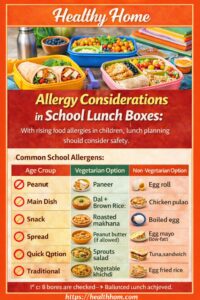
Vegetarian vs Non-Vegetarian Lunch Options Table
| Component | Vegetarian Option | Non-Vegetarian Option |
|---|---|---|
| Protein | Paneer wrap | Egg roll |
| Main Dish | Dal + Brown Rice | Chicken pulao |
| Snack | Roasted makhana | Boiled egg |
| Spread | Peanut butter (if allowed) | Egg mayo (low-fat) |
| Quick Option | Sprouts salad | Tuna sandwich |
| Traditional | Vegetable khichdi | Egg fried rice |
Comparison: Homemade vs Packaged Lunch
| Homemade | Packaged |
|---|---|
| Fresh nutrients | High sodium |
| Better fiber | Preservatives |
| Budget friendly | Expensive |
| Lower sugar | Hidden sugar |
Strong family nutrition and healthy habits support both physical health and emotional well-being in children.
Budget-Friendly Tips for Healthy School Lunches:
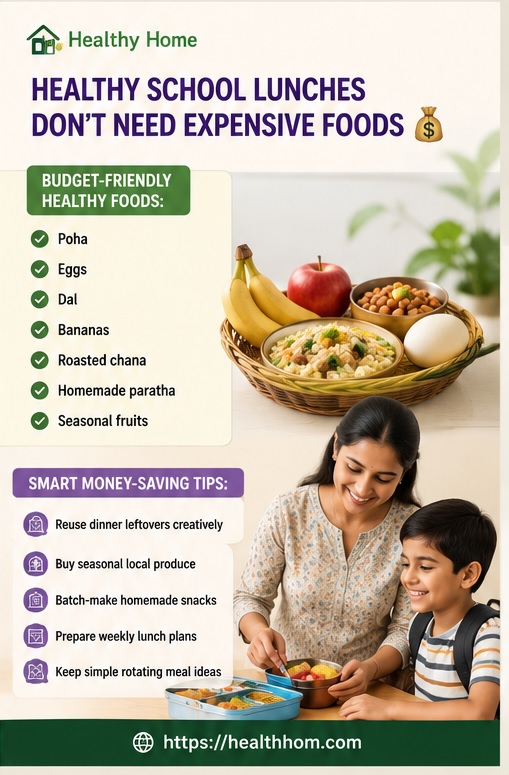
Healthy lunch boxes doesn’t mean always a costly or imported food. In many of Indian houses, simple homemade meals are both helthier and cost-effective.
Practical cost-saving ideas:
- Use seasonal fruits instead of imported fruits
- Reuse dinner leftovers creatively
- Buy local vegetables from weekly markets
- Prepare homemade snacks in batches
- Use roasted chana or peanuts instead of costly packaged snacks
- Include affordable proteins like eggs, sprouts, dal, and paneer
Many nutritious Indian foods such as poha, dal, curd, millet and bananas are naturally budget-friendly, but it can provide excellent nutrition for growing children.
Key Takeaways:
- A lunch box should contains whole grains, protein, vegetables, fruit, and hydration to meet healthy needs.
- School hours require balanced meals because it helps the students to grow, maintain energy, and stay focused.
- Many children become more curious about healthy foods when meals look colorful and visually appealing.
- Packaged foods are less nutritious and more expensive than home-made meals.
- Since children spend a large part of their active day at school, lunch should ideally provide nearly one-third of their daily nutrition needs.
- Weekly meal planning decreases stress which provides people with permanent nutritional benefits.
- People can develop lifelong healthy eating patterns through small modifications in their food consumption practices.
Common Lunch Box Mistakes
- Packing too much food
- Including sugary drinks
- Repeating the same meals daily
- Not adding protein
- Sending foods difficult to eat quickly
School Lunch Safety Checklist
- Washed hands before packing
- Food packed in insulated container
- Water bottle filled
- Fruit included
- Protein source added
Nutrient-Rich Indian Foods Table
| Food | Main Nutrient |
|---|---|
| Egg | Protein |
| Paneer | Calcium |
| Banana | Potassium |
| Dal | Protein & Iron |
| Spinach | Iron |
Expert Insight by Bibhu Ranjan Mund, MPH
During the filed level interaction with the families from both rural and urban packets, I have observed that lunch box can be improved not only by knowing about nutrition. But parents should know about fruits, vegetables and protein and consistently use it.
The actual challenge is to prepare the lunch in the busy morning schedule. Families who have succeed in better lunch boxes doesn’t mean that they follow the complicated plan. They generally prepare ingredients from previous evening, rotate a few good recipes and also involve their child in selecting the weekly menus.
A Realistic Parenting Reminder:
When the children suddenly not interested in taking the healthy homemade meals, its a worry part for every parents. It is obvious during the growth phases, exam time, social influence from other friends at schools. So, the healthy eating habits by the children actually develop slowly through family routines and patience.
Simple Real-Life Example:
For a working mother who have already two children may not be able to prepare always fresh meals every mornings. For the said situation, they should prepare dough at night, boil eggs in advance, use leftover dal for paratha stuff so that time can be managed during morning hour.
Small Lunch Box Wins Matter More Than Perfect Lunch Box
Many Indian parents may feel guilty when their child return the lunch box half full. The actual healthy eating develop not in a single school day, but it may requires months. If your child:
- Eats one additional fruit this week,
- Tries a new vegetable once,
- Chooses water instead of a sugary drink,
- Finishes a homemade snack instead of a packaged one,
these are the meaningful improvements.
In Indian families, food is sometimes closely linked with emotions, routines and also family traditions.
Concluding Points
Even the lunch box of child look small, but its impact is lifelong. Now you are packing the lunch to fill the stomach of children, but actually its purpose is to shape their energy, immunity and future relationship with healthy food.
As per the study published in PubMed Central (2023), it highlights that the children who consume a balanced, home-made meals are less prone to develop obesity, poor eating habits and many lifestyle diseases in their later life.
But actually, in real life the perfection is not a practical concept. You may observe that, some day meals may come back with half-eaten, but its a general thing.
So, its a matter of consistency over time such as :
- Adding just only one fruit instead of none
- Choosing the home-made instead of packaged if possible
- Let you child to decide a healthy food i.e. Involvement is to be encouraged.
These small steps may create a big and long-lasting positive habits towards a healthy food. .
Start with simple lunch. You may use the 7-day balanced meal plan and can experiment that what your child enjoys or not.
Because your goal is not just a “perfect lunch box”, but it’s about encouraging a child who actually understands, enjoys and chooses healthy food for life.
Related Health Articles from Healthy Home :
- Kids Choline rich foods to sharpen memory
- What is a balanced daily meal plan?
- Mindful Eating for Kids : 7 fun ways
- 7 days meal plan with accessible nutrition
- 10 Evergreen Foods : Heal your gut naturally
Recommendations in this article are based on nutrition guidance from public health organizations and practical school meal studies. However, lunch box planning should always be adapted according to a child’s age, appetite, activity level, allergies, cultural food preferences and school environment.
Trusted References and Research Sources:
- Harvard Nutrition Source – Kids’ Healthy Lunchbox Guide Source: https://nutritionsource.hsph.harvard.edu/kids-healthy-lunchbox-guide/
- ResearchGate – School Lunchboxes & Health: A Scoping Review Source: https://www.researchgate.net/publication/367546435_School_lunchboxes_as_an_opportunity_for_health_and_environmental_considerations_a_scoping_review
- PubMed Central – Healthy Lunchbox Study (Research Article) Source: https://pmc.ncbi.nlm.nih.gov/articles/PMC9885980/
- Oxford Academic – Health Promotion Study on Lunch Practices Source: https://academic.oup.com/heapro/article/38/1/daac201/7010382
FAQs:
1. What are the simple lunch box ideas for children?
Whole-grain sandwiches, wraps, pieces of fruit, yogurt cups, boiled eggs, veggie sticks and mini homemade parathas or dosas are available as some of the easier choices. They are fast foods and children friendly.
2. Which are the most suitable protein foods to carry in school lunch-boxes?
Examples of good sources of proteins are eggs, paneer, lentil patties, tofu, chicken strips, beans and Greek yogurt. They keep kids full longer.
3. What shall I do to keep the lunchbox fresh till lunch?
Make an insulated lunchbox, warm foods can be put in a thermos and cold foods can be put in an ice pack. Store the foodstuffs in air-tight containers.
4. What are the healthy snacks to be included in a healthy lunchbox?
Good snacks like nuts (assuming that school will not prohibit), roasted chana, slices of fruits, homemade muffins, energy bites, whole-grain crackers and cheese cubes.
5. What can I do to the picky eaters to habituate them with new lunch foods?
Increase the intake of new foods gradually, combine them with common foods, prepare food colorful, engage children in planning and cut foods in shapes of fun.
6. Is it possible to make lunchboxes in advance?
Yes. To save time in the morning you can prepare the ingredients ahead at night, such as chopping fruits, creating wraps, preparing pasta or simply dividing snacks.
7. What are the foods that should not be in the lunch box of the kid?
Salads, pastries and soft drinks which have mayonnaise, cream and quickly spoil should not be eaten because they are too spicy, greasy, messy, sweet or spoil easily.


About the Author – “Bibhu Ranjan Mund”, Master in Public Health (MPH) from IIHMR University, Jaipur (Rajasthan) has more than 18 years of experience in Public Health activities in maternal health, child health, adolescent health, nutrition and community wellness programs under National Health Mission, Health & Family Welfare Department, Odisha. He is the founder of “Healthy Home” and translates the evidence based public health information into a practical source so that families may able to apply in everyday life. All the information are for educational purposes only and not replaces the professional medical advice. ORCID Researcher ID – 0009-0003-0158-4992. Connect LinkedIn – https://www.linkedin.com/in/bibhu-ranjan-mund-b72171358/