Eco Friendly Eating: Sustainable Food Choices for Better Health
Discover eco friendly eating and regenerative nutrition practices that support your health and protect the planet. Learn practical, affordable tips for sustainable living.
Reviewed by Bibhu Ranjan Mund, MPH (Public Health Expert) with experience in maternal, infant, child, and adolescent health programs. Content is based on evidence-informed guidelines aligned with organizations such as the World Health Organization, UNICEF, Centers for Disease Control and Prevention, and National Institutes of Health.
Medical Disclaimer: This content is for informational and educational purposes only and is not intended as medical advice, diagnosis, or treatment. Always seek the advice of a qualified healthcare professional regarding any medical condition or concerns.
Introduction for Eco Friendly Eating
As per the report of Food and Agricultural Organization of the United Nation (FAO, 2022), it shows that about 30-34% of global greenhouse gas emissions actually comes from the food system.
If you are thinking it’s expensive to go for organic, it is not correct.
Eco Friendly Eating says only about simple and everyday choices like seasonal available foods, reducing waste, adding plant-based meals which can improve your health and simultaneously able to reduce the environmental damages.
Due to the rising climate change, soil degradation, many lifestyle diseases, now healthy food is not just for me, it should be both for me and the earth.
This article will provide you a clear idea about the practical, affordable and science-backed ways to start eco friendly eating without stress or any restriction.
Quick Takeaways:
- Eat local & seasonal
- Reduce food waste
- Prefer plant-based meals
- Use reusable packaging
Global Food System and Environmental Impact
| Indicator | Global Insight | Source |
|---|---|---|
| Share of global greenhouse gas emissions from food systems | About 30–34% of global emissions | FAO |
| Global food waste | Around 1/3 of food produced is wasted | FAO |
| Agricultural land under degradation | More than 75% affected | FAO |
| Share of freshwater used by agriculture | Around 70% | FAO |
Source: FAO Food Waste Index 2021 and FAO Global Land Degradation Report 2022
Meaning of Sustainable eating:
Eco-friendly eating can be described as making food decisions that reduce negative effects on the environment and which promote long-term health. It is the understanding how food is produced, transported, processed and eaten.
- Foot-printing of lower level carbons :
- Eat less red meat: The direct live stocks contributing to GHG emissions are mainly cattle rearing specifically farming.
- One can try replacing meat with legumes, mushrooms, tofu and many more in order to meet free food.
- Buy local and seasonal: It also cuts the energy consumption of moving and storing the materials used to construct various structures.
- Avoid air-freighted foods, Viz. Go for foods produced locally, rather than the berries or out-of-season fruits from other countries.
- Minimize food waste: Whenever possible store food to avoid going bad and serve the leftovers in an appealing manner, scraps should be disposed through composting.
- Choose organic or regenerative produce: These practices of farming are normally practiced as they use less synthetic fertilizer and soil health is improved.
Understanding sustainability begins with a well-structured diet, learn how to build one in our guide on a balanced daily meal plan.
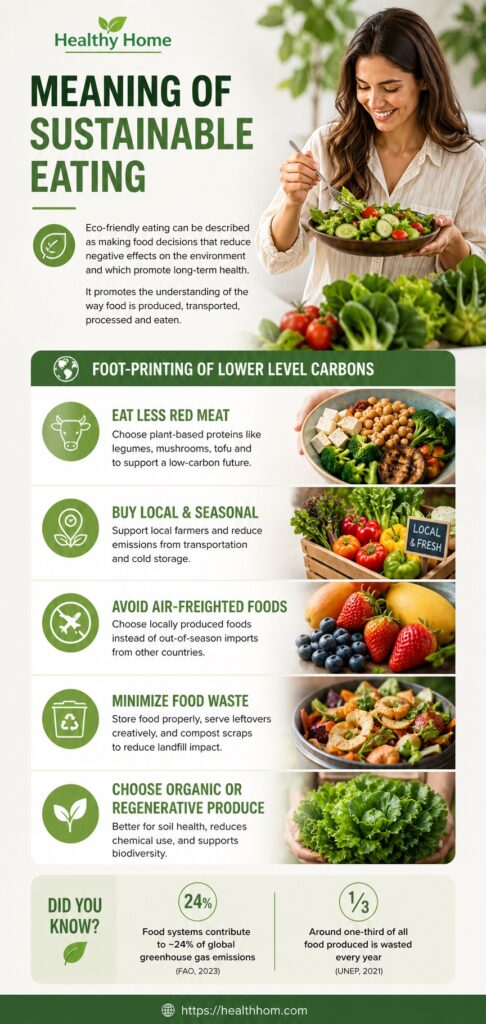
Foot-printing of lower level carbons
| Food Category | Environmental Impact (General Trend) |
|---|---|
| Red meat | Higher land and water use |
| Poultry and eggs | Moderate environmental impact |
| Dairy products | Moderate greenhouse gas emissions |
| Plant-based foods | Generally lower environmental footprint |
| Legumes and grains | Lower land and water requirements |
Source: The Lancet Planetary Health Diet Report 2019
- Conversations of water & energy
- Eating of maximum plant based foods
- Choose dry beans over canned: Boiling and cooking of beans reduces energy consumed in processing and packaging that is normally done industrially.
- Cooking through Steam or in pressure cooker : This method uses less energy and water as compared to boiling or oven baking of the food stuff.
- Batch cook meals: Cooking in a single round is efficient as it reduces the number of times the source of heat whether it is electricity or gas.
- This can be done by fixing leaks, as well as using water-efficient dishwashers such as the Water Saver Dishwasher. This translates into a saving of thousands of litres of water in the kitchen area per year.
- Soil rich with nutrients –
- Organic food from the choice:
- Purchase food from the farms whose produce is generated organically: These methods exclude undesirable chemicals, which are threatening for lab, improve the soil, and encourage the presence of various living beings.
- Plant heirloom or heritage crops: These are plant varieties that promote genetic diversity, and do not usually do well with artificial fertility products.
- Recognizes a variety of agriculture practices and promotes farming of many crops not just the single cash crops.
- Support local polyculture farms
- Compost kitchen waste: Replaces soil nutrients that have been lost and no use of artificial fertilizers on the farm.
- Practicing the old and ethical process
- Should choose only from certified organic products
- Pasture Raised or Free Range Animal Products consumption
- Supporting the Re-generative Agriculture practices
- Purchasing the produce from local or small scale farmers
- Fair trade goods may be ascertained
- Food waste with packaging to be minimized
- Try for shopping from a bulk bins
- Focusing the Compostable packaging always
- Meal planning and avoiding impulse buying is another effective way of avoiding wastage of food
- Refer to Brands of Zero-Waste or Low-Waste
- Have Meals with leftovers and turn to “Nose-to-Tail” eating
- Compost Food Scraps
Therefore, by adopting green solutions, it means that we have diets to match a healthy environment. As an example, people can switch the meat to lentils once a week, the use of local foods rather than the importation of goods. Avoid the use of polythene bags at the grocery shops for enhancing sustainability.
Comparison : Sustainable vs Conventional Food Choices
| Aspect | Sustainable Food Choice | Conventional High-Impact Choice |
|---|---|---|
| Food sourcing | Local and seasonal foods | Imported or air-freighted foods |
| Production system | Organic or regenerative farms | Intensive industrial agriculture |
| Packaging | Reusable or minimal packaging | Single-use plastics |
| Environmental impact | Lower carbon footprint | Higher resource consumption |
Source: Harvard T.H. Chan School of Public Health 2021

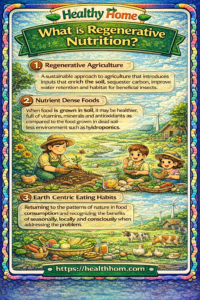
What is a Re-generative Nutrition?
With the former, the goal is to cause the least harm by avoiding some foods : with the latter, there is intentionally trying to do more good by consuming beneficial foods. It supports agriculture that not only harms nature and people, but actually improves the soil, earth and our health.
Therefore regenerative nutrition can be outlined as follows:
- Regenerative Agriculture : A sustainable approach to agriculture that introduces inputs & enrich the soil, sequester carbon, improve water retention and habitat for beneficial insects.
- Nutrient Dense foods : When food is grown in soil, it may be healthier, full of vitamins, minerals and antioxidants as compared to the food grown in dead soil-less environment such as hydroponics.
- Earth centric eating habits : Returning to the patterns of nature in food consumption and recognizing the benefits of seasonally, locally and consciously when addressing the problem.
- Ethical Animal Integration : This entails feeding livestock in manners similar to the grassland ecosystems, maintain and enhance the quality of pasture lands, and Cut down methane emissions.
Unlike industrial agriculture which exhausts the resources, regenerative practices build and restore the capacity of the bio-regions and the ecosystems and makes our food system more climate- resilient, drought- resilient and disease resilient.
Comparison : Regenerative Agriculture vs Industrial Agriculture
| Aspect | Regenerative Agriculture | Industrial Agriculture |
|---|---|---|
| Soil health | Focus on soil regeneration | Often leads to soil depletion |
| Biodiversity | Encourages diverse crops | Often monoculture systems |
| Chemical inputs | Limited synthetic chemicals | Higher fertilizer and pesticide use |
| Ecosystem impact | Supports natural ecosystems | May increase environmental pressure |
Source: Rodale Institute Regenerative Agriculture Report 2020
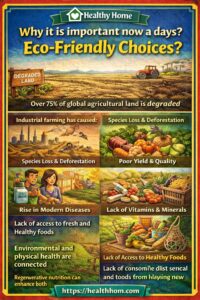
Why it is important now a days?
It is disheartening that more than 75% of the global agricultural land is already under different forms of degradation.
- Industrial farming has been identified as the biggest cause of loss of the diversity of species and deforestation.
- Yield decreases while the quality of foods decreases as seen by favorable soils.
- Modern diseases such as obesity, diabetes and autoimmune diseases are on the rise
- Lack of vitamins and minerals is quite widespread, including in person who think that they are taking good care of themselves
- Quite a number of communities do not even have a ready access to clean, fresh and whole foods
Whole, plant-based diets also help restore gut balance, discover foods that naturally heal your gut.
In other words, the well being of our physical selves and the physical environment is very much connected. Regenerative nutrition may support both environmental sustainability and overall well-being when practiced as part of a balanced lifestyle
Sustainable eating not only protects the planet but also supports emotional well-being, learn how food affects mental health.
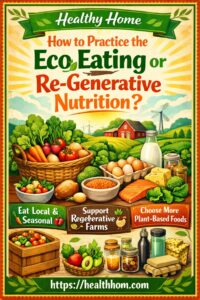
How to practice the eco eating or re-generative Nutrition ?
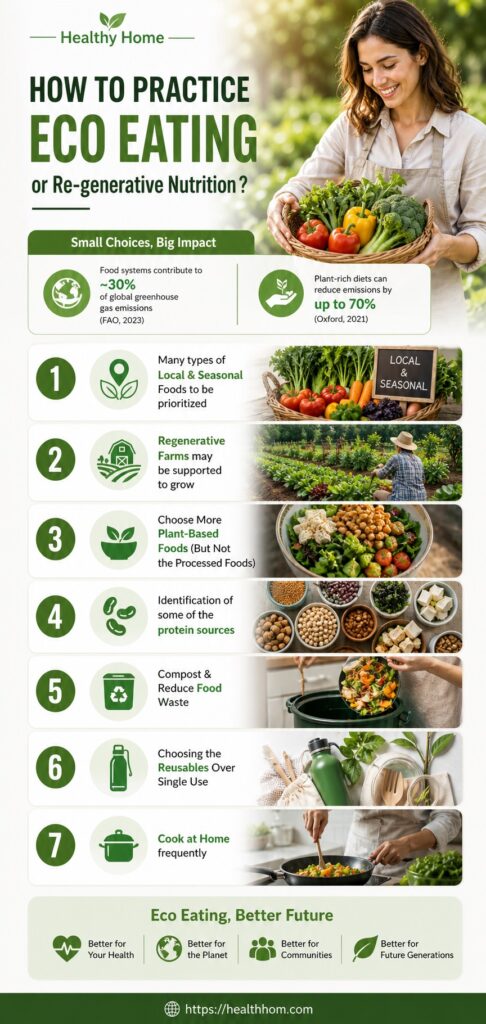
Simple Household Actions for Sustainable Eating
| Action | Environmental Benefit |
|---|---|
| Cooking at home | Reduces packaging and food waste |
| Buying from farmers’ markets | Supports local agriculture |
| Meal planning | Prevents food wastage |
| Using reusable containers | Reduces plastic waste |
| Composting food scraps | Returns nutrients to soil |
Source: Harvard School of Public Health Sustainable Diet Guide 2021
To get started practically, follow a structured approach like this 7-day gut health plan.
Here are some of the things that actually can help us transition to green living in our everyday life:
1. Many types of Local & Seasonal Foods to be prioritized
Consuming locally available foods also means that there’s no need for extensive use of refrigerants, cross-country transportation, or storage all of which release gases to the atmosphere. It also benefits the local farmers and provide fresh food that has more nutrients than the food produced far away.
But instead of consuming imported blueberries in the winter, it is better to eat carrots, beets or any other seasonal vegetables in the same period. This also makes sure that you are eating fresh foods by eliminating the use of poly-stuffs that affect the quality of food that is being transported.
Climate-resilient crops like millets are excellent sustainable choices, understand why millets are considered a nutritional gift.
Many types of Local & Seasonal Foods to be prioritized
| Benefit | Explanation |
|---|---|
| Reduced transport emissions | Shorter supply chains |
| Freshness and quality | Foods harvested closer to consumption |
| Support for local farmers | Strengthens local economy |
| Reduced storage energy | Less refrigeration and long-term storage |
Source: FAO Sustainable Diets Report 2019
2. Regenerative Farms may be supported to grow
Regenerative Organic Certified, Demeter (Biodynamic) and others, or simply cooking with local farmer grown products. In its simplest forms the organic foods can be procured from farmers markets or through local co-operative stores.
When choosing eggs for consumption, opt for those produced from regenerative farms that allow its hens to roam around on the pasture. The eggs then come from chickens feeding on grassland reared to rehabilitating the ground and plants hence better animal treatment and improved food.
3. Choose More Plant-Based Foods (But Not the Processed Foods)
Reducing meat consumption has been found to have a much smaller impact on the Earth’s ecosystem, but the emphasis should be placed on whole plant foods viz. pulses, vegetables, nuts, seeds and many types of whole grains.
Good choices: Some of example of health promoting types of foods include lentils, chickpeas, quinoa, sweet potatoes, green leafy, nuts, fresh fruits in season. Limit these: Soya meat substitutes, chemically-processed burgers with soya protein isolate, soya milk-flavored soya milk, packaged processed foods of vegan-protein.
Including fermented foods not only supports digestion but also aligns with eco-friendly eating, explore the benefits of fermented foods for gut health.
4. Identification of some of the protein sources
Animal agriculture can be categorized as one of the biggest contributors to earth’s maladies but regenerative grazing actually rebuilds soils.
We may have the option of:
- Grass feeding, pasteurized raised meats
- Fish from a sustainable fisheries
- Dairy (if you take dairy products)
Or even go plant based with beans, lentils, tofu and tempeh, though make sure it comes from organic agriculture farms or better still biodynamic.
Comparison : Plant-Based vs Animal-Based Protein
| Feature | Plant-Based Protein | Animal-Based Protein |
|---|---|---|
| Common sources | Lentils, beans, tofu, nuts | Meat, poultry, fish, dairy |
| Environmental impact | Generally lower | Higher resource demand |
| Land use | Lower land requirement | Higher land requirement |
| Carbon footprint | Typically lower emissions | Higher emissions |
Source: Harvard Nutrition Source 2022
5. Compost & Reduce Food Waste
A study shows that a shocking 40% of all food that is produced is never consumed. Composting is an innovative method to utilize the leftovers to completes the cycle & also to return the nutrient back to the soil.
- Do:
- Prepare food for several meals at once, use leftover food parts wisely, using freezing services for vegetables and fruits, and dispose cups, coffee grounds, and damaged vegetables with a compost bin.
- Avoid:
- Purchasing more quantities than required, preparing excess food and disposed due to discoloration or blemishes, disposing of scraps even if they could have been used as manure.
Common Causes of Food Waste
| Cause | Example |
|---|---|
| Over-purchasing | Buying more food than needed |
| Improper storage | Food spoiling early |
| Confusion over food labels | “Best before” vs “expiry date” |
| Large portion preparation | Leftovers discarded |
Source: UN Environment Programme Food Waste Index 2021
6. Choosing the Reusables Over Single Use
Place your egg/liquid products into your own bags, jars and container to avoid adding to the existing cases. Favor the bulk bins or brands that have used environmentally friendly packing materials.
- Use:
- Food storage boxes made from cloth, drink containers made of steel, glass containers used in storage of foods, beeswax food wraps, and reusable drinking straws made of metal.
- Avoid:
- Carrier bags, foods wraps, cups, plates, and straws, spoons and forks among others.
Sustainable Kitchen Practices
| Practice | Example |
|---|---|
| Reusable storage | Glass containers, steel bottles |
| Bulk purchasing | Buying grains and legumes in bulk |
| Energy-efficient cooking | Pressure cooking, steaming |
| Water conservation | Efficient dishwashing |
Source: UN Sustainable Consumption Guidelines 2022
7. Cook at Home frequently
Home cooking is more helpful in terms consuming less processed/takeaway meals.
Preparing meals at home supports both sustainability and family health, explore healthy food choices for families.
New Green nutrition food-philosophy which is beyond the Plate meal
Eco eating and regenerative nutrition therefore do not conform to the standard idea or concept of dieting or trying to count what one eats. They constitute the shift or the rebirth or going back to ‘tribal-ness’ form of eating. That means:
- Being conscious and appreciative of the provenance of food
- Knowledge, work and ecologies determinations
- They are grateful to what fosters you
It does not matter whether they make the changes perfect or not but whether they make them or not.
A mindful and sustainable diet can also reduce stress, learn how to reduce anxiety naturally.

Eco-Friendly Choices vs Less Sustainable Choices
| Eco-Friendly Option | Less Sustainable Option |
|---|---|
| Seasonal vegetables | Imported out-of-season produce |
| Whole grains | Highly processed snacks |
| Dry beans | Heavily packaged convenience foods |
| Reusable packaging | Single-use plastics |
Source: Harvard Sustainable Eating Guide 2021

Environmental Benefits of Sustainable Eating
| Environmental Benefit | Explanation |
|---|---|
| Lower greenhouse gas emissions | Reduced high-impact food consumption |
| Reduced food waste | Efficient food use |
| Conservation of water resources | Sustainable farming practices |
| Protection of biodiversity | Diverse crop cultivation |
Source: FAO Sustainable Food Systems Report 2022
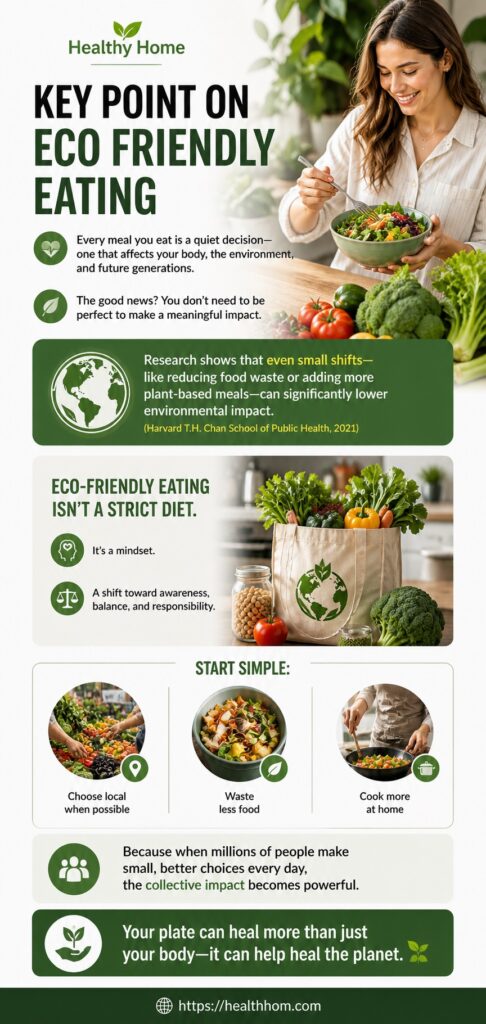
Key message : Eating for a better future
Every meal you are eating should focus your personal health, for the environment and future generations.
The important part is that you needn’t to be perfect for it’s impact.
As per the research published in Harvard T.H. Chan School of Public Health (2021), it shows that even small changes like reducing food waste, adding more plant-based meals may lower the overall environmental impact.
So, we came to know that eco friendly eating doesn’t mean a strict and complicated diet. It’s only awareness and responsibility of every individual to choose right food.
Start with a very simple like:
- Choose local when possible
- Waste less food
- Cook more at home
Because if millions of people make small, better choices every day, the collective impact becomes more effective.
Your daily diet plate may heal both your body and the planet.
FAQs:
Q1. What is eco-friendly eating?
Q2. What is the difference between regenerative nutrition and sustainable eating?
Q3. What is the significance of regenerative agriculture?
Q4. Can environmentally friendly eating are cheap?
Q5. Are all plant-based foods environmental friendly?
Related Health Articles from Healthy Home
- Learn what constitutes a balanced daily meal plan
https://healthhom.com/what-is-a-balanced-daily-meal-plan/ - Discover the role of fermented foods for supporting gut health
https://healthhom.com/fermented-food-for-gut-health/ - Explore foods that help heal your gut naturally
https://healthhom.com/foods-heal-your-gut-naturally/ - Understand how food affects mental health and well-being
https://healthhom.com/how-food-affects-mental-health/ - Find out what millet is and why it’s considered a human nutritional gift
https://healthhom.com/what-is-millet-its-gift-to-human/
Trusted References and Research Sources:Healthy Nutrition Guide for Families : Balanced Diet, Gut Health and Weekly Meal PlanHigh Protein Indian Diet Plan: 7-Day Family Meal Plan with Affordable Protein FoodsHealthy Living Guide for Families : Nutrition, Sleep and Daily Wellness Habits11 Iron Rich Foods During Pregnancy : Benefits and Healthy Meal IdeasWhat is a balanced daily meal plan? Nutrition Guide and 7-Day Diet Plan