Last Updated on June 13, 2026 by Bibhu Ranjan Mund, MPH
Discover 8 science-based fermented food for gut health, immunity, mood and digestion. Safe, practical guide for parents in 2026.
Reviewed by Bibhu Ranjan Mund, MPH (Public Health Expert) with experience in maternal, infant, child, and adolescent health programs. Content is based on evidence-informed guidelines aligned with organizations such as the World Health Organization, UNICEF, Centers for Disease Control and Prevention, and National Institutes of Health.
Medical Disclaimer: This content is for informational and educational purposes only and is not intended as medical advice, diagnosis, or treatment. Always seek the advice of a qualified healthcare professional regarding any medical condition or concerns.
Affiliate Disclosure: This article contains affiliate links. If you purchase through these links, we may earn a small commission at no extra cost to you.
Is the mood swings, acne or low energy level of your teen is linked with their gut?
You may think this as impossible, but the science is saying it’s a real truth.
As per the report of Harvard Medical School (2021), it shows that about 70% of the immune system of our body lives in the gut and there is a strong connection between gut health with digestion, skin problem and even mental wellness in adolescents.
During the adolescent age, most are involved in irregular eating, more stress, poor sleep, junk & processed food which actually creates problem in balancing the gut health. So that it leads to many issues like fatigue, mood changes, bloating etc. in adolescents.
The important thing is that, just a simple daily taking of fermented foods may help to restore the gut balance naturally.
In this article, you will find-out the 8 science-backed Fermented Food for Gut Health which may support in digestion, immunity and overall health of adolescents.
If you start with small, it can build a long-term health of your child.
Let’s start with these foods.
The microbiome of the gut digestive system promotes:
- Healthy digestion
- Nutrient absorption
- Immune balance
- Skin health
- Mood regulation
- Energy levels
New studies have suggested that a healthy microbiome in the gastrointestinal system can help to keep adolescents physically and emotionally healthy.
Quick Summary:
- Gut health is significant in the period of adolescence: like digestion, immunity, mood and skin.
- Fermented foods have the good bacteria which can contribute to the balance in the gut.
- Yogurt, idli, dosa, sourdough bread and fermented cheese are teen friendly.
- Foods that are hot or sour such as kimchi and kombucha should be introduced slowly.
- Always use natural fermentation and low sugar ones.
- Eat sparingly as a constituent of the diet.
- Teenagers who are allergic or medically challenged need to be advised on significant changes in their diet.
The importance of Gut Health in the Teenage Years
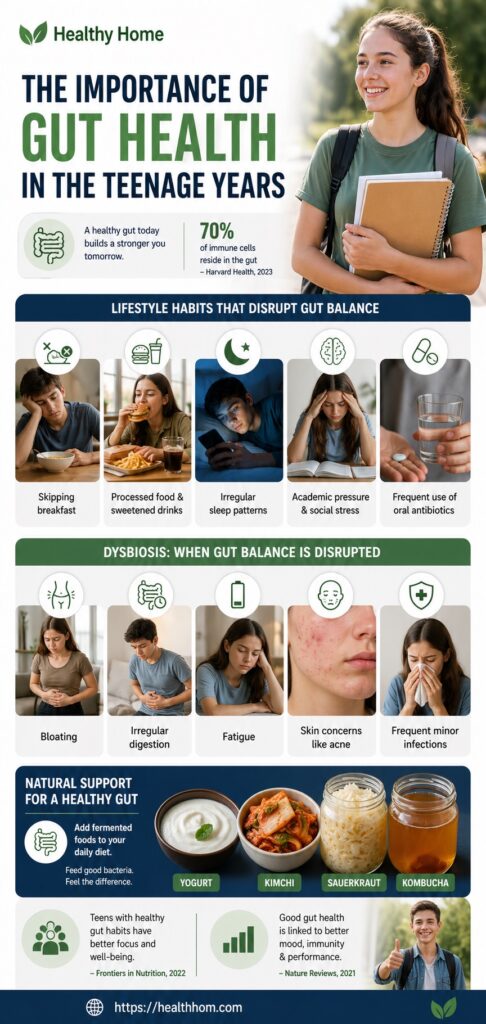
The lifestyle habits at adolescence stage may sometimes disrupt gut balance. Common factors include:
- Skipping breakfast
- Consumption of processed food and sweetened beverages in large amounts.
- Irregular sleep patterns
- Academic pressure and social stress.
- Frequent use of oral antibiotics (for acne or infections) may temporarily disrupt gut bacteria balance.
In case of disequilibrium in the gut (the state known as dysbiosis), adolescents may develop:
- Bloating
- Irregular digestion
- Fatigue
- Skin concerns like acne
- Frequent minor infections
Fermented foods could be added to the diet to be the natural support of microbial balance.
A well-structured balanced daily meal plan for teenagers plays a key role in maintaining gut health, immunity, and overall development.
The importance of Gut Health in the Teenage Years
| Indicator | Global Estimate | Source | Year |
|---|---|---|---|
| Adolescents worldwide | ~1.3 billion people | WHO | 2023 |
| Adolescents experiencing digestive issues periodically | ~20–30% | World Gastroenterology Organisation | 2022 |
| Percentage of immune cells located in the gut | ~70% | Harvard Medical School | 2021 |
| Teen diet influenced by |
Poor gut health can contribute to several common health challenges in adolescents, including stress, anxiety, and low energy levels.
What Are Fermented Foods?
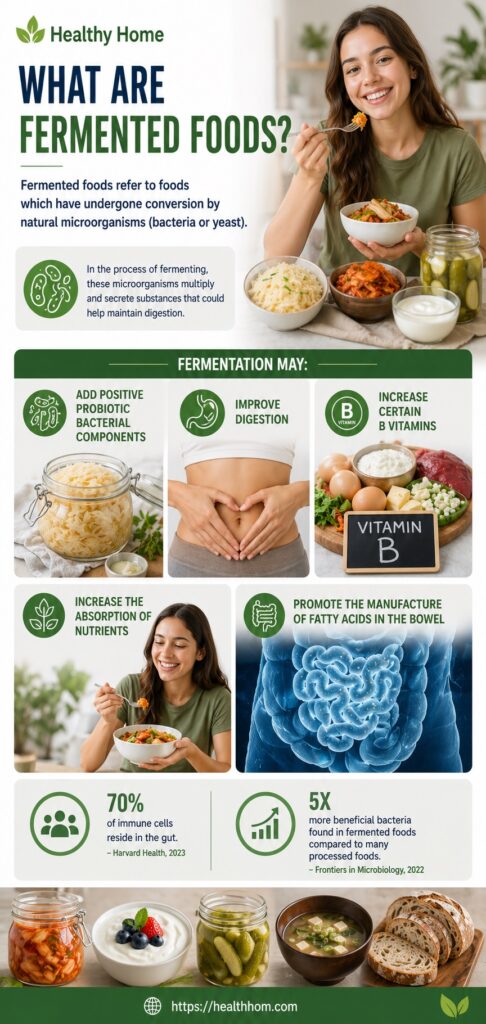
Fermented foods refer to foods which have undergone conversion by natural microorganisms (bacteria or yeast). In the process of fermenting, these microorganisms multiply and secrete substances that could help to maintain digestion.
Fermentation may:
- Add positive probiotic bacterial components.
- Improve digestion
- Increase certain B vitamins
- Increase the absorption of nutrients.
- Promote the manufacture of fatty acids in the bowel.
Including fermented foods is one of the natural ways to improve immunity and lifespan through better microbiome balance.
Eight fermented foods that may be appropriate with teenagers:
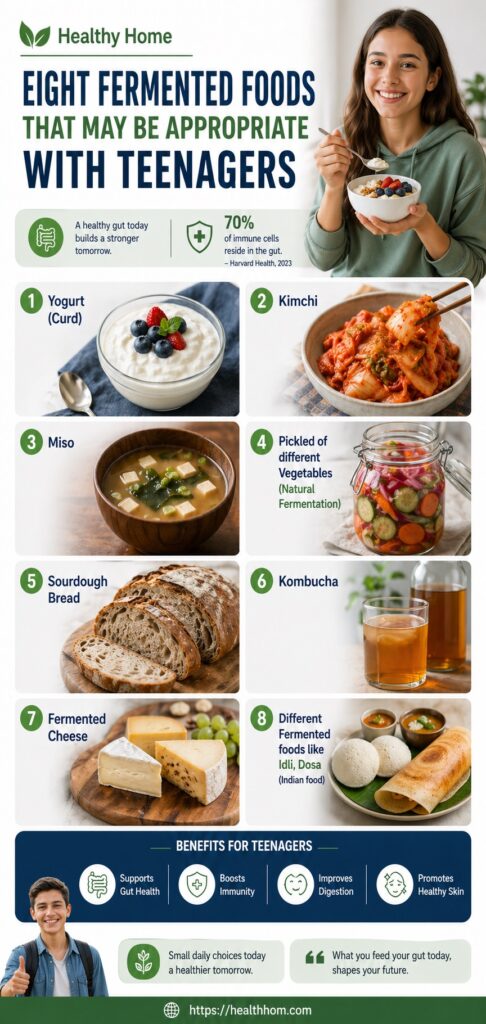
1. Yogurt (Curd)
One of the most available probiotic foods is yogurt. It has good bacterial populations of Lactobacillus and Bifido-bacterium.
Potential Benefits:
- Supports digestion
- Assists lactose digestion
- Fermented foods may help to restore gut balance after antibiotics, but teens should consult a healthcare provider.
- Gives the growing bones protein and calcium.
- A balanced gut may indirectly support healthy skin through reduced inflammation.
Some Tips:
- Select low fat plain, unsweetened yogurt.
- Add nuts, honey in small quantities or fresh fruit.
- Eat in smoothies or snack after school.
2. Kimchi
Kimchi is a conventional Korean food item made by lacto-fermentation of cabbage, radish and other vegetables along with garlic, chili pepper and incorporation of various spices.
Kimchi, typically is eaten because of its crispy texture and good probiotic quality and is described to have a pungent smell and spicy flavor.
Nutritional standpoint, kimchi:
- It also has many lactic acid bacteria and this increases the diversity within the gut microbiota.
- It contains a lot of phenolic antioxidants and soluble dietary fibers.
- May have beneficial qualities, that include a clearer head and decreased inflammation on a systemic basis.
The common ways to implement kimchi into the diet of adolescents are
- Put it in rice bowls, wraps, sandwiches, noodle bowls or swirl it in hot rice meals, fried rice or scrambled eggs
- Asian food palate to the diet; and letting those who like spicy foods enjoy it.
Combining probiotics with anti-inflammatory foods for better gut health can further reduce digestive discomfort and inflammation.
3. Miso
Other foods include the soybean paste called miso which is important in the Japanese foods.
It is prepared from a type of soybeans which left to ferment with salt & koji that is a type of special mold.
Benefits for Adolescents:
- Probiotics, protein & minerals
- It enhances the flavor.
- It contains iso-flavones that is able to regulate endocrine pathways in the body
Putting miso in soups especially miso soup is very effective.
- Do not heat it in any other way such as by boiling which destroys the live cultures.
- Miso may be consumed with bread
- Toss in sesame oil with garlic can be served as dipping sauce and also it is really delicious.
4. Pickled of different Vegetables which is a Natural Fermentation
Pickled vegetables by natural fermentation form another food category which differs with the vinegar-based pickles when it comes to the process of spoilage:
- Pickles are fermented in salt and water solution to such an extent that probiotic bacteria develops over a long duration of time.
- Intake of these preparations presents a number of clinical benefits to teenagers such as better digestion. Induction of satiety and the supply of dietary fibre.
- The use of commercial foodstuff not under the category is however, it is to be avoided because of their overdependence with vinegar and use of other preservatives.
- As substitutes to this industry product, retailers and home cooks will be encouraged to focus on fermented products containing label as live cultures, or to make their own salt-brine pickles.
5. Sourdough Bread
Sourdough is prepared through the fermentation of flour mixed with water in the presence of the indigenous yeast and bacteria, which makes the product more digestible than the ordinary bread.
- Epidemiology studies have shown that this type of fermentation is beneficial to teenager as compared to young adults because it is less gluten laced.
- The natural fermentation as used in the production of sourdough comparing to industrially kneaded bread increases bioavailability of micronutrients.
- Moreover, cleaner label product can be offered that no additives and preservatives typical of sourdough production are used.Sourdough can replace the sandwich bread or be used as a topping on a piece of toast.
- It also is a healthy energy source when taken together with the nutrient dense spreads like avocado, hummus or nut butter to help in the energy demands of the adolescents.
- Whole-grain sourdough bread is available who want to add more dietary fiber in their system.

6. Kombucha
It is like a fermented tea product which is filled with few good acids, enzymes & probiotics. Its fizzy nature makes it to be a delight to the teenagers, who usually find its flavour matching with the taste of carbonated drinks.
- The facts show that kombucha can help to rationalize gastro-intestinal issues, including bloating and enzyme digesting, and deliver a nutritionally enhanced substitution to high- sugar carbonated liquids.
- Also, the action of certain polyphenolic components can suppress the harmful effect of oxidative stress that, in turn could promote mood and homeostasis in energy levels.
- It is still not possible to come up with concrete findings about its safety and/or efficacy, since clinical trials are ongoing and the current article is unable to show any conclusive results.
- An adequate consumption is advised between 100 and 150 ml of intake per day, but not exceeding high sugar content.
- Evening dosage should be done with caution as a lot of commercial preparations contain caffeine.
Not recommended for children under 12. Choose low-sugar, certified brands.

7. Fermented Cheese
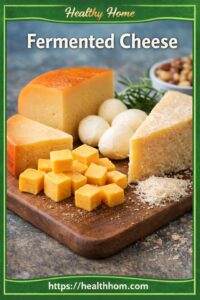
Some cheeses, especially cheddar, gouda, mozzarella and parmesan are aged as well as undergoing the process of natural fermentation, which generates useful bacteria.
Such type of microorganisms are having actic acid bacteria & bifido-bacteria.
- More of this kind of cheese has protein and calcium.
- An average 28 grams serving provides about 12 % of Daily Value calcium, 10 % protein and 10 % vitamin B12.
- On the impact on gut microbiota, eating these cheeses was found to increase the variety of intestinal bacteria when eaten in reasonable quantities.
- The food products are also easily incorporated into the diets usually followed by teenagers and can be fitted in packed lunch, sandwiches and snacks during and after exercise.
- Raw or simply artisanal cheeses with labeling of either aged or cultured are the best to give maximum benefits.
- On the contrary, cheese slices and spreads should be avoided which are highly processed.
8. Different Fermented foods like idli, dosa which is an Indian food
Other preparations made by the Indians like idli, dosa, appam, and dhokla are obtained after fermenting rice and lentils overnight so besides increasing the digestibility, it also increases the nutritional value.
- Fermented and this slow absorption of the carbohydrates is easier on the gastrointestinal tract
- The end product is a balanced combination of macronutrients where the complex carbohydrates are combined with the vegetal protein.
- The fact that these foods are usually soft and light textured means that they can be used by the picky eaters.
One can also eat sambar or coconut chutney. Another way is to give dosa batter an extra strength by adding grated vegetables, which further helps in adoring extra fiber. Fermented foods can also be provided to the adolescents with the help of progressive acclimatization and habituation.
Initiation of Fermented Foods to the adolescent people:
It is usually necessary to develop a step-by-step process to make fermented foods appealing to the teenage audience.

Introduction of Fermented Food to Teenagers.
- Start with yogurt
- Serve in small amounts at a time.
- Allow teenagers to engage in cooking.
- Mix fermented foods with other well-known foods.
- Provide diversity and do not coerce.
- Consistency is more important than variety when starting
Healthy gut practices often begin with early nutrition habits in children, which shape long-term digestion and immunity.
Safety Considerations
Although fermented foods are considered to be safe to healthy people, it is important to take into consideration the following:
- Foods containing high amounts of salt (such as pickles) should be consumed in moderation.
- Dairy or soy allergic teens are not to be exposed to trigger food.
- Individuals who have persistent digestive disorders need to see a medical practitioner.
- Foods that are not eaten before should be introduced slowly.
- This is an informative topic which is not a substitute of medical consultation.
Using healthy cooking practices for better nutrition ensures fermented foods retain their beneficial bacteria.
The Gut-Brain Connection
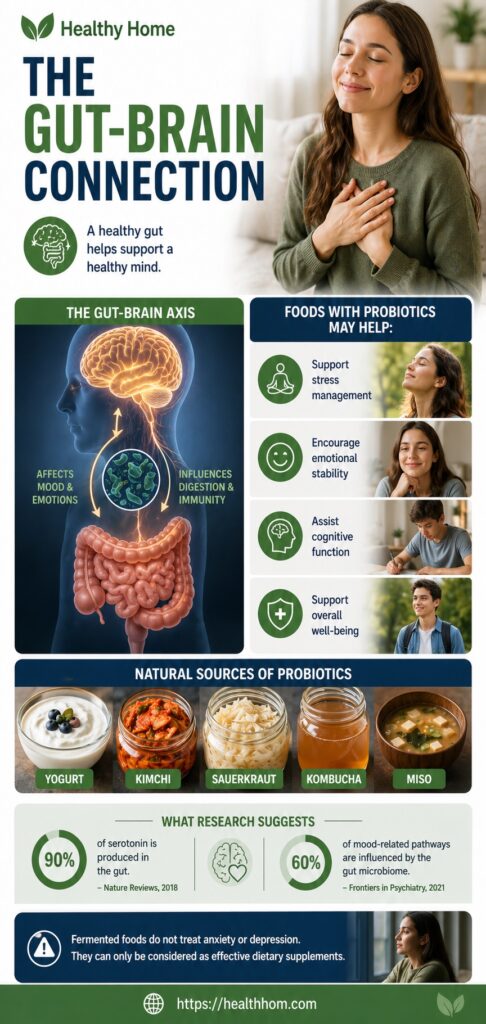
The studies of the gut-brain axis have indicated the possibility of the gut bacteria in the regulation of mood and emotional balance.
It has been reported that foods with probiotics in them can:
- Support stress management
- Encourage emotional stability.
- Assist cognitive function
Nevertheless, fermented foods do not treat anxiety and depression. They can only be considered as effective dietary supplements.
Emerging research shows how food affects mental health, highlighting the strong link between gut bacteria and emotional balance in adolescents.
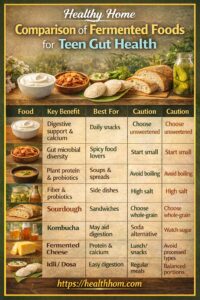
Comparison of Fermented Foods for Teen Gut Health
| Food | Key Benefit | Best For | Caution |
|---|---|---|---|
| Yogurt | Digestive support & calcium | Daily snacks | Choose unsweetened |
| Kimchi | Gut microbial diversity | Spicy food lovers | Start small |
| Miso | Plant protein & probiotics | Soups & spreads | Avoid boiling |
| Fermented Pickles | Fiber & probiotics | Side dishes | High salt |
| Sourdough | Easier digestion | Sandwiches | Choose whole-grain |
| Kombucha | May aid digestion | Soda alternative | Watch sugar |
| Fermented Cheese | Protein & calcium | Lunch/snacks | Avoid processed types |
| Idli / Dosa | Easy digestion | Regular meals | Balanced portions |
Public Health Insight:
Regular inclusion of small fermented portions (2–3 times weekly) may support microbial diversity in adolescents.
Suitable Fermented Foods Based on Teen Needs
The selection of the correct fermented food is dependent on health objectives of your teenager. The following is a brief parent friendly guide of comparison that can be used to determine what is best.
1. For Acne-Prone Skin → Yogurt (Curd).

Why it helps: Plain yogurt has positive bacteria such as Lactobacillus which can help to maintain gut balance. The gut-skin axis is known to be associated with inflammation, and thus healthy digestion can have an indirect positive effect on clear skin.
Best way to serve:
- ½ to 1 cup (100–200g) per day.
- Add nuts or fruit that has been moistened.
- Replacement of sugary drinks with smoothies.
Parent Tip: Do not use flavored yogurts with high quantities of added sugar.
2. For Energy & Growth → Sourdough + Idli/Dosa:

Why it helps: Naturally fermented grains also increase nutrient absorption and could increase the availability of B-vitamins. The foods contain consistent-release carbohydrates, which are best in school, sports and growth spurts.
Improved nutrient absorption through fermented foods can support preventing anemia in adolescents through diet.
Best options:
- Whole-grain sourdough toasted bread with peanut butter.
- 2–3 idlis with sambar
- Added fiber vegetable dosa.
Good when: it is an active day of teenagers, exam time, morning sports practice.
3. For Immune Support → Kimchi

Why it helps: Kimchi has a wide variety of lactic acid bacteria which could maintain the diversity of microbes. Gastrointestinal resistance is associated with a healthy microbiome.
How to introduce:
- Start with 1–2 tablespoons
- Mix into rice bowls or wraps
- Add to scrambled eggs
Precaution: Select low-salt types and add gradually to the diet of the teen in case he is not accustomed to spicy food.
4. School lunch and snacks Fermented Cheese.

Why it helps: Older cheeses such as cheddar or gouda are also good sources of protein, calcium and helpful bacteria (although not as much as yogurt). They are easily packaged, nutritious and youthful friendly.
Smart choices:
- 1 small cube (20–30g) in lunch box
- Pair with whole-grain bread
- None of the processed cheese slices.
Good on: Rushing school days and after-sports snacks.
Maintaining hygiene alongside diet helps prevent digestive infections naturally and supports gut health.
Quick Comparison Table
| Teen Need | Best Fermented Food | Key Benefit | Ideal Frequency |
|---|---|---|---|
| Acne Support | Yogurt | Gut balance & calcium | 4–5x weekly |
| Energy & Growth | Sourdough / Idli | Steady energy release | 3–4x weekly |
| Immune Support | Kimchi | Microbial diversity | 2–3x weekly |
| School Snacks | Fermented Cheese | Protein & convenience | 3–4x weekly |
Expert Insight :
Smaller and regular portions (instead of huge portions every now and then) are more helpful in maintaining the health of the teen gut. Diversity + moderation is key.
Concluding to Fermented Food for Gut Health:
Teenage is the foundation to a healthy adult and gut health plays a key role as most parents need to realize it.
As per the research of Harvard Health (2021) & Nutrition Society Review (2024), they show that the adding fermented foods can support the microbial balance and overall wellness.
But, important thing is that, it’s not counselling about eating more, but suggestion to eat smartly.
Start with small today and keep consistency.
If you will consistently provide a bowl of yogurt, a serving of idli (south Indian breakfast) or a slice of sourdough may improve the health of your teen in long-term.
Dramatical changes or strict costly diet is not required, it’s only focus on a simple science-backed habits.
Which fermented food will you introduce to your teen first?
- Yogurt
- Idli/Dosa
- Sourdough
- Kimchi
Because better gut health today means a healthier and stronger tomorrow.
Adopting healthy food choices for long-term wellness ensures sustained gut health and overall adolescent development.
FAQs:
1. Fermented foods: Are they safe in adolescents?
Yes, in a moderate amount, as a part of a moderate diet.
2. What is the recommended frequency of the consumption of fermented foods by teens?
Small portions taken on a daily basis (yogurt or idli) can be added.
3. Are fermented foods effective in the treatment of acne?
Some research suggests gut balance may influence skin health, but results may vary.
4. Is it safe to use antibiotics while taking fermented foods?
Probiotic foods and yogurt can be used to maintain gut balance but a medical practitioner should be consulted.
Related Health Articles from Healthy Home:
- Healthy Food Choices for Lifelong Wellness
➤ https://healthhom.com/healthy-food/ - What Is Millet? Its Gift to Human Health and Nutrition
➤ https://healthhom.com/what-is-millet-its-gift-to-human/ - Health Benefits of Papaya
- Low-Carbon Cooking: Sustainable Nutrition for Health & Planet
➤ https://healthhom.com/low-carbon-cooking/ - How to Minimize the Risk of Worm Infestation – Hygiene & Nutrition Tips
➤ https://healthhom.com/how-to-minimize-the-risk-of-worm-infestation/
Trusted References and Research Sources:
1. Milestone Development of a Child – Research Insights
https://pmc.ncbi.nlm.nih.gov/articles/PMC9003261/
A detailed research-backed review on child developmental milestones and neurological growth patterns.
2. Long-Term Risks of Malnutrition & Adolescent Anemia
https://pmc.ncbi.nlm.nih.gov/articles/PMC12249102/
Scientific analysis exploring how adolescent anemia impacts long-term health and development.
3. Fibre & Fermented Foods – Microbiota–Gut–Brain Axis
https://www.cambridge.org/core/journals/proceedings-of-the-nutrition-society/article/fibre-fermented-foods-differential-effects-on-the-microbiotagutbrain-axis/1FCFCF34665A6E10E34928301CA9EDE3
An in-depth look at the unique effects of fiber and fermented foods on gut microbiota and brain function.
4. Neurobiology & Fermented Foods – Scientific Review
https://www.sciencedirect.com/science/article/pii/S0149763424000307
Explores how fermented foods influence neurobiology, gut health, immunity, and overall wellbeing.
5. Fermented Foods for Better Gut Health – Harvard Health
https://www.health.harvard.edu/blog/fermented-foods-for-better-gut-health-201805161607
Harvard Medical School guidance on how fermented foods improve digestion and gut microbiome balance.
6. Probiotics & Fermented Food Products – Health Benefits
https://www.researchgate.net/publication/7084027_Probiotics_and_their_fermented_food_products_are_beneficial_for_health
ResearchGate publication explaining broad health benefits of probiotic-rich fermented foods.
8. Gut Microbiota & Fermented Foods – Updated Review
https://pmc.ncbi.nlm.nih.gov/articles/PMC11311591/
A comprehensive review of how fermented foods influence gut microbes and metabolic health.
9. Probiotics – Cleveland Clinic Guide
https://my.clevelandclinic.org/health/treatments/14598-probiotics
Trusted medical overview of probiotics, their uses, and benefits for digestive and immune health.
10. Probiotics – Mayo Clinic FAQ
https://www.mayoclinic.org/healthy-lifestyle/nutrition-and-healthy-eating/expert-answers/probiotics/faq-20058065
Mayo Clinic experts answer the most common questions about probiotics and their safety.
11. Fermented Foods & Their Health-Promoting Components
https://www.researchgate.net/publication/367434538_Fermented_Foods_Their_Health-Promoting_Components_and_Potential_Effects_on_Gut_Microbiota
Explores bioactive compounds in fermented foods and their effects on gut microbiota.
12. Fermented Foods & Human Gut Microbiome – Review Article
https://pmc.ncbi.nlm.nih.gov/articles/PMC6723656/
Scientific insights into fermentation, probiotic strains, and gut health improvement


About the Author – “Bibhu Ranjan Mund”, Master in Public Health (MPH) from IIHMR University, Jaipur (Rajasthan) has more than 18 years of experience in Public Health activities in maternal health, child health, adolescent health, nutrition and community wellness programs under National Health Mission, Health & Family Welfare Department, Odisha. He is the founder of “Healthy Home” and translates the evidence based public health information into a practical source so that families may able to apply in everyday life. All the information are for educational purposes only and not replaces the professional medical advice. ORCID Researcher ID – 0009-0003-0158-4992. Connect LinkedIn – https://www.linkedin.com/in/bibhu-ranjan-mund-b72171358/