Outdoor Wellness: Benefits of Sunlight and Nature for Health
Discover how sunlight and nature improve mental health, immunity, sleep and child development. Simple outdoor wellness tips for families.
Reviewed by Bibhu Ranjan Mund, MPH (Public Health Expert) with experience in maternal, infant, child, and adolescent health programs. Content is based on evidence-informed guidelines aligned with organizations such as the World Health Organization, UNICEF, Centers for Disease Control and Prevention, and National Institutes of Health.
Medical Disclaimer: This content is for informational and educational purposes only and is not intended as medical advice, diagnosis, or treatment. Always seek the advice of a qualified healthcare professional regarding any medical condition or concerns.
Introduction:
Do you ever think that just stepping outside, you family can improve the sleep, mood and immunity without having a supplement?
As per the study report of Harvard T.H. Chan School of Public Health (2023), it shows that people are spending about 90% of their time in indoor. So, rising issues like stress, poor sleep, lacking vitamin-D level etc. are now a common issue even in children.
But the important and relax part is :
The report of National Institute of Health (2019) and World Health Organization (2022), they show that by just 10-30 minutes of daily sunlight and nature, it may improve the mental health, sleep quality and overall health & well-being.
Still, most of the families don’t realize the truth of this free medicine. In this article, you will find-out the benefits of Outdoor Wellness and others as follows:
- Why sunlight and nature are essential for modern health
- Science-backed benefits for children and adults
- Simple, realistic ways to add outdoor wellness into your daily routine
Outdoor activities also support digestion, this gut health plan for families explains how lifestyle habits improve your microbiome naturally.
Quick Summary :
- The morning sunlight is known to regulate sleep, mood and hormones.
- Exposure to nature decreases stress and helps in maintaining a healthy mind.
- Outdoor activities enhance development and bonding of family members.
- Outdoor movement is easy and pleasurable.
- Even 10-30 minutes of time a day outdoors can be beneficial in terms of health.
- More green time, less screen time helps to make lifestyles healthier.
Why today, sunlight and nature play an important role?
Nature has not made our systems for surviving inside a home. People started out living outside in nature, in accordance with the sun’s cycle. Most of us spend 90% or more of our time inside and children are usually outside playing on their own for only about 10 minutes per day. More cases of anxiety, sleep problems, gaining weight, vitamin D shortage and attention difficulties can be related to this disconnection.
Global Indoor Lifestyle Trends
| Indicator | Global Estimate | Source |
|---|---|---|
| Average time people spend indoors | ~90% of daily life | Harvard T.H. Chan School of Public Health (2023) |
| Children’s outdoor playtime compared to previous generations | Declined significantly in many countries | UNICEF Child Development Report (2021) |
| Screen time among children (average) | 4–7 hours per day in many regions | WHO Digital Health Guidelines (2020) |
| Nature exposure linked with improved well-being | Observed in multiple population studies | NIH Environmental Health Perspectives (2019) |
Encouraging outdoor routines is a key part of building healthy lifestyle habits for adolescents in today’s digital world.

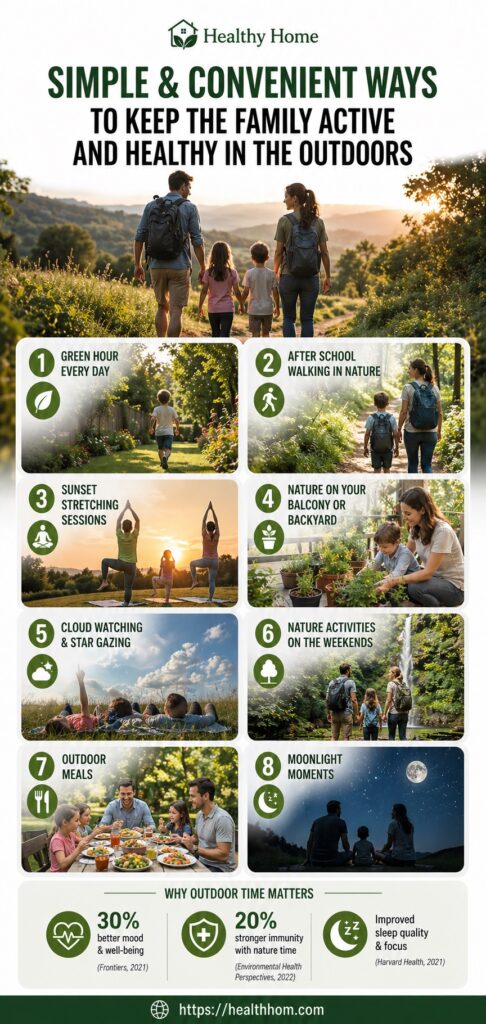
Evidence proving outdoor time is good for us:
1. Makes us feels better and relieves stress:
Being outdoors activates the parasympathetic nervous system, which helps the body to relax, digest and recover.
- Minimize depressed mood and worry tendencies
- Ease the feelings of sadness and make people happy.
- It was also found out that spending time in nature helped children with Attention Deficit Hyperactive Disorder (ADHD) to have an easier time concentrating compared to a time spent in cities.
Research Findings on Nature and Mental Well-Being
| Study Finding | Observation | Source |
|---|---|---|
| Time spent in natural environments linked to improved mood | Observed in population studies | Harvard Health Publishing (2022) |
| Exposure to green spaces associated with lower stress levels | Observed in environmental psychology research | NIH – Environmental Health Perspectives (2019) |
| Nature activities linked with improved attention in children | Observed in behavioral studies | University of Illinois Child Development Research (2018) |
| Outdoor recreation associated with improved emotional well-being | Observed across multiple surveys | Mayo Clinic Health System (2021) |
2. Enhances a More Immunological System:
Environment surrounding by trees increases the amount of phytoncides found in the air which are known to be antimicrobial. It has been established that these substances do the following:
- Increase the functioning of white blood cells
- Reduce inflammation
- Raise the immune system’s effectiveness
- Because of this, forest bathing is now seen to have healing power globally.
Combining outdoor exposure with anti-inflammatory foods can further strengthen your immune system and reduce chronic inflammation.
3. Enhances the sleep process and makes the body follow a normal sleep rhythm.
Natural sunlight in the morning boosts your cortisol which is necessary for a good day’s start and helps to generate melatonin in your system at night.
Sunlight:
- Helps people fall asleep more quickly
- Helps regulate how the body sleeps
- Cuts down the need for taking artificial melatonin.
Young people who wake up early can use morning light to restore regular sleep and feel more awake in the day.
Exposure to natural sunlight plays a key role in improving sleep quality naturally by regulating your circadian rhythm.
4. Promotes physical activity:
Time spent in nature motivates kids to run, climb, jump and crawl. Children love the freedom of playing outside and being active with friends, more than they like doing indoor workouts. Outdoor activities generally include everyone and can be adjusted which helps the whole family get involved.
Indoor vs Outdoor Movement Patterns
| Activity Environment | Typical Behaviour | Lifestyle Impact |
|---|---|---|
| Indoor screen activities | Sitting, minimal movement | Sedentary behavior |
| Indoor structured exercise | Limited time commitment | Moderate activity |
| Outdoor free play | Running, climbing, exploration | Higher natural movement |
| Outdoor family activities | Walking, cycling, sports | Supports active lifestyles |
Source: WHO Physical Activity Guidelines (2020)
Staying active outdoors should always be paired with a proper hydration routine to maintain energy and prevent fatigue.
5. Achieves skills to stand ups and downs:
Being in nature gives people opportunities to be creative, solve challenges and manage their emotions.
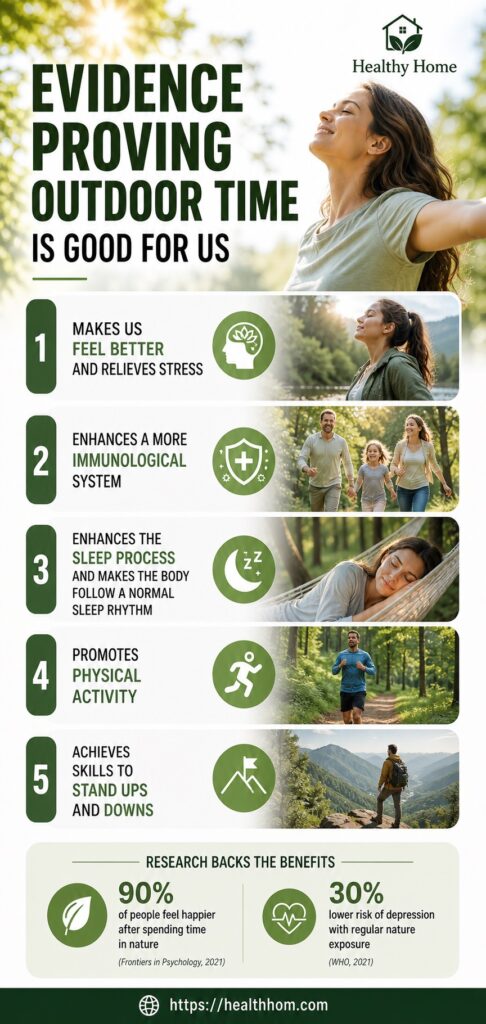
Children are very easily affected by nature deficit. According to pediatricians and child psychologists, a lack of enough outdoor activities may cause the following:
- People are distracted more easily.
- Inability to control emotions
- More issues related to behavior
- The brain cannot handle all the information it gets from the senses.
Regular outdoor play is essential for overall child health and development, supporting physical, emotional and cognitive growth.
Simultaneously, going out into nature on a routine basis:
- Aids in better academic results
- Enhances self-confidence
- Cuts down on bad behavior and extreme activity
Playtime outside does count in the brain development not just as the fun factor.
Observed Developmental Benefits of Outdoor Play
| Area of Development | Observed Benefit | Source |
|---|---|---|
| Cognitive development | Nature play associated with improved attention | American Academy of Pediatrics (2019) |
| Emotional well-being | Outdoor play linked with reduced stress | Harvard Center on the Developing Child (2021) |
| Social skills | Cooperative play observed during outdoor activities | UNICEF Child Friendly Cities Report (2020) |
| Physical development | Outdoor play associated with increased physical activity | WHO Child Physical Activity Guidelines (2020) |
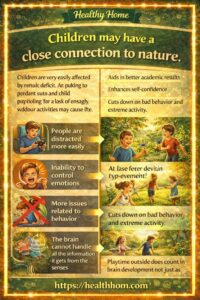
The Morning Sun-light
Sunlight of different strengths and qualities exists. Exposure to early morning light before 10 o’clock is very good for you. Because:
- A Low UV Index means your skin will be safe, especially for young children.
- Helps regulate your natural sleep and hormonal cycles.
- A good mood is due in part to serotonin which is made by melatonin
3-Minute Morning Sun Ritual
- At the start of your day, go outside (with bare feet if you can) and sunlight your face for about 3 to 5 minutes.
- Adding a mantra, stretching or breathing can make you feel more grounded.
General Sunlight Exposure Considerations
| Factor | General Observation | Source |
|---|---|---|
| Morning sunlight exposure | Supports natural circadian rhythm | NIH Circadian Biology Research (2020) |
| Early daylight exposure | Linked with improved sleep timing | Harvard Medical School Sleep Research (2021) |
| Short outdoor exposure | Often sufficient for daily sunlight contact | WHO Environmental Health Guidance (2022) |
| Excessive midday sun | Higher UV intensity during peak hours | World Health Organization UV Radiation Report (2021) |
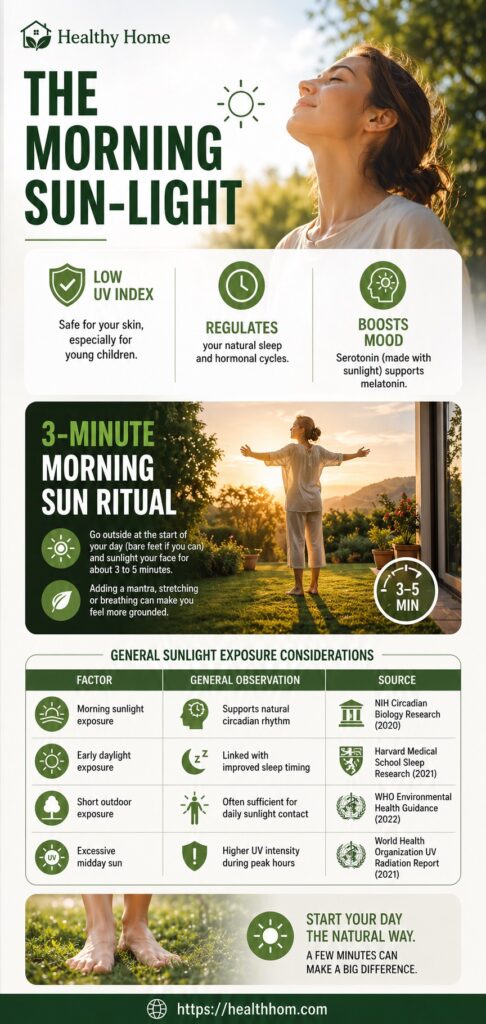
Simple and convenient ways to keep the family active and healthy in the outdoors:
It is not only about those hard experiences of climbing and establishing giant holidays. Here we will discuss easy steps you can take to benefit your wellness by getting outside.
- We should have a green hour in our days : Try to set aside an hour every day for your child to play or relax in the unstructured way they like. You might take your walk in your garden, a nearby park or just a short walk outside your house.
- After School Walking in Nature : A walk should be part of your regular routine instead of your child playing games right after school. Discover birds while you are walking, count the flowers or start a game to involve the children.
- Sunset Stretching Sessions : Do a walk or a short yoga class together with your family outside as the sun begins to set. Spend some moments together, talk about what happened today and connect again.
- Nature : On your Balcony or in the backyard place, we may pot greens, herbs and some nature items in a small part of your home. Suggest that kids should either care for the plants or just sit and watch over time.
- Cloud Watching & Star Gazing : Lay on the ground, raise your eyes and identify different forms in the clouds. Coloring lets children relax and notice what is happening in their world.
- Nature activities on the weekends : Explore botanical gardens, beaches or forests around you. List nearby places in nature and plan to visit one each week.
- Outdoor Meals : Taking meals outside, for a picnic or just having breakfast, is always a little more refreshing and mindful.
- Moonlight Moments : Take some time outdoors in the evening, admire the moon, point out constellations and tell stories as you stare up into the night sky. It allows us to feel more wonder, creativity and appreciation.
Ways to make spending time outdoors:
- Put the rules not to allow the use of phones or tablets during outdoors.
- Stay positive: Having the right equipment, both weather conditions are enjoyable for you.
- Try to get out just for 10 minutes; spending that small time outside matters.
- Understand that perfection is not about outdoor wellness, but consistency is the key.
- Gaining experience is most important. See what excites your child: Interact with dirt, bugs, sticks and leaves to help them grow and know that these items offer learning benefits.
Learning in the open-air environments Education:
Not only the play outside increase well-being, but it also gives children an opportunity to learn something:
- Science: Watch insects, distinguish the plants growing in your area and watch cloud movements.
- Math: Add up the rocks, take the measurements of shadows and guess how far away objects are.
- Make nature journals, with children writing stories or poems in them.
- Arts: Have children play expressively with materials of nature such as the stones, leaves and twigs.
Children learn better and remember lessons more when they use natural methods than when they are taught in a classroom.
Vitamin D which protects us from the sun:
It improves the condition of the immune system, bones and mood.
A short time (10–20 minutes) outside, without applying sunscreen on your arms and legs, can produce enough vitamin D. This is to blend attention to the environment, the economy and development.
- Avoid going outside when the sun is strongest when UV rays are strongest, from 10 a.m. to 3 p.m.
- Note the sites of your skin that are problematic and the type of those problems.
- If you are outside after your vitamin D window, put sunscreen.
When your child does not get much sunshine, especially in winter months, talk with the doctor about using vitamin D drops.
Sunlight and Vitamin D Context
| Topic | General Information | Source |
|---|---|---|
| Sunlight exposure | Main natural source of vitamin D | NIH Office of Dietary Supplements (2022) |
| Vitamin D role | Associated with bone and immune health | NIH (2022) |
| Limited sun exposure | May contribute to lower vitamin D levels | WHO Nutrition Reports (2021) |
| Dietary sources | Fish, fortified dairy, eggs | USDA Nutrition Database (2022) |
More read from our article on : Vitamin-D crisis :What happens when pregnant mothers lack it?

Nature and Mindfulness usefully combined for healing.
Spend time outside also by being mindful:
- Spend 2 minutes listening to the birds, without watching what is around you.
- Walk barefoot on the ground of the earth or the lawn.
- Watch or sense five senses simultaneously or take part without making a sound.
- Performing these small exercises moves the nervous system, making people appreciate peace and beauty in the future.
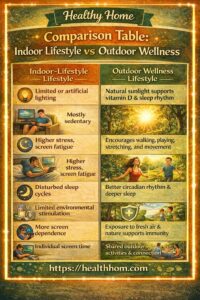
Comparison Table: Indoor Lifestyle vs Outdoor Wellness
| Aspect | Indoor-Dominant Lifestyle | Outdoor Wellness Lifestyle |
|---|---|---|
| Sunlight Exposure | Limited or artificial lighting | Natural sunlight supports vitamin D & sleep rhythm |
| Physical Activity | Mostly sedentary | Encourages walking, playing, stretching, and movement |
| Mental Health | Higher stress, screen fatigue | Reduced stress, improved mood & calmness |
| Sleep Quality | Disturbed sleep cycles | Better circadian rhythm & deeper sleep |
| Immune Support | Limited environmental stimulation | Exposure to fresh air & nature supports immunity |
| Child Development | More screen dependence | Better focus, creativity & emotional regulation |
| Family Bonding | Individual screen time | Shared outdoor activities & connection |
Suggested Outdoor Time (General Wellness Guidance)
| Age Group | General Outdoor Time Recommendation | Source |
|---|---|---|
| Preschool children | Several periods of active outdoor play daily | WHO Physical Activity Guidelines (2020) |
| School-age children | At least 60 minutes of physical activity per day | WHO (2020) |
| Adults | Regular outdoor activity encouraged | CDC Physical Activity Guidelines (2021) |
| Families | Shared outdoor time supports healthy routines | Harvard Health Publishing (2022) |
Easy tips for wellness of families:
- Performing morning rituals helps you to sleep enough and be in a good mood
- After school, having a nature walk benefits focus and lowers the time of watching screens.
- Taking time daily for green hour helps children become more creative and active.
- A balcony nature spot lets nature into busy cities.
- Star-gazing activities encourage people to be more interested in the sky and relaxed.
Spending time outdoors also supports women’s holistic health, including hormonal balance, mood and overall well-being.
Key-points:
Out of the much complicated health advices, outdoor wellness is a very simple among them.
As per the research of World Health Organization (2022) and Harvard Health (2021), they show that regular exposure to sunlight and nature may support the better sleep, stronger immunity, improved mood and also healthier childhood development.
But, all of these don’t require any dramatical lifestyle changes. It can be started with a very small step like:
- A 10-minute morning walk
- Watching the sunset with your family
- Children to play freely outdoors
These simple steps my improve the overall health and can build the connection to nature, resilience and lifelong good habits. Health isn’t be built just in gym or any clinics, but it is also possible in natural sunlight, fresh air and outdoor activities.
So step outside today and your body & your family will thank you for this noble solution. Spending time in nature has been shown to support mental and emotional well-being and may complement healthy lifestyle habits.
Daily Outdoor Wellness Checklist
| Habit | Example |
|---|---|
| Morning sunlight exposure | Short outdoor walk |
| Nature play for children | Park play or gardening |
| Reduced screen time | Outdoor family activity |
| Evening relaxation | Sunset walk or stretching |
| Weekend nature trips | Park, forest or beach visit |
Source: Mayo Clinic Lifestyle Wellness Guidance (2022)
Regular outdoor activity is a simple yet powerful habit for preventing lifestyle diseases such as obesity, diabetes and heart conditions.
FAQs
1. What is outdoor wellness?
2. What are the advantages of sunshine on human health?
3. What is the importance of spending time in nature for children?
4. What is the recommended outdoor time of the families?
5. When is the most appropriate time of the day to receive sunlight?
Related Health Articles from Healthy Home
- 8 best ways to Improve Lifespan & Healthspan – Healthy Home – Trusted Health Tips for Kids, Teens & Families (healthhom.com)
- Sleep Music & Sound Therapeutic best intervention – Healthy Home – Trusted Health Tips for Kids, Teens & Families (healthhom.com)
- 7-Day Gut Health Plan for Families – Improve Digestion Naturally – Healthy Home – Trusted Health Tips for Kids, Teens & Families (healthhom.com)
- Healthy lifestyle in Adolescent : Importance, Promotion & Practical Tips (healthhom.com)
Trusted References and Research Sources:10 Early Warning Signs of Type 2 Diabetes: Symptoms, Risk Factors and PreventionHealthy Living Guide for Families : Nutrition, Sleep and Daily Wellness HabitsHow to know your Cholesterol level, BMI & BMR? A Simple Health Guide5 Benefits of Reducing Salt and Sugar : Health Effects and Practical Tips
- Time spent in nature can boost physical and mental well-being | Harvard T.H. Chan School of Public Health
- Benefits of Sunlight: A Bright Spot for Human Health – PMC (nih.gov)
- The mental health benefits of nature: Spending time outdoors to refresh your mind – Mayo Clinic Press
- A prescription for better health: go alfresco – Harvard Health
- Spending Time In Nature Is Good for You. New Research Explains Why (healthline.com)
- What Are the Benefits of the Sun’s UV Rays? (healthline.com)