Last Updated on June 13, 2026 by Bibhu Ranjan Mund, MPH
Discover sleep music for better sleep and sound therapy improve deep sleep, reduce stress & insomnia naturally. Science-backed tips & tools for better rest.
Reviewed by Bibhu Ranjan Mund, MPH (Public Health Expert) with experience in maternal, infant, child, and adolescent health programs. Content is based on evidence-informed guidelines aligned with organizations such as the World Health Organization, UNICEF, Centers for Disease Control and Prevention, and National Institutes of Health.
Medical Disclaimer: This content is for informational and educational purposes only and is not intended as medical advice, diagnosis, or treatment. Always seek the advice of a qualified healthcare professional regarding any medical condition or concerns.
Sleep is not just about the taking rest to body, it is the time when the body repairs and restores itself. As per the global sleep report (2024), approximately 1 in 3 adults are now struggling for a restful sleep.
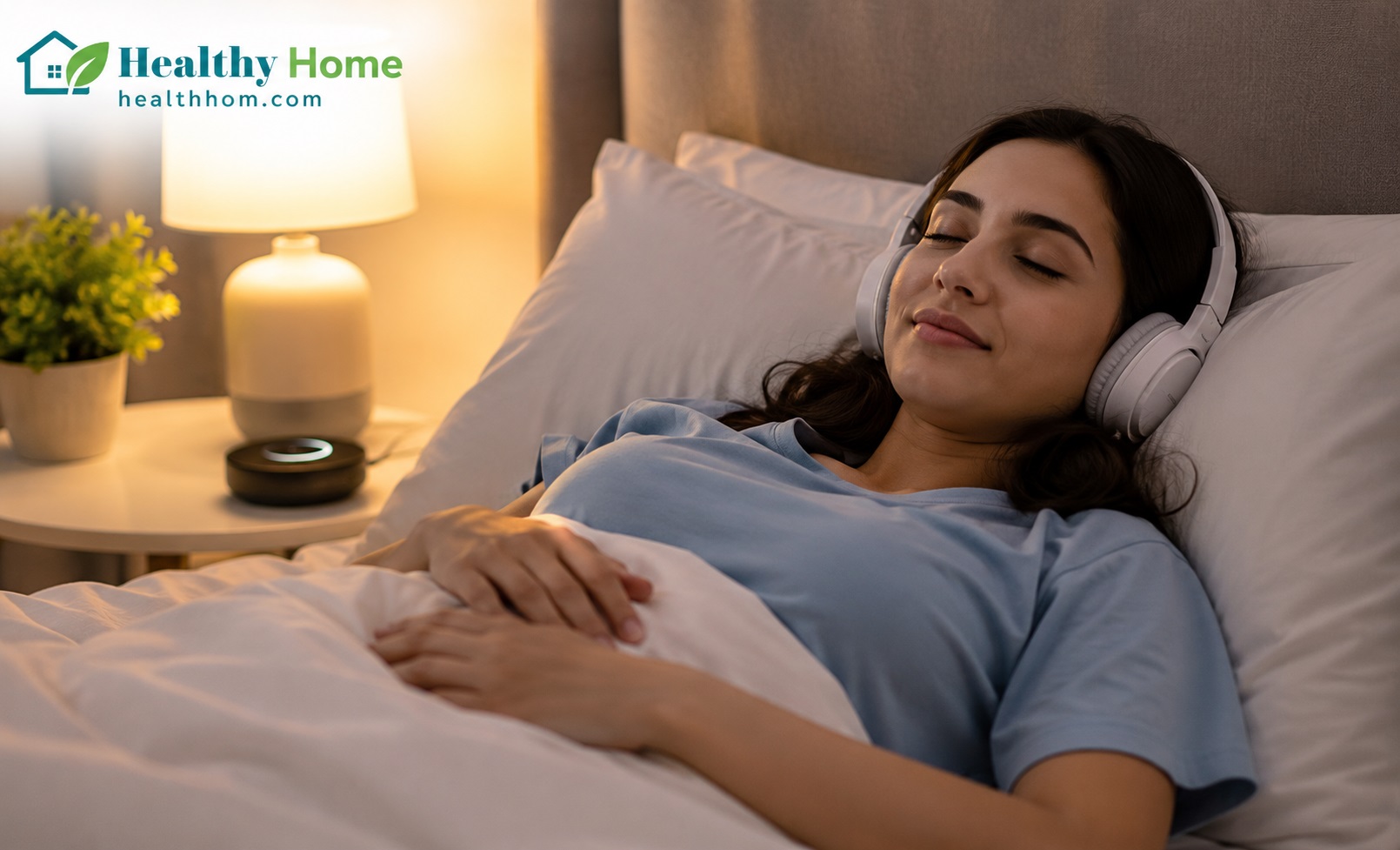
Few calming sounds, nature or slow music may help the brain to gradually shift into a more relaxed sleep state. Many people also found that they are able to sleep better with soft rain sounds or calming instrumental music.
As per the research published in Frontiers in Human Neuroscience (2019), it shows that the slow music may improve the sleep quality. Also in other clinical review (2022) review, it is suggested that sleep is more likely comfortable with the music interventions.
In this article, we will discuss about:
- How sound therapy affects the brainwaves
- Which types of sleep music will work best
- Simple and science-backed ways to sleep faster
Assometimes, good sleep doesn’t need a pure medication, but it may simply needs a calm routine.
Sleep is one of the core pillars of preventive health and plays a major role in reducing long-term disease risk.
Why So Many Families Struggle With Sleep Today:
- Parents scrolling phones after midnight
- Children sleeping with cartoons running
- Working professionals checking emails in bed
- Indian urban noise pollution
- Exam stress among teens
- Ceiling fan, traffic or notifications
In many Indian families, now the bedtime is not a peaceful time. As, the parents have to finish their household work till late night, teenagers may stay awake studying late or scrolling through reels, younger children sleep with cartoons running in TV. Even after spending 7–8 hours in bed, many people wake up mentally tired because the brain never fully relaxes.
Quick Summary:
- Slow music is used during sleep time (60-80 BPM to relax the nervous system).
- Helps the anti-stress hormone, cortisol and helps to produce melatonin.
- Enhances the quality of sleep, due to relaxation in mind.
- White noise masks many disruptive environmental sounds.
- It is safe and suitable for adults, teens and children
Many people may also notice the difference of quality sleep within few nights of using the same calming sound consistently before going to bed.

What These Studies Actually Mean for Everyday Sleep:
All the above studies not suggest that music will cure insomnia quickly in a night. So, the researchers repeatedly observe that the calming sound help to calm the thoughts before bedtime. In practical, many people may be able to sleep faster due to the nervous system gradually shifts from an alert state to a calm situation.
1. What is Sound Therapy?
Sound therapy : It involves sound, vibration, music to sustain physical, emotional and mental health. It utilizes consciously selected notes that help to guide the brain into a relaxed state.
Sound healing has always been echoed throughout many cultures:
- The singing bowls of Tibet have been used for meditation.
- Drumming is practiced by the indigenous community for restorative states.
- It is natural for the babies to fall asleep by the songs.
Sound therapy scattered across the present day can comprise many things: binaural beats or white noise machines or guided meditational music or even a full sound bath. Each kind has a slight variation but they all are aimed towards quieting the brain and putting the human body to a profound sleep.
During the community wellness programs, I have observed that many parents share that their children fall asleep more peacefully by listening the low-volume devotional music.
2. The Science of Sound & Sleep:
When you listen to some kinds of music or tones, it is possible to be sent off into these deeper states. The binaural beats are used as an example, set slightly different frequency in the ear and the brain perceives the frequency difference as a rhythmic beat.
- According to the results of a 2019 study in Frontiers in Human Neuroscience, listening to slow music standing by bedtime contributed to increase in the quality of sleep.
- Other researchers indicate sound therapy has the capacity to reduce cortisol (the stress hormone) and is associated with improved melatonin regulation (the sleep hormone).
In a word, the right music may enable a quality sleep time.
Managing stress effectively is an essential part for improving sleep quality and overall mental well-being.

3. Types of Sleep-inducing Sounds:
i. White Noise
- The constant back noise that hides environmental noises such as cars, a dog or a snoring partner.
- Particularly helpful for light sleepers and infants.
Many parents living near the busy road or railway areas use the white noise in the background which actually help their babies to sleep without waking repeatedly and not disturbed by outside sound.
ii. Nature Sounds
- The rain, surges, the singing of birds or the rustle of leaves.
- Studies indicate that these sounds produce a sense of safety and relaxation, which in turn lowers the level of stress in the body.
Familiar nature sounds often create a feeling of comfort and safety like in the monsoon evening, many people find rain sounds calming and emotionally soothing. Also during summer or power cuts, the ceiling fan noise may be calming. So, the familiar environmental sounds actually feel comfortable & emotionally relaxed.
Spending time in natural environments can also enhance relaxation and support sleep cycles.
iii. Instrumental & Classical Music
- Slow piano, harp, guitar or flute music.
- A tempo speed of 60 to 80 beats every minute is found to correspond to resting heart rates.
Many older people prefer soft devotional instrumental music as it feels already familiar to them.
iv. Binaural Beats & Isochronic Tones
- Binaural beats employ two alternating frequencies to produce the perception of a rhythm.
- Pulses of sound are spaced evenly in isochronies.
v. Mantras & Chanting
- Low-frequency and repetition such as Om set a relaxing vibration during chanting.
- Useful for meditation before bed.
Sleep quality is also closely connected with daytime stress, physical activity, and screen habits : Outdoor Wellness: How Nature Enhances Physical and Mental Health

4. Benefits of Sound Therapy for Sleep
- Decreasing Stress and anxiety: Helps to calm the nervous system, lower the heart rate and blood pressure.
- Enhances the sleep routines
- Increases the performance the next day: With increased sleep it may enhance focus, memory and energy.
- Harmless : Like sleeping pills, sound therapy is not addictive and is safe.
- Helps in mental health: Some people report feeling emotionally calmer with regular relaxation routines.
Some people inform that by sleeping longer time doesn’t a benefit, but if wake up frequently really matters and wake up mentally exhausted the next morning.
Learn how the sleep can also improve lifespan naturally with science-backed habits : Improve Lifespan Naturally with Science-Backed Healthy Habits

5. How to Use Sound Therapy at Home
You do not have to have a lot of costly equipment in order to start. Following may be the solution :
- Bedtime playlist: Select relaxing 20–40-min music. Spotify, Apple Music and YouTube have created playlists of sleep music.
- Best timing: Sounds should be played 30 to 60 minutes before sleep to put your brain in the rest mode.
- Headphones vs. speakers : are popular to use with white noise and nature sounds, whereas the headphones are to be employed with binaural beats.
- Use apps: Calm, Headspace and Endel have soundscapes which are relaxation-oriented and sleep-oriented.
- Combine with rituals: Use sound therapy with light stretching exercise or journaling.
Following a structured daily routine can further enhance sleep quality and overall wellness
Common Mistakes People Make:
- Music volume too loud
- Changing tracks constantly
- Using stimulating songs
- Scrolling YouTube comments
- Sleeping with bright screens
- Expecting instant results

6. Sound Therapy Tools & Devices:
- White noise Machines: Small machines that play original background noise.
- Sleep earbuds : are special, low profile earbuds that offer comfort when sleeping.
- Sound Pillows: In-built speakers enable you to listen without the use of headphones.
- Singing Bowls and Tuning Forks: This is good in the meditation before sleep.
- Mobile Apps: Affordable, accessible and customizable for every user.
However, it is important to balance digital usage to avoid screen-related sleep disturbances.


7. Sound Therapy for Kids & Teens:
Kids and teenagers may have child-specific sleep issues: resistance to bedtime or pre-school/exam stress. Sound therapy may become a mild treatment.
- Sweet songs and tunes: Make younger patient children comfortable and secure.
- In nature noises: Good to people that cannot sleep.
- In adolescents: Music is shown to help reduce anxiety even lower study attention.
Tips on parenting: Do not use screens at bedtime. Play audio-only music on a speaker or smart device in the room and at a low level.
Simple mindfulness practices can also help children and teens relax before bedtime.
A Common Bedtime Situation Many Parents Recognize:
In Indian families, many of the parent notice that their children become emotionally more active just before bedtime. Few ask to see one more reel or video, teens may continue chatting with their friends till late night. To overcome such situations, calming audio routines sometimes work better than repeated scolding.
8. Precautions and what to remember:
- Not a replacement for medical care: If insomnia persists, consult a doctor.
- Volume issues: Play music that is not over 60 decibels for hearing.
- Consistency: Like meditation, it accumulate with daily practice.
- Personal preference: People might be bothered by some audible noises, but please do experiment until you find what sounds good.
Sound therapy with healthy daily habits may create a stronger foundation for long-term wellness.
If you wake up tired even after 7–8 hours, your sleep quality, not quantity may be the problem.
Public Health Perspective:
In public health, sleep problems are sometimes linked with stress, irregular routines, excessive caffeine intake, long screen exposure or anxiety rather than simply the absence of relaxing music.

Healthy Sleep Routine Checklist
- Have regular sleep pattern.
- NO Screens 60 min before bed.
- Keep bedroom dark and cool
- Use low-volume sleep music (<60 dB)
- Do not take any caffeine 6 hours before sleep.
- Deep breathing or stretching.
- Sound therapy should be used regularly.
5 Min Bedtime Sound Bedtime Sound Routine.
- Minute 1 Darkness and no notifications.
- Minute 2: Play relaxing instrumental music.
- Minute 3: Slow 4-6 breathing.
- Minute 4: Body scan relaxation
- Minute 5: Let music playing come to pass as you fall asleep.
Total time: 5 minutes.
Did You Know?
- Slow music is more likely to get in sync with a human heart rate.
- The music of 60-80 BPM is equal to the resting heart rate.
- There is a psychological effect of safety response caused by nature sounds.
- Stress hormones can be reduced even by 10 minutes of relaxing music.
Diet also plays a key role in sleep quality, especially reducing stimulants like sugar and processed foods.

Who Should Avoid Sound Therapy?
- People have sensitive hearing impairments.
- Individuals who have epilepsy (must seek the physician before using binaural beats)
- Extreme chronic insomnia (need medical examination) patients.
Public Health Perspective:
In many families, sleep issues are not caused by one major medical problem but by few lifestyle habits such as irregular bedtime, prolonged screen exposure and stress.
Example From an Urban Work Routine
Ravi is a 35-year-old IT professional who struggled with late-night screen exposure and stresses at work. He started playing 30 minutes of slow instrumental sleep music a night using a speaker.
After introducing a fixed bedtime routine with low-volume instrumental music and reduced phone use, he noticed fewer racing thoughts at night and less dependence on late-night scrolling to “feel sleepy.”
This highlights how calming audio combined with reduced screen time may support sleep quality.
When to See a Doctor?
- If sleep problems last more than 2–3 weeks
- Involve loud snoring
- Breathing pauses or severe daytime fatigue
- Consult a healthcare professional to rule out sleep apnea or medical insomnia.
Concluding Points:
Sleep music is more than just background sound before bed. Good sleep can’t be possible just by only one solution, good sleep usually develops through small daily habits repeated consistently.
As per the study from Oxford Academic (2024) and APA (2023), they show that even 10-30 minutes of relaxing music be able to reduce the stress hormones and the depth of quality sleep.
Sound therapy helps in deep sleep in a natural way without any side effect. But, it only works with daily habits & consistency. You may start from tonight. Instead of scrolling mobile, try this:
- Turn off your screen
- Play a 10-minute calming track
- Let your breathing slow naturally
It may be simple, but for the above activities may softens your mind and sleep is easy. Adequate sleep may be built through simple routines repeated consistently.
Integrating natural therapies like sound therapy with nutrition and lifestyle habits creates a complete wellness approach.
Related Health Articles from Healthy Home :
- Social Media Addiction in 2026: Symptoms, Health Effects & 10 Proven Ways to Reduce Screen Time
- Nurturing Mental Well-Being in Adolescents for a Healthier Future
- Pre-Pregnancy Planning Guide for Women: Nutrition, Health & Lifestyle Tips
- Vitamin D Deficiency in Pregnancy & Breastfeeding: Risks and Key Precautions
Trusted References and Research Sources:
- Can white noise really help you sleep better? — Harvard Health
- Sleep Quality Improvements Through Music Interventions – Oxford Academic Study (2024)
- Therapeutic Effects of Music on Sleep: Evidence from Clinical Trials (PMC)
- Music-Based Interventions for Insomnia and Sleep Disorders – ScienceDirect Review (2024
- Music Therapy as a Promising Intervention for Better Sleep – ResearchGate Review
- Music Interventions to Improve Sleep in Adults with Mental Health Disorders – Systematic Review (Cambridge University Press)
- Relaxation Music and Sleep Patterns – Clinical Findings (PMC)
- How Music Influences Mood, Stress, and Sleep – APA (American Psychological Association)
- Music Therapy Approaches for Improving Night-time Relaxation – Evidence From PMC
10 Early Warning Signs of Type 2 Diabetes: Symptoms, Risk Factors and PreventionHealthy Living Guide for Families : Nutrition, Sleep and Daily Wellness HabitsHow to know your Cholesterol level, BMI & BMR? A Simple Health Guide5 Benefits of Reducing Salt and Sugar : Health Effects and Practical Tips
FAQs:
1. What is sleep music?
Sleep music is a calming audio which is designed to help the brain and body to relax before bedtime. It may include the slow instrumental music, while noise, rain sounds, nature sound, soft music which support in deeper and more restful sleep.
2. What is the effect of sleep music on the quality of sleep?
It decreases stress, lowers the heart rate, and calms the nervous system so that one could fall asleep and may sleep longer.
3. Which kinds of music should one listen to get a better sleep?
The most suitable types of instrumental music to help sleep are soft instrumental, nature sounds, white noise, and low-frequency melodies.
4. Does music play a role in overcoming insomnia?
Yes. Music can also help the insomnia individual to fall asleep quicker by having calming music that can ease the anxiety and racing thoughts.
5. What is the duration of listening to sleep music?
Listening before or during sleep (20-30 min) is beneficial to the majority.
6. Can one sleep with music on through the night?
Yes. Music of low volume and soft tones is harmless, however, some people like to use a timer so that the music does not play all the time.


About the Author – “Bibhu Ranjan Mund”, Master in Public Health (MPH) from IIHMR University, Jaipur (Rajasthan) has more than 18 years of experience in Public Health activities in maternal health, child health, adolescent health, nutrition and community wellness programs under National Health Mission, Health & Family Welfare Department, Odisha. He is the founder of “Healthy Home” and translates the evidence based public health information into a practical source so that families may able to apply in everyday life. All the information are for educational purposes only and not replaces the professional medical advice. ORCID Researcher ID – 0009-0003-0158-4992. Connect LinkedIn – https://www.linkedin.com/in/bibhu-ranjan-mund-b72171358/