
Last Updated on June 16, 2026 by Bibhu Ranjan Mund, MPH
Discover how to adhere hydration routine on different climate & activity. Smart hydration tips will ensure you stay healthy, increase energy & avoid dehydration
Reviewed by Bibhu Ranjan Mund, MPH (Public Health Expert) with experience in maternal, infant, child, and adolescent health programs. Content is based on evidence-informed guidelines aligned with organizations such as the World Health Organization, UNICEF, Centers for Disease Control and Prevention, and National Institutes of Health.
Medical Disclaimer: This content is for informational and educational purposes only and is not intended as medical advice, diagnosis, or treatment. Always seek the advice of a qualified healthcare professional regarding any medical condition or concerns.
Affiliate Disclosure: This article contains affiliate links. If you purchase through these links, we may earn a small commission at no extra cost to you.
“Drink 8 glasses of water a day”, you have heard it many time from every source. A fixed recommendation of eight glasses per day may not suit everyone.
As per the Harvard Health Publishing (2023), it is known that we need water based on climate, physical activities, individual body physiology etc. Actually, fluid needs vary according to body size, activity, climate, health conditions and dietary intake.
In general, most of the people used to drink much water when feel tired, or take other liquids may be essential electrolytes, but it may harm your health.
So, the important point is : Do you drink as suggested by anyone or just own guess?
In this article you may find-out the simple, science-baked daily hydration routines based on climate and activity, so as to keep the body energized, focused and hydrated.
Quick Summary :
- The amount of water required depends on the climate, altitude and the intensity of activities.
- Sweat and electrolyte loss is enhanced by hot and humid weather.
- Hot and dry climates can increase unnoticed fluid loss through breathing and evaporation.
- Low temperature decreases the thirst, but does not decrease the loss of fluid.
- The elevation may also cause the risk of dehydration as the air is dry and breathing rate remains elevated.
- Active people need more electrolytes and increased fluid consumption.
- The presence of pale yellow urine is an un-complicated urine hydration test.
- Food is also a source of daily fluid intake which may be up to 20-30 percent.
- The requirements of fluids may vary according to the body weight, health and medical conditions.
A Lesson From a Summer Health Camp
During one summer health awareness camp at rural area of Rayagada (Odisha), a middle-aged farmer came with complain of headache, unusual tiredness and dizziness. He was in a thinking of simple tired due to hard working in his farm.
After discussion with him regarding daily routines, we found that he was not drinking enough water during working time and used to take frequent tea.
So, as per the counselling by the Health Worker (Female), he started to take oral rehydration fluids during peak summer days and drink adequate water. Subsequently his habits changed and symptoms of headache reduced.
Such types of experience from the field activities show that dehydration begins with mild symptoms which people ignores initially.
Why Climate and Activities Should Change Daily Water Intake?
Water is lost by the body through sweat, breathing and urine continually. The rate of water loss is, however affected by external factors like temperature, humidity, altitude and internal factors such as intensity of exercise and metabolism.
The system of hydration may vary in different situation, as:
- The amount of water a runner in humid Chennai city loses is more than that lost by a person sitting in an air-conditioned office in Delhi.
- A trekker in Ladakh at high altitude will require more fluids to counter the increased rate of breathing and dry air.
- In cold weather, an office employee may be at risk of over-hydration in case he or she drinks much water without sweating.
- Knowing such differences will help you in hydrating wisely to avoid dehydration as well as hyponatremia (over-hydration that dilutes the electrolytes).
What Are Signs of Dehydration?
Common signs are:
- Dark yellow urine
- Dry mouth
- Fatigue
- Headache
- Dizziness
- Muscle cramps
- Reduced concentration
The Origins of Hydration.
With the introduction of climate-specific tips it would be useful to revise the principles of hydration.
Dehydration may worse the fatigue and mental stress, explore the recommended techniques to reduce anxiety naturally for better overall wellness.
1. Water Balance
The state of hydration is determined by the ratio of water intake (drinks and food) to water loss (sweat, urine and respiration). Dehydration is caused by the excess loss over the intake, resulting in fatigue, headache, muscle cramps and lack of concentration.
2. Electrolytes
It is not just about water, but hydration is also about the electrolyte balance. Nerve and muscle activity is controlled by the electrolytes such as sodium, potassium, magnesium and chloride. Heavy sweating may cause imbalance in hot environment or during endurance activities.
Balanced hydration and mineral intake also support hormonal health, you may read these thyroid-supportive nutrition recipes.
3. Hydration from Foods
Food can be close to 20-30 percent of daily fluid intake. Fruits such as watermelon, oranges, cucumber and tomatoes contain the necessary electrolytes and are hydrating naturally.
Hydration also supports digestion and microbiome health, learn how to reset your gut effectively in our 7-day gut health plan.
Hydration Challenges in Indian Families
In many Indian houses, taking adequate water is still an issue as they drink water if feel thirsty.
Common situations in Odisha:
- School children leaving home without finishing a glass of water.
- Office workers relying mainly on tea or coffee.
- Elderly family members drinking less water because they do not feel thirsty.
- Outdoor workers delaying water intake during busy work hours.
During hot Indian summers, such habits may increase the risk of dehydration.
A simple family habit : Always keep filled water bottles in the visible area of house so that everyone can be able to drink small amounts regularly instead of waiting till thirsty.
Hot & Humid weather condition:
In hot and humid weather, sweat does not evaporate easily, hence your body does not cool easily. The loss of water and electrolytes increases.
Hydration Challenges:
- Sweating too much on the skin surface leads to loss of electrolytes.
- Fatigue, dizziness or cramps
- May have threat of heat exhaustion or may be heatstroke.
Hydration Tips:
- Start your day with water: Take 1-2 glasses of water in the morning as it is necessary to replace the water lost during the night.
- May follow the Sweat Rule: Like Drink 200 – 300ml of water per 30 minutes of outdoor play.
- Include Electrolytes: Substitute regular water with lemon water + pinch of salt, coconut water or ORS solutions when you are sweating a lot.
- Avoid sweetened or soda of any kind
- Try to eat hydrating foods viz. cucumber, watermelon, oranges and buttermilk etc.
- Check regularly the Urine Color: If it is Pale yellow then “hydrated”. Dark yellow then “drink more water”
Spending time in outdoors also improves hydration awareness and vitamin-D levels, discover the full benefits of sunlight and outdoor wellness.
Hydration During Indian Heatwaves
In India, when temperatures goes up to normal summer levels, we should drink enough water. The people who are working in outdoors, farms, travelling long or more time in direct sunlight may:
- Carry water before leaving home.
- Drink before feeling thirsty.
- Include coconut water, buttermilk, lemon water or ORS when sweating heavily.
- Avoid long periods without fluid intake.
- Take breaks in shaded areas whenever possible.
During recent heatwave seasons, public health professionals throughout India repeatedly focused that staying hydration is one of the easiest and effective prevention.
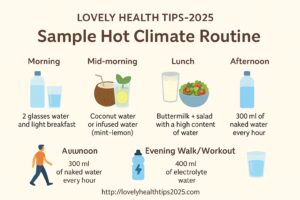
Sample Hot Climate Routine:
- Morning (7 AM): 2 glasses water and light breakfast.
- Mid-morning : Coconut water or infused water (mint- lemon).
- Lunch: Buttermilk + salad with a high content of water.
- Afternoon: 300 ml water every hour.
- Evening Walk/ Workout: 400 ml of electrolyte water.
- Night: 1 glass of water prior to sleep.
Hydration pattern during Dry and Arid Climate.
When it is hot and humid (such as in the desert or dry states such as Arizona or Rajasthan), the moisture in the air evaporates at a higher rate than normal (even though you may not feel sweaty).
Hydration Challenges:
- Breath loss is not noticed.
- Dry skin, lips and throat
- Due to low sweat, fatigue and dehydration.
Hydration Tips:
- Do not take large gulps of beverages but small ones.
- It maintains the level of hydration and prevents rapid loss of urine
- Wet air (in case of indoor) with moisture: Indoor plants or a humidifier should be used in order to reduce dryness.
- May add soups: Rehydrating and calming solutions also restore the electrolytes.
- Infuse flavor in water: The inclusion of fruits and herbs promotes the regular intake of sipping.
- Balancing the caffeine: Please restrict to 1 to 2 cups of coffee daily, moderate caffeine intake does not usually cause significant dehydration in healthy adults.
Sample Dry Climate Routine:
- Morning 2 glasses of warm water and lemon.
- Breakfast: Fruits (banana, orange or spinach), Smoothie.
- Noon: take in water at regular intervals (after every 20 minutes) (150 ml).
- Lunch: Dal or Lentil soup consisting of vegetables.
- Evening time: May either have herbal tea or coconut water.
- Night schedule: an amount of one glass of warm water before going to sleep.
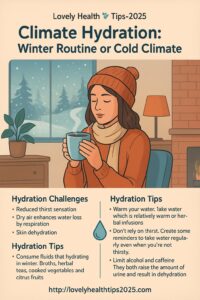
Climate Hydration: Winter Routine or Cold Climate.
During cold weather, human beings do not feel as much thirsty yet the body still loses the fluids due to respiration (breathing warm air in and out) and indoor heating.
Hydration Challenges:
- Reduced thirst sensation
- Dry air enhances water loss by the respiratory.
- Skin dehydration
Hydration Tips:
- Warm your water: Take warm water or herbal infused for proper consumption.
- Don’t rely on thirst: Create some reminders to take water after every short while even when you are not thirsty.
- Consume fluids that are hydrating in winter: Broths, herbal teas, cooked vegetables and citrus fruits contain retention of hydration.
- Limit alcohol and caffeine: They both raise the amount of urine and result in dehydration.
- Use moisturizers: Hydration does not only begin within the body, the skin also needs to be hydrated.
Proper hydration works closely with quality rest, follow these sleep optimization strategies to improve recovery and energy.
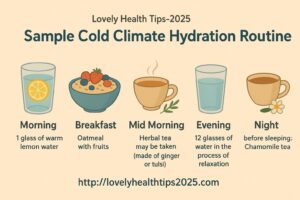
Sample Cold Climate Routine:
- Morning: 1 glass of warm lemon water.
- Breakfast: Oatmeal with fruits.
- Mid Morning time: Herbal tea may be taken (made of ginger or tulsi)
- Lunch: Lentil broth or warm soup.
- Evening: 1 – 2 glasses of water in the process of relaxation.
- Night: before sleeping: Chamomile tea.
Hydration by climate in the High Altitudes.
The higher the altitude (more than 2500 meters) the lighter and drier is the air and the higher the breathing rate is thus causing additional fluid loss.
Hydration Challenges:
- Dehydration in a short period of time caused by dry air.
- Urinary urgency (because of acclimatization to the altitude).
- Risk of altitude sickness
Hydration Tips:
- Fluid requirements may increase significantly at high altitude and can reach 4–5 liters daily for some individuals depending on activity and environmental conditions.
- Add electrolytes and carbohydrates: Energy is maintained with the help of energy drinks or diluted fruit juices.
- Consumption of alcohol is to be avoided at all costs: It only worsens the dehydration and elevation sickness.
- Consume food with high water content: Stews and porridge and cooked vegetables keep one hydrated.
- Hydration packs during the trekking: Drink in small portions rather than swallowing huge portions.
Proper hydration is a part of preventive health care practices that reduce long-term health risks.
What Mild Dehydration Often Feels Like
Many people think that dehydration is mainly due to extreme hot & thirsty. In reality, the early signs are:
- Afternoon unusual tired even if adequate sleep
- Difficulty in concentrating at work
- Mild headaches
- Dry lips or dry mouth
- Feeling unusually irritated
- Reduced physical performance during exercise
As a public health professional, I sometimes observe that people think these symptoms due to stress or workload, but these may be due to insufficient water intake and dehydration. So, to early identification and prevention may not lead to complication.
Hydration by Activity Level
The amount of hydration required is also dependent on your activity level.
Sedentary Lifestyle
- During Off Days or when one is at the office: Take 2 glasses of water upon waking.
- Take glass every 2 hours.
- Noon and afternoon : Add herbal tea or lemon water.
- Target: 2 to 2.5 liters/day
Moderate Activity
Do you walk or do light exercises every day:
- 2 glasses before breakfast
- 1 before and after workout
- All day Goal: 2.5 to 3 liters/day
Healthy hydration habits should begin early, follow these family nutrition and hydration habits for long-term wellness.
Intense (Sports-people or Gym Lovers)
In case of extreme exercise or prolonged exercise:
- Have 500 ml of water before exercise
- During exercise: 150 to 200 ml after every 20 minutes.
- Post exercise 700 ml of electrolyte beverage. Target: 3 to 4.5 liters/day
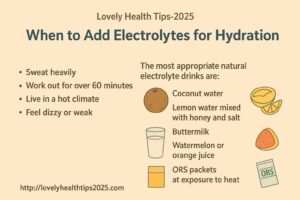
When to Add Electrolytes
- Sweat heavily
- Work out for over 60 minutes
- Live in a hot climate
- Feel dizzy or weak
The most appropriate natural electrolyte drinks are:
- Coconut water
- Lemon water mixed with honey and salt.
- Buttermilk
- Watermelon or orange juice
- ORS packets at exposure to heat.
Smart Hydration Habits
- Have a reusable water bottle.
- Consume fruits and vegetables on a daily basis.
- Drink at a slow pace rather than swallowing.
- Do not take too much alcohol or sweetened beverages.
- Keeping track with phone notification for drinking.
- Substitute the fluids that get lost for any physical activity.
Choosing seasonal, water-rich foods also supports sustainability, learn more about eco-friendly eating habits for better health and planet care.
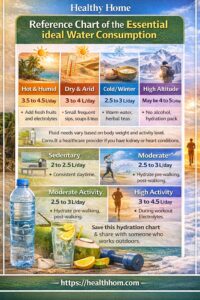
Reference Chart of the Essential ideal Water Consumption.
| Climate & Activity | Recommended Intake | Hydration Tips |
|---|---|---|
| Hot & Humid | 3.5 – 4.5 l/day | Add fresh fruits and electrolytes |
| Dry & Arid | 3 – 4 l/day | Small frequent sips, soups & teas |
| Cold/Winter | 2.5 – 3 l/day | Warm water, herbal teas. |
| High Altitude | May be 4 – 5 l/day | No alcohol, hydration pack |
| Sedentary | 2 – 2.5 l/day | Consistent daytime. |
| Moderate Activity | 2.5 – 3 l/day | Hydrate pre-walking, post-walking |
| High Activity | 3 to 4.5 l/day | During workout Electrolytes |
Fluid needs may vary based on body weight and activity level. Consult a healthcare provider if you have kidney or heart conditions.
Hydrating foods like fruits and vegetables also reduce inflammation, include these anti-inflammatory foods in your daily diet.
Save this hydration chart & share with someone who works outdoors.
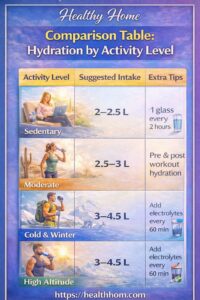
Comparison Table: Hydration by Activity Level
| Activity Level | Suggested Intake | Extra Tips |
|---|---|---|
| Sedentary | 2–2.5 L | 1 glass every 2 hours |
| Moderate Exercise | 2.5–3 L | Pre & post workout hydration |
| Intense Training | 3–4.5 L | Add electrolytes every 60 min |
Quick Visual Chart: Fluid Needs Scale
Sedentary ▓▓▓▓▓ 2–2.5 L
Moderate ▓▓▓▓▓▓▓ 2.5–3 L
Hot Climate ▓▓▓▓▓▓▓▓▓ 3.5–4.5 L
High Altitude ▓▓▓▓▓▓▓▓▓▓ 4–5 L
When to Add Electrolytes
Add electrolyte support if:
- Sweating heavily
- Exercising > 60 minutes
- Living in hot climates
- Feeling dizzy or weak
- Traveling to high altitude
Natural options:
- Coconut water
- Lemon water + pinch of salt
- Buttermilk
- ORS solution
Hydration Needs by Age Group
| Group | Daily Fluid Goal |
|---|---|
| Children | Varies by age |
| Teenagers | Higher during sports |
| Adults | 2–3 L |
| Elderly | Monitor regularly |
Common Hydration Mistakes
- Drinking only when thirsty
- Replacing water with tea
- Ignoring electrolytes
- Drinking excessive water rapidly
- Forgetting hydration during winter
Key Takeaways
- The hydration requirements change depending on the climate, the degree of activity, and altitude.
- Electrolyte and sweat loss is enhanced by hot and humid weather.
- Low temperatures decrease thirst, but not fluid loss.
- The risk of dehydration is high because of the accelerated breathing with elevated altitude.
- Good hydration is simply shown by pale yellow urine. Certain vitamins, medications and medical conditions can also affect urine color.
Quick Tips
- Begin your day with 1-2 glasses of water.
- Drink a small portion of water frequently rather than drinking a lot of water at a time.
- Add electrolytes when sweating heavily or on the long workouts.
- Consume water-based foods such as fruits and vegetables on a daily basis.
- Reminders may set to remind you for drinking water regularly.
Expert Insight (by Bibhu Ranjan Mund, MPH)
- In community health programs, dehydration condition is often under-recognized, especially in cold climates where thirst is reduced
- Even simple behavior to bring a water bottle and checking the color of urine can be helpful as far as hydration awareness is concerned.
- Most people depends on water, but the balance of electrolytes is also necessary, particularly in hot places.
My Perspective After Years in Community Health
After so many years of working in community health programs, I have observed that people don’t give value of hydration.
Many Indians focus on food, exercise and medications but only few show interest in adequate daily fluid intake. They may feel headaches, tiredness, lack of concentration or muscle cramps, but don’t think that these symptoms may be due to inadequate hydration.
The hydration routine is just a simple step to follow as per weather conditions, physical activity, colour of urine rather following fixed rule of 8 glass of water for everyone.
Concluding Points:
Hydration doesn’t mean to drink more water forcibly.
But, it’s about how much the body actually needs as per climate, activity level etc., so that the daily needs also change for balancing it.
It’s a very simple step:
You may follow very small daily habits like adding electrolytes as per need, taking water regularly, drink as per weather condition to keeping intact your energy level, focus and overall health.
You may watch your daily habits, listen your body and stay consistent.
As the proper hydration routine not only prevent dehydration, but it may also empower the brain metabolism.
Consistent hydration is a key pillar of longevity, explore more strategies to improve lifespan naturally.
FAQs:
Q1. Why does climate influence how much water we need?
Ans. Water is lost from the body in the form of sweat, breath and urine. This loss is more in hot, wet, or dry climates and more fluids are required to increase the balance and limit the dehydration.
Q2. What are the indicators that whether I am taking adequate water or not?
Ans. Test the urine color. It ought to be light yellow. The darker may refer to dehydration. The other symptoms are fatigue, dry mouth, headache and dizziness.
Q3. Does excessive drinking of water cause any harm?
Ans. Yes. Provided you drink sufficient water, but do not replace electrolytes, then over-hydration or hyponatremia may take place and dilute sodium levels in your blood-stream. This may lead to confusion, weakness or even serious health problems.
Q4. Which is the most effective hydration plan in hot and humid weather?
Ans. Take 3.5-4.5 liters per day, use electrolytes and fruits such as watermelon or cucumber and drink them gradualy throughout the day rather than drinking at a time.
Q5. Is there an elevation effect and air travel effect on fluid requirements?
Ans. Yes. The altitudes and cabins of an airplane are drier which may cause the water to get dehydrated faster. Consume more water and should not take alcohol or caffeine on flights or treks.
Related Health Articles from Healthy Home :
- Reduce Anxiety Naturally
Simple evidence-based natural methods to reduce anxiety using breathing, mindfulness, diet, and daily routines. - 7 Days Gut Health Plan
A complete 1-week microbiome reset plan for better digestion, immunity, and overall well-being. - Cyber Security for Adolescents
Practical cyber safety habits to help teens stay safe online and avoid common digital risks. - First Day of Birth Guide
Trusted References and Research Sources: How to know your Cholesterol level, 10 Early Warning Signs of Type 2 Diabetes: Symptoms, Risk Factors and Prevention Healthy Living Guide for Families : Nutrition, Sleep and Daily Wellness Habits How to know your Cholesterol level, BMI & BMR? A Simple Health Guide5 Science-Backed Benefits of Reducing Salt and Sugar (WHO Guide)
- How much water should I drink a day? – Harvard Health
- Physical activity guidelines 2020: comprehensive and inclusive recommendations to activate populations – The Lancet
- Water: How much should you drink every day? – Mayo Clinic
- Stay Hydrated At Every Age: Recommended Water Intake Guidelines Revealed By Dietitian – NDTV Food
- Water Intake, Water Balance, and the Elusive Daily Water Requirement – PMCWater Intake, Water Balance, and the Elusive Daily Water Requirement – PMC
- iris.who.int/server/api/core/bitstreams/1135af28-f2ca-40a0-9221-808fdd3e9134/content
- Influence of Physical Activity and Ambient Temperature on Hydration: The European Hydration Research Study (EHRS) – PMC


About the Author – “Bibhu Ranjan Mund”, Master in Public Health (MPH) from IIHMR University, Jaipur (Rajasthan) has more than 18 years of experience in Public Health activities in maternal health, child health, adolescent health, nutrition and community wellness programs under National Health Mission, Health & Family Welfare Department, Odisha. He is the founder of “Healthy Home” and translates the evidence based public health information into a practical source so that families may able to apply in everyday life. All the information are for educational purposes only and not replaces the professional medical advice. ORCID Researcher ID – 0009-0003-0158-4992. Connect LinkedIn – https://www.linkedin.com/in/bibhu-ranjan-mund-b72171358/