Pre Pregnancy Planning for Women : Health Checklist, Nutrition and Fertility Tips
Planning for pregnancy? Learn expert-backed tips on Pre Pregnancy Planning for Women like nutrition, folic acid, fertility, lifestyle, medical tests, emotional health, and preconception care for a healthy mother and baby.
Reviewed by Bibhu Ranjan Mund, MPH (Public Health Expert) with experience in maternal, infant, child, and adolescent health programs. Content is based on evidence-informed guidelines aligned with organizations such as the World Health Organization, UNICEF, Centers for Disease Control and Prevention, and National Institutes of Health.
Medical Disclaimer: This content is for informational and educational purposes only and is not intended as medical advice, diagnosis, or treatment. Always seek the advice of a qualified healthcare professional regarding any medical condition or concerns.
Affiliate Disclosure: Some of the products recommended in this article may contain Amazon affiliate links. If you make a purchase through these links, we may receive a small commission. This supports our platform and helps us continue sharing reliable health information, without affecting your purchase price.
Introduction:
As per the report published by World Health Organization (WHO Antenatal Care & Preconception Health Guidelines, 2016, updated maternal health recommendations referenced in 2023), it shows that most of the pregnancy complications and birth defects may be prevented through the proper nutrition, folic acid supplementation, immunization and health lifestyle before conception.
So preparation for pregnancy is a vital step for a safe and health motherhood.
Still, many couples don’t think about the baby’s development, as this actually begins in the very first few weeks of pregnancy. Many factors like diet, smoking, alcohol, stress, obesity, anemia and other chronic health conditions can influence the fertility, fetal growth and long-term child health.
This article will provide the details guide on pre pregnancy planning for women so that woman can prepare physically, emotionally, nutritionally and medically for a safe and healthier baby.
A well-balanced diet plays a crucial role even before conception. You can explore our detailed guide on healthy eating habits for families to build a strong nutritional foundation.
Quick Summary:
- Folic acid before pregnancy helps reduce birth defects
- Healthy weight improves fertility and pregnancy outcomes
- Smoking and alcohol can affect fetal development early
- Preconception health impacts baby’s brain and growth
Why Pre Pregnancy Planning is Important?
Both stages preceding pregnancy and delivery carry the same importance. Almost everything you eat or breathe during pregnancy will be transferred to the developing fetus. This procedure starts as soon as you are pregnant. As a result, make sure you are following a healthy diet and stopped using of smoking, alcohol, tobacco products and illegal drugs. This is a react fact for both the parents.
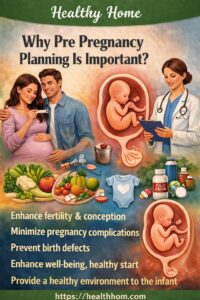
The advantages of pre-pregnant planning:
- Enhance the fertility and conception.
- Minimise of pregnancy complications.
- Prevent birth defects
- Enhance the best physical and emotional well-being.
- Provide a healthy environment to the infant.
Early planning provides sufficient time to address nutritional deficiencies, deal with a health disease and live healthier lifestyles.
Globally, maternal health remains a major public health priority.
Global Maternal & Preconception Health Snapshot
| Indicator | Latest Global Estimate | Source (Year) |
|---|---|---|
| Maternal deaths annually | ~287,000 worldwide | WHO Maternal Mortality Estimates (2023) |
| Anemia among women of reproductive age | 29.9% globally | WHO (2021 Global Anemia Report) |
| Women not receiving adequate antenatal care | ~1 in 3 globally | WHO (2022) |
| Neural tube defects can be reduced with folic acid intake before conception | Public health recommendation | WHO (2016 ANC Guidelines) |
First step of Pre Pregnancy Planning for Women
If the couple is expecting a child, then it has to be planned prior to conceive. Thus, giving the mother the right nutrition (before pregnancy) and ensuring that she had the right activity, (well balanced) before conception will, ensure safe delivery and a healthy baby.
Several people need extra time in order to plan for this process.
To have a smart and healthy child with a sensitive nature, a decision together of couple will bring the emotional stability and improved results to both mother and child.
Before Pregnancy Medical Tests
- Thyroid
- Blood sugar
- Vitamin D
- CBC
- STI screening
Pre-Pregnancy Red Flags
- Severe anemia
- Obesity
- Smoking
- Uncontrolled diabetes
- Stress
Pre-Pregnancy Preparation Checklist
| Area | Key Actions |
|---|---|
| Nutrition | Balanced diet from all food groups |
| Supplements | 400 mcg folic acid daily |
| Health Screening | Blood pressure, hemoglobin, blood sugar |
| Vaccination | Review immunization status |
| Lifestyle | Avoid tobacco & alcohol |
| Emotional Health | Stress management & family support |
Source: NICHD Preconception Care Factsheet (2023); WHO Maternal Health Overview (2023)

A. Plan your pregnancy :
Think Before You Get Pregnant
- Talk to your partner about the number and time of children that you want.
- Decisions should be made without social or family pressure.
- Do not conceive at the age of less than 18.
- Youth should have a 2-year interval between pregnancies.
- Get yourself ready, emotionally, financially and physically, to become a parent.
The birth of your child will require you to make arrangements of requisite resources. Make your spouse or yourself ready financially, emotionally, mentally and physically. Get checked out holistically.
Take up and keep up a healthy diet, way of life, and habits. Ask your physician about the result of your current measurement of hemoglobin. Report to your physician when the volume is below 12 grams per deciliter.
Do you want child now?
Birth control of at least 6 months before you start planning. Local Health Care Providers, Medical Professionals may be consulted to adopt any method of birth control. Then protect yourself by using the protection continuously and rightly until it is time to have kids.

B. Eat Nutritious Foods :
Healthy nutrition during pregnancy helps in the early growth of the fetus and well-being of the mothers.
The mother’s nutrition even before conception plays a vital role in the infant’s early growth and development.
Including iron-rich foods is essential to prevent anemia before pregnancy, read our complete guide on iron-rich foods during pregnancy.”
Certainly, one of each group should be introduced into the diet of the mother.
i. Cereals & Whole Grains:
Includes rice, wheat, ragi, bajra and jowar in various forms namely chapati, idli, dosa, upma, and poha.
Maida should not be used in making white bread and biscuits because these are part of processed flour products.
ii. Fruits & Vegetables
- Green leafy vegetables- 2kg/week
- Starchy vegetables (potato, carrot, beetroot) -1 kg/week
- Other vegetables (beans, tomatoes, brinjal, ladyfinger) -1 kg/week.
Vitamin deficiencies can affect fertility and fetal development, learn more in our guide on Vitamin B12 benefits and deficiency
iii. Protein Sources – may review from Amazon
- Protein should consist of cooked flesh and full-boiled eggs as well as fish unless you follow a vegetarian diet.
- Each day as a vegetarian you should eat at least two among moong, masoor, tuvar and rajma pulses
- Non-vegetarian: cooked meat, fish and eggs that have been boiled completely.
Healthy fats like omega-3 are vital for brain development, read more about omega-3 deficiency effects in mothers
iv. Milk and Dairy
Milk, dairy, products: You can either have 60 grams of paneer, two glasses of milk or two katoris of curd.
Proper cooking methods help preserve nutrients and avoid infections, check our guide on healthy cooking tips for pregnant women.
v. Healthy Fats
People who eat meat or fish should pick cooked poultry and full-boiled eggs while vegetarians should select any pulses as well as two daily portions. People who eat a vegetarian diet should consume two katoris each day together with pulses like moong, masoor, tuvar and rajma and any other kind that they prefer.
For sufficient omega-3 and omega-6 fatty acids in the diet use a combination of mustard oil and groundnut oil, or a combination of mustard oil and rice bran oil. Flax seeds (Alsi) is one more cure to keep the adequate portions of Omega 3 acids in the eating regimen
vi. Water Intake
Water: Take 10-12 glasses of water in a day. A glass of Warm water at morning may be preferred.
Balanced Diet Before Pregnancy
| Food Group | Examples | Public Health Recommendation Source |
|---|---|---|
| Whole grains | Rice, wheat, ragi, millet | WHO Healthy Diet Guidelines (2018) |
| Fruits & vegetables | Leafy greens, seasonal fruits | WHO Healthy Diet Guidelines (2018) |
| Protein sources | Pulses, eggs, fish | WHO Nutrition Guidance (2020) |
| Dairy | Milk, curd, paneer | WHO Healthy Diet (2018) |
| Healthy fats | Mustard oil, groundnut oil | FAO/WHO Dietary Fats Report (2019) |

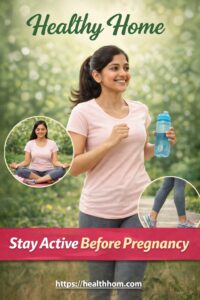
C. Stay Active :
- This is because being healthy prior to pregnancy will enhance fertility and pregnancy.
- Walk, do yoga or light exercise every day.
- Avoid a sedentary lifestyle always.
- Underweight and overweight can also be conception-related conditions.
- Homeworking is not an exercise, physical movement is a necessity.
Maintaining a healthy lifestyle also includes proper nutrition and routine, see our complete family health and development guide for a holistic approach.
Healthy Weight Consideration Before Pregnancy
| BMI Category | General Classification | Source |
|---|---|---|
| Below 18.5 | Underweight | WHO BMI Classification (2004, updated 2022 reference) |
| 18.5 – 24.9 | Healthy range | WHO |
| 25 – 29.9 | Overweight | WHO |
| 30+ | Obesity | WHO |
BMI classification based on WHO standards. Individual evaluation should be done by healthcare providers.
(Affiliate Disclosure: As an Amazon Associate, I earn from qualifying purchases. This does not affect your price.)
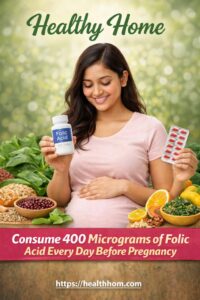
D. Take 400-mcg folic acid every day – may review from Amazon
Both the mother and the child need folic acid. This prevents the baby born with brain and spinal abnormalities. You need to start as early as you have the plans to get pregnant and take it three months after the pregnancy period. You can obtain it free of cost from government health programmes in some region.
In any case, the 400 microgram tablet is not available, a 5 mg pill can also be included in a high- folic acid diet. Pregnant women should visit a physician or other health care providers in the area.
Micronutrient deficiencies like vitamin D can also impact pregnancy, read more about vitamin D deficiency risks during pregnancy
Folic Acid Public Health Guidance
| Recommendation | Suggested Dose | Source (Year) |
|---|---|---|
| Women planning pregnancy | 400 mcg daily | WHO ANC Guidelines (2016) |
| Start timing | At least 1 month before conception | WHO (2016) |
| Continue through | First trimester minimum | WHO (2016) |
E. Avoid harmful chemicals & substances:
Possible exposures to toxins may cause interference with conception and damage the growing baby.
How to Reduce Toxic Exposure:
- No smoking
- Cleanse the fruits and vegetables (wet in salt water).
- Containers made out of glass or stainless-steel should be used instead of plastic.
- Take off shoes and go inside the house.
- Use of lead based paints and dangerous chemicals should be avoided.
- Replace chemical repulsive with mosquito nets.
Lifestyle habits significantly affect long-term health outcomes, learn more in our guide on early warning signs of type 2 diabetes

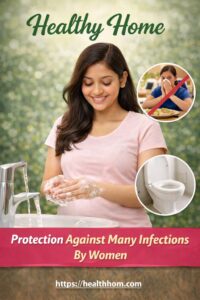
F. Protection from infections:
- Wash hands with soap and water. It protects you from infections particularly at the times when you cook or eat your meals.
- Do not eat or share food with ailing people.
- Keep the personal and food hygiene in good condition.
- After using the lavatory, you wash your hands.
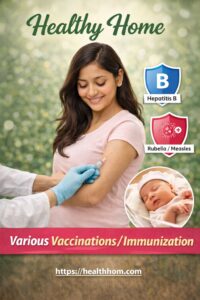
G. Many vaccines or immunization
Vaccination saves the mother and the baby against severe illnesses.
- Important vaccines viz. Hepatitis B Rubella or Measles etc.
- Un-vaccinated women are to meet a doctor for consultation
The newborn will suffer serious health complications due to these conditions.
Pre-Pregnancy Immunization Review
| Vaccine | Why Review Before Pregnancy | Source |
|---|---|---|
| Rubella | Prevents congenital infection risk | WHO Immunization Position Paper (2020) |
| Hepatitis B | Protects mother & newborn | WHO (2022) |
| Tetanus | Maternal & neonatal protection | WHO (2019) |
Vaccination timing should follow national guidelines and physician advice.
(Affiliate Disclosure: As an Amazon Associate, I earn from qualifying purchases. This does not affect your price.)
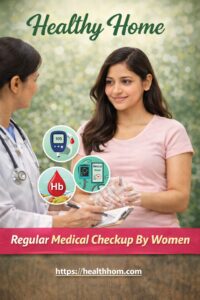
H. Regular Medical Checkup:
Prior to the conception, it is recommended to consult a doctor or health worker to:
- Measure the blood sugar level and blood pressure by a medical professional – may review from Amazon
- Test hemoglobin levels
- Review medical history
- Treat chronic illnesses (diabetes and high blood pressure and epilepsy)
- Thalassemia (sickle cell),
- HIV and syphilis screening.
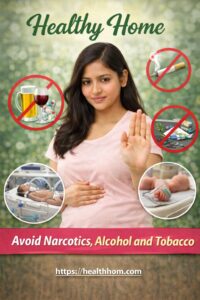
I. Avoiding the narcotics drugs, alcohol & tobacco etc.
Alcohol, cigarette, and narcotics may cause:
- Fertility problems
- Low birth weight
- Premature birth
- Birth defect and infant mortality.
The baby requires a healthy lifestyle prior to conception.
Lifestyle Habits – Recommended vs To Avoid
| Recommended | To Avoid |
|---|---|
| Balanced diet | Tobacco use |
| Regular physical activity | Alcohol consumption |
| Adequate sleep | Narcotic drug use |
| Stress management | Second-hand smoke exposure |
Source: WHO Maternal Health Overview (2023)
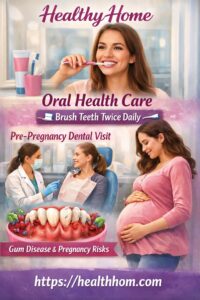
J. Oral Health :
- Oral Health Care
- Brush teeth twice daily
- Pre-pregnancy visit to dentist office.
Pregnancy may also be influenced by infections of the gums.
K. Emotional Health :
Stress may cause chronic stress, which interferes with hormones and makes one infertile.
- Relaxation techniques
- Practice. Communicate with close relatives.
- Get emotional help with your spouse and relatives.
- Reduce and control your tension.
- Any type of stress will lead you to feel lonely sadness and develop anxiety. That can cause trouble to your baby, when she is born or later. The father and other family members can assist the mother by ensuring that an effective home environment is provided.
Mental well-being is equally important, explore simple techniques in our guide on mindfulness exercises for kids and families.
Opt Out of Domestic Abuse
- Domestic violence may cause serious damage to the baby and mother.
- In case you are affected, take the help of a trusted person or local women helpline.
Emotional support and confidence in handling the childbearing schedules are to be provided by the husband and mother-in-law’s care and support. To ease anxiousness, the mother-in-law can talk about her experience.
Emotional Readiness Factors
| Factor | Positive Practice |
|---|---|
| Partner support | Joint decision-making |
| Stress management | Relaxation techniques |
| Family support | Open communication |
| Domestic safety | Seek help if unsafe |
Source: WHO Maternal Mental Health Overview (2022)
Common Myths About Child’s Gender
- Myth -The mother is the cause of the gender of the baby.
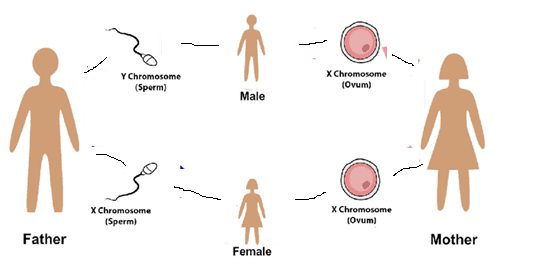
- Facts- It is because the sex of the baby depends on the father chromosome.
The gender of the baby cannot be manipulated by any drug, therapy or diet. Any claims of such nature are false and they can be dangerous.
Does the mother have the responsibility for the birth of a boy or girl?
Having a boy (or girl) child should not matter in today’s environment. Girls have an equal opportunity in any profession. They are therefore able to excel as doctors, engineers, scientists, poets, painters, or as athletes. This is only possible if they are given the same encouragement and treatment as boys.
Some of us, however, still under-value a girl child’s potential and hold the mother responsible for her birth.
Gender Determination – Facts
| Statement | Fact |
|---|---|
| Mother determines baby’s sex | False |
| Sex determined by chromosome from father | True |
| Diet or medicine can change baby’s sex | No scientific evidence |
Source: WHO Genetics Overview (2022); Standard Human Biology Text
The father chooses a child’s sex, yet he has no control over it. Here’s why:
One the chromosome of the mother, another the chromosome of the father. The nature of those chromosomes is to define the child as male or female. The two sex chromosomes of the mother are referred to as XX. The two sex chromosomes of the father are called the XY chromosomes though they are different to those of the mother.
The presence of the Y chromosome which the child inherits as a male defines sex in the male. The father is not able to foretell however which chromosome will be inherited by the child. The genetic composition of a primitive infant cannot be altered after XX or XY is chosen on the first day of life.
Can a child’s sex be chosen? Can the sex of the offspring be changed through medical or treatment?
Is there any medication or treatment exist to alter a fetus’s sex?
You are unable to choose the sex by which your child reproduces itself with. The father has no control over which chromosomes a given sperm will carry or which sperm will fertilize the egg, even though his chromosome determines the child’s sex.
Nobody can transform your child into a different sex via pills or any kind of medicine. Any medications that make such claims run the risk of damaging the child’s brain and other organs.
The Decision to have a Baby should be made mutually between husband and wife.
FAQs:
Q1. The importance of pre-pregnancy planning?
Q2. At what time should I begin preparing to be a mother?
Q3. What are the first steps?
Q4. What are the vitamins that are needed prior to pregnancy?
Q5. Does diet affect fertility?
Q6. Does body weight matter?
Q7. Are alcohol and smoking to be discontinued?
Q8. Are medical tests necessary?
Q9. What are the habits that help in a healthy pregnancy?
Related Health Articles from Healthy Home:
- Iron-Rich Foods During Pregnancy
Complete guide to iron-rich foods that support healthy hemoglobin levels and fetal development during pregnancy.
https://healthhom.com/iron-rich-foods-during-pregnancy/ - Healthy Cooking Tips for Pregnant Women
Practical cooking tips to preserve nutrients, ensure food safety, and support maternal nutrition during pregnancy.
https://healthhom.com/cooking-tips-for-pregnant-women/ - Vitamin B12: Benefits, Sources, and Deficiency
Detailed explanation of vitamin B12 functions, dietary sources, deficiency symptoms, and health benefits.
https://healthhom.com/vitamin-b12/ - Vitamin D Deficiency Risks During Pregnancy and Breastfeeding
Insight into health issues caused by vitamin D deficiency in pregnant and nursing women, including bone and immune health concerns.
https://healthhom.com/what-issues-might-a-pregnant-or-nursing-woman-have-from-a-vitamin-d-deficiency/ - Omega-3 Deficiency Effects in a Mother’s Diet
Explains how lack of omega-3 fatty acids in a mother’s diet can affect fetal brain development and maternal health.
https://healthhom.com/what-occurs-if-omega-3-is-absent-from-the-mothers-diet/
Trusted References and Research Sources:
- WHO Healthy Diet Guidelines (PDF) Official World Health Organization guidelines on balanced diets, nutrient intake, and healthy eating patterns. https://iris.who.int/bitstream/handle/10665/78067/9789241505000_eng.pdf?sequence=1
- Scientific Review on Nutrition and Diet Quality (NCBI) Peer-reviewed research explaining diet quality, nutrition patterns, and long-term health outcomes. https://pmc.ncbi.nlm.nih.gov/articles/PMC6075697/
- Preconception Care Guidelines by NICHD Evidence-based recommendations on nutrition, lifestyle, and health planning before pregnancy. https://www.nichd.nih.gov/health/topics/factsheets/preconceptioncare
- WHO Antenatal Care Nutrition Recommendations World Health Organization recommendations covering nutrition, supplements, and pregnancy care. https://www.who.int/publications/i/item/9789241549356
- Pre-Pregnancy Health Checklist (WebMD)Practical checklist covering diet, lifestyle, and medical preparation before pregnancy. https://www.webmd.com/baby/ss/slideshow-prepregnancy-checklist
- WHO Maternal Health Overview Global overview of maternal nutrition, healthcare access, and pregnancy health strategies. https://www.who.int/health-topics/maternal-health#tab=tab_1
- WHO Antenatal Health Care Services Guidelines (PDF) Policy-level guidelines detailing antenatal nutrition, supplements, and maternal healthcare services. https://platform.who.int/docs/default-source/mca-documents/policy-documents/guideline/SDN-CC-10-01-GUIDELINE-eng-Antenatal-Health-Care-Services.pd
How This Guide Was Prepared ? This guide is based on WHO guidelines, peer-reviewed research and public health field experience in maternal and child health programs. Sex selection is illegal in many countries, including India5 Benefits of Reducing Salt and Sugar : Health Effects and Practical Tips