7-Day Gut Health Plan : Family-Friendly Foods for Better Digestion
Try this simple 7-day gut health plan for families to improve digestion, immunity & energy naturally. Backed by science and easy for kids.
This guide is based on evidence-informed nutrition practices recommended by WHO and leading public health institutions.
Reviewed by Bibhu Ranjan Mund, MPH (Public Health Expert) with experience in maternal, infant, child, and adolescent health programs. Content is based on evidence-informed guidelines aligned with organizations such as the World Health Organization, UNICEF, Centers for Disease Control and Prevention, and National Institutes of Health.
Medical Disclaimer: This content is for informational and educational purposes only and is not intended as medical advice, diagnosis, or treatment. Always seek the advice of a qualified healthcare professional regarding any medical condition or concerns.
Introduction:
Is it possible to improve your family’s low energy level, frequent illness & constant bloating by just changing the food habits in 7 days?
You may be surprised to know that, the research of National Institutes of Health (2022), shows that your gut is a home to trillions of microbes which can influence the digestion process, immunity, mood changes and even the functioning of brain.
It is also interesting to know that the Standford School of Medicine (2021) shows “the diet changes specially fiber and fermented foods may be able to improve the gut microbiome diversity within a week”.
Still, due to our modern lifestyle, more dependent upon processed foods, stress, frequent antibiotic use etc. may disrupts the balance for both adult and child.
A Common Situation in Many Indian Homes:
In the day to day life of Indian families, every morning starts with hurried breakfast or many-times skipping breakfast, packaged snacks in school bags of children, in-sufficient taking of water, late-night dinner only because of busy schedules. So, that the children complains about the stomach pain, constipation, less appetite, frequent cold etc. Also parents suffer from acidity, bloating, fatigue but think it as normal due to stress.
The Community Nutrition programs across India suggests that the digestive problems are increasing even in the younger generation due to irregular food habits as traditional eating habits are increasingly replaced by ultra-processed foods including sedentary life styles.
But, the important thing is that you don’t need any costly supplements or diets.
This article will provide you a family friendly 7 days gut health plan which may help you to:
- Restore digestive balance naturally
- Boost immunity and energy levels
- Build long-term healthy eating habits for kids
Because the actual gut healing will not be possible by restricting any diet, but it can be started with the right and proper daily habits consistently.
Building a strong digestive system starts with a balanced daily meal plan, which ensures your body gets the right mix of fiber, nutrients, and energy for optimal gut function.
Global Research Insights on the Gut Microbiome
| Indicator | Estimate / Observation | Source | Year |
|---|---|---|---|
| Microorganisms living in the human gut | Trillions of microbes | National Institutes of Health (NIH) Human Microbiome Project | 2022 |
| Gut microbiome diversity linked with diet variety | Higher plant diversity associated with greater microbial diversity | American Gut Project | 2021 |
| Fiber intake linked with microbiome diversity | Higher fiber diets associated with diverse gut bacteria | Harvard T.H. Chan School of Public Health | 2023 |
| Fermented foods studied for microbial diversity | Observational links with microbiome diversity | Stanford School of Medicine | 2021 |
Quick Summary :
- Increase intestinal, immune and vitality in the entire family.
- Dietary priorities should be on fiber-based food, fermented foods and hydration.
- Restrict consumption of added sugar and processed foods to have a healthy microbiome.
- Daily movement, mindful eatin, and easy gut-friendly lifestyles.
- Simple, non-complicated 7- day diet plan suitable to both adults and children.
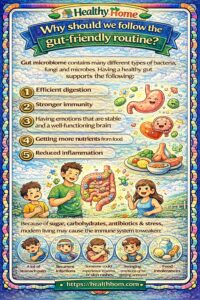
Why should we follow gut-friendly routine?
Many of the Indian families face with day-to-day digestion issues like constipation among children, bloating after meals, low energy, acidity, irregular habits due to busy schedules. Such types of causes are related to gut health which the people ignore.
Having a healthy gut supports the following:
- Efficient digestion
- Stronger immunity
- Having emotions that are stable and a well-functioning brain
- Getting more nutrients from food
- Reduced inflammation
Because of sugar, carbohydrates, antibiotics & stress, modern living may cause the immune system to weaken. Children are more at risk for gut imbalances which can show up as problems like:
- A lot of stomach pain or problems with constipation
- Recurrent infections
- Someone could experience eczema or skin rashes.
- Swinging emotions or be getting annoyed
- Food intolerances
Including anti-inflammatory foods in your meals can help reduce gut irritation and support a healthier microbiome over time.

7-Days Gut Health Plan: Main Rules
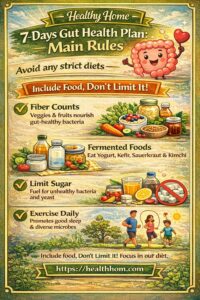
Before you start the reset, here are the major principles:
- Avoid any strict diets — Include food, don’t limit it. Focus on including more fiber, fermented products and liquids in your diet.
- Fiber Counts : Vegetables and fruits rich in fiber nourish the bacteria that maintain good health to the intestine.
- Fermented foods to be Included — Eat yogurt, kefir, sauerkraut and kimchi since they have live probiotics.
- Intake of Sugar Should be Limited — Sugar is not forbidden but it gives fuel to unhealthy bacteria and yeast.
- Regular exercise: Working out and sleeping well on a daily basis promote a wide range of microbes.
Examples of Gut-Supporting Food Groups
| Food Category | Examples | Nutritional Role | Source | Year |
|---|---|---|---|---|
| Fiber-rich foods | Oats, beans, apples | Provide prebiotic fiber | Harvard Nutrition Source | 2023 |
| Fermented foods | Yogurt, kefir, kimchi | Contain live cultures | World Gastroenterology Organisation | 2023 |
| Whole grains | Brown rice, quinoa | Source of complex carbohydrates | USDA Dietary Guidelines | 2022 |
| Plant foods | Vegetables, fruits, legumes | Provide plant diversity | American Gut Project | 2021 |
| Hydrating beverages | Water, herbal tea | Support digestion | Mayo Clinic | 2022 |
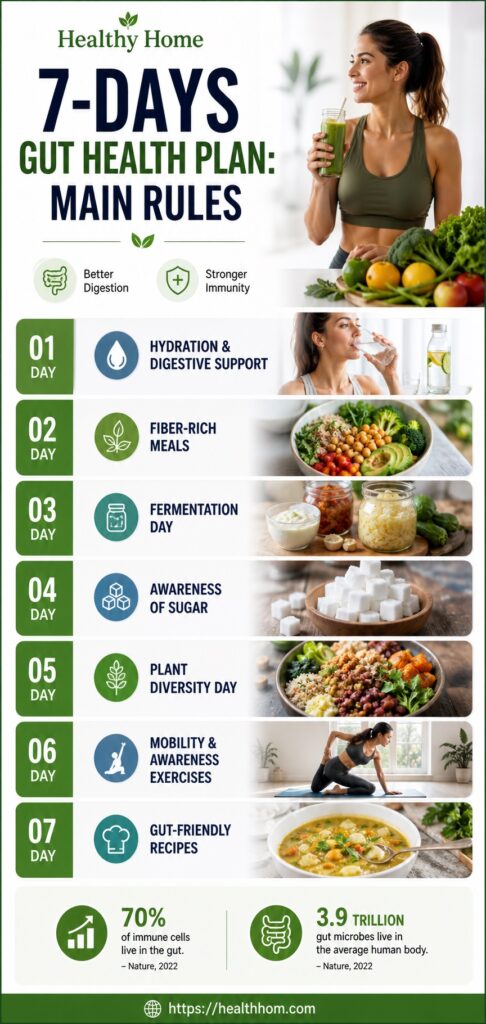
We can look at above topic day by day.
1. Day 1 – Hydration & Digestive Support
Aim: Support natural digestion from the body an action plan.
- For the first drink of the day, have either warm water plus lemon (for parents) or water with a little orange juice (for kids).
- Have your breakfast with cooked oatmeal, chia seeds and some berries and yogurt.
- Have less soda or sugary juice and choose water or fresh juice that is not very sweet.
- Have your lunch with a bowl of lentil soup, some whole grain bread and carrot sticks for delicious fiber.
- Do a post-dinner quick walk with your family or incorporate a stretch.
Drinking enough water improves bowel function and supports the gut bacteria.
Following a proper hydration routine is essential for smooth digestion and maintaining a healthy gut environment.
Public Health Observation:
Across many families in India, inadequate taking of water is one of the simplest cause of constipation and poor digestion which are always ignored. Also few children replaces water with packaged juices or soft drinks during summer season. So as per the observation by Public Health personnel, adequate water intake can make a noticeable difference within few months.

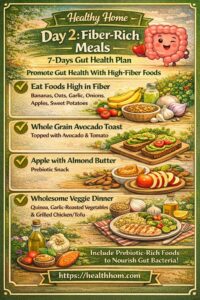
2. Day 2 – Eating meals with fiber content
Once hydration improves digestion, the next step is feeding the healthy bacteria already living inside the gut. So, fiber becomes important.
The aim is to provide more prebiotic fiber for good gut bacteria. Here is the Action Plan.
- Think about including foods high in inulin, pectin and resistant starch, for example, bananas, onions, garlic, oats, apples, sweet potatoes.
- All ingredients are whole grain bread and the toppings are slices of avocado and tomatoes.
- A snack can be apple slices spread with almond butter.
- A typical dinner would be quinoa, garlic-roasted vegetables and either grilled chicken or tofu.
We may note that “Prebiotics are the nutrient source most favored by gut bacteria.”
Adding a variety of gut-friendly foods like oats, fruits, and legumes helps nourish beneficial bacteria in the digestive system.
After increasing fiber intake, the body also benefits from introducing fermented foods that naturally contain helpful bacteria.
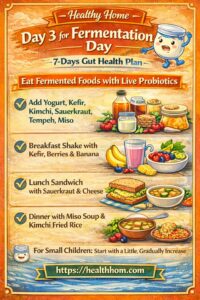
3.️ Day 3 is for fermentation day
Goal: Eat fermented foods that include live probiotics. Here is some Action Plan.
- Try to always include one portion of fermented food like yogurt, kefir, sauerkraut, miso, kimchi or tempeh with meals.
- Making a breakfast shake is simple by combining kefir, banana and berries.
- Sandwich at lunch consisting of sauerkraut, cheese and whole grain bread that had been grilled.
- Miso soup and kimchi fried rice are tasty dishes to serve with the rest of the meal
- Fermented foods are also introduced in small quantity in food or drinks especially in small children.
First, use a small quantity and then slowly increase amount.
Common Fermented Foods Used in Diets Worldwide
| Food | Region | Key Feature | Source | Year |
|---|---|---|---|---|
| Yogurt | Global | Fermented dairy product | FAO Fermented Foods Report | 2021 |
| Kefir | Eastern Europe | Fermented milk beverage | World Gastroenterology Organisation | 2023 |
| Kimchi | Korea | Fermented vegetables | Journal of Ethnic Foods | 2021 |
| Sauerkraut | Europe | Fermented cabbage | FAO | 2021 |
| Miso | Japan | Fermented soybean paste | Harvard Health | 2022 |
4. Awareness of Sugar
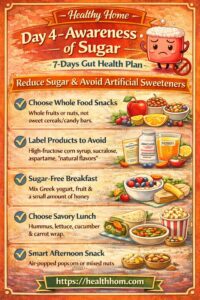
Review your foods so you can decrease sugar and completely eliminate any artificial sweeteners. Action Plan:
- We may choose the whole fruit or nuts not by taking sweet taste cereals or granola bars for snacks.
- Mark foods with high-fructose corn syrup, sucralose, aspartame or “natural flavors” as products to avoid.
- Try mixing Greek yogurt without sugar, fruit and a small amount of honey as your first meal.
- Try a lunch wrap with hummus, lettuce and some thin slices of cucumber and carrots.
- A cup of popcorn that was air-popped or some nuts (of mixed nuts).
Sugar and artificial sweeteners tend to boost harmful bacteria in our digestive system and interfere with the diversity of our healthy microbiome.
Learning about the benefits of reducing sugar intake can help prevent harmful bacteria overgrowth and improve gut balance.
What I Commonly Observe:
As per present belief of Indian people, healthy packaged snacks are good for the overall health of children. But, it may contains added sugar in the flavored yogurt, chocolate drinks, packaged granola bars, breakfast cereals. So, reading ingredient labels carefully is very much important before purchasing it.
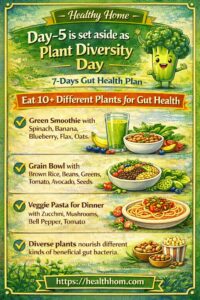
5. Day-5 is set aside as Plant Diversity Day.
Try to eat 10 or more different plants during a single day. ACTION PLAN
- Calculate here the number of plant-based meals you eat now.
- Make a smoothie out of spinach, banana, blueberry, flax and oats.
- Brown rice, beans, greens, tomato, avocado and pumpkin seeds mixed in a grain bowl for the lunch.
- Dinner with a plate of pasta with homemade veggie sauce (zucchini, mushrooms, bell pepper, tomato).
- Eating a range of foods promotes a greater range of beneficial bacteria in the gut.
Giving a variety of fiber sources is always good for them.
A plant-based diet is not meant to replace a detox, cleanse or starving. In fact, it feeds our digestive tract by adding the good bacteria in the body making us feel good later on.
A Simple Family Change That Worked:
During my discussion with the community in a wellness discussion session, one parent shared her experience that her child is not eating green vegetables and complained about constipation always. So, instead of giving direction to child to eat vegetables, parents can use colorful foods in smoothies, parathas, homemade pasta sauce and even in snacks. After eating these, the child became more comfortable trying different foods.
6. Mobility exercises and awareness exercises make up the Day 6 workout:
The goal is to build connection between the gut and brain through regular exercise, good habits and reducing stress. Following the action plan:
- Do at least 30 minutes of movement such as a family dance, bicycling, yoga or walking through nature.
- You could include some heavy breathing or journaling about things before bed.
- Try to eat each bite 15–20 times and focus on the meal.
- When stressed, the lining of your gut might weaken which also could reduce the number of good bacteria present.
Being calm helps the digestive system to function properly.
Lifestyle Practices Associated With Digestive Well-Being

7. Gut-Friendly Recipes
Our goal is to encourage gut health by enjoying a meal with those foods & remembering the experiences from the week. Actions to take:
- Give your family whole grain pancakes, top them with kefir yogurt and add some fresh fruit compote.
- Dinner: Give everyone the chance to pick from beans, avocado, salsa, onions and other veggies.
- Advice from the gut: Explaining how meals impact the body helps kids select better options long time.
Easy Indian Gut-Friendly Food Swaps for Families:
| Instead of | Try This |
|---|---|
| Sugary breakfast cereal | Poha with peanuts & vegetables |
| Soft drinks | Buttermilk or lemon water |
| Instant noodles | Vegetable dalia or upma |
| Packaged flavored yogurt | Homemade curd with fruits |
| Fried snacks daily | Roasted chana or makhana |
| White bread | Whole wheat roti or multigrain bread |
In the present Indian traditional foods, it already contains so many gut-friendly foods such as curd, fermented rice, buttermilk, idli, dosa, lentils, some seasonal vegetables, spices rich in fiber. The aim is to improve the everyday family meals gradually instead of taking the imported diet always.

Helpful Advice to Care for Your Gut Over the Long Term
- Changing your food choices every week helps to keep diverse the microbiome.
- To make children willing to eat other meals, involve them in purchasing groceries and cooking.
- Try a fermented food weekly such as blending kefir into smoothies, using yogurt in dips or having kimchi on top of rice.
- Have some high-fiber foods available for snacks such as nuts, seeds, popcorn, raw vegetables and dried fruits.
- Do not take antibiotics unless doctor recommends them and always finish any antibiotic course as told by them.
Long-term gut health also supports lifestyle disease prevention, including reducing risks of diabetes and metabolic disorders.
Promote good gut health for kids.
Their digestive systems are not fully formed yet which makes their microbiomes extra sensitive. This plan is food-based and generally suitable for healthy families, but children may respond differently.
However, if any of these are happening to your kid:
- A food problem identified as an intolerance or an allergy
- Problems in digestion such as IBD and celiac
- Since the last 30 days, the type of antibiotics used
- Those with frequent problems with constipation or diarrhea
Asking to a pediatrician or registered dietitian before such changes in diet is recommended.
Supporting gut balance is an essential part of overall child health and development, especially during early growth years.

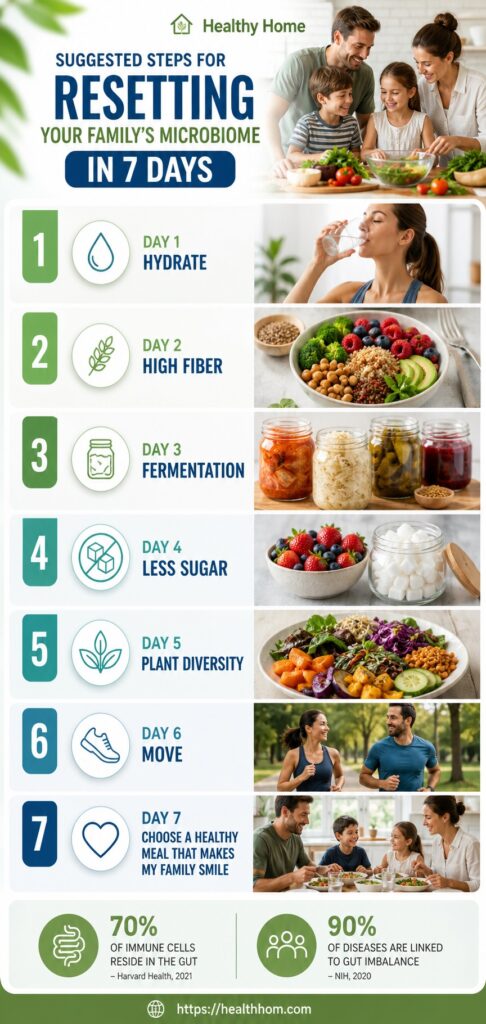
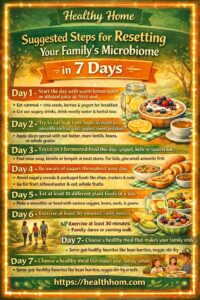
Quick 7-Day Family Gut Health Checklist
1. Starting Day 1 : Good clean and proper hydration.
- Take a warm lemon water or dilute juice at the first thing in the morning
- Eat a mix of oatmeal, chia seeds, berries and yogurt for breakfast
- Reduce sugary drinks to drink mostly water and herbal teas.
- Get yourself or your family to take a quick evening stroll after dinner.
2. As much as possible, try to eat high fiber foods on Day 2
- Include foods with fiber such as oats, apples and sweet potatoes.
- Have apple slices spread with nut butter.
- Eat more lentils, beans or whole grains with your meals.
- Incorporate them where you can into your food
3. Day 3 is the day of the fermentation:
- Eat 1 fermented food per week (yogurt, kefir or sauerkraut are good choices).
- You can find miso soup, kimchi or tempeh at most stores.
- Give children only small amounts at first.
4. Day-4: be aware of how much sugar you are having throughout the day.
- Skip sugary cereals and packaged foods such as chips, crackers and cookies.
- Check the list of ingredients for sugars and sweeteners on packaged foods.
- If you have to drink soda, always go for fruit-infused water.
- Eat whole fruits.
5. The fifth day focuses on many different plant species
- Try to eat at least 10 various plant foods in a day.
- By adding unusual quantities of various vegetables, make a smoothie or a bowl.
- Children need to have beans, seeds, greens and fruits in their meals.
- Count on how many plants you eat in the day.
6. Day 6 — Exercise
- Make sure that you get at least 30 minutes of exercise (walking, dancing, yoga practice)
- Major journaling or deep breathing activities might help the younger population.
- Eat with small bites and chew it well.
- Less action in the screen at night helps in promoting digestion.
7. On Day 7 Choose a Healthy meal that makes my family smile :
- Make it a point to cook food that promotes healthy gut in your family.
- Serve fermented sauces e.g. yogurt, pickles and kimchi with the toasts.
- Write about what everyone’s thoughts and feelings were during the week.
- Be proud of the minor achievements.
Weekly Focus Areas for Gut Health Habits
| Day | Focus Area | Primary Nutrition Goal | Source | Year |
|---|---|---|---|---|
| Day 1 | Hydration | Support digestion | Mayo Clinic | 2022 |
| Day 2 | Fiber | Provide prebiotic nutrients | Harvard Nutrition Source | 2023 |
| Day 3 | Fermented foods | Introduce live cultures | World Gastroenterology Organisation | 2023 |
| Day 4 | Sugar awareness | Reduce excess added sugar | WHO Nutrition Guidelines | 2022 |
| Day 5 | Plant diversity | Increase dietary variety | American Gut Project | 2021 |
| Day 6 | Activity & mindfulness | Support gut-brain balance | Harvard Health | 2023 |
| Day 7 | Balanced meals | Maintain healthy food habits | USDA Dietary Guidelines | 2022 |
When Families Should Seek Medical Advice:
A gut-friendly routine supports general wellness, but persistent digestive symptoms should not be ignored. Families should consult a qualified doctor if symptoms of:
- Blood in stool
- Persistent diarrhea
- Sudden weight loss
- Severe abdominal pain
- Repeated vomiting
- Ongoing constipation despite dietary changes
- Poor growth or appetite in children
Medical evaluation is especially important for children with food allergies, celiac disease, inflammatory bowel disease or chronic digestive symptoms.
Note for Parents:
This food-based plan is intended for generally healthy families. Children with food allergies, digestive disorders or recent antibiotic use should consult a pediatrician or registered dietitian before dietary changes.
Possible Changes Families May Notice:
Families may notice small but meaningful improvements after following the gut-friendly habits consistently:
- More regular bowel movements
- Reduced bloating or stomach discomfort
- Better appetite in children
- Improved energy levels
- Less dependence on packaged snacks
- Better hydration habits
- More mindful eating routines
However, gut health improvement is gradual and varies from person to person.
During nutrition awareness activities, one repeated observation is that families often focus on supplements before improving daily meal quality.
Concluding remarks: A small step for gut health
Gut health can be restored not by expensive diet or supplements, but it can be through simple and consistent choices.
As per the study report of Harvard health (2023) and World health Organization (2022), they show that small dietary changes like increasing fiber in daily diet, adding of fermented foods, staying hydrated etc. may support the balancing of gut and overall wellness.
The important part is : after starting the 7 days gut health plan, you may observe the changes like better digestion, improved in energy level, stable mood.
In many homes, healthy eating becomes difficult not because families do not care, but because modern life is busy, stressful and filled with convenience foods. This is why gut health should not feel like a strict diet challenge.
But, this plan is just the beginning of improvement.
Real improvement happens when these habits become part of everyday family life:
- Choosing whole foods over processed ones
- Eating mindfully as a family
- Creating a healthy relationship with food for your children
Because a healthy gut can’t built within a week, it’s only possible through small daily decisions.
Start today with just one meal at a time, your future health may be able to shape the gut.

FAQs:
Q1. Is it possible to make children adhere to 7-day gut health plan?
Q2. What is the duration to experience the improvement in digestion?
Q3. Have fermented foods are safe on a daily basis?
Q4. Would this gut plan in seven days be appropriate to vegetarians?
Q5. Is it possible to repeat such gut health plan monthly?
Related Health Articles from Healthy Home:
- 8 Best Fermented Food for Gut Health in Adolescents – Healthy Home – Trusted Health Tips for Kids, Teens & Families (healthhom.com)
- 10 Evergreen Gut Friendly Foods That Support Gut Health Naturally – Healthy Home – Trusted Health Tips for Kids, Teens & Families (healthhom.com)
- What is millet ? Nutrition, Benefits, Uses & Side Effects (healthhom.com)
- How to know your Cholesterol level, BMI & BMR? – Healthy Home – Trusted Health Tips for Kids, Teens & Families (healthhom.com)
- 7 best Thyroid friendly recipes to boost metabolism naturally – Healthy Home – Trusted Health Tips for Kids, Teens & Families (healthhom.com)
Trusted References and Research Sources:Healthy Nutrition Guide for Families : Balanced Diet, Gut Health and Weekly Meal Plan10 Early Warning Signs of Type 2 Diabetes: Symptoms, Risk Factors and PreventionHealthy Living Guide for Families : Nutrition, Sleep and Daily Wellness HabitsHow to know your Cholesterol level, BMI & BMR? A Simple Health Guide5 Benefits of Reducing Salt and Sugar : Health Effects and Practical Tips
- 5 simple ways to improve gut health – Harvard Health
- Diet and the Gut | World Gastroenterology Organisation
- The 11 Best Ways to Improve Your Digestion Naturally (healthline.com)
- Healthy Gut Healthy You_ Traditional Recipes with Potential Probiotic Benefits_compressed.pdf (fssai.gov.in)
- Gut Microbiome: Profound Implications for Diet and Disease – PMC (nih.gov)
- Transforming your gut health: Simple steps for a healthier you – Mayo Clinic Press
- Gut health: definitions and determinants – The Lancet Gastroenterology & Hepatology