Annual Health Checkup for Lifestyle Diseases : Screening Tests for Early Disease Detection
Annual health checkup for lifestyle diseases like diabetes, heart and thyroid disorders through early detection and timely screening tests.
Reviewed by Bibhu Ranjan Mund, MPH (Public Health Expert) with experience in maternal, infant, child, and adolescent health programs. Content is based on evidence-informed guidelines aligned with organizations such as the World Health Organization, UNICEF, Centers for Disease Control and Prevention, and National Institutes of Health.
Medical Disclaimer: This content is for informational and educational purposes only and is not intended as medical advice, diagnosis, or treatment. Always seek the advice of a qualified healthcare professional regarding any medical condition or concerns.
Introduction:
Even if you are feeling completely healthy, suddenly heard about people of your same age suffering from a heart attack or diabetes? Below is the actual truth:
As per the research of the World Health Organization (WHO, 2024), over 60% of most lifestyle-related diseases develop in the body silently for years before giving any visible symptoms.
It is clear that your body is already at risk without showing a single warning sign. Many people seek medical care only after symptoms appear, when disease progression may already have occurred.
Now think the following point: “Can a simple annual health checkup detect diseases before they become serious?”
That is exactly the purpose of an annual health checkup.
As per the research of the Indian Council of Medical Research (ICMR, 2023), it shows that early screening can reduce the complications of lifestyle diseases up to 70% when identified at an early stage. Your body doesn’t suddenly become unhealthy, it slowly sends signals that most people ignore.
This article will help you to understand:
- Why silent diseases are rising rapidly mostly in India
- What exactly happens if a full health checkup is done
- Which tests matter as per your age
- How early detection can save your life and money
Because someone says wisely that the difference between illness and health is “just one proper test done in time”.
Understanding how to prevent lifestyle diseases naturally can help reduce long-term health risks.
What is an annual health checkup?
An annual health checkup is a screening of body which includes blood tests, physical examination, and risk assessment to detect diseases early and maintain overall health.
Quick Summary:
- Early detection of symptoms of many lifestyle diseases.
- Minimize the costs of long-term care.
- Avoid heart attack, stroke and damaged kidneys.
- Pre-diabetes can be reversed simply by changing the lifestyle.
- Improve life quality and longevity.
- Peace of mind of you and your family.
- Build home based preventive health.
A Health Camp Experience That Changed My Perspective
During a community health screening camp organized by National Health Mission at Koraput (Odisha), I met with a school teacher aged about 40 years who think that he was completely healthy. He didn’t visit to any medical as he had no prior symptom and managing his daily routine perfectly.
During the camp, Health Worker (Female) identified that his blood pressure was increased with fasting blood sugar above normal range. After seeing these, his first reaction was surprise that “How can I have a problem when I feel absolutely Okay?”
I have remembered his expression till now. It may reflects in many Indian families as the people wait till symptoms appear. But, many lifestyle diseases such as hypertension, diabetes and high cholesterol may develop silently for years.
Thanks that his condition was identified early so that proper medical guidance was provided with counselling of regular walking, dietary changes with regular follow-up monitoring schedule. His health indicators was improved due to his effort.
Such type of experiences show a lesson of early preventive health check-ups and not to wait till complications arises.
What Are Lifestyle Diseases?
Lifestyle diseases are the illnesses which primarily arise due to our present lifestyles, sedentary schedule, unhealthy eating, stress, insomnia etc. These are the diseases which actually develop gradually and silently unlike infection.
Lifestyle diseases
- Diabetes- This is usually associated with food, lack of exercise or excess weight.
- High Blood Pressure (Hypertension) – Can live with it many years without any symptoms.
- Heart Disease- Develops due to accumulation of cholesterol, smoking or lack of exercise.
- Obesity -Correlated with hormonal disorders and metabolism.
- Thyroid Disorders- Increasing particularly in females.
- Fatty Liver & Kidney Disorders – These are usually connected with the improper nutrition or alcoholism.
These diseases can often be prevented or reversed when detected early and this is where annual health checkups are very important.
Adopting obesity prevention and healthy lifestyle habits plays a key role in reducing disease risk
The Power of Early Detection:
Think of your body as a car. You have serviced it as per scheduled time so as to keep in running condition. The same thing should be done with your health.
1. Prevention is always better than cure.
Early detection involves treating a problem in the small, easy and cheaper way. For example, it is much easier to put the borderline blood sugar under control using diet and exercise compared to treat the full-scale diabetes.
2. Minimizes Risk of Considerable Complications.
It diagnoses some diseases such as hypertension, thyroid disorders or fatty liver at particular stages before they harm the crucial organs. You may receive an opportunity to take action before the heart attack, a stroke, or kidney failure.
3. Individual Health Consciousness.
Checkups will provide you with a clear image of your health level, cholesterol, sugar, blood pressure and vitamin levels and so on. This aids in personalizing the diet, exercise and lifestyle to the actual needs of your body.
4. Peace of Mind for your & family members
Being healthy is emotionally peaceful. It will calm you down and encourage you to stick to good behavior.
What are the Recommended Tests in an Annual Check-up?
An annual check up includes the basic tests which diagnose the major systems of your body. These are prepared with regards to age, gender and family history.
Screening frequency should be individualized based on age, family history, risk factors and physician recommendations.
General Tests (For All Adults):
- Complete Blood Count (CBC): Examinations are against anemia, infection or inflammation.
- Fasting Blood Sugar and HbA1c: Identifies diabetes and pre diabetes.
- Lipid Profile: Measures cholesterol and triglycerides to establish the condition of the heart.
- Blood Pressure/ BMI: The easiest but effective warning signs of lifestyle diseases.
- Liver and kidney Function Tests: Detection of early sign of any Organ problem.
- Thyroid Test: For diagnosing of any thyroid problems.
For Women:
- Pap Smear or HPV Test: It manifests during the early alterations of the cervix.
- Breast Examination/Mammogram: Necessary over 40 years of age.
- Bone Density Test (DEXA): Should be done after menopause to examine the risk of osteoporosis.
For Children & Teens:
- Dental examination, vision and annual growth.
- Nutrition tests to prevent anemia or vitamins deficiency.
For Men & Seniors:
- The Prostate Health Tests (PSA): Beyond 50.
- Cardiac Screening & ECG: This is particularly among persons with family history.
- Most of the diagnostic centers today have the family health packages that integrate all these tests at a reduced cost.
Understanding cholesterol, BMI and BMR levels provides deeper insight into your overall health status.
At what age should you start health checkups?
Study advise that even you think you are not sick, you should start annual health check-ups after 25-30 years.
But in case you possess the following risk factors:
- The family medical history of diabetes, hypertension or heart disease.
- Unhealthy eating patterns/obesity.
- Stressful work life
- Smoking or alcohol use
- Abnormal eating and sleeping patterns
- In the case of children and teenagers, annual checkups by pediatricians are effective in healthy growth and development.
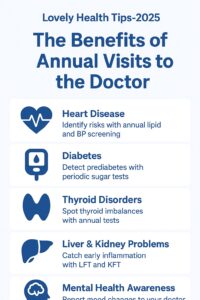
The Benefits of Annual Visits to the Doctor.
We shall now have a chance to watch the actual working of early detection
Heart Disease
There is no symptom of high cholesterol or blood pressure. Early identification of risks can be done through annual lipid profile and BP screening. Even a simple change of lifestyle such as walking every day, eating right and avoiding salt will help to avoid problems with the heart in the long term.
Diabetes
Prediabetes may take years to manifest itself. Periodic sugar tests detect it before becomes chronic diabetes i.e. before it is too late to change diet and exercise.
Thyroid Disorder
The thyroid disorder may have the symptoms like changes in the mood, weight gain or fatigue, but it may not appear significantly. It can be identified easily with the help of annual tests, in particularly among women.
Liver & Kidney Problems
These organs are silent organs until they are damaged in a late stage. Regular LFT and KFT check the early inflammation or accumulated toxins, so that you can take a remedial action.
Mental Health Awareness
During checkup, you can report about your mood swings, the quality of sleep or anxiety to your physician, which may be easy to recognize the primary symptoms of depression or burnout.
Early diagnosis makes treatment more like a wellness maintenance rather than the treatment of disease.
Following heart-healthy lifestyle and diet tips can significantly reduce cardiovascular risk.
How to Prepare an Annual Checkup.
To achieve the best and get correct results:
- Fasting 8-10 hours pre-test of blood.
- Bring with your past reports to easy compare.
- Record any symptoms, drugs or any lifestyle changes.
- Disclose your family medical history.
- Have your physician focus your questions about your diet, exercise and stress control
Keep in mind: your doctor is a partner of your wellness.
Discover more about How to know your Cholesterol level, BMI & BMR?
Real-Life Example Small Changes Before a Big Problem
During a health awareness activity, I had interacted with an educated couple from Padmapur (Odisha), who thought that they are living a healthy lifestyle.
They usually have frequent tea with sugar, limited physical activity, late dinners and long hours of office duty.
During a routine health screening conducted by Health Worker:
- The husband was found to have borderline high cholesterol.
- The wife showed early signs of prediabetes.
They had never any early symptoms. Then they as per advice, focus on these simple habits:
- Evening walks after dinner
- Reducing sugary beverages
- Including vegetables in every meal
When they attended the follow-up screening camp several months later, both had improved their health indicators.
Every person’s health journey may be different, but this example shows that due to some lifestyle changes one may easily prevent the problems early.
Maintaining a balanced daily meal planning for better health ensures accurate test results and long-term wellness.
Preventive Care in Family Health
The decisions you make about your health impact on your family. In a case where preventive checkups are the priority of the parents, the children will develop their overall health.
The ideas of routine family checkup are as follows:
- Arrange family checkup month i.e. say every January.
- A combination of diet, exercise and wellness goals can be planned using the results.
- Commemorate the good health achievements- make wellness entertaining.
- This collective strategy holds all people involved & interested.
Families can also follow this complete child health and development guide to build lifelong healthy habits.
Why Many Indian Families Delay Health Checkups
In many Indian households, healthcare services are provided by the families only when symptoms becomes more serious. During my work in community health programs, I have observed the following reasons:
- “I feel fine, so I don’t need a test.”
- “I am too busy right now.”
- “Why spend money when there is no illness?”
The only challenge is that the diseases like diabetes, hypertension, fatty liver problem and high cholesterol usually don’t show any symptoms in early stages.
Many Indian families may spend thousands of rupees in treating the complications that could have been identified much earlier through a simple annual screening package. So, a preventive health check-up should be considered as investment in health rather think medical
How to Live a Healthy Life Between Checkups
Long-term health is ensured by daily practices, despite the importance of screenings on a yearly basis:
- Eat Whole and Fresh Foods– Prefer Grains, vegetables and unprocessed fruits.
- Keep Hydrated -Drink 2-3 liters water per day.
- Exercise Everyday– The body and brain are improved even by a 30 minute walk.
- Sleep Well – The sleep renews the hormones and immune power.
- Deal with Stress– Attempt yoga, profound breathing or conscious journaling.
- Limit Sugar and Junk Foods -Less risk of diabetes and obesity.
- No Smoking or Alcoholism.
- Annual Health Check-up is not a single examination like a one-time test but a rather habitual decision.
Discover more about the Obesity Prevention: 20 Evidence-Based Lifestyle Habits That Work (2026 Guide)
Lifestyle Disease Statistics in India (Latest Available Data)
Non-communicable diseases or lifestyle diseases are increasing at a high rate in India as a result of urbanization, change in lifestyles and diet.
Data from World Health Organization (WHO)
- According to the World Health Organization, noncommunicable diseases account for over 60% of deaths in India.
- The deaths caused by NCDs are mostly due to cardiovascular diseases.
- In developing countries such as India, the rate of diabetes is rising
- WHO has stressed on early-detection and frequent screening as important to preventive measures.
Results of Indian Council of Medical Research (ICMR).
- More than 100 million diabetes patients in India.
- Many of the adults are prediabetic and this adds to the future risk.
- Hypertension occurs in almost 1 out of 3 adults of urban population.
- Numerous cases are not diagnosed because they are not screened regularly.
What National Family Health Survey (NFHS-5) shows.
- Increase in obesity and overweight in adults (15-49 years old).
- There were high levels of blood sugar reported by both men and women.
- There is an increasing number of cases of high blood pressure in rural and urban areas.
- Risk factors related to lifestyle, including lack of physical exercise and poor diet, are increasing.
What These Statistics Mean for You
- There is no longer an age restriction of lifestyle diseases.
- Risk factors can be identified early by health checkups conducted every year.
- Preventative screening minimizes health complications and other costs of the treatment in the long-run.
Early diagnosis will save lives, save healthcare expenses and enhance quality of life.
| Indicator | Latest Estimate | Source | What It Means |
|---|---|---|---|
| Deaths due to Noncommunicable Diseases (NCDs) | ~63% of total deaths in India | World Health Organization | Majority of deaths are linked to preventable lifestyle diseases |
| Adults with Diabetes | 100+ million people | Indian Council of Medical Research | India is among the countries with highest diabetes burden |
| Prediabetes Prevalence | 130+ million individuals | Indian Council of Medical Research | Large population at high future risk of diabetes |
| Hypertension in Adults | Nearly 1 in 3 adults | National Family Health Survey | Many cases remain undiagnosed without screening |
| Overweight/Obesity (15–49 yrs) | Rising in both men & women | National Family Health Survey | Increased risk of heart disease and metabolic disorders |
What These Numbers Mean From a Public Health Perspective
India has more than 100 million people living with diabetes which suggests that it is a common lifestyle disease in families.
As a public health professional, I personally view these figures as the prevention is not possible after diagnosis. The real opportunity is to identify the risk factors much before symptoms through annual screening and awareness. As a public health professional, I view these figures as a warning that prevention cannot begin after diagnosis.
Annual Health Check-ups are not only required for older adults, but for younger working adults as well.
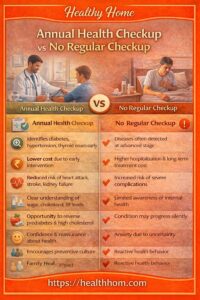
Annual Health Checkup vs No Regular Checkup
| Factor | Annual Health Checkup | No Regular Checkup |
|---|---|---|
| Early Detection | Identifies diabetes, hypertension, thyroid issues early | Diseases often detected at advanced stage |
| Treatment Cost | Lower cost due to early intervention | Higher hospitalization & long-term treatment cost |
| Risk of Complications | Reduced risk of heart attack, stroke, kidney failure | Increased risk of severe complications |
| Health Awareness | Clear understanding of sugar, cholesterol, BP levels | Limited awareness of internal health |
| Lifestyle Correction | Opportunity to reverse prediabetes & high cholesterol | Condition may progress silently |
| Mental Peace | Confidence & reassurance about health | Anxiety due to uncertainty |
| Family Health Impact | Encourages preventive culture | Reactive health behavior |
Following a daily hydration routine for overall wellness supports metabolism and organ health.
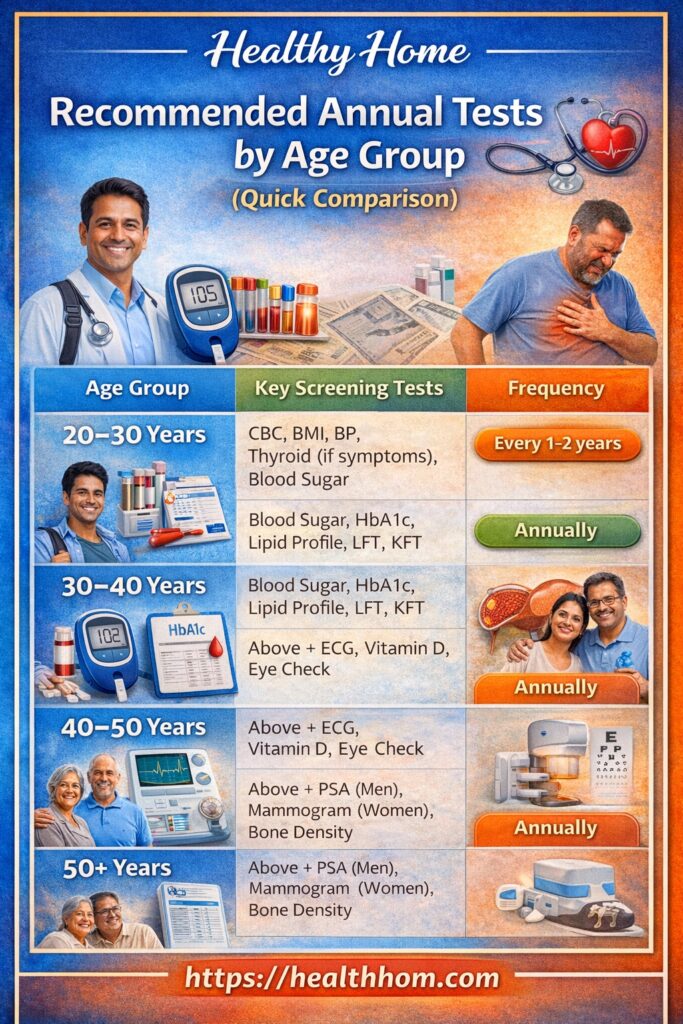
Recommended Tests by Age Group (Quick Comparison)
| Age Group | Key Screening Tests | Frequency |
|---|---|---|
| 20–30 Years | CBC, BMI, BP, Thyroid (if symptoms), Blood Sugar | Every 1–2 years |
| 30–40 Years | Blood Sugar, HbA1c, Lipid Profile, LFT, KFT | Annually |
| 40–50 Years | Above + ECG, Vitamin D, Eye Check | Annually |
| 50+ Years | Above + PSA (Men), Mammogram (Women), Bone Density | Annually |
PSA screening should be discussed with a healthcare professional because benefits and risks vary among individuals. Health checkups are important because they help detect diseases at an early stage and take timely action.
Annual Health Checkup in India (2026) Cost
Health checkups in India are affordable and vary by package type. It differs in prices depending on the type of tests, city and diagnostic center. There are various hospitals and labs which are currently offering preventative health packages targeting various age groups.
Average Price Range
| Package Type | Estimated Cost (2026) | What It Includes | Suitable For |
|---|---|---|---|
| Basic Health Package | ₹999 – ₹5,000 | CBC, Blood Sugar, Lipid Profile, Liver & Kidney Function, Thyroid, Urine Test | Adults below 40 without major risk factors |
| Advanced Health Package | ₹5,000 – ₹15,000 | All basic tests + HbA1c, Vitamin D, ECG, Ultrasound, Cardiac Risk Markers | Adults above 40 or with family history |
| Executive / Corporate Package | ₹3,000 – ₹12,000 (company-sponsored or discounted) | Customized screening based on employee age & risk | Working professionals |
What Affects the Cost?
- City (higher pricing in the metro cities)
- Number of diagnostic tests included
- Hospital/ vs. private diagnostic lab.
- Services of home sample collection.
- Secondary specialist advice.
Should we pay money on Annual Health Checkups?
Yes. Preventive screening will enable early detection and:
- Minimize the cost of long-term hospitalization.
- Avoid expensive problems such as heart attack or kidney failure.
- Pre-diabetes can be reversed before medication is required.
- Give people and families peace of mind.
Preventive screening of Rupees. 1,000-5,000/year can be much cheaper than lifelong treatment of more developed lifestyle diseases.
Health checkup in India is a very low cost and economical option of preventing lifestyle diseases and saving on future medical bills.
Annual Health Checkup vs Health Insurance Coverage
A lot of individuals are questioning whether health insurance covers annual health checkups or not. It actually depends on the kind of plan that you possess and the preventive care benefits that the insurer is offering.
| Feature | Out-of-Pocket Health Checkup | Health Insurance Coverage |
|---|---|---|
| Routine Screening Tests | You pay directly (₹999 – ₹15,000) | Some plans reimburse basic screenings |
| Coverage for Diagnostics | All tests included in the package | Often limited to preventive benefits or rider add-ons |
| Pre-Existing Conditions | Does not affect cost | Coverage may be restricted depending on policy terms |
| Frequency | Annual (recommended) | Depends on insurer — usually once per policy year |
| Claim Process | None required | May require pre-authorization or reimbursement |
| Cashless Option | Generally no | Possible if offered under preventive care benefits |
| Add-On/Rider Availability | Not applicable | You can add preventive care riders for annual checkups |

The process of Insurance on Preventive Checkups.
A number of insurers provide the policy benefits of free annual checkups, normally after the initial policy year. This is usually basic screenings including:
- CBC,
- Blood Sugar
- Lipid Profile
- BMI,
- Blood Pressure
- Thyroid Test (Thyroid screening may be recommended based on symptoms, age, risk factors or physician advice).
Reimbursement vs Cashless:
- Reimbursement: This is where you pay in advance and send the bills to the insurer.
- Cashless: Tests can be performed at partner labs, without being paid. This requires the support of the network of your insurer.
Tips to Maximize Coverage
- Revise your preventive care benefit policy.
- Add Health Checkup Rider.
- Have current Medical records -insurers may enquire.
- Select network labs in order to make cashless claims.
Whereas fundamental health checkups are usually paid out of pocket, most of the Indian health insurance policies are currently covering at least some part or entirely cover the preventive screenings. The appropriate plan will save you a lot of money in addition to promoting annual reviews.
Most Indian health insurance plans have begun to include preventive screenings such as annual health checkups as a rider or as a basic benefit and has lowered your out-of-pocket expense.
Best Time to Book an Annual Health Checkup
- Beginning of the year
- After policy renewal
- Before 40th birthday
- After lifestyle change
Key Takeaways:
- An annual check up is used in detecting diseases before they strike.
- Heart attack, stroke, and kidney damage may be avoided by early diagnosis.
- The growth of lifestyle diseases is increasing at an alarming rate- even among the young people.
- Timely screening enhances the health outcomes in the long run and lowers the cost of treatment.
- This is because simple lifestyle changes can reverse prediabetes at the initial stage.
- Preventive medicine is less costly and more effective than cure.
Quick Tips:
- Plan your health checkup at the beginning of each year.
- Fast for 8-10 hours prior to blood tests.
- Monitor your BP, sugar and cholesterol.
- Eat a healthy diet and exercise every day.
- Get at least 7-8 hours of sleep a day.
- Abstain from smoking and reduce alcohol consumption.
- Keep all your medical reports.
Expert Insight
- In my experience in the field of public health, majority of serious diseases are diagnosed only at a late stage because of the absence of periodic screening.
- Lifestyle changes alone reverse prediabetes and high cholesterol in many patients in 3-6 months.
- Those families that embrace the culture of yearly checkups have improved health results in the long term.
- Preventive care is not costly, it will save a lot of money in medical expenditures.
- The most effective weapon in the healthcare is awareness & early action.
My Practical Recommendation
After working in public health programs for more than 18 years, I am sure that most people don’t need any costly executive health insurance package every year.
For many Indian adults, a basic annual screening package which includes blood sugar test, blood pressure, BMI, Lipid Profile (Cholesterol level), liver function test, kidney function and thyroid assessment may be useful with a low cost. Even few services are free at every Govt. Hospitals like Medical Colleges, District HQ Hospital, Sub-Divisional Hospitals, Community Health Centers, Primary Health Centers, Ayushman Arogya Mandir (AAM-Sub Centers) etc.
I want to recommend only one habit i.e. to choose one fixed month every year and perform health check-up of entire family members.
Some may schedule it in January or to remember birthday month of senior most member. The exact month of screening doesn’t matter, but to have screening matters a lot.
Concluding Points:
It confirms from the article that overnight health doesn’t decline. Generally, it changes slowly, silently even without prior warnings.
So, you shouldn’t thing that I have spent a lot in Annual Health Check-ups, as these are the early warning signs for your life. “From diabetes to heart disease or thyroid imbalance to fatty liver, most of the lifestyle diseases begin silently without any symptoms”.
But, the important news is:
As per the study of CDC (2023), approximately 80% of premature complications of lifestyle disease may be prevented only by early identification and simple daily lifestyle changes.
It is clear that, your healthy future is under your control. You may not require any costly diets or expensive treatments to start.
Just you need the following three things:
- Awareness of your health indicators
- Regular annual screening
- Small and consistent lifestyle improvements
Because prevention is always better than treatment.
Start the following from today onwards:
- Schedule your annual checkup
- Encourage your family members to do the same
- Track your health like you are conscious about your career or finances
Think of this in other way:
* You don’t wait your phone to stop talking before charging it
* You don’t wait for a car or motorcycle to cease before servicing it
You may also read our detailed health related topics here:
- 8 Best Ways to Improve Lifespan & Healthspan
Evidence-based preventive habits to boost longevity, reduce disease risk, and improve long-term health. - 7-Day Plan to Sleep Like a Baby
Simple daily steps and habits to improve sleep quality, restore your body, and reduce stress naturally. - Pre-Pregnancy Planning for Female: First Step to Become a Mother
Essential maternal health tips for women preparing for pregnancy, focusing on nutrition and preventive care. - Precious Infancy to Toddler: A Baby’s First Two Years
A detailed overview of milestones, nutrition, and developmental care from birth to toddlerhood.
Trusted References and Research Sources:
- Everyday actions for better health – WHO recommendations
- Tips for staying alive, decades in the making — Harvard Gazette
- Lifestyle Prevention Measures for the Clinic Visit – StatPearls – NCBI Bookshelf
- Nutrition for a healthy life – WHO recommendations
- Disease Prevention • The Nutrition Source
- Healthy diet
- Lifestyle Medicine: The Health Promoting Power of Daily Habits and Practices – PMC
- Preventing noncommunicable diseases
FAQs:
Q1. What is annual checkup on health?
Q2. What age one should have yearly health examinations?
Q3. What examinations do you have in a full body checkup?
Q4. Do early diagnosis of lifestyle diseases prevent illness?
Q5. What is the frequency of preventive health screening?
Q6. Is insurance company includes yearly health examinations?
Q7. Why are health checkups important annually despite the lack of any symptoms?