
Last Updated on June 13, 2026 by Bibhu Ranjan Mund, MPH
Non communicable diseases in adolescents are rising fast. Learn causes, early symptoms and expert-backed prevention tips to protect teen health.
Reviewed by Bibhu Ranjan Mund, MPH (Public Health Expert) with experience in maternal, infant, child, and adolescent health programs. Content is based on evidence-informed guidelines aligned with organizations such as the World Health Organization, UNICEF, Centers for Disease Control and Prevention, and National Institutes of Health.
Medical Disclaimer: This content is for informational and educational purposes only and is not intended as medical advice, diagnosis, or treatment. Always seek the advice of a qualified healthcare professional regarding any medical condition or concerns.
Introduction:
Now-a-days, in many Indian households, teenagers are frequently sleeping late, spending a lot on mobiles, taking packaged snacks or fast food. Many parents assume these habits are temporary and simply part of exam stress or teenage behavior. But, pediatricians and public health experts warn that these daily wrong habits are the main cause of increasing the risk of obesity, diabetes, hypertension, asthma, some mental health conditions even before the adult period.
As per the study of World Health Organization (2023), it shows that about 74% of the deaths globally are linked to different non communicable diseases, which starts from teenage years. The most concerning part is that over 80% of adolescents are physically inactive and taking unhealthy diets is now a trend.
One of the biggest challenges with non-communicable diseases is that the early warning signs are sometimes ignored for normal teenage behavior.
Adolescence is one of the most important stages for physical, emotional, and behavioural development. Hence, if an adolescent is linked with unhealthy choices, it may silently build disease risk in future. So the adolescent must be informed about their healthy future.
In this article, you will find-out:
- The real causes behind rising NCDs in teens
- Early warning signs most parents ignore
- Science-backed prevention strategies that actually work
Because understanding the risk today can prevent a lifetime of disease tomorrow.
Unhealthy eating patterns and poor lifestyle habits during adolescence can increase long-term disease risk, learn more about balanced nutrition in our guide on Healthy Food for Adolescents: Nutrition Guide to Prevent Malnutrition.
Global Burden of NCDs
| Indicator | Global Estimate | Source |
|---|---|---|
| Deaths caused by Non-Communicable Diseases globally | ~41 million deaths per year | WHO Global NCD Report |
| Share of global deaths caused by NCDs | ~74% of total deaths | WHO |
| Adolescents aged 10–19 worldwide | ~1.2 billion | UNICEF |
| Major behavioural risk factors among adolescents | Unhealthy diet, physical inactivity, tobacco use | WHO Adolescent Health Fact Sheet |
Source: WHO Global Health Observatory 2023, UNICEF Adolescent Statistics 2022
A 15 year old teen boy from an Urban School of Odisha was frequently tired and always avoiding sport activities. His parents initially thought that it is due to the exam pressure and studying till late night. But after the routine health check-up, doctor found that the boy is having early obesity risk factor including increased blood pressure.
So, his parents had taken few step for the boy like improved balanced diet, reduced screen time, better sleep early, daily outdoor & physical activity and subsequently his health gradually improved after a few month. Public health workers and doctors are now seeing similar cases more frequently during adolescent health programs.
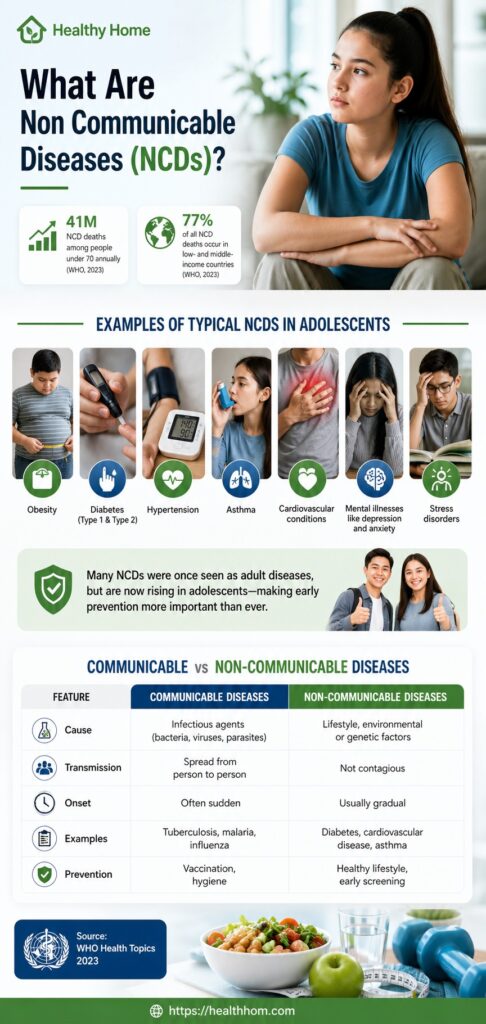
What Are Non Communicable Diseases (NCDs)?
Examples of typical NCDs in adolescents are:
- Obesity
- Diabetes (Type 1 and Type 2)
- Hypertension
- Asthma
- Cardiovascular conditions
- Mental illnesses like depression and anxiety and stress disorders.
Many NCDs were previously thought of as adult diseases but it is on rising among adolescence, so early prevention of the diseases are necessary.
Comparison Table: Communicable vs Non-Communicable Diseases
| Feature | Communicable Diseases | Non-Communicable Diseases |
|---|---|---|
| Cause | Infectious agents (bacteria, viruses, parasites) | Lifestyle, environmental or genetic factors |
| Transmission | Spread from person to person | Not contagious |
| Onset | Often sudden | Usually gradual |
| Examples | Tuberculosis, malaria, influenza | Diabetes, cardiovascular disease, asthma |
| Prevention | Vaccination, hygiene | Healthy lifestyle, early screening |
Source: WHO Health Topics 2023
Why focus NCDs on adolescents?
Adolescence refers to an important time of development in physical, mental and behavioral aspects. The habits that are developed in this age continues its trend even in the adulthood.
The importance of early prevention, Why is it important?
- The majority of NCDs in adults have their risk factors that are set in childhood.
- The productivity and Sustainable Development Goals (SDGs) of a country are filled by healthy adolescents.
- Earlier interventions are more effective and sustainable in form of lifestyle interventions.
Adolescence is a critical stage for building lifelong habits, explore more in our article on Healthy Lifestyle in Adolescents: Tips, Habits & Health Promotion.
What Parents Often Notice First (But Ignore):
In real life, NCD risks rarely appear suddenly. Many parents first notice small changes that may seem harmless:
- Teenagers becoming tired all the time
- Reduced interest in outdoor games
- Weight gain after coaching classes or exam periods
- Late-night mobile use and poor sleep
- Breathlessness during physical activity
- Mood swings, anxiety or social withdrawal
Some parents also observe that now the family conversation is shorter due to habit of mobile use. Teens are now spending much more time alone with screens and skipping the outdoor activities & also not interested in family meal. Such lifestyle changes are being overlooked till any health concerns arises.
In many Indian families, such changes are considered due to study pressure or growing teen age problems. However, when unhealthy habits continue for months or years, they may gradually increase the risk of chronic diseases.
Public health professionals working in school and adolescent health programs often observe that lifestyle-related problems usually begin quietly at home and school level long before medical diagnosis happens.
Global Adolescent Lifestyle Risk Indicators
| Indicator | Global Estimate | Source |
|---|---|---|
| Adolescents insufficiently physically active | ~81% | WHO Global School Health Survey |
| Adolescents consuming sugary drinks regularly | ~44% | UNICEF Nutrition Report |
| Adolescents experiencing mental health conditions | ~1 in 7 adolescents | WHO |
| Overweight and obesity among adolescents (global trend increasing) | Rapidly rising since 1990 | The Lancet Commission |
Sources: WHO 2022, UNICEF 2021, The Lancet Commission 2020
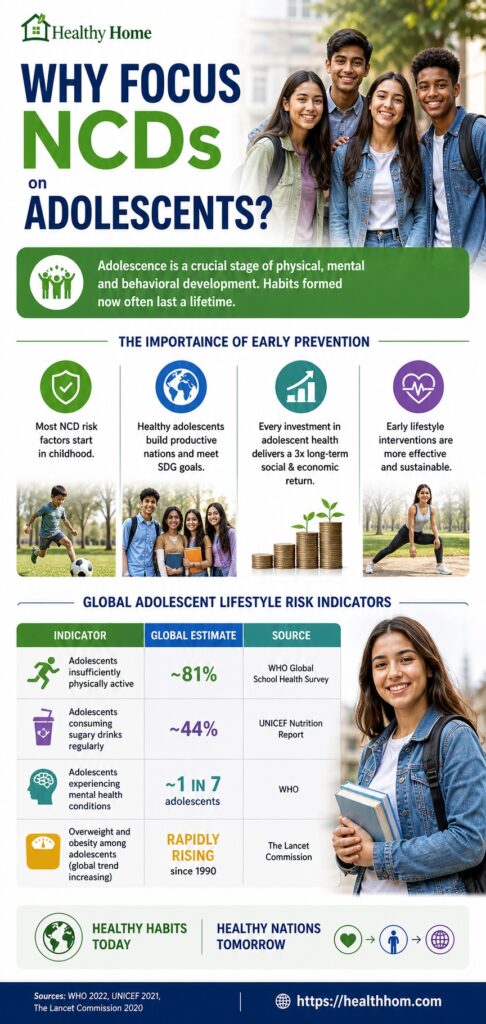
To understand why NCDs are increasing among teenagers, it is very much important to look at the daily lifestyle patterns which influence adolescent health today.
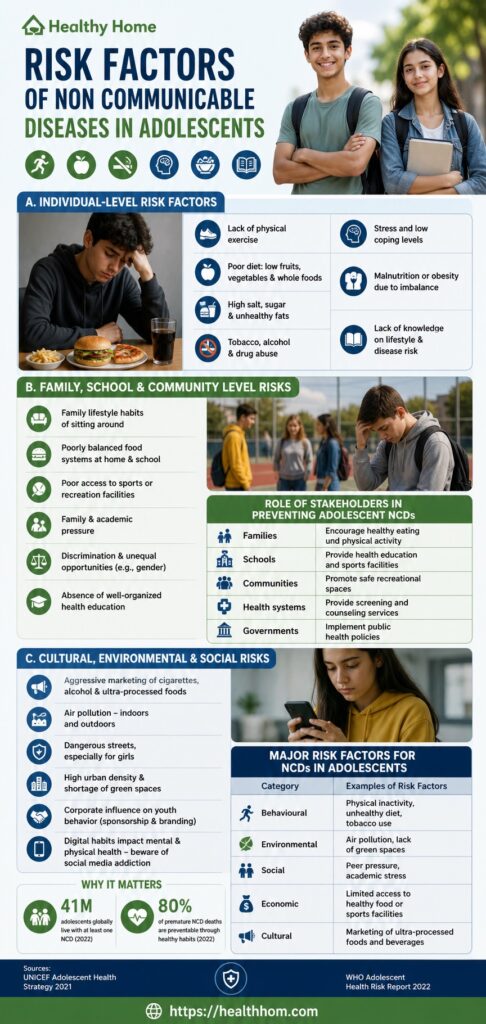
Risk Factors of Non Communicable Diseases in Adolescents
A. Individual-Level Risk Factors
- Lack of adequate physical exercise.
- Poor consumption of fruits and vegetables and whole foods.
- High-salt content, high-sugar content and high-fat foods are often consumed. Due to also easy access to the fast food, instant noodles, fried snacks, processed bakery including food delivery apps have changed the eating pattern in urban & semi-urban areas. These foods are now replacing the Indian traditional home-made meals.
- Tobacco, alcohol and drug abuse.
- Stress and low level of coping. Due to academic pressure, many of the adolescents have to balance school time, coaching classes, competitive expectations including social media. So, emotional stress may lead to their poor eating habits, sleeping problem, reduced the outdoor activity, more screen time which are directed linked with increasing the risk of NCDs.
- Malnourished or obese because of nutritional imbalance.
- Lack of knowledge on the association between disease risk and lifestyle.
B. Family, School and Community Level Risks.
- Family lifestyle habits
- Poorly balanced food systems- home and school.
- Poor access to sports facilities or recreation facilities.
- Family pressure and academic pressure.
- Discrimination and lack of an equal opportunity depending on gender.
- Absence of well-organized health education.
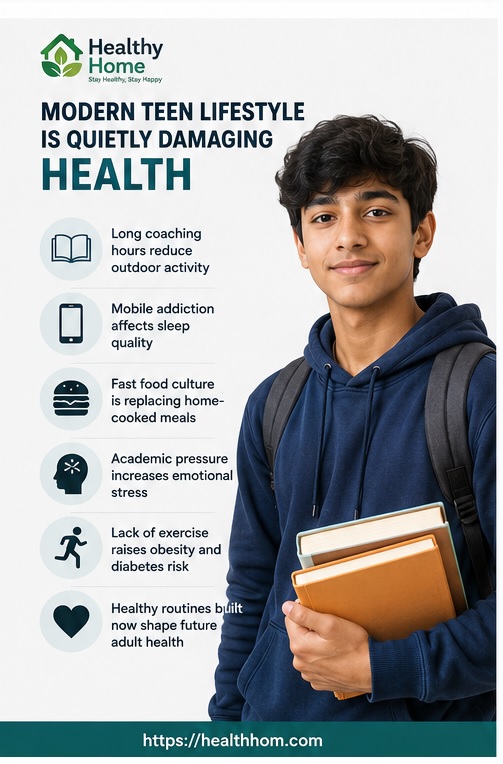
How Modern Teen Lifestyle Is Changing Adolescent Health:
As compared to our previous generations, now many teens are usually spending less time at outdoors. Also the day-to-day academic competition, online education, tution classes, online gaming and social media are decreasing the physical activity.
In the urban areas of India, many adolescents have to leave their home early for school, then to coaching and return late in the evening. This may lead to:
- Skipped meals
- Poor sleep quality
- Increased junk food intake
- Less family interaction
- Chronic stress
- Lack of exercise
Subsequently, these daily routines may contribute to obesity, increase in blood pressure, insulin resistance and emotional issues.
C. Cultural, Environmental and social risks.
- Aggressive marketing of cigarettes, alcohol and ultra-processed food.
- Air pollution- indoors and outdoors.
- Dangerous streets, especially with girls.
- High urban population density and the shortage of green spaces.
- Corporate influence on youth behavior in sponsorship and branding.
Digital habits can influence both mental and physical health, understand risks in Social Media Addiction and Adolescent Health
Major Risk Factors for NCDs in Adolescents
| Category | Examples of Risk Factors |
|---|---|
| Behavioural | Physical inactivity, unhealthy diet, tobacco use |
| Environmental | Air pollution, lack of green spaces |
| Social | Peer pressure, academic stress |
| Economic | Limited access to healthy food or sports facilities |
| Cultural | Marketing of ultra-processed foods and beverages |
Source: WHO Adolescent Health Risk Report 2022
Poor diet and micronutrient deficiencies significantly increase NCD risk, find the helpful guide on Healthy Food for Adolescents: Nutrition Guide to Prevent Malnutrition.
Typical Non-Communicable Diseases in Adolescents and Red Flags.
1. Cardiovascular Conditions
- Reduced physical endurance
- Shortness of breath as compared to peers.
- Lightheadedness or fainting with exercise.
- Heart palpitations
- Bluish discoloration of lips or gums (rare but severe)
2. Diabetes in Adolescents
Type 1 Diabetes
- Elevated urination and thirst.
- Extreme hunger
- Fatigue and irritability
- Weight loss
- Blurred vision
- Smelling of fruit (acute symptom)
Type 2 Diabetes
- Urination (i.e. frequent urination, including at night)
- Increased thirst
- Slow wound healing
- Brown spots on the skin (acanthosis nigricans)
- Fatigue and blurred vision
Diabetic ketoacidosis (DKA) is a health emergency and it should be treated by medical workers.
Many India parents also notice that their teenagers used to drink water constantly, wake up frequently at night for urination, loses weight even eating normally. Such symptoms are ignored initially because the family may think it due to summer, exam stress or changing the food habits.
3. Cancer (Uncommon but Still possible at the Adolescent Age)
- New or changing skin lesions
- Unexplained weight loss
- Constant headaches and vomiting.
- abnormal bleeding or bruising.
- Prolonged fever or fatigue
4. Asthma
- Wheezing or coughing frequently.
- Shortness of breath in the form of breathlessness at the time of exercise.
- Chest tightness
- Difficulty breathing, which results in disturbed sleep.
5. Mental Health Disorders
- Constant depression or bad mood.
- Interests in activities lost.
- Eating and or sleeping disorders.
- Social withdrawal
- Poor academic achievements.
- Persistent fear, anxiety, or lack of motivation
Stress and emotional challenges can also contribute to NCD risk, understand the connection in How Food Affects Mental Health in Children & Teenagers.
In such conditions, teachers and parents may observe the isolation, irritation, lack of interest in hobbies, decline in academic results. Mental health disorders in teenage years not only lead to sadness, but also it may shows anger, tiredness, poor concentration and not interested in social interaction.
Common NCDs in Adolescents
| NCD Category | Description | General Impact |
|---|---|---|
| Cardiovascular diseases | Conditions affecting heart and blood vessels | May affect physical endurance |
| Diabetes | Chronic metabolic disorder affecting blood sugar regulation | Requires long-term management |
| Asthma | Chronic respiratory condition | May cause breathing difficulty |
| Mental health disorders | Conditions affecting emotional and psychological wellbeing | Can affect learning and relationships |
| Certain cancers | Rare but possible during adolescence | Requires medical evaluation |
Source: WHO Noncommunicable Diseases Fact Sheet 2023
Conditions like obesity and diabetes are increasingly seen in teenagers, early warning signs are explained in Early Warning Signs of Type 2 Diabetes.
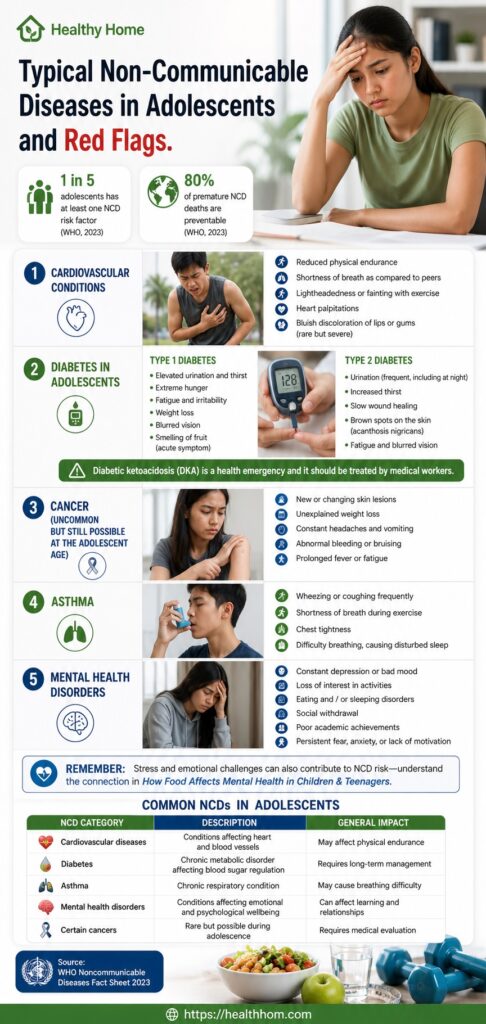
Different NCDs may show different warning signs, but many early symptoms are often overlooked at home or school.
Early Diagnosis and Health Evaluation
Key Screening Measures:
- BMI Classification
- Underweight: <5th percentile
- Normal: 5th–85th percentile
- Overweight: 85th–95th percentile
- Obese: 95th percentile
- Blood Pressure
- Elevated BP: ≥90th percentile to <95th percentile
- Hypertension: ≥95th percentile on 3 separate readings
The disease progression can be avoided and can be treated in a timely manner through early detection.
Screening and Early Detection Indicators Table
| Screening Indicator | What It Assesses |
|---|---|
| BMI measurement | Growth and weight status |
| Blood pressure monitoring | Cardiovascular health indicators |
| Lifestyle assessment | Physical activity and dietary patterns |
| Mental health screening | Emotional wellbeing |
| Family medical history | Genetic risk awareness |
Source: WHO Adolescent Health Guidelines 2022
When Should Parents Seek Medical Advice?
Parents should take professional medical guidance if a teenager has:
- Rapid unexplained weight gain or weight loss
- Persistent fatigue
- Frequent headaches
- Breathlessness during mild activity
- High screen dependence with poor sleep
- Constant anxiety or mood changes
- Strong family history of diabetes or hypertension
Early medical consultation may help to identify the lifestyle risks before any serious complications develop.
The important point is that many adolescent NCD risk factors are preventable through early lifestyle changes and family support.
Healthy Living through Prevention of NCDs
1. Promote Physical Activity
- At least 30–60 minutes daily
- 3-5 times in aerobics a week.
- Exercises of strength (yoga, dancing, sport) and flexibility.
- Promote play and less screen time.
Regular physical activity and healthy routines are key pillars, learn more in Healthy Lifestyle in Adolescents: Promotion Strategies.
2. Promote Healthy Dietary practices.
- Whole grains, vegetables and fruits daily.
- Eliminate junk food and sugary beverages.
- Home and school balanced diets.
- Adequate hydration
A balanced diet supports long-term disease prevention, discover the role of gut health in Best Foods to Heal Your Gut Naturally.
3. Prevent Substance Abuse
- Teach refusal skills
- Talk of consequences in the long term.
- Promote good peer in networks.
- Offer counseling services on demand
4. Manage Stress Positively
- Meditative and stress relief practices.
- Promote free flow of information.
- Encourage skill of problem solving.
- Contact the mental health professionals where necessary.
Mental health plays a major role in overall well-being, explore practical coping strategies in Mindfulness and ADHD: Improving Focus & Mental Health.
5. Reduce Indoor Air Pollution
Promote:
- Clean cooking fuels
- Proper ventilation of the kitchen.
- Safe household practices
Avoid:
- Passive smoking
- Poor waste disposal
- Indoor overcrowding
6. Families, Schools and Communities.
- Encourage routine medical examinations.
- Promote positive role modelling.
- Enhance accessibility of health services to adolescents.
- Conduct communal sensitization.
- Encourage physical exercise and nutrition education.
Action against social and gender disparities.
Preventing NCDs starts with small daily habits, read more in Prevention of Lifestyle Diseases: Complete Guide.
Small Daily Changes That Actually Work for Families:
Preventing NCDs may not always require costly diets or gym memberships. In many families, small consistent habits make the difference.
Practical examples –
- Eating dinner together without mobile phones
- Replacing sugary drinks with homemade lemon water or buttermilk
- Encouraging walking to nearby shops or schools
- Setting fixed sleep schedules during exam periods
- Keeping fruits visible at home instead of packaged snacks
- Taking short evening walks as a family
Public health experts sometimes point out that the adolescents actually follow what their families practice and not what parents advise verbally.

Building healthy habits early can prevent multiple diseases, start with our practical guides on Healthy Food for Adolescents and Anemia in Adolescents: Prevention & Nutrition Tips.
Public Health Observation from Indian Communities:
During adolescent health and nutrition programs, public health workers now observe the lifestyle-related conditions are appearing at younger ages than before. These are due to common patterns observed in urban and semi-urban are like reduced outdoor activity, irregular eating habits, poor quality sleep, more screen time by adolescents.
In many cases, parents become aware of the problem only after weight gain, emotional stress or declining academic performance appears.
What Parents Can Start Doing Today:
Even small daily changes may improve the adolescent health over time:
- Encourage at least one screen-free family meal daily
- Keep healthier snacks easily available at home
- Prioritize regular sleep schedules during exams
- Encourage outdoor activities, even for 20–30 minutes
- Talk openly about stress, emotions, and peer pressure
- Schedule routine health check-ups when needed
Small daily consistent habits may have a bigger long-term impact than short and strict rules.
Concluding Points:
Many parents still believe diabetes, high blood pressure or heart disease only affect older adults. But doctors are now seeing these conditions much earlier even during teenage years.
But the most important thing is that most of these are preventable.
Research from the different reputed organizations like UNICEF and World Health Organization, they show that if you invest now in adolescents, it will be beneficial for them lifelong which will also create a good environment for family and society.
Everyday small and consistent lifestyle changes like healthier & balanced diet, regular physical activity, controlled stress, annual health check-ups may reduce the long-term disease burden globally.
Supporting the adolescent health requires consistent efforts both at home and within schools and communities.
Parents shouldn’t think that teenage is just about the academic purpose, but actually it is the foundation years for a lifelong health. The habits initiated from this period like eating, sleep routine, physical activity continues up-to adulthood.
The parents to pay daily attention like simple conversations with their teens, healthier family routines, emotional support and regular health check-ups may protect the adolescent health for the future.
FAQs:
Q1. What does NCD stand for?
Ans: Non-Communicable Diseases refer to those diseases that are not contagious and are caused by lifestyle and inherited or environmental factors.
Q2. Why do teenagers and adolescents become susceptible to NCDs?
Ans: Risk factors like poor diet, lack of exercise, stress and use of substances usually start in adolescence age.
Q3. What are the most common Non Communicable Diseases in adolescents?
Ans: Obesity, diabetes, high blood pressure, asthma, depression, anxiety, and early cardiovascular risk.
Q4. What are some ways that adolescents can avoid NCDs?
Ans: Eating well, engaging in exercise every day, quitting tobacco and alcohol, dealing with stress, and undergoing frequent medical examinations.
Q5. What is the significance of early intervention?
Ans: Prevention of premature heart disease, diabetes, and stroke by 80 percent can be achieved by healthy habits at an early age.
Q6. Is it the role of parents and schools in preventing NCDs?
Ans: Yes. It is necessary that there is positive role modeling and conducive environments.
Q7. Are mental health disorders considered non-communicable diseases?
Ans: Yes. Non-communicable diseases are depression and anxiety.
Q8. Symptoms that need to be monitored by parents?
Ans: Loss of weight, fatigue, breathlessness, change of mood as well as frequent illness.
Q9. What are the prevention tips to adolescents for NCDs?
Ans: This means that the health of today will have a better, healthier future.
Related Health Articles from Healthy Home
- Social media addiction and adolescent health — Insight on social media impacts
https://healthhom.com/social-media-addiction/ - Prevention of lifestyle diseases — Comprehensive lifestyle disease prevention guide
https://healthhom.com/prevention-of-lifestyle-diseases/ - Healthy lifestyle in adolescents: promotion strategies — Guide to promoting adolescent well-being
https://healthhom.com/healthy-lifestyle-in-adolescent-its-promotion/ - Gender equality issues among adolescents — Discussion on gender equality and youth
https://healthhom.com/gender-equality-issues-in-adolescent-people/ - Mindfulness and ADHD — Mindfulness approaches for ADHD and well-being
https://healthhom.com/mindfulness-and-adhd/
Trusted References and Research Sources:
- Understanding global adolescent health risks — PMC article on adolescent NCD risks
https://pmc.ncbi.nlm.nih.gov/articles/PMC6324039/ - Evidence on NCD burden in clinical populations — The Lancet eClinicalMedicine full text
https://www.thelancet.com/journals/eclinm/article/PIIS2589-5370(22)00321-2/fulltext - UNICEF data on noncommunicable diseases in children — Child health & NCD statistics
https://data.unicef.org/topic/child-health/noncommunicable-diseases/ - Academic insights on NCDs in adolescence — Oxford Academic book chapter
https://academic.oup.com/book/29864/chapter/253067681 - UNICEF thematic report on adolescent diets & nutrition (PDF) — India-focused nutrition data
https://www.unicef.org/india/sites/unicef.org.india/files/2020-02/CNNS-Thematic-Report-Adolescents-Diets-and-Nutrition.pdf - WHO fact sheet: adolescent health risks & solutions — Official WHO resource
https://www.who.int/news-room/fact-sheets/detail/adolescents-health-risks-and-solutions/ - PubMed research on adolescent noncommunicable diseases — Scientific paper reference
https://pubmed.ncbi.nlm.nih.gov/39869379/ - UNICEF regional report: childhood NCD workshop (PDF) — South Asia NCD workshop summary
https://www.unicef.org/rosa/media/29986/file/Report%20on%20Childhood%20NCD%20workshop.pdf.pdf - WHO Q&A on childhood overweight, obesity & NCDs — Detailed WHO Q&A resource
https://www.who.int/news-room/questions-and-answers/item/noncommunicable-diseases-childhood-overweight-and-obesity
Guideline of WHO for Non communicable disease and its link as mentioned below: https://www.who.int/news-room/fact-sheets/detail/noncommunicable-diseases
Editorial Policy:
All articles on Healthy Home are reviewed by public health professionals and updated periodically to align with WHO, UNICEF and national adolescent health guidelines.


About the Author – “Bibhu Ranjan Mund”, Master in Public Health (MPH) from IIHMR University, Jaipur (Rajasthan) has more than 18 years of experience in Public Health activities in maternal health, child health, adolescent health, nutrition and community wellness programs under National Health Mission, Health & Family Welfare Department, Odisha. He is the founder of “Healthy Home” and translates the evidence based public health information into a practical source so that families may able to apply in everyday life. All the information are for educational purposes only and not replaces the professional medical advice. ORCID Researcher ID – 0009-0003-0158-4992. Connect LinkedIn – https://www.linkedin.com/in/bibhu-ranjan-mund-b72171358/