Last Updated on June 13, 2026 by Bibhu Ranjan Mund, MPH
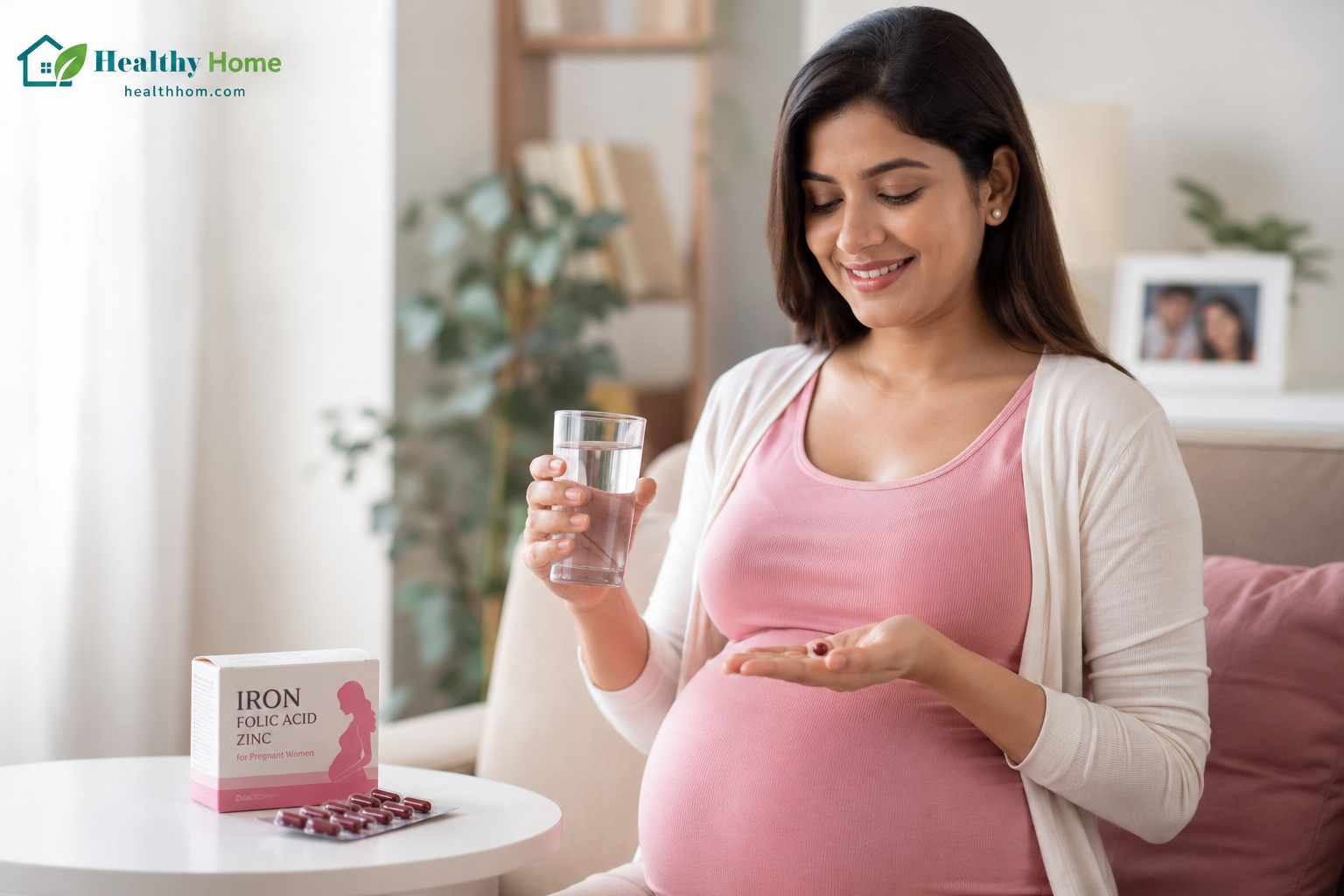
Iron deficiency during pregnancy may increase the risk of anemia, preterm birth, low birth weight, and developmental delays. Learn what is Antenatal Iron Supplementation, its symptoms, iron-rich foods and WHO-recommended prevention strategies.
Reviewed by Bibhu Ranjan Mund, MPH (Public Health Expert) with experience in maternal, infant, child, and adolescent health programs. Content is based on evidence-informed guidelines aligned with organizations such as the World Health Organization, UNICEF, Centers for Disease Control and Prevention, and National Institutes of Health.
Medical Disclaimer: This content is for informational and educational purposes only and is not intended as medical advice, diagnosis, or treatment. Always seek the advice of a qualified healthcare professional regarding any medical condition or concerns.
Introduction:
As per the publication by World Health Organization (WHO, 2024), it shows that about 40% of pregnant women worldwide experience the issue of anemia with iron deficiency as the main cause.
So, during the pregnancy period, a mother needs more iron than other stages of life. As the baby grows, the body requires more iron to carry oxygen to support the healthy brain development in the fetus.
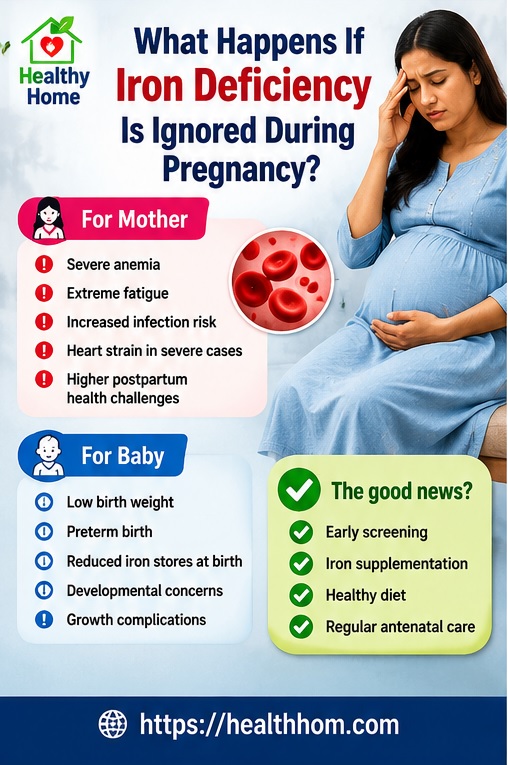
Due to lack of iron, the symptoms like fatigue, weakness, dizziness and breathlessness may appear. If left untreated it may increase the risk of preterm birth, low birth weight, poor fetal brain development and several maternal anemia.
But, if early antenatal iron supplementation be initiated including dietary improvements, routine screening, it can reduce the risks. In this article you will find-out the guide why iron matters during pregnancy, warning signs, best iron-rich foods and how to protect both mother and baby from iron deficiency.
If you want to improve your iron levels naturally through diet, read our detailed guide on Top 11 Iron Rich Foods During Pregnancy (Prevent Anemia Naturally) for practical food-based solutions.
Quick Summary:
| Key Point | Details |
|---|---|
| Main Cause | Increased iron demand during pregnancy |
| Common Symptoms | Fatigue, dizziness, weakness |
| Daily Iron Requirement | 27 mg/day |
| High-Risk Groups | Women with anemia, poor diet, multiple pregnancies |
| Best Prevention | Iron-rich diet + supplements |
| Major Risks | Preterm birth, low birth weight, maternal anemia |
Global Burden of Iron Deficiency in Pregnancy
| Indicator | Estimated Global Data |
|---|---|
| Prevalence of anemia in pregnancy | ~36–40% globally |
| Most common cause of anemia | Iron deficiency |
| Increased blood volume in pregnancy | ~40–50% |
| Recommended daily iron intake | 27 mg/day |
| Risk reduction with supplementation | ↓ maternal anemia & low birth weight |
What These Numbers Mean for Expecting Mothers:
The above global statistics don’t suggest that every pregnant mother will develop the severe anemia.
It only shows that the iron deficiency is common issue in different countries and communities.
But, the important message is that most of the anemic condition can be prevented and managed through proper antenatal care, healthy balanced meals, regular iron supplementation and monitoring.
Public Health Observation:
During my community health program interactions, I have observed that many family members and pregnant women prioritize the ultrasound examinations, but ignore the regular hemoglobin screening.
So, iron deficiency is sometimes detected only after symptoms appears.
Routine antenatal check-ups (preferably minimum 4 times during pregnancy period) plays a key role for identification and treatment before any serious complication arises.
You can also follow a structured nutrition approach with our guide on What is a Balanced Daily Meal Plan? Complete Guide + 7-Day Diet Plan to ensure adequate daily nutrient intake during pregnancy.
Iron Deficiency Is Not Only a Rural Problem:
Many of Indians assume that the prevalence of anemia is more concern in rural communities.
But, I have noticed that iron deficiency anemia is also so much common in educated urban families where women are frequently skipping meals for fitness, follow a restrictive diet pattern and many relying heavily processed foods.
A family may reside in village or urban, the actual iron requirements and nutritional needs mustn’t be overlooked during pregnancy.
Why Many Pregnant Women Ignore Iron Deficiency?
Many women assume tiredness and weakness are a normal part of pregnancy. However, persistent fatigue, dizziness, and pale skin may actually be early signs of iron deficiency anemia that should not be ignored.
Why Iron Deficiency Often Goes Unnoticed in Indian Families?
In many Indian houses, the elder family members think that the tiredness is normal during pregnancy period.
The elders encourage for extra rest but may not recognize the weakness, dizziness, pale skin or breathlessness which are the indication of anemia condition.
In several rural areas, the pregnant women also managing the household works and feel exhausted, but ignore these symptoms due to the assumption as normal during pregnancy period.
So, its important to generate awareness among the husbands, mother-in-laws and other elder family members who actually can help to identify the warning signs and support for early medical treatment.
A Real-Life Situation I Have Seen During Maternal Health Programs:
During my routine health awareness session at rural community, I met with one pregnant women who was frequently feeling tired & short of breath after any household working. She was thinking that these are normal during pregnancy and didn’t focus, also not intimate to his healthcare service provider during the antenatal check-ups.
Next antenatal visits confirmed that she is having moderate anemia as the Health Worker suspected and performed Hemoglobin test.
Now after proper counselling, she had taken the iron supplementation as per schedule, focused on iron-rich foods and performed regular antenatal check-ups at health worker so that her condition improved gradually.
So, such type of experience show that the symptom of fatigue should not be ignored during pregnancy.
What I Often Hear From Pregnant Mothers?
During my maternal health awareness, one common sharing by mothers repeatedly is:
“I thought the tiredness is just a part of my pregnancy.”
Many women from Odisha (India) also get surprised when they listen that the fatigue, dizziness and reduced energy levels may be associated with low hemoglobin level not for pregnancy alone.
So, for this the regular antenatal health examination and hemoglobin estimation is highly recommended.
Common Early Warning Signs Families Often Miss:
Many symptoms of iron deficiency develop gradually during pregnancy period and similar for other pregnancy changes.
Some warning signs:
- Feeling unusually tired after daily activities
- Frequent dizziness when standing up
- Pale skin or pale inner eyelids
- Reduced concentration
- Increased breathlessness
- Headaches frequently
If these symptoms appears, it should be discussed with the medical practitioner.
How Iron Deficiency is Diagnosed During Pregnancy
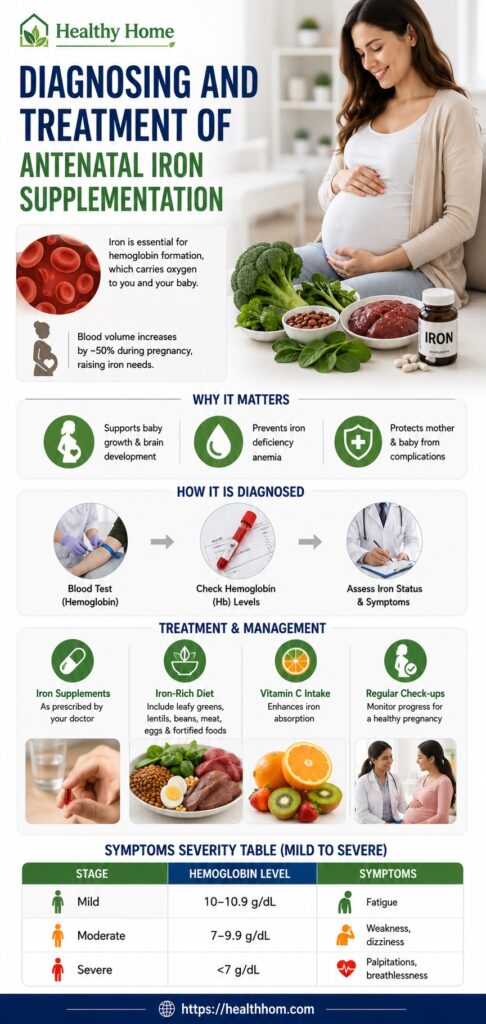
As an essential element in the human body iron functions as the main substance in red blood cell proteins known as hemoglobin to transport oxygen through the bloodstream.
A woman’s blood volume expands by approximately 50 percent across pregnancy period as the body tries to accommodate the baby and gives rise to a higher demand of iron. Iron deficiency anemia can add some serious health implications to mother and baby, an iron deficient diet can cause it.
Monitoring your overall health indicators is equally important, learn how to track key metrics in our guide on How to Know Your Cholesterol Level, BMI & BMR.
Symptoms Severity Table (Mild to Severe)
| Stage | Hemoglobin Level | Symptoms |
|---|---|---|
| Mild | 10–10.9 g/dL | Fatigue |
| Moderate | 7–9.9 g/dL | Weakness, dizziness |
| Severe | <7 g/dL | Palpitations, breathlessness |
Pregnancy Iron Deficiency complications:
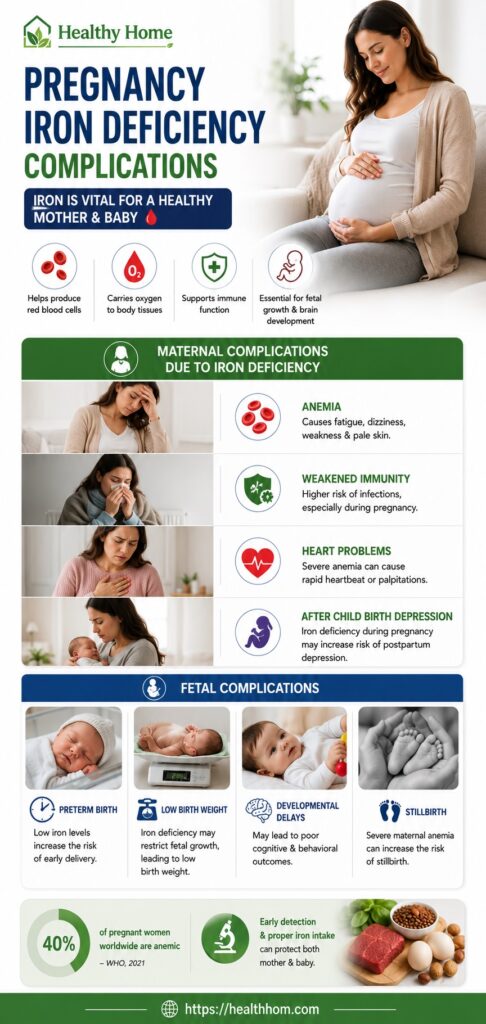
Maternal Complications:
- Anemia: Extreme iron deficiency can lead to anemia, which would produce signs and symptoms, from fatigue to dizziness, weakness and pale skin.
- Weakened Immunity: The immune system cannot be functioning properly without iron. They are more likely to develop infections if they are deficient, particularly pregnant mothers.
- Problems Related to the Heart: The heart beats faster or begins to palpitate in severe anemia as it struggles to deliver oxygen to the tissues of the body.
- After Child Birth Depression: If pregnant women are iron deficient they may face after birth depression.
Regular health monitoring and preventive care can reduce such risks, explore Prevention of Lifestyle Diseases by Annual Checkups to stay proactive about your health.
Fetal Complications
- Preterm Birth: The low amounts of iron may also cause preterm birth that puts the child at risk of early birth.
- Infants born with low birth weight result from iron deficiency in mothers that restricts their fetal size during pregnancy.
- Developmental Delays: Iron plays a vital part in the developing of the brain. In offspring, maternal deficiency during pregnancy has been associated with poor cognitive and behavioral outcomes.
- Stillbirth: Severe anemia (in particular during pregnancy) can increase the risk of stillbirth in the extreme case.
Early nutrition directly impacts a child’s development, read Precious Infancy to Toddler: A Baby’s First Two Years to understand long-term child health outcomes.
What Causes Iron Deficiency Anemia During Pregnancy?
- Inappropriate Food Intake: Unwholesome eating of food not eating iron-containing food, and to some extent unhealthy eating habits might cause iron insufficiency.
- High Nourishment Demands: The developing fetus needs plenty of iron.
- There are gastrointestinal diseases, like celiac disease and inflammatory bowel disease which reduce the body’s ability to soak up iron.
- Blood loss: Heavy periods before pregnancy or bleeding during pregnancy can deplete iron.
Comparison Table: Iron From Diet vs Supplementation
| Factor | Dietary Iron | Iron Supplements |
|---|---|---|
| Absorption Rate | Moderate (heme > non-heme) | Higher (especially ferrous salts) |
| Control Over Dose | Variable | Fixed & measurable |
| Used For | Prevention | Treatment of anemia |
| Side Effects | Minimal | Constipation, nausea |
| Best For | Mild deficiency | Moderate–severe anemia |
How Family Support Can Help Prevent Iron Deficiency?
Pregnancy nutrition shouldn’t be thought as sole responsible of mother itself.
Family members should help in:
- Preparing the iron-rich meals at home
- Reminding mothers to take supplements in time
- Supporting for regular antenatal visits
- Encouraging the adequate rest and not to take any stress
- Help to reduce more physical workload
Such types of small activities can support a lot and may make the difference.
A Common Pregnancy Scenario:
Think about two different pregnant women with similar health status.
One of them, attends the regular antenatal health check-ups, follow the supplementation guidance from health worker and take the iron rich foods in her diet.
Other one not interested in taking the supplements and also not having iron-rich foods.
Subsequently, the second pregnant mother may be more vulnerable to develop the symptoms of iron deficiency along-with its complications.
This simple example show the importance of daily healthy habits and its influence in pregnancy period.
Prevention & Management
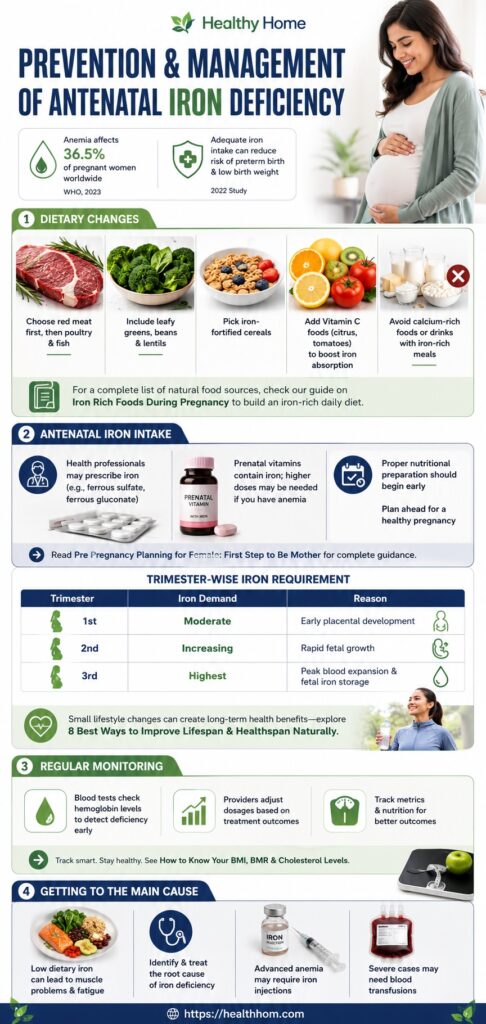
Dietary Changes:
- The first step to avoid iron deficiency is choosing red meat, then poultry and fish, leafy greens, beans and lentils and iron-fortified cereals.
- Aim to include foods high in Vitamin C such as citrus and tomatoes, if you include foods rich in iron in your meals.
- We should not serve iron-rich meals together with calcium-rich food or drinks, as calcium stops iron from being absorbed.
For a complete list of natural food sources, check out our guide on Iron Rich Foods During Pregnancy to build an iron-rich daily diet.
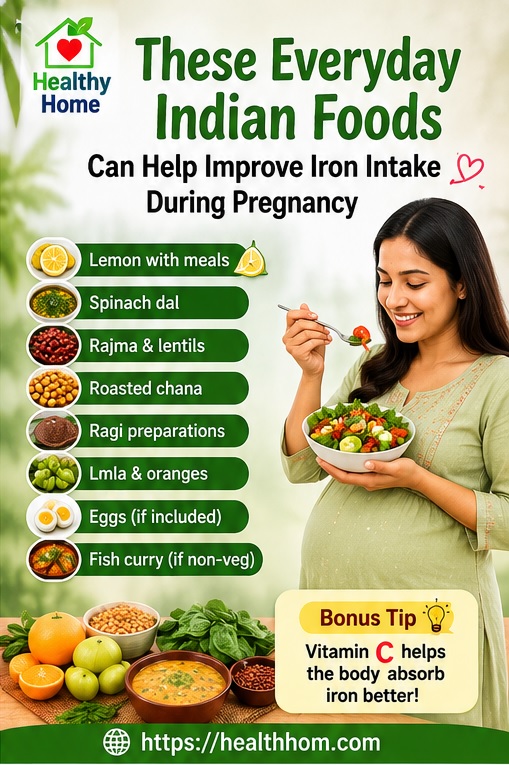
Simple Iron-Rich Meal Ideas for Indian Families:
Some practical examples:
Breakfast
- Vegetable poha with peanuts and lemon
- Ragi roti or Payas
- Iron-fortified cereals
Lunch
- Dal with spinach
- Rajma with roti
- Fish curry with vegetables
Evening Snack
- Roasted chana
- Dates and raisins
Dinner
- Green leafy vegetables
- Lentil soup
- Meat or egg preparations (if taking)
Along-with these, adding lemon, guava, amla or oranges can help to improve the iron absorption.
Iron Supplements During Pregnancy:
- Many health professionals often prescribe iron (e.g., ferrous sulfate, ferrous gluconate) to pregnant women.
- Many prenatal vitamins contain iron, however if the mother has Anemia, she may need to take more.
Proper nutritional preparation should begin early, read Pre Pregnancy Planning for Female: First Step to Be Mother for complete guidance.
A Common Challenge With Iron Tablets:
Some pregnant women stop taking the iron tablets due to its few side effects like nausea, constipation, metallic taste.
In reality, many of them not inform this side effects to their health workers and discontines self.
Hence, the importance of practical solution of side effects is also a major concern and health workers to focus these.
Trimester-wise Iron Requirement Table
| Trimester | Iron Demand | Reason |
|---|---|---|
| 1st | Moderate | Early placental development |
| 2nd | Increasing | Rapid fetal growth |
| 3rd | Highest | Peak blood expansion & fetal iron storage |
Small lifestyle changes can create long-term health benefits, explore 8 Best Ways to Improve Lifespan & Healthspan Naturally.
Regular Monitoring:
- Physicians may find and manage iron deficiency early by testing a patient’s blood for hemoglobin levels.
- Providers have the ability to make proper dosages changes based on the observed outcomes of treatment.
Tracking body metrics and nutrition together helps better outcomes, see How to Know Your BMI, BMR & Cholesterol Levels.
Managing Severe Iron Deficiency
- Muscle problems can develop if your body doesn’t gain as much iron from your diet, so these problems should be treated.
- When a person has advanced anemia, experts may advise giving them injections of iron and blood transfusions.
Iron-Rich Food Sources Table
| Food Source | Iron (mg per serving) | Type (Heme/Non-Heme) |
|---|---|---|
| Red meat | 2.5–3 mg | Heme |
| Spinach (cooked) | 3–4 mg | Non-heme |
| Lentils | 3 mg | Non-heme |
| Fortified cereals | 4–18 mg | Fortified |
| Chicken | 1 mg | Heme |
Iron Absorption Enhancers vs Inhibitors Table
| Enhances Absorption | Reduces Absorption |
|---|---|
| Vitamin C foods | Tea & coffee |
| Citrus fruits | Calcium |
| Tomatoes | Phytates (whole grains) |
| Fermented foods | Antacids |
Combining nutrients correctly is essential, learn how to structure meals in our Balanced Daily Meal Plan Guide.
Key Evidence Statistics
- Iron deficit increases risk of low birth weight by approximately 29 per cent.
- Iron supplementation of mothers daily decreases maternal anemia by approximately 70 percent.
- The World Health Organization recommends 60 mg elemental iron plus 500 microgram folic acid daily during pregnancy in areas where anemia is a public-health concern.
What This Recommendation Means in Practice?
The recommendation by World Health Organization is to prevent iron deficiency anemia during pregnancy considering the population as a whole. But, the individual requirement may vary depending on the present nutritional status of mother, hemoglobin level, previous medical history including the healthcare guidelines.
My own Perspective:
After working of 18+ years in maternal and child health programs throughout Odisha, I have learnt that many mothers seek for any help from medical health workers only after developing anemia symptoms and affecting their daily lives.
In reality, prevention of iron deficiency is sometimes much easier than its treatment to major cases.
Proper antenatal check-ups at health care institutions as per recommendation by medical workers, balanced nutrition are the most effective tools to protect both mother and newborn baby.
Why Early Prevention Matters?
The Indian parents actually plan the future of child from the beginning of pregnancy period.
Healthy nutrition within these nine months of pregnancy not only support the mother but also help to create a healthy foundation for the baby’s growth, development and health after birth.
Final Thoughts:
Iron deficiency anemia during pregnancy period is one of the most common challenge worldwide. Still, many women are unaware about the real fact and wait till arising symptoms and affecting daily activities.
Iron deficiency is a preventable condition through regular medical examinations, timely supplementation, natural proper balanced meal pattern and the most important family support. Many pregnancy related complications associated with anemia may be reduced if treated early.
If you make a daily habit of taking a balanced diet rich in iron and timely supplementation as per advice of doctor, then the risk of anemia, preterm birth, low birth weight and developmental complications may be avoided.
If you know an expecting mother struggling with fatigue or anemia, share this guide to know about the importance of iron during pregnancy.
When Should You Speak With Your Doctor?
Seek medical advice if you feel:
- Persistent fatigue
- Dizziness or fainting episodes
- Shortness of breath
- Rapid heartbeat
- Pale skin
- Difficulty performing daily activities
- Previous history of anemia
Only a qualified health worker can suggest whether testing or treatment is required in individual cases.
FAQs:
Q1. What role does iron play for pregnant women?
Ans. The pregnancy requires iron to generate additional blood supply for both the developing baby and the mother. The nutrient helps to transfer oxygen throughout the body while maintaining steady energy levels and functions to reduce anemia risk and other medical problems & Iron deficiency anemia in pregnancy.
Q2. What are the dangers of insufficient iron during pregnancy?
Ans. The development of a baby’s brain and body faces impediments while premature birth and maternal anemia and low birth weight become more likely when women suffer from iron deficiency.
Q3. What are the common signs of iron deficiency in pregnant women?
Ans. The symptoms of iron deficiency in pregnant women may manifest through intense fatigue combined with paleness of the skin and breathing difficulties and dizziness as well as rapid heart rate and difficulty concentrating.
Q4. Pregnant women should follow natural methods to receive adequate iron into their bodies.
Ans. One way for pregnant women to get more iron is to eat lean red meat (only if non-vegetarian), spinach, legumes, fortified cereals and dried fruits. If healthy pregnant women eat iron-rich foods and oranges or tomatoes, the vitamin C makes it easier for their bodies to absorb the iron.
Q5. What level of Antenatal Iron supplementation is necessary for a woman who is pregnant?
Ans. Prenatal iron supplements is necessary. According to WHO and other health authorities, the average recommended daily iron intake during pregnancy is around 27 mg, though individual needs vary and should be guided by a healthcare provider.
Q6. Do deficiencies in iron cause any problems in the baby’s postnatal health?
Ans. Women with iron shortages often give birth to babies whose iron reserves are very low and this may negatively affect their baby’s postnatal growth and health.
Q7. Should pregnant women take iron supplements?
Ans. A healthcare provider can determine the correct iron dosage based on hemoglobin levels, trimester, dietary intake and individual risk factors.
Related Health Articles from Healthy Home:
- Healthy Lifestyle in Adolescents – Importance, Promotion & Long-Term Benefits
- Eco-Friendly Eating & Nutrition – How Sustainable Food Choices Improve Health and the Planet
- Millet Recipes for Better Health – Wholesome and Nutrient-Rich Meal Ideas
- Iron Supplementation – Essential Benefits and Dietary Tips for Preventing Deficiency
- Improve Lifespan Naturally – Proven Lifestyle and Nutrition Habits for Longevity
Trusted References and Research Sources:
Sources Used for This Article
- WHO antenatal iron supplementation guidelines
- WHO anemia prevalence reports
- American Society of Hematology publications
- Peer-reviewed studies on maternal anemia and pregnancy outcomes
- Public health field observations from maternal health programs
- Evidence-based antenatal care recommendations
- WHO Data Portal – Antenatal Iron Supplementation Overview
- How I Treat Anemia in Pregnancy: Iron, Cobalamin, and Folate – American Society of Hematology (Blood Journal)


About the Author – “Bibhu Ranjan Mund”, Master in Public Health (MPH) from IIHMR University, Jaipur (Rajasthan) has more than 18 years of experience in Public Health activities in maternal health, child health, adolescent health, nutrition and community wellness programs under National Health Mission, Health & Family Welfare Department, Odisha. He is the founder of “Healthy Home” and translates the evidence based public health information into a practical source so that families may able to apply in everyday life. All the information are for educational purposes only and not replaces the professional medical advice. ORCID Researcher ID – 0009-0003-0158-4992. Connect LinkedIn – https://www.linkedin.com/in/bibhu-ranjan-mund-b72171358/