Right Food Supplementation for Babies After 6 Months: Complete Feeding Guide
Learn the best food supplementation for babies after 6 months, including feeding stages, textures, quantities, safety tips, self-feeding, and WHO-based nutrition guidance.
Reviewed by Bibhu Ranjan Mund, MPH (Public Health Expert) with experience in maternal, infant, child, and adolescent health programs. Content is based on evidence-informed guidelines aligned with organizations such as the World Health Organization, UNICEF, Centers for Disease Control and Prevention, and National Institutes of Health.
Medical Disclaimer: This content is for informational and educational purposes only and is not intended as medical advice, diagnosis, or treatment. Always seek the advice of a qualified healthcare professional regarding any medical condition or concerns.
Introduction:
As per the study reports of World Health Organization (WHO Infant and Young Child Feeding Guidelines, 2023), it shows that after six month of age, only breast milk alone is not sufficient to meet the enough iron, zinc, protein and energy for the baby’s rapid growth and brain development.
Hence, the transition period from exclusive breastfeeding to introduction of solid food after six months of age is the most important stage in every baby’s early development.
The introduction of foods of baby during this stage not only supports the physical growth but also build the future eating habits, taste preferences including cognitive development. Still, many parents are not realizing the importance and when to start the solid foods, how to feed, quantity of food required and avoiding chocking or allegeie etc.
This article will provide the detail guide on right food supplementation, its textures, feeding stages, quantities, safety practices, WHO recommendations for the baby between 6-12 months of age.
Quick Feeding Summary
- Start solids at 6 months
- Continue breastfeeding alongside solids
- Begin with iron-rich foods
- Introduce one food at a time
- Avoid honey before 1 year
- Encourage self-feeding gradually
What foods should babies eat after 6 months?
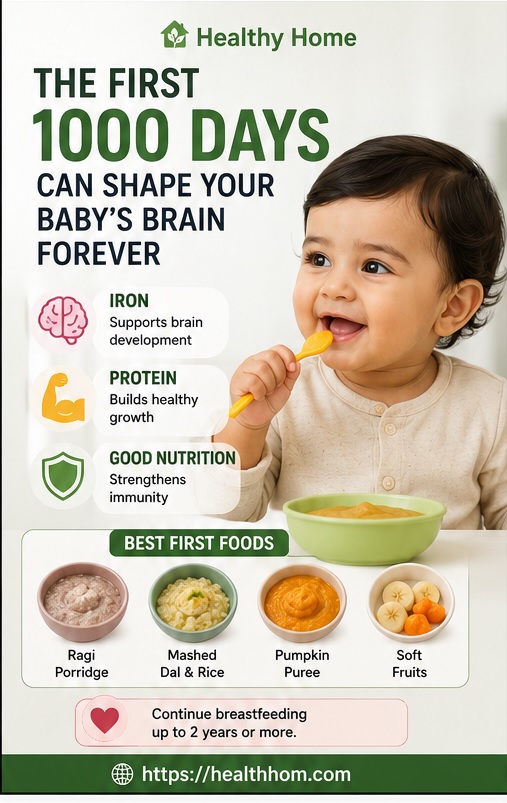
After 6 months, babies should begin complementary feeding with iron-rich and soft foods such as mashed vegetables, fruits, cereals, lentils, eggs, and soft finger foods while continuing breastfeeding. Foods should progress gradually from purees to mashed and chopped textures according to the baby’s developmental stage.
The Importance of Food Supplementation after 6 Months
In the early years of life (the first half a year), the child is normally fed with breast milk (or formula, which is sufficient to offer proper nutrition). But the nutritional requirements of the baby rise after six months, with a particular need of iron, zinc, protein and energy. It is also at this age that breast milk might not provide all the nutritional needs hence the need to introduce complementary feeding.
Before starting complementary feeding, it is important to understand newborn care basics, read our guide on Basic Infant Care: A Complete Guide to Feeding, Sleep & Newborn Hygiene
The complementary foods assist in the support of:
- Healthy physical growth
- Brain development and cognitive development.
- Strong immunity
- Chewing/ swallowing skills development.
Breastfeeding is encouraged to take place with supplementary foods up to a period of at least 12 months or more as is advised by health authorities.
Early nutrition plays a critical role in brain development, explore Why Is a Human Child So Unique? What Truly Makes Us Human to understand how early feeding supports cognitive growth.
Globally, complementary feeding practices remain an important child nutrition priority
Global Complementary Feeding Snapshot
| Indicator | Latest Global Estimate | Source |
|---|---|---|
| Exclusive breastfeeding under 6 months | 48% worldwide | WHO Infant & Young Child Feeding Fact Sheet (2023) |
| Minimum acceptable diet (6–23 months) | ~29% globally | UNICEF Global Nutrition Report (2023) |
| Children affected by stunting under 5 | 148 million | WHO/UNICEF Joint Estimates (2023) |
| Iron deficiency common in 6–23 months age group | Identified as major public health concern | WHO Guideline: Iron Supplementation in Infants (2020) |
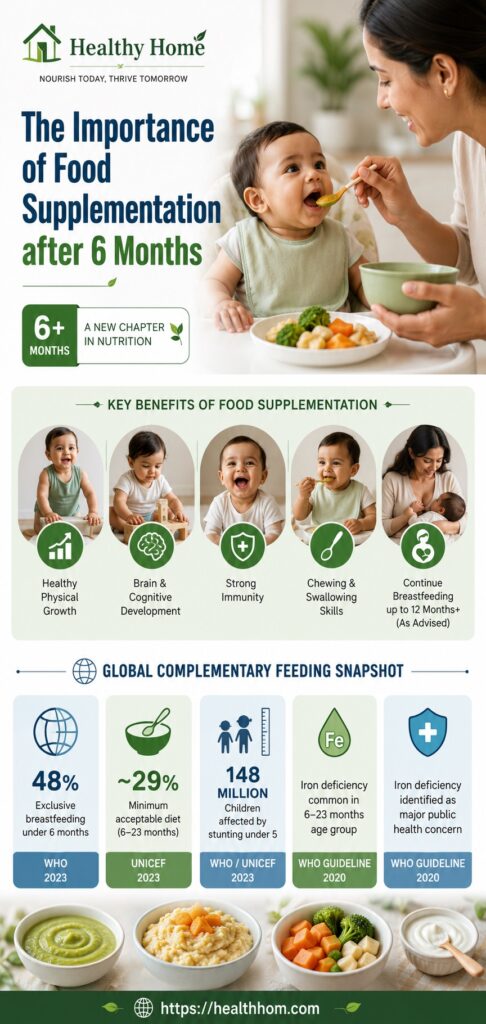
Three Phases of Complementary Feeding
The complementary feeding in texture, consistency and variety as the child grows:
Stage 1: At 6 Months (Pureed Foods)
Babies are prepared to start solid foods at about six months when they indicate the readiness through the following things like sitting with the help of the hand, good head control etc.
Recommended foods:
- Purees of vegetables: pumpkin, carrot, spinach, bottle gourd.
- After vegetables Fruit purees: banana, apple, pear.
- Soft cereals Rice cereal, ragi.
- Mashed dal with rice
Micronutrient deficiencies like Vitamin B12 can affect infant growth, explore Vitamin-B12 Deficiency During Pregnancy: Risks, Symptoms & Prevention.
Key tips:
- Begin with smooth lump-free purees.
- Present new food products one at a time.
- Start with 1-2 teaspoons and then increase.
Breastfeeding should continue alongside solids, understand early feeding patterns in First Day of Birth: Newborn Care, Sleep Patterns & Emotional Bonding.
Stage 2: 7 months -9 months (Mashed and Lumpy Foods)
At the age of seven to nine months, infants are able to work with thicker textures and the small soft lumps.
Foods to include:
- Vegetable khichdi cooked in soft.
- Mashed potatoes and lentils
- Yogurt and soft cheese
- Properly prepared and mashed vegetables.
- Soft fruits
At this point, provide foods of all the food groups:
- Grains
- Vegetables
- Fruits Pulses and legumes
- Dairy (in small amounts)
- Healthy fats and oils
Healthy fats are essential during this stage, learn more in What Happens If Omega-3 Is Lacking During Pregnancy? Risks & Prevention for brain and vision development.
Stage 3: 9-12 months of age (Finger food and Family foods)
Since nine months, a baby is able to consume finely sliced foods and start to self-feed.
- Suitable foods: Banana pieces, steamed vegetables are examples of soft finger foods.
- Chapati soaked in dal Idli, upma
- Soft rice dishes
- Fully cooked eggs and fish, de-boned
When self-feeding is encouraged, the motor skills are enhanced and confidence is developed in the mealtimes.
Self-feeding supports motor and brain development, explore Early Childhood Development: Growth, Learning, and Milestones
Complementary Feeding Stages Overview
| Age | Texture | Meal Frequency | Key Focus |
|---|---|---|---|
| 6 months | Smooth purees | 2–3 meals/day | Iron-rich foods |
| 7–9 months | Mashed, soft lumps | 3 meals + 1 snack | Texture progression |
| 9–12 months | Soft chopped, finger foods | 3 meals + 1–2 snacks | Self-feeding skills |
Source: WHO Complementary Feeding Overview (2023); MoHFW India IYCF Guidelines (2016)
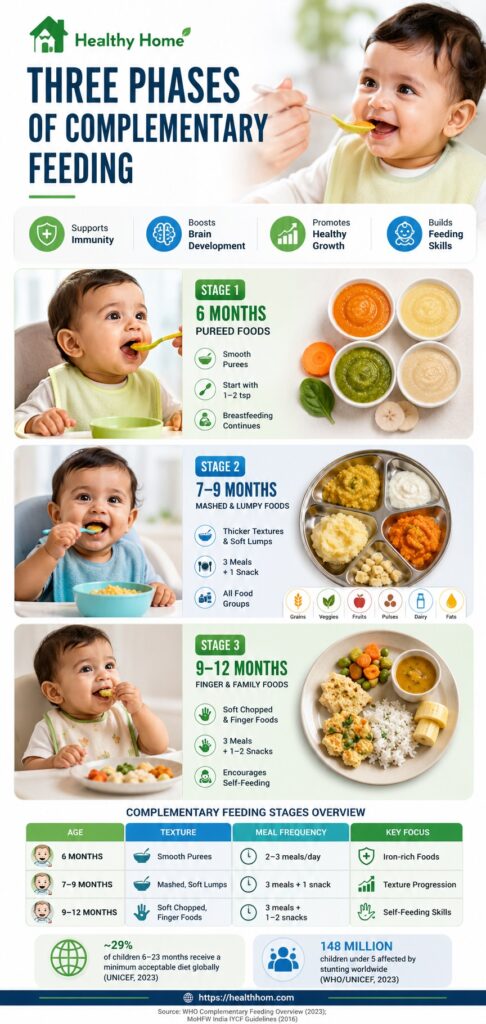
Signs Baby Is Ready for Solids
- Sits with support
- Good neck control
- Interest in food
- Opens mouth for spoon
Common Feeding Mistakes
- Force feeding
- Early salt/sugar
- Too much juice
- Screen feeding
- Choking-risk foods
Foods to Avoid Under 1 Year
- Honey
- Whole nuts
- Popcorn
- Sugary foods
- Excess salt
Right Food Supplementation Guides:
1. Right Taste and Flavor Development:
Childhood food exposure helps in the development of preferences related to food in the long term.
Best practices:
- Avoid adding salt or sugar
- Restrict packaged and processed food.
- Present diversified natural flavors.
- Put more emphasis on vegetables first before sweet foods.
Exposure to new tastes repeatedly makes children accept them as time goes by.
2. Right Food Consistency
The food consistency must be related to the stage of development of the baby:
- 6 months: runny purees of all smoothness.
- 7-9 months: thick and small lumps of mashed foods.
- 9-12 months: soft foods that are chopped or are eaten with fingers
The food should not be more thick or watery, because the wrong texture can augment the chance of choking or decrease the intake of nutrients.
Proper feeding practices build the foundation for long-term development, read Global Developmental Delay in Children to understand the impact of early nutrition.
Texture Progression by Development Stage
| Age | Suitable Texture | Avoid |
|---|---|---|
| 6 months | Runny but smooth puree | Hard chunks |
| 7–9 months | Thick mashed, soft lumps | Sticky or hard foods |
| 9–12 months | Soft finger foods | Whole nuts, raw carrots |
Source: WHO Complementary Feeding Standards (2023); UNICEF Feeding Guide (2022)
3. Solid Foods Recommended Quantity
Eat in small portions and then more and more:
- Begin with 1 teaspoon
- Increase to 1 tablespoon
- Graduate to 2 – 3 tablespoons per meal.
Feeding based on hunger indicators of the baby. There should be no force-feeding because it can lead to aversion to feeding.
Approximate Portion Progression
| Stage | Starting Portion | Gradual Increase |
|---|---|---|
| 6 months | 1–2 teaspoons | 2–3 tablespoons |
| 7–9 months | 2–3 tablespoons | ½ small bowl |
| 9–12 months | ½ bowl | ¾ bowl depending on appetite |
Source: MoHFW India IYCF Guidelines (2016); WHO IYCF (2023)
4. Safety in feeding and Prevention of Choking
To ensure safe feeding:
- Always supervise meals
- Hard foods such as nuts, whole grapes, raisins and peanuts should be avoided.
- Prepare food into small tender slices.
- Make sure that the baby is sitting up when eating.
Safe feeding practices begin from birth, refer to Basic Infant Care: A Complete Guide to Feeding, Sleep & Newborn Hygiene
Safer Food Options vs Foods to Avoid (Under 1 Year)
| Safer Options | Foods to Avoid |
|---|---|
| Soft banana pieces | Whole grapes |
| Steamed vegetables | Raw carrots |
| Mashed dal | Whole nuts |
| Deboned fish | Hard candies |
| Soft idli/upma | Popcorn |
Source: WHO Complementary Feeding Overview (2023); UNICEF Feeding Guide (2022)
5. Hygiene and Preparation of Food
Hygiene is a precaution that will lower the risk of infections:
- Wash clean hands before preparation of food.
- Clean utensils and surfaces
- Wash fruits and vegetables thoroughly
- Prepare raw and cooked food differently.
Infants require a clean kitchen environment.
Food safety during infancy is closely linked to maternal practices, see Best Cooking Tips & Safe Meal Plans for Pregnant Women (Indian Diet Guide).
Safe Food Preparation Checklist
| Practice | Why It Matters |
|---|---|
| Wash hands before cooking | Reduces contamination |
| Separate raw & cooked foods | Prevents cross-contamination |
| Clean utensils thoroughly | Maintains food safety |
| Use clean drinking water | Safe food preparation |
| Serve freshly prepared food | Maintains quality |
Source: WHO Food Safety Guidelines (2022)
6. Treating Problematic Eating Behavior.
During the stage of infant and toddlers, food refusal and fussiness are normal.
Helpful strategies:
- Be patient and calm
- Avoid force-feeding
- Repeat the same food some other day
- Remove uneaten food without pressure
This is a transitory period and is normal development.
7. Encouraging Self-Feeding
The child should be helped to feed himself early:
- Allow mess during meals
- Offer finger foods
- Eat together as a family
- Prepare the food in another bowl to the child.
Good nutrition makes healthy eating habits.
8. Food Allergies
Present one at a time common allergenic food together with checking against reactions.
Common allergens include:
- Eggs
- Fish
- Wheat
- Soy
- Protein sources – nuts (powdered or paste).
In case of such symptoms as rashes, vomiting, or diarrhea, discontinue food and refer to a pediatrician.
Caution: Honey is contraindicated until the age of one year because of the possibility of botulism.
Strong immunity begins during pregnancy, learn about nutrient deficiencies in Vitamin-D Deficiency During Pregnancy: Risks, Effects & Prevention
Introducing Common Allergenic Foods
| Food | Suggested Approach |
|---|---|
| Egg | Fully cooked, small amount |
| Fish | Well-cooked, deboned |
| Wheat | Soft chapati or cereal |
| Peanut | Powdered/paste form only |
| Soy | Cooked & mashed |
Source: WHO Infant Feeding Recommendations (2023); NCBI Complementary Feeding Chapter (2022)
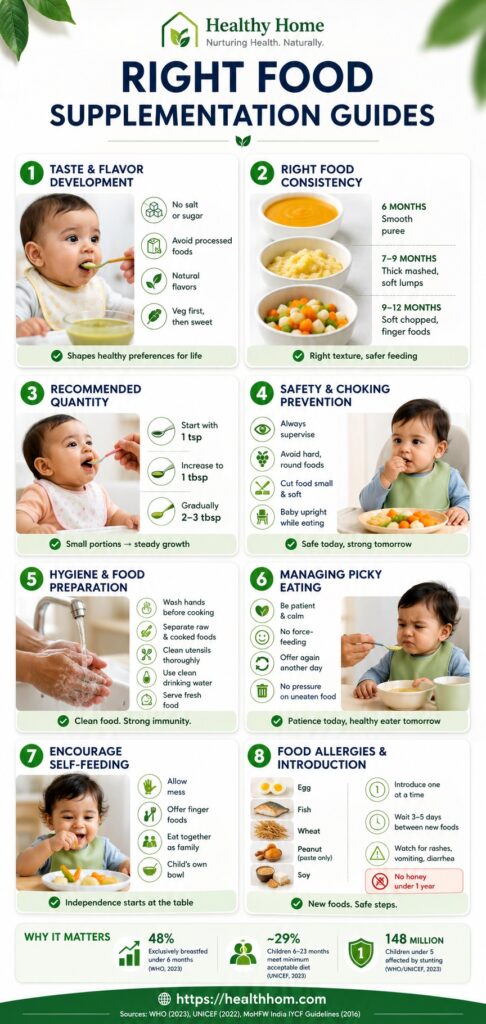
Foods to Provide between 9- 12 months
- Grains
- Rice, wheat, ragi, millet, suji, khichdi, idli, chapati.
- Proteins
- Pulses Lentils, chickpeas, eggs (fully cooked) Fish (deboned)
- Fruits
- Fruits Banana, papaya, apple, mango, seasonal fruits.
- Vegetables
- Spinach, carot, pumpkin, bottle gourd, beans and coriander.
- Dairy
- Curd, paneer, butter (in slight portions)
- Fats and Oils
- Rice bran oil, mustard oil, groundnut oil (in small amounts).
Balanced nutrition during early years supports long-term growth, read Precious Infancy to Toddler Stage Development Guide.
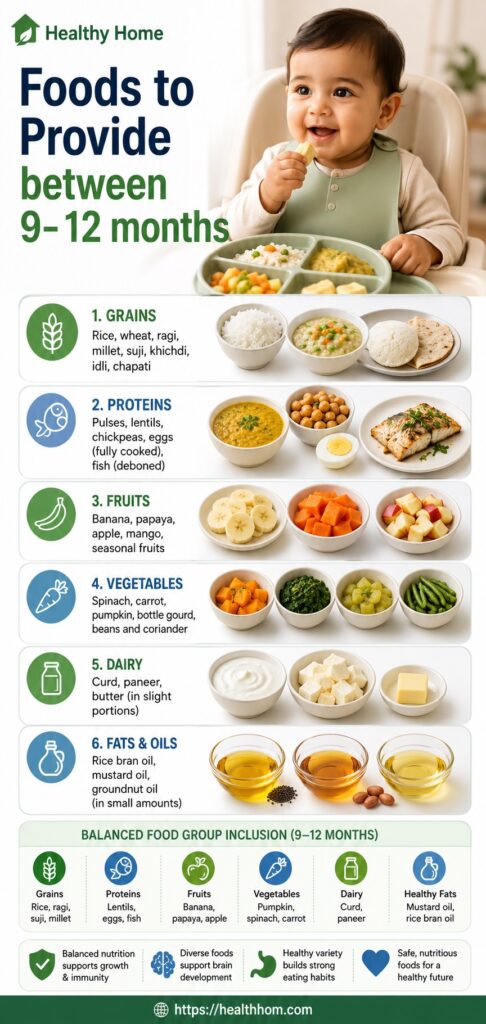
Balanced Food Group Inclusion (9–12 Months)
| Food Group | Examples |
|---|---|
| Grains | Rice, ragi, suji, millet |
| Proteins | Lentils, eggs, fish |
| Fruits | Banana, papaya, apple |
| Vegetables | Pumpkin, spinach, carrot |
| Dairy | Curd, paneer |
| Healthy Fats | Mustard oil, rice bran oil |
Source: MoHFW India IYCF Guidelines (2016); WHO IYCF (2023)
For a complete parenting journey, explore Basic Infant Care, Early Childhood Development, and First Day of Birth Newborn Care Guides for step-by-step guidance.
Concluding Points :
Baby’s healthy growth depends upon the right complementary foods after 6 months and it also builds stronger immunity and support the brain development. Proper nutrition, age appropriate food along-with continued breastfeeding may help to build a long-term healthy eating habits of the child.
Every baby is having a different pace, so the parents or caregivers must focus on their interest, balanced nutrition, safe feeding practice with love and consistency and feel the difference.
Proper nutrition during infancy is a continuation of maternal nutrition—learn how pregnancy diet influences child health in Best Cooking Tips & Safe Meal Plans for Pregnant Women (Indian Diet Guide).
FAQs:
Q1. When should babies start solid foods?
Q2. What is the best first food for babies?
Q3. Should breastfeeding continue after solids?
Q4. What foods should babies avoid before age one?
Q5. Is breastfeeding to be continued eve after the introduction of solid food?
Related Health Articles from Healthy Home
- Early Childhood Development – Learn about key stages, milestones, and factors influencing a child’s growth in this guide on Early Childhood Development
- Global Developmental Delay – Understand causes, symptoms, diagnosis, and early intervention strategies for Global Developmental Delay in Children
- What Makes Humans Unique – Explore the biological, cognitive, and emotional traits that define humanity in Why a Human Child Is So Unique and What Makes Us Human
- Infancy to Toddler Development – A comprehensive overview of physical, emotional, and cognitive changes from birth to toddlerhood in Precious Infancy to Toddler Stage
- Food Supplementation for Growth & Nutrition – Learn how nutritional supplementation supports maternal and child health through Food Supplementation and Its Importance
Trusted References and Research Sources:Child Health and Development Guide: Growth Milestones, Immunity and Daily CareHealthy Living Guide for Families : Nutrition, Sleep and Daily Wellness Habits5 Benefits of Reducing Salt and Sugar : Health Effects and Practical Tips
- WHO Infant and Young Child Feeding Guidelines – Evidence-based recommendations on breastfeeding and complementary feeding practices https://www.who.int/news-room/fact-sheets/detail/infant-and-young-child-feeding
- Complementary Feeding and Infant Nutrition (NCBI Book Chapter) – Scientific overview of nutrient needs and feeding stages after 6 months
https://www.ncbi.nlm.nih.gov/books/NBK596427/ - UNICEF Guide to Feeding Babies Aged 6–12 Months – Practical advice for introducing solids and balanced meals for infants https://www.unicef.org/parenting/food-nutrition/feeding-your-baby-6-12-months
- WHO Complementary Feeding Overview – Global standards for introducing solid foods safely and effectively
https://www.who.int/health-topics/complementary-feeding#tab=tab_1 - National Guidelines on Infant and Young Child Feeding (MoHFW, India) – Official Indian government recommendations for infant nutrition and feeding practices
https://www.mohfw.gov.in/sites/default/files/308320517NATIONAL%20GUIDELINES%20ON%20INFANT%20AND%20YOUNG%20CHILD%20FEEDING.pdf - WHO Iron Supplementation for Children (6–23 Months) – Guidance on preventing iron deficiency and anemia in infants and toddlers https://www.who.int/tools/elena/interventions/iron-children-6to23