Last Updated on June 13, 2026 by Bibhu Ranjan Mund, MPH
Discover why is a human child so unique, how early brain development shapes intelligence, and why the first 1000 days are critical for lifelong growth.
Reviewed by Bibhu Ranjan Mund, MPH (Public Health Expert) with experience in maternal, infant, child, and adolescent health programs. Content is based on evidence-informed guidelines aligned with organizations such as the World Health Organization, UNICEF, Centers for Disease Control and Prevention, and National Institutes of Health.
Medical Disclaimer: This content is for informational and educational purposes only and is not intended as medical advice, diagnosis, or treatment. Always seek the advice of a qualified healthcare professional regarding any medical condition or concerns.
Introduction:
Do you ever thought that, why newborn babies are so dependent as compared to other species?
As per the research published by UNICEF and World Health Organization (2023), they show that about 80-85% of a human child’s brain develops by the age of two and so first 1000 days is one of the most critical phase of human life. During this time, the human brain forms millions of neural connections which is responsible for learning, emotion, behavior and overall future health.
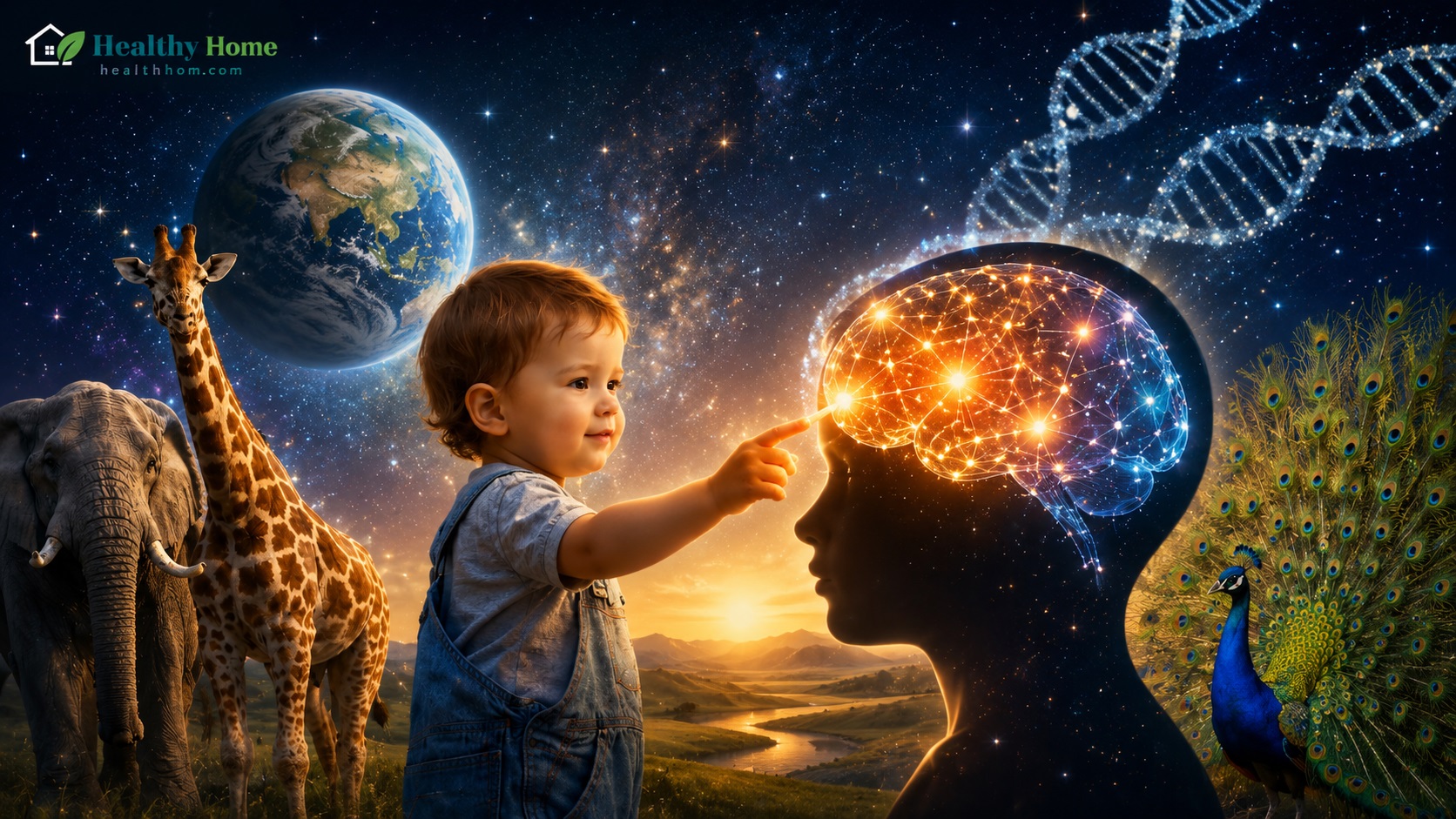
Other species like Giraffe can walk within a few hours of birth, whereas human child needs years of care, learning and emotional support. But actually this dependence is not a weakness, but is a great srengths.
Why human child so unique?
It is because of extraordinary ability of human brain to learn, adapt, imagine, communicate and emotionally connect. So, if we understand the early experiences to build a child’s brain, that may be able to shape a healthier and brighter further.
Quick Summary:
- Human brains continue rapid development after birth
- Around 80–85% of brain growth occurs by age two
- Early experiences shape learning and emotions
- Brain wiring develops through interaction and care
- Nutrition, bonding, and stimulation strongly influence development
Why Is a Human Child So Unique?
Human children have one of the most advanced learning and brain development abilities in nature. Although most animals are born with instincts that enable them to survive almost immediately. Human babies are born with high dependency of the caregivers & this dependence is actually one of the greatest strengths of human development.
Human beings are a part of Homo sapiens, which means wise humans. It is not the physical power, height, and look that make us be so different, but our capacity to think, learn, imagine, communicate and adapt. These skills grow in a short time in early childhood, particularly the first two years in life which is critical to the health and intelligence in a lifetime.
Early brain growth is closely linked with proper nutrition and care, learn more in our detailed guide on Early Childhood Development: Growth, Learning, and Milestones
Early Childhood Brain Development: Its Importance.
A human baby is not born with a fully developed brain as the case with most other animals. Although the fundamental brain structure is developed in the course of pregnancy, the processes of connecting of brain cells or rather known as brain wiring develop at a very fast rate after birth.
The child development research indicates that:
- It is during the first 1,000 days (since conception to age two) that the brain grows at the fastest rate.
- Childhood experiences have a great effect on learning, emotional control and behavior.
- The optimum brain development is facilitated by positive interaction, stimulation, nutrition and care.
Parents and caregivers have a great role to play therefore not only in keeping a child alive, but also in ensuring that the child flourishes.
The first 1,000 days are critical for brain development, explore how delays can impact children in our guide on Global Developmental Delay in Children

Human Brain Growth Timeline
| Age | Approximate Brain Growth |
|---|---|
| At Birth | ~25% of adult brain size |
| 1 Year | ~60% of adult brain size |
| 2 Years | ~80–85% of adult brain size |
| 5 Years | ~90% of adult brain size |
Human Child vs Other Species
| Feature | Elephant | Giraffe | Peacock | Human Child |
|---|---|---|---|---|
| Main Strength | Physical power | Height | Appearance | Brain development |
| Brain Plasticity | Moderate | Low | Low | Extremely high |
| Dependency at Birth | Moderate | Low | Low | Very high |
| Learning Capacity | Instinct-driven | Instinct-driven | Instinct-driven | Experience-driven |
| Emotional Bonding | Present | Limited | Limited | Highly developed |
Unlike animals, human development depends heavily on nutrition and stimulation, read our article on Supplementary Feeding Guidelines for Infants to support early growth.

To explain the individuality of a human child, it is better to draw parallels between humans and other animals:
Elephant
- The first issue of the elephant during birth is the physical size and strength.
- Elephants can weigh up to 6,000 kg as adults whereas humans weigh on average 60 kg.
- The calves of the elephants are physical powerhouses but they do not depend on long-term learning as much.
Giraffe
- Height is the characteristic feature of giraffe.
- A giraffe has the potential to be 18 feet tall and has a neck that is approximately 6 feet long.
- It is mostly physical growth as opposed to cognitive.
Peacock
- Famous over beauty and looks, especially colored feathers.
- Although visually appealing, brain complexity is low in comparison to human beings.
Human Child
- The most significant point of focus is the brain.
- Children are able to think, communicate, emotionally bond and be creative as human beings do.
- Learning capacity and behavior in adulthood are determined at an early stage in the brain wiring.

Development of the brain starts even before birth
Development of the brain begins in womb.
- Adult brain size is only attained at a rate of 25 percent.
- A significant portion of brain growth occurs during the first three years, influenced by environment and care-giving.
This does not occur automatically. Brain development is encouraged by interaction, language exposure, play and emotional bonding as well as appropriate nutrition.
Brain development begins during pregnancy and depends on maternal nutrition, learn more in our guide on Antenatal Iron Supplementation During Pregnancy.
Head Circumference: A Measure of Brain Development
The healthcare providers routinely measures the head circumference of the infants as it significantly indicates the development of the brain in the early stages of life.
Head Circumference Growth Milestones
| Age | Expected Growth |
|---|---|
| Birth | 33–34 cm |
| 0–3 months | 1.5–2 cm/month |
| 3–6 months | ~1 cm/month |
| 6–12 months | ~0.5 cm/month |
| 1 Year Total | 10–11 cm increase |
| After 1 Year | 2–3 cm/year |
Head circumference monitoring is one of the methods that are used to determine healthy brain development at infancy.
Monitoring growth milestones is essential, understand complete development stages in our article on From Infancy to Toddlerhood: Key Developmental Stages.

How Early Experiences Literally Shape a Child’s Brain
Human brain matures just like a house:
House Construction
- Foundation is laid first
- Walls and structure follow
- All is bound together with electrical wiring
Human Brain Development
- The fundamental brain structure is made up of genes.
- Brain cells are connected by experiences.
- Learning, memory and control of emotions are all possible through neural connections.
During early childhood, there is a formation of neural connections amounting to 700 new connections each second in the brain. This makes early life as the most flexible and delicate stage of development.
Early stimulation and interaction play a key role in brain wiring, discover practical parenting strategies in Early Childhood Development Guide.

Brain Wiring Facts
| Indicator | Estimated Value |
|---|---|
| New neural connections per second (early childhood) | ~700 |
| Peak synapse density | 2–3 years |
| Synaptic pruning begins | After age 2 |
| Brain plasticity highest | Birth to 3 years |
Did You Know?
- A baby’s brain forms nearly 700 neural connections every second during early childhood.
- Talking and reading to infants supports language development long before they speak.
- Emotional bonding influences stress regulation and social behavior later in life.
What Really Determines a Child’s Future Potential?
Parents are usually distracted by a lot of issues, but a study conducted reveals that such aspects are not conclusive:
- Gender
- Skin color
- Height or weight
- Physical appearance
The Human Genome Project discovered that we are all virtually the same with 99.99% of the genetic content. The potential of the brain is not based on race, gender or location.
What truly matters is:
- Health and nutrition
- Emotional security
- Learning opportunities
- Responsive care giving
The brain is an entity that lacks color, sex or social status but develops according to the experience and nurture.
Balanced nutrition is essential for cognitive development, check out our guide on Healthy Lunch Box Ideas for Growing Kids.
Factors That Do NOT Determine Brain Potential
| Factor | Scientific Finding |
|---|---|
| Gender | No difference in basic brain capacity |
| Skin color | No impact on intelligence |
| Ethnicity | 99.99% genetic similarity |
| Height/Appearance | Not linked to cognitive ability |

The Parental and Environmental Intervention
The structure is made by the environment and blueprint is made by genes. Parents are seen as builders who create the environment of a child to help him/her grow.
The positive environments are:
- Speaking and reading to children.
- Safe exploration and play
- emotional bonding and affection.
- Nutrition and medical wellness.
A properly developed brain has the ability to impact not just a family but even the society and the future generations.
Responsive caregiving and proper feeding practices go hand in hand, read our article on Supplementary Feeding Guidelines for Infants for expert tips.
Why First 1000 Days Matter
Risk Factors for Poor Brain Development
| Risk Factor | Possible Impact |
|---|---|
| Malnutrition | Delayed cognition |
| Lack of stimulation | Language delay |
| Emotional neglect | Behavioral problems |
| Chronic illness | Developmental delay |
| Poverty | Reduced learning exposure |
Nutritional deficiencies and poor stimulation can delay development, learn warning signs in Global Developmental Delay in Children.
Simple Ways Parents Can Support Brain Development
- Talking to babies
- Reading aloud
- Skin-to-skin bonding
- Nutritious feeding
- Safe play
- Emotional responsiveness
Concluding Points:
The human child so unique not only because of its appearance, size or physical strength, but also its ability of brain to learn, adapt, feel emotions and also build relationships.
As per the research of WHO, UNICEF and also studies from other child development, they show that proper nutrition, safe environments and responsible care giving during the first 1000 days can influence a child’s future potential. A very small moments like talking, playing and bonding may help to build the brain connections which last a lifetime.
Every child is born with extraordinary potential, and early care plays a powerful role in helping that potential grow.
- A baby’s brain is learning from every cuddle, word and smile.
- The first years of life quietly shape the person a child may become.
- Human babies may appear helpless, but their brains are incredibly powerful.
Supporting early brain development requires the right mix of nutrition, care, and stimulation—explore our complete guide on Early Childhood Development and Parenting Strategies
This article is based on evidence-informed public health guidance and reviewed using research from WHO, UNICEF, NIH, and peer-reviewed child development studies.
Early Brain & Development Milestones
| Age | Key Development |
|---|---|
| 2 Months | Social smile |
| 6 Months | Recognizes caregivers |
| 1 Year | Says simple words |
| 2 Years | Combines 2 words |
| 3 Years | Simple conversations |
FAQs:
1. Why is a human child unique to the rest of the species?
The human children possess additional maturation of the brain which facilitates language, creativity, emotional attachment and long term learning.
2. What makes the human brain special when it is born?
The brain of human babies is very adaptable and quickly gets connected via experience and interaction.
3. What is different about the human intelligence and animals?
Human beings have self-consciousness, problem solving skill, imagination, planning skills and elaborated language structures.
4. What is the difference between human emotional bonding?
The bonding of human beings entails empathy, long-term care, emotional insight and social acquisition, which are beyond necessary survival.
5. Does culture influence human development?
Yes. Culture influences values, communication, creativity level of social behavior and identity formation.
6. Why are human babies more helpless at birth?
Human infants are born at an early stage of brain development, which allows greater flexibility for learning, adaptation, and development through interaction with their environment.
Related Health Articles from Healthy Home :
- Early Childhood Development: Growth, Learning, and Milestones
- Understanding Global Developmental Delay in Children
- From Infancy to Toddlerhood: Key Developmental Stages
- Supplementary Feeding Guidelines for Infants
- Healthy Lunch Box Ideas for Growing Kids
Trusted References and Research Sources:Child Health and Development Guide: Growth Milestones, Immunity and Daily CareChild Health and Development Guide: Growth Milestones, Immunity and Daily Care
- WHO Guidelines on Early Childhood Development
- Scientific Review on Early Brain Development (PubMed Central)
- UNICEF on Early Childhood Development and Learning
- Research Evidence on Brain Plasticity and Child Development (PMC)


About the Author – “Bibhu Ranjan Mund”, Master in Public Health (MPH) from IIHMR University, Jaipur (Rajasthan) has more than 18 years of experience in Public Health activities in maternal health, child health, adolescent health, nutrition and community wellness programs under National Health Mission, Health & Family Welfare Department, Odisha. He is the founder of “Healthy Home” and translates the evidence based public health information into a practical source so that families may able to apply in everyday life. All the information are for educational purposes only and not replaces the professional medical advice. ORCID Researcher ID – 0009-0003-0158-4992. Connect LinkedIn – https://www.linkedin.com/in/bibhu-ranjan-mund-b72171358/