10 Useful Kitchen Tools for Healthy Meal Preparation
Find out 10 useful kitchen tools for healthy meal preparation, including digital scales, measuring cups, portion plates, food containers, blenders, air fryers and more.
Reviewed by Bibhu Ranjan Mund, MPH (Public Health Expert) with more than 18 years of experience in maternal, infant, child and adolescent health programs.
Disclosure :Some links on this page may be affiliate links. If you purchase a product through an affiliate link, we may receive a commission at no additional cost to you. As an Amazon Associate, Healthy Home earns from qualifying purchases. Product availability, prices, features and specifications may change. Always check the current product information on the retailer’s website before purchasing.
Medical Disclaimer: This article provides general health and lifestyle information and is not a substitute for personalized medical advice, diagnosis, or treatment. If you have specific dietary, medical, or nutritional concerns, consult an appropriately qualified healthcare professional.
Introduction:
Healthy eating doesn’t need any complicated recipes, costly ingredients or spending more hours in the kitchen. So, the right kitchen tools can make the healthy meal preparation with a simple, fast and in an organized way.
You may prepare meals for yourself, your children or the whole family, practical kitchen equipment can help to aware about portion control, food preparation, meal planning, hydration and also how to store the homemade meals.
Your aim should not be to buy each and every gaget, but to choose tools that solve everyday problems and fit your cooking habits.
10 Kitchen Tools for Healthy Meal Preparation
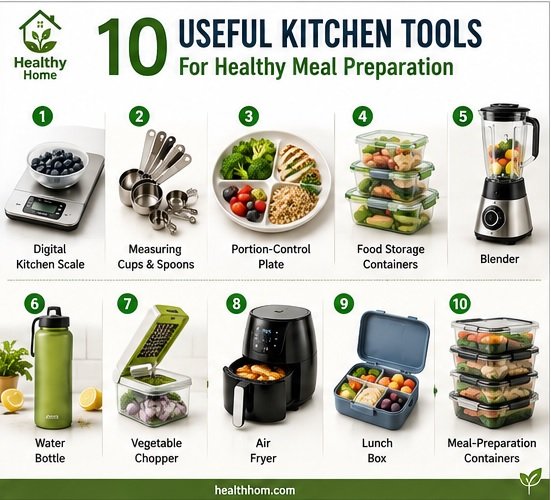
1. Digital Kitchen Scale
A digital kitchen scale is a simple tool that can help you for measuring ingredients accurately.
It can be useful if you prepare recipes where ingredients are given in grams or when you want to become more aware of serving sizes.
A kitchen scale can help you to:
- Measure ingredients accurately
- Follow recipes more consistently
- Compare ingredient quantities
- Portion foods more easily
- Reduce guesswork when preparing meals
- Track ingredients when following a structured meal plan
For example, instead of estimating how much rice, flour, nuts or other ingredients you’re using, you can measure the amount directly.
You can look for scale with:
- Easy-to-read digital display
- Zero function
- Gram and ounce measurements
- Sufficient weight capacity
- Easy-to-clean surface
- Automatic shut-off
A compact model is sufficient for everyday home cooking.
A digital kitchen scale can be particularly helpful when you are trying to maintain a healthy body weight as a part of balanced eating routine.
Healthy Home Tip: A kitchen scale is a measurement tool, not a requirement for healthy eating. Use it when accuracy is useful, but every meal need not to be weighed.
Recommended: A simple 1 g precision digital kitchen scale is sufficient for most home cooking and portion-measurement needs. Check the latest price on Amazon.in.
2. Measuring Cups and Spoons
Measuring cups and spoons are among the simplest and most affordable kitchen tools.
They are useful for measuring ingredients such as grains, flour, oils, spices, sauces, milk and other recipe ingredients.
Why they are useful
Accurate measurements can help you to:
- Follow recipes consistently
- Control the amount of oils and sauces used
- Reproduce successful recipes
- Avoid accidentally adding too much of an ingredient
- Teach children basic cooking skills
A set normally have several cup and spoon sizes, which are convenient for different recipes.
Choose measuring sets that are:
- Easy to clean
- Clearly marked
- Durable
- Suitable for both dry and liquid ingredients
- Easy to store
Stainless steel or good quality food safe plastic may be practical options.
Using measuring cups can make it easier to follow balanced recipes and maintain appropriate portions, which are important parts of healthy nutrition for the whole family.
Healthy Home Tip: Measuring oils, dressings, spreads and other calorie dense ingredients can help you to be aware of how much you are adding during cooking.
Recommended: Look for a stainless-steel measuring set with clearly marked cup and spoon sizes for both cooking and baking. Check the latest price on Amazon.in.
3. Portion-Control Plate
A portion-control plate is designed with sections or visual guides that can help the people about the relative proportions of different foods on their plate.
It can be useful for people who find portion sizes difficult to judge visually.
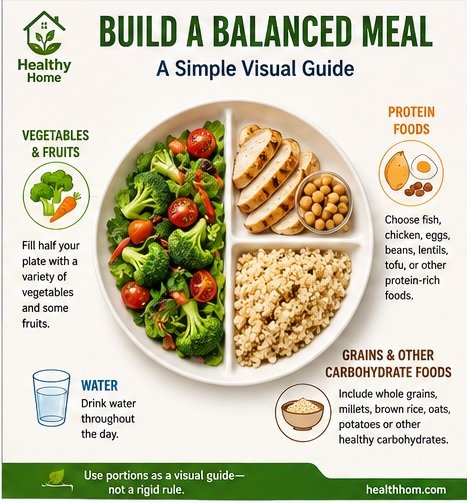
A simple balanced meal may have vegetables or other plant foods, a source of protein and a suitable carbohydrate containing food.
A portion-control plate may help you to:
- Visualize meal proportions
- Include more vegetables
- Build balanced meals
- Avoid automatically filling a large plate
- Teach children about balanced meals
- Develop greater awareness of serving sizes
Look for a plate that:
- Has clear section markings
- Is made from food-safe material
- Is easy to clean
- Is microwave and dishwasher safe if needed
- Has an appropriate size for your household
Remember that portion needs vary according to age, body size, activity level, health needs and individual circumstances.
Combining appropriate portions with regular physical activity and other healthy habits can support long-term weight management.
Healthy Home Tip: Think of a portion-control plate as a visual guide and not as a strict rule. Nutritional needs are different for every person.
Recommended: A divided portion-control plate can provide a simple visual guide for organizing different foods on the plate. Check the latest price on Amazon.in.
4. Food Storage Containers
Food storage containers can make it easier to keep prepared ingredients and leftovers in an organized way.
They are particularly useful when you cook larger quantities and want to save portions for later meals.
Benefits of using food storage containers:
- Organize prepared foods
- Store leftovers
- Pack meals for work or school
- Keep ingredients separated
- Reduce unnecessary food waste
- Make meal preparation more convenient
Clear containers can also make it easier to see what is available in the refrigerator.
Safe and organized food storage also makes weekly meal planning more practical because prepared foods can be portioned and stored for convenient use.
Choose containers that are:
- Food-safe
- Leak-resistant
- Easy to clean
- Durable
- Stackable
- Appropriate for refrigerator or freezer use
If you want to microwave food in the container, make sure it is specifically labeled as microwave-safe.
Food Safety Reminder: Store perishable foods as per norm and follow appropriate food-safety practices for refrigeration, reheating and storage.
Recommended: Choose leak-resistant, food-safe containers that are suitable for your intended refrigerator, freezer or microwave use. Check the latest options on Amazon.in.
5. Blender
A blender can be a very good tool for preparing homemade foods and drinks.
Depending on the model, it can be used for smoothies, soups, sauces, dips, chutneys and other recipes.
You can use it to prepare:
- Fruit and vegetable smoothies
- Homemade soups
- Vegetable-based sauces
- Dips
- Chutneys
- Homemade dressings
- Nut or seed preparations, when appropriate for the blender
Blending can also make it easier to provide a variety of ingredients into meals.
A blender may help some people to have more fruits and vegetables, though individual results vary based on usage patterns and a balanced diet.
You can look for
- Motor power appropriate for your need based use
- Suitable container capacity
- Easy-to-clean components
- Durable blades
- Safety features
- Availability of replacement parts
You don’t need a high power premium blender if you mainly prepare simple smoothies and sauces.
Healthy Home Tip: When making smoothies, remember that blending does not automatically make a drink healthier. Ingredients and portion sizes also matter a lot. Whole fruits and vegetables are also valuable parts of a balanced diet.
Recommended: For smoothies, chutneys and simple homemade preparations, a compact personal blender may be sufficient. Check the latest price on Amazon.in.
For more practical ideas on preparing healthier meals at home, see the American Heart Association’s How to Cook Healthier at Home guide.
6. Reusable Water Bottle
A reusable water bottle isn’t technically a cooking tool, but it can be a useful part of a healthy kitchen and meal preparation routine.
If water is readily available, it is more easier to choose water throughout the day and stay hydrated.
Keeping a reusable water bottle nearby can allow healthier hydration habits and make drinking water a simple part of your daily routine.
A practical water bottle should be:
- Leak-resistant
- Easy to clean
- Comfortable to carry
- Made from a suitable food-contact material
- Large enough for your needs
- Convenient for home, work, school or travel
Some people prefer bottles with measurement markings because they make it easier to keep track of how much they drink.
Why it belongs in a healthy kitchen
Healthy meal preparation is not only about food. Beverages are also part of daily dietary habits.
For many people, choosing water on regular interval instead of sugary drinks can be a useful healthy habit.
See the CDC’s guidance on water and healthier drinks for additional information.
Recommended: Choose a reusable bottle that is easy to clean, leak-resistant and convenient to carry. Check the latest price on Amazon.in.
7. Vegetable Chopper
Preparing vegetables can sometimes take time for cooking.
A vegetable chopper can make chopping of certain foods faster and more convenient.
It may be useful for preparing:
- Onions
- Carrots
- Cucumbers
- Peppers
- Tomatoes
- Herbs
- Other suitable vegetables
Preparing vegetables in advance can make it easier to have more plant-based foods in everyday meals and follow a nutritious eating pattern.
Why it can encourage healthy cooking
When vegetables are easier and faster to prepare, you may add them regularly in home-cooked meals.
A chopper can be helpful when preparing ingredients for:
- Salads
- Soups
- Stir-fries
- Curries
- Sandwiches
- Wraps
- Vegetable-based dishes
What to see:
- Sharp, durable blades
- Stable base
- Food-safe materials
- Easy cleaning
- Appropriate container size
- Safety features
Always use chopping tools according to the manufacturer’s instructions and handle blades carefully.
Healthy Home Tip: Prepare several vegetables at once and store them appropriately so they are ready for the next meal.
Recommended: A compact vegetable chopper can save preparation time when you regularly cook vegetables, salads and homemade meals. Check the latest price on Amazon.in.
8. Air Fryer
An air fryer is noe popular as it can cook foods using circulating hot air and depending on the recipe, little or no added oil.
It can be useful for preparing vegetables, potatoes, fish, chicken and other foods.
Advantages:
- Make cooking convenient
- Reduce the amount of oil used in some recipes
- Cook foods relatively quickly
- Make roasting and crisping convenient
- Encourage experimentation with homemade meals
But, an air fryer does not automatically make every food healthy.
For example, highly processed foods can remain as highly processed even when cooked in an air fryer.
An air fryer can be useful when preparing meals with less added oil, particularly when combined with nutritious ingredients and portion sizes.
You should also think about:
- Appropriate basket capacity
- Easy-to-clean components
- Temperature controls
- Timer
- Safety features
- Basket design suitable for your household
You should choose the actual size of cooking based on the numbers of people.
Healthy Home Tip: Use an air fryer as one cooking method, but not as a substitute for a varied diet. Combine air-fried foods with vegetables, whole grains, legumes and other nutritious foods.
Recommended: For a small or medium household, think about an air fryer with an appropriate capacity, easy-to-clean basket, temperature controls and timer. Compare current air-fryer options on Amazon.in.
9. Lunch Box
A good lunch box can make it easier to carry homemade meals to work, school, college or other activities.
Preparing lunch at home can give you greater control over what foods and drinks you carry.
What makes a good lunch box?
- Leak-resistant compartments
- Appropriate capacity
- Easy-to-clean materials
- Strong construction
- Separate sections for different foods
- Insulation if needed
- A secure closure
A compartment-style lunch box can make it easier to pack different foods without mixing everything together.
Preparing a balanced lunch at home can help the families to make healthier food choices and develop practical healthy eating habits.
What can you pack?
Depending on individual needs and preferences, a balanced lunch may be:
- Vegetables
- Fruit
- Whole grains
- Protein-rich foods
- Yogurt or another suitable food
- Water
For children, keep portions age-appropriate and have foods they can comfortable to eat.
Healthy Home Tip: Involve children in choosing and packing suitable lunch items. It can help to make healthy meal planning a family activity.
Recommended: Look for a lunch box with secure closure, suitable compartments and enough capacity for your usual meal. Check the latest options on Amazon.in.
10. Meal-Preparation Containers
Meal-preparation containers are designed to divide prepared food into individual meals.
They are useful for people who like to prepare several meals in advance.
Meal-preparation containers can make it easier to:
- Divide meals into portions
- Organize several days of meals
- Pack lunches
- Store prepared foods
- Plan meals in advance
- Reduce last-minute food decisions
For example, you could prepare vegetables, a protein-rich food and a grain or other carbohydrate containing food and divide them into separate meal containers.
When preparing meals in advance, follow guidance on safe storage of leftovers to help maintain food safety.
Choose containers that are:
- Food-safe
- Durable
- Leak-resistant
- Stackable
- Easy to clean
- Suitable for the refrigerator
- Microwave-safe if required
Always check the manufacturer’s instructions before freezing, microwaving or placing containers in a dishwasher.
Organizing meals in advance can make it easier for busy families to maintain consistent eating routines and make nutritious choices during the week.
Proper storage is just as important as preparation. Follow FDA guidance on food storage safety when refrigerating leftovers and other perishable foods.
Recommended: Meal-preparation containers with separate compartments can make portioning and organizing several meals more convenient. Check the latest options on Amazon.in.
Top Picks:
If you want to build a healthier and more organized kitchen, these practical products can help for measuring, meal preparation, food storage, hydration and portion organization. Product prices and availability may change, so check the current Amazon.in listing before purchasing. Followings are few top picks:
- Digital kitchen scale
- Measuring cups & spoons
- Food storage containers
- Vegetable chopper
- Air fryer
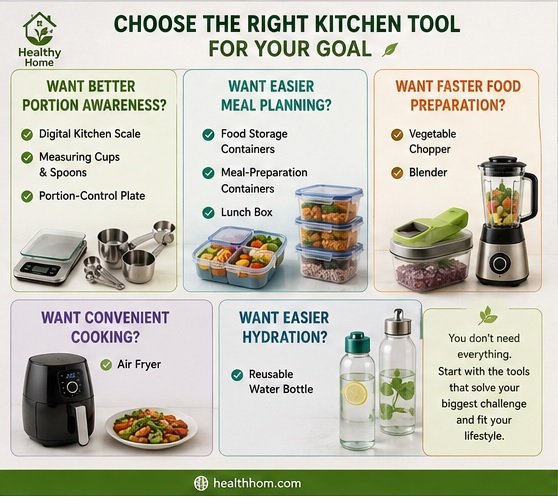
How to Choose the Right Kitchen Tools for Your Home
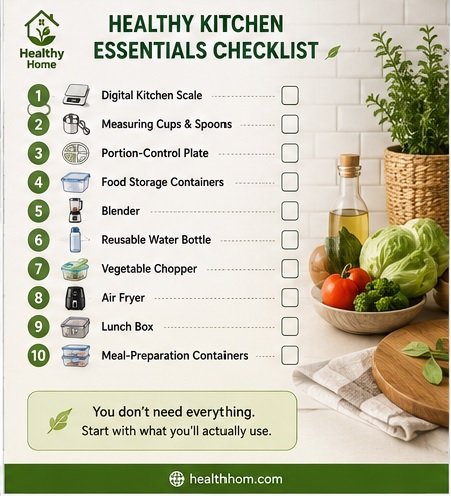
You don’t need all ten tools for a healthy eating.
So, you can tart by identifying the most challengeable kitchen routine.
If portion awareness is your priority, think about:
- Digital kitchen scale
- Measuring cups and spoons
- Portion-control plate
If meal planning is difficult:
- Food storage containers
- Meal-preparation containers
- Lunch box
If preparing vegetables takes too long, try:
- Vegetable chopper
- Blender
If you want convenient cooking options:
- Air fryer
- Blender
- Food storage containers
If you want to support better hydration habits
- Reusable water bottle
The best kitchen tool is usually the one you will actually use regularly.
The most important point is that the tools should make an easier healthy behavior and more practial, not to add any complex item.
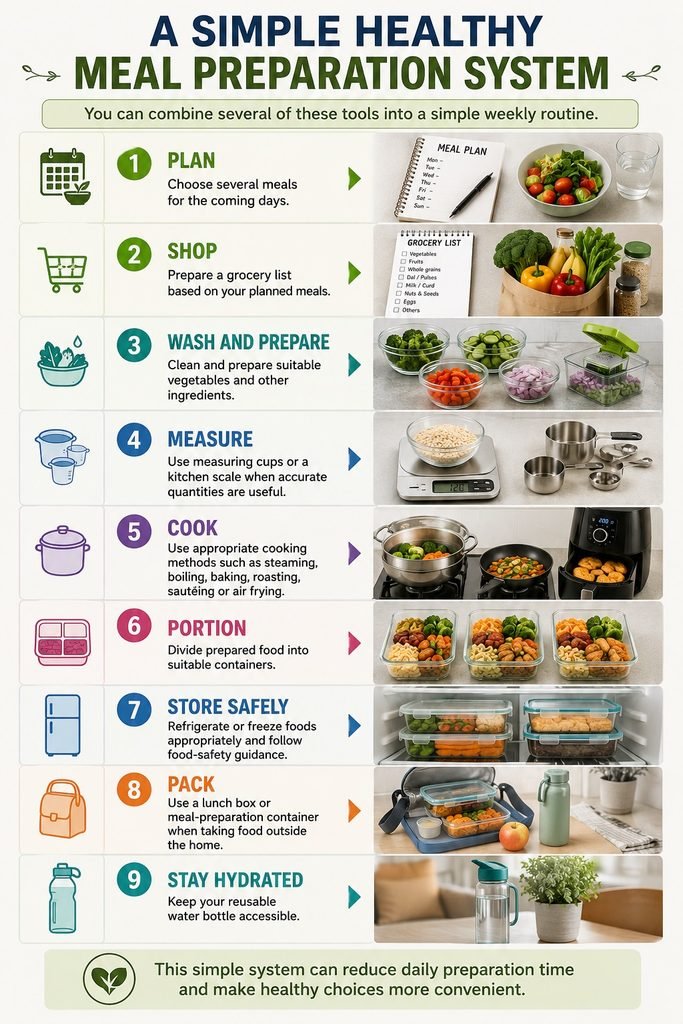
A Simple Healthy Meal Preparation System
You can combine several of these tools into a simple weekly routine.
Step 1: Plan
Choose several meals for the coming days.
Step 2: Shop
Prepare a grocery list based on your planned meals.
Step 3: Wash and prepare
Clean and prepare suitable vegetables and other ingredients.
Step 4: Measure
Use measuring cups or a kitchen scale for accurate quantity.
Step 5: Cook
Use appropriate cooking methods such as steaming, boiling, baking, roasting, sautéing or air frying.
Step 6: Portion
Divide prepared food into suitable containers.
Step 7: Store safely
Refrigerate or freeze foods appropriately and follow food-safety guidance.
Step 8: Pack
Use a lunch box or meal-preparation container when taking food outside the home.
Step 9: Stay hydrated
Keep your reusable water bottle accessible.
This simple system can reduce daily preparation time and make a healthy choices easily.
Combining meal preparation with adequate hydration, physical activity, sleep and other daily habits can contribute to a more practical healthy lifestyle for the entire family.
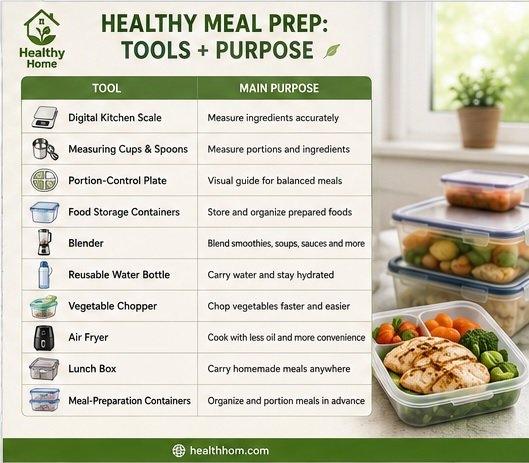
10 Kitchen Tools at a Glance
| Kitchen Tool | Main Purpose | Particularly Useful For |
|---|---|---|
| Digital kitchen scale | Accurate ingredient measurement | Portion awareness & recipes |
| Measuring cups and spoons | Measuring ingredients | Everyday cooking |
| Portion-control plate | Visual portion guidance | Balanced meals |
| Food storage containers | Storing prepared food | Leftovers & meal organization |
| Blender | Blending foods | Smoothies, soups & sauces |
| Reusable water bottle | Carrying water | Hydration convenience |
| Vegetable chopper | Faster chopping | Vegetable preparation |
| Air fryer | Convenient cooking | Roasting & crisping |
| Lunch box | Carrying meals | Work & school |
| Meal-preparation containers | Organizing prepared meals | Meal planning & portion organization |
Frequently Asked Questions:
1. Do I need all 10 kitchen tools?
2. Is a digital kitchen scale necessary for healthy eating?
3. Is an air fryer healthier than traditional cooking?
4. Are portion-control plates suitable for everyone?
5. Can I use plastic food containers?
6. Is a blender useful for a family?
7. What is the most useful kitchen tool for beginners?
8. Can kitchen tools help me to eat healthier?
9. How can I make healthy meal preparation easier?
10. Should I buy expensive kitchen equipment?
Final Takeaway
Healthy meal preparation should not be complicated.
A few practical kitchen tools can make it easier to measure ingredients, understand portions, prepare vegetables, cook meals, store leftovers, pack lunches and organize food for the week.
You don’t need a kitchen full of gadgets. Start with one or two tools that fulfill your biggest challenge and build from there.
The most important kitchen tool isn’t the most costly one, it’s the one that helps you to prepare nutritious meals practically.
At Healthy Home, our goal is to make healthy living practical for individuals and families.
Looking for ideas to put your kitchen tools to work? Explore these healthy recipes from the American Heart Association.
Related Health Guides:
- What Is a Balanced Daily Meal Plan?
Evidence-based meal planning guide for healthy eating and daily nutrition balance. - Healthy Millet Recipe – Nutritious & Easy to Prepare
Step-by-step millet recipe offering high fiber, minerals, and pregnancy-friendly nutrition. - Healthy Nutrition Guide for Families — Practical guidance for balanced eating, nutrition and meal planning.
- How to Know Your Cholesterol Level, BMI & BMR – Understand common health measurements and what they mean.
- Healthy Home Health Calculators – Free tools for estimating selected health and nutrition-related indicators.