Last Updated on August 2, 2026 by Bibhu Ranjan Mund, MPH
Find-out 10 healthy Indian recipes for fatty liver disease with breakfast, lunch, snacks and dinner ideas suggested by science to support liver health.
Reviewed by Bibhu Ranjan Mund, MPH (Public Health Expert) with more than 18 years of experience in maternal, infant, child and adolescent health programs. Content is based on evidence-informed guidelines aligned with organizations such as the World Health Organization, UNICEF, Centers for Disease Control and Prevention and National Institutes of Health.
Medical Disclaimer: This content is for informational and educational purposes only and is not intended as medical advice, diagnosis, or treatment. Always seek the advice of a qualified healthcare professional regarding any medical condition or concerns.
Research Archive:
Mund, B. R. (2026). 10 Healthy Indian Recipes for Fatty Liver Disease: Easy Breakfast, Lunch, Snacks & Dinner (Version 1.0). Healthy Home (healthhom.com). https://doi.org/10.5281/zenodo.21761088
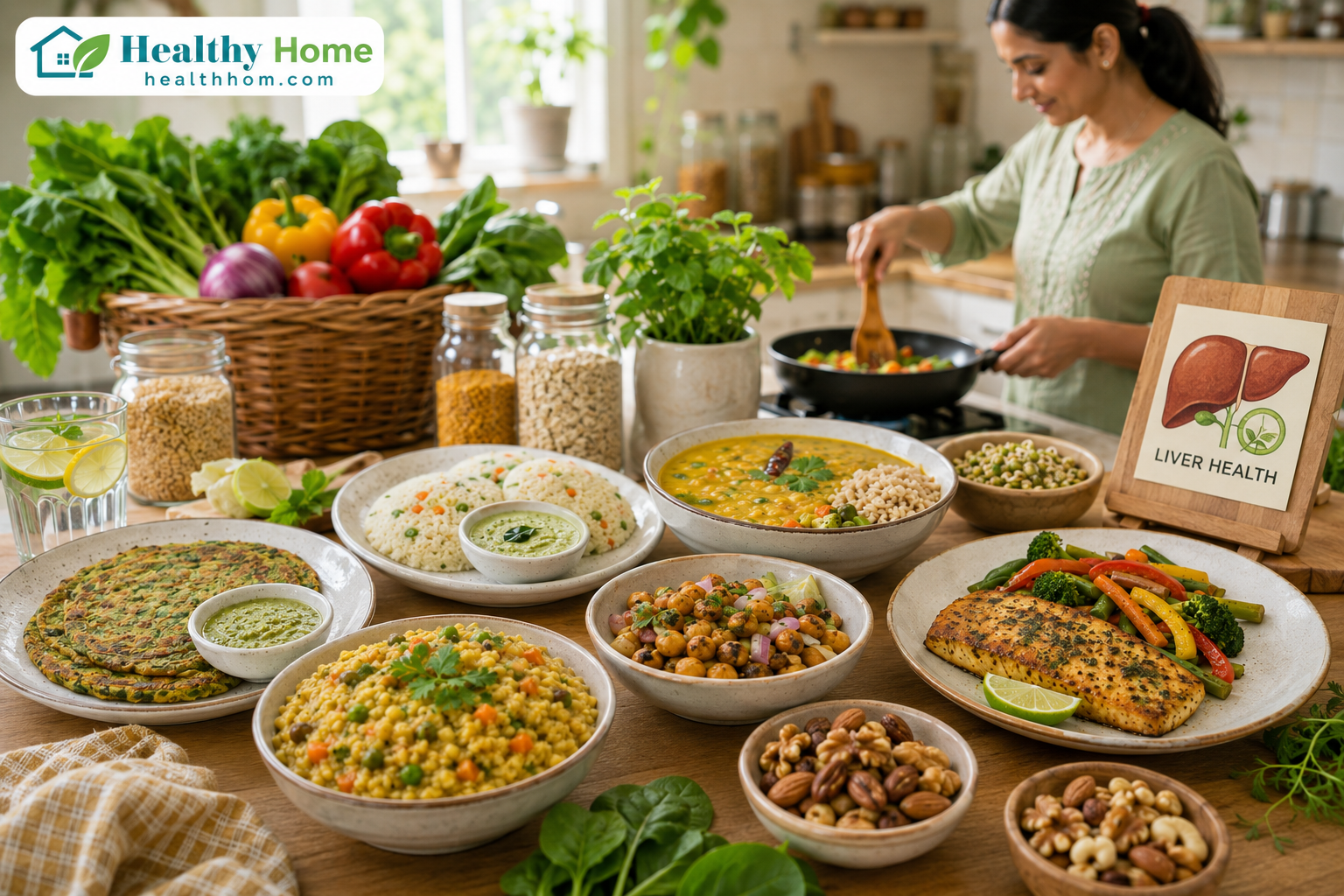
If you are looking for recipes to prevent or manage the fatty liver disease, these 10 easy healthy Indian recipes for fatty liver disease like breakfast, lunch, snack and dinner recipes may be your solution. Whole grains, lean protein, vegetables and healthy fats are taken into account which may support liver health. All these recipes are based on recent nutritional suggestions and also family-friendly.
Executive Summary
- Fatty liver disease may improve with dietary changes consistently.
- Traditional Indian foods can support a better liver health.
- Whole grains and millets are the excellent choices.
- Try to take protein in every meal.
- Use less oil and to avoid deep frying.
- Increase the quantity of vegetables and legumes in every meal.
- Reduce or limit the added sugar and refined flour.
- Portion control is also equally important like healthy food choice.
- Home-cooked meals are to be preferred for healthier liver life.
Can Your Daily Indian Meals Help to Reverse Fatty Liver?
In an Indian family, if a member was diagnosed with fatty liver disease, first dietary changes they usually do with “No rice or no oil”. You can imagine the reaction of family members, as they think “What we can eat now?”
Like so many Indian families, a fatty liver diagnosis means to give up all favorite meals. But during the consultation, the doctor smiled and said some surprising fact:
“You don’t need imported costly superfoods. You just need revised version a of the foods you already cook at home.”
The above advice of doctor, may totally change our assumption that “how we previously looked at food”.
Our traditional meals are the evergreen diet which you don’t need to discard all. So, in consideration to the recent recommendations , you can change your lifestyle habits including few dietary changes like consuming more vegetables, whole grains, reduce excess oil and focus on portion sizes. Gradually, these small and simple habits can become a part of everyday life.
As a public health professional and during my working in Odisha, I have also observed that many families think that medicines can only cure fatty liver disease. But in reality, doctors throughout the world suggest that healthy eating, regular physical activity and gradual weight loss are preliminary treatment for most people who are living with metabolic dysfunction-associated steatotic liver disease (MASLD), formerly known as non-alcoholic fatty liver disease (NAFLD).
This article discusses ten practical Healthy Indian Recipes for Fatty Liver Disease which are easy to prepare, enjoyable for the whole family and supported by recent nutritional suggestions.
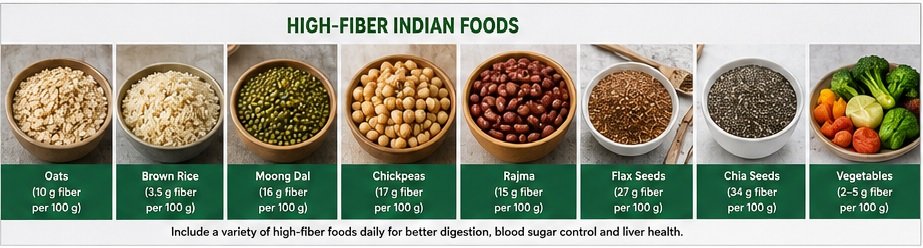
Fatty Liver Disease: Global Statistics at a Glance
| Statistic | Data | Source | Publication Year |
|---|---|---|---|
| Adults worldwide living with MASLD | Approximately 30% | Global Liver Institute | 2025 |
| Overweight or obese adults with MASLD | Up to 70% | American Association for the Study of Liver Diseases | 2024 |
| Recommended weight loss for improving liver fat | 7–10% of body weight | European Association for the Study of the Liver | 2024 |
| Minimum weekly physical activity | At least 150 minutes | World Health Organization | 2024 |
| Diet rich in whole grains, vegetables, and legumes is associated with better metabolic health | Supported by nutrition guidelines | ICMR–National Institute of Nutrition | 2024 |
What Do These Numbers Really Mean?
The statistics may be alarming, but it also remind that many health problems can be prevented and managed with the right and proper steps.
Now, fatty liver disease is a most common lifestyle-related liver condition throughout the globe. Research always shows that the liver has the ability to recover itself, if a person adopts healthy habits during early period of diagnosis. Even moderate level of weight loss, regular walking and balanced healthy meals may reduce liver fat and improve metabolic health in many people.
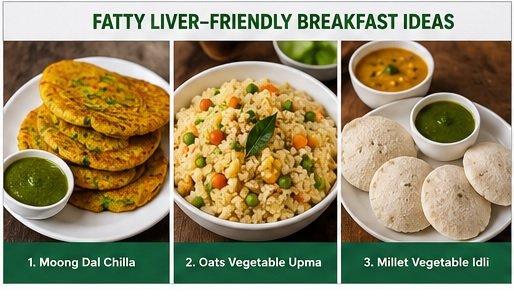
Healthy Breakfast for Fatty Liver Disease
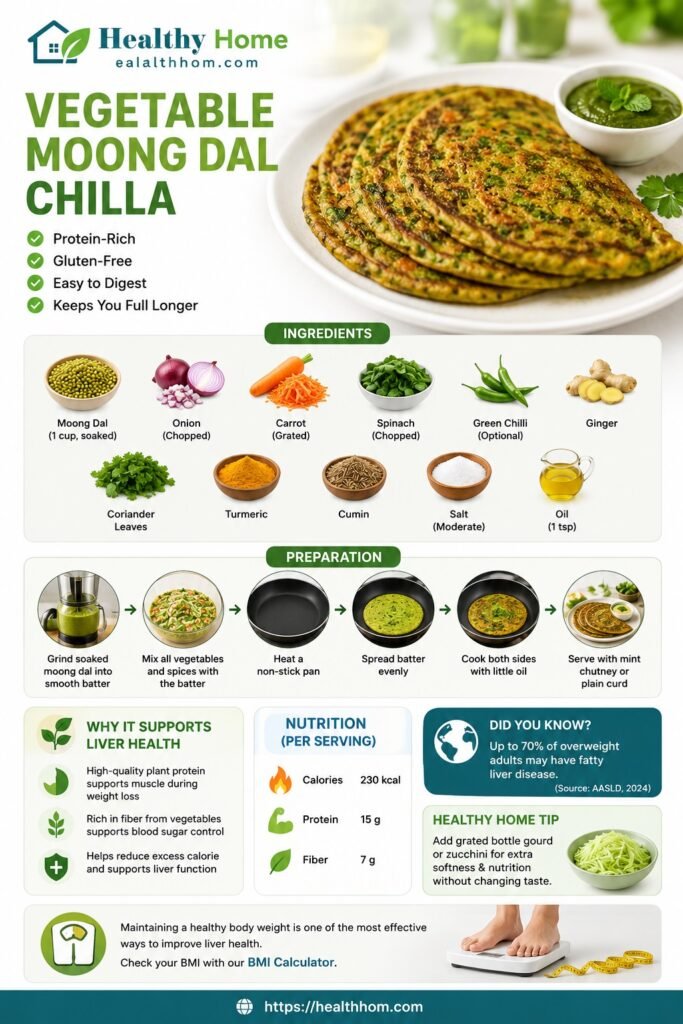
1. Vegetable Moong Dal Chilla
Why You will Love It
This protein-rich breakfast is easy to digest and naturally gluten-free. It keeps you satisfied for longer time and help to reduce unhealthy snacking in next part of the day.
Ingredients
- 1 cup soaked moong dal
- 1 small onion, finely chopped
- 1 grated carrot
- Chopped spinach
- Green chilli (optional)
- Ginger
- Coriander leaves
- Turmeric
- Cumin
- Salt (moderate)
- 1 teaspoon oil for cooking
Preparation
- First grind the soaked moong dal and prepare as a smooth batter.
- Mix all vegetables and spices with the batter.
- Heat a non-stick pan.
- Spread the batter evenly in the pan.
- Cook both sides using very little oil.
- Serve or eat with mint chutney or plain curd.
Why It Supports Liver Health
Moong dal provides plant protein that helps to maintain muscle during gradual weight loss. Vegetables increase fiber intake, helps to improve blood sugar control and help to reduce excess calorie consumption.
Maintaining a healthy body weight is one of the most effective ways to improve liver health. You can estimate your healthy weight using our BMI Calculator.
Approximate Nutrition (Per Serving)
- Calories: 230 kcal
- Protein: 15 g
- Fiber: 7 g
Healthy Home Tip
If you add grated bottle gourd or zucchini, it will make the chilla soft and also increase the vegetable intake without changing it’s taste.
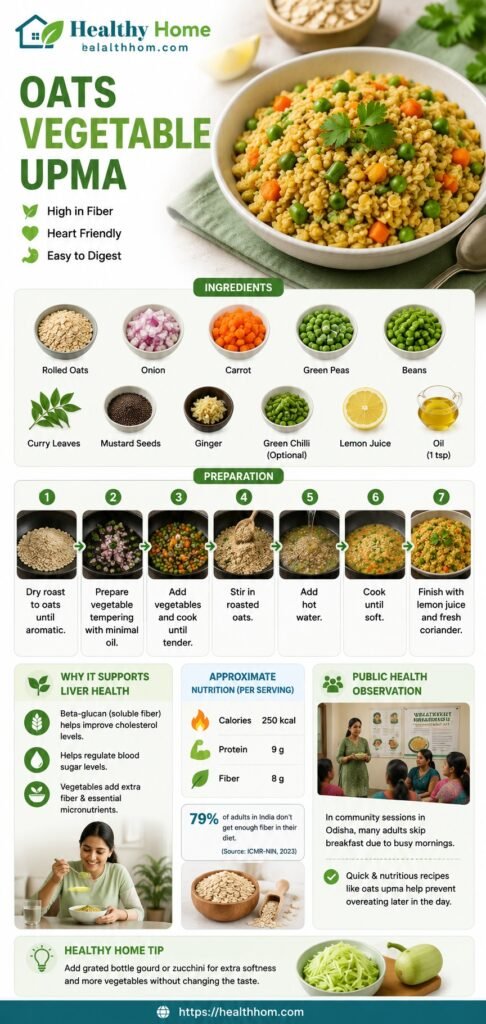
2. Oats Vegetable Upma
Many Indian people think that oats is only an Western breakfasts. In reality, oats can also be prepared as traditional Indian cooking method. This recipe can be popular in many families as it can replace the refined breakfast options.
Ingredients
- Rolled oats
- Onion
- Carrot
- Green peas
- Beans
- Curry leaves
- Mustard seeds
- Ginger
- Green chilli (optional)
- Lemon juice
- 1 teaspoon oil
Preparation
- Dry roast to oats until aromatic.
- Prepare vegetable tempering with minimal oil.
- Add vegetables and cook until tender.
- Stir in roasted oats.
- Add hot water.
- Cook until soft.
- Finish with lemon juice and fresh coriander.
Why It Supports the Liver Health
Oats contain beta-glucan which is a soluble fiber. This help to improve the cholesterol level and regulate blood sugar level. If you cook oats with vegetables, it can further increase the fiber and micronutrient intake.
Approximate Nutrition
- Calories: 250 kcal
- Protein: 9 g
- Fiber: 8 g
Public Health Observation
During my community nutrition sessions in Odisha, many adults say they skip breakfast due to their busy morning schedules. Recipes like oats upma can be prepared quickly and may help to prevent overeating later in the day.
3. Millet Vegetable Idli
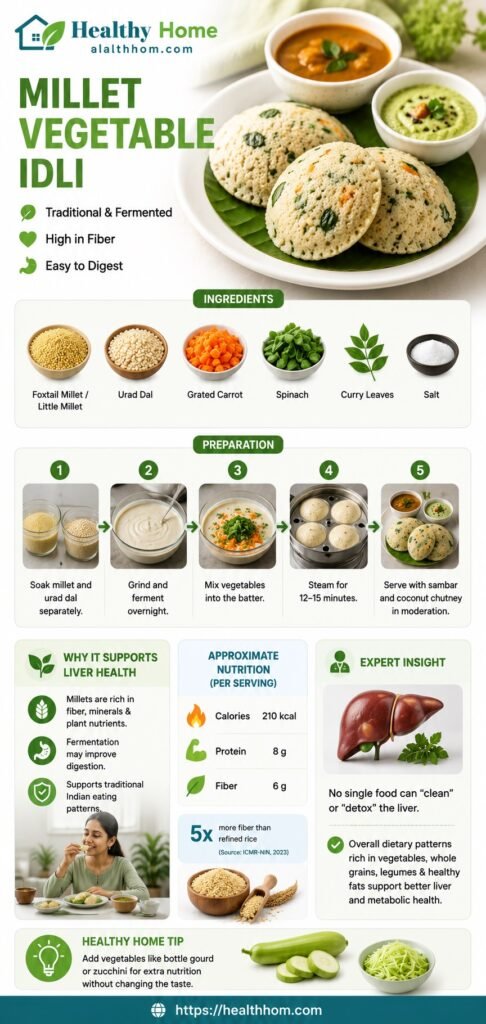
This is a traditional Indian fermented foods which deserve appreciation.
A best way to increase the dietary diversity is to replace the refined rice with traditional millet. It is a nutrient rich food and can provide healthy alternative without changing family eating habits.
Ingredients
- Foxtail millet or little millet
- Urad dal
- Grated carrot
- Spinach
- Curry leaves
- Salt
Preparation
- Soak millet and urad dal separately.
- Grind and ferment overnight.
- Mix vegetables into the batter.
- Steam for 12–15 minutes.
- Serve with sambar and coconut chutney in moderation.
Why It Supports Liver Health
Millets provide more fiber and several minerals than polished grains. Fermentation may improve digestion and supports traditional Indian eating patterns.
Approximate Nutrition
- Calories: 210 kcal
- Protein: 8 g
- Fiber: 6 g
Expert Insight
No single food can “clean” or “detox” the liver. So, the overall dietary patterns matter a lot. Meals which are rich in vegetables, whole grains, legumes and moderate portions of healthy fats are associated with better liver and metabolic health than highly processed diets.
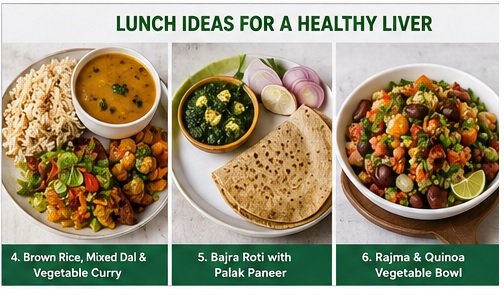
Healthy Lunch & Snack Recipes for Fatty Liver Disease
A liver-friendly diet should not be in restriction of many foods. Instead of preparing separate meals for one person, these recipes can easily become part of everyone’s lunch or evening snack.
One lesson I have observed during community nutrition awareness programs, that people like to continue healthy eating if the food tastes and satisfying.
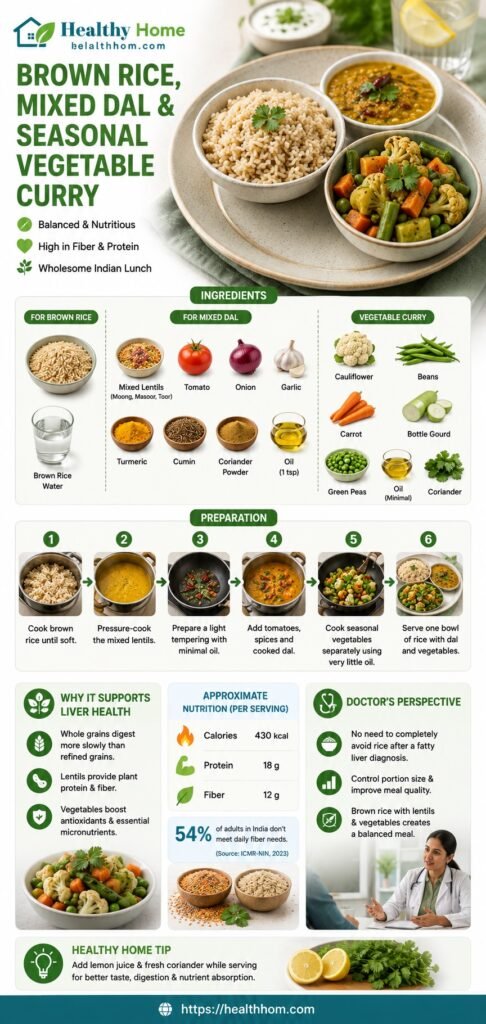
4. Brown Rice, Mixed Dal & Seasonal Vegetable Curry
This is one of the simplest balanced Indian lunches. It provides complex carbohydrates, plant protein, fiber, vitamins and minerals in one meal.
Ingredients
For Brown Rice
- 1 cup brown rice
- Water
For Mixed Dal
- Half cup mixed lentils like moong, masoor and toor dal
- Tomato
- Onion
- Garlic
- Turmeric
- Cumin
- Coriander powder
- 1 teaspoon oil
Vegetable Curry
- Cauliflower
- Beans
- Carrot
- Bottle gourd
- Green peas
- Minimal oil
- Fresh coriander
Preparation
- Cook brown rice until soft.
- Pressure-cook the mixed lentils.
- Prepare a light tempering with minimal oil.
- Add tomatoes, spices and cooked dal.
- Cook seasonal vegetables separately using very little oil.
- Serve one bowl of rice with dal and vegetables.
Why It Supports Liver Health
Whole grains used to digest more slowly than refined grains. Lentils provide the plant protein including fiber and vegetables increase the antioxidant intake.
Approximate Nutrition
- Calories: 430 kcal
- Protein: 18 g
- Fiber: 12 g
Doctor’s Perspective
Many people have wrong conception that they have to stop eating rice after diagnosis of a fatty liver disease. Recent nutrition evidence suggests to control the portion size and improve the quality of the meal, not to completely avoid rice. Also it is important to take brown rice with lentils and vegetables which may create a more balanced meal.
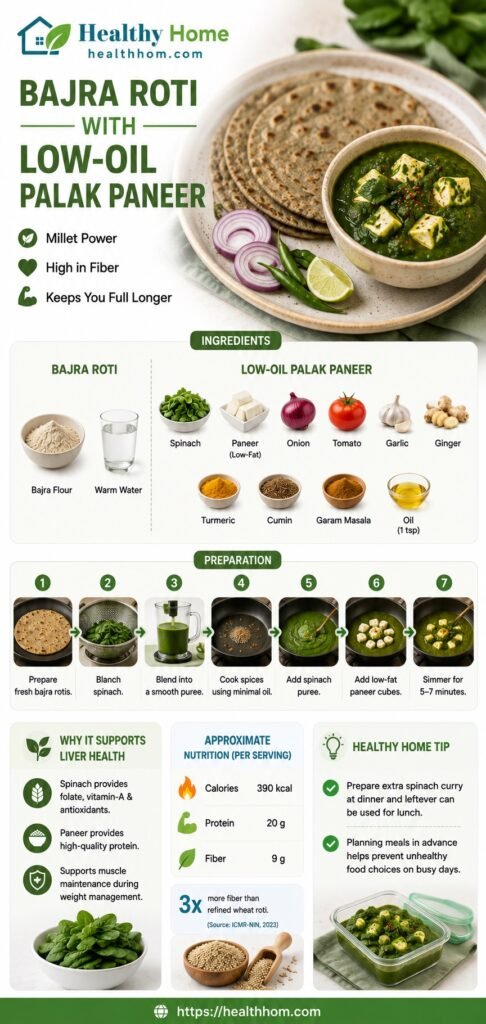
5. Bajra Roti with Low-Oil Palak Paneer
Millets are an evergreen traditional Indian food alternatives. Bajra (pearl millet) is naturally a fiber-rich and can keep you full for longer time.
Ingredients
Bajra Roti
- Bajra flour
- Warm water
Palak Paneer
- Fresh spinach
- Low-fat paneer
- Onion
- Tomato
- Garlic
- Ginger
- Turmeric
- Cumin
- Garam masala
- 1 teaspoon oil
Preparation
- Prepare fresh bajra rotis.
- Blanch spinach.
- Blend into a smooth puree.
- Cook spices using minimal oil.
- Add spinach puree.
- Add low-fat paneer cubes.
- Simmer for 5–7 minutes.
Why It Supports Liver Health
Spinach provides folate, vitamin-A & antioxidants. Paneer provides high-quality protein which can support muscle maintenance during weight management.
Approximate Nutrition
- Calories: 390 kcal
- Protein: 20 g
- Fiber: 9 g
Healthy Home Tip
Prepare extra spinach curry at dinner and leftover can be used for lunch of the next day. If you plan meals before, it can prevent to order unhealthy food during busy schedules.
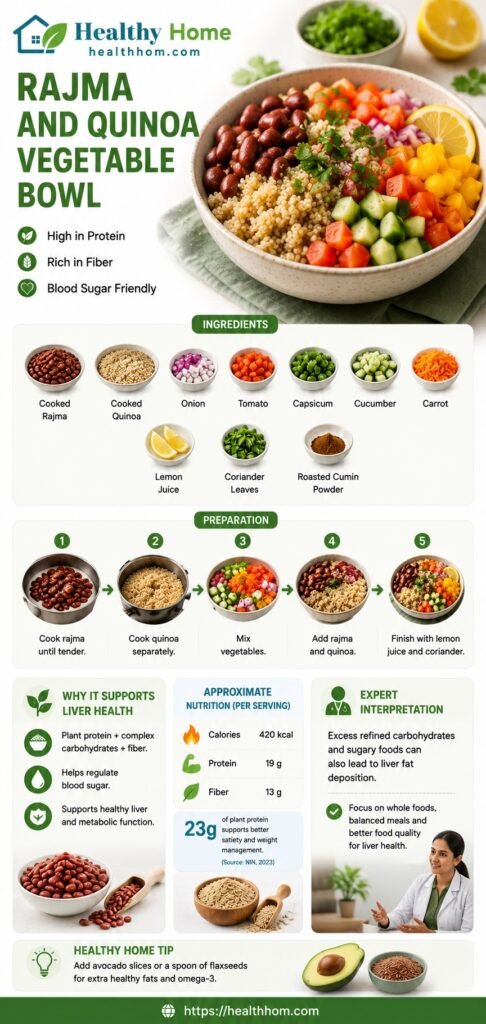
6. Rajma and Quinoa Vegetable Bowl
Rajma is traditionally eaten with rice. So, if you replace part of the rice with quinoa sometimes adds extra protein and fiber.
Ingredients
- Cooked rajma
- Cooked quinoa
- Onion
- Tomato
- Capsicum
- Cucumber
- Carrot
- Lemon juice
- Coriander leaves
- Roasted cumin powder
Preparation
- Cook rajma until tender.
- Cook quinoa separately.
- Mix vegetables.
- Add rajma and quinoa.
- Finish with lemon juice and coriander.
Why It Supports Liver Health
This meal is a combination of plant protein, complex carbohydrates and fiber which can support a better blood sugar regulation .
Approximate Nutrition
- Calories: 420 kcal
- Protein: 19 g
- Fiber: 13 g
Expert Interpretation
Many people always focus to reduce fat intake, but another part should also be taken into account as excessive refined carbohydrates and sugary foods can also leads to liver fat deposition.
Healthy Evening Snacks
Evening time snacks is one of the biggest challenges for many Indian families. After a busy workday, packaged snacks, fried foods and sugary tea-time treats become heavy. So, healthier alternatives can be chosen.
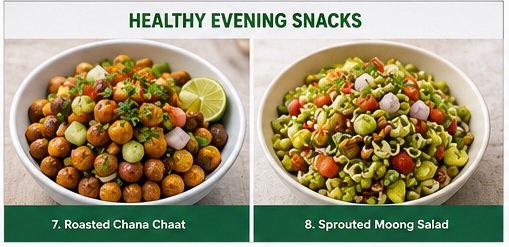
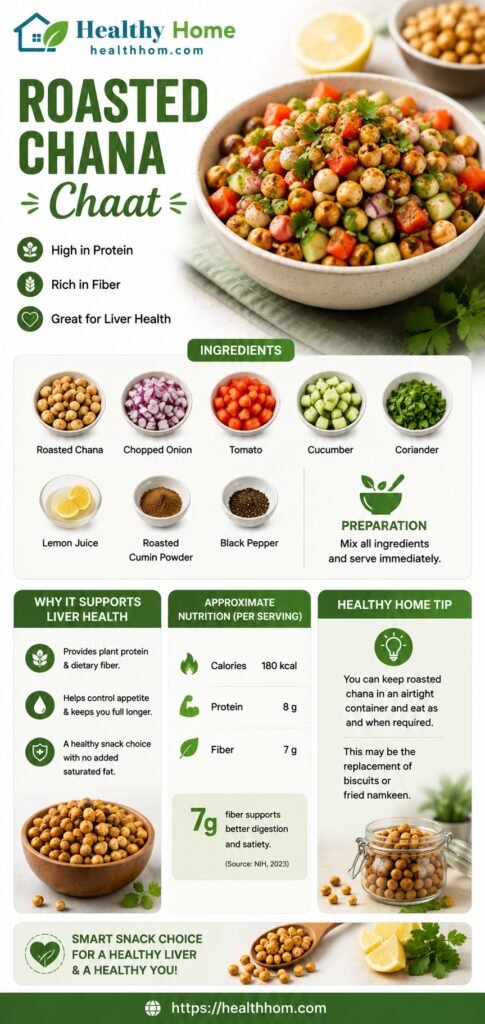
7. Roasted Chana Chaat
Ingredients
- Roasted chana
- Chopped onion
- Tomato
- Cucumber
- Coriander
- Lemon juice
- Roasted cumin powder
- Black pepper
Preparation
Mix all ingredients and serve immediately.
Why It Supports Liver Health
Roasted chana provides protein and fiber which is also help to control appetite without adding excess saturated fat.
Approximate Nutrition
- Calories: 180 kcal
- Protein: 8 g
- Fiber: 7 g
Healthy Home Tip
You can keep roasted chana in an airtight container and eat as and when required. This may be the replacement of biscuits or fried namkeen.
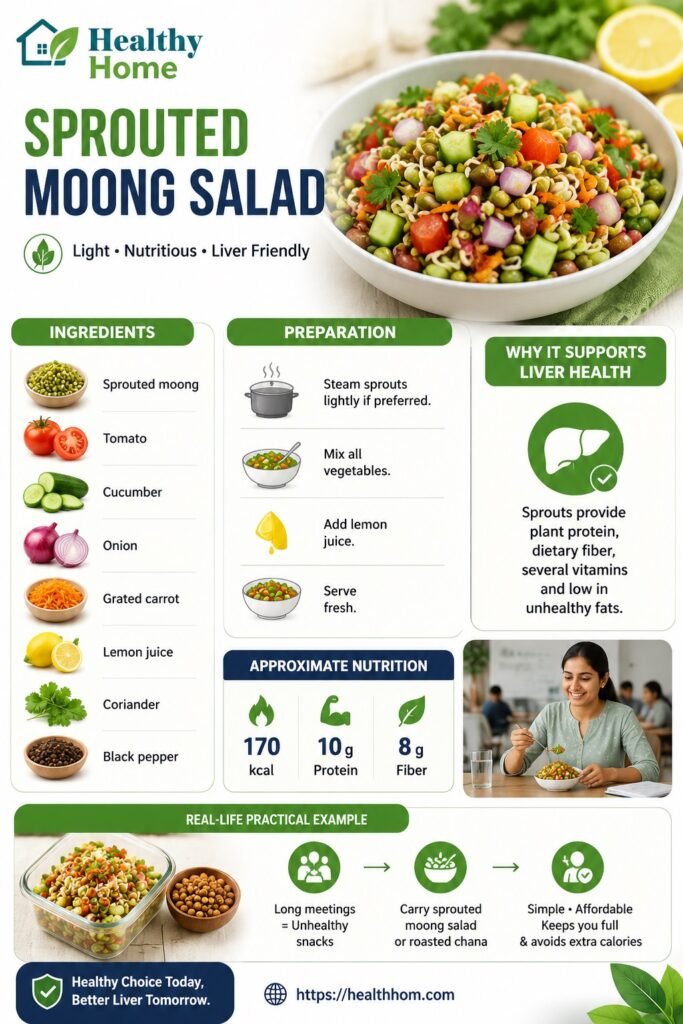
8. Sprouted Moong Salad
This colorful salad may be a refreshing option during hot Indian summers and also be an alternative for evening snack or light lunch.
Ingredients
- Sprouted moong
- Tomato
- Cucumber
- Onion
- Grated carrot
- Lemon juice
- Coriander
- Black pepper
Preparation
- Steam sprouts lightly if preferred.
- Mix all vegetables.
- Add lemon juice.
- Serve fresh.
Why It Supports Liver Health
Sprouts provide plant protein, dietary fiber, several vitamins and low in unhealthy fats.
Approximate Nutrition
- Calories: 170 kcal
- Protein: 10 g
- Fiber: 8 g
Real-Life Practical Example
During district and block level health meetings, due to long sessions people have to take the fried snacks and tea. So, to avoid this, you can carry a small quantity of sprouted moong salad or roasted chana, it can be a practical alternative. It is very simple, not so much costly and help to avoid unwanted calories and keep full stomach.
Foods to Choose More Often
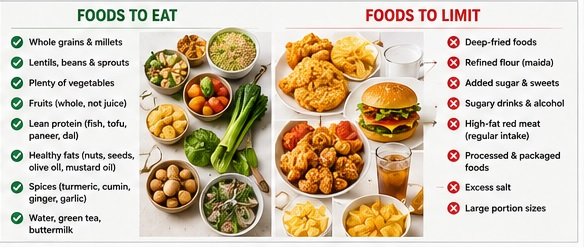
| Food Group | Better Choices |
|---|---|
| Whole grains | Brown rice, oats, barley, millets, whole wheat |
| Protein | Lentils, beans, chickpeas, soy, tofu, fish, eggs, low-fat paneer |
| Vegetables | Spinach, bottle gourd, bitter gourd, pumpkin, carrots, beans, cabbage |
| Fruits | Apple, guava, orange, papaya, berries, pear |
| Healthy fats | Nuts, seeds, small amounts of groundnut, mustard, sesame or olive oil |
| Drinks | Water, buttermilk without added sugar, lemon water, unsweetened herbal tea |
Foods to Limit
| Food | Why Limit? |
| Sugary drinks | Increase calorie intake and may contribute to liver fat |
| Deep-fried snacks | High in unhealthy fats and calories |
| Bakery products | Often contain refined flour, sugar, and unhealthy fats |
| Processed meat | Usually high in sodium and saturated fat |
| Packaged sweets | Rich in added sugars |
| Sweetened breakfast cereals | Low in fiber and high in sugar |
| Excess alcohol | Can worsen liver damage and should be avoided unless advised by a healthcare professional |
Smart Grocery Shopping Checklist
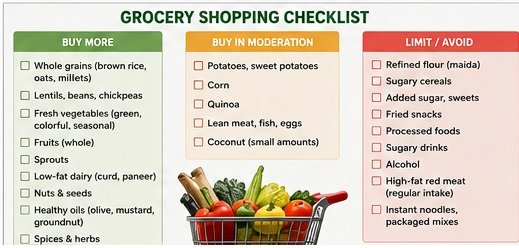
Choose these foods during your weekly shopping:
- Whole wheat flour
- Brown rice
- Millets (bajra, jowar, ragi, foxtail millet)
- Oats
- Lentils and beans
- Seasonal vegetables
- Seasonal fruits
- Low-fat milk and curd
- Eggs or fish (if eaten)
- Unsalted nuts
- Seeds such as flaxseed, chia, and sesame
If you by a seasonal produce, it is economical and also opportunity for a greater variety in the diet.
Public Health Observation
One common thing I have observed during nutritional education sessions in Odisha, that many families think healthy eating requires costly and imported foods. But, traditional Indian kitchens have already many nutritious values. The foods like lentils, vegetables, curd, millets and seasonal fruits can provide many nutritional values with lower cost than any processed health foods which are readily available in the market.
Healthy Dinner Recipes
A dinner should not be heavy. So, you have to focus on light, balanced evening meal and avoid late-night overeating, so that it can support both weight management and metabolic health. No single meal can reverse fatty liver disease and for that you have to choose wholesome dinners which may help to reduce excess calorie intake and improve overall dietary quality.
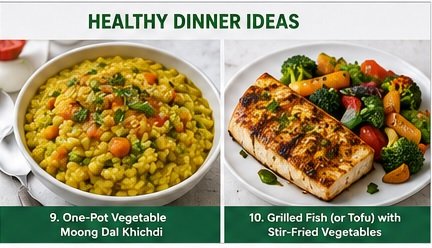
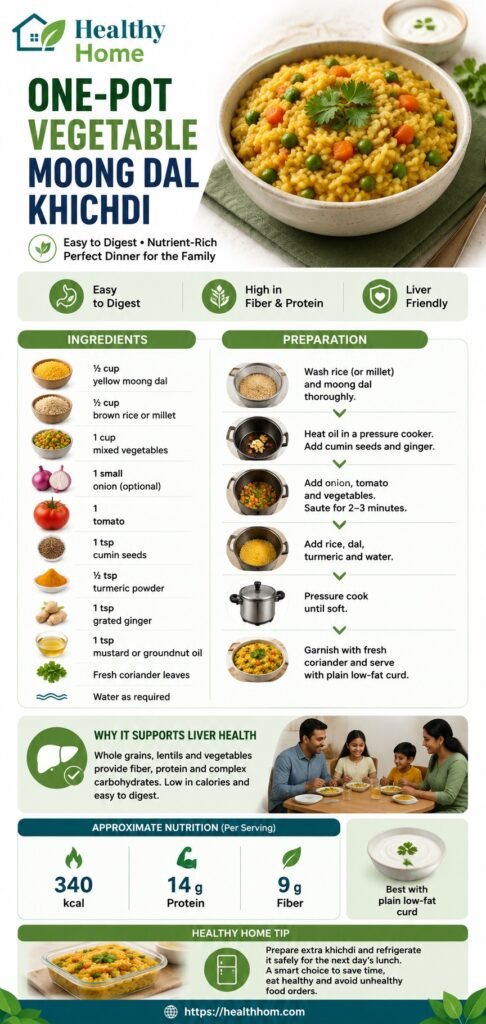
9. One-Pot Vegetable Moong Dal Khichdi
It is easy to digest and filled with nutrients, vegetable khichdi is an excellent dinner option for the entire family.
Ingredients
- Half cup yellow moong dal
- Half cup brown rice or little millet
- 1 cup mixed vegetables (carrot, beans, peas, bottle gourd)
- 1 small onion (optional)
- 1 tomato
- 1 teaspoon cumin seeds
- Half teaspoon turmeric powder
- 1 teaspoon grated ginger
- 1 teaspoon mustard or groundnut oil
- Fresh coriander leaves
- Water as required
Preparation
- Wash the rice (or millet) and moong dal thoroughly.
- Heat oil in a pressure cooker and add cumin seeds and ginger.
- Add onion, tomato and vegetables; saute for 2–3 minutes.
- Add rice, dal, turmeric and water.
- Pressure cook until soft.
- Garnish with fresh coriander and serve with plain low-fat curd.
Why It Supports Liver Health
This meal focuses whole grains, lentils and vegetables and provide fiber, protein and complex carbohydrates. It is not having high calories and easy to digest than any heavy evening meals.
Approximate Nutrition (Per Serving)
- Calories: 340 kcal
- Protein: 14 g
- Fiber: 9 g
Healthy Home Tip
You may prepare extra khichdi and refrigerate it safely for the next day’s lunch. Healthy leftover foods can be a better option for next day ordering from market or through any food ordering Apps on busy days.
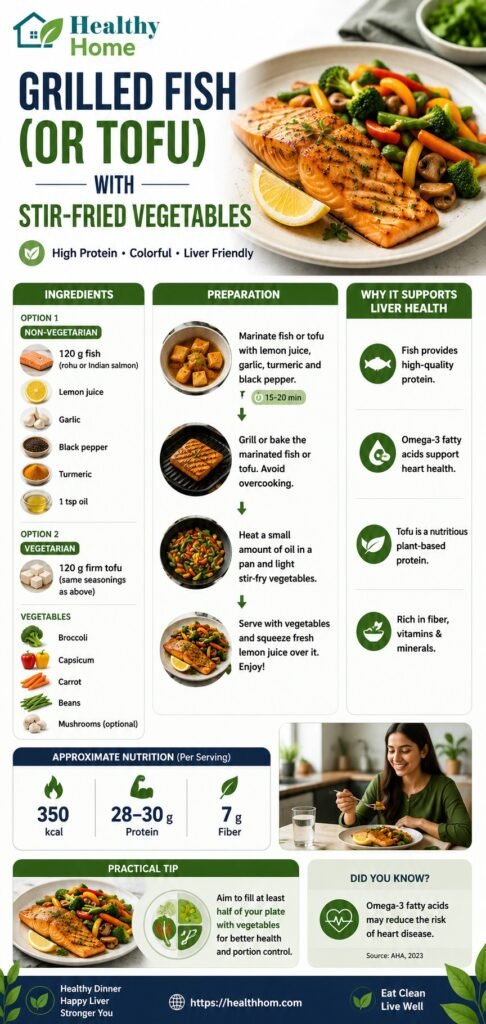
10. Grilled Fish (or Tofu) with Stir-Fried Vegetables
This meal is rich in protein and colorful vegetables which can make a satisfied dinner.
Ingredients
Option 1 (Non-Vegetarian)
- 120 g fish (such as rohu or Indian salmon)
- Lemon juice
- Garlic
- Black pepper
- Turmeric
- 1 teaspoon oil
Option 2 (Vegetarian)
- 120 g firm tofu
- Same seasonings as above
Vegetables
- Broccoli
- Capsicum
- Carrot
- Beans
- Mushrooms (optional)
Preparation
- Keep the fish or tofu in a bowl and coat it with lemon juice, garlic, turmeric and black pepper. Marinate it for 15–20 minutes.
- Cook the marinated fish or tofu by grilling or baking and avoid overcooking.
- Now, heat a small amount of oil in a pan and light stir-fry the vegetables.
- Serve and eat the grilled fish or tofu with the vegetables. Squeeze fresh lemon juice over it.
Why It Supports Liver Health
Fish provides protein for the body. Oily fish also have omega 3 fatty acids, which may be beneficial heart health. Tofu is a nutritious plant-based food. These foods can increase fiber and micronutrient intake in the body.
Approximate Nutrition
- Calories: 350 kcal
- Protein: 28–30 g
- Fiber: 7 g
Practical Tip
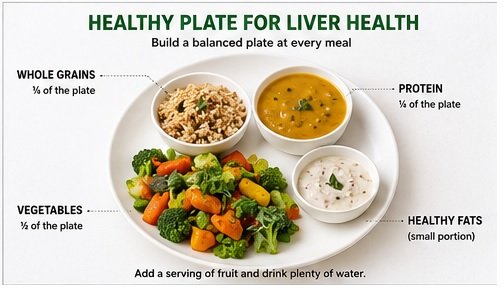
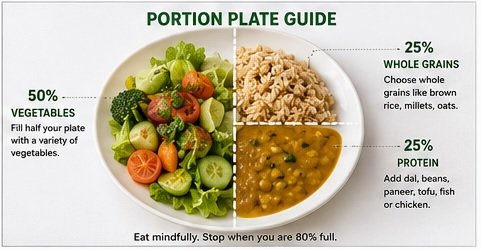
You should aim to fill at least half of your dinner plate with vegetables. This simple habit can help in portion control.
Doctor’s Perspective: What Really Helps the Liver?
People also ask, “Which food can cleanses the liver?” The actual answer is that the liver does not need a special detox food. But, it benefits from consistent healthy habits.
Current clinical guidelines suggests that lifestyle changes is the key point to manage MASLD. Important strategies are;
- Achieving gradual weight loss if overweight or obese (rapid weight loss is generally not recommended unless medically supervised).
- Eating more vegetables, fruits, legumes, whole grains and lean protein.
- Limiting foods high in added sugars, refined carbohydrates and saturated fats.
- Doing at least 150 minutes of moderate physical activity each week or as advised by a healthcare professional.
- Getting adequate sleep and managing stress, as both can influence eating habits and metabolic health.
If the people with diabetes, high blood pressure or abnormal cholesterol levels, they need regular follow-up with a healthcare provider.
Healthy Home Tips for Everyday Living
Small, realistic changes with practical habits like:
- Start your day with a protein-rich breakfast.
- Take at least one seasonal vegetable in every meal.
- Avoid sugary drinks and take water or unsweetened buttermilk.
- Always use smaller plates which will help to portion control.
- Choose fruit instead of sweets in most of the days.
- Have a habit to read nutrition labels during buying packaged foods.
- Plan for healthy snacks before hungry
- Make a practice of 10–15 minute walk after dinner if your doctor allows it.
Recipe Comparison Table
| Recipe | Meal | Prep Time | Calories | Protein |
|---|---|---|---|---|
| Vegetable Moong Chilla | Breakfast | 20 min | 240 | 15 g |
| Oats Upma | Breakfast | 15 min | 260 | 9 g |
| Millet Idli | Breakfast | 30 min | 225 | 8 g |
| Brown Rice + Dal | Lunch | 35 min | 440 | 18 g |
| Bajra Roti + Palak Paneer | Lunch | 30 min | 400 | 21 g |
| Rajma Quinoa Bowl | Lunch | 40 min | 430 | 19 g |
| Roasted Chana Chaat | Snack | 10 min | 185 | 8 g |
| Sprouted Moong Salad | Snack | 15 min | 175 | 10 g |
| Vegetable Khichdi | Dinner | 30 min | 345 | 14 g |
| Grilled Fish/Tofu | Dinner | 25 min | 355 | 31 g |
Who Should Try These Recipes?
- Adults with MASLD (fatty liver disease)
- People with overweight or obesity
- Individuals with prediabetes or type 2 diabetes (with personalized carbohydrate guidance)
- Families wanting healthier everyday Indian meals
- Adults aiming to lose weight gradually
- Anyone interested in supporting long-term liver health
Who Should Consult a Doctor First?
These recipes are prepared for general educational purposes. People with cirrhosis, chronic kidney disease, advanced diabetes, pregnancy, food allergies or other medical conditions should seek individualized dietary advice from their healthcare provider or a registered dietitian.
Avoid These Common Mistakes
- Adding too much oil
- Drinking sugary fruit juice
- Skipping breakfast
- Eating oversized portions
- Assuming “healthy” means unlimited quantities
Nutritional Values of the 10 Healthy Indian Recipes for Fatty Liver Disease
| Recipe | Serving Size | Calories (kcal) | Carbohydrates (g) | Protein (g) | Fat (g) | Fiber (g) |
|---|---|---|---|---|---|---|
| 1. Vegetable Moong Dal Chilla (2 medium chillas) | 2 chillas | 240 | 28 | 15 | 7 | 8 |
| 2. Oats Vegetable Upma | 1 bowl (250 g) | 260 | 38 | 9 | 8 | 8 |
| 3. Millet Vegetable Idli (3 medium idlis) | 3 idlis | 225 | 38 | 8 | 4 | 6 |
| 4. Brown Rice + Mixed Dal + Vegetable Curry | 1 plate | 440 | 62 | 18 | 10 | 12 |
| 5. Bajra Roti (2) + Low-Oil Palak Paneer | 1 plate | 400 | 42 | 21 | 15 | 10 |
| 6. Rajma Quinoa Vegetable Bowl | 1 bowl | 430 | 55 | 19 | 12 | 13 |
| 7. Roasted Chana Chaat | 1 bowl | 185 | 24 | 8 | 5 | 7 |
| 8. Sprouted Moong Salad | 1 bowl | 175 | 24 | 10 | 3 | 8 |
| 9. Vegetable Moong Dal Khichdi | 1 bowl | 345 | 52 | 14 | 7 | 9 |
| 10. Grilled Fish with Stir-Fried Vegetables | 1 plate | 355 | 12 | 31 | 18 | 6 |
Approximate Micronutrient Highlights
| Recipe | Key Nutrients |
|---|---|
| Vegetable Moong Dal Chilla | Folate, iron, magnesium, potassium |
| Oats Vegetable Upma | Beta-glucan, manganese, B vitamins |
| Millet Vegetable Idli | Iron, calcium, magnesium, B vitamins |
| Brown Rice + Mixed Dal | Iron, zinc, folate, potassium |
| Bajra Roti + Palak Paneer | Calcium, iron, vitamin A, folate |
| Rajma Quinoa Bowl | Iron, magnesium, phosphorus, potassium |
| Roasted Chana Chaat | Iron, folate, manganese |
| Sprouted Moong Salad | Vitamin C, folate, potassium |
| Vegetable Khichdi | Potassium, vitamin A, magnesium |
| Grilled Fish & Vegetables | Omega-3 fatty acids (if oily fish), vitamin D, vitamin B12, selenium |
| Grilled Tofu & Vegetables | Calcium (if calcium-set tofu), iron, magnesium |
Why These Recipes Are Suitable for Fatty Liver Disease
These recipes provides:
- Moderate calories and also support for a healthy weight management.
- Higher protein to preserve muscle mass.
- More dietary fiber from whole grains, lentils, vegetables and fruits and supports in controlling blood sugar and good gut health.
- Lower saturated fat by using minimal oil and limiting high-fat ingredients.
- Lower added sugar to reduce excess calorie intake.
- Balanced carbohydrates, which help to avoid large spikes in blood glucose.
Note: These nutritional values are approximate and educational purposes only. Individual requirements may vary based on age, sex, activity level, medical conditions and portion size. For individual meal planning, readers should consult a registered dietitian or their healthcare provider.
Healthy Home Expert Verdict
| Recipe | Best For |
|---|---|
| Vegetable Moong Dal Chilla | High-protein breakfast and sustained energy |
| Brown Rice + Mixed Dal + Vegetable Curry | Balanced family lunch and long-lasting fullness |
| Rajma Quinoa Vegetable Bowl | Weight management and blood sugar control |
| Sprouted Moong Salad | Healthy evening snack with excellent nutrient density |
| Grilled Fish/Tofu with Vegetables | Protein-rich, light dinner supporting muscle and metabolic health |
Key Takeaways
- There is not a single “magic” food that cures fatty liver disease.
- Traditional Indian meals are the best alternatives for a healthy and balanced options.
- Whole grains, legumes, vegetables, fruits and lean protein are the most required food for liver health.
- Regular medical follow-up, physical activity and healthy eating can improve the liver health.
You May Also Like Reference from Healthy Home
- High Protein Indian Diet Plan for Families
- Healthy Nutrition Guide for Families
- Healthy Living Guide for Families
- Metabolic Syndrome: Symptoms, Causes & Prevention
- 10 Early Warning Signs of Type 2 Diabetes
- Annual Health Check-up for lifestyle diseases
- BMI Calculator and other calculators
- Healthy Recipes Collection
- 100 FAQs on Fatty Liver Disease
Frequently Asked Questions (FAQs)
Can I eat rice if I have fatty liver disease?
Yes. Rice shouldn’t be completely avoided. Take appropriate quantity and include rice with lentils, vegetables and protein for a balanced meal.
Which Indian breakfast is best for fatty liver?
Protein and fiber-rich breakfasts like moong dal chilla, vegetable oats upma, millet idli or vegetable poha with sprouts are good options from available sources.
Is ghee completely to be forbidden?
Small amounts may be good for some people, but shouldn’t take excess of saturated fats. Individual needs may vary, so you can discuss about your dietary choices with healthcare provider or dietitian.
Can I eat fruit every day?
Yes definitely. Whole fruits such as apples, guava, oranges, papaya and pears provide fiber and important nutrients. Whole fruit is preferred than fruit juice as it contains more fiber and less concentrated sugar.
Are eggs good for fatty liver disease?
For many people, eggs can be part of a balanced diet due to its high-quality protein. People may discuss with their doctor or healthcare professional for individual query.
Is exercise more important than diet?
Both are important and work best together. A balanced diet combined with regular physical activity may have a greater benefits than a single approach.
Conclusion
If a person diagnosed with fatty liver disease, it may worry at first, but it’s the beginning of healthier family habits. You do not suppose to buy costly superfoods or any unreal diet schedule. In many Indian homes, the ingredients required for a better liver health are already exists in the kitchen like lentils, seasonal vegetables, whole grains, curd, fruits and traditional spices.
We should think that healthy aspect is different for individuals. If you are living with diabetes, obesity, high cholesterol, advanced liver disease or other medical conditions, you must seek personalized advice from your doctor or a registered dietitian before making major dietary changes.
Healthy eating is not about giving up your favorite Indian foods. It is about to rediscover them in a way that supports your health, your family and your future.
Recommended Reference List
- World Health Organization. Healthy Diet. Updated 2024. Accessed July 2026.
- World Health Organization. Physical Activity. Updated 2024. Accessed July 2026.
- American Association for the Study of Liver Diseases (AASLD). Clinical Assessment and Management of Metabolic Dysfunction-Associated Steatotic Liver Disease (MASLD). Accessed July 2026.
- European Association for the Study of the Liver (EASL), European Association for the Study of Diabetes (EASD), and European Association for the Study of Obesity (EASO). Clinical Practice Guidelines on the Management of MASLD. 2024.
- National Institute of Diabetes and Digestive and Kidney Diseases (NIDDK). Metabolic Dysfunction-Associated Steatotic Liver Disease (MASLD). Updated 2024.
- American Liver Foundation. Fatty Liver Disease. Accessed July 2026.
- Global Liver Institute. Global Liver Institute Resources. Accessed July 2026.
- Eat Right India (Food Safety and Standards Authority of India). Healthy Eating Resources. Accessed July 2026.


About the Author – “Bibhu Ranjan Mund”, Master in Public Health (MPH) from IIHMR University, Jaipur (Rajasthan) has more than 18 years of experience in Public Health activities in maternal health, child health, adolescent health, nutrition and community wellness programs under National Health Mission, Health & Family Welfare Department, Odisha. He is the founder of “Healthy Home” and translates the evidence based public health information into a practical source so that families may able to apply in everyday life. All the information are for educational purposes only and not replaces the professional medical advice. ORCID Researcher ID – 0009-0003-0158-4992. Connect LinkedIn – https://www.linkedin.com/in/bibhu-ranjan-mund-b72171358/