7 day plan to sleep like a baby : Healthy Habits for Better Sleep
Struggling with poor sleep? Try this science-based 7-day plan to sleep like a baby to improve deep sleep, reset hormones & wake up refreshed.
Reviewed by Bibhu Ranjan Mund, MPH (Public Health Expert) with experience in maternal, infant, child, and adolescent health programs. Content is based on evidence-informed guidelines aligned with organizations such as the World Health Organization, UNICEF, Centers for Disease Control and Prevention, and National Institutes of Health.
Medical Disclaimer: This content is for informational and educational purposes only and is not intended as medical advice, diagnosis, or treatment. Always seek the advice of a qualified healthcare professional regarding any medical condition or concerns.
Introduction:
Many people are spending 7-8 hours in bed, but not able fall asleep.
As per the report of Centers for Disease Control and Prevention (2022), it shows that about 35% of adults reports poor quality of sleep. Even for less sleep, you are feeling tired, but also study shows that poor sleep is linked with 55% higher the risk of obesity and also reducing the brain performance.
But the real truth is : how long you are sleeping is not a matter, but how well your body cycles through deep and REM sleep. The important point is, proper sleep doesn’t need any complex daily routine or any sleeping pill.
In this article, you will find-out the simple 7-day sleep plan to sleep like a baby with the following:
- Reset your body clock
- Improve deep sleep naturally
- Help you to wake up refreshed, without relying on supplements
Now fix your sleep starting from tonight.
Global Sleep Health Snapshot
| Indicator | Estimate | Source |
|---|---|---|
| Adults reporting insufficient sleep | ~35% of adults | CDC Sleep Data Report (2022) |
| Recommended sleep duration for adults | 7–9 hours per night | National Sleep Foundation (2015; reaffirmed 2022) |
| People experiencing occasional insomnia symptoms | ~30% of adults | American Academy of Sleep Medicine (2021) |
| Poor sleep associated with reduced daytime alertness | Observed in multiple sleep studies | Harvard Medical School Sleep Research (2022) |
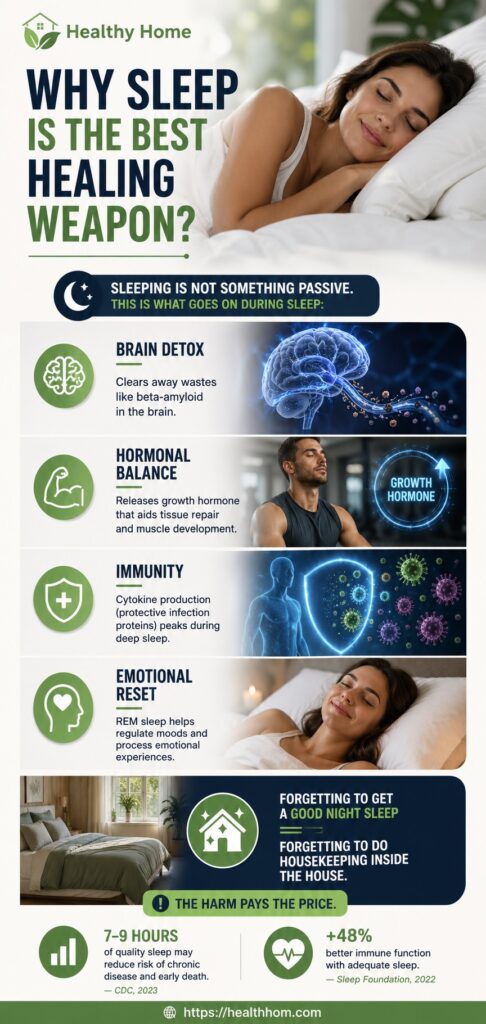
Why sleep is the best healing weapon?
During our sleep, different activities are being carried out, some are as follows:
- Brain Detox: During sleep, the system clears away wastes in the brain such as beta-amyloid in the brain.
- Hormonal Balance: It releases growth hormone that aids tissue repair and the development of the muscle.
- Immunity: A lot of the cytokine manufacturing (protective infection protein) happens at night when you are in deep sleep.
- Emotional Reset: REM sleep facilitates regulation of moods.
Forgetting to get a good night sleep is equivalent to forgetting to do housekeeping inside the house. The harm may pay the price.
Sleep and mental health are closely connected, learn more about how diet also influences mood in our guide on How Food Affects Mental Health.
Different stages of sleep as all hours are not equal?
Sleep is divided into three main stages
- Stage 1 (Light Sleep): Transitional stage- there is a decline of heart rate and body temperature.
- Stage 2: In this stage, the memory clears up and gets stronger, whereas the body re-juvenates as a result of light exercise.
- Stage 3 (Deep Sleep): This is the state in which the body performs repair works and the immune system is made strong.
It requires 4–6 complete sleep cycles in the night to make you feel rested.
Main Stages of Sleep
| Sleep Stage | General Characteristics | Source |
|---|---|---|
| Light Sleep (Stage 1) | Transition between wakefulness and sleep | National Institute of Neurological Disorders and Stroke (2021) |
| Stage 2 Sleep | Body temperature and heart rate slow down | Sleep Foundation Research Review (2022) |
| Deep Sleep (Stage 3) | Body restoration and physical recovery processes | Harvard Medical School Division of Sleep Medicine (2021) |
| REM Sleep | Dreaming stage associated with brain activity | National Sleep Foundation (2022) |
7 Sleep-Sabotaging behaviors:
Even when we are in bed with the correct amount of time, we may not rest well considering the other aspects:
- Blue light during night hour (Release of melatonin is being affected by screens)
- Caffeine timing (it is about 5-7 hours)
- Stressful (melatonin blocked by overly-high cortisol)
- Consumption of excess food during dinner can be detrimental (and especially when this food is rich in sugar or fat).
- Abnormal sleeping hours (alter circadian cycle)
- Inadequate morning sunlight (the most important thing in resetting the body clock)
- It reduces deep and REM sleep when combined with alcohol close to the bed time.
Common Lifestyle Factors That Influence Sleep
| Factor | Example |
|---|---|
| Screen exposure before bed | Phones, tablets, computers |
| Caffeine intake | Coffee, energy drinks late in the day |
| Irregular sleep schedule | Different sleep times daily |
| Stress levels | Work or lifestyle stress |
| Bedroom environment | Light, noise, temperature |
Source: Mayo Clinic Sleep Hygiene Guidance (2022)
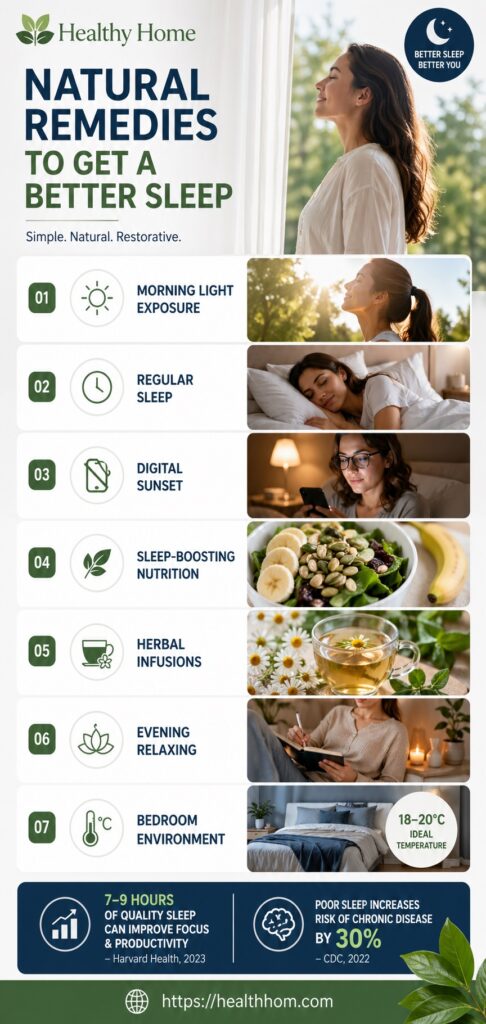
Natural Remedies to get a better sleep
These are non-medicated techniques – how to sleep better:
- Morning light Exposure– Expose yourself to 15–20 minutes of bright sunlight within one hour of awake. Melatonin level is being maintained for the said activity. Morning sunlight helps regulate your body clock, discover more benefits in Outdoor Wellness Benefits: Sunlight & Nature for Family Health
- Regular Sleep– Waking pattern : get to the bed and wake up at regular times, even on weekends. It maintains circadian stabilization.
- Digital Sunset– Turn off the screens 1–2 hours at bedtime. Also, you may wear the glasses which can block the effect of blue light or you may use night mode in the devices.
- Sleep-Boosting Nutrition : Consume magnesium-rich food like leafy vegetables, pumpkin seeds and banana.
- Herbal infusions: Chamomile, passion flower and tulsi (holy basil). Carbohydrates, protein & fat to be balanced during dinner time.
- Evening relaxing: Gentile stretch or having a deep breathing. To calm the chattering mind, the most popular is journaling or gratitude writing. Simple relaxation techniques like mindfulness can calm the mind, try these 5-Minute Mindfulness Exercises for Kids & Teens before bedtime.
- Take care of the Bedroom Environment Temperature: Maintain it at 18–20 degree Celsius.
Including anti-inflammatory foods can support better sleep quality, explore the Best Anti-Inflammatory Foods to Eat Daily for deeper recovery
Take care of the Bedroom Environment
| Factor | Suggested Condition | Source |
|---|---|---|
| Temperature | Around 18–20°C | Sleep Foundation Environmental Sleep Research (2021) |
| Lighting | Dark or minimal light | Harvard Sleep Medicine Division (2022) |
| Noise | Quiet or white noise | Mayo Clinic Sleep Guidance (2022) |
| Electronics | Limited device use before bed | CDC Sleep Hygiene Tips (2022) |
- Darkness: You should use dark curtains or eye mask during sleep time.
- Sound: Apply white noise
Lifestyle Habits Often Associated with Better Sleep
| Habit | Example Practice | Source |
|---|---|---|
| Consistent sleep schedule | Sleeping and waking at same time daily | CDC Sleep Health Guidelines (2022) |
| Morning daylight exposure | Spending time outdoors in early morning | Harvard Health Publishing (2021) |
| Relaxation practices | Meditation, breathing exercises | National Sleep Foundation (2022) |
| Physical activity | Regular daily movement | WHO Physical Activity Guidelines (2020) |
Proper hydration also supports sleep quality, follow a personalized Hydration Routine by Climate & Activity for better recovery.
Sleep Aids (Caution use)
The natural supports can be effective temporary:
- Magnesium glycinate, or citrate– This will relax the muscular system and the nervous system.
- Melatonin Supplement — Immediately after the waking up, the sleep and wake cycle can be managed with the assistance of melatonin, which can be consumed as a supplement.
- L-theanine– Calms the mind; it is a natural substance that is present in green tea.
- Ashwagandha root or valerian root– Ashwagandha and valerian are adaptogens that decrease cortisol levels and increase calmness. Managing stress is essential for better sleep—read more in our guide on Nurturing Mental Well-being in Adolescents.
It is advised to consult a healthcare expert to know whether supplements should be added on top of a healthy diet or around the same time when pregnant, lactating or during drug use.
Overview of the 7-Day Sleep Optimization Plan
| Day | Focus |
|---|---|
| Day 1 | Establish consistent sleep schedule |
| Day 2 | Morning sunlight and physical activity |
| Day 3 | Reduce caffeine and stimulants |
| Day 4 | Create bedtime relaxation routine |
| Day 5 | Improve sleep environment |
| Day 6 | Reduce evening screen exposure |
| Day 7 | Review progress and adjust habits |
Calming sounds can improve sleep onset, learn how in Sleep Music & Sound Therapeutic Best Intervention.
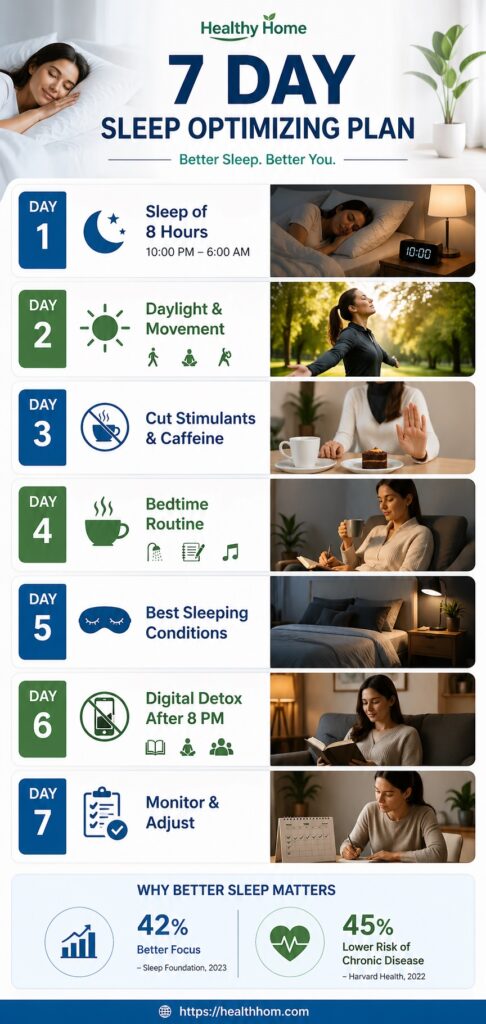
Basing on our day to day life style, we can restart our sleep as follows:
- Day 1: Sleep of eight hours, 10.00 PM to 6.00 AM. We should continue the same for a week un-interruptedly.
- Day 2: Daylight and movement. Go outside in one hour of waking. Spend 15 – 30 minutes doing light exercise (pace, yoga, stretch) etc.
- Day 3-Cut down stimulants & quit caffeine at lunch time. During evening snacks, we should avoid to take high sugar items including energy drinks.
- Day 4: Bed time routine start a relaxing habit 1 hour before bed time. Taking a shower, having an herb tea, listening to a relaxation playlist, journaling about the things you are grateful about.
- Day 5: Get the best sleeping conditions. Turn as dark as you can your room. Use a sleep mask. Clean out the bedroom, and get rid of gadgets.
- Day 6: Digital Detoxing during Evening time where we should avoid screen time after 8-PM. Rather: Read a book, meditate, talk to the family off-line.
- Day 7: Monitoring that how you are feeling at day-7 and concentrate more on adapting the above schedule. Also, we should change our bedtime or pre sleeping routine if any.
These are some of the easy methods of falling asleep quickly and sleep
- The 4–7 -8 breathing: Inhale taking 4 seconds, hold the breath 7 and then exhale 8. This technique helps slow your heart rate and make you feel less tense.
- Progressive muscles relaxation: Squeeze all the muscles of your body and then let them go beginning at your toes and go up to your head.
- Visualization: We think ourselves as a forest, beach or hiking in the mountains. Spent 5 -10 mins attention on the sights, sounds and smell.
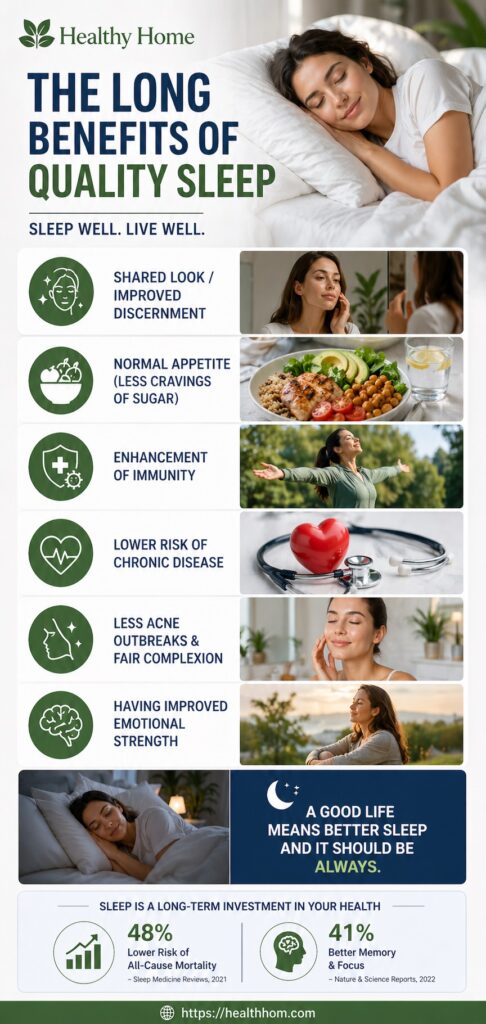
The long benefits of quality sleep are:
- Improved Discernment
- Normal appetite (less cravings of sugar)
- Enhancement of immunity
- Chronic disease may reduce the chance
- Less acne outbreaks and fair complexion
- Having improved emotional strength
A good life means better sleep and it should be sleep always.
Quality sleep is a key pillar of longevity, explore more strategies in 8 Best Ways to Improve Lifespan & Healthspan.
Sleep also affects metabolism and heart health, track your health metrics using this guide on How to Know Your Cholesterol, BMI & BMR.
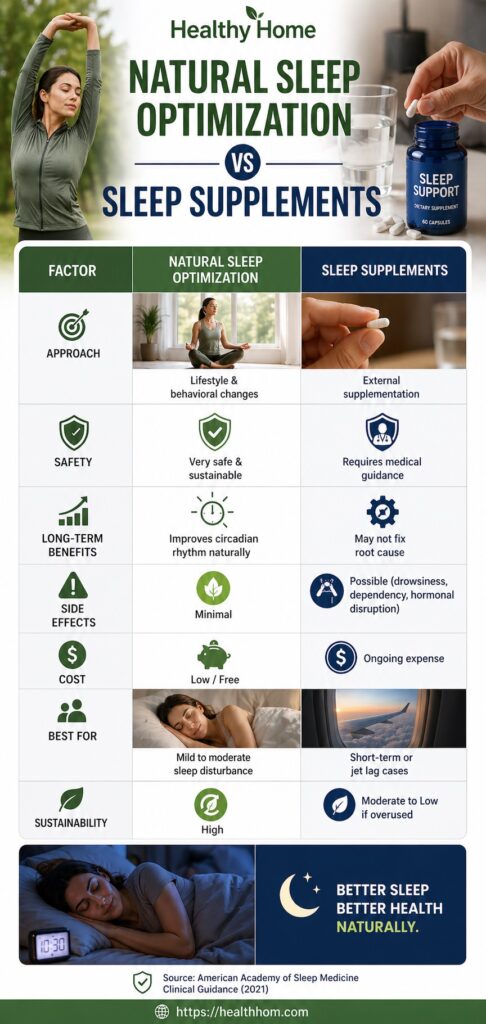
Natural Sleep Optimization vs Sleep Supplements
| Factor | Natural Sleep Optimization | Sleep Supplements |
|---|---|---|
| Approach | Lifestyle & behavioral changes | External supplementation |
| Safety | Very safe & sustainable | Requires medical guidance |
| Long-term Benefits | Improves circadian rhythm naturally | May not fix root cause |
| Side Effects | Minimal | Possible (drowsiness, dependency, hormonal disruption) |
| Cost | Low / Free | Ongoing expense |
| Best For | Mild to moderate sleep disturbance | Short-term or jet lag cases |
| Sustainability | High | Moderate to Low if overused |
Source: American Academy of Sleep Medicine Clinical Guidance (2021)
Key takeaways:
For every one, Sleep is the body’s most powerful recovery system after a day-long working schedule.
As per the research published by National Institute of Health (2020), it shows that due to consistent and high quality sleep, it can support the immunity along-with mental clarity. But, most of the people are ignoring the real fact of quality sleep and subsequently fatigue, stress or health issues appears.
The key point is to start with small daily habit, it may lead to a long-term sleep optimization.
This 7-day sleep optimization plan isn’t telling about the perfection, but it requires consistency. Just by improvement of 1-2 daily habits like morning sunlight, reducing screen may enhance the sleep quality.
Before going to take supplements, please thing that:
- Am I doing my routine work as per my body permits?
- Do I giving sufficient time to my brain for proper rest & unwind?
You may start from tonight. Just please don’t sleep in bed, prepare your body to sleep better.
Do not self-medicate. Always consult a qualified healthcare professional before starting supplements.
Daily Sleep Hygiene Checklist
| Habit | Example |
|---|---|
| Consistent bedtime | Same sleep time each night |
| Morning sunlight exposure | 10–20 minutes outdoors |
| Balanced evening meal | Avoid heavy late-night meals |
| Screen reduction | Avoid devices before bedtime |
| Relaxation routine | Reading, breathing exercises |
Source: CDC Sleep Health Recommendations (2022)
A healthy gut also plays a key role in sleep, follow this 7-Day Gut Health Plan for Families to improve digestion and rest.
FAQs:
Q1. What is the required hours of sleep among adults?
Q2. Would you say that I can get better sleep without taking any medication?
Q3. How can I fall asleep in the quickest time possible?
Q4. Why do I feel sleepy when I have been in bed already 8 hours?
Q5. Do the sun rays really enhance sleep?
Related Health Articles from Healthy Home
- Sleep Music & Sound Therapeutic best intervention – Healthy Home – Trusted Health Tips for Kids, Teens & Families (healthhom.com)
- 8 best ways to Improve Lifespan & Healthspan – Healthy Home – Trusted Health Tips for Kids, Teens & Families (healthhom.com)
- 5 Minute Mindfulness Exercise for Kids & Teens – Healthy Home – Trusted Health Tips for Kids, Teens & Families (healthhom.com)
- Outdoor Wellness Benefits: Sunlight & Nature for Family Health – Healthy Home – Trusted Health Tips for Kids, Teens & Families (healthhom.com)
- How to know your Cholesterol level, BMI & BMR? – Healthy Home – Trusted Health Tips for Kids, Teens & Families (healthhom.com)
Trusted References and Research Sources: