Precious Infancy to Toddler: Milestones in the First 2 Years
Discover the precious infancy to toddler period and how your baby grows from birth to 2 years with expert-backed guidance on milestones, feeding, brain development, sleep, vaccinations, emotional bonding and parenting tips.
Reviewed by Bibhu Ranjan Mund, MPH (Public Health Expert) with experience in maternal, infant, child, and adolescent health programs. Content is based on evidence-informed guidelines aligned with organizations such as the World Health Organization, UNICEF, Centers for Disease Control and Prevention, and National Institutes of Health.
Medical Disclaimer: This content is for informational and educational purposes only and is not intended as medical advice, diagnosis, or treatment. Always seek the advice of a qualified healthcare professional regarding any medical condition or concerns.
Introduction:
As per the research published by the World Health Organization (WHO, 2023), about 80% of brain develops before the age of two years of a child. Within this period, a baby’s physical growth along-with brain, immunity, emotions, communication skills also grows. This first two years is the most important stage for a human.
From the first cry to two years of age, each baby needs proper care including feeding, cuddling, talking which actually shape the future health and learning ability. Still, millions of children globally not having proper development due to inadequate nutrition and healthcare.
In this article, you will find-out the detail about precious infancy to toddler care, developmental milestones, vaccinations, warning signs and positive parenting practices which may support the growth from birth to 2 years.
What are the most important developments in a baby’s first two years?
A baby’s first two years are critical for brain development, emotional bonding, immunity, speech, movement, and learning. During this period, children rapidly develop physical, cognitive, and social skills through nutrition, responsive caregiving, safe environments, and early stimulation.
A child’s development begins even before birth, read our complete guide on pre pregnancy planning for women to understand how early preparation impacts infant health.
Quick Summary:
- 80% of brain growths by age of 2 years
- Exclusive breastfeeding is recommended for 6 months
- Early bonding improves the emotional development
- Proper parenting supports the life-long learning of baby
A Public Health Observation:
Many parents become worried if their babies don’t achieve the milestones like speaking, hearing, sitting, walking etc. in time and it is a part of Community Health Programs in India. Such types of delay in milestones matters a lot for the growth of child which may be taken care by regular nutrition, timely medical check-ups, proper caregiving and the most important is not to compare their child with others.
Global Early Childhood Development Snapshot
| Indicator | Global Estimate | Source | Year |
|---|---|---|---|
| Brain growth achieved by age 2 | ~80% of adult brain size | World Health Organization | 2023 |
| Children at risk of not reaching developmental potential | ~250 million (LMICs) | UNICEF | 2023 |
| Exclusive breastfeeding under 6 months | ~48% globally | World Health Organization | 2023 |
| Neonatal period (first 28 days) risk | Highest mortality risk period in childhood | UNICEF | 2022 |
Early identification is key, read more in our detailed article on global developmental delay in children
The First Two Years Every Parent Remembers Forever
The first two years of a baby is a memorable one for every parents. During that period, many parents may struggle to feed their child even at midnight, so that they may remain sleepless. Also for vaccinations, first smile, joy of hearing from baby like “mama” or “papa” are the most important memorable events for the parents. In most of the Indian families, the grandparents also take a major role in providing the proper care to the newborns, shares their traditional practices with emotional support to the parents. This two years of life of every human brings the bonding with brain development.
Day of Birth : Necessary Newborn Care
First 24 hours of every newborn is a sensitive time and many first time parents become nervous with an excitement that how to take proper care. Many mothers worry whether the baby is getting enough mother milk. Some fathers worry about why their newborn is crying continuously etc. But in Indian Hospital even Govt. or Private, the nurses, ASHAs or any Community Health Workers frequently guide the families about the proper breast-feeding position, Kangaroo Mother Care to keep the baby warm. Just a simple counselling by the health care givers to the parents, are generally reduces the stress.
The early life after the birth is very critical. Newborn care should be recommended as:
- Present with the baby and mother, in case you can.
- Begin to touch the skin of the child at birth.
- Check proper positioning and latch of breastfeeding.
- Breastfeed the baby during the first hour.
- Delayed cord clamping (at least 1 minute after birth) is better than iron status and health of babies.
- Take colostrum (original thick yellow milk) — it improves immunity.
- Frequent breastfeeding (8-12 times/day) during the first days.
- Newborns may have black/dark green stool (meconium) first of all – it is normal.
- Wet diapers generally increase from day 5 onwards.
- A majority of babies gain birth weight from day 10.
Treat your newborn with care, keep them warm and act as fast as possible to the baby. The attachment affects the early bonding that provides your baby with the feeling of security and love.
Early nutrition and maternal health play a vital role in newborn outcomes, explore our guide on iron-rich foods during pregnancy for better birth outcomes.
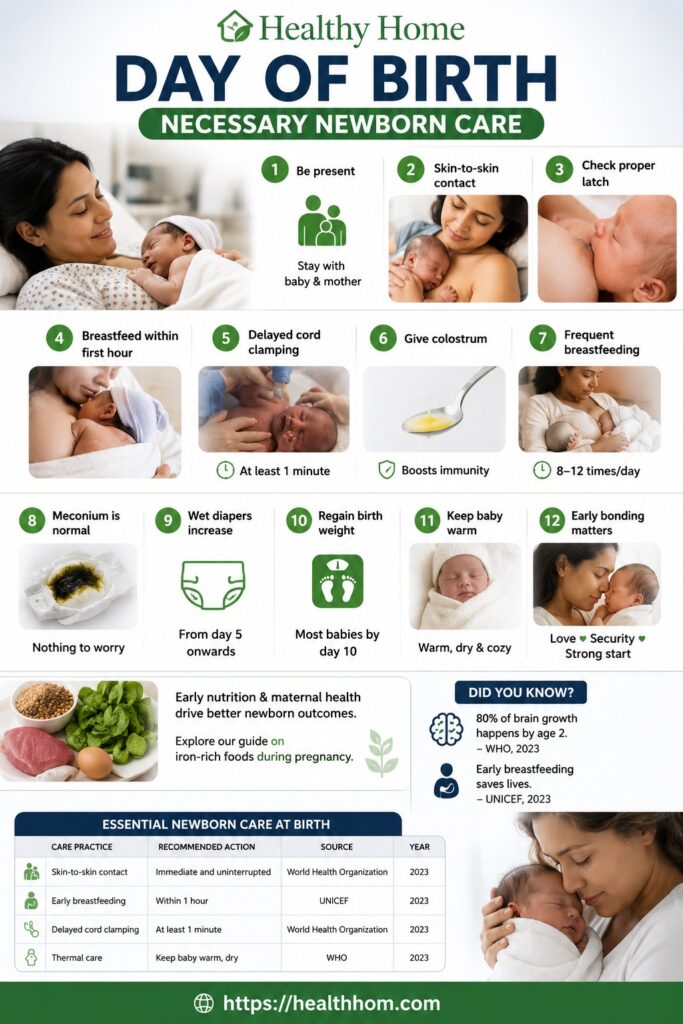
Essential Newborn Care at Birth
| Care Practice | Recommended Action | Source | Year |
|---|---|---|---|
| Skin-to-skin contact | Immediate and uninterrupted | World Health Organization | 2023 |
| Early breastfeeding | Within 1 hour | UNICEF | 2023 |
| Delayed cord clamping | At least 1 minute | World Health Organization | 2023 |
| Thermal care | Keep baby warm, dry | WHO | 2023 |
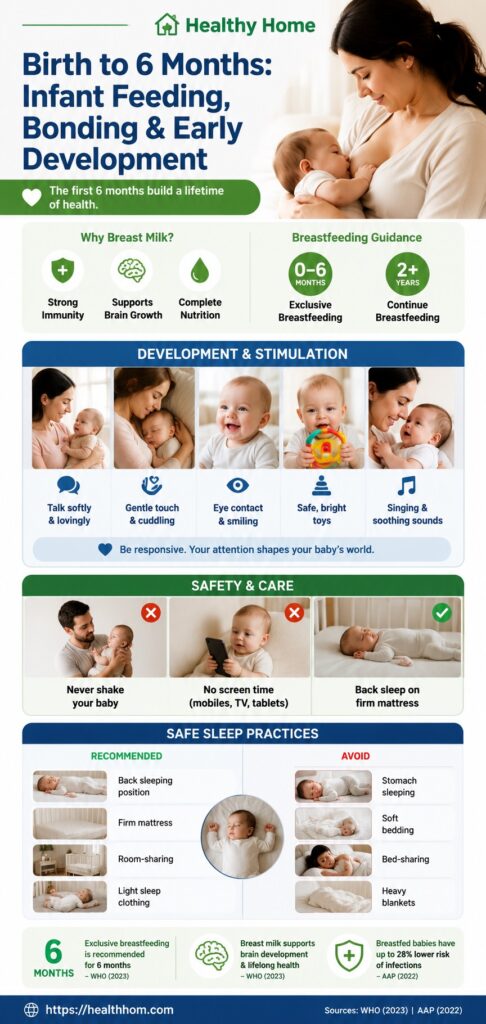
Birth to 6 Months: Infant Feeding, Bonding and Early Development.
Common Breastfeeding Challenges New Mothers Face:
Breastfeeding is a natural process, it may not be easy feeling to the mother in the beginning. As some mother may experience of having nipple pain, poor latch, low milk secretion even so tired for night-time feeding for sleepless. In the Indian families, due to some custom and traditional practices, so many advice come from different relatives, elders which may create additional stress for the new mothers. Hence, mothers should consult the pediatrician or any lactation counselor and can take help them to continue breast-feeding comfortably.
The six months will be the beginning of the lifetime health.
- Feeding
- 6 months of exclusive breastfeeding (no water, liquids or food except upon medical recommendation).
- Breast milk is anti-protective against infections, brain developmental, and immuno-genic.
- Keep on breastfeeding to 2 years or more.
- Development & Stimulation
- Your baby benefits from:
- Talking softly and lovingly
- Gentle touch and cuddling
- Eye contact and smiling
- Toys of bright colors, safe due to age.
- Singing or soothing sounds
- Respond warmly when your baby cries, smiles or tries to communicate
- Safety & Care
- Shake baby
- Do not have a screen time (mobiles, TV, tablets).
- Make sure that there is safe back sleeping, firm mattress, no pillows or heavy blankets.
In many Indian families, sometimes the babies are slept on soft pillows or cushions are surrounded. But the pediatric experts recommended a firm sleeping surface without any loose bedding due to soft material may increase the suffocation to infants.
Maternal nutrition directly affects breast milk quality, learn more in our guide on vitamin B12 benefits and deficiency
Feeding Recommendations Across First Two Years
| Age | Feeding Guidance | Source | Year |
|---|---|---|---|
| 0–6 months | Exclusive breastfeeding | World Health Organization | 2023 |
| 6–12 months | Add complementary foods + continue breastfeeding | WHO Infant and Young Child Feeding | 2023 |
| 12–24 months | Family foods + continued breastfeeding (if possible) | UNICEF | 2023 |
6-12 Months: Learning and Curiosity and First Milestones – Precious Infancy to Toddler
Around six months, many babies suddenly become more curious about everything around them. Parents may notice their child is trying to grab utensils in kitchen area, stare at ceiling fans or react the voice of family members. This stage promotes learning, motor development and emotion development.
- Feeding
- Continue breastfeeding.
- Complementary foods should be added at 6 months:
- Iron-rich cereals
- Sometimes, soft mashed fruits and vegetables which are easy to swallow.
- Mashed puree and protein foods.
- Provide different kinds of textures, colors, and tastes.
- Finger foods should be encouraged at 8-9 months
- Development & Play
- Most babies may: Sit with or without support
- Crawl or attempt movement
- May be pronounced as mama or dada.
- Be interested and also listen to voices.
- Recognize familiar people
- Provide:
- Safe play space
- Age-appropriate toys
- Lots of love and interaction
- Do not use baby walkers they can cause more injury. Floor play with supervision or Push-toys are safer.
Starting the right complementary foods is crucial, read our detailed guide on right food supplementation for babies after 6 months
How Indian Families Usually Start Complementary Feeding:
In most of the Indian homes, the actual practice of providing the mashed rice with dal water, khichidi, mashed banana, suji, boiled vegetables, curd etc. are introduced just after six months and popularly known as “Anna Prasanna”. So, it may be recommended that the parents should introduce only one new food at a time and observe the digestion issues if any. Also parents should avoid very spicy, salty, packaged foods or any sugary items during this time.
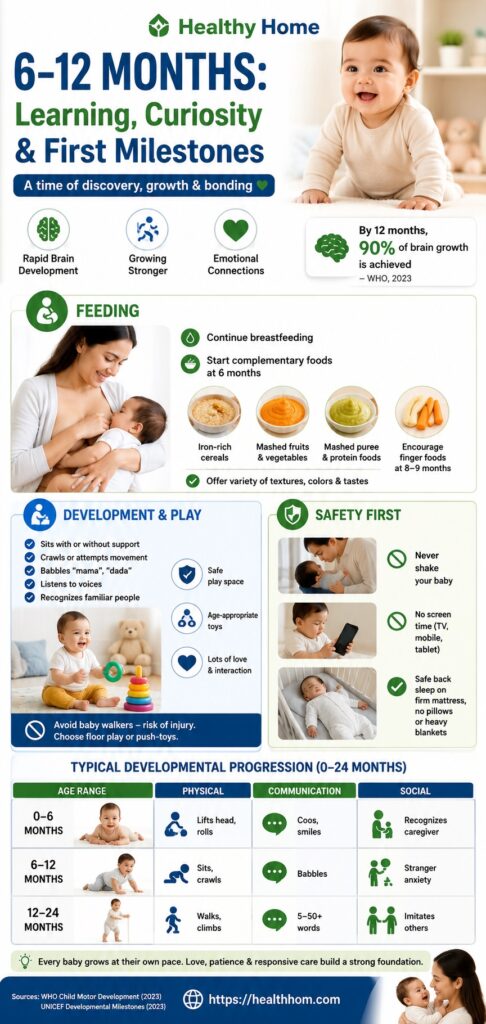
Typical Developmental Progression (0–24 Months)
| Age Range | Physical | Communication | Social |
|---|---|---|---|
| 0–6 months | Lifts head, rolls | Coos, smiles | Recognizes caregiver |
| 6–12 months | Sits, crawls | Babbles | Stranger anxiety |
| 12–24 months | Walks, climbs | 5–50+ words | Imitates others |
Sources:
- World Health Organization Child Motor Development (2023)
- UNICEF Developmental Milestones (2023)
Safe and nutritious food preparation is essential, check our guide on healthy cooking tips for pregnant women (also applicable for infant food safety).
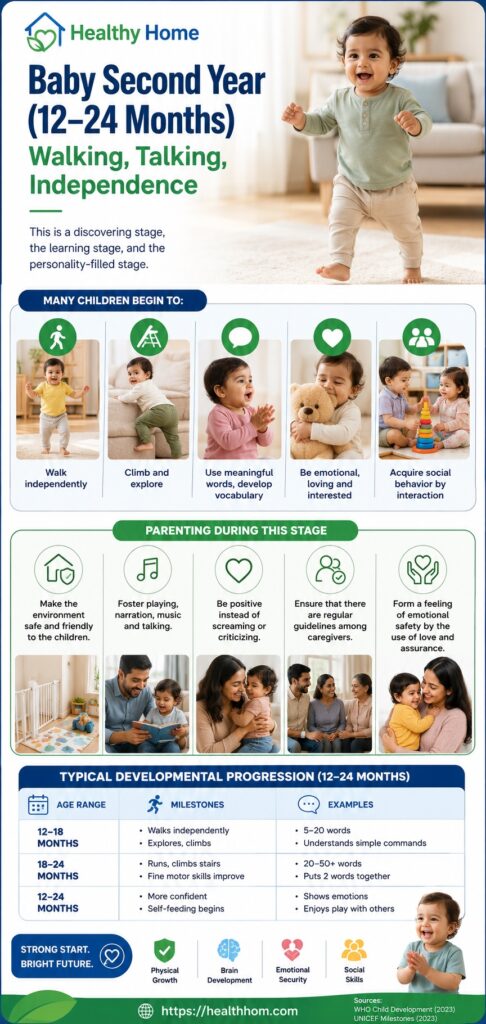
Baby Second year (12-24 months) Walking, Talking, Independence
The second year is sometimes full of exploration, curiosity and rapidly growing personality.
- Many children begin to:
- Walk independently
- Climb and explore
- Use meaningful words, develop vocabulary.
- Be emotional, loving and interested.
- Acquire social behavior by means of interaction.
- Parenting During This Stage
- Make the environment safe and friendly to the children.
- Foster playing, narration, music and talking.
- Be positive instead of screaming or criticizing.
- Ensure that there are regular guidelines among caregivers.
- Form a feeling of emotional safety by the use of love and assurance.
Toddler Tantrums and Emotional Changes:
During 1 and 2 years of age, many toddlers shows their irritation like sudden crying, may begin frustration when they not be able to express their feelings properly. This is very normal for emotional development. If during such irritation, parents will shout it may impact the feelings of the child. So instead, the parents may calmly distract or divert the attention of child. The most important is to judge the sleeping pattern with how to communicate with toddlers consistently may reduce the irritation of child.
Balanced family nutrition becomes important during toddler years, explore our child health and development guide for a holistic approach
Medical Examinations and Immunizations
Routine check-ups should be done to maintain good health. The vaccinations that are normally recommended between the age of birth and two years old may include:
- Hepatitis B
- DTP
- Polio
- Hib
- MMR
- Varicella
- Influenza (as advised)
Never miss any schedule. Some countries may have different recommendations.
A strong immune system also depends on proper nutrition, learn about essential nutrients in our guide on vitamin D deficiency risks
Common Vaccines in First Two Years (May Vary by Country)
| Vaccine | Protects Against | Source | Year |
|---|---|---|---|
| Hepatitis B | Liver infection | World Health Organization | 2023 |
| DTP | Diphtheria, Tetanus, Pertussis | WHO | 2023 |
| Polio | Poliomyelitis | WHO | 2023 |
| Hib | Haemophilus influenzae | WHO | 2023 |
| MMR | Measles, Mumps, Rubella | UNICEF | 2023 |
What Parents Should Expect After Vaccination:
The AEFI (Adverse Effect Following Immunization) like mild fever, irritability, sleepiness, pain at the injection cite may occur after some vaccinations. This type of reactions are so natural which indicates that the proper functioning of immune system. But, parents must also follow the advice of pediatrician or health care provider for management of adverse effect.
Caution: When to use medical assistance.
Request the advice of a pediatrician whenever your child:
- Smaller, does not smile, does not socialize.
- Cannot sit by 9 months
- Does not walk by 18 months
- Demonstrates continued inability to gain milestones.
- Has low eye contact or non responsive to sound.
- Suffers feeding or breathing disability.
Early intervention is very beneficial to development.
WHO Developmental Screening Recommendations (2023)
Many of the developmental delays can be identified early by the parents if they notice keenly few changes in children like reduced eye contact, lack of response to name calling, not sitting without support etc. So, the parents should discuss these small observations with their Doctor immediately without waiting a long only due to the Indian Custom or family assurance like “every child develops differently”.
Emotional Care & Positive Parenting
Children thrive when they feel:
- Loved
- Secure
- Valued
Avoid
- Shaming in public
- Comparing your child and other children.
- Constant criticism
Encourage:
- Patience
- Support
- Mistakes are perceived as learning.
- Gentle discipline
- Positive communication
Confidence, emotional stability and good mental health are developed with the help of a nurturing environment.
UNICEF Parenting for Early Childhood (2022)
A Simple Daily Routine for Babies and Toddlers:
- Feeding properly
- Floor play
- Storytelling by parents or grand-parents
- Outdoor sunlight
- Nap schedule
Growth Monitoring Indicators
| Indicator | Why It Matters | Source | |
|---|---|---|---|
| Weight-for-age | Nutritional status | World Health Organization Growth Standards | 2023 |
| Length/Height | Physical growth | WHO | 2023 |
| Head circumference | Brain development indicator | WHO | 2023 |
Parent Mental Health Also Matters:
After childbirth, the mother actually feels exhausts both physically and emotionally. So , many conditions like lack of sleep, stress in feeding during night-time, sometimes not supported by old fashioned elders may affect the mental health of mother. It’s the duty of family to ensure that both the parents having emotional support, proper rest and knowledge of parenting. By a calm environment, the development of child may flourish.
Common Parenting Mistakes During the First Two Years:
- Early screen exposure
- Force feeding
- Comparing children
- Delaying vaccinations
- Excess packaged foods
- Ignoring sleep routine
Concluding Points:
We shouldn’t think that a baby’s first 2 year is just above physical growth, but the actual foundation for lifelong brain development, emotions, learning ability and overall health begins from this stage.
Every small daily step like breastfeeding, talking, cuddling, caregiving, proper nutrition, immunization in time, safe sleep may create a positive impact of the child’s future.
Parents or caregiver should celebrate each milestone and regular health check-up with pediatrician may be the better investment of a child’s life.
FAQs:
Q1. When do babies usually start walking?
Q2. Why are the first 1000 days important?
Q3. When should parents worry about developmental delay?
Q4. What vaccines the child requires between the birth and second birthday.
Q5. Which foods should infants be introduced?
Q6. What is the appropriate time for switching a baby from breast milk or formula feed to cow’s milk?
Related Health Articles from Healthy Home:
- Early Childhood Development – Complete Guide:
Understanding Early Childhood Development - Global Developmental Delay – Child Health Resource:
Global Developmental Delay in Children - Pre-Pregnancy Planning – Women’s Health Guide:
Pre-Pregnancy Planning for Women - Healthy Lunch Box Ideas – Child Nutrition:
Healthy Lunch Box Ideas for Kids - Human Development & Evolution – Educational Article:
Why the Human Child Is Unique and What Makes Us Human
How These Recommendations Apply in Real Life:
International health organizations such as WHO and UNICEF provide evidence-based recommendations, but practical parenting may look different in every household. Families should adapt guidance according to cultural practices, financial conditions, work schedules, and advice from qualified pediatric professionals. The goal is not “perfect parenting,” but safe, responsive, and loving caregiving.
Trusted References and Research Sources:
1. UNICEF – Child Development Milestones:
Your Baby’s Developmental Milestones
2. Healthline – Baby Development Stages:
Baby Development Stages by Month
3. PubMed Central – Infant Development Study:
Infant Development and Early Life Research
4. WHO – Essential Newborn Care Guidelines:
Essential Newborn Care Practices (WHO)
5. ResearchGate – Infant Development Study:
Infant Development: The First 3 Years of Life
6. WHO – Motor Development Milestones:
Child Motor Development Milestones (WHO)
7. WebMD – Baby Milestones Guide:
Baby Milestones in the First Year
PubMed – Infant Growth and Development Study:
Infant Growth and Development Research
9. PubMed Central – Early Childhood Development Study:
Early Childhood Development and Health Outcomes
10. UNICEF : https://www.unicef.org/parenting/child-development/your-babys-developmental-milestonesChild Health and Development Guide: Growth Milestones, Immunity and Daily Care