Child Health and Development Guide: Growth Milestones, Immunity and Daily Care
Complete child health and development guide covering growth milestones, nutrition, immunity, vaccination, sleep, and daily care tips for healthy children in 2026.
Reviewed by Bibhu Ranjan Mund, MPH (Public Health Expert) with experience in maternal, infant, child, and adolescent health programs. Content is based on evidence-informed guidelines aligned with organizations such as the World Health Organization, UNICEF, Centers for Disease Control and Prevention, and National Institutes of Health.
Medical Disclaimer: This content is for informational and educational purposes only and is not intended as medical advice, diagnosis, or treatment. Always seek the advice of a qualified healthcare professional regarding any medical condition or concerns.
Introduction
For our society, child health is the foundation for a strong & healthy environment. Starting from the early childhood, health transformation of every human being begins like physical development, brain maturation, emotional stability and other related growths.
Based on early childhood care, the different intellectual abilities, learning capacity, development of immunity etc. are depended upon. The risk of developing the chronic illness in later life is also a major concern, if proper early childhood care will not be focused. Hence, all caregivers and parents should guide their children regarding the good habits at an early stage.
This article covers most of the things that the parents need to support for a child’s overall growth:
- Growth and development milestones
- Nutrition for strong immunity
- Daily care routines
- Sleep and mental health
- Preventive healthcare practices
Healthy child development begins with a strong foundation of proper nutrition, care, and a supportive environment. You may refer our step-by-step 7-day balanced meal planning tutorial on what your child needs to be fully nourished.
As informed by many parents, now-a-days so many children are not accepting the vegetables and repeatedly facing colds. Also children are spending more time on screens rather their actual outdoor play. I have visited to many villages and communities and seen that mothers are serious about the low appetite and fathers bother about the poor school level concentrations. But, when children follow regular sleep routines, homemade meals, outdoor playing then, many parents may observe the improvements.
Quick Summary:
- The concept of child health embraces nutrition, growth, immunity and emotional status.
- Early childhood care has a long impact on lifelong health.
- A balanced diet, proper hygiene, and timely vaccination are essential for healthy development.
- Parents should actively monitor the normal milestones of growth.
- Healthy practices eliminate illnesses and malnutrition.
What I Have Observed While Working With Families
At rural and urban communities, I have noticed that most of the parents want the best for their children and also many common child health issues not caused by lack of care.
An example that some parents worry as their child suffers from frequent colds, not wanting to take vegetables, use mobile phone frequently, not concentrating in study activities etc.
In many cases, costly supplement or a special health product may not be required, but a few small daily routine matters a lot. Like regular sleep time, balanced diet, outdoor activities, family time sometimes useful to meet the expectations of parents.
What is Child Health?
Child health is the physical, mental, emotional and social health of children from birth to adolescence age.
World Health Organization suggests that early childhood development is an important part of lifetime health, learning and behavior.
It includes the followings:
- Proper nutrition
- Safe environment
- Hygiene practices
- Immunization
- Emotional support
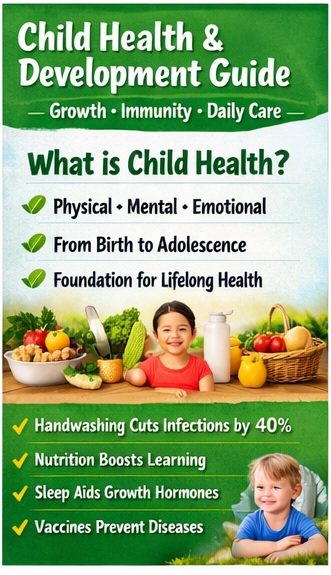
Importance of Child Health
Children grow into healthy adults. Due to poor health and awareness during childhood period, it may leads to long-term complications such as :
- Weak immunity
- Poor academic performance
- Onset of few chronic diseases in later life.
According to WHO, over 45 million children in the world may face different diseases which may be prevented easily.
Growth & Development Stages
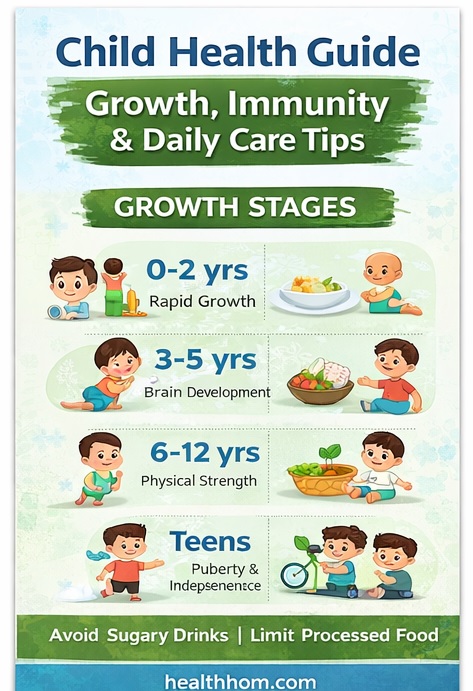
If the parents understand the growth stages of children, it will help them to effectively monitor their child’s development.
| Age Group | Physical Growth | Mental Development | Social Skills |
|---|---|---|---|
| 0–2 years | Rapid growth | Sensory learning | Bonding |
| 3–5 years | Motor skills | Language development | Play behavior |
| 6–12 years | Steady growth | Logical thinking | School interaction |
| 13–18 years | Puberty | Emotional maturity | Independence |
Source: WHO Child Development Guidelines (2023)
Key Growth Indicators are:
- Regular & consistent weight gain
- Increase in height as per schedule
- Active behavior of child
- Good appetite age per age
- Achievement of milestones as per WHO standard
Regular monitoring is required by the parents.
Growth Red Flags by Age
0–12 Months
- Not responding to sounds
- No eye contact or very less
- Poor weight gain throughout the period
1–3 Years
- Not able to speak
- Difficulty walking and motor issue
4–5 Years
- Not interested in social activities
- Developmental delays
What Public Health Experts Look For Except Weight and Height
Many Indian parents specially a mother focus only on weight gain for the child’s health. But, public health professionals suggest more than weight and height such as :
- Energy levels during whole day
- School attendance matters a lot
- Appetite patterns in child
- Sleep quality with time
- Emotional behavior among children
- Physical activity levels focusing on outdoor
A child who is always active, sleeping well in time, learning effectively as per capability and participating in social activities may be developing a normal life even if they are naturally lean.
So, growth of children may be think as a complete health rather than just a single number on a weighing scale.
Age-wise Child Development Stages
Infants (0–1 Year)
Key Focus: Growth, bonding, basic motor skills
- Usually begin to crawl and sit by their own support
- Identifies parents and respond them
- Responds to sounds from different sources including own expressions
Care Tips:
- Colostrum breastmilk feeding soon after birth
- Exclusive breastfeeding (first 6 months of birth)
- Regular vaccination as per schedule in their region
- Skin-to-skin bonding after birth of baby like Kangaroo Mother Care (KMC)
Toddlers (1–5 Years)
Key Focus: Language, movement, social interaction
- Starts walking and running without any support
- Speaks basic words clearly
- Shows curiosity and play attitude like hide and seek
Care Tips:
- Everyday nutritious meals with proper nutrition to be provided to child
- Safe playing environment with proper guidance by parents
- Encouragement of communication with others
School-age Children (6–12 Years)
Key Focus: Learning, discipline, physical growth
- Develops the problem-solving skills by own
- Builds friendships and tries to express their feelings
- Feel independence of taking any small action
Care Tips:
- Proper routine in daily life schedule should be allowed
- Healthy home-prepared food with variety to be provided to them and focus on few limited exercises
- Yoga for few minutes
- Emotional support to them with affection
Child Development Milestones Table
| Age | Physical | Cognitive | Social |
|---|---|---|---|
| 0–1 yr | Crawling | Recognizes faces | Smiles |
| 1–3 yr | Walking | Basic words | Plays |
| 3–5 yr | Running | Problem solving | Interaction |
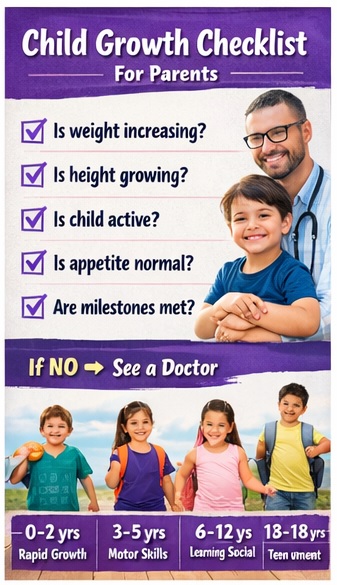
Growth Tracking Checklist
The checklist helps in determining the physical growth status of children.
- Does your child gain weight on a regular basis? YES/NO
- Increasing height with age as per WHO suggested norm?
- Does your child play and move around with other friends?
- Is appetite normal?
- Does your child achieve developmental milestones as per WHO standard?
In case you observe delays, consult with a pediatrician.
A Parent’s Experience: When Growth Concerns Turned Out to Be Lifestyle Related
During my community nutrition session at Koraput, one mother worry about her 8 year old son who was not growing similar to his classmates.
I had discussed about the daily routine of family and found that the child was regularly skipping breakfast, late-night sleep due to mobile game and not interrested in outdoor play.
Instead of immediately focusing on supplements, the family started three simple changes:
- Fixed the breakfast time
- Earlier bedtime
- One hour of outdoor play on daily basis
After few months later, the child showed the better appetite, improved energy levels and also more active participation in school activities. This type of experience shows that everyday habits can influence the growth and wellbeing.
Child Health Guide: Nutrition for Growth & Immunity
Proper nutrition is the foundation of healthy child development.
Essential Nutrients for Kids
| Nutrient | Role | Food Sources |
|---|---|---|
| Protein | Growth | Eggs, pulses |
| Calcium | Bones | Milk, dairy |
| Iron | Blood | Green vegetables |
| Vitamins | Immunity | Fruits |
Source: UNICEF Nutrition Report (2022)
To learn more about the gut-friendly foods which helps to prevent digestive issues and boost the immune system, may have a look at our published article on the best fermented foods to improve gut health.
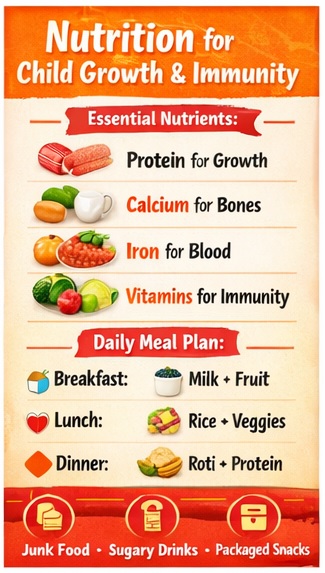
Daily Diet Plan for Children
| Meal | Example |
|---|---|
| Breakfast | Milk + banana + oats |
| Lunch | Rice + dal + vegetables |
| Snack | Fruits + nuts |
| Dinner | Roti + paneer + salad |
Source: ICMR Dietary Guidelines (2024)
Recommended to prefer homemade food over packaged snacks.
Iron is important in the prevention of childhood anemia. More about the iron rich foods and supplementation in our in depth article.
Common Parenting Mistakes That May Affect Child Health:
- Giving packaged snacks regularly because packaged snacks are easily available and convenient for busy parents
- Allow the children to use mobile phone during meal time
- Sleep timing is a very much important and during weekends not in regular time schedule
- Due to busy work schedule, forcing children to complete meals even when they are not hungry
- Comparing a child’s growth with other children
- Avoiding the vaccination or sometimes delaying only due to fear or custom or myths.
- Not focusing the outdoor play activity and allowing for mobile or TV
In many families such habits are not a new concept and they are ignoring always, so that it is impacting the immunity, weight problem, concentration of children later-on.
Budget-Friendly Child Health Tips for Families:
- Seasonal and locally available fruits are sometimes healthier and cost-friendly than the packaged juices
- Homemade roasted chana, peanuts, banana, curd and boiled eggs are affordable nutritious snacks
- Daily outdoor play in nearby parks or fields is a better choice than always long-time indoor screen habits.
- Homemade meals generally prepared with less salt, sugar and preservatives which are a healthier choice
- Simple no-cost habits like consistent sleep timing for supporting immunity and growth
During my nutritional counselling sessions at different communities, I have found a common issue that many school going children are skipping the breakfast before coming to school. The parents are in belief that the packed foods like biscuits or sugary drinks are sufficient for their children to fill their stomach. But after simple intervention like replacing the junk foods with banana, milk, poha, boiled eggs, oats and other locally available fruits like papaya & guava, the parents reported the improvements in their children like reducing the tiredness, better school performances & concentration within a few months.
Common Child Health Challenges in Indian Households
Now many Indian families facing challenges that were not seen in past decades. Some frequent observations are:
- Increased the online activities after school activities
- Reduced outdoor play
- Dependence on packaged snacks
- Irregular sleep time
- Busy working parents and limited family meal time
Also, in urban areas, children sometimes spend long hours indoors for study including playing. But, in rural communities, in-spite of availability of natural sources of food, the nutritional diversity may be an issue. So, to address such challenges both in rural and urban areas many build a healthier routine.
Age-wise Growth Monitoring Schedule
| Age | Monitor |
|---|---|
| 0–1 yr | Weight, feeding, milestones |
| 1–3 yrs | Speech, walking |
| 4–6 yrs | Learning, social skills |
| 7–12 yrs | Growth, school performance |
| 13–18 yrs | Puberty, emotional wellbeing |
When Parents Should Not Worry About Growth
Many Indian parents compare the growth of their child with cousins, neighbors or classmates. But, as every child is different, their growth pattern may also vary. A child may be naturally:
- Taller
- Shorter
- Leaner
- More active
- Slower in certain milestones
The differences do not always indicate a health issue. So, instead of comparing with others, parents should focus on steady growth. If any major concerns, they should visit to pediatrician for assessment.
Sample Weekly Healthy Meal Plan
Weekly Healthy Meal Plan for Children
| Day | Breakfast | Lunch | Dinner |
|---|---|---|---|
| Monday | Milk + oats | Rice + dal + veg | Roti + paneer |
| Tuesday | Poha + fruit | Chapati + sabzi | Dal + rice |
| Wednesday | Idli + chutney | Veg pulao | Roti + egg curry |
| Thursday | Upma | Rice + sambar | Chapati + veg |
| Friday | Paratha + curd | Dal + rice | Light khichdi |
| Saturday | Bread + eggs | Veg curry + roti | Soup + salad |
| Sunday | Pancake + fruit | Family meal | Light dinner |
This helps to ensure variety along-with the balanced nutrition.
Strengthening Immunity
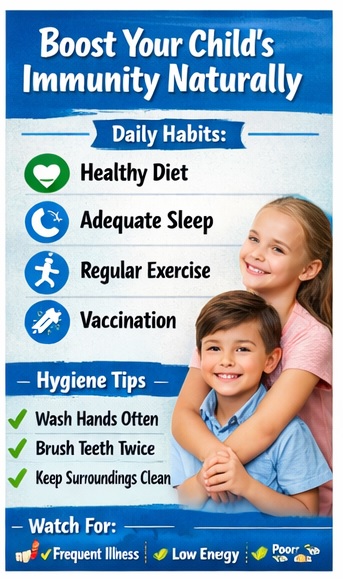
Along with various nutritious meals, daily habits also play an important role in strengthening of a child’s better immunity level.
Strong immunity protects children from many infections.
Key practices are:
- Nutrient-rich family foods with protein foods (find out our article on High Protein Indian Diet Plan for Families)
- Vaccination
- Adequate sleep
- Physical activity
The Centers to Disease Control and Prevention state that vaccines are considered to be one of the most effective methods of preventive medicine.
Recommendations may vary based on individual health conditions.
A healthy gut contributes for increasing immunity. In our specialist guide find natural gut healing foods.
Importance of Vaccination
Vaccination protects against serious diseases.
Common Vaccines:
- Polio
- Measles
- Hepatitis B
- DPT
Follow national immunization schedule. You may refer our guide on Comprehensive Vaccination Schedule in India
Hygiene & Daily Care:
Maintaining good hygiene significantly reduces the risk of infections.
Essential Habits:
- Hand-washing before every meals
- Brushing your teeth twice daily
- Bathing regularly
- Clean surroundings & maintain hyegine
According to WHO (2023), handwashing alone can reduce infections by up to 40%. This simple practice is a low cost or no cost activity for every families. Daily practice in schools, houses may reduce the different stomach infection including seasonal illness among the children.
Hygiene and healthy eating means well-being. Also, you can try how to track such health indicators as BMI and BMR.
Mental & Emotional Health
Like physical growth, a healthy child development also needs emotional wellbeing & mental health. These influence the learning, confidence and social development like:
- Encourage communication
- Reduce stress
- Limit screen exposure
Screen Time Guidelines:
- <2 hours per day
- Encourage outdoor play
Detail article on Teenage Mindfulness and ADHD from us may be referred.
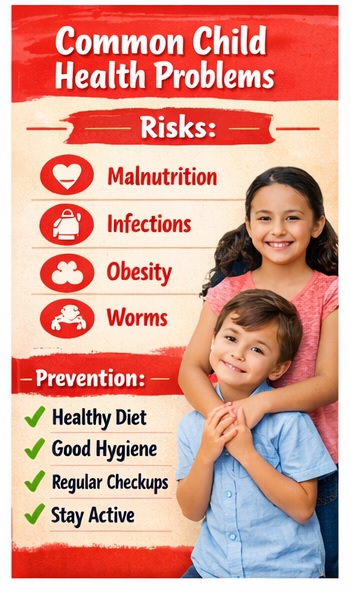
Common Health Problems in Children
1. Malnutrition
- Caused by poor & inadequate diet
- Leads to stunted growth
2. Infections
- Respiratory infections
- Diarrhea
3. Worm Infestation
- Due to poor hygiene
- Not adhering to De-worming (You may find-out our guide on Worm Infestation in children)
4. Obesity
- Increasing due to junk food
- Living a sedentary lifestyle (suggested the article on Obesity prevention)
Common Problems & Prevention
| Problem | Cause | Prevention |
|---|---|---|
| Malnutrition | Poor diet | Balanced meals |
| Infection | Poor hygiene | Clean habits |
| Obesity | Junk food | Healthy diet |
Source: WHO & UNICEF Joint Report (2023)
There are few red flags which you shouldn’t ignore:
Consult with the doctor when your child experiences:
- Fever (lasting longer than 2 days)
- Sudden weight loss
- Loss of appetite
- Frequent infections
- Delayed speech or movement
Health complications may be prevented through early diagnosis and treatment.
Physical Activity for Kids
Exercise is essential for growth.
Recommended:
- Outdoor play
- Cycling
- Sports
Benefits:
- Strong bones
- Better immunity
- Improved mental health
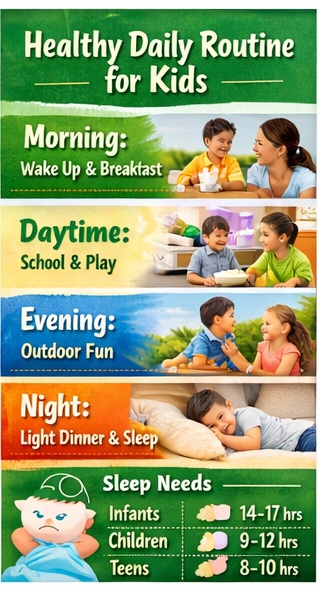
Importance of Sleep
Nutrition supports the physical growth. Like this sleep is equally important for growth and recovery process during resting time of children.
Children who are in a habit of late-night sleep, may feel tiredness, mood changes, concentration lacking, weaker immunity gradually. So, a simple consistent sleep habits may support the growth hormones, learning ability and controlling the emotion.
Recommended Sleep Duration:
| Age | Sleep Hours |
|---|---|
| Infants | 14–17 hrs |
| Children | 9–12 hrs |
| Teens | 8–10 hrs |
Source: American Academy of Pediatrics (2023)
Parenting Tips for Healthy Children
- Encourage healthy eating
- Maintain routine
- Be a role model
- Monitor growth regularly
7 day plan to sleep like a boy article from Healthy home.
Many children like to continue their daily routines, and emotional security rather not any costly gifts from parents. Even a simple daily habits by the parents with their children that eating together, usual conversations during free time, together outdoor play may influence the emotional development.
Daily Routine for Healthy Child
It is also easy to develop a simple day-to-day routine which makes the children active, healthy with emotionally balanced.
- Morning
- Wake up early and drink sufficient water
- Healthy Breakfast- Fruits like bananas, mango, pineapple, strawberry, strawberry etc.
- Personal hygiene – Brushing (cleaning the teeth) & Bathing (showering, washing)
- Daytime
- Education and activities at school.
- Balanced lunch
- Physical activity or play.
- Evening
- Outdoor play or sports
- Communication with the family (discussion and attachment)
- Night
- Light dinner
- Reduce the online activites
- Sleep on time (as per age)
Regular exercise promotes physical and mental growth.
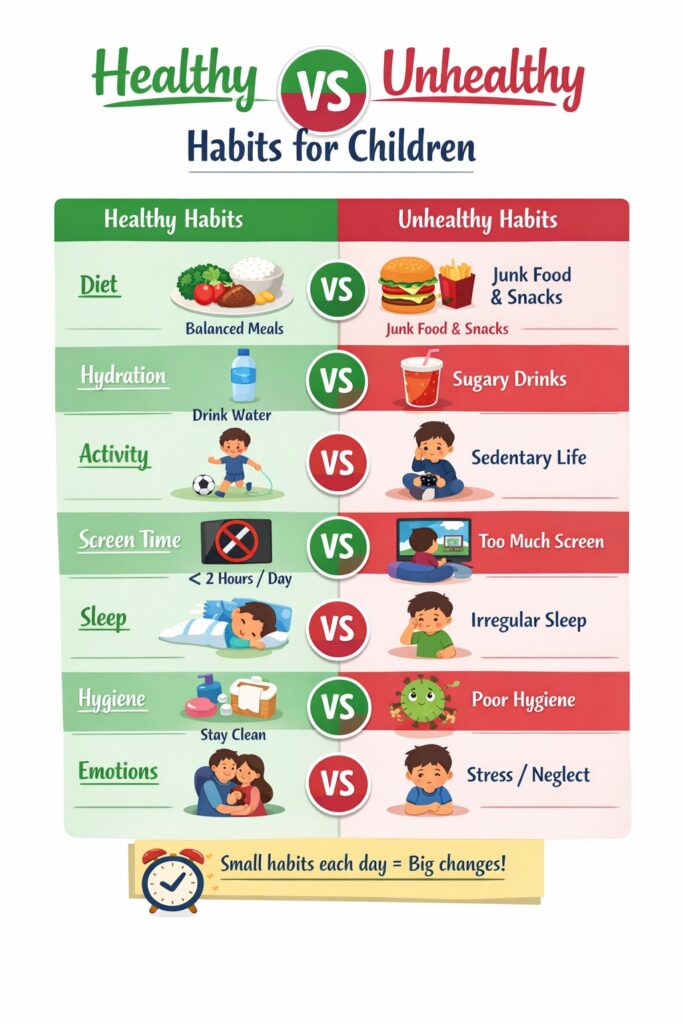
Healthy vs Unhealthy Habits for Children
| Area | Healthy Habits | Unhealthy Habits |
|---|---|---|
| Diet | Balanced, home-cooked meals | Junk food, processed snacks |
| Hydration | Drinking enough water | Sugary drinks, sodas |
| Activity | Daily play and exercise | Sedentary lifestyle |
| Screen Time | Limited (<2 hours/day) | Excessive screen use |
| Sleep | Regular, adequate sleep | Irregular or less sleep |
| Hygiene | Handwashing, daily cleanliness | Poor hygiene habits |
| Emotional Health | Family bonding, support | Stress, neglect |
| Routine | Structured daily schedule | No fixed routine |
Signs That Sometimes Indicate a Child’s Health is Improving:
Parents mainly notice the followings:
- Better sleep with quality time
- Increased activity and playfulness with cheerful
- Improved appetite
- Fewer or negligible infections
- Better attention in school with performance
- Stable mood with reduced irritability and happiness
This is practical and experience-driven.
A Real life topic:
The common situation in many families that the children are skipping breakfast may be due to academic pressure or else, using mobile games, late night sleep pattern and ignoring the outdoor game. Subsequently, due to these irregular practices, the parents may notice their children with tiredness, irritability, poor concentration in school & coaching, frequently affected by many infections like cold etc.
So, these habits can be easily changed by doing only a few simple step like fixed meal time, reducing the screen time both mobile & TV, early sleeping & early arising habits, daily outdoor physical activity, so as to improve the both physical and emotional health.
Parent Note:
Children may not inform the parents about their stress directly. So, parents should observe their changes in appetite, sleep pattern, irritability or any lacking of school performances which may be the early signs that should be emotionally supported.
Expert Insights (by Bibhu Ranjan Mund, MPH)
During the time of working under maternal and child health programme, I have observed that the children who consistently follow healthy routines under the guidance of parents, they are showing better school performances, better immunity and also less digestion problems. Both in rural and urban communities, the main health problems are not related to poverty but it is linked with irregular food choices, more packaged foods, less sleep timing with less parental guidance.
In many families, emotional support from parents plays a major role in a child’s confidence, eating habits, and emotional stability. So, by the active involvement of family members and shared meals by them, will develop a healthier eating habits and overall confidence growth.
What Research Consistently Shows About Healthy Child Development?
The research from WHO, UNICEF and reputed public health agencies show that a few factors may have the impact on overall child’s development:
- Adequate nutrition
- Timely immunization
- Safe and supportive family environments
- Physical activity
- Quality sleep
- Responsive parenting
Most of the above factors are low-cost and no-cost practice which can every household follow.
FAQs:
1. What is child health?
2. What is the normal weight for a child by age?
1 year: ~7–11 kg
2 years: ~9–14 kg
5 years: ~14–22 kg
10 years: ~24–40 kg
Parents should focus on steady growth over time rather than comparing their child with others.
3. What is the recommended sleep of a child?
4. How can I improve my child’s immunity naturally?
5. What is the role of vaccination in child health?
6. What should parents monitor regarding the child development at home?
7. How much screen time is safe?
2–5 years: Up to 1 hour/day.
6+ years: Ideally less than 2 hours/day recreational screen
8. What foods increase child growth?
Why Trust Healthy Home
Content on Healthy Home is developed using evidence-based public health research and reviewed by a Public Health professional with experience in maternal, child, and adolescent health programs.
This article is written focusing on day-to-day practical family health challenges faced by Indian communities, including nutritional gaps, safe hygiene practices and lifestyle related health issues.
Information is based on guidance from organizations such as:
- World Health Organization
- UNICEF
- Centers for Disease Control and Prevention
- National Institutes of Health.
- ICMR (India) (2024)
All data tables are adapted from WHO (2023), UNICEF (2022), CDC (2024) guidelines.
Key Takeaways for Parents
- It is imperative to have a balanced diet.
- Immunization against severe illnesses as per scheduled norm.
- Regular handwashing and bathing minimizes the risk of infection.
- Physical activity is recommended for better health & development..
- Confidence is to be created with children through emotional support.
Small things you do every day may have a substantial impact on the future health of your child in well-planned manner.
Practical Tips for Busy Parents
- Prepare meals in advance
- Keep healthy snacks ready
- Limit junk food at home
- Promote out-of-doors games.
- Have a good time with your child.
Did You Know?
- The risk of serious infections can be significantly reduced through clean daily habits such as regular hand-washing, brushing, bathing, cleaning surroundings etc.
- Regular physical activity supports healthy brain development.
- Growth hormones are directly related to sleep.
Quick Parent Self-Check
Ask yourself:
- Is my child taking a balanced diet on a daily basis?
- Is mobile should limit?
- Does my child go out to play often?
- Is sleep routine consistent?
When majority answers are “No”, then it is time to make daily habits better.
My Perspective as a Public Health Professional
After last two decades of working, I believe that most effective child health practices begin at home.
Sometimes, parents go for a quick solution when a child experiences poor appetite, low immunity or concentration. Medical evaluation is essential, but if the family will focus on regular balanced meals, proper sleep, limiting screen, active play, emotional support may improve the daily routines.
In most tribal villages of Koraput district, I have observed that the children who focus on taking the breakfast regularly showed improvements in classroom participations.
In my opinion, consistency may be the actual key of success. Focus on long-term good habit rather a short-term expensive efforts.
Five Small Changes Parents Can Start This Week
- Serve one fruit daily with breakfast.
- Create a fixed bedtime routine.
- Eat one family meal together each day.
- Reduce mobile uses before sleep.
- Encourage at least 60 minutes of active play.
Concluding Points on Child Health and Development Guide:
Child health can be focused through consistent daily habits like nutrition, hygiene, sleep, and emotional care. The main objective as a parent or a caregiver is to provide the child with a safe, healthy and nurturing environment.
In the field of Public Health, a major observed topic is the child health which can be built by consistent daily habits than any kind of costly products or complicated daily routines. Parent guidance in this regard is highly recommended.
Related Health Articles from Healthy Home
- Healthy Millet Recipe – Nutritious & Easy to Prepare
- How to Know Your Cholesterol Level, BMI & BMR
- 7-Day Balanced Meal Plan for Families (PDF Guide)
- Iron-Rich Foods & Supplementation Guide for Children
- 7-Day Gut Health Plan for Families – Improve Digestion Naturally
- Healthy Lifestyle Guide for Adolescents (Daily Routine Tips)
Trusted References and Research Sources:
- Download WHO Child Growth Standards (Official Publication PDF)
- Child Health & Development Guide (NCBI Medical Resource)
- UNICEF Child Health & Development Overview
- WHO Nurturing Care Framework for Child Development
- NHM Child Health Trainers Guide (India PDF)
- Harvard Healthy Child Nutrition Guide
- WHO Healthy Growth & Development Guidelines
- UNESCO Early Childhood Development Report (PDF)