
Last Updated on March 22, 2026 by Bibhu Ranjan Mund, MPH
Learn what is a balanced daily meal plan, its key nutrients, benefits and a 7-day healthy diet chart for all ages. Improve energy, immunity & overall health naturally.
Reviewed by Bibhu Ranjan Mund, MPH (Public Health Expert) with experience in maternal, infant, child, and adolescent health programs. Content is based on evidence-informed guidelines aligned with organizations such as the World Health Organization, UNICEF, Centers for Disease Control and Prevention, and National Institutes of Health.
Last reviewed on: 22 March 2026.
Medical Disclaimer: This content is for informational and educational purposes only and is not intended as medical advice, diagnosis, or treatment. Always seek the advice of a qualified healthcare professional regarding any medical condition or concerns.
Affiliate Disclosure: This article contains affiliate links. If you purchase through these links, we may earn a small commission at no extra cost to you.
Introduction:
In the modern-day busy lifestyle, healthy eating is taking the back foot. Heavy daily work schedule, distracted by the internet or just distracted by the ready-to-heat packaged food, most of us forget that our bodies are made out of what we consume. Balanced diet does not mean any form of restraints or denying yourself about favorite foods but rather means feeling good, feeling more energetic, healthier and having fewer mood swings.
This article will aid you to realize what a balanced diet is all about, why it is necessary and how to adhere without straining in your day to day life.
Quick Summary :
- Balanced daily meal intake constitutes carbohydrates, protein, healthy fats, vitamins, minerals and water.
- It helps in energy, immunity, digestion and well being.
- With the plate method, 1/2 vegetables and fruits, 1/4 whole grains, 1/4 lean protein.
- Drink 8–10 glasses of water daily.
- Restrict processed food, sugar and too much food.
- The important factors of long-term health are uniformity and moderation.
What is a balanced diet?
A balanced diet refers to a diet which incorporates the necessary nutrients such as carbohydrates, proteins, fats, vitamins, minerals and water in the right balance to assure that your body remains healthy and operating at the best level.
It is not about eating one kind of food but it is about having balance, moderation as well as variety in the daily food that you take.
In simple words: Balanced diet is to get all the nutrients required for our body to operate efficiently without either over-eating or under-nourishment.
What is a balanced daily meal plan & its importance?
Our body has so many roles to play everyday, repairing of tissues, generating energy and addressing infections. All these processes are dependent on food acquired nutrients. A balanced diet helps to:
- Check healthy body weight.
- Boost immunity
- Improve digestion
- Enhance energy levels
- Avert lifestyle diseases like diabetes, heart disease and obesity.
Unbalanced dieting can lead to fatigue, lack of nutrients and increased chances of developing chronic diseases.
Key elements of a healthy diet.
A balanced diet contains six main ingredients namely:
1. Carbohydrates -The energy source.
Carbs form the primary source of energy to your body. They make your brain, muscles and day to day activities.
Healthy sources are:
- Whole grains Oats, brown rice, millet and quinoa.
- Carrots, sweet potatoes and peas are some of the vegetables.
- Such fruits as apples, bananas and berries.
- These refined carbs such as white bread, sweetened snacks and sodas should be avoided because they lead to crash in energy and increase in weight.

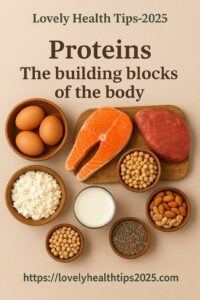
2. Proteins -The building blocks of the body
Proteins contribute to the repair of the muscles, hormone production and growth of the tissues. Protein should be added to each meal as it makes you feel more satisfied and keeps your metabolism at a healthy level.
Best protein sources:
- Eggs, fish and lean meat
- Lguminous foods as lentils, beans and chickpeas.
- Dairy products such as milk, curd and paneer.
- Nuts and seeds like almonds, chia, pumpkin seeds etc.
- By mixing plant proteins (rice and beans), vegetarians are able to obtain all the necessary amino acids.
3. Fats – The Healthy Fuel
Not all fats are bad, Healthy fats contribute to the health of the brain, maintenance of hormones and absorption of vitamin.
Healthy fat sources:
- Avocados Coconut oil, mustard oil and olive oil.
- Nuts and seeds
- Fishes with a lot of fat such as mackerel and salmon.
- Trans fats and saturated fats that are high in food preparation should be avoided and include fried foods, pastries and processed snacks.

4. Vitamins -the micronutrient powerhouse.
Vitamins are essential in metabolism, immunity and health. They are needed in limited quantities but are important to all systems of the body.
Examples:
- Vitamin A -vision (spinach, carrots)
- Vitamin C – to strengthen the immunity (citrus fruits, guava)
- Vitamin D -in bones (sunlight, fortified milk)
- Vitamin B – Maintain healthy nerves (eggs, dairy, fish)
- Consumption of diverse fruits and vegetables everyday will provide you with all the necessary vitamins in a natural manner.
Calorie Range Guidance
- Adult female: 1,800–2,200 kcal/day
- Adult male: 2,200–2,600 kcal/day

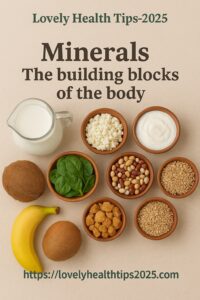
5. Minerals : The building-blocks of the human body
Through minerals such as calcium, iron, zinc and potassium, the body is necessary in strengthening the bones, carrying oxygen and in maintaining electrolyte balance.
Top sources:
- Milk, cheese, yogurt (calcium)
- Salads, jaggery, beans (iron)
- Bananas, coconut water (potassium).
- Whole grains & seeds (zinc, magnesium)
6. Water – The life
Our body consists of 60 to 70 percent of water, which is essential in the digestion process, the production of body heat and the removal of toxics. Dehydration may lead to fatigue, lack of concentration and headaches
Take a minimum of 8 to 10 glasses of water per day. Incorporate the hydrating foods such as watermelon, cucumber and soups.
How to build a balanced plate
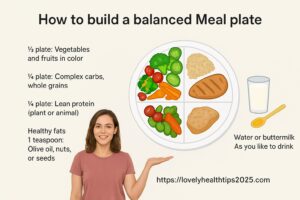
This is a simple implication of the My Plate Method of visualizing your daily balanced meal:
- ½ plate: Vegetables and fruits in color.
- 1/4 plate: Complex carbs, whole grains.
- 1/4 plate Lean protein (plant or animal).
- Healthy fats 1 teaspoon Olive oil, nuts, or seeds.
- Water or buttermilk As you like to drink.
- This aesthetic approach makes each meal proportional and different.
A balanced diet plan in everyday life of human.
We can have a glimpse of what an ordinary, common day of eating may be:
🕖 Morning (7:00 AM – 8:00 AM)
- Lemonade in a glass of hot water.
- Breakfast: Oats porridge with fruits as well as nuts or vegetable poha with curd.
- Green tea or milk
Importance:
- The tone of your whole day is determined in the morning and therefore, it is necessary to begin the day with hydration and with light food.
- The warm lemon water is good at cleansing your system and improving your metabolism after having gone without food overnight.
- As breakfast, eat oats porridge with fruits, such as banana or apple or nuts, such as almonds or walnuts. This mixture gives you the complex carbohydrates, the healthy fats and the fiber, that will make you full and energized up until lunchtime.
- Alternatively, a bowl of Indian vegetable poha with curd is a healthy option, low in calories, easy to digest and with a high amount of iron and probiotics. Combine it with either a green tea to boost metabolism or a glass of milk as a source of added calcium and protein.
- Eat a healthy breakfast and be mentally sharp, steady and well-balanced throughout your day.
🕙 Mid-Morning Snack
- One or two almonds
- A fruit may be an apple or a banana as per availability.
Importance:
- This is a small snack in between breakfast and lunch which does not lead to overeating afterwards in the day.
- Consumption of a handful of almonds contains vitamin E, healthy fats and gives the body a good protein boost to ensure long-term energy.
- Alternatively, fresh fruits such as apple, banana or pear contain natural sugars, fiber and antioxidants that keep the blood sugar level under control and ensure the level of concentration is maintained.
- Snacking at the middle of the day is also conducive to normalizing the metabolism and avoiding acidity, thus snacking is an essential micro-meal in the balanced diet program.
🕛 Lunch (12:30 PM – 1:30 PM)
- Brown rice/ whole wheat chapati.
- Dal or lentil curry The vegetables (steamed or sautéed) should be mixed.
- Salad and curd
Importance:
- The lunch meal of the day must be the most balanced and nutritious.
- A blend of whole grains, proteins and fiber rich vegetables gives a stable supply of energy in the afternoon. Select whole wheat chapati or brown rice as a complex carb which provides slow release of energy.
- It goes well with the dal or lentil curry that are a great source of protein in plants and contain iron and folates.
- Add a variety of vegetables: carrots, beans, spinach and bell peppers steamed or sauted lightly so that they do not lose their vitamins and minerals.
- A fresh salad is rich in raw enzymes and roughage that help digest food, and curd which provides probiotics to the gut and immunity.
- This meal does not only ensure your body remains nourished but also avoids post lunch lethargy so your body will focus its mind throughout the day.
🕒 Evening Snack
- Chickpeas or sprouts salad that is roasted.
- Herbal tea or coconut water
Importance:
- Evenings are those times that the energy levels tend to fall and the urge of having fried or sugar snacks usually tends to appear.
- Rather than grabbing a pack of biscuits or chips grab some of the following: Roasted chickpeas or a sprouts salad. They are both rich in protein and fiber that make the stomach feel full and keep the sugar levels balanced.
- Sprouts should be added with chopped vegetable and lemon juice that will increase their taste and nutritional value.
- To hydrate, use one of the following: herbal tea, e.g. green tea, tulsi, chamomile etc. to refresh your senses and relax your mind.
- Alternatively, fresh coconut water is an excellent natural source of electrolytes particularly after a hard workday or slight exercise.
- This is a healthy snack that will not make one overeat during dinner and will also keep metabolism going throughout the night.
🕕 Dinner (7:00 PM – 8:00 PM)
- Clear Chicken soup or vegetable soup.
- Stir fried vegetable and grilled paneer or tofu.
- 1/4th plate of brown rice or millet.
Importance:
- Dinner must always be light but satisfying so that your body has time to digest before going to sleep. A clear and warm soup of chicken or vegetable will be a good opening to the stomach, to start the circulation in the body and to pour some water into it.
- Serve it with lightly cooked and stir-fried vegetables that have not been boiled so that they retain their crunch and nutrients. Combine it with grilled paneer or tofu which are good spouses of protein and calcium.
- A portion of simple carbs should be avoided as it is heavy to digest, and it can lead to a lack of restful sleep, so a small portion of brown rice, quinoa or millet is something that offers complex carbs and does not overburden the digestive system.
- The combination aids in muscle repair, enhances night metabolism and healthy weight maintenance. Goal is to have dinner at least 2 to 3 hours before bedtime to achieve the most results.
🕙 Before Bed
- Turmeric mixed 1 glass of hot milk.
- This is balanced with all nutrients but the foods are light and nourishing.
Importance:
- A glass of warm milk is a relaxing drink that is taken at the end of the day to relax the mind and ensure good sleep as the amino acid present in the drink may help to produce the serotonin.
- A pinch of turmeric can be added to the drink, which will provide it with the strong anti-inflammatory and immunity-enhancing properties, thus the drink will act as a natural healer at night.
- Besides feeding your body, it is a bedtime routine that works towards healing, relaxation of muscles and reinvigorating sleep.
- Lactose intolerant people will have the option of taking almond or oat milk.
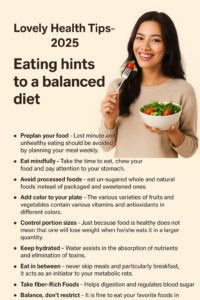
Eating hints to a balanced diet.
- Preplan your food – Last minute and unhealthy eating should be avoided by planning your meal weekly.
- Eat mindfully -Take the time to eat, chew your food and pay attention to your stomach.
- Avoid processed foods – eat un-sugared whole and natural foods instead of packaged and sweetened ones.
- Add color to your plate- The various varieties of fruits and vegetables contain various vitamins and antioxidants in different colors.
- Control portion sizes- Just because food is healthy does not mean that one will lose weight when he/she eats it in a larger quantity.
- Keep hydrated -Water assists in the absorption of nutrients and elimination of toxins.
- Eat in between -never skip meals and particularly breakfast, it acts as an initiator to your metabolic rate.
- Take fiber-Rich Foods -Helps digestion and regulates blood sugar
- Balance, don’t restrict -It is fine to eat your favorite foods in moderation, you should not eat a lot of it.
- Get enough sleep- When you do not eat well, it is because of a poor sleep cycle.
Moderated diets and lifestyle diseases.
One of the major causes of non-communicable diseases such as:
- Obesity
- Diabetes
- Hypertension
- Heart disease
- Certain cancers
A healthy diet that will contain high content of fiber, antioxidants and good fats will help to decrease the inflammation, keep the cholesterol levels under control and the blood sugar under natural control. It is the best method of preventing these lifestyle disorders coupled with regular exercise.
Healthy diet at various ages.
1. For Children
Nutrients are required by the children to grow and develop. Add milk, egg, whole grains, fruits and vegetables. Limit sugary snacks.
2. For Adults
Concentrate on energy, immunity and weight. Balance proteins, carbohydrates, and healthy fats and eat lots of fiber and water.
3. For Seniors
Older individuals require increased calcium, vitamin D and fiber. Take soft, easily-digestible foods such as soups, porridge, fruits, and low-fat milk.

Common mistakes to avoid
- Skipping meals
- Eating too much of the supplements rather than whole food.
- Drinking too little water
- Processed diet foods Overconsumption.
- Ignoring portion control
A really balanced diet is not based on extreme diets or short cuts but rather on natural whole foods.
How to make eating healthy.
Creating a balanced diet is not a perfectionist thing at all. Please start with a small steps.
- The white rice should be substituted with brown rice or millets.
- Eliminate the sweet beverages and use water or herb tea.
- Fruit or salad should also be added to each meal.
- Eat homemade food rather than take out food.
- Always have healthy snacks around nuts, fruits, roasted seeds.
- Such little habits are cumulative and eventually become a way of life.
Proper diet and psychological well-being.
- Did you know that your gut and your brain is connected closely?
- A healthy diet is used to control the mood and mental sharpness.
- The fish has omega-3 fats that are helpful in maintaining the brains.
- Vitamin B complex helps in memory and concentration.
- Probiotics (curd, yogurt) are beneficial to the health of the gut, alleviating anxiety and stress.
- The diet of nutrients will ensure that your mind is calm, concentrated, and cheerful.

Balanced diet myths vs. facts
| Myth | Fact |
| Carbs make you fat | It has healthy carbs such as whole grains and fruits which are essential sources of energy |
| Fat should be avoided | The good fats help to maintain the heart and the brain. Only trans fats are harmful |
| Food can be substituted with supplements | Fiber and antioxidants found in whole foods are not available in forms of supplements |
| Less eating translates to losing weight | Consumption of balanced and nutritious food is useful in maintaining healthy metabolism |
| Healthy food is boring | Healthy food can be good with spices, herbs and variety |
Sample 7 Day Healthy Diet Plan
| Day | Breakfast | Lunch | Dinner |
|---|---|---|---|
| Monday | Poha & fruit | Brown rice, dal & veggies | Soup, chapati & paneer |
| Tuesday | Vegetable upma | Millet khichdi | Grilled fish & salad |
| Wednesday | Smoothie bowl | Roti & mixed sabzi | Moong dal & rice |
| Thursday | Oats with nuts | Lemon rice & curd | Stir-fried tofu & soup |
| Friday | Idli & sambar | Rajma & brown rice | Millet roti & veggies |
| Saturday | Egg omelette & toast | Chole & salad | Daliya & curd |
| Sunday | Fruit bowl & nuts | Vegetable pulao & raita | Light soup & grilled paneer |
The plan is an excellent taste and a good balance of nutrition in daily life.

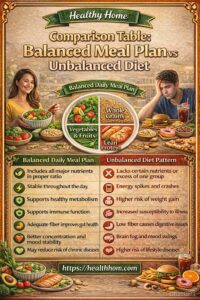
Comparison Table: Balanced Meal Plan vs Unbalanced Diet
| Factor | Balanced Daily Meal Plan | Unbalanced Diet Pattern |
|---|---|---|
| Nutrient Intake | Includes all major nutrients in proper ratio | Lacks certain nutrients or excess of one group |
| Energy Levels | Stable throughout the day | Energy spikes and crashes |
| Weight Management | Supports healthy metabolism | Higher risk of weight gain |
| Immunity | Supports immune function | Increased susceptibility to illness |
| Digestion | Adequate fiber improves gut health | Low fiber causes digestive issues |
| Mental Focus | Better concentration and mood stability | Brain fog and mood swings |
| Long-term Health | May reduce risk of chronic diseases | Higher risk of lifestyle diseases |
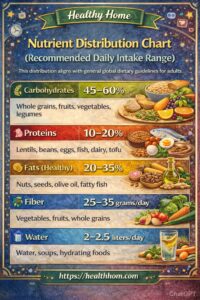
Nutrient Distribution Chart (Recommended Daily Intake Range)
This distribution aligns with general global dietary guidelines for adults:
| Nutrient | Recommended % of Total Daily Calories | Main Sources |
|---|---|---|
| Carbohydrates | 45–60% | Whole grains, fruits, vegetables, legumes |
| Proteins | 10–20% | Lentils, beans, eggs, fish, dairy, tofu |
| Fats (Healthy) | 20–35% | Nuts, seeds, olive oil, fatty fish |
| Fiber | 25–35 grams/day | Vegetables, fruits, whole grains |
| Water | 2–2.5 liters/day | Water, soups, hydrating foods |
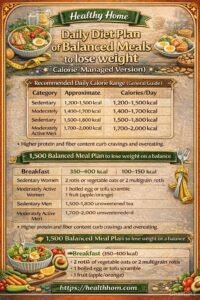
Daily Diet Plan of Balanced Meals to lose weight (Calorie-Managed Version)
A balanced daily meal plan for weight loss focuses on calorie control, portion management, and nutrient density, without eliminating essential food groups. The goal is to create a moderate calorie deficit while still providing adequate protein, fiber, healthy fats, vitamins and minerals.
Recommended Daily Calorie Range (General Guide)
| Category | Approximate Calories/Day |
|---|---|
| Sedentary Women | 1,200–1,500 kcal |
| Moderately Active Women | 1,400–1,700 kcal |
| Sedentary Men | 1,500–1,800 kcal |
| Moderately Active Men | 1,700–2,000 kcal |
There are individual needs depending on the age, activity level and illnesses.
Ideal Nutrient Distribution for Weight Loss
| Nutrient | % of Total Calories | Why It Matters |
|---|---|---|
| Protein | 25–30% | Preserves muscle & increases satiety |
| Carbohydrates | 40–45% | Provides sustained energy |
| Healthy Fats | 25–30% | Supports hormones & fullness |
| Fiber | 25–35g/day | Controls appetite & improves digestion |
The increased intake of protein and fiber can be used to decrease the cravings and overeating.
1,500 Balanced Meal Plan of weight loss on a balance.
Breakfast (350–400 kcal)
- 2 rotis of vegetable oats or 2 multigrain rotis
- 1 boiled egg or tofu scramble
- 1 fruit (apple/orange)
- Green tea or unsweetened tea
Mid-Morning Snack (100–150 kcal)
- Handful of almonds (8–10)
- OR
- Greek yogurt (unsweetened)
Lunch (400–450 kcal)
- 1 cup brown rice or 2 chapatis
- 1 cup dal / grilled chicken / paneer.
- Mixed vegetable sabzi
- Greens (salad) – (cucumber, carrot, tomato)
Evening Snack (100–150 kcal)
- Roasted chana / sprouts salad
- OR
- Buttermilk (low salt)
Dinner (350–400 kcal)
- Clear vegetable soup
- Grilled fish / tofu / paneer
- Stir-fried vegetables
- Quinoa (in small portion) or 1 chapati (optional)
Tips of Portion Control to lose weight.
- Get a smaller plate to control the size of serving portions.
- Get half your plate full on vegetables.
- Eat slowly and mindfully
- Do not consume sweet drinks and pre-packaged food.
- Stop eating when 80% full
Common Mistakes to Avoid
- Skipping meal
- Eliminating the carbohydrates altogether.
- Very low-calorie crash diets
- Ignoring protein intake
- Not drinking enough water
Pro Trick to Sustainable Weights Loss.
Combine this meal plan with:
- 30-45 minutes of fast paced walking
- 7–8 hours of quality sleep
- The practice of stress management.
Healthy weight loss typically ranges from 0.5 to 1 kg per week when followed consistently.
Concluding points:
Balanced diet does not have anything to do with fad dieting, it is a lifetime trend of eating smarter and living healthier. It provides your body with nutrients that it requires to work effectively and your mind is active and positive.
Note: You should know, you do not have to eat less, you just have to eat right. Be mindful of what you eat, be in tune with your body and remain consistent. In the long run, you will feel more energetic, have better skin, immune system and wellness.