Last Updated on March 22, 2026 by Bibhu Ranjan Mund, MPH
Discover how climate change and human health, pollution & heat waves. Evidence-based insights on risks, prevention & vulnerable groups.
Reviewed by Bibhu Ranjan Mund, MPH (Public Health Expert) with experience in maternal, infant, child, and adolescent health programs. Content is based on evidence-informed guidelines aligned with organizations such as the World Health Organization, UNICEF, Centers for Disease Control and Prevention, and National Institutes of Health.
Last reviewed on: 22 March 2026.
Medical Disclaimer: This content is for informational and educational purposes only and is not intended as medical advice, diagnosis, or treatment. Always seek the advice of a qualified healthcare professional regarding any medical condition or concerns.
Affiliate Disclosure: This article contains affiliate links. If you purchase through these links, we may earn a small commission at no extra cost to you.
Introduction to Climate & Health:
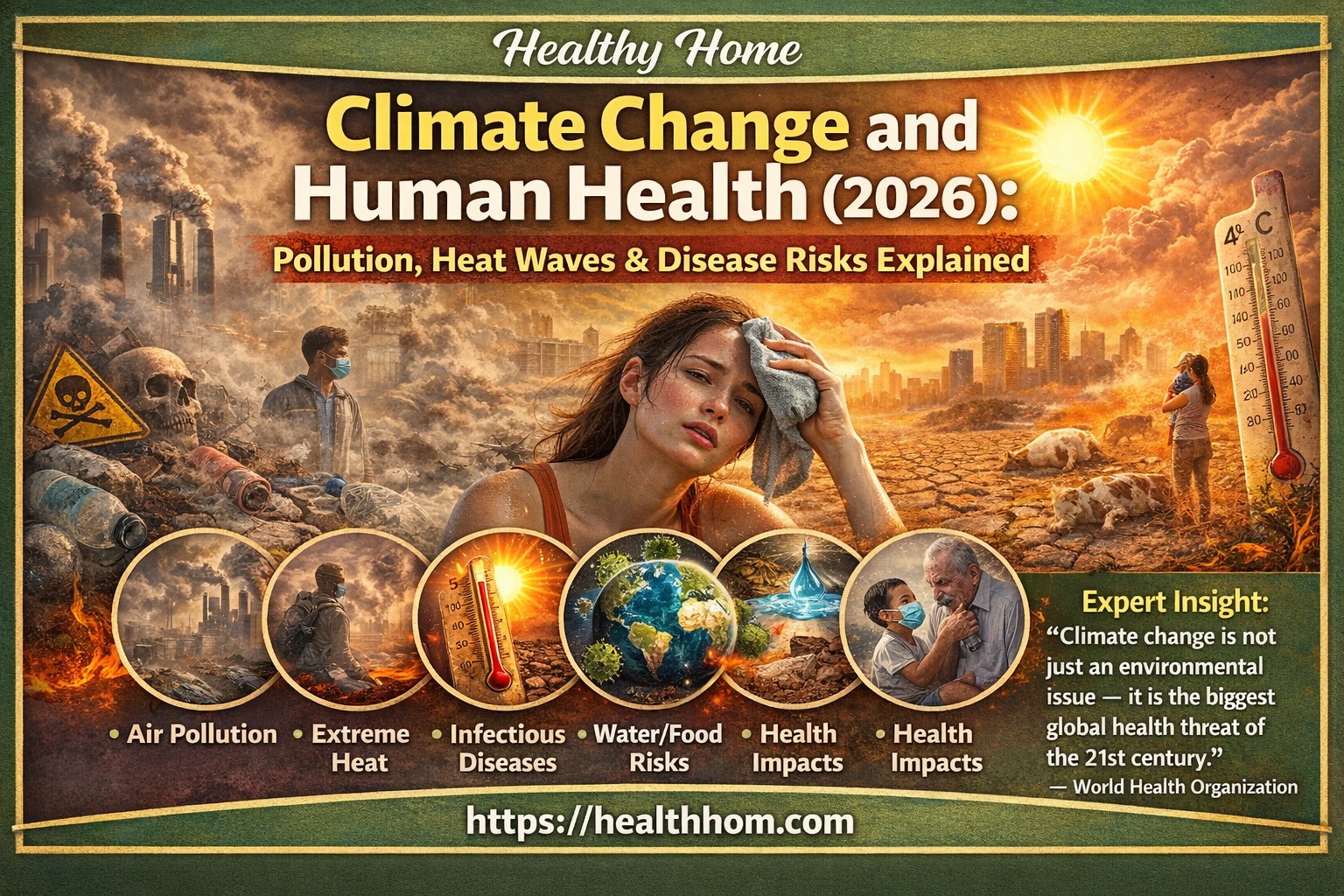
The climate crisis shows a direct effect on human wellbeing from amplified respiratory disease to fatalities related to heat. I have tried to put forth the effects of pollution, heat waves including environmental change on the physical & mental health.
Expert Insight:
“Climate change is not just an environmental issue — it is the biggest global health threat of the 21st century.”
— World Health Organization
How does climate change impact human health?
Climate change has the following impacts on health:
- Rising number of respiratory diseases.
- Raising heatstroke risk
- Widening infectious diseases.
- Worsening mental health
- Endangering the hygiene of food and water.
Quick Summary
- Climate change has become a significant health menace to the population.
- Air pollution has been a cause of millions of premature deaths every year.
- Heat waves foresee the aggravation of heart attack, stroke, and dehydration.
- Infectious diseases are transmitted by floods and droughts.
- Increase in temperatures spreads mosquito-related diseases.
- The most vulnerable groups are children, elderly and low-income.
- It needs policy, community action and individual responsibility to prevent it.
Latest Climate & Health Data (2025 Update)
| Indicator | 2026 Estimate | Source Authority |
|---|---|---|
| Annual deaths due to air pollution | ~7 million | World Health Organization |
| Global population breathing polluted air | 99% | World Health Organization |
| Heat-related deaths globally (2023–2025 trend) | 70,000+ annually | The Lancet |
| Increase in dengue transmission zones | 30–40% expansion | World Health Organization |
| Climate-related disasters per year | 400+ major events | United Nations |
| Economic loss from climate health impact | $300+ billion/year | World Bank |
1. Pollution and Human Health
A. Air Pollution
Health Effects of PM2.5 Exposure
- Increased heart attack risk
- Stroke
- Lung cancer
- Asthma exacerbation
Neurological Effects
- Increased dementia risk
- Cognitive delay in children
- Behavioral disorders
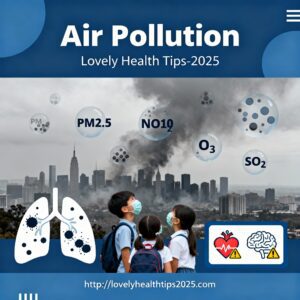
One of the health environmental risks is air pollution. The World Health Organization (WHO) reported that nine out of every 10 individuals on earth are inhaling air that is contaminated in excess of feasible levels. The products of the emissions, i.e. the major pollutants are the key emissions, namely particulate matter (PM 2.5 and PM 10), nitrogen dioxide (NO2), ozone (O 3), and sulfur dioxide (SO 2).
- Cardiovascular Problem: Fine particles enter into the lungs which may cause the asthma, chronic obstructive pulmonary disease (COPD), lung cancer and heart diseases etc.
- Many children may also be vulnerable due to immature lungs & higher breathing rate. Study shows that, due to long exposure to pollution, Children are having problem in slow growth of lungs, infection in respiration which are leading to increase the absenteeism in school.
- Neurological side-effects due to air pollution : May include cognitive deterioration of children, Alzheimer disease & also developmental delay in children.
B. Water Pollution
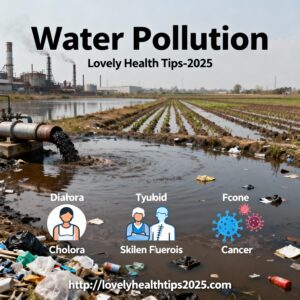
Contaminated water, industrial effluent, farming runoff and poor handling of waste products etc. impact millions of human beings on earth. Water pollution leads to diarrhea, cholera, typhoid or other alimentary issues. In the countryside, there have been incidences of skeletal fluorosis to cancer after being exposed to poisonous arsenic and fluoride contamination in their ground water.
C. Soil Pollution
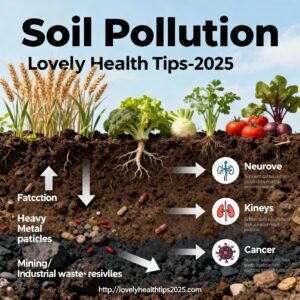
The chemicals and heavy metals present in food crops and the soil (mostly pesticides byproducts, mining and industrial wastes) cause bioaccumulation of toxins in individuals. These pollutants can lead to injuries even to the nervous system, kidney system and even cancer.
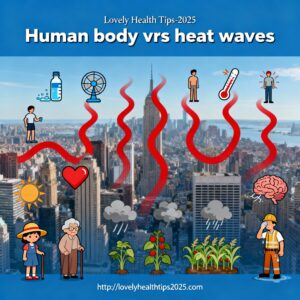
2. Human body and heat waves:
Rising Temperatures:
- Global warming has also worsened heat waves and their intensity. Urban cities due to heat island effect, they experience a rise in temperature than in the surrounding rural regions. Heat waves are being occasional incidences and are currently seasonal occurrences.
- Effects of Heat: If excessive heat over longer duration, it may imbalance the temperature of body which may leads to dehydration, heat exhaustion & may be heatstroke.
- Cardiac Problem: It may also increase the threat of heart attack & stroke. Effects of Stress, irritability and even aggression are augmented, subsequently on Mental Health. Research has been done which indicates that the anxiety and depression escalate even in the long durations of conditions of heat.
- More Deaths: Children, individuals with chronic illnesses, youth and the elderly are most susceptible populations. An example is the Europe heat wave of 2003 that claimed the lives of over 70,000 people.
Indirect Impacts:
- Air quality is now deteriorating because of hot weather which is also indirectly causing the respiratory illness of human.
- Food Security: It is the degradation effect of the unreasonable heat that reduces the manufacturing of foodstuffs and the reproduction of animals, in terms of nutrition security.
- Cases of occupational hazards: Construction and agriculture, outside work and a long term health complications, a loss of productivity, dehydration etc.
The European Environment Agency reported record-breaking heat mortality in 2022.
3. Environmental & Health Change.
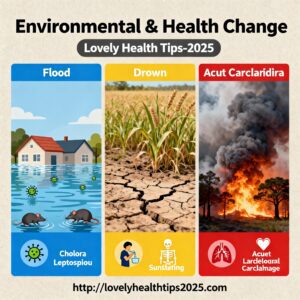
A. Extreme Weather Events
- Floods: Cholera and leptospirosis are water borne diseases. The effects of each of these events on the health of the majority have a long-term impact:
- Droughts: Starvation due to absence of food & die of thirst due to absence of water.
- Wildfires: Long term lungs damage as well as acute ventilatory & cardiovascular disturbances are caused by smoking.
B. Vector-Borne Diseases
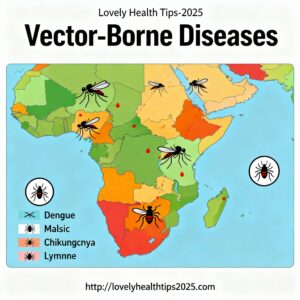
Global warming increases the regions that harbor disease carrying vectors like mosquitoes and ticks. Dengue diseases, malaria, chikungunya and Lyme diseases are already spotted where they were no such occurrence seen previously.
- Dengue fever
- Malaria
- Chikungunya
- Lyme disease
C. Mental Health & Eco-Anxiety
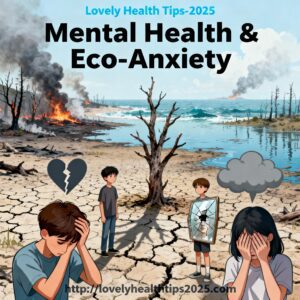
The eco-anxiety trend is emerging because of climate insecurity and environmental devastation. Individuals and especially the youths are said to have feelings of hopelessness and fear and anxiety towards the future of this earth. Post-traumatic stress disorder (PTSD), depression and enduring psychological trauma are additional disorders among the victims of Climate Disasters.
Eco-anxiety is increasingly studied in journals like The Lancet.
Learn more from our article : Teenage Mindfulness and ADHD: 6 Science-Backed Ways to Improve Focus & Emotional Control
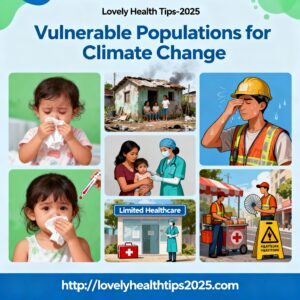
4. Vulnerable Populations:
Communities in general are not equally impacted by pollution, heat waves and environmental change.
- Infants & Children: There is a chance of increasing the Respiratory & diarrhea disease in infants & children.
- Low-income Communities: They may be inhabitants of a high-pollution area, occupy poor houses and may not be able to afford quality healthcare services.
- Outdoor Workers: constantly at risk of being overheated due to bad air quality.
5. Transforming the World into a Global Village:
i) Policy and Governance
- Sterner Pollution -Governments need to establish pollution regulations, introduce cleaner fuel supply and penalize violators.
- Plan for Heatwave Management: Many Cities may prepare a mechanism for an early warning system, cooling areas and also awareness campaigns among people.
- Urban area smart infrastructure: Construction of climate friendly smart Green urbanization through drainage and energy efficient constructions.
ii) Community Initiatives
- Planting trees and gardens in the urban area: Better air quality, shade and reduce urban heat islands effects.
- Awareness Campaigns: The individuals should be sensitized, how to curb pollution, how to conserve garbage and energy.
- Local Health Camps: This will involve offering prevention related disease screenings and information on different prevention measures.
iii) Individual Actions
- We must try to reduce the personal pollution like smoke from vehicles and bikes, reduce the utilization of plastic thus causing reduce the energy etc.
- Masks may be used during any high pollution area. Also during the heat wave, we should drink plenty of waters and other liquid food.
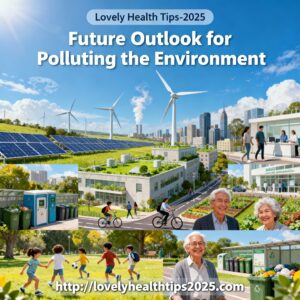
6. Future Outlook:
A better future may be depended upon the global health in the future & we should have an eye to reduce the Greenhouse gas emissions with addressing climate change. However, the climate crisis may led to a health crisis and it can be minimized with the assistance of proactive initiatives such as clean energy, long-term city planning, better healthcare facilities, and well-built communities.
We should also focus on investing fund in protection of the environment. So that, it may support human lives, decreasing the healthcare costs and helps to flourish in tomorrow’s generations.
Personal Climate Health Protection Checklist
- Monitor local AQI
- Use N95 mask in high pollution
- Hydrate yourself in the heat waves.
- Never take outdoor activity during hot weather.
- Initiatives to support tree plantation.
- Reduce plastic use
- Place air cleaners in the house.
Comparison Table: Climate Change vs Environmental Pollution
| Factor | Climate Change | Environmental Pollution |
|---|---|---|
| Main Cause | Greenhouse gas emissions | Industrial waste, vehicle emissions |
| Time Impact | Long-term gradual | Immediate & cumulative |
| Health Effects | Heatstroke, vector diseases | Respiratory & heart diseases |
| Reversibility | Slow, needs global action | Faster with regulation |
| Most Affected | Elderly, outdoor workers | Urban populations |
Home Safety Checklist
- Indoor air cross ventilation.
- Avoid indoor smoking
- Reduce plastic burning
- Have water purifying systems.
- Keep emergency heat kit ready.
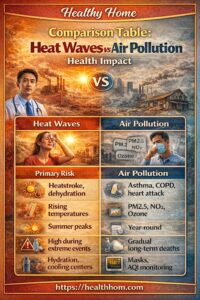
Comparison Table: Heat Waves vs Air Pollution Health Impact
| Feature | Heat Waves | Air Pollution |
|---|---|---|
| Primary Risk | Heatstroke, dehydration | Asthma, COPD, heart attack |
| Trigger | Rising temperatures | PM2.5, NO2, Ozone |
| Seasonal Pattern | Summer peaks | Year-round |
| Immediate Mortality | High during extreme events | Gradual long-term deaths |
| Prevention | Hydration, cooling centers | Masks, AQI monitoring |
Checklist: Eco-Friendly Lifestyle.
- Use public transport
- Switch to LED lights
- Reduce food waste
- Support renewable energy
- Take part in tree plantation campaigns.
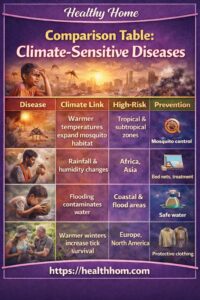
Comparison Table: Climate-Sensitive Diseases
| Disease | Climate Link | High-Risk Regions | Prevention |
|---|---|---|---|
| Dengue fever | Warmer temperatures expand mosquito habitat | Tropical & subtropical zones | Mosquito control |
| Malaria | Rainfall & humidity changes | Africa, Asia | Bed nets, treatment |
| Cholera | Flooding contaminates water | Coastal & flood areas | Safe water |
| Lyme disease | Warmer winters increase tick survival | Europe, North America | Protective clothing |
Did You Know?
- Exposure to heat may cause aggression and stress.
- Air pollution particles (PM2.5) are minute enough to get into the bloodstream and they are smaller than human hair.
- Climate change lengthens the period of pollen seasons which aggravates allergies.
- The heat island effect may make urban areas 37C hotter than rural areas.
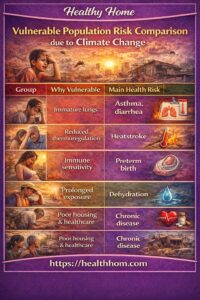
Vulnerable Population Risk Comparison
| Group | Why Vulnerable | Main Health Risk |
|---|---|---|
| Children | Immature lungs | Asthma, diarrhea |
| Elderly | Reduced thermoregulation | Heatstroke |
| Pregnant women | Immune sensitivity | Preterm birth |
| Outdoor workers | Prolonged exposure | Dehydration |
| Low-income communities | Poor housing & healthcare | Chronic disease |
Why WHO deems Climate as Major global health challenge?
The world health organization predicts that climate change will have the following consequences:
- Another 250,000 (2030-2050 projection) deaths per year.
- Increased malnutrition
- Transmission of communicable infections.
- Millions of people are facing water shortage.
Heat Risk Warning Signs
Seek Medical help if :
- Body temperature > 40°C
- Confusion or dizziness
- Rapid pulse
- No sweating during heat
Concluding Points:
Human health is depended on the health of the environment. Pollution, global warming and global climatic changes are quietly creating our health conditions & in most cases, with serious public health concern. Sound good governance by communities and individual people can result in a healthy and stronger society. A responsible attitude towards the environment is to not only save the climate, but also health.
Reference from related posts of Healthy Home:
- Outdoor Wellness Benefits: Sunlight & Nature for Family Health – Healthy Home – Trusted Health Tips for Kids, Teens & Families (healthhom.com)
- Read our guide on anti-inflammatory foods that support heart health during high pollution exposure: Anti-Inflammatory Foods
- 7 Days Meal Plan for Better Nutrition
A balanced weekly meal plan designed to boost energy, improve digestion, and support overall wellness. - Top 5 Anti-Aging Supplements
A science-backed review of supplements that support skin health, longevity, and cellular repair. - 7 Natural Foods for Women’s Hormonal Balance
Natural foods proven to help balance hormones, reduce PMS symptoms, and support reproductive health. - Early Childhood Development
Covers major developmental milestones and activities that support a child’s early brain and physical growth.
Reference from trusted sources :
- Climate change, pollution and health — Impact of chemicals, waste and pollution on human health
- WHO – Climate Change and Health (Fact Sheet)
An overview of how climate change affects global health, including heat stress, diseases, and air quality. - PMC – Human Health Impacts of Climate Change
Peer-reviewed research on climate-related health risks such as respiratory diseases, vector-borne illnesses, and mortality. - United Nations – Causes & Effects of Climate Change
Explains the science behind climate change and its impact on ecosystems, weather patterns, and human life. - The Lancet – Climate Change & Global Public Health
A comprehensive scientific analysis of climate change as a major global health threat. - NASA – Effects of Climate Change
Detailed scientific explanations of rising temperatures, ice melt, sea-level rise, and extreme weather. - Earth.org – Biggest Environmental Problems of Our Time
Covers major environmental threats including pollution, deforestation, species loss, and climate change. - AAFP – Climate Change & Environmental Health Policy
Official policy statement highlighting the medical community’s response to climate-related health challenges. - WHO – Health Impacts of Air Quality & Energy
WHO review of how air pollution and energy systems affect respiratory, cardiovascular, and global health. - PMC – Climate Change & Public Health: Evidence Review
Scientific review discussing climate-related disease patterns, health vulnerabilities, and adaptation strategies.
FAQs:
For more detail, please visit to my website as mentioned below:


About the Author – “Bibhu Ranjan Mund”, Master in Public Health (MPH) from IIHMR University, Jaipur (Rajasthan- IHMR-U/12/2021 -23/0015) has experience of 18 years in Public Health activities like maternal health, child health, adolescent health, nutrition and community wellness programs. Through “Healthy Home”, he shares evidence-based health and wellness guidance designed to support families in making informed lifestyle decisions. This content is for educational purposes only and does not replace professional medical advice. Connect LinkedIn – https://www.linkedin.com/in/bibhu-ranjan-mund-b72171358/