Last Updated on March 22, 2026 by Bibhu Ranjan Mund, MPH
Iodized salt during pregnancy: learn iodine needs, deficiency risks, fetal complications and how to protect your baby’s brain development.
Reviewed by Bibhu Ranjan Mund, MPH (Public Health Expert) with experience in maternal, infant, child, and adolescent health programs. Content is based on evidence-informed guidelines aligned with organizations such as the World Health Organization, UNICEF, Centers for Disease Control and Prevention, and National Institutes of Health.
Last reviewed on: 22 March 2026.
Medical Disclaimer: This content is for informational and educational purposes only and is not intended as medical advice, diagnosis, or treatment. Always seek the advice of a qualified healthcare professional regarding any medical condition or concerns.
Affiliate Disclosure: This article contains affiliate links. If you purchase through these links, we may earn a small commission at no extra cost to you.
Iodized Salt During Pregnancy – Adequate iodine is important for the proper growth of both a baby’s thyroid and brain. Iodine supplements such as iodine-enriched salt, are usually recommended for pregnant and breastfeeding mothers. Despite adding iodine to salt, there are still elements that could make the infant iodine deficient.
Statistics
- The worldwide iodine intake is inadequate among 2 billion citizens (approximately). (Source: WHO, 2023)
- Iodine deficiency is a major cause of cognitive impairment that can be prevented in the world. (Source: UNICEF, 2022)
- Since the 1990s, severe deficiency has been brought down tremendously through universal salt iodization programmes. (Source: WHO, 2023)
- The pregnant women are still a high-risk group of the population since they have higher requirements of iodine. (Source: NIH, 2023)
Introduction to Iodized Salt During Pregnancy:
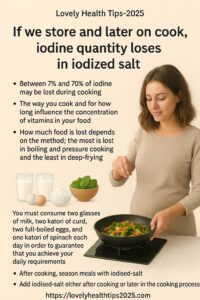
If we store and later on cook, iodine quantity loses in iodized salt.
- Between 7% and 70% of iodine may be lost during cooking. The way you cook and for how long influence the concentration of vitamins in your food.
- How much food is lost depends on the method; the most is lost in boiling and pressure cooking and the least in deep-frying.
- You must consume two glasses of milk, two katori of curd, two full-boiled eggs, and one katori of spinach each day in order to guarantee that you achieve your daily requirements.
- After cooking, season meals with Iodised-salt.
- Add Iodised-salt either after cooking or later in the cooking process.
- Don’t keep it near the heat and steam in the kitchen.
- It should be kept in an airtight glass jar after it has been opened.
- According to WHO and NIH, the recommended iodine intake during pregnancy is 220 mcg per day
Quick Summary:
- Iodine supports baby’s brain development
- Use iodized salt correctly
- Avoid excessive intake
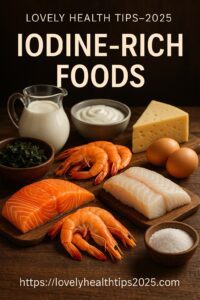
- Include iodine-rich foods
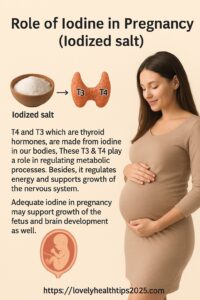
Role of Iodine in Pregnancy (Iodized salt)
T4 and T3 which are thyroid hormones, are made from iodine in our bodies. These T3 & T4 plays a role in regulating metabolic processes. Besides, it regulates energy and supports growth of the nervous system. Adequate iodine in pregnancy may support growth of the fetus and brain development as well.
The risk of iodine deficiency in pregnant women.
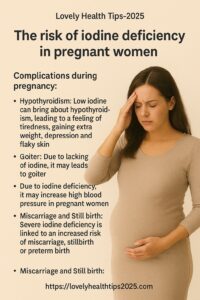
1. Complications during pregnancy:
- Hypothyroidism: Low iodine can bring about hypothyroidism, leading to a feeling of tiredness, gaining extra weight, depression and flaky skin.
- Goiter : Due to lack of iodine, it may leads to goiter.
- Due to iodine deficiency, it may increase high blood pressure in pregnant women.
- Miscarriage and Still birth: Severe iodine deficiency is linked to an increased risk of miscarriage, stillbirth or preterm birth.
2. Fetal Complications
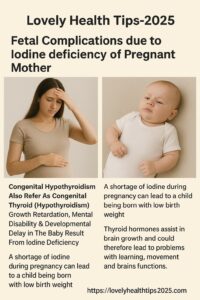
- Congenital Hypothyroidism Also Refer As Congenital Thyroid (Hypothyroidism) Growth Retardation, Mental Disability & Developmental Delay In The Baby Result From Iodine Deficiency.
- Severe and prolonged iodine deficiency, which is rare today, may result in serious developmental conditions if left unaddressed. It may cause children to have stunted growth, mental delays and problems with both speaking and hearing.
- A shortage of iodine during pregnancy can lead to a child being born with low birth weight.
- With regards to neurodevelopment, thyroid hormones assist in brain growth and could therefore lead to problems with learning, movement and brains functions.
Iodine deficiency — and why pregnant mothers have it.
- Not eating enough dairy, seafood eggs is one reason why people may eat low-iodine foods.
- Mothers in regions where iodine is hard to get or people don’t typically eat iodized salt are more like to experience from iodine deficiency during pregnancy.
- The requirement of Iodine is increased during pregnancy– During pregnancy the Thyroid is in an active state of activities, which necessitates a large amount of iodine which is required both for maternal and fetal thyroid.
- In some cases, digestive disorders or a poor diet cause iodine not to be absorbed by the body.

How to Prevent & Manage the Iodine Deficiency:
Foods That Naturally Contain Iodine:
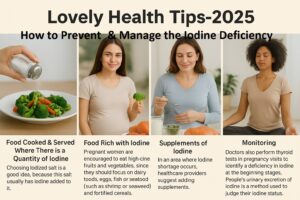
- Choosing iodized salt is a good idea, because this salt usually has iodine added to it.
- Iodine deficiency in fish and other animals is treated using government programs that supply fish food and iodized salt.
Common Mistakes to Avoid
- Adding salt too early in cooking
- Using non-iodized salt
- Over-relying on supplements
Food rich with Iodine are as follows:
- Pregnant women are encouraged to eat high-iodine fruits and vegetables, since they should focus on dairy foods, eggs, fish or seafood (such as shrimp or seaweed) and fortified cereals.
Supplements of Iodine:
- In an area where iodine shortage occurs, healthcare providers suggest adding supplements.
The additional pregnancy requirements are supported by iodine enhancement found in prenatal vitamins.
Monitoring:
- Doctors also perform thyroid tests in pregnancy visits to identify a deficiency in iodine at the beginning stages. People’s urinary excretion of iodine is a method used to judge their iodine status.
- Both government health programs and health agencies strive to ensure that everyone can get access to iodized salt.
Daily Iodine Requirement by Life Stage
| Group | Recommended Intake (mcg/day) |
|---|---|
| Children (1–8 yrs) | 90 |
| Adolescents | 120 |
| Adults | 150 |
| Pregnant Women | 220 |
| Breastfeeding Mothers | 290 |
(Source: World Health Organization & National Institutes of Health)
Global Burden of Iodine Deficiency
- Approximately two billion people on earth lack adequate intake of iodine.
- Iodine deficiency is present in almost 30 percent of school-going children in the world.
- The most common preventable cause of intellectual disability in the world is iodine deficiency.
- The severe deficiency has decreased by 1990 through Universal Salt Iodization programs.
- Even in the countries where the policy of iodized salt exists, pregnant women remain one of the high-risk groups.
Effects of Iodine Deficiency by Severity
| Severity | Mother | Baby |
|---|---|---|
| Mild | Fatigue | Slight learning difficulty |
| Moderate | Goiter | Developmental delay |
| Severe | Hypothyroidism | Congenital hypothyroidism |
| Extreme | Pregnancy complications | Cretinism (rare today) |
Iodine Content in Common Foods
| Food | Approx. Iodine (mcg per serving) |
|---|---|
| Iodized salt (½ tsp) | 150 |
| Milk (1 cup) | 85 |
| Curd/Yogurt (1 cup) | 75 |
| Boiled Egg (1) | 24 |
| Shrimp (100g) | 35 |
| Seaweed (varies) | 16–2,000 |
| Spinach (½ cup cooked) | 3 |
Deficiency vs Excess Iodine: Comparison
| Issue | Deficiency | Excess Intake |
|---|---|---|
| Thyroid effect | Hypothyroidism | Hyperthyroidism |
| Pregnancy risk | Low birth weight | Thyroid dysfunction |
| Safe Upper Limit | – | 1,100 mcg/day |
When to Discuss with a Doctor
- Thyroid concerns
- Dietary restrictions
- Pregnancy complications
How Doctors Assess Iodine Status
| Test | Purpose |
|---|---|
| Urinary Iodine Test | Measures iodine excretion |
| TSH Test | Checks thyroid function |
| T3/T4 Test | Evaluates hormone levels |
| Thyroid Ultrasound | Detects goiter |
Iodine Loss by Cooking Method
| Method | Estimated Iodine Loss |
|---|---|
| Boiling | High (up to 50–70%) |
| Pressure cooking | Moderate–High |
| Frying | Moderate |
| Adding salt after cooking | Minimal loss |
Why Iodine Matters in Each Trimester
| Trimester | Importance |
|---|---|
| 1st | Brain & neural tube development |
| 2nd | Thyroid hormone production |
| 3rd | Rapid brain growth |
Key Points:
When the mother does not get enough iodine, both she and the baby may experience serious issues, but these problems can still be quickly treated. All of us should try to get the necessary iodine, as it’s good for health and a well-balanced diet. The greatest defense against iodine deficiency comes from doing what is necessary to ensure your baby’s health and safety during pregnancy.
FAQs:
Related Health Articles from Healthy Home :
- Early Childhood Development – Building Foundations for Life
- Global Developmental Delay – Understanding, Signs & Intervention
- Can My Infant Still Have an Iodine Shortage Even If I Use Iodized Salt?
- Folic Acid – Essential Nutrient for Pregnancy & Child Growth
- Antenatal Iron Supplementation – Best Practices for Expecting Mothers
Trusted References and Research Sources:
- Iodine for Pregnancy – WHO ELENA Intervention — A key resource on the role of iodine supplementation during pregnancy for maternal and child health.
- Salt Iodization: Iodized Salt for Prevention of Iodine Deficiency Disorders – WHO ELENA Review — Insight into iodized salt programmes and how they prevent iodine-deficiency disorders globally.
- Iodine Fact Sheet for Health Professionals – NIH ODS — Detailed guidance for health professionals on iodine nutrition, needs, sources, and deficiency risks.
- What Is Iodized Salt? – WebMD — Easy-to-understand overview of iodized salt, why we use it, and its benefits for general health.
- Salt Iodization – WHO ELENA Intervention Summary — Programmatic summary on salt iodization strategies and implementation in public health.
- Research Article: Iodine Nutrition and Iodized Salt Efficacy – PMC (Free Full Text) — Peer-reviewed study exploring the effectiveness of iodized salt programmes in diverse populations.
- Historical Study: Iodine Content of Iodized Salt in the United States – EMRO/WHO (1996) — Early investigation of iodized salt coverage and iodine nutrition in the U.S. context.
- ResearchGate Publication: Iodine Nutrition – United States Iodized Salt Content — Detailed research on iodized salt content and iodine intake in the U.S. population.
For more detail, please visit to my website as mentioned below:


About the Author – “Bibhu Ranjan Mund”, Master in Public Health (MPH) from IIHMR University, Jaipur (Rajasthan- IHMR-U/12/2021 -23/0015) has experience of 18 years in Public Health activities like maternal health, child health, adolescent health, nutrition and community wellness programs. Through “Healthy Home”, he shares evidence-based health and wellness guidance designed to support families in making informed lifestyle decisions. This content is for educational purposes only and does not replace professional medical advice. Connect LinkedIn – https://www.linkedin.com/in/bibhu-ranjan-mund-b72171358/