Last Updated on March 22, 2026 by Bibhu Ranjan Mund, MPH
Discover how food affects mental health, mood and brain function. Learn essential nutrients, healing foods and diet tips for a healthy mind.
Reviewed by Bibhu Ranjan Mund, MPH (Public Health Expert) with experience in maternal, infant, child, and adolescent health programs. Content is based on evidence-informed guidelines aligned with organizations such as the World Health Organization, UNICEF, Centers for Disease Control and Prevention, and National Institutes of Health.
Last reviewed on: 22 March 2026.
Medical Disclaimer: This content is for informational and educational purposes only and is not intended as medical advice, diagnosis, or treatment. Always seek the advice of a qualified healthcare professional regarding any medical condition or concerns.
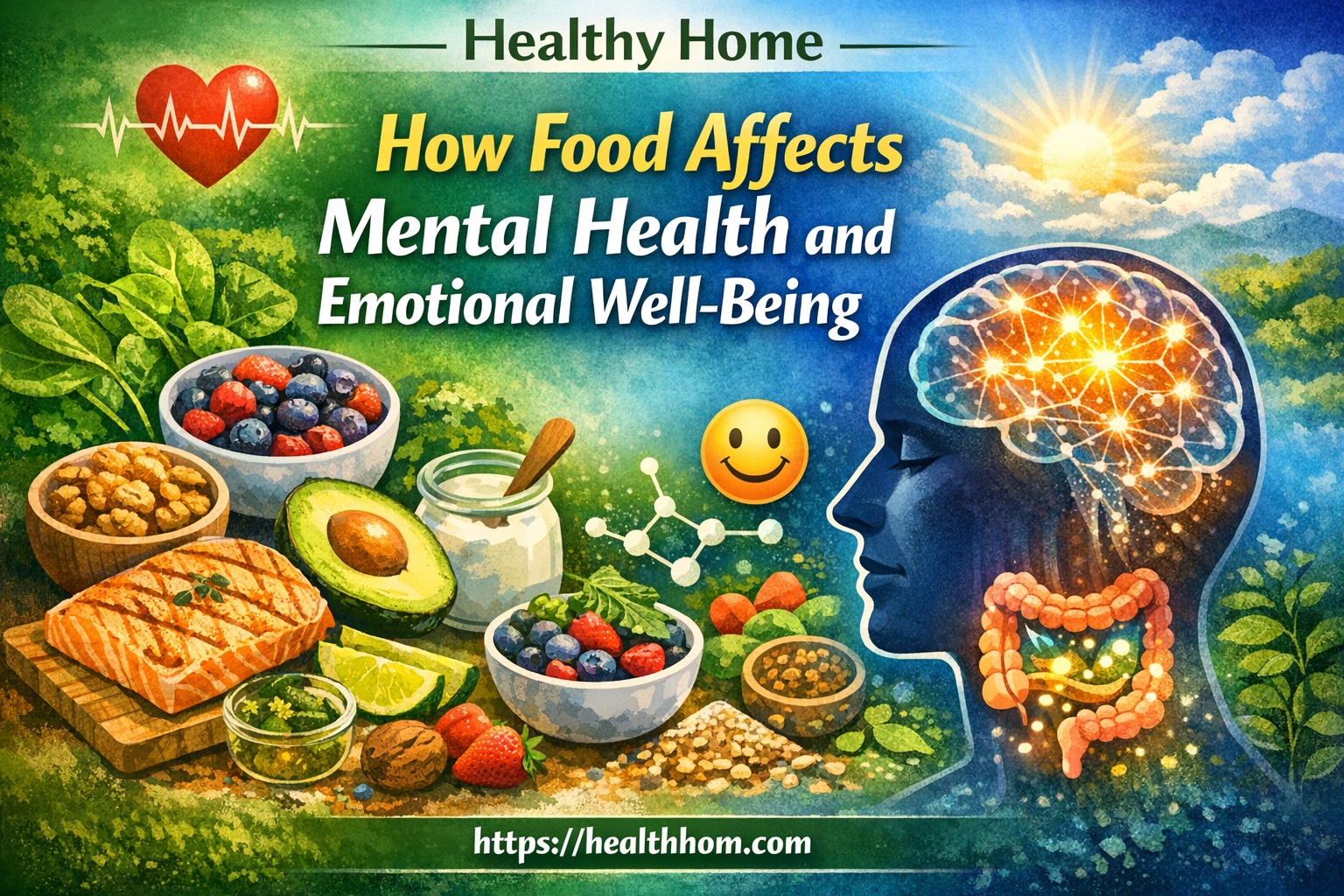
Stress, anxiety, low mood and poor concentration are some of the mental health issues that are becoming more prevalent in the hectic lifestyle of today. Although therapy and exercise are relevant as well as social support, diet has a strong and neglected influence on mental health.
According to scientific research, the foods that we consume has a direct effect on brain chemistry, neurotransmitter production, gut health and inflammation, which all have an impact on mood, memory and emotional balance. Food in simple terms does not only power the body but also feeds the mind.
This article discusses the impact of food on the mind, the importance of the relevant nutrients, brain-nourishing foods and real-world ideas on how to sustain a healthy, balanced mind by the use of food.
Global Mental Health and Nutrition Overview
| Indicator | Global Insight | Source |
|---|---|---|
| People living with mental health conditions worldwide | About 970 million people | WHO Mental Health Report 2022 |
| Depression prevalence globally | One of the leading causes of disability | WHO Mental Health Report 2022 |
| Role of diet in mental well-being | Balanced diets linked with better mental health outcomes | Harvard Health Publishing 2015 |
| Population not consuming recommended healthy diets | Majority of global population | WHO Mental Health Report 2022 |
Influences of food in Brain Chemistry
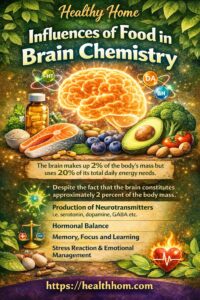
Despite the fact that the brain constitutes approximately 2 percent of the body mass, it takes up almost 20 percent of the total energy requirement of the body on a day-to-day basis. A brain cannot operate effectively without a steady flow of food nutrients.
Nutrition majorly contributes to essential aspects of the brain such as:
- Production of neurotransmitters i.e. serotonin, dopamine, GABA etc.
- Hormonal balance
- Memory, focus and learning
- Stress reaction and emotional management.
Omega-3 fatty acids, B-vitamins, minerals, and antioxidants are some of the nutrients that can ensure healthy neuron communication and a healthy brain cell is not damaged.
Brain Energy Requirements
| Brain Fact | Explanation |
|---|---|
| Body weight contribution | Brain represents about 2% of body weight |
| Energy consumption | Uses about 20% of body energy |
| Nutrient requirement | Requires steady supply of glucose, fatty acids and micronutrients |
| Functional roles | Supports memory, focus and emotional regulation |
Harvard Medical School Brain Nutrition Review 2018
Comparison: Macronutrients and Brain Function
| Macronutrient | Function in the Brain | Example Foods |
|---|---|---|
| Carbohydrates | Provide primary energy for brain | Whole grains, fruits |
| Proteins | Supply amino acids for neurotransmitters | Eggs, legumes |
| Healthy fats | Support cell membranes and signaling | Nuts, fish |
Source: WHO Nutrition Guidelines 2023
Gut-Brain which functions as Second human Brain
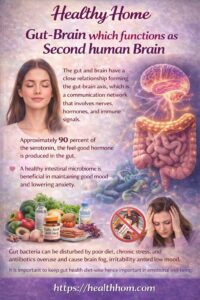
The gut and brain have a close relationship forming the gut-brain axis which is a communication network that involves nerves, hormones, and immune signals. The gut has millions of neurons and trillions of useful bacteria affecting the mental health.
Approximately 90 percent of the serotonin, the feel-good hormone is produced in the gut.
- A healthy intestinal microbiome is beneficial in maintaining good mood and lowering anxiety.
- Gut bacteria can be disturbed by poor diet, chronic stress, and antibiotics overuse and cause brain fog, irritability and low mood.
- It is important to keep gut health diet-wise hence important in emotional well-being.
Gut–Brain Axis Information
| Component | Role |
|---|---|
| Gut microbiome | Trillions of microbes supporting digestion |
| Nervous system link | Gut communicates with brain through the vagus nerve |
| Hormone signaling | Influences neurotransmitter activity |
| Diet influence | Fiber-rich foods support gut microbial diversity |
NIH Gut-Brain Axis Research Review 2020
Effects of the Modern Diet on Mental Health.
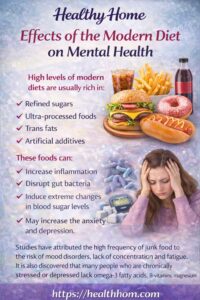
High levels of modern diets are usually rich in:
- Refined sugars
- Ultra-processed foods
- Trans fats
- Artificial additives
These foods can:
- Increase inflammation
- Disrupt gut bacteria
- Induce extreme changes in blood sugar levels.
- May increase the anxiety and depression.
Studies have attributed the high frequency of junk food to the risk of mood disorders, lack of concentration and fatigue. It is also discovered that many people who are chronically stressed or depressed lack omega-3 fatty acids, B-vitamins, magnesium and zinc.
Comparison Table: Healthy Diet vs Ultra-Processed Diet
| Aspect | Balanced Whole-Food Diet | Ultra-Processed Diet |
|---|---|---|
| Main components | Fruits, vegetables, whole grains | Sugary snacks, refined foods |
| Nutrient density | High vitamins and minerals | Often low nutrient density |
| Gut microbiome support | Supports beneficial bacteria | May disrupt gut balance |
| Energy levels | More stable energy supply | Frequent energy fluctuations |
WHO Healthy Diet Guidelines 2023
Essential Nutrients to Mental Health.
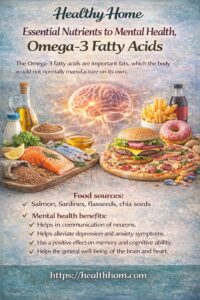
Omega-3 Fatty Acids
The Omega-3 fatty acids are important fats, which the body would not normally manufacture on its own.
Food sources:
Salmon, Sardines, flaxseeds, chia seeds.
Mental health benefits:
- Helps in communication of neurons.
- The helps alleviate depression and anxiety symptoms.
- Has a positive effect on memory and cognitive ability.
- Helps the general well-being of the brain and heart.
Important Nutrients for Brain and Emotional Health
| Nutrient | Main Role in Brain Function | Common Food Sources |
|---|---|---|
| Omega-3 fatty acids | Supports neuron communication | Fish, flaxseeds |
| B-complex vitamins | Involved in neurotransmitter production | Whole grains, eggs |
| Magnesium | Supports nerve function | Nuts, leafy greens |
| Zinc | Supports immune and cognitive function | Seeds, legumes |
| Antioxidants | Protect cells from oxidative stress | Fruits and vegetables |
Source: Harvard Nutrition Psychiatry Overview 2015 and NIH Nutrition Research 2020
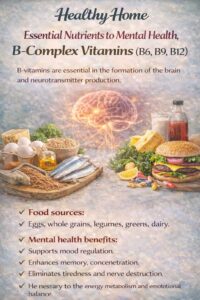
B-Complex Vitamins (B6, B9, B12):
B-vitamins are essential in the formation of the brain and neurotransmitter production.
Food sources:
Eggs, whole grains, legumes, greens, dairy.
Mental health benefits:
- Supports mood regulation
- Enhances memory, concentration.
- Eliminates tiredness and nerve destruction.
- Necessary to the energy metabolism and emotional balance.
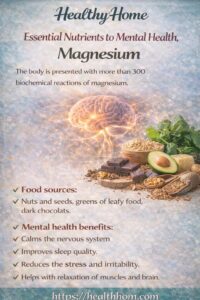
Magnesium:
The body is presented with more than 300 biochemical reactions of magnesium.
Food sources:
Nuts and seeds, greens of leafy food, dark chocolate, whole grains.
Mental health benefits:
- Calms the nervous system
- Improves sleep quality
- Reduces the stress and irritability.
- Helps with relaxation of muscles and brain.
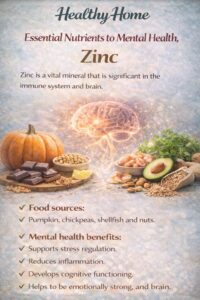
Zinc:
Zinc is a vital mineral that is significant in the immune system and brain.
Food sources:
Pumpkin, chickpeas, shellfish and nuts.
Mental health benefits:
- Supports stress regulation
- Reduces inflammation
- Develops cognitive functioning.
- Helps to be emotionally strong.
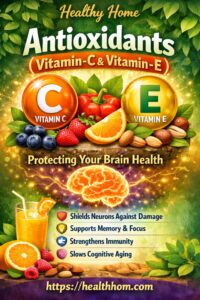
Antioxidants (Vitamin-C & Vitamin-E)
Antioxidants help in preventive activities against the oxidative stress and inflammation of the brain cells.
Food sources:
Fruits Berries, citrus fruits, bell peppers, nuts, seeds.
Mental health benefits:
- Shields the neurons against damage.
- Supports memory and focus
- Strengthens immunity
- Slows cognitive aging
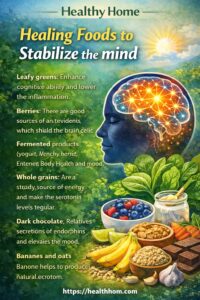
Healing Foods to Stabilize the mind.
There are several foods that will naturally help to maintain the brain and emotional balance:
- Leafy greens: Enhance cognitive ability and lower the inflammation.
- Berries: These are good sources of antioxidants which shield the brain cells.
- Fermented products (yogurt, kimchi, kefir): Enhance body health and mood.
- Whole grains: Are a steady source of energy and make the serotonin levels regular.
- Dark chocolate: Relatives secretions of endorphins and elevates the mood.
- Bananas and oats: Banana helps to produce natural serotonin.
- Turmeric and garlic: Anti-inflammatory agents
There is no need to be perfect when eating healthy, what counts the most is to eat in a regular, conscious manner.
Foods that Support Mental Well-Being
| Food Group | Nutritional Contribution |
|---|---|
| Leafy vegetables | Rich in vitamins and antioxidants |
| Berries | Source of plant antioxidants |
| Fermented foods | Support gut microbial balance |
| Whole grains | Provide steady energy |
| Nuts and seeds | Provide healthy fats and minerals |
Harvard T.H. Chan School of Public Health 2021
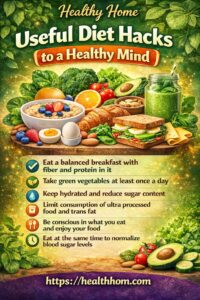
Useful Diet Hacks to a Healthy Mind.
- Eat a balanced breakfast with fiber and protein in it.
- Take green vegetables at least once a day.
- Keep hydrated and reduce sugar content.
- Limit consumption of ultra processed food and trans fat.
- Be conscious in what you eat and enjoy your food.
- Eat at the same time to normalize blood sugar levels.
Dietary Habits that Support Mental Wellness
| Habit | Why It Matters |
|---|---|
| Regular meals | Helps maintain stable energy levels |
| Balanced nutrition | Supports brain nutrient needs |
| Adequate hydration | Important for cognitive performance |
| Limiting excess sugar | Helps maintain energy balance |
| Mindful eating | Encourages healthy food choices |
Source: WHO Healthy Lifestyle Recommendations 2022
You may read more : What is a balanced daily meal plan?
Quick Reference of nutrient:
| Nutrient | Example Food Sources | General Role |
|---|---|---|
| Omega-3 | Fish, flaxseed | Supports brain structure |
| Vitamin B complex | Eggs, legumes | Supports energy metabolism |
| Magnesium | Nuts, seeds | Supports nerve function |
| Zinc | Pumpkin seeds, chickpeas | Supports immune and brain processes |
| Vitamin C | Citrus fruits | Antioxidant protection |
Source: NIH Office of Dietary Supplements 2023
Conclusion – Eat Your Way to Mental Peace.
The state of the mind starts in the kitchen. The kind of foods you eat every day does not only affect physical well-being, but also emotional stability, sharpness, and strength.
A healthy body can help you maintain a clearer head, enhanced concentration, and elevated spirits by feeding on nutrient-rich foods that are healthy. One of the most efficient and easy measures to long-term mental health is eating well.
- Eat for Mental Peace
- Focusing on mental well-being arises from the decisions you make while cooking in your kitchen.
- The choice of different meals can provide your organism with food and also nourish your soul.
- Your everyday life will become clearer and more focused and joyous by selecting foods that make informed choices.
- Eating should therefore be your every day strategy to ensure that you put personal wellness first.
Lifestyle Factors Supporting Mental Health
| Lifestyle Factor | Importance |
|---|---|
| Balanced nutrition | Supports overall brain function |
| Physical activity | Supports mood regulation |
| Adequate sleep | Helps brain recovery |
| Social connection | Supports emotional well-being |
Source: WHO Mental Health Promotion Guidelines 2022
Related Health Articles from Healthy Home
- Healthy Home – Fermented Food for Gut Health: https://healthhom.com/fermented-food-for-gut-health/
- Healthy Home – Reduce Anxiety Naturally:https://healthhom.com/reduce-anxiety-naturally/
- Healthy Home – 7 Days Gut Health Plan:https://healthhom.com/7-days-gut-health-plan/
- Healthy Home – Eco-Friendly Eating & Nutrition:https://healthhom.com/eco-friendly-eating-nutrition/
- Healthy Home – What Is a Balanced Daily Meal Plan?:https://healthhom.com/what-is-a-balanced-daily-meal-plan/
Trusted References and Research Sources:
1. Adolescent Mental Health – YouTube Video:
https://www.youtube.com/embed/QTdVC6tk4Fo?si=XWqE52jXMVfkxWSc
2. Harvard Health Publishing – Nutritional Psychiatry & Food on Mood:
https://www.health.harvard.edu/blog/nutritional-psychiatry-your-brain-on-food-201511168626
3. WHO – Healthy Diet & Nutrition:
https://www.who.int/news-room/fact-sheets/detail/healthy-diet
4. PMC Article (Brain Health & Nutrition):
https://pmc.ncbi.nlm.nih.gov/articles/PMC7322666/
5. APA – Food & Mental Health:
https://www.apa.org/monitor/2017/09/food-mental-health
6. PubMed Study – Nutrition & Mental Health:
https://pubmed.ncbi.nlm.nih.gov/32601102/
7. WHO – Mental Health: Strengthening Our Response:
https://www.who.int/news-room/fact-sheets/detail/mental-health-strengthening-our-response
FAQs
For more detail, please visit to my website as mentioned below:


About the Author – “Bibhu Ranjan Mund”, Master in Public Health (MPH) from IIHMR University, Jaipur (Rajasthan- IHMR-U/12/2021 -23/0015) has experience of 18 years in Public Health activities like maternal health, child health, adolescent health, nutrition and community wellness programs. Through “Healthy Home”, he shares evidence-based health and wellness guidance designed to support families in making informed lifestyle decisions. This content is for educational purposes only and does not replace professional medical advice. Connect LinkedIn – https://www.linkedin.com/in/bibhu-ranjan-mund-b72171358/
Hey team healthhom.com,
Hope your doing well!
I just following your website and realized that despite having a good design; but it was not ranking high on any of the Search Engines (Google, Yahoo & Bing) for most of the keywords related to your business.
We can place your website on Google’s 1st page.
* Top ranking on Google search!
* Improve website clicks and views!
* Increase Your Leads, clients & Revenue!
Interested? Please provide your name, contact information, and email.
Bests Regards,
Ankit
Best AI SEO Company
Accounts Manager
http://www.bestaiseocompany.com
Phone No: +1 (949) 508-0277
Please send email – lovelyhealthtips2025@gmail.com
Hey team healthhom.com,
Hope your doing well!
I just following your website and realized that despite having a good design; but it was not ranking high on any of the Search Engines (Google, Yahoo & Bing) for most of the keywords related to your business.
We can place your website on Google’s 1st page.
* Top ranking on Google search!
* Improve website clicks and views!
* Increase Your Leads, clients & Revenue!
Interested? Please provide your name, contact information, and email.
Bests Regards,
Ankit
Best AI SEO Company
Accounts Manager
http://www.bestaiseocompany.com
Phone No: +1 (949) 508-0277