Last Updated on March 22, 2026 by Bibhu Ranjan Mund, MPH
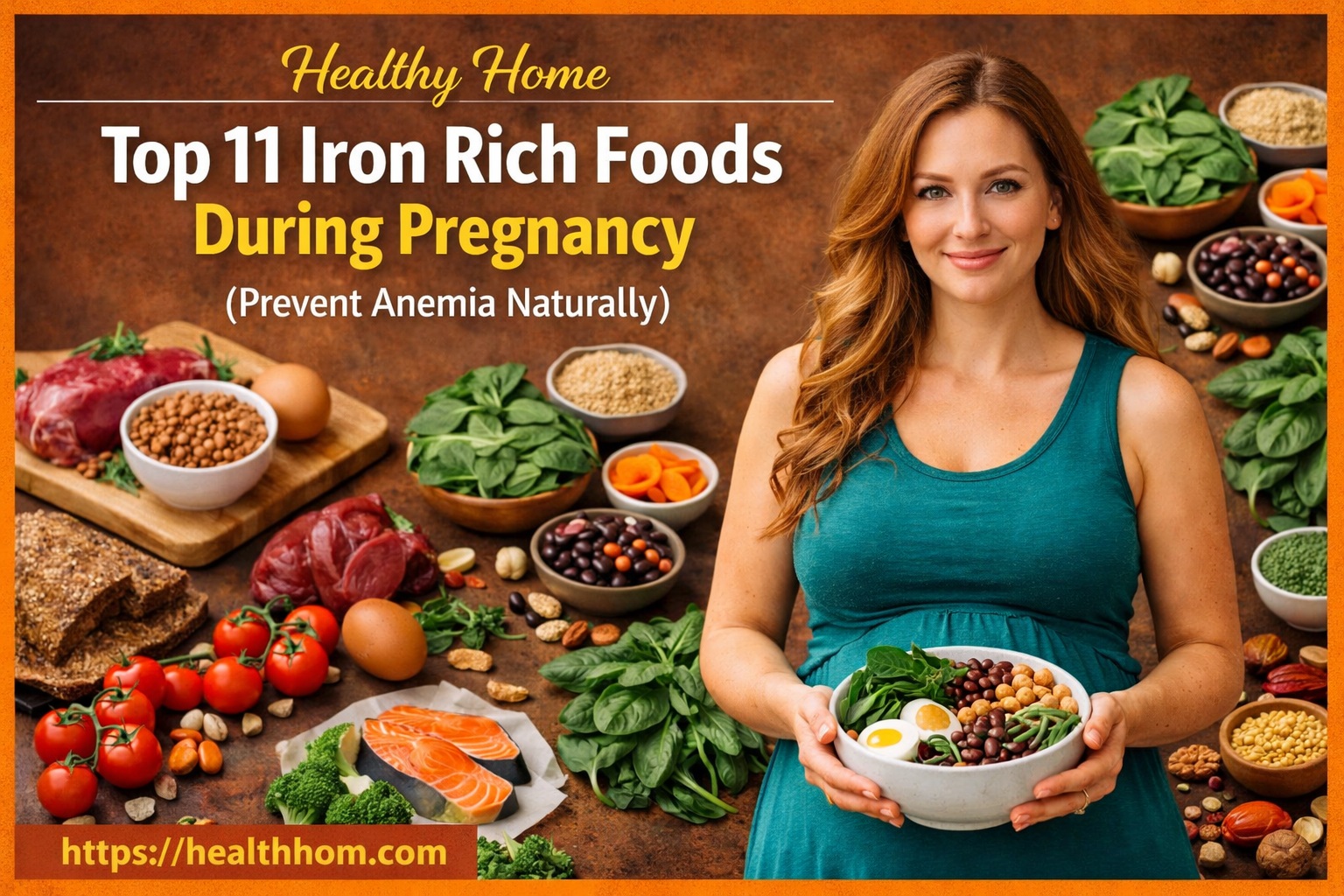
Discover the best iron rich foods during pregnancy to prevent anemia, increase energy and support healthy fetal development. Includes diet tips and absorption methods.
Reviewed by Bibhu Ranjan Mund, MPH (Public Health Expert) with experience in maternal, infant, child, and adolescent health programs. Content is based on evidence-informed guidelines aligned with organizations such as the World Health Organization, UNICEF, Centers for Disease Control and Prevention, and National Institutes of Health.
Last reviewed on: 22 March 2026.
Medical Disclaimer: This content is for informational and educational purposes only and is not intended as medical advice, diagnosis, or treatment. Always seek the advice of a qualified healthcare professional regarding any medical condition or concerns.
Affiliate Disclosure: This article contains affiliate links. If you purchase through these links, we may earn a small commission at no extra cost to you.
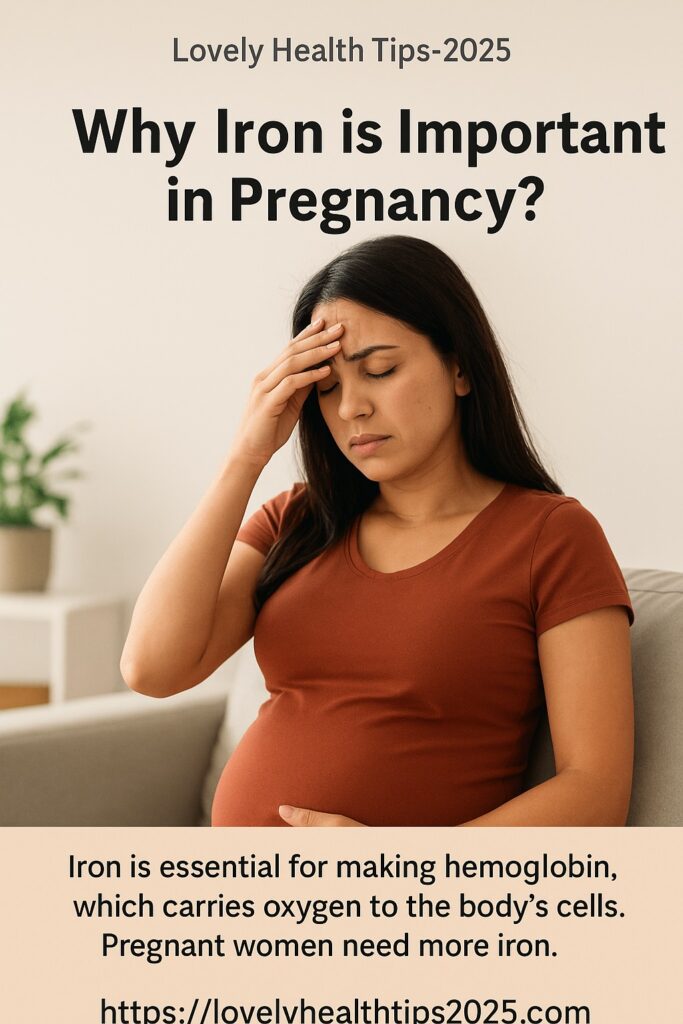
Why Iron is Important in Pregnancy?
The process of pregnancy is a strong growth and developmental stage and the nutritional requirements of the body are exceptionally high. Iron is one of the most important nutrients needed at this period. Iron assists in the production of hemoglobin which is the protein that carries oxygen in blood. When a woman is pregnant, the blood volume expands by almost half, which implies that the iron needs of a pregnant woman also increase. It is unfortunate that most mothers are affected by iron deficiency anemia which may cause weakness, dizziness, poor appetite, fatigue and complication of both the mother and the baby.
This article provides the reasons why iron is so important in pregnancy, the required amount of iron and the most appropriate iron rich foods that should be incorporated in a daily diet.
Women who are pregnant require 27 milligrams of iron per day to prevent the occurrence of anemia and to maintain the development of the unborn baby. The type of foods that contain a lot of iron during pregnancy are spinach, lentils, eggs, chicken, pumpkin seeds, millets and fortified cereals with iron. Add vitamin C so that it is better absorbed.
Quick Summary :
- During the period of pregnancy, iron is critical in the formation of hemoglobin and the supply of oxygen to the child.
- The recommended amount of iron needed by pregnant women is 27mg per day.
- Foods that are best natural sources are the leafy greens, lentils, eggs, meats, seeds, millets and fortified foods.
- Meat which is heme iron is better absorbed than non-heme iron i.e. plants.
- Vitamin C enhances the absorption of iron (lemon, orange, amla).
- Do not take tea and coffee with iron-rich food.
- Weariness, dizziness, paleness of skin and dyspnea may result due to iron deficiency.
- Frequent antenatal examinations provide checking of the hemoglobin levels.
Iron helps in having a number of essential functions to both the mother and the baby as follows:
1. Helps to Form Hemoglobin in the blood
Iron assists in the formation of hemoglobin which makes sure that mothers have adequate oxygen and nutrients enough to sustain themselves and the baby.
2. Favors the Brain Development of Baby.
Sufficient iron in the body facilitates the development of the brain of the fetus particularly during late pregnancy cycle.
3. Pregnancy Complications Prevention.
Iron deficiency may cause the escalation of the risk of:
- Preterm delivery
- Low birth weight
- Maternal fatigue
- Adequate iron intake may help reduce the risk of postpartum fatigue and mood changes.
- Retarded development of the infant.
4. Strengthens Immunity
Iron also enhances the immune system and therefore the mother is not susceptible to infections during pregnancy.
Additional iron is needed every day during pregnancy; however, the quantity varies based on the trimester in the pregnancy.
The majority of health institutions suggest: 27 mg of iron per day
This quantity takes into consideration iron in:
- Food sources
- Prenatal supplements
- Fortified foods
But the most effective and safe is regarding iron intake through the sources of natural food.
The natural Iron rich foods during pregnancy
Listed below are the most optimal foods with high amounts of iron and with no harm to the general health of the maternal:
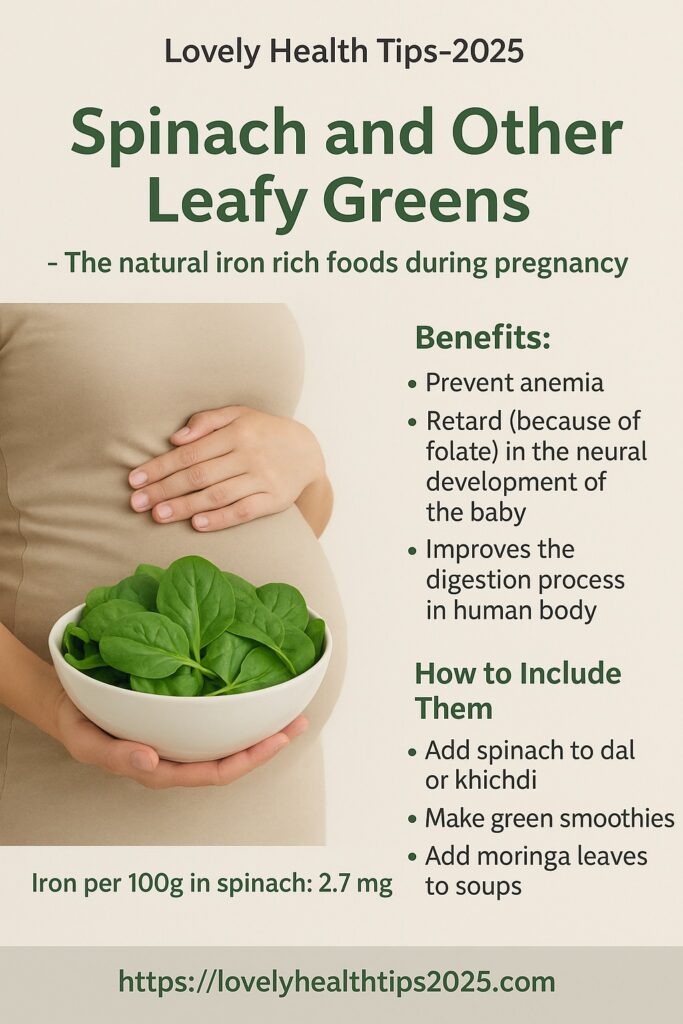
1. Spinach and Other Leafy Greens
Such foods include spinach, kale, moringa leaves and amaranth (chaulai) which are high in non- heme iron, folate, vitamin C, fiber and antioxidants.
- Benefits:
- Prevent anemia
- Retard (because of folate) in the neural development of the baby
- Improves the digestion process in human body
- How to Include Them
- Add spinach to dal or khichdi
- Make green smoothies
- Add moringa leaves to soups
- Prepare saag with roti
Iron per 100g in spinach: 2.7 mg
2. Lentils and Legumes
The moong dal, masoor dal, chana, rajma, peas and cowpeas are all good plant sources of both iron and protein. Legumes are also one of the best natural foods that pregnant women should consume as they contain folate, iron, fiber and magnesium which are sources of plant-based protein.
- Benefits
- Contains a lot of iron, folate, magnesium and fiber.
- Provide long-lasting energy
- Aid in controlling blood sugar level.
- Neural and cognitive development
- Folate helps in the development of the neural and cognitive development of the baby.
- Fiber is beneficial in constipation prevention and stabilization of blood sugar.
- The use of iron prevents anemia during pregnancy
- How to Include Them
- Prepare dal daily
- Peas or black chana can be added to salads after being cooked.
- Prepare rajma curry on the brown rice.
- Chana or black peas salad that has been boiled.
- Dal with rice or roti
- Lentil soup with vegetables
Iron per 100g lentils: 3.3 mg
3. Eggs:
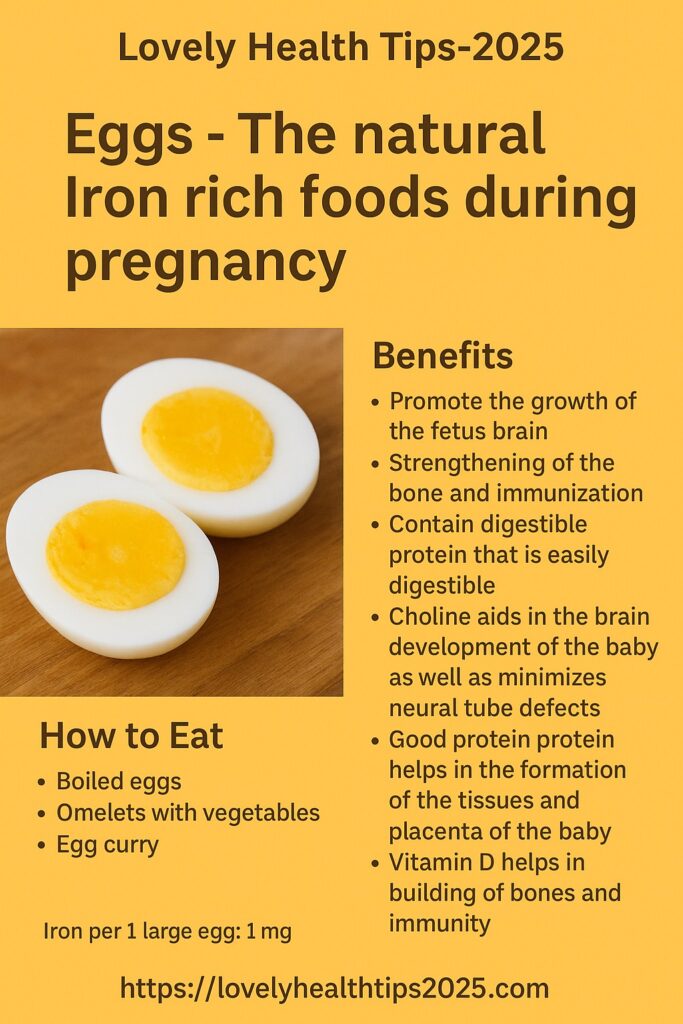
Eggs, and particularly, egg yolk, has moderate amounts of iron, as well as, protein, choline, vitamin B12, and vitamin D. Eggs are one of the most ideal pregnancy foods: they are cheap, easy to digest and they are highly nutritious.
- Benefits
- Promote the growth of the fetus brain.
- Strengthening of the bone and immunization.
- Contain digestible protein that is easily digestible.
- Choline aids in the brain development of the baby as well as minimizes the neural tube defects.
- Good protein protein helps in the formation of the tissues and placenta of the baby.
- Vitamin D helps in building of bones and immunity.
- How to Eat
- Boiled eggs
- Omelets with vegetables
- Egg curry
- 1-2 eggs a day (not medically limited).
Iron per 1 large egg: 1 mg
4. Meat and Poultry (Non-Vegetarian)
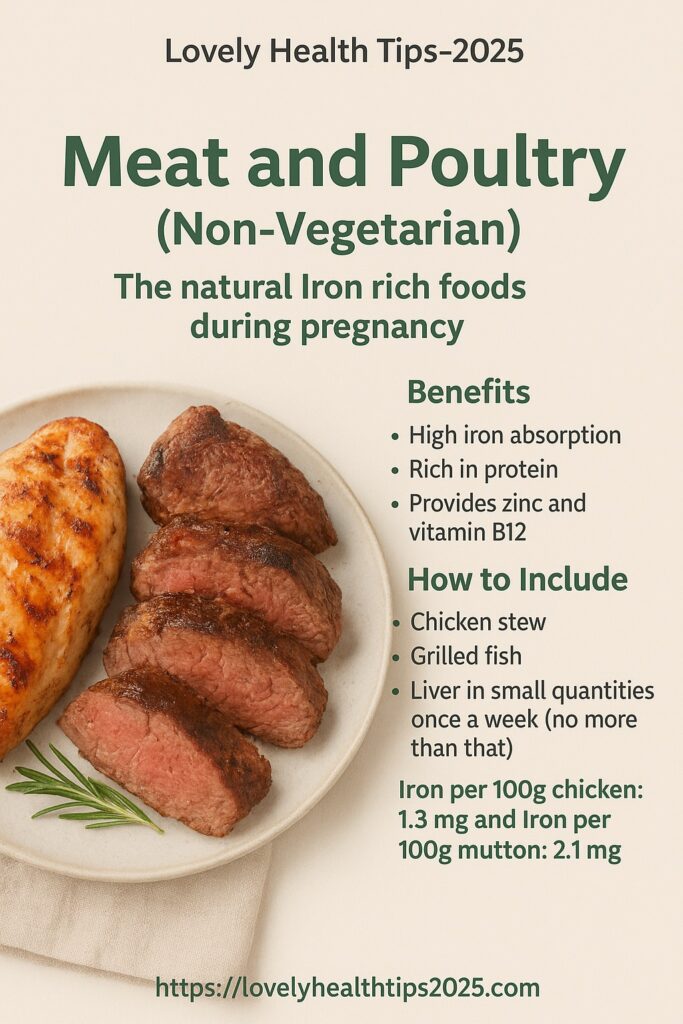
The high amounts of heme iron are found in lean meats including chicken, mutton and liver (in small portions) and are readily absorbed in the body.
- Benefits
- High iron absorption
- Rich in protein
- Provides zinc and vitamin B12
- How to Include
- Chicken stew
- Grilled fish
- Liver in small quantities once a week (no more than that)
Iron per 100g chicken:1.3 mg and Iron per 100g mutton: 2.1 mg
5. Nuts and Seeds
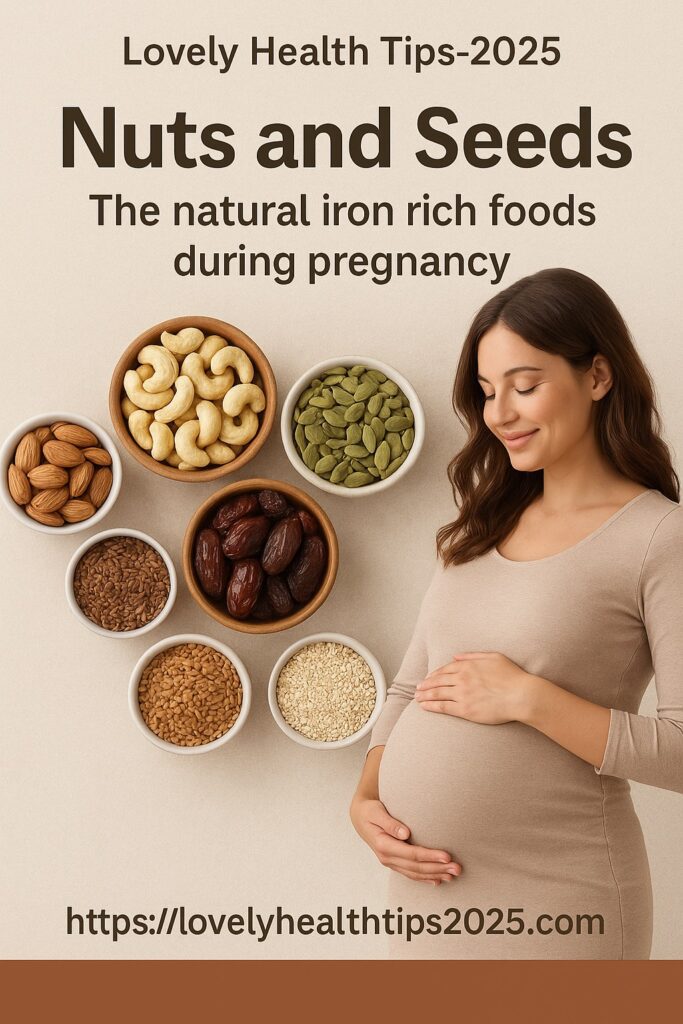
The almonds, cashews, raisins, dates, flaxseeds, pumpkin seeds and sesame seeds contain iron in the super-foods. Nuts and seeds contain healthy fats, omega-3s, protein, fiber and antioxidants which are vital in the growth of the fetus brain.
- Benefits
- Iron-rich, omega-3 and magnesium and fiber.
- Promote the growth of the fetus brain and heart.
- Give maternal hormones healthy fats.
- The Omega-3 fatty acids help in the development of the babies brain and eye functions.
- Healthy fats or fat also help the balance of hormones in the mother.
- Magnesium and fiber are beneficial to the digestive system and decrease cramps.
- How to Include
- Add flaxseed powder to sabzi
- Consume low quantities of mixed nuts in a day.
- Add pumpkin seeds to oatmeal
- Several nuts (20 – 25 gm) and 12 tbsp seeds in a day.
- The morning water should have chia seeds.
- Have a few snacks consisting of mixed nuts.
Iron in pumpkin seeds: 8.8 mg per 100g
6. Whole Grains
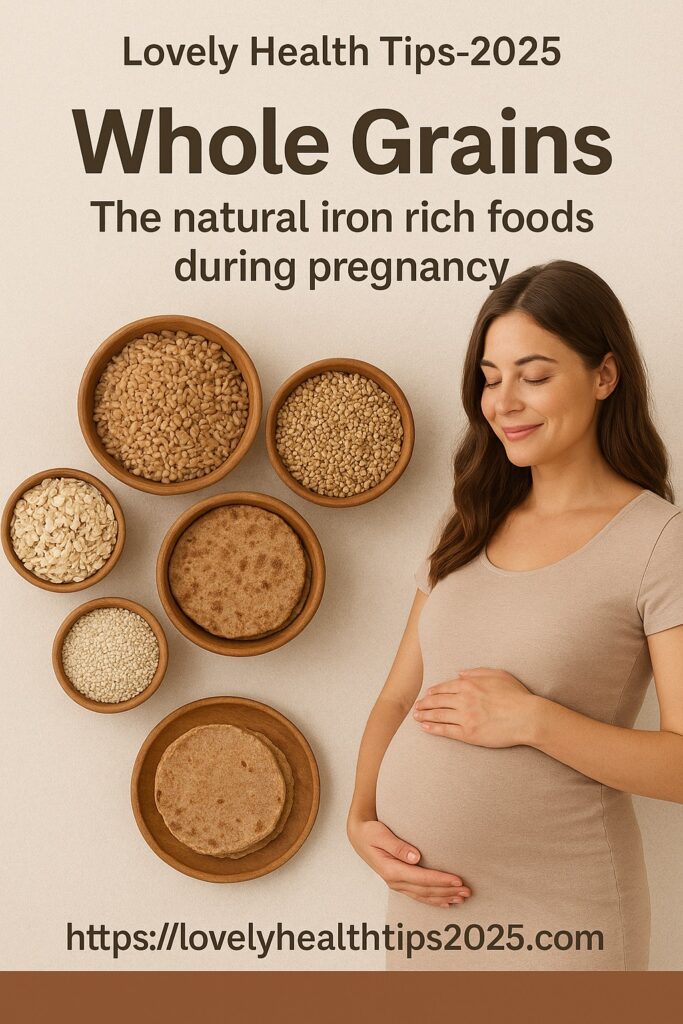
Complex carbs and non-heme iron are found in high amounts in brown rice, oats, wheat, quinoa, bajra and ragi. Wholesome, unprocessed, low in fat, low in sugar, gluten-free, vegan and nutritious.
- Benefits
- Provide steady energy
- Reduce fatigue
- Improve digestion
- Rich in fiber B-vitamins
- Give long and sustained energy to pregnant women.
- Reduce the possibility of gestational diabetes.
- Provide the necessary vitamins in the formation of fetal tissue.
- How to Include
- Oats for breakfast
- Bajra roti for dinner
- Ragi porridge
- Chapati prepared using multigrain flour.
- Whole grain rice in place of white rice.
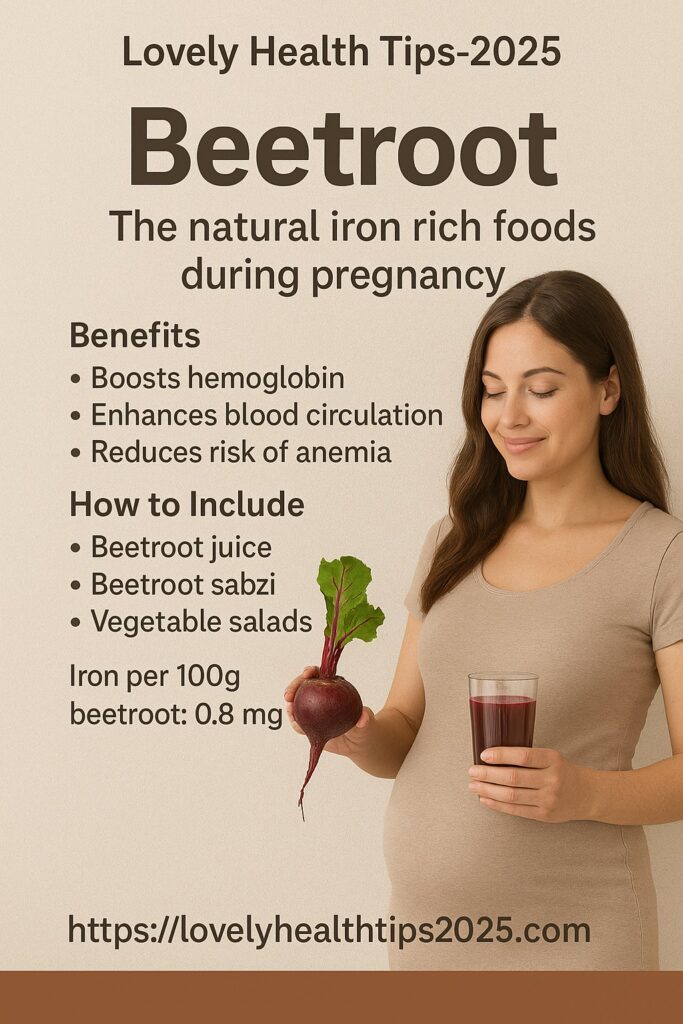
7. Beetroot
The beetroot has high levels of iron, folate, potassium and antioxidants.
- Benefits
- Boosts hemoglobin
- Enhances blood circulation
- Reduces risk of anemia
- How to Include
- Beetroot juice
- Beetroot sabzi
- Vegetable salads
Iron per 100g beetroot: 0.8 mg
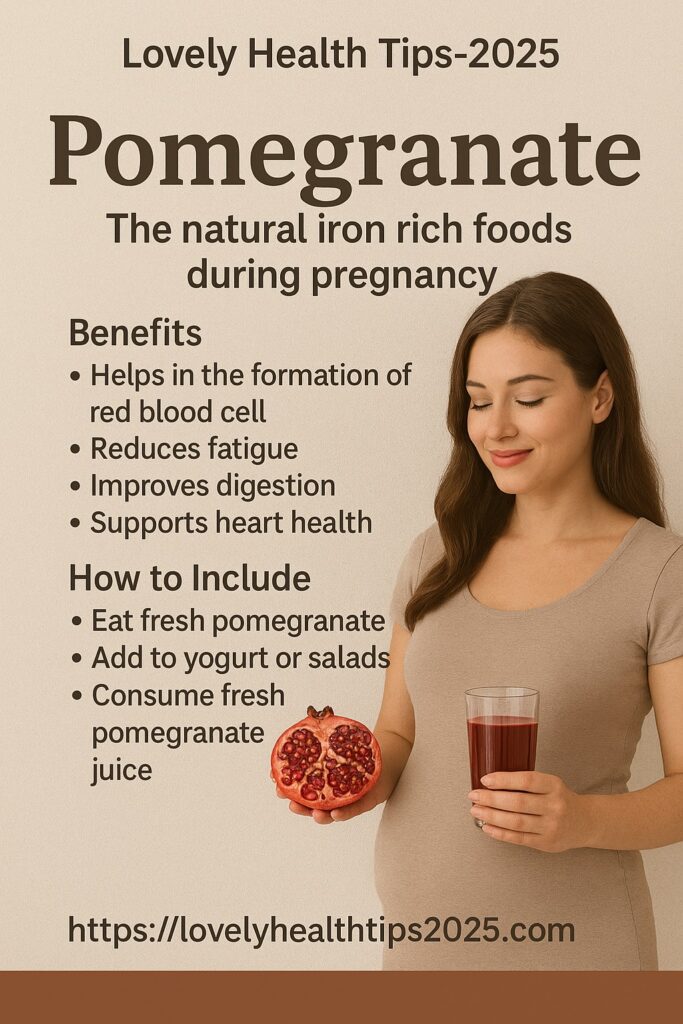
8. Pomegranate
Pomegranate is a natural hemoglobin supplement. It has iron, vitamin C, potassium and fiber
- Benefits
- Helps in the formation of red blood cell.
- Reduces fatigue
- Improves digestion
- Supports heart health
- How to Include
- Eat fresh pomegranate
- Add to yogurt or salads
- Consume fresh pomegranate juice.
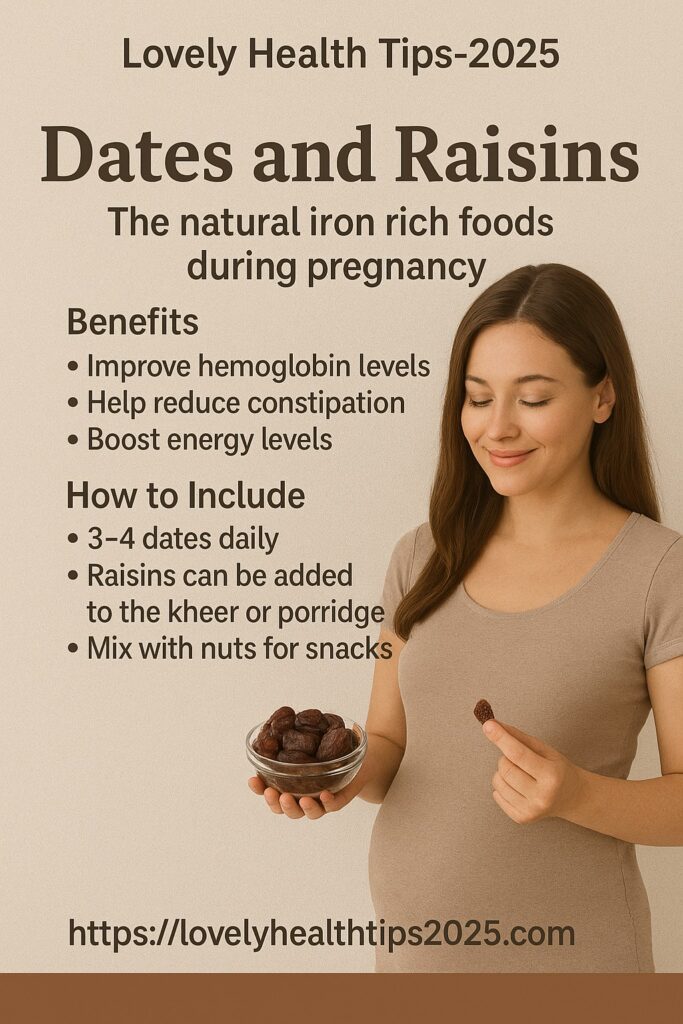
9. Dates and Raisins
Natural sweeteners such as dates, raisins contain high amounts of iron, magnesium and fiber.
- Benefits
- Improve hemoglobin levels
- Help reduce constipation
- Boost energy levels
- How to Include
- 3–4 dates daily
- Raisins can be added to the kheer or porridge
- Mix with nuts for snacks
10. Iron-Fortified Foods
Foods are added some iron to supplement nutrition:
Examples :
- Iron-fortified cereals
- Multigrain breads
- Fortified atta
These assist in achieving the daily recommended iron intake particularly in the case of vegetarian mothers.
11. Millets :
Millets, which are the ancient grains now using as the good source of nutrition for modern people. It has the ability to provide protein, fibre, iron, calcium & antioxidant property which nourish the body efficiently.
The following six types of Millets recipes may be prepared for the Pregnant Women at home:
- Finger Millet Chakuli Cake an Indian Food
- Little Millet Khechudi an Indian Food
- Foxtail Millet Kheeri
- Finger Millet Laddu
- Finger Millet Manda Cake
- Little Millet Upma
You can follow the cooking method from Healthy Recipes of this website. Materials required and preparation time also mentioned in the above article.
Table for Food & Iron quantity:
| Food | Iron (per 100g) | Type |
|---|---|---|
| Spinach | 2.7 mg | Non-heme |
| Lentils | 3.3 mg | Non-heme |
| Pumpkin Seeds | 8.8 mg | Non-heme |
| Chicken | 1.3 mg | Heme |
Improve the Intake of Iron: Different methods
To enhance food absorption of iron, the following tips can be used:
1. Take Vitamin C-Rich Food
Vitamin-C increases the absorption of iron.
Best choices:
- Lemon
- Orange
- Tomato
- Amla
- Guava
2. Soak and Sprout Legumes
This decreases anti-nutrients and enhances the absorption of iron.
3. Do not eat Tea and Coffee with Eats.
The tea and coffee decrease the iron uptake. Keep a 1–2 hour gap.
4. Cook in Iron Kadai
The iron cookware used has a natural effect of adding iron in food.
Red flags of Iron Deficiency during Pregnancy.
The effects of iron deficiency cause the following signs:
- Abdominal discomfort
- Diarrhea
- Nausea
- Dehydration
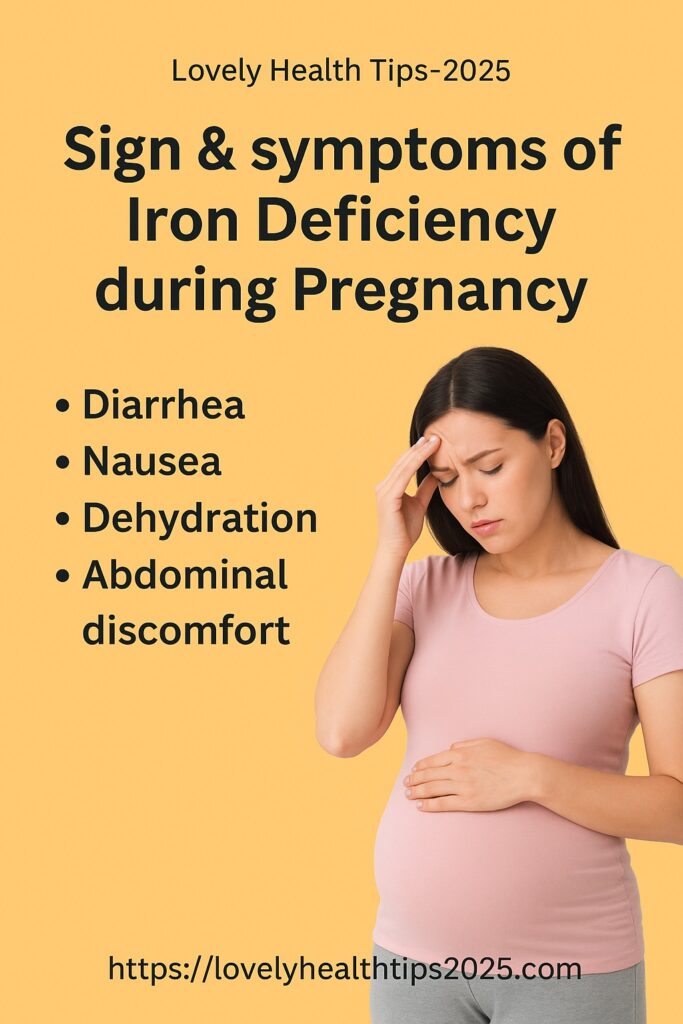
Iron Deficiency during Pregnancy: Symptoms.:
- Persistent fatigue
- Weakness
- Pale skin
- Headache or dizziness
- Hair fall
- Shortness of breath
Consult your doctor to test and take at least a few supplements in case you have any symptoms.
The following foods may be used in less quantity:
- Too much caffeine
- Excess dairy with iron meals
- Foods rich in calcium and Iron-containing meals.
- Processed snacks
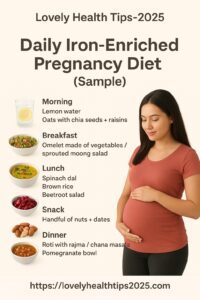
Daily Iron-Enriched Pregnancy Diet (Sample).
- Morning
- Lemon water
- Oats with chia seeds + raisins
- Breakfast
- Omelet made of vegetables / sprouted moong salad.
- Lunch
- Spinach dal
- Brown rice
- Beetroot salad
- Snack
- Handful of nuts + dates
- Dinner
- Roti with rajma / chana masala
- Pomegranate bowl
Other Foods may be taken during Pregnancy:
A. Leafy Green Vegetables
Examples Spinach, kale, amaranth (saag), mustard leaves, morphine leaves.
Leafy greens are some of the richest foods in the world and they come in handy particularly during pregnancy. They also contain folate (natural folic acid), iron, calcium, potassium, magnesium, fiber and antioxidants all of which are beneficial to the health of the mother and to the development of the fetus.
Why these are essential
- Folate prevents the occurrence of neural tube defects including spina bifida.
- Iron prevents a frequent issue during pregnancy that is anemia.
- Fiber helps in alleviation of constipation, which is a common symptom because of change in hormones.
- Antioxidants help to protect maternal cells and immunity
How much to eat
1 to 2 -cups green vegetables cooked each day.
Easy ways to include
- Add spinach to dal or khichdi
- Blend kale into smoothies
- Prepare saag with roti
- Add amaranth leaves to soups
B. Dairy Products
Examples Milk, yogurt (curd), paneer, cheese.
Dairy is among the most appropriate natural sources of calcium, vitamin D and protein and probiotics, which are essential during pregnancy.
Why these are Essential
- Calcium helps in formation of bones and teeth of the baby.
- Probiotics in yogurt are beneficial in improving digestion and also in preventing constipation.
- Proteins of paneer and milk aid in tissue development and nourishment.
How Much to Eat
2–3 servings of dairy daily.
Easy Ways to Include
- Before going to bed take a glass of warm milk.
- Curd with meals
- Paneer stir-fries
- Yogurt smoothies
C. Fresh Fruits
Products: Banana, oranges, apples, berries, pomegranate, mango, guava, etc.
Fruits are a good source of vital vitamins, minerals, water, antioxidants and natural sugars that can be used to keep the energy levels high.
Why these are Essential
- Vitamin C enhances immunity and absorption of iron.
- Bladder Potassium prevents pregnancy leg cramps.
- Fiber enhances the digestion and bowel movement.
- Antioxidants save the cells of the fetus against oxidative stress.
How Much to Eat
2–3 servings of fruits daily. Best Choices for Pregnancy.
- Banana: It is rich in potassium, and makes it less acidic.
- Oranges: Rich in vitamin C
- Pomegranate increases hemoglobin.
- Berries: High antioxidants
- Apple: Good for digestion
Easy Ways to Include
- Fruit salad bowls
- Smoothies
- Pomegranate with curd
- Apple with peanut butter
Extra suggestion to Pregnant Mothers.
In order to maximize the advantages of such natural foods:
1. Stay Hydrated
Take 8-10 glasses of water per day.
2. Avoid Processed Foods
Restrict junk foods, sweetened beverages and snacks.
3. Maintain Balanced Meals
Every plate should include:
- Protein
- Healthy fats
- Complex carbohydrates
- Vegetables/Fruits
4. Do Not Omit Prenatal Vitamins.
Particularly prescribed folic acid, iron, calcium, and vitamin D.
5. Eat Smaller Frequent Meals
Helps decrease nausea, acid and indigestion.
Heme vs Non-Heme Iron: What’s the Difference?
| Feature | Heme Iron | Non-Heme Iron |
|---|---|---|
| Source | Animal-based foods | Plant-based foods |
| Common Foods | Chicken, mutton, liver, fish | Spinach, lentils, beans, millets, nuts, seeds |
| Absorption Rate | High (15–35%) | Lower (2–20%) |
| Affected by Other Foods? | Less affected | Easily affected by tea, coffee, calcium |
| Best For | Faster correction of anemia | Daily vegetarian iron intake |
| Pregnancy Suitability | Highly effective if non-vegetarian | Effective when combined with Vitamin C |
| How to Improve Absorption | Eat with balanced meals | Combine with lemon, orange, amla, tomatoes |
In pregnancy, when non-heme iron foods are used together with vitamin C, the absorption of iron is enhanced greatly and anemia is prevented.
Iron Requirement in Trimester-Wise Pregnancy
During pregnancy, one needs a lot of iron since the blood flow increases and the fetus develops quickly.
1. First Trimester (0–12 weeks)
- Iron requirement: an average of 27 mg/day (average value).
- Baby is not big, although maternal blood volume starts to grow.
- Specialize in the construction of iron stores at an early stage.
- Light nausea can decrease the appetite, and thus, add little iron-rich meals.
Best foods Lentils, spinach, eggs, fortified cereals.
2. Second Trimester (13–26 weeks)
- There is a huge increase in blood volume.
- Frailty of anemia increases.
- Doctors usually initiate or maintain iron supplements in this era.
Hint: Plant iron should be taken together with Vitamin C (lemon, orange, amla) in order to enhance its absorption.
3. Third Trimester (27–40 weeks)
- Iron demand is highest.
- Ironing of baby takes place during first 6 months of birth.
- Close monitoring of the levels of hemoglobin should be done.
World health organization has suggested that it is usually advised that pregnant women take iron supplements daily to minimize the chances of maternal anemia.
Caution: Consult your healthcare provider before starting supplements.
Side Effects of Iron Supplement.
Iron supplements are normally prescribed, although some women might have minor side effects.
Common Side Effects:
- Constipation
- Nausea
- Stomach discomfort
- Normal reaction
- Black or dark stool
- Mild abdominal pain
Typically black stool is non-hazardous and occurs as a result of unabsorbed iron.
How to Reduce Side Effects:
- Use supplements once a day (unless otherwise).
- Drink 8–10 glasses of water daily.
- Consume more fiber (Vegetables, whole grains, fruits).
- Do not take iron with tea and coffee as well as milk.
In case of intense vomiting, abdominal pain that does not go away, or diarrhea, then visit your healthcare provider.
When is Hemoglobin Tests Are to be done during pregnancy?
The Hb level needs to be monitored to identify anemia in its initial stages.
Recommendations of the Testing Schedule:
- First antenatal check up (pregnancy at an early age)
- Around 24–28 weeks
- In the third trimester (32–36 weeks)
- Before delivery (if advised)
Pregnant women usually have a normal hemoglobin level of above 11 g/dL (Guidelines).
The World Health Organization comprises hemoglobin less than 11g/dl as anemia during pregnancy.
When Immediate Testing is Needed:
- Persistent fatigue
- Dizziness
- Pale skin
- Shortness of breath
- Rapid heartbeat
At an early stage, it would prevent:
- Preterm birth
- Low birth weight
- Maternal complications
Trimester-Wise Iron Requirement Comparison
| Trimester | Weeks | Iron Requirement | Why Iron is Important | Risk Level of Anemia | Key Focus |
|---|---|---|---|---|---|
| First Trimester | 0–12 weeks | 27 mg/day | Supports early blood volume increase and placenta formation | Moderate | Build iron stores early |
| Second Trimester | 13–26 weeks | 27 mg/day (often supplement started) | Rapid blood volume expansion and fetal growth | Higher | Monitor hemoglobin levels |
| Third Trimester | 27–40 weeks | 27 mg/day (highest demand phase) | Baby stores iron for first 6 months after birth | Highest | Prevent late pregnancy anemia |
The World Health Organization is of the opinion that regular iron supplementation in pregnancy decreases maternal anemia and preterm delivery.
Comparison Table: Iron-Rich Foods During Pregnancy
| Food | Iron (Approx.) | Type of Iron | Key Benefit | Best For |
|---|---|---|---|---|
| Spinach | 2.7 mg / 100g | Non-heme | Prevents anemia, rich in folate | Vegetarians |
| Lentils | 3.3 mg / 100g | Non-heme | Energy + fiber | Daily meals |
| Eggs | 1 mg / egg | Mixed | Brain development (choline) | Easy protein |
| Chicken | 1.3 mg / 100g | Heme | High absorption | Non-veg diet |
| Pumpkin Seeds | 8.8 mg / 100g | Non-heme | Iron-dense snack | Quick boost |
| Millets (Ragi) | 3–4 mg / 100g | Non-heme | Energy + minerals | Indian diet |
| Dates & Raisins | 1–1.5 mg / serving | Non-heme | Improves hemoglobin | Natural sweet snack |
| Iron-Fortified Cereals | Varies (added iron) | Fortified | Meets daily 27 mg target | Extra support |
When to Seek Medical Care
- Severe fatigue
- Shortness of breath
- Persistent dizziness
- Hemoglobin below 11 g/dL
Concluding Points :
Iron is among the most significant nutrients in pregnancy it is necessary to maintain the health of the mother, her blood flow, and the development of a baby. The intake of various natural food sources that contain a lot of iron, including leafy greens, legumes, nuts and seeds, eggs, beetroot, millets and fruits can go a long way towards raising the levels of hemoglobin and thus avoiding anemia.
Pregnant women need to adhere to healthy lifestyle habits, remain hydrated, use iron-based cooking utensils and consult their health professional regarding supplements when necessary, among other things.
Through creating intelligent eating habits, mothers will have a healthier pregnancy and help the baby grow since the beginning.
The World Health Organization recommends 27 mg of iron daily during pregnancy.
Pregnant Mother should also have differrent regular checkups during the pregnancy period such as :
- Body Mass Index – BMI Calculator to monitor healthy weight gain during pregnancy
- Pregnancy Calculator –Pregnancy Calculator to monitor during pregnancy
- Protein Intake – Protein Intake Calculator to monitor during pregnancy
FAQs:
Related Health Articles from Healthy Home :
- Antenatal Iron Supplementation – Importance & Guidelines
Explains why iron supplements are essential during pregnancy and how they prevent maternal anemia. - Iron Supplementation – Types, Benefits & Dosage
Overview of iron supplement forms, recommended intake, and absorption tips. - Impact of Anaemia in Adolescents – Long-Term Risks of Malnutrition
Discusses the health, growth, and cognitive risks of adolescent anemia and nutrient deficiencies. - What Is a Balanced Daily Meal Plan?
Evidence-based meal planning guide for healthy eating and daily nutrition balance. - Healthy Millet Recipe – Nutritious & Easy to Prepare
Step-by-step millet recipe offering high fiber, minerals, and pregnancy-friendly nutrition.
Trusted References and Research Sources:
- American Pregnancy Association – Iron-Rich Foods for Pregnancy
Evidence-based guide on iron-rich foods recommended for pregnant women. - NCBI – Iron Requirements in Pregnancy
Detailed scientific explanation of iron needs, absorption, and deficiency during pregnancy. - World Health Organization – Daily Iron Supplementation in Pregnancy
WHO recommendations for preventing anemia in pregnant women. - ScienceDirect – Iron Intake and Maternal Health
Research findings on iron consumption and pregnancy outcomes. - Healthline – Iron-Rich Foods for Pregnancy
Consumer-friendly overview of iron-rich foods and absorption boosting methods. - Mayo Clinic – Pregnancy Nutrition Guide
Medical guidance on essential nutrients—including iron—for healthy pregnancy. - NIH – Iron Fact Sheet for Health Professionals
Comprehensive analysis of iron intake, deficiency risks, and professional guidelines. - WebMD – Iron-Rich Foods
List of iron-rich foods with explanations and health benefits. - British Dietetic Association – Iron-Rich Foods & Iron Deficiency
Dietitian-approved guidance on managing iron deficiency through diet. - Cleveland Clinic – Anemia During Pregnancy
Clinical overview of causes, symptoms, and management of iron deficiency anemia. - World Health Organization – Anaemia Fact Sheet
Global data and health implications of anemia, including pregnancy-specific risks.
For more detail, please visit to my website as mentioned below:


About the Author – “Bibhu Ranjan Mund”, Master in Public Health (MPH) from IIHMR University, Jaipur (Rajasthan- IHMR-U/12/2021 -23/0015) has experience of 18 years in Public Health activities like maternal health, child health, adolescent health, nutrition and community wellness programs. Through “Healthy Home”, he shares evidence-based health and wellness guidance designed to support families in making informed lifestyle decisions. This content is for educational purposes only and does not replace professional medical advice. Connect LinkedIn – https://www.linkedin.com/in/bibhu-ranjan-mund-b72171358/