Last Updated on June 21, 2026 by Bibhu Ranjan Mund, MPH
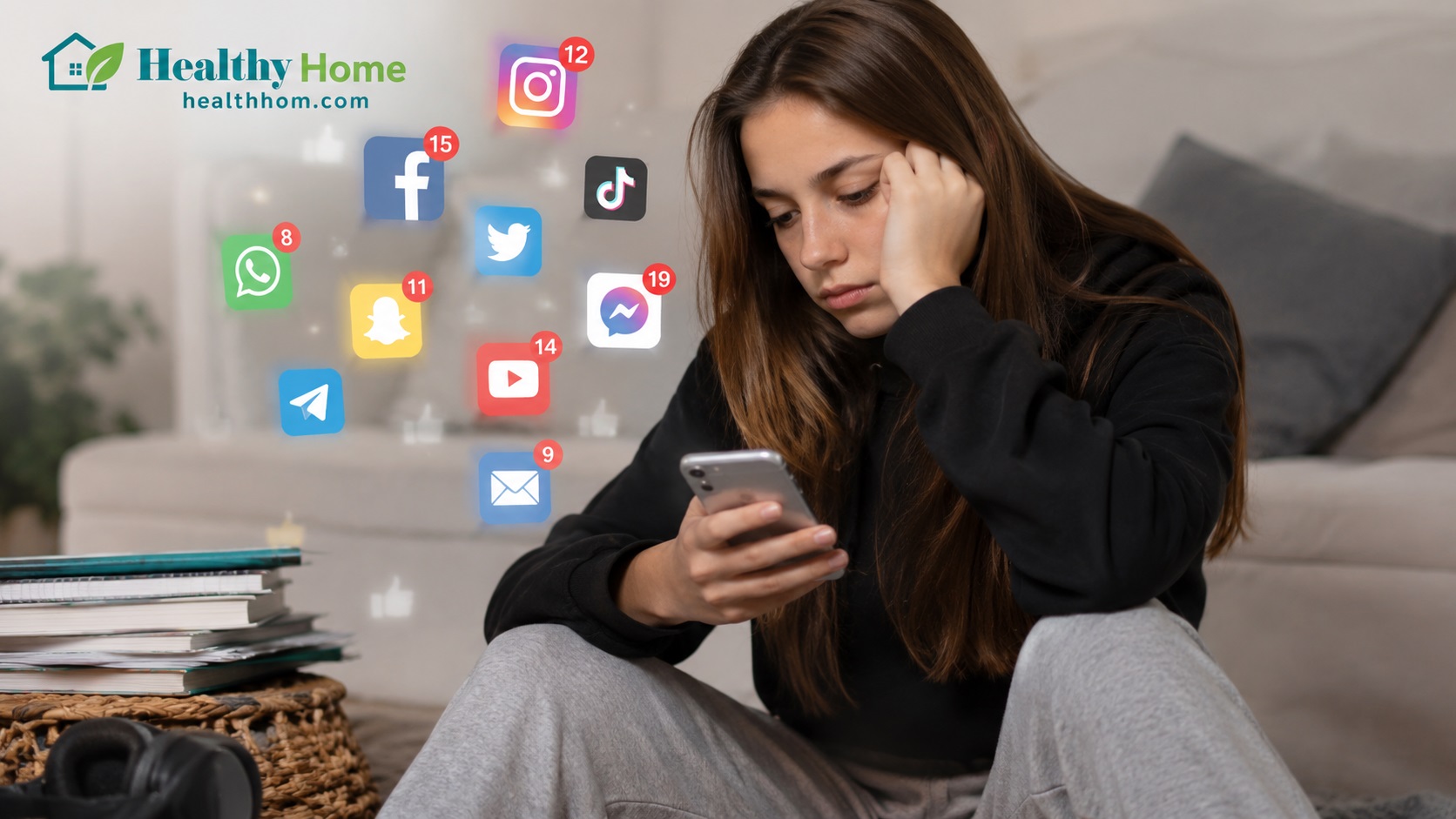
Explore 50 updated social media addiction statistics, including teen screen time, mental health risks, and global trends based on WHO, APA, and Pew Research (2023–2025).
Reviewed by Bibhu Ranjan Mund, MPH (Public Health Expert) with experience in maternal, infant, child, and adolescent health programs. Content is based on evidence-informed guidelines aligned with organizations such as the World Health Organization, UNICEF, Centers for Disease Control and Prevention, and National Institutes of Health.
Medical Disclaimer: This content is for informational and educational purposes only and is not intended as medical advice, diagnosis, or treatment. Always seek the advice of a qualified healthcare professional regarding any medical condition or concerns.
Introduction
During my 18 years of work in maternal care, child health and adolescent health programs under National Health Mission in Odisha, I have observed that many rural and urban Indian families are still struggling with practical nutrition choices rather than unavailability of health awareness. This article combines the evidence based guidance including practical challenges that I have observed in different communities of Odisha.
Now-a-days, Social Media is a part of everyday life, but actually how much is a too much?
According to DataReportal (2025), globally about 5.24 billion social media users, who are spending an average of 2 hours 27 minutes daily in different platforms viz. Instagram, Tiktok, YouTube etc.
Such types of platforms actually help the people to connect, learn & many more.
The research from American Psychological Association (2023-2025) and Pew Research Centre (2024) shows that about 5-10% of users may engage in addictive or compulsive behavior and the adolescents are the most vulnerable group among all users.
Teens who spend more than 5 hours daily on different social media platforms, are generally more likely to have anxiety, depression and sleep disturbances which is a great concern now.
But, the reality is that Social media itself is not the actual problem, only the concern is how to use it.
To better understand emotional challenges linked with excessive screen time, explore our detailed guide on mental well-being in adolescents.
Why This Topic Matters More Than Ever for Parents
A decade ago, many Indian parents were worried about the television time by teens. Now totally a different situation arises with many challenge by using smartphone, short video platforms and continuous notifications from social media.
During my adolescent health and school health sessions in Rayagada (Odisha), I have learnt from parents that “My child is always in a habit of mobile, but without my knowledge this normal habit becomes unhealthy.”
Social media is not entirely harmful. Many children are using it for learning purpose, strong communication and school related activities particularly after Covid-19 pandemic. But the challenge starts when such online activities gradually replaces the sleep, reduce the physical activity, study books and quality family time.
Recommended read on Screen Time in Children and Adolescents, health Effects, WHO Guidelines & Practical Parenting Tips.
So, it is now a very important by each parent to distinguish the healthy and unhealthy engagements by their teens.
This guide provides 50 updated social media addiction statistics (2026) which will help to understand the:
- Global usage trends
- Teen screen time patterns
- Mental health risks
- Behavioral warning signs
- What families can do to stay balanced
You may be a parent, teacher, or student, these insights will suggest how you view screen time forever.
Adopting a healthy lifestyle in adolescents can significantly reduce the risk of digital addiction and improve overall well-being.
What is Social Media Addiction?
Social media addiction means the excessive and compulsive use of social platforms which interferes with the daily life, mental health, sleep, and relationships.
A Situation Many Indian Parents Quietly Notice:
In today’s situation of Indian Households, parents observe that their teens are eating with one hand while scrolling mobile in other hand. Few children also watch short videos long after midnight, even before exam time also.
During my community interaction for awareness sessions, several parents share their same opinion that their children are physically at home, but mentally online.
The main worry is not just the screen time, but also the emotional changes like:
- irritability,
- poor sleep,
- reduced outdoor activity,
- lower concentration,
- emotional dependence on notifications.
Social media has now become deeply integrated into teenage life, specially after the introduction of online education, gaming culture and short-video platforms after the Covid-19 pandemic years.
Global Social Media Usage Snapshot
| Metric | Value | Source | Year |
|---|---|---|---|
| Global social media users | 5.24 billion | DataReportal / BrandWell | 2025 |
| Percentage of world population using social media | 63.9% | DataReportal | 2025 |
| Average daily time spent on social media | ~2 hours 27 minutes | Global Digital Report | 2025 |
| Estimated number of people with social media addiction | ~210 million | Global research estimates | 2025 |
| Average teen screen time | ~7 hours/day | ZipDo Education Report | 2025 |
Quick Summary:
- In 2026, there are more than 5 billion social media users existing worldwide. This rapid growth indicates that the digital platforms are now influencing the healthy sleep habits, emotional health and even attention spans globally.
- Average daily usage ranges between 2–3 hours per individual.
- About 5–10% of total users may exhibit problematic or compulsive usage patterns.
- The risk of addiction is the most common in teenagers (10-15%).
- Excessive use is linked with anxiety, depression and low self-esteem.
- Sleep disorder may also be a side effect due to excessive use of social media, particularly in adolescents.
- Instagram, Tik Tok and YouTube are the most used platforms which have taken over the daily screen time.
- Features like endless scrolling, autoplay videos and constant notifications are specifically designed to keep users engaged for longer periods.
- Fear of Missing Out (FOMO) makes people more compulsive.
- The teen usage is approximately higher than the adults who are 30 years and above.
What These Numbers Mean in Real Life:
A statistic like “5 hours of screen time” may not sound alarming at first. But in practical family life, those 5 hours sometime replace:
- sleep,
- physical activity,
- study focus,
- face-to-face conversation,
- outdoor play,
- emotional bonding.
In many adolescents, excessive scrolling does not suddenly become addiction overnight. Parents may notice a gradual pattern:
- Checking phones frequently,
- Sleeping later,
- Reduced attention span,
- Mood changes,
- Emotional dependence on online validation.
From a public health perspective, the concern is less about technology itself and more about imbalance.

During my visit to community, a parent had shared their experience from their 15 year son’s screen addiction. That he was used to keep his mobile under the pillow and waking up several times at night due to incoming notifications. At first, it was not a serious issue, but subsequently his sleep time was reduced, affected the concentration level including mood changes. This may happen in many teenagers.
Global Social Media Addiction Statistics (2026)
1. As of 2026, the number of users of social media may exceed 5 billion or over 60 percent of the global population. This quick growth reflects the increasing trend for the utilization of digital platforms & to shape the day-to-day behavior with mental health trends. 1
2. As per recent study, approximately 210 million people worldwide are experiencing some problematic or addictive social media use which is approximately 4-5 percent of total users. 2
3. It has been found that, about 4-5 percent of the users from entire globe already met the criteria of social media addiction. Although the percentage might be small, but it symbolizes millions of affected persons.
4. Approximately, 10% of the total population (33 million) is addicted to social media in the United States only. 4
5. Young adults and teenagers are supposed to be a dis-proportionate group.5
6. Approximately thirty-six percent of adolescents report an excessive social media usage which is associated with poor health status. 6
7. As per some studies, in many countries the level of social media addiction is as high as 5 to 31 percent. 7
8. In Africa, addiction levels are nearly 37% whereas Asia is coming second around 31%. 8
9. In Europe and North America, the rates range between 15 percent and may be higher. 9
10. Adolescents with a minimum spending of 5-hours daily on social media are supposed to be more addicted. 10
There are increasing risk factors of depression and disruption of sleep in teenagers who find themselves consuming over 5 hours a day on social media. The prospective digital habit education may avoid the dependencies pattern in the long term.
Learn how cyber security for adolescents plays a crucial role in protecting teens from online risks and digital over-exposure.

What Public Health Experts Look For
Public health professionals not only focus on screen time but also:
- Is sleep being reduced?
- Is physical activity declining?
- Is academic performance suffering?
- Has family interaction decreased?
Two teenagers each may spend four hours online daily, but the impact can be very different depending on how those hours affect their overall lifestyle and well-being.
Daily Usage & Behavioral Patterns
11. On an average, one user takes approximately 2 hours and 20 minutes daily to spend on the various media. :11
12. Adolescents between 13 – 17 years are generally spending 3 hours and 17 minutes on social networks every day.
13. Adults of 18-29 years spend an average of 2 hours 54 minutes on social media every day. 13
14. Adolescents are visiting to known social applications several times a day. 14
15. Social users spend over 14 billion hours a day on these sites.
16. Gen Z users are more dependent on social media platforms as compared to older generations.
17. In the U.S., almost 7 out of 10 adults utilize one or more social media sites on a daily basis. 17
Learn more about the Social Media Addiction in 2026:
Quick Poll: How Much Time Do You Spend on Social Media?
- Less than 1 hour
- 1–2 hours
- 2–3 hours
- 3–5 hours
- More than 5 hours
According to a study conducted by Pew Research Center and World Digital data, the use of digital devices more than 3-5 hours per day may have a connection with emotional and sleep issues among adolescents.
Practicing mindfulness exercises for teens can help to reduce screen dependency and improve focus and emotional balance.
Observed by many Indian parents shows that, teenagers use phones secretly after bedtime, it may be during board exam years when stress and late-night screen exposure combines.
Average Social Media Usage
| Age Group | Average Daily Usage |
|---|---|
| Teenagers | 3–7 hours. This implies that, many teenagers are in a habit of using social media rather than outdoor play, reading, family time or any physical activity. |
| Young adults | 2–4 hours |
| Adults | ~2.5 hours |
| Global average | 2h 27m |
The actual average user spends about 2.5 hours daily on social media.
Teen & Young Adult Addiction
Global usage is increasing across all age groups, among them teenagers remain the most emotionally vulnerable population.
18. The younger generation (teen) is more vulnerable to addictive behaviors associated with social media compared to older adults. :18
19. Almost half of American adolescents claim to be on-line all the time. 19
20. Approximately 90 percent of the teens visit YouTube on daily basis. 20
21. The usage of Tik Tok by teenagers is up to 60 percent, and also they visit it nearly all the time. 21
22. Adults belonging to Gen Z says that they are dependent on platforms like Instagram or Tik Tok of having 82 percent of their time. 22
23. The age group of younger users (18-22) have a higher rate of addiction as compared to other age population. 23
Learn more about on Substance Abuse in Adolescent with Best Prevention.
The statistics shows that teens and young adults are more prone to social media and using more regularly than older adults. The behavioral risks may be overcome by proper early education in digital literacy, parental oversight and monitoring screen-time.
In the urban areas of India, now-a-days so many adolescents are provided with personal smartphone before the age of 13 years only due to online classes, tution apps. But the un-restricted access and without child-lock system in phones, educational smartphone use gradually shifts toward entertainment-focused.
Behavioral addictions like excessive social media use often overlap with risks such as substance abuse in adolescents.
Public Health Perspective:
It is not very difficult to maintain a healthy digital boundary for adolescents as many parents and teachers have reported about these situation. The most common concern is that the screen time is reaching till late night which lead to improper sleep quality and increasing daytime fatigue.
Platform-Specific & Demographic Trends
24. One of the most common addictive sites is Tik Tok which is most frequently used, particularly by youth.24
25. Frequent checking the status and engagement is also high in Instagram and Snapchat. 25
26. The typical duration of time on Tik Tok is about 1.5 hours. 26
27. In certain surveys, women population present a little more problematic use than men. 27
28. Adults (18-22) tend to report the highest hours of usage in a day. 28
Did You Know?
- The social media platform is specifically designed to increase the interactions through continuous scrolling, push notification and algorithmically-driven content feeds.
- Here the behavioral scientists refer this as a variable reward loop which encourages the repeated checking behavior.
- The study of the American Psychological Association shows that younger users can be more vulnerable to social media when they seek online validation.
Why Social Media Feels So Hard to Stop:
Due to:
- dopamine reward loops,
- short-video stimulation,
- peer validation,
- fear of exclusion,
- algorithmic personalization.
Many short-video platforms are continuously providing the un-predictable rewards like funny clips, likes, messages which usually keeps the brain expecting that “one more interesting thing”. Such type of repeated reward cycle gradually increases the regular checking behavior among adolescents as their emotional regulation system is in developing condition.
Social Media in Indian Families: A Changing Reality
In many Indian households, particularly in urban areas the use of smartphones become essential for education, communication and also entertainment.
If parents restrict the phone, they are facing difficulties like conflict and emotional health. But in reality, unrestricted access may increase the unhealthy access to world.
In the modern society, the teens are growing in both Online and Offline life, so that they must be taught with nutrition, physical activity and sleep hygiene.
Mental Health & Well-Being
The main concern for parents and psychologists is not just the screen time duration, but how excessive social media exposure affects emotional development during adolescent period.
29. The high usage of social media is associated with increased risk of anxiety and depression. 29
30. Research suggests an association between long duration social media use and increased mental health risks. 30
31. Social media addiction is related to disruption of sleep or low quality sleep. 31
32. Problematic use are generally associated with depression or anxiety in maximum teen users and also people in their twenties. :32
33. Eye strain is one of the frequent physical symptoms associated with overuse of social media which is about 38.4%. 33
34. Almost three out of four teenagers say that they are addicted, and this has a great emotional influence. 34
Discover more about the Nurturing Mental Well-being in Adolescents this time.
Social Media & Academic Pressure in India:
In the present competitive academic environments, excessive late-night scrolling may indirectly affect the:
- concentration,
- memory,
- classroom attention,
- exam preparation,
- sleep recovery.
Some adolescents report the difficulty in studying continuously for even 20–30 minutes without checking notifications.
Various researches indicate that overuse or uncontrolled use of social media can be linked with:
- Increased anxiety symptoms
- Depressive mood patterns
- Sleep disruption
- Poor self esteem among adolescents.
However, the moderate and uses due to need does not necessarily mean an addiction. In this situation, time and the personal ability to cope are significant.
For teens struggling with attention and emotional regulation, ADHD and mindfulness strategies can offer effective coping techniques.
A real story : Mamina a teen age girl was initially using the social media for entertainment in her leisure time. But gradually she started to spend about six hours daily scrolling the short videos. Subsequently, her sleep time became irregular, low performance in school, increased anxiety during unavailability of internet etc. This is just an example, many adolescents may face such situation in their life.
Many adolescents express their feeling that they are emotionally exhausted after a long time of social media use, specially when they are comparing themselves with other ideal online lifestyles.
Historical Growth & Future Projections
35. The use of social media is in increasing trend every year. 35
36. The social media population in the world had increased to more than 5 billion during 2025, as compared to 3.8 billion in 2020.36
37. In 2025, the social media was used by nearly 64 percent of the global population. 37
38. This is why expected to growing of almost 6 billion users in the world by 2027. 38
39. Asia and Africa are the regions that experience the fastest growth. 39
During my community interaction, one mother express her feeling that her son became anxious whenever Wi-Fi stopped working for a few minutes only. In initial phase the family assumes that it was a normal behavior, but later they realized that his emotional dependence on the online platform has increased a lot.
Public Awareness, Legal & Policy Trends
40. According to a poll during 2026, an 86 percent of American citizens believe that the social media addiction issue may be the responsibility only for the tech companies. 40
41. Platform design and addiction claims are now becoming the subject of more and more public debate and lawsuits. 41
42. Governments are thinking of adding rules like mental health warning labels in every social media feeds. 42
43. In the United States, it is forcing social media companies to explain why their platforms are so programmed to be addictive in nature. 43
44. Opponents say features like endless scrolling and algorithms can be addictive. 44
A real life story: One teacher from Odisha from a private school noticed that, many students are now struggling to complete the classroom activities without checking notification repeatedly even it may be a short one.
Public Health Observation:
Under the Community Adolescent Health Programs in India, sleep disturbance is sometimes taken as the earliest visible warnings for unhealthy digital behavior. Also so many families observe that due to reduced sleep for a continuous of several months, the academic career of their teens declines.
Associated Behavioral & Health Concerns
45. Several studies shows that due to excessive social media use, it may increase the anxiety symptoms, specially among adolescents who are already struggling with stress or self-esteem. 45
46, Adults who actually spend over 2 hours per day on social media platforms, may correlate with increased sedentary lifestyle patterns such as obesity. 46
47. Research also links problematic use of social media as low self-esteem.
48. An approximated 70%+ of adolescents are reported that they feel social isolation in the real world of relationship because they use social platforms too much. 48
49. The symptoms of social media addiction can disrupt the school or work schedules. 49
50. Scholars warns that the addictive design features can have a stronger influence on younger brains.50
Balancing screen time with physical activity and family nutrition and healthy habits is essential for long-term health.
A story from Odisha reveals that, parents notice during family outings time also the teens are usually mentally engaged with social media updates throughout the day, so that there is no meaning of outing and not reducing the stress.
Expert Observation:
The teens are are already struggling with anxiety, loneliness or with peer pressure may be more vulnerable for excessive social media engagements.
In 2026, the most significant number of teenagers demonstrate high daily use and a high probability of addiction among other age categories. The rates of mental health are considerably greater in the case of adolescents and young adults.
Early Digital Addiction Signs Many Families Ignore:
- Irritability without phone,
- Avoiding outdoor activities,
- Reduced face-to-face conversation,
- Late-night scrolling,
- Constant notification checking,
- Emotional dependence on likes or comments.
Early Warning Signs I Frequently Hear From Parents
During community interactions, parents sometimes share similar early warning signs long before social media addiction like:
- Constant checking of notifications without a clear reason.
- Difficulty concentrating on homework.
- Reduced interest in hobbies once enjoyed.
- Irritability when internet access is interrupted.
- Staying awake late despite feeling tired.
- Increased dependence on online approval and validation.
These changes may develop gradually, making them easy to overlook during the early stages.
Social Media Addiction Warning Signs Checklist (2026)
Research conducted by Pew Research Center and Centers of Disease Control and Prevention shows that the long-term use of the digital world can affect sleep, mood and behavioral patterns among adolescents.
The self-assessment checklist is used to determine potentially problematic social media habits.
i) Behavioral Signs
- Feels agitated or nervous when not using any social media.
- Scanning the platforms upon waking up.
- Marked as lost
- Losing tracking of time spent while scrolling
- Failing to attend school, work or duties as per scheduled task
- Social media to avoid negative emotions.
ii) Sleep & Physical Signs
- Scrolling till late night Late even after midnight.
- The duration of sleep or the quality of sleep is less than expected.
- Suffering from eye strain or headaches
- Reduced physical activity
iii) Emotional Signs
- Always comparing with others on the Internet.
- Change of mood following social media use.
- Fear of missing out (FOMO)
- Decreased real life social interaction.
iv) How to Interpret
- 0-3 checked -Probably healthy use.
- 4-7 checked -Check screen time and decrease screen time.
- 8+ checked – Think about organized digital detox measures.
Understanding the adolescent safety and protection which helps the parents to identify behavioral warning signs early and take preventive action as soon as possible.

Pie Chart – Addiction Prevalence (2026)

Bar chart (Teen vs Adult usage hours)

Adolescents are particularly vulnerable to social comparison, and prolonged exposure to curated online identities can amplify anxiety, low self-esteem, and depressive symptoms.”
— American Psychological Association (Social Media & Mental Health Reports, 2023–2025)
“Digital platforms can offer connection and support, but excessive and unregulated use may negatively impact sleep, emotional regulation, and overall well-being in young people.”
— World Health Organization (Digital Health & Mental Well-being Reports)
Long-term digital habits may also contribute to risks associated with non-communicable diseases in adolescents.
What Successful Families Often Do Differently
Families who successfully manage screen habits may not rely on strict punishment, but they usually create consistent routines like
- keeping devices outside bedrooms,
- scheduling outdoor activities,
- maintaining regular meal times,
- creating technology-free family conversations,
- setting an example through healthy parental screen habits.
Many parents also share that their children respond better when adults follow the same rules they expect teenagers to follow.
What Actually Helps Families Reduce Screen Dependency:
Families may include:
- Phone-free meals,
- Charging phones outside bedroom,
- Weekend outdoor routines,
- Notification reduction,
- App timers,
- No-screen mornings,
- Family digital agreements.
Some parents report that, if they are keeping their phone outside bedroom at night, they have improved their sleep time a lot.
What Parents Say Works Best:
Families sometimes inform better results from gradual boundaries rather than sudden hard restrictions.
Helpful strategies may be as follows:
- keeping charging stations outside bedrooms,
- introducing one screen-free evening weekly,
- family walks after dinner,
- reducing parental screen overuse first,
- encouraging hobbies before restricting devices.
In the joint-families of India, grand-parents sometimes observe that the behavioral changes occurs due to reduced social interaction during meals and family getherings.
Some adolescents express their feeling as anxious when they are not able to respond immediately to messages or notifications.
Small Daily Changes That Make a Big Difference:
You may include:
- 30-minute phone-free morning,
- No phones during meals,
- Disabling auto-play,
- Grayscale mode,
- Outdoor breaks,
- Bedtime device cutoff.
When to Seek Professional Help
- Severe anxiety or depression
- Sleep problems > 2 weeks
- Social withdrawal
- Academic decline
Quick Tips for Healthy Social Media Use, People should :
- Limit the screen time to a maximum of 2 to 3 hours daily.
- Stay away from social media platforms during the hour before sleep.
- Disable all notifications that they do not need to receive.
- Families should plan daily activity schedule which will keep them away from screens.
- Promote outdoor playtime and extracurricular activities along-with others.
- Use applications that help them monitor and restrict their screen time.
The Role of Schools & Communities:
It may includes:
- Digital literacy education,
- Screen awareness workshops,
- Outdoor activities,
- Emotional wellness programs,
- Healthy tech boundaries.
Key Takeaways:
- The world now has more than 5 billion people who use social media platforms.
- The risk of excessive screen time and dependence on screens is more for teenagers.
- People who spend more than 3 to 5 hours watching screens every day face mental health problems.
- Excessive screen time results in sleep problems and anxiety and decreases self-esteem.
Expert Insight by Bibhu Ranjan Mund, MPH
- The current public health research shows, in many adolescents, sleep disturbance is sometimes may be the first visible sign that screen habits are becoming unhealthy.
- Families shouldn’t underestimate the quick influence of social media leads to emotional behavior and self-esteem.
- Families that establish digital limits experience improved mental and emotional well-being.
Not all social media use is harmful, moderate and mindful usage can support learning, connection, and creativity.
Social Media Is Not Entirely Harmful:
Social media itself is not an automatically danger. In moderation, digital platforms may help the adolescents to :
- learn new skills,
- stay socially connected,
- access educational content,
- build creativity,
- explore career opportunities.
The real problem starts if screen habits replace healthy sleep, real-life interaction, physical activity and emotional balance.
My Public Health Perspective
After my working in adolescent health programs, one thing I observe that, families are now noticing the sleep time changing including behavioral problem due to screen overuse.
In my experience, it may be strengthened by improving the early education, focus on bedtime routines, limit the late-night phone use and the most family time meal with quality conversations.
We can’t disappear the social media entirely from the adolescent life, but helping them to develop a healthy digital habit may support for healthy and real world experience.
CONCLUSION
It is known to all that Social Media will remain permanently as a part of our modern life. The aim is not to avoid the new technology completely, but to search a way that adolescents can develop healthier digital habit before starting any problematic behavior.
Since the number of global users is steadily increasing, these statistics are worth studying, as they can support individuals, families, and policymakers to make quality decisions regarding healthy habits in digital life.
Explore how social influences and digital platforms impact gender equality issues in adolescents and others:
- Adolescent Safety from Violence and Injuries: Prevention & Protection Guide
- Healthy Lifestyle in Adolescents: Promotion Strategies & Wellness Tips
- Non-Communicable Diseases in Adolescents: Risk Factors & Prevention
Trusted References and Research Sources:
- American Psychological Association – Social Media and Mental Health Resources
- World Health Organization – Digital Health Strategy & Resources
- Pew Research Center – Teens, Social Media and Technology Report 2024
- Common Sense Media – Teen & Media Usage Studies
- DataReportal – Digital 2025: Global Overview Report
- Statista – Social Media User Forecast (2025)
- CDC – Youth Risk Behavior Surveillance System (YRBSS) Reports
FAQ:
1. What is the percentage of social media addicts?
Studies indicate that approximately 5-10% of social media users exhibit problematic or addictive behavior, and teenagers and young adults exhibit higher prevalence of this behavior.
2. What is the number of social media users in the global world in 2026?
The number of social media users worldwide is more than 5 billion, which comprises over 60 percent of the world population.
3. What are the average hours that people spend on social media per day?
The global average of social media users is 2 to 3 hours daily.
4. Does the addiction to social media increase mental health issues?
Yes. Research implicates the overuse of social media with anxiousness, depression, sleep disorder, and low self esteem especially in adolescents.
5. What is so addictive about social media?
Infinite scrolling, notifications and social validation (likes/comments) functions of social media activate dopamine reward systems in the brain.
6. Do teenagers have a high tendency to social media addiction?
Yes. Adolescents are thought to be more vulnerable because of the levels of brain development and sensitivity to social comparisons.
Share this article to a parent, a teacher or a teenager who can gain something by knowing about the social media trends in 2026.


About the Author – “Bibhu Ranjan Mund”, Master in Public Health (MPH) from IIHMR University, Jaipur (Rajasthan) has more than 18 years of experience in Public Health activities in maternal health, child health, adolescent health, nutrition and community wellness programs under National Health Mission, Health & Family Welfare Department, Odisha. He is the founder of “Healthy Home” and translates the evidence based public health information into a practical source so that families may able to apply in everyday life. All the information are for educational purposes only and not replaces the professional medical advice. ORCID Researcher ID – 0009-0003-0158-4992. Connect LinkedIn – https://www.linkedin.com/in/bibhu-ranjan-mund-b72171358/