Last Updated on March 22, 2026 by Bibhu Ranjan Mund, MPH
Discover 7 Indian thyroid friendly Indian recipes with a 7-day meal plan, expert tips and nutrient-rich ingredients to naturally support metabolism, energy, and hormonal balance.
Reviewed by Bibhu Ranjan Mund, MPH (Public Health Expert) with experience in maternal, infant, child, and adolescent health programs. Content is based on evidence-informed guidelines aligned with organizations such as the World Health Organization, UNICEF, Centers for Disease Control and Prevention, and National Institutes of Health.
Last reviewed on: 22 March 2026.
Medical Disclaimer: This content is for informational and educational purposes only and is not intended as medical advice, diagnosis, or treatment. Always seek the advice of a qualified healthcare professional regarding any medical condition or concerns.
Affiliate Disclosure: This article contains affiliate links. If you purchase through these links, we may earn a small commission at no extra cost to you.
The thyroid has an impact on metabolism, energy levels, mood, weight, hair and menstrual health. Hence, supportive meals can help in a smoother daily living with medical treatment. These 7 thyroid friendly recipe focuses on constant protein, selenium, iodine-conscious options, anti-inflammatory spices and ferments that are non-inflammatory to the gut to encourage nutrient absorption and hormonal balance.
This post covers 7 best Indian thyroid diet recipes, Weekly Mean Plan & cooking tips etc.
Quick Summary :
- The health of the thyroid has a direct influence on metabolism, energy, weight, mood as well as hormonal balance.
- A nutritious thyroid-stimulating diet is centered on the protein, selenium, zinc, iodine (in moderation) and the anti-inflammatory spices.
- Cooked cruciferous vegetables are considered to be safe in most cases when taken in moderation.
- Protein consumption aids in maintaining blood sugar levels and aids in hormone work.
- Fermented products such as curd and chaas nurture the gut health and absorption of the nutrients.
- Taking of medication (without iron/calcium) is better at the right time to improve the effectiveness of thyroid treatment.
- A weekly meal plan ensures that there are no loopholes in nutrients and increases consistency.
Scientific Evidence on Nutrition & Thyroid
1. The conversion of Selenium and Thyroid Hormone.
Selenium plays a critical role in the process of deiodinase enzymes which transforms the inactive T4 into T3 which is the hormone that stimulates metabolism. Healthy thyroid hormone balance could be provided with sufficient selenium. Thyroid function and selenium status — PubMed
2. Protein & Metabolic Support
Protein is highly thermogenic and is important in energy outlay and muscle growth. Normal protein nutrition can be used to maintain general metabolic health. Can eating more protein increase your metabolism? — Harvard Health
3. Fermented Foods & the Gut‑Thyroid Axis
Recent studies indicate that there is a relationship between intestinal microorganisms and the metabolism of thyroid hormones. Curd, chaas and dosa/ idli batter are fermented foods that could potentially contribute to the development of gut flora, subsequently improving the absorption of nutrients and the immune system. Thyroid‑Gut Axis and microbiota — PubMed
Thyroid friendly recipes – Principles:
- Protein at each meal: dals, eggs, paneer, tofu, fish stabilizes energy and helps with the repair of tissues that are related to hormones.
- Selenium and zinc: walnuts, sunflower seeds, sesame, fish, eggs and whole pulses help in thyroid enzyme functioning and immunity.
- Anti-inflammatory base: turmeric, ginger, garlic, black pepper and colorful vegetables will be used to decrease chronic inflammation that can add up to fatigue or joint pain.
- Smart carbs and fiber: millets, brown rice, quinoa, veg dishes and fruit to keep the level of glucose and gut clean.
- Digestive aid:- Curd, chaas & Indian ferments (which are safe, hygienic preparation) to enhance
- digestion & the absorption of micronutrients.
Goitrogen context (simplified)
The diet can be maintained with cooked crucifers (cauliflower, cabbage, broccoli), soy and some millets that can be cooked well. Take thyroid medicine as per advice of Doctor & take calcium/iron-enriched foods including supplements several hours later as per the recommendation of your doctor.
Protein based breakfast concepts:
- Millet vegetables : Millet or barnyard milk & onions, carrots, beans, turmeric etc. Squeeze lemon & crunchy paneer on top which will add some protein to the upma as well as combining turmeric-ginger that is anti-inflammatory in nature.
- Spinach chilla + curd Besan flour mixed with water, spinach grated, ginger, turmeric and cumin : Cook in the pan and served with a small portion of curd to have serious probiotics and protein balance.
- Overnight chia-curd bowl:- Combine the curd, chia & a pinch of cinnamon, chopped walnuts and any fruit of the season. It is wonderful in the morning & get a dose of selenium in your system. These also comes with nuts.
Morning Snacks: Thyroid friendly
- Mix one any fruit with one Tablespoon of mixed seeds (pumpkin, sunflower, sesame etc.) to get minerals and satiety
- Spiced chaas: There is thin curd mixed with water, add roasted cumin, black salt and mint which helps in digestion and hydration but mostly in hot seasons.
- Roasted chana: Protein Fibers are in your hands so you can keep your energy levels up and your hunger at bay.
Lunch plates that nourish
- Dal Rice which is called as rainbow thali: May be Moong or masoor dal cooked with garlic, cumin & turmeric : Half-plate mixed veg sabzi, one katori rice, side salad, drizzle of ghee to aid the absorption of fat-soluble nutrients.
- Thyroid-enhancing khichdi: Moong dal + a little bit of brown rice with turmeric, ginger, ajwain, add sauteed carrots/beans to it and a spoon of curd to it and it is a full bowl.
- Millet bowl with eggs: Foxtail millet topped with two boiled eggs and lemon, onions, peppers and spinach: Sauteed and put into the bottom of the bowl, this dish covers protein, fiber and micronutrients.
- Fish curry (mustard-coconut light): Light spice that contains turmeric and tomatoes, it is mixed with red rice or millet to prepare omega and protein without being too heavy.
Evening snacks (free of sugar)
- “”Paneer tikka“ on a stick: Curd marinated in turmeric, ginger, garlic etc.. Air-fry instead of eating a savory bite that is rich in protein.
- Sprout chaat: Onion, tomato, coriander, lemon and chaat masala sprouts, which are lightly steamed is beneficial in the support of fiber and micronutrients.
- Golden milk mini-latte: A warm milk, a pinch of turmeric and black pepper, a calming and anti-inflammatory beverage that comes in handy at the end of the day when you just want to soothe down and relax.
Dinner: light, high in proteins:
- Palak chicken or tofu stir-fry: Sauteed fast with ginger-garlic and pepper add lemon so as to absorb the iron of greens. Probability – To promote the gut, stable carbohydrates (fibers) and protein.
- Sambar & idli or dosa (South Indian Food): Dal is having protein & vegetable diversity. Salad may be added to the food to increase the amount of fiber.
- Quinoa with prawn pulao: Onion & tomato base with turmeric and coriander etc. Low fat, tasty and substantial which you need a variation of grain in the life.
- Vegetable-egg soup bowl: This consists of clear broth, carrots, beans, cabbage and ribbons of whisked eggs. Ginger and white pepper are necessary to add some warmth without making it heavy.
Quick 5-Minute Emergency Thyroid Plate
Busy day? Missed meal prep? This is a basic balanced plate with ordinary Indian dishes in the kitchen:
- 2 hard boiled eggs- Quality protein and selenium.
- 1 seasonal fruit 1-fiber, natural antioxidant
- 1 tablespoon combined mixed seeds (sunflower, pumpkin, sesame) – Zinc and healthy fats.
- 1 glass buttermilk (chaas) – Probiotics and hydration support
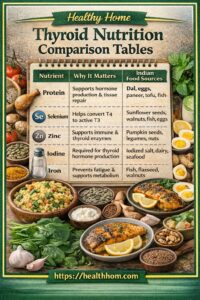
Thyroid Nutrition Comparison Tables
| Nutrient | Why It Matters | Indian Food Sources |
|---|---|---|
| Protein | Supports hormone production & tissue repair | Dal, eggs, paneer, tofu, fish |
| Selenium | Helps convert T4 to active T3 | Sunflower seeds, walnuts, fish, eggs |
| Zinc | Supports immune & thyroid enzymes | Pumpkin seeds, legumes, nuts |
| Iodine | Required for thyroid hormone production | Iodized salt, dairy, seafood |
| Iron | Prevents fatigue & supports metabolism | Spinach, lentils, jaggery |
| Omega-3 | Reduces inflammation | Fish, flaxseed, walnuts |
Hypothyroidism vs Hyperthyroidism (Diet Focus)
| Condition | Focus | Caution |
|---|---|---|
| Hypothyroidism | Protein-rich, selenium foods, fiber | Avoid excess raw crucifers |
| Hyperthyroidism | Balanced calories, anti-inflammatory foods | Avoid excess iodine |
7-types of Thyroid-supportive Indian meals
1. Turmeric Ginger-turmeric moong dal soup.
- Ingredients: Yellow colored moong-dal, turmeric, ginger grated, garlic, cumin, ghee, lemon and coriander.
- Methods: Cook dal under pressure using turmeric and ginger, tempering ghee using cumin-garlic, mix and add salt, lemon and coriander.
- This recipe is easy to digest and contains anti-inflammatory spices like turmeric and ginger.
Nutrition Information (Approx. per serving)
| Nutrient | Estimated Amount (Approx. per serving) | Benefits |
|---|---|---|
| Calories | 180–200 kcal | Light yet nourishing |
| Protein | 12–14 g | Supports muscle repair & satiety |
| Fiber | 5–6 g | Aids digestion |
| Iron | Moderate | Helps reduce fatigue |
| Selenium | Small amount | Supports thyroid enzyme activity |
| Anti-inflammatory compounds | Present | Turmeric & ginger support overall wellness |
2. Khichdi with foxtail millet vegetables.
- Ingredients :Foxtail millet, moongdal, turmeric, ajeewan, mixed veg (carrot, beans, peas), ghee.
- Methods: Preparation Rinse millet/ dal; saute ajwain and turmeric in ghee, put in veg, water, cook pressure, serve with spoon of curd.
- Probiotics to promote the gut, stable carbs (fibers), and protein.
| Nutrient | Estimated Amount (Approx. per serving) | Benefits |
|---|---|---|
| Calories | 220–250 kcal | Sustained energy |
| Protein | 10–12 g | Hormone & tissue support |
| Complex Carbohydrates | High | Stable blood sugar |
| Fiber | 6–7 g | Gut health |
| Magnesium | Moderate | Supports metabolism |
| Probiotics (with curd) | Present | Improves nutrient absorption |
3. Paneer mint spinach lettuce wraps.
- Ingredients: Both cooked and fresh: Methi leaves, onions, tomatoes, green chilies, turmeric, cumin wraps, Lettuce leaves.
- Methods: Cumin, onion and tomatoes are to be sautéed with turmeric, methi and paneer (crumbled) are to be added, stuff into crisp lettuce.
- Protein & Vegtetable based and less refined carb during dinner.
| Nutrient | Estimated Amount (Approx. per serving) | Benefits |
|---|---|---|
| Calories | 200–220 kcal | Low refined carbs |
| Protein | 14–16 g | Helps maintain lean mass |
| Calcium | High | Bone & muscle health |
| Iron | Moderate | From spinach |
| Vitamin C | Moderate | Improves iron absorption |
| Fat | Moderate | Satiety & nutrient absorption |
4. Spinach Quinoa Egg masala.
- Ingredients: Boiled eggs, onion with tomato masala, turmeric, ginger-garlic paste, garam masala, cooked quinoa and spinach. etc.
- Methods: Simmer eggs in masala, sautéed spinach in quinoa, place the foodstuffs on the plate and lemon.
- Proteins, iron and anti-inflammatory spice mix.
| Nutrient | Estimated Amount (Approx. per serving) | Benefits |
|---|---|---|
| Calories | 280–300 kcal | Complete balanced meal |
| Protein | 18–20 g | Supports metabolism |
| Iron | Moderate | Energy support |
| Selenium | Moderate | Egg-based selenium |
| Fiber | 5–6 g | Digestive health |
| Healthy fats | Present | Hormone support |
5. Cucumber salad bowl Curd-chaas.
- Ingredients are: Thick curd & thin chaas, chopped cucumber, roasted cumin, mint, black salt (optional) in order to add protein.
- Methods: Whisk curd and add a splash of chaas, then add cucumber, cumin and mint and lastly add chana to make it a complete meal.
- Cools and has probiotic properties and does not upset the stomach, which is delicious during hot weather or after eating spicy food.
| Nutrient | Estimated Amount (Approx. per serving) | Benefits |
|---|---|---|
| Calories | 120–140 kcal | Cooling & light |
| Protein | 6–8 g | From curd |
| Probiotics | High | Gut balance |
| Calcium | Moderate | Bone health |
| Hydration | High | Supports metabolism |
| Sodium | Low | Suitable for regular intake |
6. Turmeric-ginger fish fry.
- Ingredients are: Fisher fillets, turmeric, ginger-garlic paste, lemon, salt, pepper, mustard brush. etc.
- Methods: Marinate all for 20 minutes. Have it air fry or pan sear. Take it with sauteed carrots, beans etc.
- Anti-inflammatory and low-oil protein which is lean.
| Nutrient | Estimated Amount (Approx. per serving) | Benefits |
|---|---|---|
| Calories | 220–240 kcal | Lean protein option |
| Protein | 20–22 g | Supports muscle & metabolism |
| Omega-3 fats | Moderate | Anti-inflammatory |
| Selenium | High | Thyroid enzyme support |
| Fat | Low–moderate | Air-fried preparation |
| Vitamin B12 | Present | Energy metabolism |
7. Idli made of milk like sambar and veggie poriyal.
- Ingredients– Miltte idli batter, toor dal sambar, tomatos, drumstick, carrots, plain poriyal beans, coconut, mustard etc.
- Methods: Steaming the idli, simmering of sambar in turmeric and tamarind, quickly cook in mustard-curry leaves.
- Well-balanced plate containing protein and fiber and a well-known profile of South Indian food that is easy to digest.
| Nutrient | Estimated Amount (Approx. per serving) | Benefits |
|---|---|---|
| Calories | 300–330 kcal | Balanced traditional meal |
| Protein | 12–14 g | From dal & millet |
| Fiber | 7–8 g | Digestive health |
| Fermented foods | Present | Gut support |
| Iron | Moderate | From lentils & vegetables |
| Complex carbs | High | Sustained energy |
These recipes are designed to support overall nutritional balance and are not intended to diagnose, treat, cure or prevent thyroid disorders.
Learn more about meal plan & nutrition : 7 days meal plan with accessible nutrition – healthhom.com
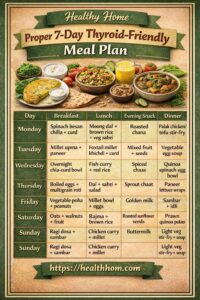
Proper 7-Day Thyroid-Friendly Meal Plan
| Day | Breakfast | Lunch | Evening Snack | Dinner |
|---|---|---|---|---|
| Monday | Spinach besan chilla + curd | Moong dal + brown rice + veg sabzi | Roasted chana | Palak chicken/tofu stir-fry |
| Tuesday | Millet upma + paneer | Foxtail millet khichdi + curd | Mixed fruit + seeds | Vegetable egg soup |
| Wednesday | Overnight chia-curd bowl | Fish curry + red rice | Spiced chaas | Quinoa spinach egg bowl |
| Thursday | Boiled eggs + multigrain roti | Dal + sabzi + salad | Sprout chaat | Paneer lettuce wraps |
| Friday | Vegetable poha + peanuts | Millet bowl + eggs | Golden milk | Sambar + idli |
| Saturday | Oats + walnuts + fruit | Rajma + brown rice | Roasted sunflower seeds | Prawn quinoa pulao |
| Sunday | Ragi dosa + sambar | Chicken curry + millet | Buttermilk | Light veg stir-fry + soup |
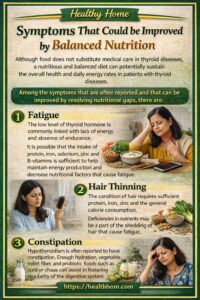
Symptoms That Could be Improved by Balanced Nutrition
Although food does not substitute medical care in thyroid diseases, a nutritious and balanced diet can potentially sustain the overall health and daily energy rates in patients with thyroid diseases.
Among the symptoms that are often reported and that can be improved by resolving the nutritional gaps, there are:
1. Fatigue
The low level of thyroid hormone is commonly linked with lack of energy and absence of endurance. It is possible that the intake of protein, iron, selenium, zinc and B-vitamins is sufficient to help maintain energy production and decrease nutritional factors that cause fatigue.
2. Hair Thinning
The condition of hair requires sufficient protein, iron, zinc and the general calorie consumption. Deficiencies in nutrients may be a part of the shedding of hair. The addition of lentils, seeds, eggs, and leafy vegetables can help with the regular hair growth.
3. Constipation
Hypothyroidism is often reported to have constipation. Enough hydration, vegetable and millet fiber, and probiotic foods such as curd or chaas can assist in fostering regularity of the digestive system.
4. Brain Fog
Mental sluggishness or difficulty in concentrating are some of the reported problems. Foods with equal amounts of protein and healthy fats that stabilize blood sugar levels could aid in keeping the mind sharp.
These nutritional plans are supportive and need to be tailored according to laboratory findings and doctoral recommendation.
Who Should Avoid These Recipes?
These recipes are usually well balanced and nutrition oriented, but some people have to consult a doctor before changing their meals.
1. Patients with severe Iodine Sensitivity.
Individuals who have iodine-induced thyroid dysfunction or certain autoimmune thyroid diseases might have to use a close follow-up of iodine. One should always talk with a medical professional about taking more food rich in iodine.
2. Patients with Strict Low-Potassium Diets.
Individual food items with moderate levels of potassium (spinach, lentils, seeds) are some of the thyroid-friendly foods. Persons having potassium limitations ought to modify the portion sizes by restricting them under the guidance of a dietitian.
3. Patients with Chronic Kidney Disease (CKD)
CKD patients usually need their own protein, potassium and phosphorus. These recipes can be modified as per the stage of kidney functioning.
4. Patients with Recurring Schedules of Thyroid Medicine.
Foods that are rich in fibers, soy, iron rich, calcium rich should be scheduled spacing with thyroid medication as recommended by a specialist.
Individualized nutrition planning is a standard practice whenever chronic health conditions are treated.
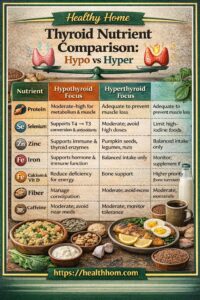
Thyroid Nutrient Comparison: Hypo vs Hyper
| Nutrient | Hypothyroid Focus | Hyperthyroid Focus |
|---|---|---|
| Protein | Moderate‑high for metabolism & muscle | Adequate to prevent muscle loss |
| Selenium | Supports T4 → T3 conversion & antioxidants | Moderate; avoid high doses |
| Iodine | Adequate, not excessive | Limit high-iodine foods |
| Zinc | Supports hormone & immune function | Balanced intake only |
| Iron | Correct deficiency for energy | Monitor; supplement if needed |
| Omega‑3 | Reduce inflammation | Support heart & reduce inflammation |
| Calcium & Vit D | Bone support | Higher priority (bone turnover) |
| Fiber | Manage constipation | Moderate; avoid excess |
| Caffeine | Moderate; avoid near meds | Moderate; monitor tolerance |
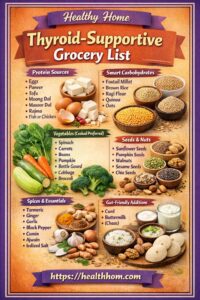
Thyroid-Supportive Grocery List
Protein Sources
- Eggs
- Paneer
- Tofu
- Moong dal
- Masoor dal
- Rajma
- Fish (if non-vegetarian)
- Chicken breast
Smart Carbohydrates
- Foxtail millet
- Brown rice
- Ragi flour
- Quinoa
- Oats
Vegetables (Cooked Preferred)
- Spinach
- Carrots
- Beans
- Pumpkin
- Bottle gourd
- Cabbage (cooked)
- Broccoli (cooked)
Seeds & Nuts
- Sunflower seeds
- Pumpkin seeds
- Walnuts
- Sesame seeds
- Chia seeds
Spices & Essentials
- Turmeric
- Ginger
- Garlic
- Black pepper
- Cumin
- Ajwain
- Iodized salt (moderate use)
Gut-Friendly Additions
- Curd
- Buttermilk (chaas)
- Fermented idli/dosa batter
The cooking tips: to obtain better absorption.
- Spice synergy: Turmeric can be used together with black pepper and fat (ghee or oil) in the daily cooking to increase Curcumin bioavailability.
- Iron friendly plates: Add lemon or tomatoes to the greens and pulses which are actually rich in iron and helps to reduce the Anemia.
- Light preparation: It is better to use steaming, sauteing, pressure-cooking rather than deep-frying as a way to maintain micronutrients and minimize the amount of inflammation.
Safety notes and personalization.
- Dose schedule: Glucocorticoid drugs: Take thyroid medication at the prescribed time, Take calcium/iron supplements at spaced time intervals as prescribed by your clinician.
- Soy and crucifers: Have them cooked and should be rotated and not eaten daily, except as directed by your doctor, there are various food types that eliminate the risk of overemphasizing any one goitrogenic food.
- Iodine context: Easily available Iodized salt may be used regularly with the suggesion of Doctor.
The 10 fast thyroid-friendly replacements.
- White rice : May be replaced to foxtail millet/brown rice as a substitution of fiber.
- Fried snacks – air-fried paneer/fish tikka as a source of protein.
- Tea with sugar may be replaced with jaggery tea without milk.
- Curries with heavy cream : topped with tomatoes, onion and ginger on top of the ghee with a spoon.
- Plain roti + minerals and fiber : Plain roti + fiber multigrain roti + minerals ragi roti + minerals ragi roti + fiber ragi roti + minerals rag Jam toast breakfast → besan chilla + curd as a source of protein.
- Evening cookies: Sunflower seed or chana trail mixed & roasted etc.
- Late meals : soup and stir-fry meals may be taken
- Individual vegetable intake : Various types of mixed color sabzis in assorted micronutrients.
Sample Thyroid Lab Markers
Knowing the lab results would make it possible about your nutrition and therapy.
1. TSH (Thyroid Stimulating Hormone)
- Produced by pituitary gland Increased
- TSH 3- High levels are a frequent sign of hypothyroidism.
- Low TSH/ May depict hyperthyroidism.
- Normal range: 0.4 -4m IU/L (depending on the lab)
2. T3 (Triiodothyronine)
- Active thyroid hormone
- Regulates the metabolism and energy.
- Low T3 can lead to fatigue, gain of weight.
- Frequently evaluated in the symptomatic patients.
3. T4 (Thyroxine)
- Thyroid hormone in form of storage.
- Converts into active T3
- The abnormal levels show that thyroid functioning is not normal.
4. Anti-TPO Antibodies
- Autoimmune thyroid disease marker (e.g. Hashimoto’s)
- Positive Anti-TPO is a good indication of immune thyroid damage.
- Stress management and a diet can be helpful in the control of inflammation in addition to medical care.
N.B- Use lab reports with a qualified medical professional.
Concluding Points
A thyroid friendly kitchen is not a restriction to many recipes, but rather consuming a regular amount of protein, foods help to fight inflammation in our body. Consuming staple foods (which are rich in fiber) with proper time of taking medicine, allows you to have energy after being tired.
Apply these recipes and structures as a framework and make customizations to your lab reports owing to prescriptions of physician to get sustainable outcomes throughout seasons and schedules in India.
“Balanced protein intake plays a key role in thyroid hormone transport.” – Public Health Nutrition Perspective
Related Health Articles from Healthy Home
- 7-Day Low Carbon Cooking Plan: Sustainable Recipes for Healthy Living – Healthy Home – Trusted Health Tips for Kids, Teens & Families (healthhom.com)
- healthy lunch box ideas for kids guide.
- iron-rich foods during pregnancy for better maternal health.
- balanced daily meal plan for sustainable nutrition.
- women’s holistic wellness guide for preventive care tips.
Trusted References and Research Sources:
- Diet for Hypothyroidism: What To Eat and Avoid
- The 30-Minute Thyroid Cookbook: 125 Healing Recipes for Hypothyroidism and Hashimoto’s (Paperback) | Harvard Book Store
- 32-thyroid-fact-sheet.pdf
- R. Kobayashi et al. Thyroid function in patients with selenium deficiency exhibits high free T4 to T3 ratio – Clinical Pediatric Endocrinology, 2021
- M. Ventura et al., Selenium and Thyroid Disease: From Pathophysiology to Treatment – PMC Open Access Article
- J. Knezevic et al., Thyroid-Gut-Axis: How Does the Microbiota Influence Thyroid Function? – Nutrients Review
- Mehdi Karimi et al., Effects of probiotics and synbiotics on thyroid function – Thyroid Research, 2025
- Harvard T.H. Chan School of Public Health research on metabolism and energy expenditure Can eating more protein increase your metabolism? – Harvard Health
FAQs:
For more detail, please visit to my website as mentioned below:


About the Author – “Bibhu Ranjan Mund”, Master in Public Health (MPH) from IIHMR University, Jaipur (Rajasthan- IHMR-U/12/2021 -23/0015) has experience of 18 years in Public Health activities like maternal health, child health, adolescent health, nutrition and community wellness programs. Through “Healthy Home”, he shares evidence-based health and wellness guidance designed to support families in making informed lifestyle decisions. This content is for educational purposes only and does not replace professional medical advice. Connect LinkedIn – https://www.linkedin.com/in/bibhu-ranjan-mund-b72171358/