
Last Updated on June 16, 2026 by Bibhu Ranjan Mund, MPH
Discover the benefits of morning walk on empty stomach regarding metabolism, heart condition as well as mood naturally using wellness tips.
Reviewed by Bibhu Ranjan Mund, MPH (Public Health Expert) with experience in maternal, infant, child, and adolescent health programs. Content is based on evidence-informed guidelines aligned with organizations such as the World Health Organization, UNICEF, Centers for Disease Control and Prevention, and National Institutes of Health.
Medical Disclaimer: This content is for informational and educational purposes only and is not intended as medical advice, diagnosis, or treatment. Always seek the advice of a qualified healthcare professional regarding any medical condition or concerns.
Many people check their phones immediately after waking up. But think, what if that first 15-30 minutes in the morning can be used to improve your metabolism, mood and also long-term health.
As per the Harvard Health Publishing (2023), it shows that the fasted exercise may increase the fat oxidation process. Also the American Heart Association reports suggests that due to regular walking may reduce the risk of cardiovascular problems.
Hence, walking on an empty stomach may enhance the fat burning, improve the cases of insulin sensitivity and may support the overall heart health.
Expensive daily routine or gym is not required, just you need half an hour morning walk before breakfast.
In this article, you will find the 12 science-backed benefits of morning walk on empty stomach including some of the simple healthy habits.
A Small Habit That Made a Big Difference
During a community health awareness program at Boriguma (Koraput), I met with a Govt. employee of age 45 years who was complaining about poor sleep, weight gain and tiredness.
As he has more work pressure, he was not able to go to gym and think that to improving health means a major changing the lifestyle. Later, he started just a simple habit of 25 minutes morning walk before empty stomach.
After a few months in my next camp, he came and expressed his happiness regarding better sleep, more energetic in office work and also in a habit of taking breakfast on time.
Such types of experience shows that small daily healthy habits may have more sustainable fitness which actually pubic health programs suggest.
Quick Summary :
The morning walk of 15-30 minutes prior to breakfast (also known as fasted walking) may:
- Increase fat oxidation
- Enhance the insulin sensitivity.
- Support heart health
- Improve the mood and mental state.
- Improve sleep quality
- Increase the Vitamin D level
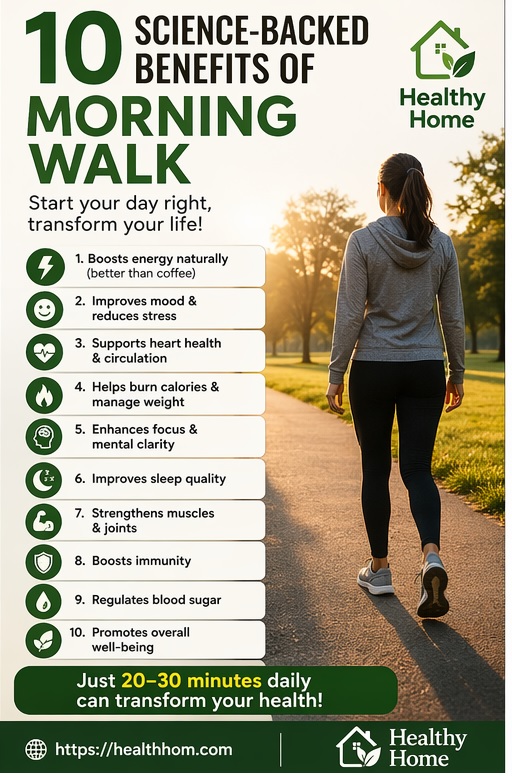
It is recommended by the health organizations like the World Health Organization that one should practice moderate physical activity at least 150 minutes every week and brisk walking is the best method.
The Physical Powerhouse:
1. Boost the metabolism naturally:
- A morning walk, specifically before food, provides your metabolism with a natural boost. It initiates a robust mechanism that is named as Excess Post-Exercise Oxygen Consumption (EPOC).
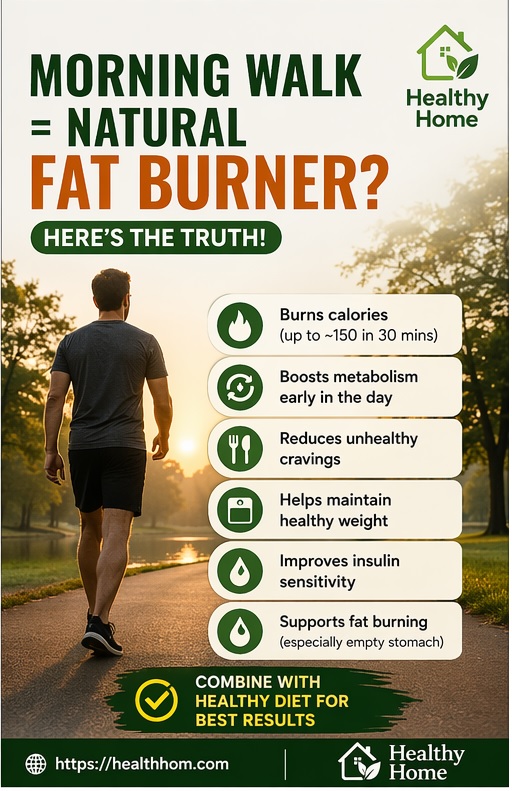
- During fasted walking, the body may rely slightly more on fat as a fuel source compared with exercising after eating.
- In the long term, this increases your metabolic adaptability, healthy body weight and aids in maintaining improved body composition.
- Have a 15 to 20 minutes walk before breakfast. You need to get hydrated either through water or herbal tea and then your body will get into its fat-burning system.
For a complete lifestyle approach to sustainable weight management, explore our detailed guide on obesity prevention strategies.
Scientific breakdown:
What Happens in Your Body?
i. Fat Oxidation
Glycogen stores are more depleted when you are walking before taking any food. The body adapts to the consumption of fat in the body.
ii. Insulin Sensitivity
Muscle contraction during walking enable glucose uptake without relying on insulin.
iii. EPOC Effect
Excess Post-Exercise Oxygen Consumption that is your metabolism will stay slightly elevated for several hours after your walk.
iv. Endorphin Release
Vigorous exercise activates serotonin and dopamine systems and thus boosting the mood.
v. Circadian Reset
Exposure to the morning sunlight inhibits the production of melatonin and aligns the body clock.
2. Improves Heart Health Naturally
- As recommended by the American Heart Association, walking it is one of the best exercises to keep your heart young and strong.
- Regular morning walk will reduce LDL (bad cholesterol), raise HDL (good cholesterol), enhance blood circulation and healthy blood pressure.
- By doing a safe aerobic exercise in each morning, you may build stronger muscle fibers, maintain your arteries and become less prone to heart disease, stroke and type 2 diabetes.
You can also assess your heart risk factors by understanding your cholesterol levels, BMI, and metabolic rate

3. Keep the sugar level in control:
- A morning walk could be your best friend, if you wants to control the blood sugar level without special efforts. In fasted state, the stored glucose is burned off by your muscles, thus clears the excessive sugar in your blood.
- This also enhances insulin sensitivity i.e. your body requires less insulin for normal glucose level. For the people with diabetes, regular walking can support blood sugar management along-with medical treatment.
- It is a type of training to your body to process sugar effectively on a daily basis.
- Trick: Walk at a moderate pace at least 20 minutes before meal. If you are diabetic or low blood sugar, remember to keep a small piece of fruit or a source of glucose and ask your physician about it.
Learn how limiting excess salt and sugar can lower disease risk and improve long-term health naturally : Reducing Salt and Sugar

4. Strong Joint & Easy Mobility
- Regular walking actually helps to protect and strengthen joints. Since joints don’t receive a direct blood supply, they rely on synovial fluid to deliver nutrients and keep them well-lubricated.
- Walking also keeps your joints loose, lubricated and ache-free, it can also strengthen the muscles that hold them up, e.g. your quadriceps, glutes and calves.
- It increases bone density, lessens rigidity due to sedentary lifestyle and prevents pain caused by arthritis as well.
- Hint: Select a soft surface such as a walking track or park rather than the concrete. The smooth track helps in the long run, with your knees and ankles.

5. Calm your mind & start the day
- Before any email or ringing of your phone, please start your day with a calm, quiet morning walk.
- Even a brisk walk supports the endorphins to discharge along-with the natural mood lifters of the brain & to slow down the stress hormones such as cortisol and adrenaline. It brings a neuro-chemical equilibrium which make you calmer, more concentrated and less emotional in the day.
- Most walkers report that they feel less anxious and their breathing becomes even and their mind is renewed with an activity.
- Be silence without music. Hear birds, deep breathing and quit thinking, it’s a kind of meditation which puts a calm atmosphere.

6. Improved Imaginative Thinking and Problem-Solving.
- Feeling stuck? Please, step outside. A steady walk may shifts your brain into a calm environment that encourages day-dreaming and enables the creative problem-solving.
- As you walk, your mind begins to form new ideas, that’s why thinkers like Aristotle, Charles Dickens and Steve Jobs often used walking for inspiration.
- Get up early for a morning walk. During that time your mind is clean and no any digital distractions, so that you can think more ideas during the rest of the day.
- Take a minimum of ten minutes screen free. Look around you, nature is a very creative and enjoy it.
Science-backed strategies to live longer, stay healthier and reduce the risk of chronic diseases: Improve Lifespan & Healthspan

7. Supports Mental Health and Reduces Stress
- Walking is one of the most underrated and also clinically recognized ways to support the mental health.
- The regular morning walk may be used to control anxiety, depression and mood swings and achieve the desired levels of serotonin, dopamine and endorphins. These are the chemicals responsible of the feeling good factor in the human brain.
- After the morning walk, it will provide a feeling of completeness and dominance in the morning. Even a small win can change the mood, enhance confidence and put a good tone to everything that happens further.
- Try This: Walking with gratitude so that you can make it a kind of emotional therapy.
Walking Together as a Family
For many Indian parents, people may not be able to find their personal wellness time. So, one practical approach it to walk with the family members during weekend or evening hour at nearby park and discuss the school experiences.
Even without the physical fitness, such types of walk may improve communication and happy family time so as to get rid from the busy schedules.

8. Align Your Body with Natural Sunlight
- An internal clock called circadian rhythm which is a 24-hour clock that regulates your body, your sleep, hormones and your energy levels.
- The best source of resetting and regulating this rhythm is morning sunlight. When you open your eyes (indirectly) to the light in the morning, it sends the signal to your brain that it is the beginning of the daytime.
- This decreases melatonin (the hormone that makes one sleepy), thus you become alert and awake. With time, your body automatically finds a way of sleeping at night and waking up in fresh morning.
- Getting up Tip: Have a walk out within 30-60 minutes of the sunrise. No-one should look directly at the sun, but allow the natural light to pervade eyes during walking.

9. Better Night Sleep.
- It might be contrary to believe, but your morning ritual will define how you sleep at night.
- A morning walk also speeds up your core body temperature and it is known to drop in the afternoon or evening, it sends signals to the body that it is time to sleep.
- The workout also develops sleep pressure, the natural urge of the body to get sleep. It becomes easy to fall asleep and get deeper and more restful sleep.
- Hint: Continue morning walks even during the weekends. Consistency maintains the circadian rhythms and you can sleep soundly at night.
You can further improve your sleep quality with these science-backed sleep optimization strategies.
10. A Dose of Vitamin D
- One of the greatest healing power of nature is the morning sunlight.
- Only 15-30 minutes of walk in the early sunshine can make your body synthesize vitamin D that is required to give you strong bones, strong immune system and a healthy mood. Sun exposure may support vitamin D production, though the amount varies among individuals.
- The lack of the vitamin D is correlated with the feeling of fatigue, poor mood and decreased immunity. When you take a morning walk and incorporate it into your routine, it will be the natural supplement for the body.
- Tip: If you plan to stay in the sun for longer time and expose your arms or face in early-morning light (before 8 a.m.), then apply sunscreen afterward to protect your skin.

11. Consistency Made Easy
- Stay consistent.
- Morning walk is so effective due to it’s simple, accessibility and sustainability. You don’t need special equipment, gym memberships or other long commutes.
- Walking in the morning means “get it done” before any daily distractions.
- Such small discipline will lead over time, improving your health, mindset and self-confidence.
Understand when supplements are useful, how they support nutrition and which ones truly benefit health: Food Supplementation Guide

Why Morning Walks Fit Easily Into Indian Family Life
The morning is much popular in India due to its simplicity. Many Indians can’t afford the gym may be due to unavailability at their locality or costly. Also working time, household responsibilities and childcare duties matters for them.
A morning walk doesn’t require any special equipment nor require much time. In many Indian families particularly in urban & semi-urban packets the couples walk together, retired employees meet friends in local parks, grandparents walk with their friend circle etc. Such routines not only improve the physical health but also strengthen the social connections.
12. A Pocket of Mindfulness
- The quietness of the world might be the morning walk.
- Forgive me, do not bring your Mobiles here. Listen to your breathing, birds welcoming the day and watch shifting colours of sky.
- It seems to be a meditation i.e. a time before the day starts.
- Being conscious, it allows good ideas to follow, relax the mind and feel gratefulness which is an emotional start to live happier.
- Use the first five minutes of your walk to calm down and then watch, breath and make the day start.
Mindfulness doesn’t stop at walking, learn how mindful eating habits can improve overall family wellness.

Common Mistakes People Make When Starting Morning Walks
Some common mistakes may be:
- Walking too fast on the first day.
- Skipping hydration before the walk.
- Expecting weight loss within a few days.
- Walking irregularly instead of building a routine.
- Comparing their progress with others.
From my experience in health education programs, people who begin with just 10–15 minutes daily may be more successful in maintaining the habit than those who try to walk for an hour immediately.
Turning your morning walk into a ritual:
The following are the ways through which you can incorporate it into your lives:
- Start Small: It should start with 10 -15 minutes and gradually increase.
- Get Ready the Night Before: Have your clothes ready so that you have less decision fatigue.
- Know Your “Why”: Be it clarity, fitness or peace
- Get a Buddy: It is even more pleasant to walk with a friend to provide a sense of accountability.
- Change Routes: Visit parks or new roads so as to make it interesting.
- Be Consistent: You can have a walk even a small walk is good, you need not be so perfect.
Your First Step Awaits:
Morning walk is simple and beautiful joy. No fancy equipment and no expensive memberships.
Each morning it brings a fresh reality to strengthen your heart, clear your mind and energies your body. Tomorrow morning, step into the garden before reaching for your phone.
The first step of morning walk will provide you more energy, peace and additional life in each breath.
Research Snapshot
- Exercise (150 minutes a week) decreases the risk of cardiovascular disease by up to 30 percent (American Heart Association).
- Some people who have fasted in the morning might show an increase of 10-20 percent in the burning of fat (reviewed by Harvard Health Publishing).
- One hour of brisk walking will burn about 80 to 150 calories, but this may vary with the mass of the body.
After your walk, support your digestion with gut-healing foods that nourish your microbiome.
Comparison Table: Empty Stomach vs Post-Meal Walk
Fasted Walk vs After-Meal Walk
| Factor | Empty Stomach Walk | Post-Meal Walk |
|---|---|---|
| Fat Burning | Higher fat oxidation | Lower fat oxidation |
| Blood Sugar Control | Improves insulin sensitivity | Reduces post-meal glucose spikes |
| Energy Level | May feel lighter | More sustained energy |
| Best For | Weight management | Diabetes control |
| Risk | Not ideal for hypoglycemia | Generally safe for most |

Heart Health Data Table:
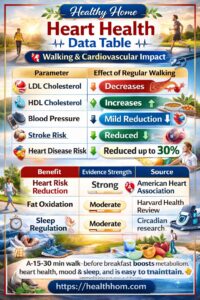
Walking & Cardiovascular Impact
| Parameter | Effect of Regular Walking |
|---|---|
| LDL Cholesterol | Decreases |
| HDL Cholesterol | Increases |
| Blood Pressure | Mild reduction |
| Stroke Risk | Reduced |
| Heart Disease Risk | Reduced up to 30% |
Regular walking combined with routine health checkups can significantly reduce long-term disease risks.
| Benefit | Evidence Strength | Source |
|---|---|---|
| Heart Risk Reduction | Strong | American Heart Association |
| Fat Oxidation | Moderate | Harvard Health Review |
| Sleep Regulation | Moderate | Circadian research |
Comparison Chart: Benefits by Goal
Which Benefit Matters Most?
| Goal | Morning Fasted Walk Rating (1–5) |
|---|---|
| Fat Loss | ⭐⭐⭐⭐ |
| Heart Health | ⭐⭐⭐⭐⭐ |
| Mental Clarity | ⭐⭐⭐⭐ |
| Sleep Quality | ⭐⭐⭐⭐ |
| Blood Sugar Control | ⭐⭐⭐⭐ |
Data Table: Calorie Burn by Body Weight
Estimated Calories Burned (30-Minute Brisk Walk)
| Body Weight | Calories Burned |
|---|---|
| 55 kg | 90–110 kcal |
| 65 kg | 110–130 kcal |
| 75 kg | 130–150 kcal |
| 85 kg | 150–170 kcal |

Who Should Avoid Fasted Walking?
- Individuals who are prone to dizziness or low blood pressure.
- Pregnant women
- People with uncontrolled diabetes
- Older persons with problems with balance.
- Who are on medication affecting blood sugar

My Perspective After Years in Public Health
After working in community health programs for years, I have observed that people search for the costly treatment to improve the health, but ignore the simple habits which are within their reach.
So, walking is one of the best habits for lifestyle changing. Many Indian people focus on costly supplements or diets and also go for gym fitness program but consistency can’t be maintained.
In reality, who is able to walk regularly may sustain the healthy behavior and become more active, better sleep at night, manage stress and good concentration in all the activities.
So, I recommend the walking as best tool for long-term wellness.
Key points:
- Naturally, a 15-30 minutes walk in the morning can make your life changed.
- It may support the metabolism and help with weight management when practiced consistently.
- Exercise is beneficial to the heart, blood sugar and improves joints.
- It is like a stress reliever that cleanses your mind and makes your mood stable.
- Sunlight in the morning, removes the circadian rhythm and improves the quality of sleep.
- You will receive a natural vitamin D, the enhanced immune system and emotional stability.
- It is free and flexible and easy to continue.
- It is just a matter of consistency.
- In short: Morning walks are not merely exercises on a starving stomach, it’s is a physical, mental and emotional ritual.
According to the Centers for Disease Control and Prevention, regular moderate physical activity reduces the risk of chronic disease and improves overall longevity.
“Walking is the closest thing we have to a wonder drug.” – Dr. Thomas Frieden
Healthy habits like morning walks can also influence long-term child growth and development.
Best Time for Morning Walking
- Before sunrise
- After sunrise
- Seasonal variations
Common Myths About Fasted Walking
- Fasted walking guarantees weight loss,
- Longer is always better
- You must walk an hour daily
- Everyone should walk before breakfast
Morning Walk Plan for Beginners
| Week | Duration |
|---|---|
| Week 1 | 10–15 min |
| Week 2 | 15–20 min |
| Week 3 | 20–30 min |
| Week 4 | 30 min |
Quick Tips:
- Begin with 10-15 minutes and gradually add time.
- To be hydrated, drink water before walking.
- Walk slowly but not too slowly or too vigorous.
- Do not walk fast when you are hungry, you may be dizzy, so carry a small snack.
- Select natural environments or parks in order to have a better mental benefit.
- Be consistent even short walks daily.
Expert Insight (by Bibhu Ranjan Mund, MPH)
- In community health programs, simple behaviors such as walking have a long-term effect on lifestyle diseases.
- Walking on fasting is good, but it should be individualized depending on health condition.
- Safety and monitoring is crucial to the elderly or people affected by diabetes.
- Walking in the sun is a better way to improve physical and mental health.
- Lifetime of health is not extreme practices but rather sustainable ones.
FAQs:
Q1. Can one walk in empty stomach?
Ans. Yes in the case of most healthy individuals it is absolutely safe. The morning walk before you eat is a mild way of conditioning your body to burn the fats. Unless you are diabetic, have low blood pressure or are easily dizzy, though it is better to eat a small fruit or warm water with honey before walking.
Q2. How much time would I take for morning walk?
Ans. Begin with 15-20 minutes and slowly increase to 30-45 minutes. Consistency is the key, even a daily walk of smaller length would be more advantageous than a long walk once a month.
Q3. Is it possible to drink water before my morning walk?
Ans. Absolutely. A glass of water before walking is beneficial in ensuring that a person is hydrated and enhances fat metabolism. Warm lemon water may support hydration and be a refreshing part of a morning routine.
Q4. When is the most appropriate time to walk in the mornings?
Ans. Appropriate time is 30-60 minutes post sunrise. Cooler temperatures, lack of noise and exposure to sunlight, at this time of the day make your circadian rhythm re-establish and increase vitamin D.
Q5. What is the food to take after walking?
Ans. Make your morning exercise followed by a balanced breakfast containing protein, fiber and healthy fats- like eggs and multigrain toast or curd and fruits and seeds. This helps in keeping you energized all day long.
Q6. Is it possible to substitute gym exercises by morning walks?
Ans. Not always. Walks in the morning are very healthy as they work on cardiovascular fitness, fat and clarity of mind whereas workouts in the gym can be performed to concentrate on strength and endurance. A combination of both may be ideal.
Related Health Articles from Healthy Home:
- Foods to Heal Your Gut Naturally
A guide to gut-friendly foods that support digestion, microbiome balance, and overall wellness. - Mindful Eating for Kids
Simple mindful eating habits that help children develop self-control, better digestion, and healthy food choices. - Obesity Prevention: 20 Evidence-Based Lifestyle Habits That Work (2026 Guide) – Healthy Home – Trusted Health Tips for Kids, Teens & Families (healthhom.com)
- How to know your Cholesterol level, BMI & BMR? – Healthy Home – Trusted Health Tips for Kids, Teens & Families (healthhom.com)
- Annual Health Checkup for Lifestyle Diseases (2026 Guide to Early Detection & Prevention) – Healthy Home – Trusted Health Tips for Kids, Teens & Families (healthhom.com)
Trusted References and Research Sources:
- Are there any benefits to exercising on an empty stomach? – Harvard Health
- Empty Stomach, Full Benefits: The Science Behind Morning Walks for Well-being (Paperback) | Harvard Book Store
- Morning Walk: How It Can Benefit Your Overall Well-Being
- 10 Morning Walking Benefits to Get You on Your Feet
- Walking Empty Stomach Or Post-Meal Walk: Which Ones Better For You?
- This is what happens when you go for a slow walk on an empty stomach every morning
- खाली पेट पैदल चलने से क्या होता है? पढ़ लीजिए इस व्यायाम के 8 अचूक फायदे | What Happens When You Walk On An Empty Stomach? Benefits of Walking Daily In Morning An Empty Stomach
- Going for a morning walk? THESE are the 5 things you must avoid – The Times of India


About the Author – “Bibhu Ranjan Mund”, Master in Public Health (MPH) from IIHMR University, Jaipur (Rajasthan) has more than 18 years of experience in Public Health activities in maternal health, child health, adolescent health, nutrition and community wellness programs under National Health Mission, Health & Family Welfare Department, Odisha. He is the founder of “Healthy Home” and translates the evidence based public health information into a practical source so that families may able to apply in everyday life. All the information are for educational purposes only and not replaces the professional medical advice. ORCID Researcher ID – 0009-0003-0158-4992. Connect LinkedIn – https://www.linkedin.com/in/bibhu-ranjan-mund-b72171358/