Last Updated on March 14, 2026 by Bibhu Ranjan Mund, MPH
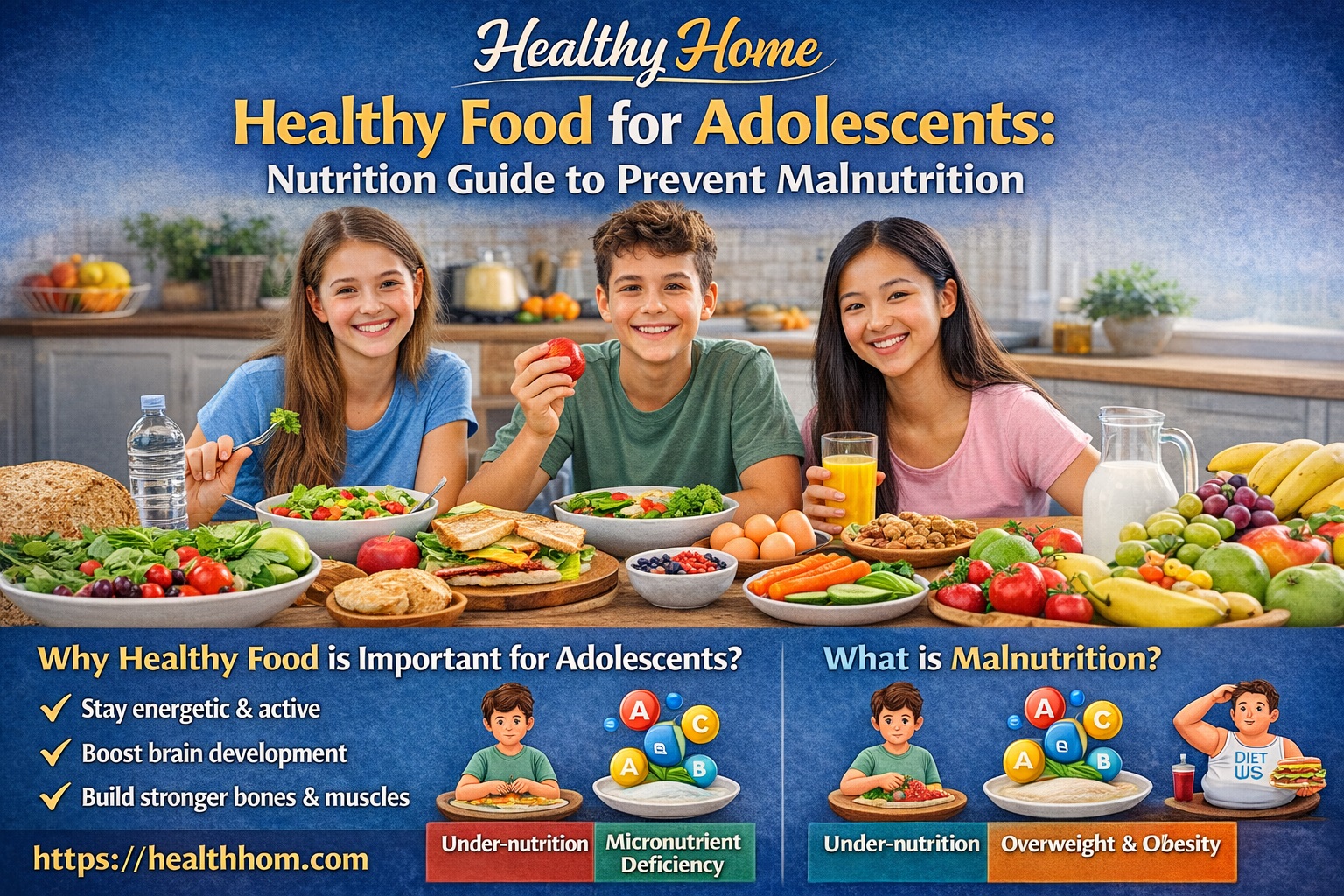
Healthy Food during adolescence supports growth, prevents malnutrition, boosts immunity and brain function. Learn nutrients, diet tips, risks and FAQs.
Reviewed by Public Health Expert (MPH), with experience in maternal and child health programs.
Medical Disclaimer : This information is for educational purposes only and does not replace professional medical advice. For personalized guidance, consult a qualified healthcare provider. This article was reviewed by a Public Health Expert (MPH) with experience in maternal, infant and adolescent programs aligned with WHO and UNICEF frameworks.
Affiliate Disclosure: This article contains affiliate links. If you purchase through these links, we may earn a small commission at no extra cost to you.
Why Healthy Food is Important for Adolescents?
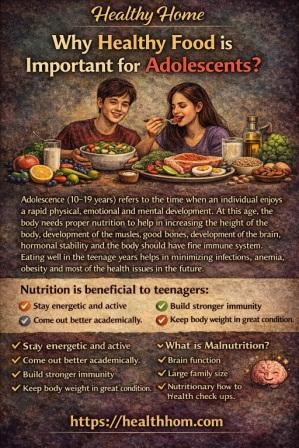
Adolescence (10-19 years) refers to the time when an individual enjoys a rapid physical, emotional and mental development. At this age, the body needs proper nutrition to help in increasing the height of the body, development of the muscles, good bones, development of the brain, hormonal stability and the body should have fine immune system. Eating well in the teenage years helps in minimizing infections, anemia, obesity and most of the health issues in the future.
Nutrition is beneficial to teenagers:
- Stay energetic and active
- Come out better academically.
- Build stronger immunity
- Keep body weight in great condition.
- Improves mood stability and concentration.
Global and national reports have indicated that adolescents have various nutritional problems such as under nutrition, deficiency of micronutrients and increasing obesity.
Global and national reports have indicated that adolescents have various nutritional problems such as under nutrition, deficiency of micronutrients and increasing obesity.
| Indicator | Global / India Estimate | Source | Publication Year |
|---|---|---|---|
| Adolescents worldwide | ~1.2 billion individuals | WHO | 2023 |
| Adolescents affected by anemia globally | ~30% of girls aged 15–19 | WHO Global Health Observatory | 2022 |
| Adolescents in India (10–19 years) | ~253 million | UNICEF India | 2023 |
| Adolescents with anemia in India | ~59% girls (15–19 years) | NFHS-5 | 2021 |
| Underweight among adolescents in India | ~24% | UNICEF Nutrition Report | 2022 |
What is Malnutrition?
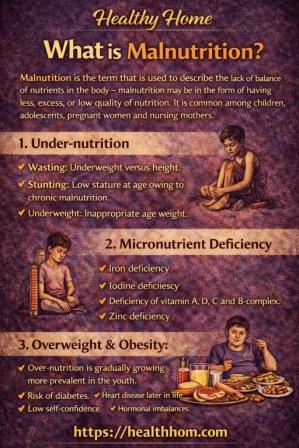
Malnutrition is the term that is used to describe the lack of balance of nutrients in the body- malnutrition may be in the form of having less, excess, or low quality of nutrition. It is common among children, adolescents, pregnant women and nursing mothers.
Types of Malnutrition
| Type of Malnutrition | Description | Common Causes |
|---|---|---|
| Under-nutrition | Insufficient intake of energy or nutrients | Poverty, food insecurity |
| Micronutrient Deficiency | Lack of vitamins or minerals | Poor diet diversity |
| Overweight & Obesity | Excess calorie intake relative to expenditure | Processed food consumption, sedentary lifestyle |
Source: WHO – Healthy Diet Guidelines (2023)
There are three major types of Malnutrition:
1. Under-nutrition
This is brought about by the lack of sufficient nutrients in the body. It may result in:
- Wasting: low weight for height
- Stunting Low stature at age owing to chronic malnutrition.
- Underweight: Low weight for age
The result of under-nutrition may be low immunity, ill health, lack of learning performance, retarded growth and physical weakness.
2. Micronutrient Deficiency
This occurs in cases where the body does not have essential vitamins or minerals. Some of the most frequent shortcomings are:
- Iron deficiency – Check in Amazon
- Anemia – Check in Amazon
- Iodine deficiency
- Deficiency of vitamin A, D, C and B-complex. – Check in Amazon
- Zinc deficiency
These can lead to tiredness, immuno-suppression, impaired brain performance, slow wound recovery among other complications.
3. Overweight & Obesity:
Over-nutrition is gradually growing more prevalent in the adolescent population particularly the low-income and urban nations. Over-nutrition occurs when calorie intake is higher than calorie expenditure. It may lead to:
- Risk of diabetes
- Heart disease later in life
- Joint and mobility issues
- Low self-confidence
- Hormonal imbalances
It is necessary to prevent it by balanced diets and physical exercises.
The Vitamins, Minerals Your Teenager Should Have
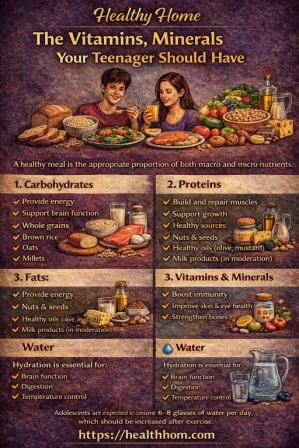
A healthy meal is the appropriate proportion of both macro and micro nutrients.
Carbohydrates
- Provide energy
- Support brain function
- Healthy sources:
- Whole grains
- Brown rice
- Oats
- Millets
- Whole-wheat bread
Proteins
- Build and repair muscles
- Support growth
- Healthy sources:
- Milk & milk products
- Eggs
- Fish & chicken
- Pulses & beans
- Soy & nuts
Fats:
- Provide energy
- Support brain development
- Healthy sources:
- Nuts & seeds
- Healthy oils (olive, mustard)
- Milk products (in moderation)
Vitamins & Minerals
- Boost immunity
- Improve skin & eye health
- Strengthen bones
Key nutrients:
- Iron
- Calcium
- Vitamin A, C, D & E
- Zinc
Important Micronutrients for Adolescents
| Nutrient | Role in Body | Food Sources |
|---|---|---|
| Iron | Supports oxygen transport in blood | Green leafy vegetables, beans |
| Calcium | Supports bone growth | Milk, yogurt |
| Vitamin A | Supports vision and immunity | Carrots, mangoes |
| Vitamin D | Helps calcium absorption | Sunlight, fortified foods |
| Zinc | Supports immune function | Nuts, seeds |
Source: WHO – Healthy Diet Recommendations (2023)
Water
Hydration is essential for:
- Brain function
- Digestion
- Temperature control
Adolescents are expected to consume 6-8 glasses of water per day, which should be increased after exercise.
Macronutrients and Their Role in Adolescent Nutrition
| Nutrient | Main Function | Healthy Food Sources |
|---|---|---|
| Carbohydrates | Provide energy for daily activities | Whole grains, rice, oats |
| Proteins | Support growth and muscle repair | Eggs, milk, legumes |
| Healthy Fats | Support brain development | Nuts, seeds, vegetable oils |
Source: FAO – Human Nutrition Guidelines (2021)
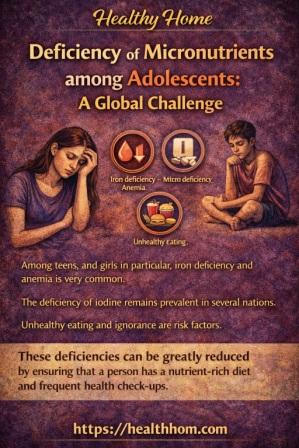
Deficiency of Micronutrients among Adolescents: A Global Challenge
- Among teens, and girls in particular, iron deficiency and anemia is very common.
- The deficiency of iodine remains prevalent in several nations.
- Unhealthy eating and ignorance are risk factors.
These deficiencies can be greatly reduced by ensuring that a person has a nutrient-rich diet and frequent health check-ups.
Common Micronutrient Deficiencies Among Adolescents
| Nutrient Deficiency | Estimated Global Prevalence | Source | Year |
|---|---|---|---|
| Iron deficiency anemia | ~30% adolescent girls | WHO | 2022 |
| Iodine deficiency | ~2 billion people at risk | UNICEF | 2021 |
| Vitamin A deficiency | ~190 million children globally | WHO | 2022 |
| Zinc deficiency risk | ~17% of global population | FAO | 2020 |
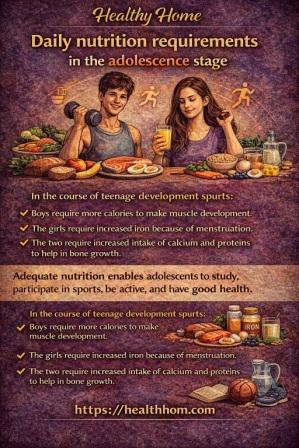
Daily nutrition requirements in the adolescence stage.
In the course of teenage development spurts:
- Boys require more calories to make muscle development.
- The girls require increased iron because of menstruation.
- The two require increased intake of calcium and proteins to help in bone growth.
Adequate nutrition enables adolescents to study, participate in sports, be active, and have good health.
Recommended Daily Nutrient Intake for Adolescents
| Nutrient | Boys (14–18 yrs) | Girls (14–18 yrs) | Source | |
|---|---|---|---|---|
| Energy | ~2800 kcal | ~2200 kcal | ICMR-NIN | 2020 |
| Protein | ~52 g | ~46 g | ICMR-NIN | 2020 |
| Calcium | 1000 mg | 1000 mg | WHO | 2023 |
| Iron | 11 mg | 15 mg | WHO | 2023 |
| Water | ~2–2.5 L | ~2 L | EFSA | 2022 |
Values approximate for educational purposes.
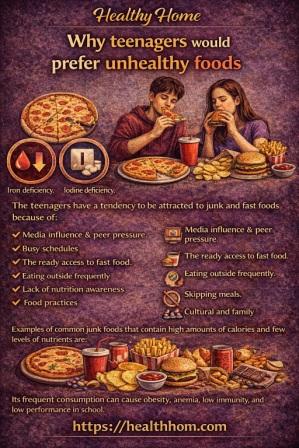
Why teenagers are preferring unhealthy foods?
The teenagers have a tendency to be attracted to junk and fast foods because of:
- Media influence & peer pressure.
- Busy schedules
- The ready access to fast food.
- Eating outside frequently
- Lack of nutrition awareness
- Skipping meals
- Food practices
- Cultural and family
Examples of common junk foods that contain high amounts of calories and few levels of nutrients are: Pizza, burgers, chips, samosa, chocolate and cakes, soft drinks, and fried snacks.
Its frequent consumption can cause obesity, anemia, low immunity, and low performance in school.
Healthy Foods vs Junk Foods
| Feature | Healthy Foods | Junk Foods |
|---|---|---|
| Nutrient Density | High | Low |
| Fiber Content | High | Low |
| Sugar & Salt | Controlled | Often high |
| Processing Level | Minimal | Highly processed |
| Health Impact | Supports growth | May contribute to poor nutrition patterns |
Source: WHO Healthy Diet Guideline (2023)
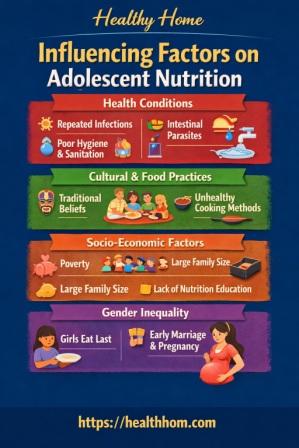
Influencing Factors on Adolescent Nutrition.
1. Health Conditions
- Repeated infections
- Intestinal parasites
- Poor hygiene and sanitation have the potential to aggravate nutritional health.
2. Cultural & Food Practices
- Traditional beliefs
- Family eating habits
- Food preparation techniques such as deep-frying are capable of lowering food nutrition.
3. Socio-Economic Factors
- Poverty
- Large family size
- Ignorance on how to eat cheaply and nutritiously
4. Gender Inequality
- Girls are last to eat or eat food of lesser nutritional value.
- Nutritional health is aggravated by early marriage and pregnancy.
- Enhancing gender equality contributes to the enhancement of the nutrition of adolescents.
Key Determinants of Adolescent Nutrition
| Factor | Examples | Impact |
|---|---|---|
| Health | infections, parasites | reduces nutrient absorption |
| Socioeconomic status | poverty, food insecurity | limits access to nutritious foods |
| Cultural practices | food restrictions | influences dietary diversity |
| Gender inequality | unequal food distribution | affects girls’ nutrition |
Source: UNICEF Adolescent Nutrition Report (2022)
The Healthy Eating Habits of Parents.
Parents can make significant contributions by:
- Serving balanced meals
- Promoting mealtime in the family.
- Educating the children on how to read food labels.
- Offering healthy snacks
- Eliminating the availability of junk food always.
- Engaging teenagers in food preparation and lunch/dinner planning.
Practical Ways Parents Can Promote Healthy Eating
| Action | Example |
|---|---|
| Provide balanced meals | Include vegetables, grains, proteins |
| Encourage family meals | Eat together regularly |
| Provide healthy snacks | Fruits, nuts, yogurt |
| Limit sugary drinks | Encourage water |
| Teach nutrition awareness | Reading food labels |
Source: WHO – Healthy Diet Key Recommendations (2023)

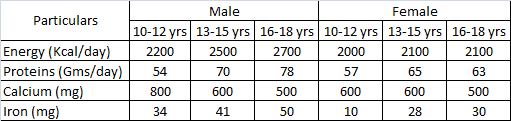
Many recommendations for Daily Allowance of Nutrients for Adolescents :
Major Nutrition Programs Supporting Adolescents in India
| Program | Focus | Target Group |
|---|---|---|
| POSHAN Abhiyaan | Improve nutrition outcomes | Women & adolescents |
| Weekly Iron Folic Acid Supplementation (WIFS) | Prevent anemia | School adolescents |
| Mid-Day Meal Scheme | Improve nutrition in students | School children |
| Rashtriya Kishor Swasthya Karyakram (RKSK) | Adolescent health services | Adolescents |
Source: Ministry of Health & Family Welfare India (2023)
FAQs:
Related Health Articles from Healthy Home:
- Anemia in Adolescents – Symptoms, Causes & Prevention
- Non-Communicable Diseases in Adolescents – Risks & Prevention
- Healthy Lifestyle in Adolescents – Promotion Tips & Strategies
- How Food Affects Mental Health – Nutrition & Brain Health
- Best Foods to Heal Your Gut Naturally – Gut Health Guide
A small video from youtube on this topic is as mentioned below:
https://www.yo utube.com/embed/tG4b3eU1Nzc?si=gd-591rczQK5JLor
Trusted References and Research Sources:
- WHO – Global Accelerated Action for Adolescent Health (AA-HA!) Guidance
- UNICEF – Adolescents’ Diets and Nutrition Report (India)
- WHO – Adolescent Health Overview
- UNICEF – Food and Me: Adolescents’ Nutrition & Well-Being
- WHO – Adolescents’ Health Risks and Solutions
- WHO – Healthy Diet: Key Recommendations
- UNICEF India – Policy Brief on Adolescent Nutrition & Food Security
This article is informational and not a substitute for pediatric medical advice.
For more detail, please visit to my website as mentioned below:


About the Author – “Bibhu Ranjan Mund”, Master in Public Health (MPH) from IIHMR University, Jaipur (Rajasthan- IHMR-U/12/2021 -23/0015) has experience of 18 years in Public Health activities like maternal health, child health, adolescent health, nutrition and community wellness programs. Through “Healthy Home”, he shares evidence-based health and wellness guidance designed to support families in making informed lifestyle decisions. This content is for educational purposes only and does not replace professional medical advice. Connect LinkedIn – https://www.linkedin.com/in/bibhu-ranjan-mund-b72171358/