Last Updated on March 22, 2026 by Bibhu Ranjan Mund, MPH
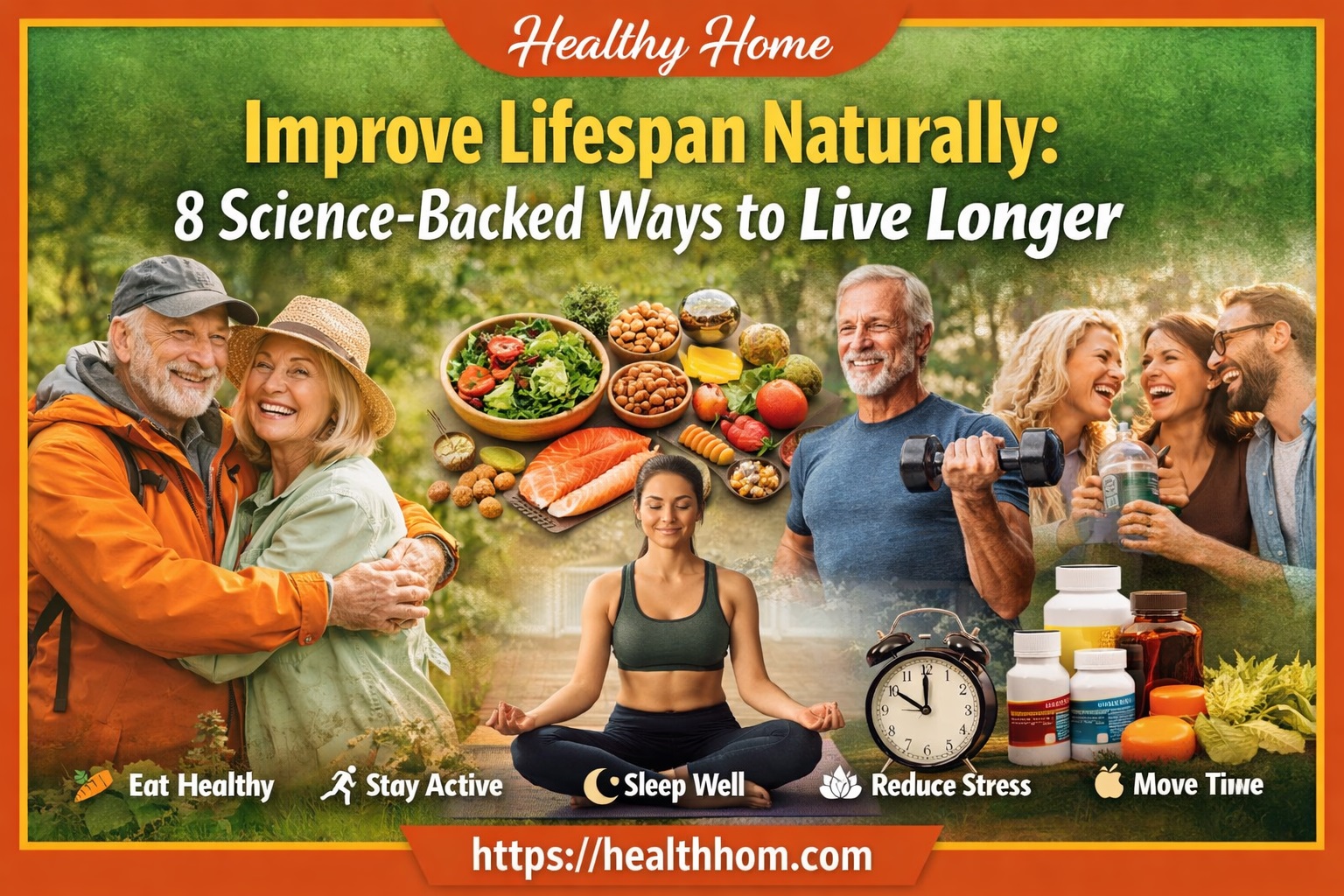
Discover 8 science-backed ways to improve lifespan naturally. Learn how diet, sleep, exercise, stress control and mindset impact healthy aging.
Reviewed by Bibhu Ranjan Mund, MPH (Public Health Expert) with experience in maternal, infant, child, and adolescent health programs. Content is based on evidence-informed guidelines aligned with organizations such as the World Health Organization, UNICEF, Centers for Disease Control and Prevention, and National Institutes of Health.
Last reviewed on: 22 March 2026.
Medical Disclaimer: This content is for informational and educational purposes only and is not intended as medical advice, diagnosis, or treatment. Always seek the advice of a qualified healthcare professional regarding any medical condition or concerns.
Affiliate Disclosure: This article contains affiliate links. If you purchase through these links, we may earn a small commission at no extra cost to you.
Living longer has been a fascination of all human beings for decades. But during these recent years, the discussion has enhanced its importance of just living to a healthy living i.e. with full of vitality, strength and independence (health-span). Living to 90 or 100 is not all that much if the final decades are spent in chronic illness and disability. The real goal is to lengthen the health-span which is the amount of life that is lived without having any disease.
Many studies have shown that we don’t need any best treatment protocol or robotic technology to accomplish this task. Actually, now-a-days, lifestyle strategies may be linked to better long-term health as well as health-span.
Some suggestive methods as below:
Quick Summary :
- Consume a full-course, plant-based diet (i.e., Mediterranean),
- Make your body move (combine strength and cardio) every day.
- Sleep 7–9 hours consistently
- Reduce stress by meditating and being in nature.
- Avoid smoking & limit alcohol
- Establish good social contacts.
- Supplements should be used when they are needed.
- Have a positive growth oriented attitude.
1. Eat for Longevity: Nutrition to Improve Lifespan Naturally
Food is also acts as information which goes to our body as input. As per our food pattern, it actually determines the expression of genes, age of our cells and functioning of our different organs. Here are some suggestive dietary steps which are extracted from natural research and result in longer, healthier lives:
- Making of Whole Plant Foods:
Diets high in vegetables, fruits, legumes, nuts and seeds provide fiber, antioxidants and Phyto-nutrients may be able to lower the inflammation level and cellular damage. It has always been established that plant based diets cut the risk of heart disease, diabetes and cancer. - Try the Mediterranean Diet:
Based heavily on olive oil, whole-grains, fish and colorful vegetables, this way of eating has been linked to longer life expectancy and reduced risk for diseases of aging. - Limit Ultra-Processed Foods:
Processed foods, sugar drinks and refined carbohydrates speed up inflammation, insulin resistance and cellular senescence. Generally, the less processed food is better. - Balance Protein Wisely:
Optimal protein intake from fish, beans, lentils and nuts can preserve muscle mass without over-stimulation of aging pathways such as IGF-1 (insulin-like growth factor). - Consider Time Restricted Eating:
Intermittent fasting (such as a 12 to 16-hour overnight fast) gives the body a chance to repair itself by a process known as autophagy, which removes damaged cells and proteins.
Discover more about : Anti-Inflammatory Foods to Reduce Chronic Inflammation Naturally
2. Movement: The Anti-Aging Medicine
Associated with improved health outcomes and linked to better long-term health. It’s good for the heart, it keeps the bones strong, it helps maintain mobility and it even helps improve brain function.
- Aim for Daily Movement:
As little as moderate activity such as brisk walking for 30 minutes a day decreases all cause mortality by as much as 30%. - Mix Strength & Cardio:
Strength training is important for maintaining lean body mass and bone density, important for maintaining independence later in life. Cardio is great for increasing circulation, heart health and endurance. - Increase Flexibility & Balance:
Yoga, tai chi and stretching all help lower injury risk and keep you mobile as you age. - Avoid Prolonged Sitting:
Sitting for long periods of time is associated with premature death. You may stand for sometime, have stretch or take little walks every hour.
Tip: Consider “move often” instead of just “exercise.” Gardening, playing with children, walking your dog, or taking the stairs etc.
3. Sleep: The Silent Healer
In today’s society, we can see that there is a glorification of being busy and a lack of importance placed upon sleep. But deep, restorative sleep is one pillar of longevity.
- Prioritize 7–9 Hours Nightly
Sleep is when your brain solidifies memories, your body repairs tissues and your immune system is rebuilt. - Have a Committing Schedule
Sleeping and waking at the same time is effective for your body. - Provide an Environment Conducive to Sleep
Make your bedroom dark, cool and quiet. Restrict the use of screens for at least an hour before bedtime - Don’t Over-Rely on Stimulants
Caffeine, alcohol and late-night snacks are disruptive to deep sleep cycles.
Sleep deprivation has been shown to be linked to obesity, diabetes, dementia and shorter life expectancy, so don’t think it is optional.
Discover more about Sleep music : Relaxing Sleep Music for Better Night Rest and Stress Reduction
4. Reducing Stress: Preserving your Inner Balance
Chronic stress overloads the body with the hormone cortisol, increases inflammation and decreases telomeres, which is the caps protecting our DNA associated with aging. Learning how to deal with stress is important for longevity.
- Try Mindfulness & Meditation
Stress levels are reduced: Just a 10-minute meditation session a day reduces the level of stress hormones and makes your mind clear. - Breathing and Relaxation exercises
Breathing deeply and slowly stimulates the para-sympathetic nervous system which can shift the body into the “rest and repair” mode. - Connect with Nature
Time spent outside reduces stress, boosts your mood and even lowers your blood pressure. - Nurture Social Bonds
Loneliness is as bad for you as smoking. Great friendships and family connections make resilience and happiness increase.
5. Healthy Behaviors that Bring Years
Small daily decisions have powerful long-term results. Try these habits in your life:
- Stay Hydrated
Water aids digestion, circulation and detoxification. Hence, please don’t be dehydrated. After, dehydration you may feel tired, also it may cause joint pain & having stress on kidneys. - Avoid Smoking & Limit Alcohol
Smoking is strongly associated with reduced life expectancy. Alcohol is harmful to the liver, heart and brain, especially when it’s consumed in excess. Just eat food in moderation. - Protect Your Brain
Reading, puzzles, social activity and life-long learning will all keep your brain sharp. - Sunlight in Moderation
A little sunlight helps produce vitamin D, which helps to control mood. But everything in moderation, because excess results in a higher chance of skin cancer.
To know the BMIR & BMR : How to know your Cholesterol level, BMI & BMR?
6. Developing the Strength of Community
What all those long-lived cultures they call Blue Zones have in common is a shared sense of purpose and strong community.
- Purpose
Get up in the morning, be it with family which is associated with years of life expectancy. - Inter-generational Living
The company of both the younger and older generations ensure this, as the younger youth keeps one occupied while the older ones help to keep one in touch with oneself and are emotionally fulfilling. - Healthy Traditions
Meals together, gardening together or walking together are natural ways for everyone to lead healthier lifestyles.
7. Help Your Body With Natural Supplements
While food should always be the first and foremost, some natural supplements will help support longevity if diet is off:
- Omega 3 Fatty Acids (Fish Oil/Algae Oil): Heart and brain healthy
- Vitamin D: This vitamin is important for bone health and immune health and is deficient among adults.
- Magnesium: Aids sleep, stress and muscle function.
- Probiotics: Probiotics can support gut health and have an impact on immunity and inflammation.
As with any type of supplement, it’s always recommended that you speak with a medical professional before taking them, particularly if you have any pre-existing conditions.
Look into the food & mental health balancing : How food affects mental health and Emotional Well-Being
8. Mindset: The Key To Lost Longevity
Research has demonstrated that people who live a positive life enjoy longer and healthier lives. Hormones that reduce stress, resilience and hope are positive emotions that support healthy aging.
Easy mindset tricks include:
- Writing in a journal every day about things for which you’re grateful.
- Getting past adversity by looking at it as a source of development.
What Is Lifespan vs Healthspan?
| Term | Meaning | Why It Matters |
|---|---|---|
| Lifespan | Total number of years lived | Living longer |
| Healthspan | Years lived free from chronic disease & disability | Living healthier |
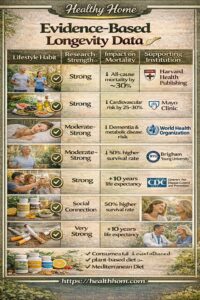
Evidence-Based Longevity Data
| Lifestyle Habit | Research Strength | Impact on Mortality | Supporting Institution |
|---|---|---|---|
| Regular Exercise | Strong | ↓ All-cause mortality by ~30% | Harvard Health Publishing |
| Mediterranean Diet | Strong | ↓ Cardiovascular risk by 25–30% | Mayo Clinic |
| 7–9 Hours Sleep | Moderate–Strong | ↓ Dementia & metabolic disease risk | World Health Organization |
| Social Connection | Strong | 50% higher survival rate | Brigham Young University |
| Smoking Avoidance | Very Strong | +10 years life expectancy | Centers for Disease Control and Prevention |
Key Longevity Statistics
- Those adults who adhere to 5 healthy habits live 10–14 years longer (Harvard cohort study).
- Inactivity also causes almost 5 million untimely deaths across the world annually.
- Prolonged stress reduces the length of the telomeres (associated with aging biological processes).
- Being alone is as dangerous to the mortality rate as smoking 15 cigarettes a day.
- Those countries, which have good community culture, have greater healthy life expectancy.
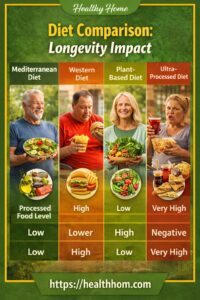
Diet Comparison: Longevity Impact
| Diet Type | Processed Food Level | Longevity Impact | Inflammation Level |
|---|---|---|---|
| Mediterranean Diet | Low | High | Low |
| Western Diet | High | Lower | High |
| Plant-Based Diet | Low | High | Low |
| Ultra-Processed Diet | Very High | Negative | Very High |
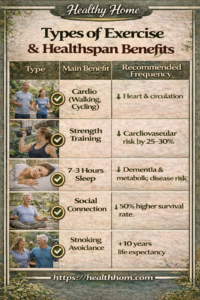
Types of Exercise & Healthspan Benefits
| Type | Main Benefit | Recommended Frequency |
|---|---|---|
| Cardio (Walking, Cycling) | Heart & circulation | 150 min/week |
| Strength Training | Muscle & bone health | 2–3 times/week |
| Flexibility (Yoga, Stretching) | Mobility & injury prevention | 2–3 times/week |
| Balance Training | Fall prevention | 2+ times/week |
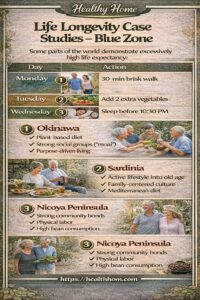
Life Longevity Case Studies – Blue Zone
Some parts of the world demonstrate excessively high life expectancy:
1. Okinawa
- Plant-based diet
- Strong social groups (“moai”)
- Purpose-driven living
2. Sardinia
- Active lifestyle into old age
- Family-centered culture
- Mediterranean diet
3. Nicoya Peninsula
- Strong community bonds
- Physical labor
- High bean consumption
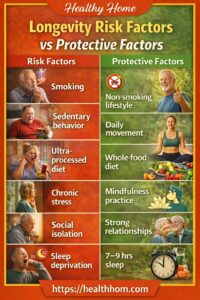
Longevity Risk Factors vs Protective Factors
| Risk Factors | Protective Factors |
|---|---|
| Smoking | Non-smoking lifestyle |
| Sedentary behavior | Daily movement |
| Ultra-processed diet | Whole-food diet |
| Chronic stress | Mindfulness practice |
| Social isolation | Strong relationships |
| Sleep deprivation | 7–9 hrs sleep |
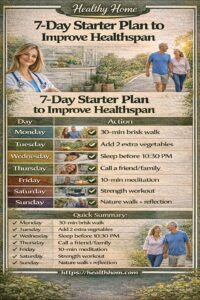
7-Day Starter Plan to Improve Healthspan
| Day | Action |
|---|---|
| Monday | 30-min brisk walk |
| Tuesday | Add 2 extra vegetables |
| Wednesday | Sleep before 10:30 PM |
| Thursday | Call a friend/family |
| Friday | 10-min meditation |
| Saturday | Strength workout |
| Sunday | Nature walk + reflection |
Healthy Aging Pyramid Simple Framework of Lifespan and Healthspan.
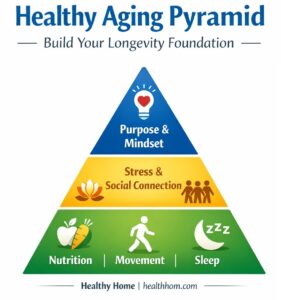
The Healthy Aging Pyramid is an easy method of perceiving how everyday lifestyle choices develop long-term health and lifespan. Similar to a food pyramid, this model demonstrates that excellent base habits promote the well-being at the upper levels.
Think of it as a structure: When the bottom is weak the top will not stand.
1. Base Level (Foundation of Longevity)
These are essential biological necessities that cannot be compromised.
i. Nutrition
- Vegan, healthy fats, legumes, vegetables, whole foods.
- Adequate protein intake
- Ultra processed food.
A healthy nutrition plan including the likes of the Mediterranean-style diet has been linked to reduced cardiovascular risk and extended health life.
ii. Movement
- 150 minutes/week moderate exercise.
- Weight lifting once or twice a week.
- Reduce prolonged sitting
In long-term research, physical exercise is associated with a decrease of about 30 percent in overall mortality.
iii. Sleep
- 7–9 hours nightly
- Consistent sleep schedule
- Less screen time at bedtime.
Sleep helps in cell repair, immune equilibrium and cognitive wellbeing.
2. Middle Level
These determine inflammation, hormones and resilience.
iv. Stress Management
- Meditation
- Deep breathing
- Time in nature
- Digital detox
Chronic stress has an inflammatory effect and promotes biological aging.
v. Social Connection
- Strong family bonds
- Community participation
- Meaningful friendships
The studies indicate that social isolation is a risk factor that leads to mortality just as commonly as significant health risk factors.
Communities that have existed long like:
3. Top Level
vi. Purpose & Mindset
- Sense of meaning
- Optimism
- Growth mindset
- Gratitude practices
Positive psychological outlook is identified to be linked with a stronger resistance to stress and a better outcome of long-term health.
Longevity-focused populations are always seen to be living with a purpose.
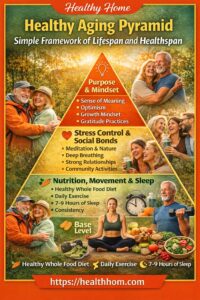
Pyramid Structure Summary
| Pyramid Level | Focus Area | Role in Longevity |
|---|---|---|
| Base | Nutrition, Movement, Sleep | Biological foundation |
| Middle | Stress Control, Social Bonds | Hormonal & emotional balance |
| Top | Purpose & Mindset | Psychological resilience |
Common Mistakes That Reduce Lifespan
- Skipping sleep
- Extreme dieting
- Overtraining
- Social isolation
Concluding Points:
Live a longer & healthier life is not an expensive therapy. Eat whole foods, move every day, sleep well, manage stress, build relationships and create purpose are all accessible to all of us.
By choosing natural lifestyle choices every day you’re not only living years longer, but living long years. In the end, health span is as important as lifespan, because what good is living longer if you can’t enjoy it?
- While genetics influence longevity, lifestyle factors play a significant role.
- Great diet, Exercise and Sleep are the basics.
- Connection within society is an influential indicator of survival.
- Stress alleviation defends the DNA and aging of the cell.
- The little habits are multiplied in decades.
Related Health Articles from Lovely Health Tips-2025 :
- Annual Health Checkup for Lifestyle Diseases (2026 Guide to Early Detection & Prevention)
- Mindfulness Exercises for Kids to Improve Focus, Calmness, and Emotional Balance
- 10 Science-Backed Health Benefits of Turmeric (Curcumin) with Uses & Dosage Guide (2026)
- Outdoor Wellness: How Nature Boosts Physical and Mental Health
- Obesity Prevention: 20 Evidence-Based Lifestyle Habits That Work (2026 Guide)
Trusted References and Research Sources:
- Healthy Lifestyle: 5 Scientifically Proven Keys to a Longer Life (Harvard Health Review)
- Stay Active as You Age – How Regular Physical Activity Extends Health Span (Harvard Health)
- The Global Divide Between Longer Life and Actual Healthy Living – Mayo Clinic Insight Report
- WHO Life Expectancy & Healthy Life Expectancy – Global Mortality and Health Estimates
FAQs:
For more detail, please visit to my website as mentioned below:


About the Author – “Bibhu Ranjan Mund”, Master in Public Health (MPH) from IIHMR University, Jaipur (Rajasthan- IHMR-U/12/2021 -23/0015) has experience of 18 years in Public Health activities like maternal health, child health, adolescent health, nutrition and community wellness programs. Through “Healthy Home”, he shares evidence-based health and wellness guidance designed to support families in making informed lifestyle decisions. This content is for educational purposes only and does not replace professional medical advice. Connect LinkedIn – https://www.linkedin.com/in/bibhu-ranjan-mund-b72171358/