Last Updated on March 22, 2026 by Bibhu Ranjan Mund, MPH
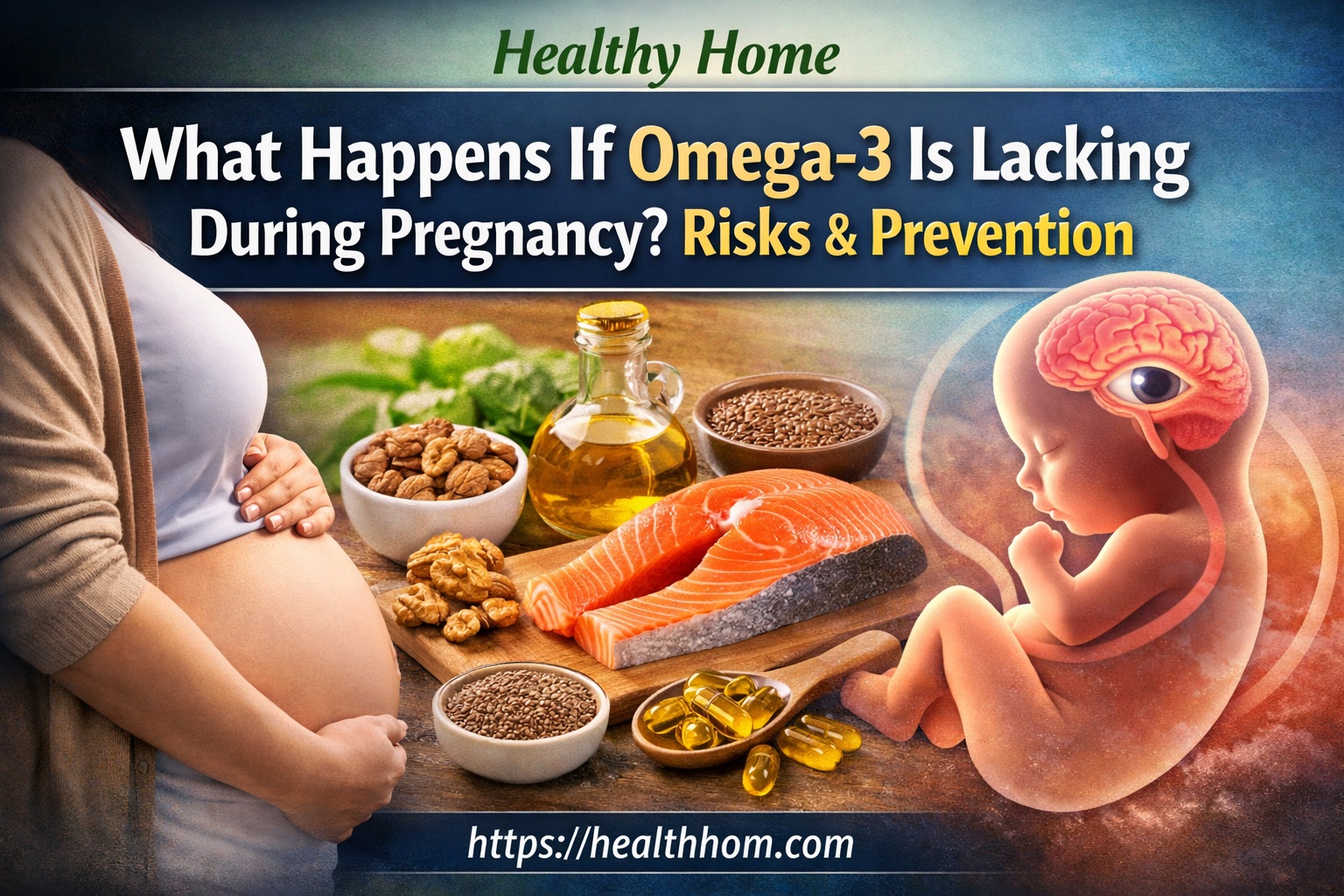
The development of the child’s brain and eyes would be impacted if your diet lacked enough Omega-3.
Reviewed by Bibhu Ranjan Mund, MPH (Public Health Expert) with experience in maternal, infant, child, and adolescent health programs. Content is based on evidence-informed guidelines aligned with organizations such as the World Health Organization, UNICEF, Centers for Disease Control and Prevention, and National Institutes of Health.
Last reviewed on: 22 March 2026.
Medical Disclaimer: This content is for informational and educational purposes only and is not intended as medical advice, diagnosis, or treatment. Always seek the advice of a qualified healthcare professional regarding any medical condition or concerns.
Affiliate Disclosure: This article contains affiliate links. If you purchase through these links, we may earn a small commission at no extra cost to you.
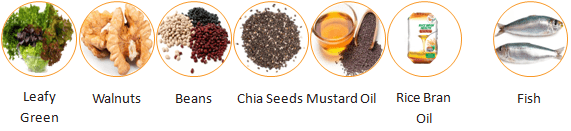
Good source of Omega-3 :
Pregnancy is an important stage in the life of women and the developing fetus. Every food taken in during pregnancy significantly helps in a good pregnancy and the best possible growth and development of the baby. The brain together with eyes and nervous system require omega-3 fats DHA (docosahexaenoic acid) and EPA (eicosapentaenoic acid) for their normal development of these organs during early development.
Inadequate Omega-3 intake during pregnancy may negatively affect maternal health and fetal development. We should now understand the value, what will happen if it is lacking and how one can keep levels enough.
Omega-3 Intake & Pregnancy Risk Statistics
| Indicator | Estimated Findings |
|---|---|
| Pregnant women not meeting DHA intake | ~60–80% globally |
| Recommended DHA intake | 200–300 mg/day |
| Reduction in preterm birth with adequate omega-3 | 10–30% |
| Brain DHA accumulation peak | Third trimester |
| Average dietary intake in low-fish regions | <100 mg/day |
The Importance of Omega-3 During Pregnancy:
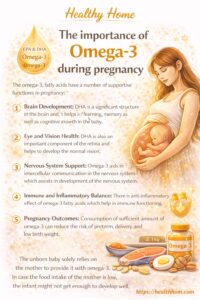
The omega-3 fatty acids have a number of supportive functions in pregnancy:
- Brain Development: DHA is a significant structure in the brain and it helps in learning, memory as well as cognitive growth in the baby.
- Eye and Vision Health: DHA is also an important component of the retina and helps to develop the normal vision.
- Nervous System Support: Omega-3 aids in intercellular communication in the nervous system which assists in development of the nervous system.
- Immune and Inflammatory Balance: There is anti-inflammatory effect of omega-3 fatty acids which help in immune functioning.
- Pregnancy Outcomes: Consumption of sufficient amount of omega-3 can reduce the risk of preterm delivery and low birth weight.
The unborn baby solely relies on the mother to provide it with omega-3. In case the food intake of the mother is low, the infant might not get enough to develop well.
Types of Omega-3 Fatty Acids
| Type | Full Name | Main Role in Pregnancy | Found In |
|---|---|---|---|
| DHA | Docosahexaenoic Acid | Brain & retina development | Fatty fish, algal oil |
| EPA | Eicosapentaenoic Acid | Anti-inflammatory support | Fish oil |
| ALA | Alpha-linolenic Acid | Converts partially to DHA/EPA | Flax, chia, walnuts |
NB- Conversion of ALA to DHA is limited (5–10%), making DHA intake important.
Omega-3 Needs by Trimester
| Trimester | Importance |
|---|---|
| 1st | Neural tube & early brain formation |
| 2nd | Rapid neuronal development |
| 3rd | Peak DHA transfer to fetal brain & eyes |
Possible Effects of Omega-3 Deficiency on the Baby
If PW is having low intake of Omega-3, may experience some of the health challenges:
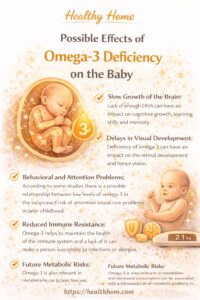
- Slow Growth of the Brain: Lack of enough DHA can have an impact on cognitive growth, learning skills and memory.
- Delays in Visual Development: Deficiency of omega-3 can have an impact on the retinal development and hence vision.
- Behavioral and Attention Problems: According to some studies there is a possible relationship between low levels of omega-3 in the pregnancy period and the increased risk of attention or learning problems in later childhood.
- Reduced Immune Resistance: Omega-3 helps to maintain the health of the immune system and a lack of it can make a person susceptible to infections or allergies.
- Future Metabolic Risks: Omega-3 is also relevant in metabolism and decreased consumption can be associated with an increased risk of metabolic problems in the future.
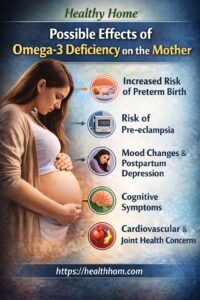
Possible Effects of Omega-3 Deficiency on the Mother
Women who have low levels of omega-3 during pregnancy will have some health problems, such as:
- Increased Risk of Preterm Birth: There is some evidence of low omega-3 levels and preterm born infants as well as low-weight babies.
- Risk of Pre-eclampsia: Omega-3 is an anti-inflammatory, which can help maintain a normal blood pressure rate.
- Mood Changes and Postpartum Depression: It has been indicated that lower levels of omega-3 are related to mood changes and high risk of postpartum depression.
- Cognitive Symptoms: The lack of omega-3 in the body can lead to the development of fatigue, impaired concentration, and memory impairment.
- Cardiovascular and Joint Health Concerns: Omega-3 is beneficial to the heart and can be used to maintain inflammation.
Effects of Omega-3 Deficiency During Pregnancy
| Effects on Baby | Effects on Mother |
|---|---|
| Delayed brain development | Higher preterm risk |
| Poor visual development | Increased inflammation |
| Behavioral concerns | Mood disorders |
| Reduced immunity | Postpartum depression |
| Future metabolic risk | Cardiovascular strain |
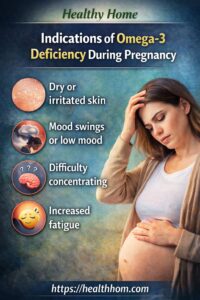
Indications of Omega-3 Deficiency During Pregnancy
The following are some of the widely reported symptoms that could be in response to low intake of omega-3:
- Dry or irritated skin
- Mood swings or low mood
- Difficulty concentrating
- Increased fatigue
Symptoms – Omega-3 vs General Pregnancy Fatigue
| Symptom | Could Be Omega-3? | Other Possible Causes |
|---|---|---|
| Fatigue | Yes | Iron deficiency |
| Mood changes | Yes | Hormonal shifts |
| Dry skin | Yes | Dehydration |
| Poor concentration | Yes | Sleep disturbance |
These are not the symptoms peculiar to omega-3 deficiency and are always to be addressed with a medical practitioner.
Who Is at Higher Risk of Omega-3 Deficiency?
| Risk Group | Reason |
|---|---|
| Vegetarian/Vegan mothers | No direct DHA/EPA intake |
| Low seafood consumption regions | Limited dietary sources |
| High processed food diet | Low healthy fats |
| Multiple pregnancies | Increased nutrient demand |
| Malabsorption disorders | Poor fat absorption |
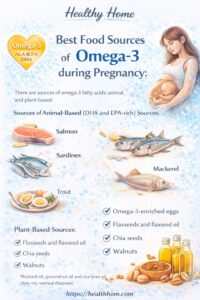
Best Food Sources of Omega-3 During Pregnancy:
There are sources of omega-3 fatty acids: animal and plant-based:
Sources of Animal-Based (DHA and EPA-rich) Sources:
- Salmon
- Sardines
- Mackerel (do not use king mackerel)
- Trout
- Omega-3–enriched eggs
Plant-Based Sources:
- Flaxseeds and flaxseed oil
- Chia seeds
- Walnuts
- Mustard oil, groundnut oil and rice bran oil (they are coupled together)
The omega-3 (ALA) found in plants is partially convertible into both DHA and EPA.
Safe Omega-3 Food Sources During Pregnancy
| Food | DHA/EPA Content | Safety Note |
|---|---|---|
| Salmon | High | Safe (low mercury) |
| Sardines | High | Safe |
| Trout | Moderate | Safe |
| Mackerel (king) | High | Avoid (high mercury) |
| Flaxseed | ALA only | Plant-based |
| Chia seeds | ALA only | Plant-based |
| Walnuts | ALA | Safe |
Avoid high-mercury fish such as king mackerel and shark.
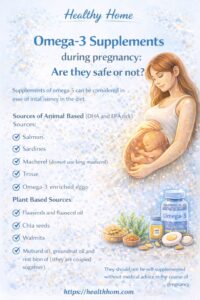
Omega-3 Supplements During Pregnancy: Are They Safe or Not?
Supplements of omega-3 can be considered in case of insufficiency in the diet. However:
- The intake of supplements is to be taken under the guidance of a medical professional.
- Supplements made of fish oil ought to be filtered and checked on mercury.
- Vegetarians and vegans can resort to algal oil supplements.
- There are prenatal vitamins that contained DHA to help the fetus develop.
They should not be self-supplemented without medical advice in the course of pregnancy.
Omega-3 Supplement Guidance
| Intake Level | Recommendation |
|---|---|
| 200–300 mg DHA | Recommended |
| 500–1000 mg DHA/EPA | May be prescribed |
| >3000 mg/day | Not recommended without supervision |
| Algal oil | Safe vegetarian option |
| Fish oil | Must be mercury-tested |
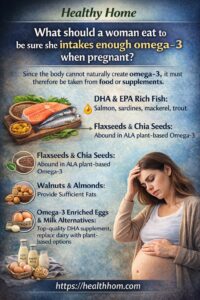
What should a woman eat for enough omega-3 when pregnant?
- Since the body cannot naturally create omega-3, it must therefore be taken from food or supplements.
- Finest food source of omega-3 heavy on DHA & EPA: Salmon, sardines, mackerel, trout flax seeds and chia seeds abound in ALA plant abased Omega3
- Walnuts & Almonds: Provide Sufficient Fats
- The Omega-3 enriched eggs serve as a top-quality DHA supplement.
- Omega rich product in these two types of milk is used to replace dairy products with plant-based options.
Recommended Omega-3 Intake During Pregnancy:
Most health experts recommend 200–300 mg of DHA per day during pregnancy. Requirements may vary based on diet and health status, so supplementation should be guided by a healthcare provider.
How to Reach 300 mg DHA Daily
| Food Option | Approximate Serving |
|---|---|
| Salmon | 2 servings/week |
| Sardines | 2–3 servings/week |
| Omega-3 eggs | 1–2 daily (partial contribution) |
| DHA supplement | 1 capsule/day (as advised) |
FAQs:
1. Why is Omega 3 important during pregnancy?
Ans. It is crucial for the development of baby’s brain, eye/vision and other overall growth.
2. What occurs, if a pregnant woman doesn’t have sufficient Omega 3?
Ans. In such case, poor fetal brain development may occur with low birth weight baby may birth & may be increased risk of depression during postpartum period.
3. In case of low level Omega 3, can it affect the baby’s future health status?
Ans. Yes, it may impact the child’s cognitive ability, vision with emotional health later in life.
4. What are signs of Omega-3 deficiency during pregnancy?
Ans. Dry skin, swings of mood, poor concentration & may be fatigue.
5. Which foods are rich in Omega 3 for pregnant women?
Ans. People can eat salmon, walnuts, chia seeds, flaxseeds or Omega 3 fortified eggs.
6. Does, Omega 3 supplement safe during the entire pregnancy period?
Ans. Still, I would advise you to see a doctor first to pick the right medication and determine the best dosage without putting your health at risk.
7. How much Omega 3 does a pregnant woman need daily?
Ans. Many specialists recommend eating or taking 200–300 mg of DHA every day while pregnant.
8. Has Omega 3 supplementation can improve the pregnancy outcomes?
Ans. Yes. A healthy intake of Omega 3 may reduce the chance of preterm birth and ensure a good birth weight.
Related Health Articles from Healthy Home
- Antenatal Iron Supplementation – Importance for Mother and Baby
Learn how iron supplementation during pregnancy supports healthy fetal growth and prevents maternal anemia. - Can My Infant Still Have an Iodine Shortage If I Take Iodized Salt?
Understand the importance of iodine in infant brain development and how maternal diet affects newborn health. - Global Developmental Delay – Early Signs and Parental Care
Discover the causes, symptoms, and early interventions for children showing developmental delays. - Early Childhood Development – Milestones and Parental Guidance
Track your child’s physical, emotional, and cognitive growth with expert-backed tips and development milestones. - Antenatal Iron Supplementation – Best Practices and WHO Guidelines
Explore WHO-recommended daily iron intake, dietary sources, and benefits for expectant mothers.
Trusted References and Research Sources:
- WHO Guidance on Fish Oil During Pregnancy
https://www.who.int/tools/elena/bbc/fish-oil-pregnancy - Scientific Evidence on Omega-3 Fatty Acids in Pregnancy (PMC)
https://pmc.ncbi.nlm.nih.gov/articles/PMC2621042/ - Omega-3, Fish Oil, and Pregnancy – American Pregnancy Association
https://americanpregnancy.org/healthy-pregnancy/pregnancy-health-wellness/omega-3-fish-oil-and-pregnancy/ - Role of Omega-3 Fatty Acids in Maternal and Infant Health (PMC Review)
https://pmc.ncbi.nlm.nih.gov/articles/PMC7926714/ - Impact of Omega-3 Intake on Pregnancy Outcomes (Clinical Review – PMC)
https://pmc.ncbi.nlm.nih.gov/articles/PMC5372860/ - PubMed Study on Omega-3 Supplementation During Pregnancy
https://pubmed.ncbi.nlm.nih.gov/30307735/ - Health Benefits of Omega-3 Fatty Acids – Healthline
https://www.healthline.com/nutrition/17-health-benefits-of-omega-3 - Recent PubMed Research on Omega-3 and Maternal Health
https://pubmed.ncbi.nlm.nih.gov/34383914/
For more detail, please visit to my website as mentioned below:


About the Author – “Bibhu Ranjan Mund”, Master in Public Health (MPH) from IIHMR University, Jaipur (Rajasthan- IHMR-U/12/2021 -23/0015) has experience of 18 years in Public Health activities like maternal health, child health, adolescent health, nutrition and community wellness programs. Through “Healthy Home”, he shares evidence-based health and wellness guidance designed to support families in making informed lifestyle decisions. This content is for educational purposes only and does not replace professional medical advice. Connect LinkedIn – https://www.linkedin.com/in/bibhu-ranjan-mund-b72171358/