
Last Updated on February 18, 2026 by Healthy Home
Discover the health benefits of papaya, its digestion process, immunity, skin, heart health and nutrition facts. Learn how to eat papaya safely.
Reviewed by Public Health Expert (MPH), with experience in maternal and child health programs.
Medical Disclaimer : This information is for educational purposes only and does not replace professional medical advice. For personalized guidance, consult a qualified healthcare provider. This article was reviewed by a Public Health Expert (MPH) with experience in maternal, infant and child health programs aligned with WHO and UNICEF frameworks.
Affiliate Disclosure: This article contains affiliate links. If you purchase through these links, we may earn a small commission at no extra cost to you.
Papaya is a tropical fruit that is famous due to a sweet taste, smooth texture and outstanding nutritional value. Papaya has been a popular food eaten in India and also in most of the tropical areas and it has long been espoused through traditional dietary culture as a nutrient-rich fruit that enables the general health.
Papaya is rich in vitamins, antioxidants, dietary fiber and natural digestive enzymes and therefore, can be included in the balanced diet. This article discusses the health value of papaya, the nutritional value of the fruit, how to eat it in the most safe way and the fundamental precautions.
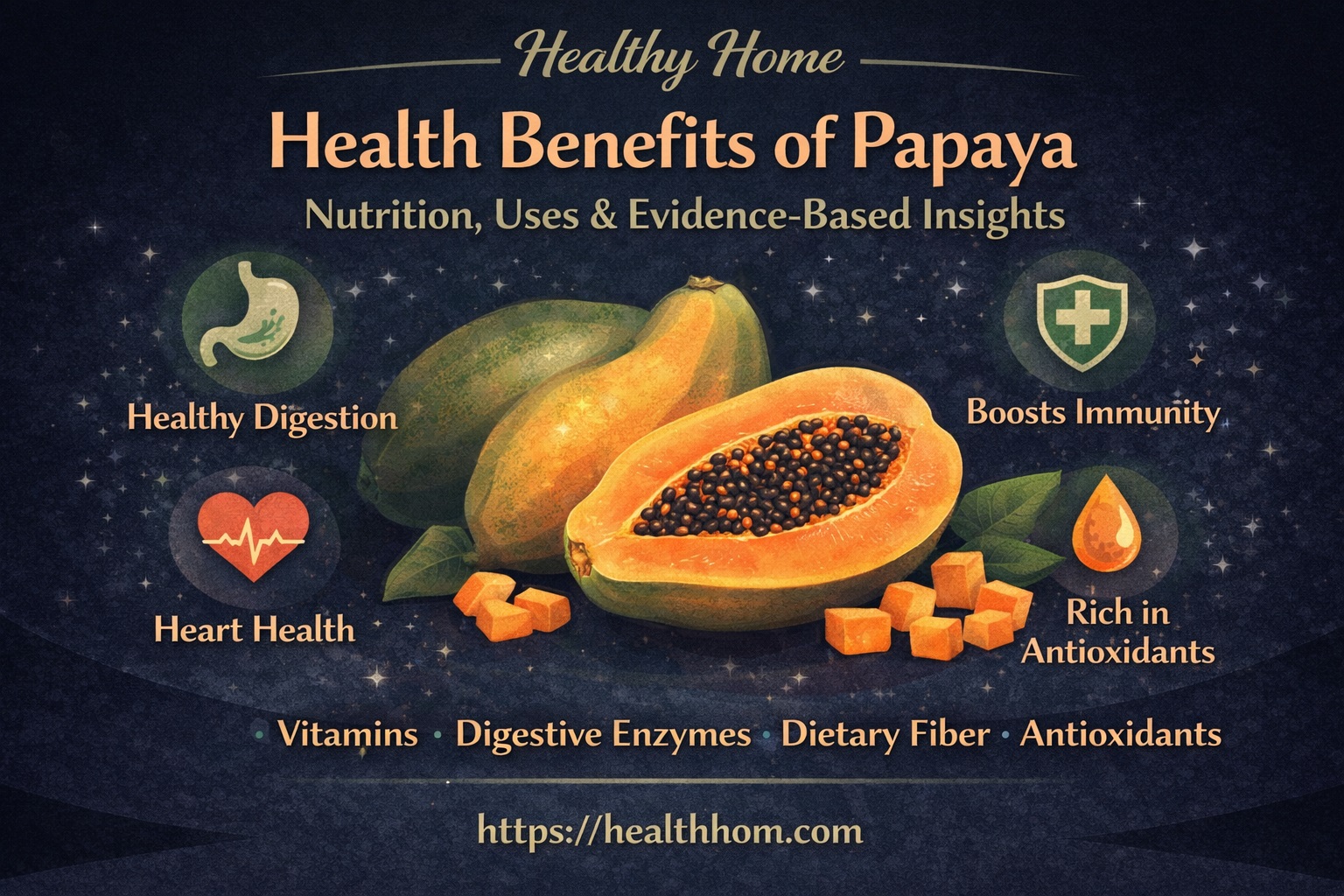
Papaya is a tropical fruit that contains rich vitamin C, A, fiber and papain which is a digestive enzyme. When taken as a contribution to a balanced diet, it may help in digestion, immunity, heart health and prevent skin aging.
- What is Papaya?
- Health Benefits of Papaya:
- 1. Supports Healthy Digestion with Papain
- 2. Supports Immune Function Naturally
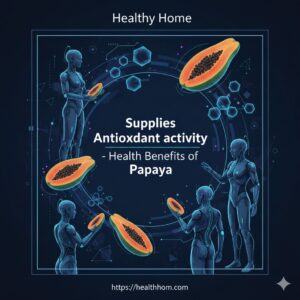
- 3. Supplies Antioxidant activity.
- 4. Promotes Healthy Nutrition of the Heart
- 5. Low Glycemic Fruit Suitable in Moderation
- 6. Supports Weight Management
- 7. Helps To Support healthy Skin with Nutrition.
- 8. Contributes to Hair and Scalp Nutrition
- 9. Nutrients in Papaya That Support Overall Wellness
- 10. Provides nutrition of the eye
- 11. Supports Gut Health
- 12. May Contribute to Health-Conscious Diet
- 13. Nutritional Role of Papaya in a Balanced Diet
- 14. Papaya Seeds: Use with CAUTION
- 15. Papaya Leaves: Not to be Part of an Everyday Diet.
- Best Ways to Eat Papaya Safely
- Who Should Avoid or Limit Papaya?
- Concluding Points:
- FAQs
Quick Summary:
- Vitamin C and Vitamin A are present in abundance.
- It includes papain enzyme which aids in digestion.
- Supplies gut stuff to keep the bowel movements regular.
- Calorie free (0.43 kcal/100g).
- Provides antioxidants such as beta- carotene.
- May nourish the heart and the skin through a well-balanced diet.
- Should be eaten in moderation and ripe.
- During pregnancy, raw papaya is not supposed to be taken too much.
- Seeds and leaves are not recommended for routine use
- Should complement, not replace medical care
What is Papaya?
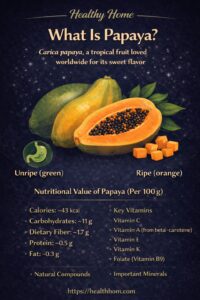
Carica papaya, is a tropical fruit with a warm climate worldwide. One can consume it both in its ripe or unripe (green) state and it is utilized in a wide range of culinary and traditional food preparations.
The papaya plant, both in its parts such as the fruit, seeds and leaves, is utilized in dietary and cultural activities, but regularly consumption of papaya fruit is only suggested of the ripe fruit.
Nutritional Value of Papaya (Per 100 g)
Papaya offers a large variation of vital nutrients.
- Calories: ~43 kcal
- Carbohydrates: ~11 g
- Dietary Fiber: ~1.7 g
- Protein: ~0.5 g
- Fat: ~0.3 g
Key Vitamins
- Vitamin C
- Vitamin A (from beta-carotene)
- Vitamin E
- Vitamin K
- Folate (Vitamin B9)
Important Minerals
- Potassium
- Magnesium
- Calcium
Natural Compounds
- Papain (digestive enzyme)
- Carotenoids and flavonoids Antioxidants.
Health Benefits of Papaya:
1. Supports Healthy Digestion with Papain
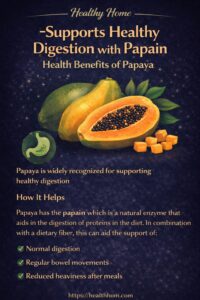
Papaya is widely recognized for supporting healthy digestion
How It Helps
Papaya contain the papain which is a natural enzyme that aids in the digestion of proteins in the diet. In combination with a dietary fiber, this can aid the support of:
- Normal digestion
- Regular bowel movements
- Reduced heaviness after meals.
- Papaya is usually associated with the diet aimed at the comfort in the digestive system.
Recommended kitchen tools for preparing papaya include blenders and fruit cutters
Recommended Organic dried papaya from Amazon
Recommended item from Amazon for Papaya Face wash
2. Supports Immune Function Naturally
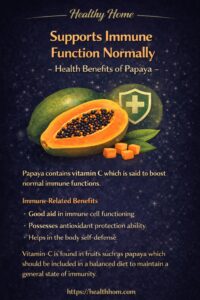
Papaya contains vitamin C which is said to boost normal immune functions.
Immune-Related Benefits
- Good aid in immune cell functioning.
- Possesses antioxidant protection ability.
- Helps in the body self-defense
Vitamin-C is found in fruits such as papaya which should be included in a balanced diet to maintain a general state of immunity.
3. Supplies Antioxidant activity.
A number of antioxidants such as beta carotene and vitamin-c are contained in papaya.
Why Antioxidants Matter?
Antioxidants help:
- Prevent cell oxidative stress.
- This is in support of the overall cellular health.
- Harmonize inflammatory status quo.
The diet that includes a lot of fruits and vegetables such as papaya is linked to the long-term wellness.
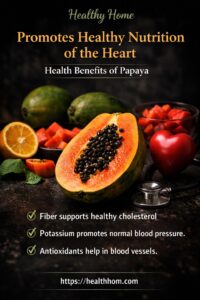
4. Promotes Healthy Nutrition of the Heart
Papaya may belong to a heart healthy diet.
Nutrients That Matter
- Fiber is beneficial to healthy cholesterol.
- Potassium is useful in normal blood pressure.
- Antioxidants help in blood vessels maintenance.
When eaten as a balanced diet, papaya could lead to cardiovascular health.
5. Low Glycemic Fruit Suitable in Moderation
Papaya is naturally sweet and also has fiber that slows the absorption of carbohydrates.
Important Notes
- Best consumed in moderate portions
- Prefer ripe, fresh papaya
- Never combine with added sugar.
- Not a substitute for medical nutrition therapy.
People with the control of blood sugar levels are advised to visit a medical practitioner and seek individualized advice on dieting.

6. Supports Weight Management
Papaya is usually featured in the diet plans.
Why It Fits Well
- Low in calories
- Contains dietary fiber
- Helps promote fullness
Papaya is a snack or a meal that does not contribute too much to the calorie content.

7. Helps To Support healthy Skin with Nutrition.
Papaya furnishes the nutrients that are vital to the skin structure and skin appearance.
Skin-Supporting Nutrients
- Vitamin C helps in the building of collagen.
- Vitamin A helps in the normal maintenance of the skin.
- Antioxidants can prevent environmental stress on the skin.
Papaya may also be applicable in the natural skin care regimen, but use topically should be cautious when dealing with sensitive skin.

8. Contributes to Hair and Scalp Nutrition
The papaya has vitamins and antioxidants that favor the general health of the hair and scalp.
Potential benefits include:
- Promoting good cycles of hair growth.
- Scalp nourishment of a maintenance kind.
- Strengthening the hair on the whole body
Dietary supplements: A healthy diet is important in the health of the hair.
9. Nutrients in Papaya That Support Overall Wellness
Papaya has enzymes and antioxidants which can assist in the body in its natural inflammatory reaction.
This may be helpful for:
- Maintaining joint comfort
- Supporting muscle recovery after activity in the post exercise phase.
Papaya is to be regarded as an assistive food rather than a cure.
10. Provides nutrition of the eye
Papaya contains carotenoids such as beta carotene that help in the health of the eyes.
Eye-Related Benefits
- Supports normal vision
- Keep the eye tissue healthy
These are nutrients that are in most of the diets aimed at the long term wellness of the eyes.
11. Supports Gut Health
Papaya helps in the health of the gut :
- Supporting digestion
- Fiber is given to achieve gut regularity.
- Helping the body to take nutrients.
A health gut is based on the general eating habits rather than on a particular food.
12. May Contribute to Health-Conscious Diet
Papaya is a source of antioxidants, which aid in the prevention of oxidative stress of the cells.
Although there is no food that prevents or cures cancer, diets that are full of fruits and vegetables, such as papaya, are related to the improvement of overall health outcomes.
13. Nutritional Role of Papaya in a Balanced Diet
Diets that are traditionally meant to support the health of liver because of its antioxidant nature usually involve papaya.
It cannot be viewed as a detox or treatment, but a nutrient-supportive food as a part of a balanced diet.
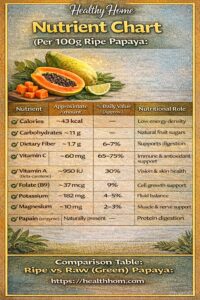
Nutrient Chart (Per 100g Ripe Papaya):
| Nutrient | Approximate Amount | % Daily Value (Approx.) | Nutritional Role |
|---|---|---|---|
| Calories | ~43 kcal | — | Low energy density |
| Carbohydrates | ~11 g | — | Natural fruit sugars |
| Dietary Fiber | ~1.7 g | 6–7% | Supports digestion |
| Vitamin C | ~60 mg | 65–75% | Immune & antioxidant support |
| Vitamin A (Beta-carotene) | ~950 IU | 30% | Vision & skin health |
| Folate (B9) | ~37 mcg | 9% | Cell growth support |
| Potassium | ~182 mg | 4–5% | Fluid balance |
| Magnesium | ~10 mg | 2–3% | Muscle & nerve support |
| Papain (enzyme) | Naturally present | — | Protein digestion |
14. Papaya Seeds: Use with CAUTION
The papaya seeds are edible in low quantities and they have natural compounds.
Important Guidelines
- Should be eaten in minute portions.
- Avoid daily long-term use
- Should not be used in pregnant women and children.
Regularly intake of papaya seeds should be advised by the professionals. These uses are based on traditional practices and are not intended as medical treatment.
15. Papaya Leaves: Not to be Part of an Everyday Diet.
Papaya leaves are prepared in traditional meals, which are not meant to be consumed on a daily basis.
In some traditional ways papaya leaf extracts are utilized. Scientific support of routine diet use is however limited. One should seek the advice of experienced medical care before they think of such products.
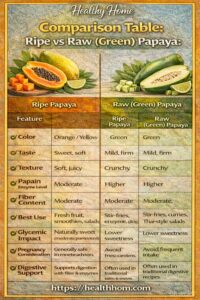
Comparison Table: Ripe vs Raw (Green) Papaya
| Feature | Ripe Papaya | Raw (Green) Papaya |
|---|---|---|
| Color | Orange / Yellow | Green |
| Taste | Sweet, soft | Mild, firm |
| Texture | Soft, juicy | Crunchy |
| Papain Enzyme Level | Moderate | Higher |
| Fiber Content | Moderate | Moderate |
| Best Use | Fresh fruit, smoothies, salads | Stir-fries, curries, Thai-style salads |
| Glycemic Impact | Naturally sweet (moderate portion advised) | Lower sweetness |
| Pregnancy Consideration | Generally safe in moderation | Avoid frequent intake |
| Digestive Support | Supports digestion with fiber & enzymes | Often used in traditional digestive recipes |
Best Ways to Eat Papaya Safely
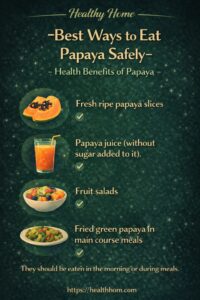
- Fresh ripe papaya slices
- Papaya juice (without sugar added to it).
- Fruit salads
- Fried green papaya in main course meals.
- They should be eaten in the morning or during meals.
Who Should Avoid or Limit Papaya?
Most people are usually safe when consuming papaya though one should be careful when taking:
- Unripe papaya (unripe pregnant women, in particular).
- Patients with latex sensibility.
- Individuals who take anti-coagulant drugs.
- Digestive sensitivity person

Nutrient Distribution
Vitamin C ████████████████████████ 70%
Vitamin A ████████████ 30%
Fiber ████ 7%
Folate ███ 9%
Potassium ██ 5%
Magnesium █ 3%
Calories Low (43 kcal)
Concluding Points:
Papaya is a well-balanced fruit with a high level of nutrients which promotes digestion, immunity, heart, skin and general wellness when taken as a balanced diet. Its vitamins, antioxidants and the natural enzymes allow it to be used as an addition to the daily meals.
Although papaya has numerous benefits with respect to nutrition, it must be considered as a supplementary food, rather than a prescription medication. The main ones are moderation and personal tolerance.
FAQs
Related Health Articles from Healthy Home
- Learn what constitutes a balanced daily meal plan
https://healthhom.com/what-is-a-balanced-daily-meal-plan/ - Discover the role of fermented foods for supporting gut health
https://healthhom.com/fermented-food-for-gut-health/ - Explore foods that help heal your gut naturally
https://healthhom.com/foods-heal-your-gut-naturally/ - Understand how food affects mental health and well-being
https://healthhom.com/how-food-affects-mental-health/ - Find out what millet is and why it’s considered a human nutritional gift
https://healthhom.com/what-is-millet-its-gift-to-human/
Trusted References and Research Sources:
- Scientific article on nutrition and healing properties
https://pmc.ncbi.nlm.nih.gov/articles/PMC9203216/ - Peer-reviewed study on fruit phytochemicals and benefits
https://pmc.ncbi.nlm.nih.gov/articles/PMC8066973/ - PubMed indexed research related to papaya health outcomes
https://pubmed.ncbi.nlm.nih.gov/40392387/ - Healthline overview of eight proven benefits of papaya
https://www.healthline.com/nutrition/8-proven-papaya-benefits - WebMD guide to the health benefits of papaya fruit
https://www.webmd.com/diet/health-benefits-papaya - ResearchGate publication on traditional and medicinal uses of Carica papaya
https://www.researchgate.net/publication/285028880_Traditional_and_medicinal_uses_of_Carica_papaya
For more detail, please visit to my website as mentioned below:


About the Author – “Mr. Bibhu Ranjan Mund”, Master in Public Health (MPH) from IIHMR University, Jaipur (Rajasthan- IHMR-U/12/2021 -23/0015) has experience of 18 years in Public Health activities. Through “Healthy Home”, we share the evidence & experienced based health & wellness guides with solutions for every day well-being. Connect LinkedIn – https://www.linkedin.com/in/bibhu-ranjan-mund-b72171358/