Last Updated on March 22, 2026 by Bibhu Ranjan Mund, MPH
Discover the best women hormone balance diet with foods, a simple meal plan and science-backed lifestyle tips to manage PMS, PCOS, thyroid health and menopause naturally.
Reviewed by Bibhu Ranjan Mund, MPH (Public Health Expert) with experience in maternal, infant, child, and adolescent health programs. Content is based on evidence-informed guidelines aligned with organizations such as the World Health Organization, UNICEF, Centers for Disease Control and Prevention, and National Institutes of Health.
Last reviewed on: 22 March 2026.
Medical Disclaimer: This content is for informational and educational purposes only and is not intended as medical advice, diagnosis, or treatment. Always seek the advice of a qualified healthcare professional regarding any medical condition or concerns.
Affiliate Disclosure: This article contains affiliate links. If you purchase through these links, we may earn a small commission at no extra cost to you.
What is Women’s Hormonal Imbalance?
Whole foods, fiber rich vegetables, healthy fats, good protein and low-glycemic carbohydrates are all components of a hormone-balancing diet. Hormonal stability is also provided through the management of stress, sleep and the intake of micronutrients.
When hormones are balanced, women often feel energetic, focused and emotionally stable. But when it lacks, women feel some irregular period, acne, fatigue, weight gain, also may have PCOS, in-fertility & thyroid imbalance etc.
If we want for hormonal balance, then some dietary & lifestyle modification is needed. So, in the blog we will discuss some points that how women should take food, have exercise, sleep & other living styles for the harmonization of their hormones.
The hormone-balancing diet consists of whole foods, vegetables that contain high fiber, healthy fats, high quality protein and low-glycemic load carbohydrates. The regulation of stress, sleep, gut health, and the intake of such micronutrients as magnesium, iron, and vitamin D are also crucial in supporting the process of hormonal regulation in the natural environment.
Quick Summary:
- A hormone diet is about whole and unprocessed food that is rich in fiber, protein and healthy fats. Insulin, estrogen and cortisol balance are necessary and required with the help of sugar level in the blood.
- Such essential nutrients are magnesium, iron, vitamin D, zinc, and omega-3 fatty acids.
- The gut is essential in metabolism of estrogens and the regulation of hormones.
- Hormone stability is greatly enhanced through managing stress and sleeping and exercise.
- Nutritional focus should be different based on different stages in life (puberty, pregnancy, menopause).
- In cases of deficiency, supplements can be used but they should be prescribed by a physician.
Common Symptoms may be:
- Irregular & painful period
- Anxiety, Mood swing or any type of depression
- Weight gain. It may be throughout the belly area
- May contribute to hair loss or unnecessary growth of hair
- Acne
- Dull skin
- During peri-menopause period or menopause period, women may experience night sweats
- Fatigue & feeling low energy
- Sleep defect etc.
Several types of reasons of Hormonal Im-balance in Women
- Dietary divergence i.e. taking high sugar & also having processed foods
- Due to elevated cortisol, women may have chronic stress
- In-sufficient physical activity
- Not able to have quality sleep
- May have different toxins from the surroundings like plastics, pesticides, chemicals etc.
- Many health conditions viz. PCOS, diabetes or have any thyroid dysfunction issues
Best Diet for Hormone Balance in Women:
1. Eating of whole food & other nutrient dense foods
Diet which is maximum in the whole un-processed foods will definitely help to balance blood sugar & promote the hormone production in the body. Nutrients eg. Omega 3 fats, magnesium, zinc & B-vitamins play an important role in synthesizing the hormones.
Eating the plenty of following nutrient rich foods:
- Green leafy like spinach, kale & broccoli etc.
- Vegetables which are colourful viz. carrots, beets, bell peppers etc.
- May be Berries, citrus, pomegranate, fruits
- Different good fats eg. avocados, nuts, seeds, olive oil etc.
- Protein like lentils, eggs, fish, chicken etc.
Explores key nutrient-rich foods that support hormonal regulation, PMS relief, and reproductive health : 7 Natural Foods for Women’s Hormonal Balance
2. Balancing the Blood sugar levels in the body
Insulin resistance is very much important for many hormonals problems, also PCOS. If we check blood sugar level regularly, it will also check the Cortisol level & estrogen/progesterone levels.
NB:
- We shouldn’t skip or meals particularly the breakfast.
- Must eat protein, healthy fat & fiber in each meal
- Try to limiting the utilization of refined sugar & processed carbohydrates.
- Low glycemic foods may be taken like oats, quinoa & sweets etc.
3. Supporting the gut health:
Our gut microbiome perfectly establishes a linkage with Metabolism of the estrogen including other hormones in the human body. If our gut is healthy, it actually helps to prevent the prevent estrogen dominance in the body.
Different types of foods which are suitable for Gut health are as mentioned below: This product link is provided for educational reference only and is not a medical recommendation.
- Probiotics: Eg. “Yogurt.”, “kefir.”, “sauerkraut.” & “kimchi.” etc.
- Prebiotics : Eg. Garlic, onions, bananas, asparagus etc. (Link from Amazon to review : https://amzn.to/4mrW607)
- Fiber: Eg. Legumes, flaxseeds, chia seeds etc.
Discover the role of fermented foods for supporting gut health : Fermented Foods for Gut Health Guide
4. Healthy fats : How to produce it?
Most common hormone building materials are Good Cholesterol and healthy fats. Hence, if we take a very low-fat diet, which may disturb ouf hormonal system.
We should take the following foods:
- Many types of fishes eg. salmon, sardines, mackerel which are actually rich in Omega-3
- Nuts & seeds i.e. flaxseeds, chia seeds & walnuts etc.
- Coconut oil & Extra virgin olive oil
5. Major micronutrients for women’s hormones
- Magnesium: It actually helps for better Sleeping during night time. Sources of magnesium are Pumpkin seeds, Almonds, Dark Chocolate etc.
- Vitamin-D: It strengthen our thyroid & also helping in reproduction process. Sunlight is one of the important source of Vitamin-D. Fortified items, fatty fish are rich in vitamin-D.
- Iron: It directly helps in preventing anaemia. It is also much important during menstruation period. Sources may be eg. lentils, spinach, moringa, red meat etc.
- Zinc: Fertility or ovulation of women is directly influenced by availability of Zinc in our body. Different sources eg. pumpkin seeds, chickpeas, oysters etc.
Guidance on iron supplementation during pregnancy, its benefits, dosage considerations and how it prevents maternal and infant complications : Antenatal Iron Supplementation
6. Herbal products i.e. natural methods:
We can also regular the hormones in natural methods like the old people were using on a traditional way. This product link is provided for educational reference only and is not a medical recommendation. As an Amazon Associate, we earn from qualifying purchases.
- Ashwagandha may support stress response. Ashwangandha : https://www.forbes.com/health/supplements/ashwagandha-benefits/ Consult healthcare provider before use
- Link to review from Amazon for Ashwagandha : https://amzn.to/4nyL1LA Consult healthcare provider before use
- Some studies suggest maca root may support energy levels, but clinical evidence remains limited.
- Vitex which is known as Chaste berry traditionally used for menstrual health
- Turmeric is capable to reduce the inflammation & may support normal liver function
Note : Some herbal remedies may interact with medications or may not suit to everyone. So, always consult a healthcare professional before using it.
Discover the thyroid friendly recipes : 7 Indian Thyroid Friendly Recipes & 7-Day Meal Plan for Metabolism (2026)
Save this guide or download the printable PDF for future reference.
Hormonal Balance:
i. Manage Stress
Due to long term stress, it increases cortisol level & interferes with progesterone, oestrogen and thyroid hormones, so that it is harmful for our hormone:
Regular practice will definitely decrease the stress. Hence, following activities may be undertaken regularly:
- Yoga, meditation
- Mindful breathing
- Trying the journaling or repose.
- Spending a quality time in nature every day
ii. Exercise the body
If we move our body frequently, it generally helps to increase the insulin sensitivity & healthy functioning of hormones. As, over exercise may lead to increase the cortisol, hence we should balance it.
Best workout for Women’s Skin:
- Yoga
- Walking /jogging regularly
- Exercise moderately
iii. Prioritizing the Sleep
If we take deep sleep, then automatically our body repairs and regulate the hormones. Lacking of sleep may lead to imbalance of hormones like cortisol, insulin, leptin & ghrelin etc.
- Try to have sleep for 7–9 hours of daily
- Creating a routine activity of having relaxed during bedtime
- Before going to bed, we should try to reduce the blue light in eye particularly we shouldn’t use the mobile before just going to bed.
- Have a time table for sleeping & waking regularly.
Learn the sleep health : 7 day plan to sleep like a baby (Backed by Science)
iv. Reducing the Exposure to Toxin
Disruption of Endocrine i.e. a type of chemicals which can block hormones such as estrogen & thyroid function.
- Avoid the utilization of un-degradable plastic & always try to use glass or stainless steel.
- If possible, we may use the different types of organic produces which are easily available in the market
- Trying to have natural skincare & cleaned goods.
v. Support Liver Health
Excess hormones are removed by breaking down the liver and thus to keep the healthy liver, we should follow the followings :
- Drinking of sufficient water per day
- Taking of some foods that support normal liver function
- Try to limit the taking of alcohol & also to highly processed food.
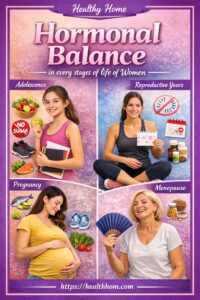
Hormonal Balance in every stages of life of Women:
A. During the Puberty & Adolescence time
- Women should have focus on whole foods for growth
- Limiting the processed sugar so that it will avoid acne & the risk of PCOS
- Actively involved in daily physical activity which is beneficial for the long-term hormone health.
B. During the Reproductive Years
- You must balance the menstrual cycle with proper nutritional supplementation
- Avoid stress and also check the stress level to prevent having irregular menstrual periods.
- Tracking the cycles to gain a knowledge of fertility & hormonal changes.
C. During the Pregnancy & Postpartum period:
- Taking the most nutrition rich foods particularly iron, folate, omega-3 etc.
- Have focus on quality sleep with recovering the stress soon after delivery.
- Management of thyroid health during & after pregnancy period.
D. During the Perimenopause & Menopause period:
- Phytoestrogen rich foods eg. soy, flaxseeds may be able to alleviate the hot flashes.
- Strengthen the training is a much effective way to avoid osteoporosis.
- Some emotional influences may affect the extremities of sleep & mindfulness help in these cases.
Hormone balancing Meal Plan : Suggested for a Day long period
- Breakfast: Oats cooked with almond milk, Chia seeds, almond butter & blueberries etc.
- Snack: A Handful of Walnuts & Pumpkin seeds with Green tea
- Lunch: Quinoa salad with spinach, grilled salmon, avocado, salad & utilization of olive oil
- Snack: Yogurt with flaxseed and banana slices
- Dinner: Lentil curry, turmeric, garlic and steamed broccoli
- Before Bed: Warm herbal tea (chamomile or ashwagandha)
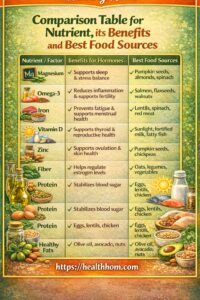
Comparison Table for Nutrient, its Benefits and Best Food Sources
| Nutrient / Factor | Benefits for Hormones | Best Food Sources |
|---|---|---|
| Magnesium | Supports sleep & stress balance | Pumpkin seeds, almonds, spinach |
| Omega-3 | Reduces inflammation & supports fertility | Salmon, flaxseeds, walnuts |
| Iron | Prevents fatigue & supports menstrual health | Lentils, spinach, red meat |
| Vitamin D | Supports thyroid & reproductive health | Sunlight, fortified milk, fatty fish |
| Zinc | Supports ovulation & skin health | Pumpkin seeds, chickpeas |
| Fiber | Helps regulate estrogen levels | Oats, legumes, vegetables |
| Protein | Stabilizes blood sugar | Eggs, lentils, chicken |
| Healthy Fats | Needed for hormone production | Olive oil, avocado, nuts |
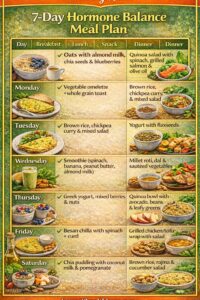
7-Day Hormone Balance Meal Plan
| Day | Breakfast | Lunch | Snack | Dinner |
|---|---|---|---|---|
| Monday | Oats with almond milk, chia seeds & blueberries | Quinoa salad with spinach, grilled salmon & olive oil | Walnuts + green tea | Lentil curry with steamed broccoli |
| Tuesday | Vegetable omelette + whole grain toast | Brown rice, chickpea curry & mixed salad | Yogurt with flaxseeds | Stir-fried tofu with bell peppers & sesame seeds |
| Wednesday | Smoothie (spinach, banana, peanut butter, almond milk) | Millet roti, dal & sautéed vegetables | Pumpkin seeds + herbal tea | Grilled fish with roasted vegetables |
| Thursday | Greek yogurt, mixed berries & nuts | Quinoa bowl with avocado, beans & leafy greens | Apple slices + almond butter | Moong dal khichdi with carrot & peas |
| Friday | Besan chilla with spinach + curd | Grilled chicken/tofu wrap with salad | Handful of almonds | Vegetable soup + paneer/tofu stir fry |
| Saturday | Chia pudding with coconut milk & pomegranate | Brown rice, rajma & cucumber salad | Boiled egg / roasted chickpeas | Baked salmon or soy chunks with greens |
| Sunday | Vegetable upma with peanuts | Lemon rice with mixed vegetables & curd | Fruit bowl + seeds mix | Light dal soup with sautéed spinach & garlic |
The meal plan is a general educational plan. The needs of the individual might differ based on age, pregnancy, medical history, including PCOS or thyroid diseases and activity level. Personal advice should be given by a professional in the field of health.
Why Hormonal Disorders Are Rising in Women (2026 Data)
- According to International Diabetes Federation, insulin resistance and metabolic syndrome are increasing globally, affecting women’s reproductive hormones.
- World Health Organization reports that thyroid disorders are among the most common endocrine disorders in women.
- PCOS affects approximately 1 in 5 women of reproductive age in India (various epidemiological estimates).
Concluding Points:
For Women, hormonal health is the most important for all round wellbeing. Combination of nourishing foods, managing stress, quality sleep, toxin-free living and mindful exercise may help to bring the balance naturally.
Every woman is different in many respect. So it is important to listen to your body and track the menstrual cycles & make the sustainable changes. In some cases, it is very much important to consult with a Doctor or Medical healthcare service provider to check the different health conditions. But with consistent effort, diet & lifestyle may be the best tools to help & improve symptoms of hormonal harmony and holistic health of self.
“Balanced nutrition, stress regulation and sleep hygiene significantly influence endocrine health in women.”
— Harvard Health Publishing
Related Health Articles from Healthy Home:
- Healthy Lifestyle in Adolescents: Its Promotion
Strategies to promote active, balanced, and healthy lifestyle habits for teens to prevent future chronic illness. - Cooking Tips for Pregnant Women
Nutrition- and safety-oriented cooking tips designed for expectant mothers to support optimal fetal and maternal health. - Nurturing Mental Well-Being in Adolescents
Practical approaches to promote mental health among teenagers through habits, support systems, mindfulness and resilience-building.
Trusted References and Research Sources:
- Harvard Health Publishing – Diet & Age at Menopause: Is There a Connection?
Explores research linking dietary patterns with the timing of menopause and women’s long-term health outcomes. - Cleveland Clinic – Hormonal Imbalance: Causes, Symptoms & Treatment
Comprehensive overview of hormonal disorders, how they impact health, and treatment options across age groups. - WHO – Healthy Diet Fact Sheet
Authoritative guide on what constitutes a healthy diet globally, including nutrient-rich foods, limiting sugars/salts, and policy implications. - PMC – Review: Diet, Hormones & Women’s Health
Peer-reviewed article examining how diet influences hormonal health, menopause, and risk factors for chronic disease.
FAQs on Hormone Balance:
For more detail, please visit to my website as mentioned below:


About the Author – “Bibhu Ranjan Mund”, Master in Public Health (MPH) from IIHMR University, Jaipur (Rajasthan- IHMR-U/12/2021 -23/0015) has experience of 18 years in Public Health activities like maternal health, child health, adolescent health, nutrition and community wellness programs. Through “Healthy Home”, he shares evidence-based health and wellness guidance designed to support families in making informed lifestyle decisions. This content is for educational purposes only and does not replace professional medical advice. Connect LinkedIn – https://www.linkedin.com/in/bibhu-ranjan-mund-b72171358/