
Last Updated on February 21, 2026 by Healthy Home
Discover the complete women’s holistic wellness guide covering hormones, nutrition, mental health, preventive screenings & self-care tips for every age.
Reviewed by Public Health Expert (MPH), with experience in maternal and child health programs.
Medical Disclaimer : This information is for educational purposes only and does not replace professional medical advice. For personalized guidance, consult a qualified healthcare provider. This article was reviewed by a Public Health Expert (MPH) with experience in maternal, infant and child health programs aligned with WHO and UNICEF frameworks.
Affiliate Disclosure: This article contains affiliate links. If you purchase through these links, we may earn a small commission at no extra cost to you.
Introduction:
True wellness is not only to live disease-free but also to prosper in all aspects in life. Wellness is about having good physical health, emotional stability, clarity in your head and social relationships. Since adolescence to motherhood and afterwards, every phase of a woman is associated with different challenges and health priorities.
In the modern busy lifestyle, it is a common occurrence that most women play various roles such as a professional, a caregiver, a partner, a homemaker etc. leaving their own health to burn. However, sustainable wellness is created when women prioritize self-care as an essential and not an indulgence.
This article aims to focus on the most important areas of women wellness such as hormonal balance, reproductive, mental, nutrition and preventive care and actionable measures to work towards being stronger, healthier and happier.
- Introduction:
- 1. Physical Women's wellness: The foundation of a healthy life.
- 2. Hormonal balance and reproductive health of women:
- 3. Nutrition: Nourishing of women
- 4. Emotional strength and intelligence.
- 5. Preventive health: Earliest diagnosis may save life.
- 6. The wellness of the social environment
- 7. Spiritual wellness
- 8. The importance of rest and rejuvenation
- 9. Holistic Wellness & technology
- 10. Holistic wellness of women – Recap
- Menopausal Hormonal Disorders in Women
- Wellness Pyramid for Women
- Hormonal Health Checklist for Women
- Monthly Self-Care Checklist in Women
- Women Health statistics
- Concluding points for Women’s Holistic Wellness
- FAQs:
Quick Summary:
- Women wellness includes the physical, hormonal, mental, emotional and spiritual wellness.
- The basis is exercising, healthy diet, water and sleep of 7-8 hours.
- Hormones are balanced by following the menstrual cycles and stress control.
- By age, it is imperative to have preventive screenings (Pap smear, mammogram, thyroid, blood tests).
- Individual self-care, relationships and mindful existence enhance the well-being.
- Not a luxury but a need, self-care is a long term health and happiness requirement.
1. Physical Women’s wellness: The foundation of a healthy life.
Physical wellness begins with the functioning of the body and taking care of your body on a daily basis. Daily workouts, healthy eating and sleep are the foundation of overall health of a woman.
a) The role of exercise
Regular physical exercise is a great benefit to women. Workouts enhance metabolism, build bone density, control hormones and improve heart activity.
Key recommendations:
- Goal of 150 minutes of moderate exercises or vigorous exercise per week.
- Take strength training two times per week to avoid osteoporosis.
- Flexibility and stress relief
- Be flexible with yoga or Pilates.
- Even walking fast, dancing or even housekeeping is also considered movement that helps in general fitness.
Regular physical activity like a morning walk improves heart health
b) Importance of sleep
The natural mechanism of body repair is sleep. Long time sleep deficiency may cause hormonal imbalances, low immunity and stress. Women, particularly during the menstrual periods or menopause, might have sleep disorder because of the hormonal changes. Regular sleeping, reduced screen time before sleep and a relaxing atmosphere can be used to regain the lost sleep.
2. Hormonal balance and reproductive health of women:
Hormones control the metabolism, mood as well as reproductive cycles. This balance is easily upset by the contemporary stress, unhealthy eating, and insomnia.
- Acute or chronic endocrine disorders.
- Hormonal and Reproductive Health
- No acute or chronic endocrine diseases present.
Hormones may be essential for the control of metabolism, mood and reproductive cycles. But these days, lifestyle, stress and inappropriate diets can simply upset hormonal balance.
a) Menstrual Health
Following the menstrual cycle will make women learn about the rhythm of the body and indicate possible signs of hormonal disruptions. Painful times, irregular cycles or heavy bleeding should not be overlooked because they may be the symptoms of such conditions as PCOS (Polycystic Ovary Syndrome) or endometriosis.
b) Maternity and health of mother.
The changes experienced by the body during pregnancy require more nutritional care, hydration and rest. Iron, folate, calcium and omega-3 fatty acids are the main nutrients that supplement the health of the mother and the fetus. The postpartum recovery is also a vital factor – the women must be given emotional support, physical rest and a balanced diet to recover the strength.
c) Menopause and beyond
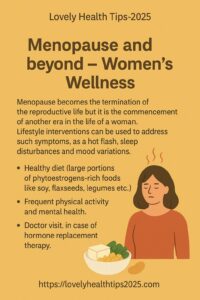
Menopause becomes the termination of the reproductive life but it is the commencement of another era in the life of a woman. Lifestyle interventions can be used to address such symptoms, as a hot flash, sleep disturbances and mood variations.
- Healthy diet (large portions of phytoestrogens-rich foods like soy, flaxseeds, legumes etc.)
- Frequent physical activity and mental health.
- Doctor visit, in case of hormone replacement therapy.
3. Nutrition: Nourishing of women
Women have nutrition as their pillar. Each phase of life, adolescence and post-menopause, requires certain nutrients to aid in growth, hormone and longevity.
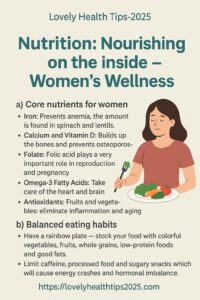
a) Core nutrients for women
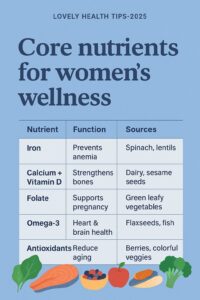
Below is the table for core nutrients for women:
| Nutrient | Function | Sources |
|---|---|---|
| Iron | Prevents anemia | Spinach, lentils |
| Calcium + Vitamin D | Strengthens bones | Dairy, sesame seeds |
| Folate | Supports pregnancy | Green leafy vegetables |
| Omega-“3” | Heart & brain health – | Flaxseeds, fish etc. |
| Antioxidants | Reduce aging aagent | Berries, colorful veggies etc. |
b) Balanced eating habits
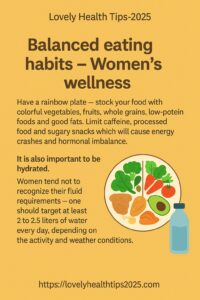
Have a rainbow plate — stock your food with colorful vegetables, fruits, whole grains, low-protein foods and good fats. Limit caffeine, processed food and sugary snacks which will cause energy crashes and hormonal imbalance.
It is also important to be hydrated. Women tend not to recognize their fluid requirements – one should target at least 2 to 2.5 liters of water every day, depending on the activity and weather conditions.
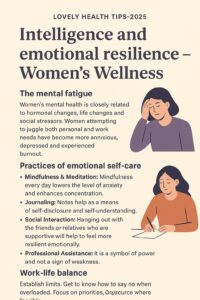
4. Emotional strength and intelligence.
Mental health of women is closely related to hormonal changes, life changes and social stressors. Women attempting to juggle both personal and work needs have become more and more anxious, depressed and experienced burnout. Mental exhaustion is also easy to detect, this is characterized by feelings of inability, frustration and a limitation
a) The mental fatigue
Symptoms of emotional strain are common and that includes irritability, mood swings, inability to concentrate and sleeping difficulties. The cure of awareness is the initial process of healing.
b) Practices of emotional self-care.
- Mindfulness & Meditation: Mindfulness every day lowers the level of anxiety and enhances concentration.
- Journaling: Notes help as a means of self-disclosure and self-understanding.
- Social Interaction: Hanging out with the friends or relatives who are supportive will help to feel more resilient emotionally.
- Professional Assistance: It is a symbol of power and not a sign of weakness.
c) Work-life balance
It is necessary to establish limits. Get to know how to say no when overloaded. Focus on priorities and outsource where feasible. Having a balanced schedule will minimize stress and will give one time to rest and recreation.
5. Preventive health: Earliest diagnosis may save life.
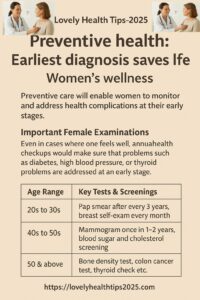
Preventive care will enable women to monitor and address health complications at their early stages.
Important Female Examinations. Even in cases where one feels well, annual health checkups would make sure that problems such as diabetes, high blood pressure, or thyroid problems are addressed at an early stage
| Age Range | Key Tests & Screenings |
|---|---|
| 20s to 30s | Pap smear after every 3 years, breast self-exam every month |
| 40s to 50s | Mammogram once in 1–2 years, blood sugar and cholesterol screening |
| 50 & above | Bone density test, colon cancer test, thyroid check etc. |
Vaccinations
Vaccines against HPV, influenza and tetanus boosters should be up-to-date among the females to avoid infections that can have long-term effects on health
6. The wellness of the social environment
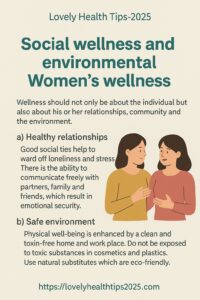
Wellness should not only be about the individual but also about his or her relationships, community and the environment.
a) Healthy relationships
Good social ties help to ward off loneliness and stress. There is the ability to communicate freely with partners, family and friends, which result in emotional security.
b) Safe environment
Physical well-being is enhanced by a clean and toxin-free home and work place. Do not be exposed to toxic substances in cosmetics and plastics. Use natural substitutes which are eco-friendly.
7. Spiritual wellness
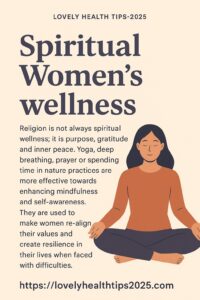
Religion is not always spiritual wellness, it is purpose, gratitude and inner peace. Yoga, deep breathing, prayer or spending time in nature practices are more effective towards enhancing mindfulness and self-awareness. They are used to make women re-align their values and create resilience in their lives when faced with difficulties
8. The importance of rest and rejuvenation
It is not idleness of rest, but re-birth. Contemporary women tend to go to extremes without taking a break to recuperate. Short breaks, recreational activities, listening to music or having some quiet time by herself are some of the ways of re-energizing the mind and body.
Mindful relaxation can be achieved with the help of regular self-care rituals, such as a warm bath, a skincare routine or reading before bed.
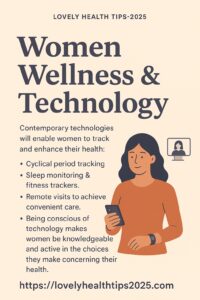
9. Holistic Wellness & technology
Contemporary technologies will enable women to track and enhance their health:
- Cyclical period tracking
- Sleep monitoring & fitness trackers.
- Remote visits to achieve convenient care.
- Being conscious of technology makes women be knowledgeable and active in the choices they make concerning their health.
10. Holistic wellness of women – Recap
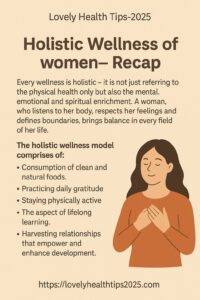
Every wellness is holistic – it is not just referring to the physical health only but also the mental, emotional and spiritual enrichment. A woman, who listens to her body, respects her feelings and defines boundaries, brings balance in every field of her life.
The holistic wellness model comprises of:
- Consumption of clean and natural foods.
- Practicing daily gratitude
- Staying physically active
- The aspect of lifelong learning.
- Harvesting relationships that empower and enhance development.
Women Wellness by Age Group Table
| Age | Focus Area |
|---|---|
| 20s | Iron, menstrual health |
| 30s | Thyroid, stress |
| 40s | Mammogram, metabolism |
| 50+ | Bone density, menopause |
Menopausal Hormonal Disorders in Women
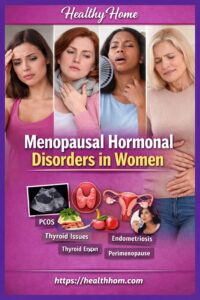
Hormones also control metabolism, mood, menstrual cycles, fertility, bone health and the level of energy. Even small imbalances will influence the general well being. Some of the most frequent hormonal conditions in women in various periods of life are discussed below.
1. The Polycystic Ovary Syndrome (PCOS)
Polycystic ovary syndrome is an endocrine problem that has prevailed among women in the reproductive age.
What happens?
PCOS is a condition that takes place due to inappropriate secretions of androgens (male hormones) by the ovaries that might interfere with ovulation.
Common symptoms:
- Irregular or missed periods
- Excess facial or body hair
- Acne or oily skin
- Excessive weight gain or the loss.
- Fertility challenges
Why it matters:
The risk of insulin resistance, type 2 diabetes and cardiovascular problems can be increased once PCOS is not controlled.
Supportive lifestyle approaches:
- Balanced, low-glycemic diet
- Regular physical activity
- Weight management
- Diagnosis and individual therapy.
Early screening is also vital particularly in cases where menstrual cycles are irregular.
2. Thyroid Disorders
A thyroid gland regulates the metabolism, energy and temperature. When hormones are either excessively high or excessively low, then there are disorders.
a) Hypothyroidism (Underactive Thyroid)
Hypothyroidism is an ailment of the thyroid gland that generates inadequate hormones.
Symptoms may include:
- Fatigue
- Weight gain
- Dry skin
- Hair thinning
- Depression
- Irregular periods
b) Hyperthyroidism (Overactive Thyroid)
Hyperthyroidism occurs when excess production of thyroid is produced.
Symptoms may include:
- Rapid heartbeat
- Anxiety or irritability
- Unexplained weight loss
- Heat intolerance
- Sleep disturbances
Why it matters:
Women are more prone to thyroid disorders and these disorders may impair their fertility, pregnancy and heart conditions.
Thyroid screening (TSH test) is commonly suggested on a regular basis particularly in case of symptoms.
3. Endometriosis
Endometriosis is a long-term illness in which the same tissue as the uterine one is developed extrauterine.
Common symptoms:
- Severe menstrual cramps
- Chronic pelvic pain
- Pain during intercourse
- Heavy menstrual bleeding
- Infertility
Why it matters:
Endometriosis may have severe effects on the quality of life and mental health.
Symptoms can be managed with early diagnosis and treatment plans (medical or surgical) designed individually to preserve the fertility.
4. Perimenopause
Peri menopause refers to the period preceding menopause and usually begins in the 40s though there are instances of it beginning early.
What happens?
The estrogens are not predictable in their levels and they cause irregular cycles as well as other symptoms.
Common symptoms:
- Irregular periods
- Hot flashes
- Night sweats
- Mood swings
- Sleep disturbances
- Brain fog
Why it matters:
This period can take a number of years before menopause. Quality of life can be enhanced by lifestyle support, stress management and medical consultation on an occasion basis.
When to Seek Medical Advice
Consult a health facility worker in case you have:
- Constant cycle abnormalities.
- Severe pelvic pain
- Sudden weight changes
- Extreme fatigue
- Disturbed moods in day-to-day living.
When diagnosed early, the disease is easier to handle and prevents the complications associated with it in the long term.
Hormonal Disorders in Women – Quick Comparison
| Condition | Main Issue | Key Symptoms | When to Consult |
|---|---|---|---|
| Polycystic Ovary Syndrome (PCOS) | High androgens, irregular ovulation | Irregular periods, acne, excess hair, weight gain | Missed cycles >3 months or fertility concerns |
| Hypothyroidism | Low thyroid hormone | Fatigue, weight gain, dry skin, depression | Persistent fatigue or sudden weight gain |
| Hyperthyroidism | Excess thyroid hormone | Rapid heartbeat, anxiety, weight loss | Palpitations or unexplained weight loss |
| Endometriosis | Uterine-like tissue outside uterus | Severe menstrual pain, heavy bleeding | Period pain affecting daily life |
| Perimenopause | Fluctuating estrogen | Hot flashes, mood swings, irregular periods | Symptoms disrupting sleep or work |
Wellness Pyramid for Women
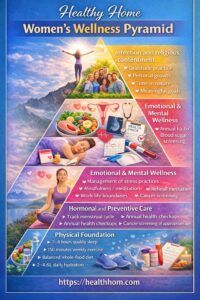
Base Layer: Physical Foundation
- 7–8 hours quality sleep
- 150 minutes weekly exercise
- Balanced whole-food diet
- 2–2.5L daily hydration
Hormonal and Preventive Care, 2nd level.
- Track menstrual cycle
- Annual health checkups
- Blood sugar screening
- Thyroid screening
- Cancer screening of appropriate age.
Hormonal balance helps in maintaining a healthy metabolism, mood and reproductive health.
Third Layer: Emotional & Mental Wellness
- Management of stress practices.
- Mindfulness / meditation
- Journaling
- Work-life boundaries
Emotional strength safeguards the health in the long term.
Fourth Layer: Social and Environmental Wellness.
- Healthy relationships
- Safe home environment
- Reduced toxin exposure
- Community engagement
Top Layer : Intention and religious contentment.
- Gratitude practice
- Personal growth
- Time in nature
- Meaningful goals
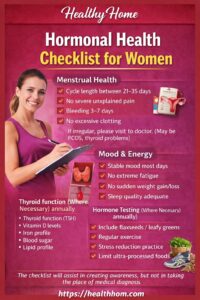
Hormonal Health Checklist for Women
Menstrual Health
- Cycle length between 21–35 days
- No severe unexplained pain
- Bleeding 3–7 days
- No excessive clotting
If irregular, please visit to doctor. (May be PCOS, thyroid problems)
Mood & Energy
- Stable mood most days
- No extreme fatigue
- No sudden weight gain/loss
- Sleep quality adequate
Hormone Testing (Where Necessary) annually.
- Thyroid function (TSH)
- Vitamin D levels
- Iron profile
- Blood sugar
- Lipid profile
Natural Support Habits
- Include flaxseeds / leafy greens.
- Regular exercise
- Stress reduction practice
- Limit ultra-processed foods
The checklist will assist in creating awareness, but not in taking the place of medical diagnosis.
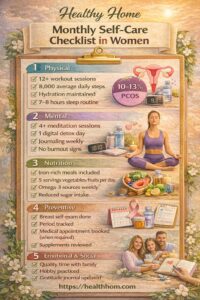
Monthly Self-Care Checklist in Women
Physical
- 12+ workout sessions
- 8,000 average daily steps
- Hydration maintained
- 7–8 hours sleep routine
Mental
- 4+ meditation sessions
- 1 digital detox day
- Journaling weekly
- No burnout signs
Nutrition
- Iron-rich meals included
- 5 servings vegetables/fruits per day.
- Omega-3 sources weekly
- Reduced sugar intake
Preventive
- Breast self-exam done
- Period tracked
- Medical appointment booked (when required)
- Supplements reviewed
Emotional & Social
- Quality time with family
- Hobby practiced
- Gratitude journal updated
- Personal boundary respected.
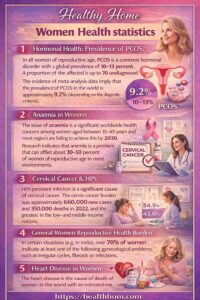
Women Health statistics
1. Hormonal Health: Prevalence of PCOS.
- In all women of reproductive age, PCOS is a common hormonal disorder with a global prevalence of 1013 percent. A proportion of the affected is up to 70 undiagnosed.
- The evidence of meta-analysis data imply that the prevalence of PCOS in the world is approximately 9.2% (depending on the diagnostic criteria).
2. Anaemia in Women
- The issue of anaemia is a significant worldwide health concern among women aged between 15-49 years and most regions are failing to achieve this by 2030.
- Research indicates that anemia is a problem that can afflict about 3050 percent of women of reproductive age in most environments.
3. Cervical Cancer & HPV
- HPV persistent infection is a significant cause of cervical cancer. In women of 50 years and older with abnormal screening outcomes worldwide, 54.5 per cent had any-HPV and 43.0 per cent had high-risk HPV.
- The cervix cancer burden was approximately 660,000 new cases and 350,000 deaths in 2022, and the greatest in the low- and middle-income nations.
4. General Women Reproductive Health Burden.
- In certain situations (e.g., in India), over 70% of women indicate at least one of the following gynecological problems such as irregular cycles, fibroids or infections.
5. Heart Disease in Women
- The heart disease is the cause of death of women in the world with an estimated one out of three women dying as a result of heart disease.
Women’s Health Data Snapshot (2026 Global Overview)
| Condition | Global Prevalence | Key Risk Group |
|---|---|---|
| PCOS | ~9–13% | 15–35 yrs |
| Anaemia | 30–50% | Reproductive age |
| Cervical Cancer | 660,000 cases (2022) | 30+ |
| Heart Disease | 1 in 3 deaths | 40+ |
Concluding points for Women’s Holistic Wellness
The wellness of women changes with change of life phases such as adolescence, motherhood, menopause and even later. The truth is in moderation, finding a balance between work and rest, ambition and self-understanding and consideration of other people and self-interest.
Women who focus on the wellness do not only improve their live, they make the lives of families, communities and future generations better. Your health is your power.
Preventive screening and early lifestyle intervention can reduce long-term disease burden in women by over 40%.”
— Public Health Perspective
You may also read our other health related topics here:
- Top 5 Anti-Aging Supplements
A review of science-backed supplements that support skin health, cellular repair, and slower aging. - Cooking Tips for Pregnant Women
Safe and nutritious cooking practices to support maternal health and healthy fetal development. - Pre-Pregnancy Planning for Women
Essential steps for women preparing for pregnancy, including nutrition, lifestyle, and medical care. - Early Childhood Development
A guide to the key milestones, cognitive growth, and physical development in the first years of life.
Reference from different sources may be referred:
- Women’s health
- All Women’s Health Articles | Page 1 – Harvard Health
- And Still She Rises: Policies for Improving Women’s Health for a More Equitable Post-Pandemic World – PMC
- Building a healthier world by women and for women is key to achieving gender equality
- Women’s and girls’ health throughout the life course
- Women’s Health Information: Everything You Need to Know
- New Directions For Women’s Health: Expanding Understanding, Improving Research, Addressing Workforce Limitations – PubMed
- Women’s health – Wikipedia
- Women’s Preventive Services Initiative’s Well-Woman Chart: A Summary of Preventive Health Recommendations for Women – PubMed
- The Women’s Preventive Services Initiative Well-Woman Chart: A Helpful Tool for the Practice of Internal Medicine – The American Journal of Medicine
- Understanding progress and challenges in women’s health and wellbeing in exemplar countries: a time-series study identifying positive outliers – The Lancet Global Health
FAQs:
For more detail, please visit to my website as mentioned below:


About the Author – “Mr. Bibhu Ranjan Mund”, Master in Public Health (MPH) from IIHMR University, Jaipur (Rajasthan- IHMR-U/12/2021 -23/0015) has experience of 18 years in Public Health activities. Through “Healthy Home”, we share the evidence & experienced based health & wellness guides with solutions for every day well-being. Connect LinkedIn – https://www.linkedin.com/in/bibhu-ranjan-mund-b72171358/