Last Updated on June 13, 2026 by Bibhu Ranjan Mund, MPH
Learn the early signs, causes, prevention tips, iron-rich foods, and WHO guidance for iron deficiency anemia in children aged 6–24 months.
Reviewed by Bibhu Ranjan Mund, MPH (Public Health Expert) with experience in maternal, infant, child, and adolescent health programs. Content is based on evidence-informed guidelines aligned with organizations such as the World Health Organization, UNICEF, Centers for Disease Control and Prevention, and National Institutes of Health.
Medical Disclaimer: This content is for informational and educational purposes only and is not intended as medical advice, diagnosis, or treatment. Always seek the advice of a qualified healthcare professional regarding any medical condition or concerns.
Iron supplementation is not required for all children and should be considered only when recommended by a healthcare provider.
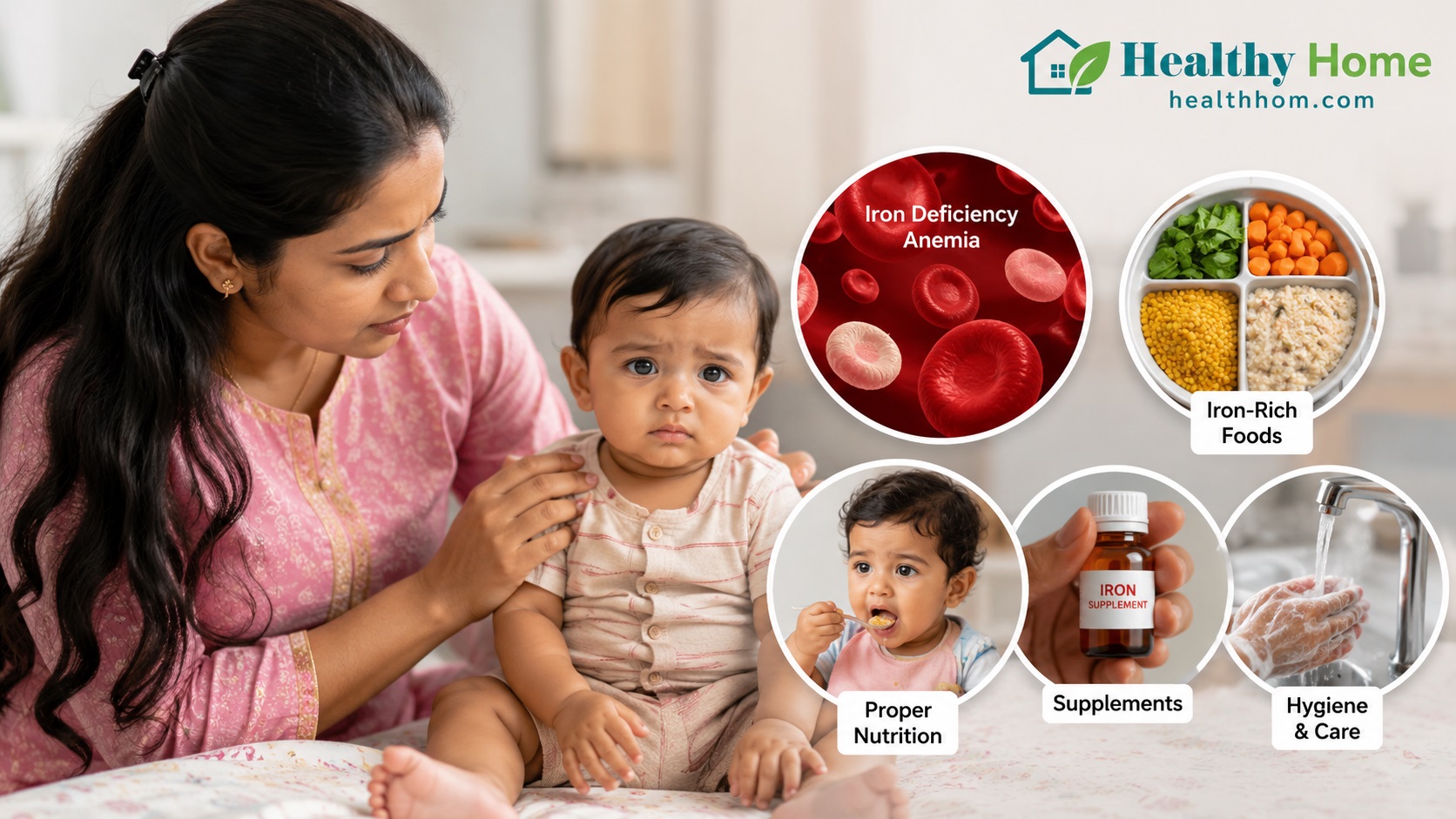
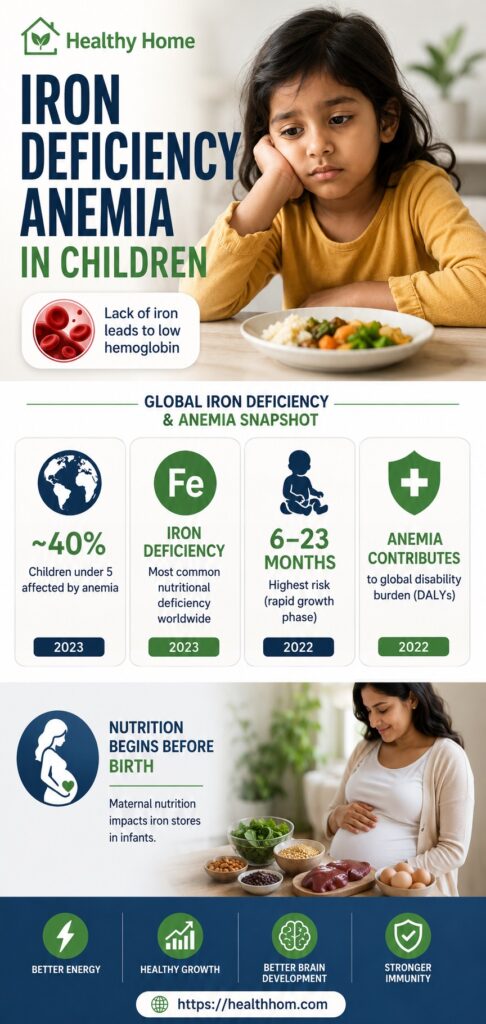
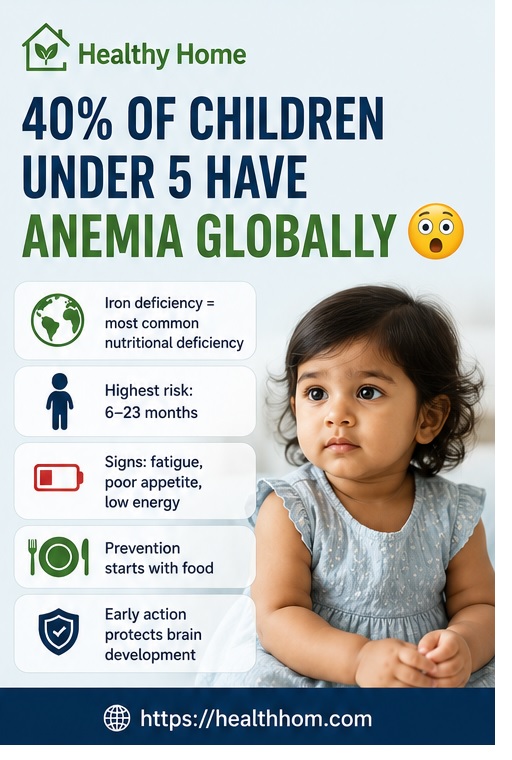
As per the publication of World Health Organization (WHO, 2023), it shows that about 40% of the children under 5 years of ages are being affected by anemia and between the aged 6-24 months are highest risk due to rapid brain and body growth. This is one of most common nutritional problems for the babies and toddlers globally.
Most of the parent overlook the early signs. If child is having iron deficiency anemia, may simply appear tired, irritated, weak, pale and less active. So, it’s important to treat the iron deficiency so as to avoid the consequences which may affect the brain development, immunity, learning ability and proper growth.
But, the important point is that, if child will be provided with iron-rich complementary foods, proper nutrition, breastfeeding as per schedule and timely medical care, then the risk of anemia can be reduced.
In this article, you will find-out the:
- Early signs of iron deficiency anemia
- Why babies 6–24 months are highly vulnerable
- Best iron-rich foods for infants and toddlers
- WHO-recommended prevention strategies
- When iron supplementation may be needed
A child’s nutritional status begins even before birth, read our detailed guide on pre pregnancy planning for women to understand how maternal nutrition impacts iron stores in infants.
Global Iron Deficiency & Anemia Snapshot
| Indicator | Global Estimate | Source | Year |
|---|---|---|---|
| Children under 5 affected by anemia | ~40% globally | World Health Organization Global Anemia Estimates | 2023 |
| Most common nutritional deficiency worldwide | Iron deficiency | World Health Organization Global Anemia Estimates | 2023 |
| Children 6–23 months at highest risk | Yes (rapid growth phase) | UNICEF Nutrition Report | 2022 |
| Anemia contributes to global disability burden (DALYs) | Recognized contributor | World Health Organization | 2022 |
Proper early nutrition supports overall child development, explore our child health and development guide for a complete overview.
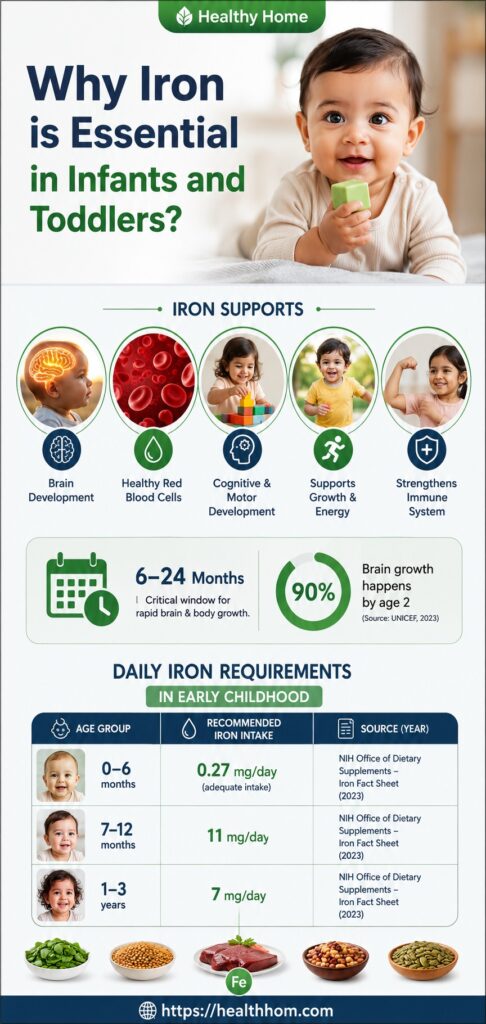
Why Iron is Essential in Infants and Toddlers?
Iron plays a key role in:
- Brain development
- Development of red blood cells that are healthy.
- Cognitive development, motor development.
- Immune system function
At an early age of childhood, particularly between 6 and 24 months, the brain and body grow rapidly. This is a critical stage where iron requirements are inadequately addressed in case developmental delays are encountered.
Daily Iron Requirements in Early Childhood
| Age Group | Recommended Iron Intake | Source | Year |
|---|---|---|---|
| 0–6 months | 0.27 mg/day (adequate intake) | National Institutes of Health Office of Dietary Supplements – Iron Fact Sheet | 2023 |
| 7–12 months | 11 mg/day | NIH Office of Dietary Supplements – Iron Fact Sheet | 2023 |
| 1–3 years | 7 mg/day | NIH Office of Dietary Supplements – Iron Fact Sheet | 2023 |
Growth and Brain Development of Iron-Deficiency
Iron deficient anemia may cause various developmental and behavioral problems in children and such may include:
- Impaired motor development and developmental delay
- Limited social interaction
- Impaired cognitive development and brain development.
- Loss in attention and concentration.
It has been indicated that some of the developmental delays linked to early iron deficiency could continue to school-going age unless early intervention is administered.
Nutritional deficiencies can impact developmental milestones, learn more in our guide on global developmental delay in children
Potential Developmental Areas Affected by Iron Deficiency
| Area | Observational Findings in Research | Source | Year |
|---|---|---|---|
| Motor skills | Slower motor development observed | World Health Organization | 2023 |
| Cognitive function | Association with learning challenges | National Institutes of Health | 2023 |
| Behavior | Reduced attention span in some studies | NIH | 2023 |
Why Highest Vulnerability of Children Between 6 and 24 Months Old?
Between 6-24 months, there is a high risk of iron deficiency due to the following reasons:
- The iron stores of birth start to deplete at about the age of 6 months.
- Increasing iron needs cannot be satisfied with breast milk beyond this age.
- Quick body and brain development enhances the iron requirement.
Babies born with low birth weight (below 2,500 grams) or too prematurely may need to be monitored and treated earlier than recommended by a health care specialist.
This stage overlaps with rapid developmental changes, read our complete guide on baby’s first two years development
Common Risk Factors for Iron Deficiency (6–24 Months)
| Risk Factor | Why It Increases Risk | Source | Year |
|---|---|---|---|
| Rapid growth | Increased iron demand | World Health Organization | 2023 |
| Low birth weight | Reduced iron stores | WHO | 2023 |
| Prematurity | Incomplete iron transfer before birth | WHO | 2023 |
| Excess cow’s milk intake | May interfere with iron balance | American Academy of Pediatrics | 2022 |
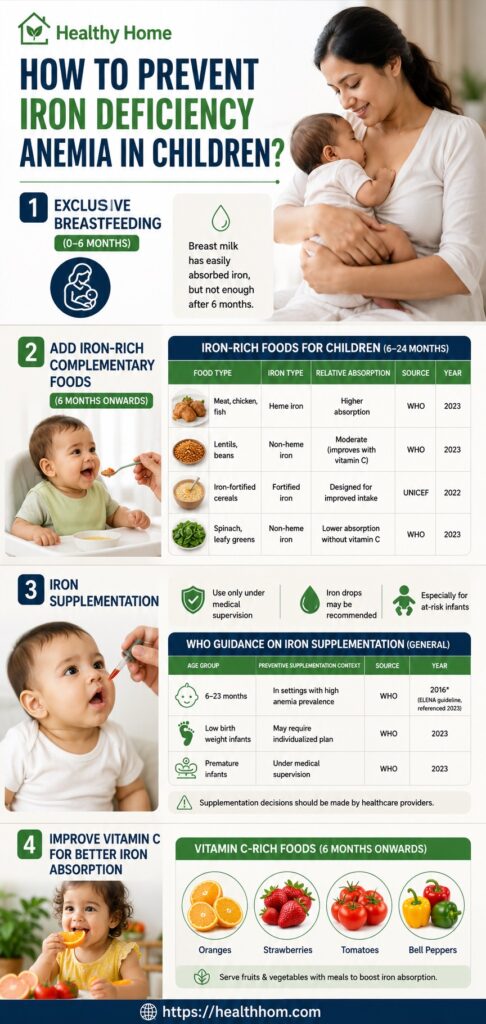
How to Prevent Iron Deficiency Anemia in Children?
1. Exclusive Breastfeeding (06 Months)
The first six months of life should be fed on only breast milk. Although breast milk is rich in iron that is very easily absorbed, the amount is insufficient to sustain a baby after the age of six months.
2. Addition of Iron-Enriched Complementary Foods (6 Months after)
Complementary foods that contain iron should be introduced at the six months with the constant breastfeeding continued. Suitable options include:
- Iron-fortified cereals
- Pureed meat, chicken or fish
- Lentils, beans and pulses
- Spinach and green leafy vegetable cooked.
- Egg yolk (one of the recommendations of a pediatrician)
Introducing the right complementary foods at 6 months is essential, see our detailed guide on right food supplementation for babies after 6 months
Iron-Rich Foods for Children (6–24 Months)
| Food Type | Iron Type | Relative Absorption | Source | Year |
|---|---|---|---|---|
| Meat, chicken, fish | Heme iron | Higher absorption | World Health Organization | 2023 |
| Lentils, beans | Non-heme iron | Moderate (improves with vitamin C) | WHO | 2023 |
| Iron-fortified cereals | Fortified iron | Designed for improved intake | UNICEF | 2022 |
| Spinach, leafy greens | Non-heme iron | Lower absorption without vitamin C | WHO | 2023 |
You can explore a detailed list of iron-rich foods in our complete guide on iron-rich foods during pregnancy (many are also suitable for children in modified form)
3. Iron Supplementation
Diet alone may not be adequate in iron in many children particularly those who are at risk. Under these circumstances, medical workers can suggest iron supplementation, usually iron drops.
- Preventive dosage is usually based on a medical professional.
- Earlier supplementation could begin in underdeveloped infants of low weights or premature birth.
- Only under the medical supervision should iron supplements be administered.
The low iron stores even in children with normal hemoglobin levels may impact on cognitive development.
Balanced diets with proper nutrient diversity are important, explore our guide on healthy lunch box ideas for kids(useful for toddlers).
WHO Guidance on Iron Supplementation (General)
| Age Group | Preventive Supplementation Context | Source | Year |
|---|---|---|---|
| 6–23 months | In settings with high anemia prevalence | World Health Organization | 2016 (ELENA guideline, still referenced 2023) |
| Low birth weight infants | May require individualized plan | WHO | 2023 |
| Premature infants | Under medical supervision | WHO | 2023 |
Supplementation decisions should be made by healthcare providers.
Nutritional deficiencies often coexist, read about related risks in vitamin D deficiency during pregnancy and breastfeeding
4. Improving Vitamin C Iron Absorption.
Vitamin C increases the absorption of non-heme iron in plant-based food. From six months of age, vitamin C-rich foods can be introduced to support iron absorption.
- Oranges
- Strawberries
- Tomatoes
- Bell peppers
- Vegetables and fruits eaten with the meals.
Micronutrient balance is essential for absorption, learn more in our guide on vitamin B12 benefits and deficiency
Important Guidance, Cow Milk and Absorption of Iron
- Cow’s milk should not be given during the first 12 months of life. After one year of age, intake should be limited to no more than 500 ml per day.
- Following one year of age, it should be taken in a minimum of not more than 500 ml daily.
- The presence of excessive cow, goat or soy milk may disrupt the absorption of iron and predispose one to the risks of iron deficiency.
Regular growth monitoring is essential, refer to our early childhood development guidefor milestone tracking
Concluding Points :
Even mild iron deficiency anemia in children may affect a child’s energy level, attention, learning ability during the early two years of life.
It’s a good thing to know that it can be prevented thorough a balanced nutrition, complementary feeding practices, continued breastfeeding, including vitamin-c rich foods, regular health check-up and growth monitoring. In case of any problem, advice of medical practitioner should be taken.
Only by a simply daily good habit and choices of parent may be able to build a healthier, stronger and happier future of child.
This article follows Healthy Home’s editorial policy based on evidence-informed public health guidelines and peer-reviewed sources.
FAQs
Q1. What is so important about iron for infants and toddlers?
Iron aids in normal growth of the brain, production of healthy red blood cells and general growth in the early childhood.
Q2. What can I do for iron supplementation for my child?
The foods rich in iron include pureed meats, fortified cereals, lentils, spinach and eggs which can be used to cover the daily intake. A pediatrician would be able to recommend the necessity of supplementation.
Q3. Is breast milk sufficient for iron quantity after 6 months?
No. Breast milk alone is not sufficient as the source of iron after six months and so supplement foods are necessary.
Q4. Which are the most suitable iron rich foods among children between the ages of 6-24 months?
Excellent ones are pureed meats, fish, iron-enriched cereals, beans, peas, spinach and egg yolks.
Q5. Should iron supplements be administered on a regular basis?
The use of iron supplements is not advisable without the recommendation of a healthcare provider especially in children with higher risks of deficiency.
Q6. Is vitamin C beneficial in absorption of iron?
Yes. Vitamin C increases the absorption rate of iron and needs to be taken once a day preferably with food.
Related Health Articles from Healthy Home
- Early Childhood Development – Learn about key stages, milestones, and factors influencing a child’s growth in this guide on Early Childhood Development
- Global Developmental Delay – Understand causes, symptoms, diagnosis, and early intervention strategies for Global Developmental Delay in Children
- What Makes Humans Unique – Explore the biological, cognitive, and emotional traits that define humanity in Why a Human Child Is So Unique and What Makes Us Human
- Infancy to Toddler Development – A comprehensive overview of physical, emotional, and cognitive changes from birth to toddlerhood in Precious Infancy to Toddler Stage
- Food Supplementation for Growth & Nutrition – Learn how nutritional supplementation supports maternal and child health through Food Supplementation and Its Importance
Trusted References and Research Sources:
- WHO Guideline on Iron Supplementation and Child Nutrition
https://iris.who.int/bitstream/handle/10665/204712/9789241549523_eng.pdf - NCBI – Complementary Feeding and Child Nutrition
https://www.ncbi.nlm.nih.gov/books/NBK285660/ - WHO Elena Intervention – Iron for Children 6–23 Months
https://www.who.int/tools/elena/interventions/iron-children-6to23 - NCBI – Anemia in Infants and Young Children
https://www.ncbi.nlm.nih.gov/books/NBK236493/ - WebMD – What to Know About Anemia in Kids
https://www.webmd.com/children/anemia-in-kids-what-to-know - Healthline – Childhood Anemia Overview
https://www.healthline.com/health/anemia/anemia-in-kids - PMC Article on Childhood Anemia and Nutrition
https://pmc.ncbi.nlm.nih.gov/articles/PMC9029079/
All articles published on Healthy Home follow an editorial review process based on evidence-based public health guidelines.Child Health and Development Guide: Growth Milestones, Immunity and Daily Care11 Iron Rich Foods During Pregnancy : Benefits and Healthy Meal Ideas5 Benefits of Reducing Salt and Sugar : Health Effects and Practical Tips


About the Author – “Bibhu Ranjan Mund”, Master in Public Health (MPH) from IIHMR University, Jaipur (Rajasthan) has more than 18 years of experience in Public Health activities in maternal health, child health, adolescent health, nutrition and community wellness programs under National Health Mission, Health & Family Welfare Department, Odisha. He is the founder of “Healthy Home” and translates the evidence based public health information into a practical source so that families may able to apply in everyday life. All the information are for educational purposes only and not replaces the professional medical advice. ORCID Researcher ID – 0009-0003-0158-4992. Connect LinkedIn – https://www.linkedin.com/in/bibhu-ranjan-mund-b72171358/