Last Updated on March 28, 2026 by Bibhu Ranjan Mund, MPH
Cyber security for Adolescents : Learn how cyber security protects adolescents from online risks like cyberbullying, phishing, and digital addiction with expert-reviewed parental guidance.
Reviewed by Bibhu Ranjan Mund, MPH (Public Health Expert) with experience in maternal, infant, child, and adolescent health programs. Content is based on evidence-informed guidelines aligned with organizations such as the World Health Organization, UNICEF, Centers for Disease Control and Prevention, and National Institutes of Health.
Last reviewed on: 22 March 2026.
Medical Disclaimer: This content is for informational and educational purposes only and is not intended as medical advice, diagnosis, or treatment. Always seek the advice of a qualified healthcare professional regarding any medical condition or concerns.
Affiliate Disclosure: This article contains affiliate links. If you purchase through these links, we may earn a small commission at no extra cost to you.
Introduction to Cyber Security for Adolescents
We are in the age of digital technologies when the internet and intelligent devices are an indispensable part of the lives of adolescents. Online sites facilitate learning, communication and entertainment, which however, leave young users to potential risks to their safety and privacy. The aspects of cyber security of adolescents are aimed at keeping the personal information safe, responsible use of technology, and safe internet conduct.
Cyber risks can be minimized through the creation of awareness of online threats, privacy settings, as well as ethical internet behavior. Teenagers may need to be instructed on how to be digitally well, such as healthy screen-time management and the prevention of destructive and offensive content. Safe internet habits will enable them to be at the advantage of technology without having to worry much about cyber security.
Excessive use of digital platforms can impact both safety and mental health—learn more in our detailed guide on social media addiction in adolescents and its effects.
Global Statistics on Adolescent Internet Use
| Indicator | Global Estimate | Source |
|---|---|---|
| Adolescents using the internet worldwide | ~71% of youth aged 15–24 use the internet | ITU |
| Children exposed to cyberbullying globally | Around 1 in 3 adolescents | UNICEF |
| Daily screen time among teenagers | Average 3–7 hours per day | APA |
| Teenagers using social media platforms | Over 80% globally | UNICEF |
Source : UNICEF Children in a Digital World 2023, International Telecommunication Union (ITU) Youth Internet Use Report 2022 and American Psychological Association Digital Media Advisory 2023
What are social media platforms?
Social media platforms refer to the online or mobile applications that enable users to create, share and engage with the content in web-based applications. These are the platforms through which communication, networking, information sharing and entertainment take place among various age groups.
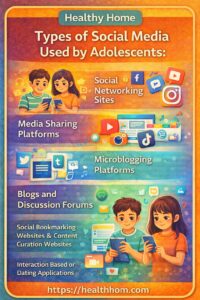
Types of Social Media Used by Adolescents:
The typical examples of social media platforms are:
- Social networking sites
- Media sharing platforms
- Microblogging platforms
- Blogs and discussion forums
- Social bookmarking websites and content curation websites.
- Interaction based or dating applications.
The teens communicate with their friends, visit their interests and make new acquaintances through social media and access to internet. Although short term usage can bring enjoyment and learning, its excessive usage can bring about time mismanagement and exposure to harmful or age inappropriate material. To be safe on the Internet, responsible content creation and consumption are necessary.
Types of Social Media Platforms Used by Adolescents
| Platform Category | Purpose | Example Activities |
|---|---|---|
| Social networking | Connecting with friends | Messaging, profile sharing |
| Media sharing | Sharing photos/videos | Uploading media content |
| Microblogging | Short posts and updates | Short messages or posts |
| Blogs & forums | Discussion and opinions | Writing and commenting |
| Content curation | Saving and sharing information | Bookmarking resources |
Source: Pew Research Center Social Media Use Study 2022
Internet Use During Adolescence: Key Priorities
The use of internet and social media among adolescents has grown a lot particularly during and after the pandemic. Digital platforms are beneficial, but the possible risks are both safety and psychological health of adolescents and their long-term growth.
The focus must be on moderate and meaningful internet use whereby the youths are instructed to use the technology in learning, creativity, and positive communication but not blindly consuming it.
Balanced digital habits are essential for emotional stability—read more in our guide on mental well-being in adolescents and stress management.
Benefits of Internet Use for Teenagers
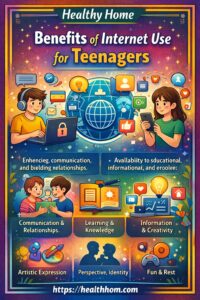
Proper use of internet has a number of advantages that include:
- Enhancing communication and building relationships.
- Increasing social and emotional knowledge.
- Availability to educational, informational, and creative information.
- Formal and informal learning opportunities.
- Management and artistic expression.
- The contact with other points of view and identities.
- Just having fun and rest when in moderation.
These benefits can be maximised once internet access is controlled, intentional and age based.
Along with digital balance, maintaining a healthy lifestyle is crucial—check our guide on healthy food choices for families to support overall development.
Comparison Table: Benefits vs Risks of Internet Use
| Aspect | Potential Benefits | Potential Risks |
|---|---|---|
| Communication | Connect with peers globally | Cyberbullying |
| Learning | Access to educational content | Exposure to misinformation |
| Creativity | Digital content creation | Online harassment |
| Entertainment | Games and videos | Excessive screen time |
Source: UNICEF Online Safety Framework 2021
Online Risks and Misuse of Internet :
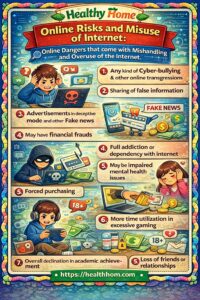
Online Dangers that come with Mishandling and Overuse of the Internet.
- Any kind of Cyber-bullying & other online transgressions
- Sharing of false information
- Advertisement in deceptive mode and other Fake news received throuh internet
- May have financial frauds
- Full addiction or dependency with internet
- May be impaired mental health issues
- Forced purchasing
- More time utilization in excessive gaming
- Maximum exposure to unwanted content in internet
- Easy access and distribution of unnecessary and in-appropriate contents frequently
- Overall declination in academic achievement of user
- Loss of friends or relationships Cyber-bullying and other infractions on the internet
Such risks make the need to be digitally literate, supervised, and communicate freely the key to the safety of adolescents.
Many of these risks are closely linked with excessive social media use—understand them better in our article on effects of social media addiction in adolescents.
Common Online Risks for Adolescents
| Online Risk | Description |
|---|---|
| Cyberbullying | Online harassment through messages or posts |
| Phishing | Fraud attempts to obtain personal information |
| Identity theft | Misuse of personal online identity |
| Exposure to harmful content | Inappropriate or misleading material |
| Online scams | Financial or deceptive online activities |
Source: UNICEF Child Online Protection Report 2022
Mental, Physical and Social Health Effects
The overuse of internet may lead to stress, anxiety, mood swings, low self-esteem and social withdrawal which are detrimental to the mental health of the adolescents. The persistent viewing of unrealistic online content could augment discontent and emotional distress.
Physical impacts could be decreased physical movements, improper body posture, eye pain, headaches, insomnia, and unhealthy weight gain. In the social aspect, the adolescents can grow alienated to the real life relations, lose interest in school life, and gain less confidence in face to face interaction.
Possible Effects of Excessive Internet Use
| Area | Possible Effects |
|---|---|
| Mental well-being | Stress, mood fluctuations |
| Physical health | Eye strain, posture issues |
| Social relationships | Reduced face-to-face interaction |
| Academic performance | Difficulty focusing on studies |
Source: American Psychological Association Social Media Advisory 2023
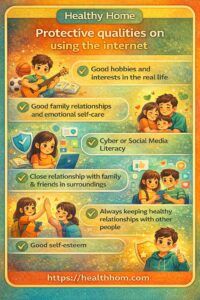
Protective qualities on using the internet:
There are some protective elements that make adolescents use the internet safely, and they are:
- Good hobbies and interests in the real life
- Good family relationships and emotional self-care.
- Cyber or Social Media Literacy
- Close relationship with family & friends in surroundings
- Always keeping healthy relationships with other people
- Good self-esteem
All these make them less vulnerable to online risks and responsible in their use of digital technology.
Techniques like mindfulness and self-regulation can improve digital discipline—explore practical strategies in our mindfulness guide for children and adolescents.
Protective Factors for Safe Internet Use
| Protective Factor | How It Helps |
|---|---|
| Digital literacy | Helps identify online risks |
| Family communication | Encourages safe internet habits |
| Positive peer groups | Reduces risky online behavior |
| Balanced screen time | Maintains healthy routines |
Source: WHO Adolescent Digital Health Guidance 2022
Risk Factors for Unsafe Internet Use
Risk Factors for Unsafe Internet Behavior
| Risk Factor Category | Examples |
|---|---|
| Individual factors | Low awareness of online risks |
| Social factors | Peer pressure and online influence |
| Family factors | Limited parental supervision |
| Environmental factors | Easy access to harmful content |
Source: UNICEF Digital Safety Research 2021
Physical and nutritional health also influence behavior and decision-making—read more about this in our article on anaemia and its impact on adolescent health.
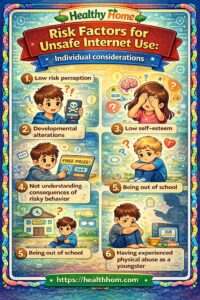
The risk factors that contribute to unsafe internet use are:
Individual considerations
- Low risk perception;
- Developmental alterations;
- Low self-esteem
- Not understanding the consequences of risky behavior and preventive behavior
- Being out of school
- Having experienced physical abuse as a youngster
- Psychological intervention, self emotions with other societal problems
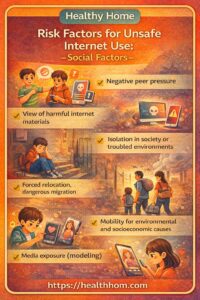
Social factors
- Negative peer pressure
- View of harmful internet materials.
- Isolation in society or troubled environments.
- forced relocation,
- dangerous migration,
- mobility for environmental and socioeconomic causes;
- media exposure (modeling)
Factors related to family
- Lacking of direct supervision & required support from family members
- Guidance in abnormal behavior
- Misuse of Substance in the family
- Un-employment

Teenagers could either be the victims or the offenders of:
- Cyber-bullying
- cyber-stalking,
- trolls,
- doxing,
- hacking,
- phishing;
- establishing and disseminating rumors;
- fabricating a persona for a variety of reasons;
- grooming;
- unwanted attention;
- blackmailing;
- financial frauds
These risks highlight why guided internet use and regular communication with adolescents is essential for their safety and mental well-being.
Issues regarding its over use:
- Uncontrolled media consumption, continuous gaming & chattering i.e. compulsion
- Continuing to use even when not intending to i.e. loss of control in overuse
- Fear of losing or not having a cell phone or sleeping with one in bed makes you feel uneasy if you aren’t permitted to use media.
- May have FOMO (fear of missing out) when not online also
Some of the most prevalent Cyber Crimes on Adolescents
Adolescents may either be a victim or unwittingly involved in cyber related crimes including:
- Cyberbullying and cyberstalking.
- Phishing and hacking
- Doxing and impersonation
- Online financial fraud and blackmailing.
Being aware of these dangers makes teenagers understand that something is wrong and they can find assistance in time.
Some related terms which are frequently being used:
Cyber-stalking is the following of someone, a group or an organization over the Internet or other technological means while being harassed.
The word ”troll” is used in reference to a person who intentionally tries to create discord or animosity or arguments within an online social group.
The practice of doxing, which is itself a form of cyber-bullying, is when individuals use private or sensitive data, statements or documents to harass, expose, financially injure, or otherwise exploit the targeted individual.
Everyone seems to have an idea of what hacking is, where hacking is more than just hacking a computer, cellphone, tablet or even a whole network.
Phishing is a social engineering attack that the perpetrators use to obtain the credit card information and access credentials of users. An attacker impersonating a trusted organization causes the victim to open an email, instant message or text message.
Common Cyber Crimes Affecting Adolescents
| Cyber Crime | Description |
|---|---|
| Cyberbullying | Repeated online harassment |
| Cyberstalking | Persistent online monitoring |
| Phishing scams | Fraud messages seeking information |
| Doxing | Publishing private personal data |
| Online impersonation | Creating fake digital identities |
Source: UNICEF Child Online Protection Report 2022
Warning Signs and Issues Related to Internet Overuse
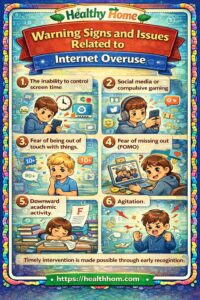
Indications of misuse of internet include:
- The inability to control screen time.
- Social media or compulsive gaming.
- Fear of being out of touch with things.
- Fear of missing out (FOMO)
- Downward academic activity.
- Agitation.
Timely intervention is made possible through early recognition.
Warning Signs of Internet Overuse
| Sign | Description |
|---|---|
| Loss of time control | Spending excessive hours online |
| Academic decline | Reduced focus on studies |
| Mood changes | Irritability or anxiety when offline |
| Social withdrawal | Reduced offline interactions |
Source: APA Digital Media Health Advisory 2023
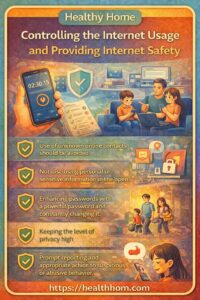
Controlling the Internet Usage and Providing Internet Safety
In order to control the use of the internet, teenagers are supposed to think over their activities online, keep logs of time, and analyze the influence of the content on their moods and objectives. Caregivers and parents are encouraged to encourage routine, offline and discussion.
Some of the major safety practices are:
- Use of unknown online contacts should be avoided.
- Not disclosing personal or sensitive information in the open.
- Enhancing passwords with a powerful password and constantly changing it.
- Keeping the level of privacy high.
- Prompt reporting and appropriate action to suspicious or abusive behavior.
Discourage them against responding to the individual or individuals who are bullying him/her online:
- Block and report the individual or people involved;
- Take screenshots and photos and document them;
- The method involves talking about it while implementing time controls and safeguarding your digital safety
- Talk about, Encourage, and Make a Suggestion Provide some advice.
- Be mindful;
- Rights, rules, regulations and obligations may be taught to the adolescent.
- High privacy settings on different social media may be done and to keep their profiles hidden always.
Practical Cyber Safety Tips for Adolescents
| Safety Practice | Example |
|---|---|
| Strong passwords | Use unique passwords |
| Privacy settings | Keep profiles private |
| Avoid sharing personal data | Do not share location or phone number |
| Report harmful behavior | Inform parents or authorities |
| Limit screen time | Follow daily usage limits |
Source: UNICEF Online Safety Toolkit 2022
What Can You Do in Action?
- Create awareness of cyber safety at schools and communities.
- Cooperate with teachers, parental figures and the government.
- Promote cyber incidents reporting.
- Make available counseling services and support services.
- Create a healthy and positive online space.
Role of Parents, Schools and Communities
| Stakeholder | Role in Cyber Safety |
|---|---|
| Parents | Monitor online activity and provide guidance |
| Schools | Provide digital safety education |
| Communities | Promote awareness campaigns |
| Government | Enforce cyber protection policies |
Source: WHO Digital Safety Advocacy Toolkit 2021
Key Message :
The internet is an influential device and has its advantages and disadvantages. Teenagers need to be advised, informed, and educated to be safe online. Adolescents need to use the internet responsibly, embrace good cyber security habits, and make effective use of their parents to safeguard their well-being and future.
The following video explains safe internet and social media practices for adolescents in a simple and practical manner. https://www.youtube.com/embed/oCQNhQmqOu0?si=Z4Of8h-u4pwaw3rE
FAQs:
Related Health Articles from Healthy Home
- Social Media Addiction in Adolescents: Causes, Effects & Prevention
https://healthhom.com/social-media-addiction/ - Mindfulness Techniques for ADHD Management in Children and Adolescents
https://healthhom.com/mindfulness-and-adhd/ - How to Minimize the Risk of Worm Infestation: Causes, Symptoms & Prevention
https://healthhom.com/how-to-minimize-the-risk-of-worm-infestation/ - Impact of Anaemia in Adolescents: Long-Term Health Risks of Malnutrition
https://healthhom.com/impact-of-anaemia-in-adolescents-long-term-risks-of-malnutrition/ - Nurturing Mental Well-being in Adolescents: Causes, Risks & Prevention (healthhom.com)
Trusted References and Research Sources:
- advocacy_toolkit.pdf (who.int)
- Adolescent safety and protection | UNICEF
- Current perspectives: the impact of cyberbullying on adolescent health – PMC (nih.gov)
- Online Safety for Children and Adolescents | UNICEF India
- Adolescent Deviance and Cyber-Deviance. A Systematic Literature Review – PMC (nih.gov)
- Health advisory on social media use in adolescence (apa.org)
- Cyberbullying Prevention and Intervention Efforts: Current Knowledge and Future Directions – PMC (nih.gov)
For more detail, please visit to my website as mentioned below:


About the Author – “Bibhu Ranjan Mund”, Master in Public Health (MPH) from IIHMR University, Jaipur (Rajasthan- IHMR-U/12/2021 -23/0015) has experience of 18 years in Public Health activities like maternal health, child health, adolescent health, nutrition and community wellness programs. Through “Healthy Home”, he shares evidence-based health and wellness guidance designed to support families in making informed lifestyle decisions. This content is for educational purposes only and does not replace professional medical advice. Connect LinkedIn – https://www.linkedin.com/in/bibhu-ranjan-mund-b72171358/