
Last Updated on March 22, 2026 by Bibhu Ranjan Mund, MPH
A practical healthy living guide covering nutrition, gut health, hydration, sleep, and mindfulness to support long-term wellness for families.
Reviewed by Bibhu Ranjan Mund, MPH (Public Health Expert) with experience in maternal, infant, child, and adolescent health programs. Content is based on evidence-informed guidelines aligned with organizations such as the World Health Organization, UNICEF, Centers for Disease Control and Prevention, and National Institutes of Health.
Last reviewed on: 22 March 2026.
Medical Disclaimer: This content is for informational and educational purposes only and is not intended as medical advice, diagnosis, or treatment. Always seek the advice of a qualified healthcare professional regarding any medical condition or concerns.
Healthy living is not built through one major change but through small daily habits practiced consistently. Nutrition, hydration, sleep, physical activity, and mental wellbeing work together to support long-term health for individuals and families.
In today’s fast-paced lifestyle, maintaining these habits can be challenging, especially for children and adolescents whose sleep, diet, and screen-time patterns are rapidly changing.
This comprehensive healthy living guide explains the five essential pillars of wellness and provides practical strategies families can use to build sustainable daily routines.
Global Lifestyle Health Statistics:
| Health Factor | Global Insight |
|---|---|
| Physical inactivity | 1 in 4 adults do not meet activity guidelines |
| Insufficient sleep | Increasing among adolescents worldwide |
| Poor diet | Linked with rising chronic disease risk |
Source: World Health Organization (2023)
Quick Summary :
- A healthy lifestyle is a combination of nutritious food, hydration, sleep, physical exercises and a healthy mind.
- Consuming vegetables, whole grains, fruits and protein foods of different kinds contributes to general health.
- Drinking of enough water serves the purpose of maintaining the body, digestion and energy levels.
- As an adult, one should have to sleep a minimum of 7-9 hours per night to stay healthy.
- Exercise may help in improving the cardiovascular health, metabolism and temper.
- Mental and emotional balance may be achieved with the help of mindfulness and stress-management practices.
- Small daily routines on a may add up to long term health and well-being.
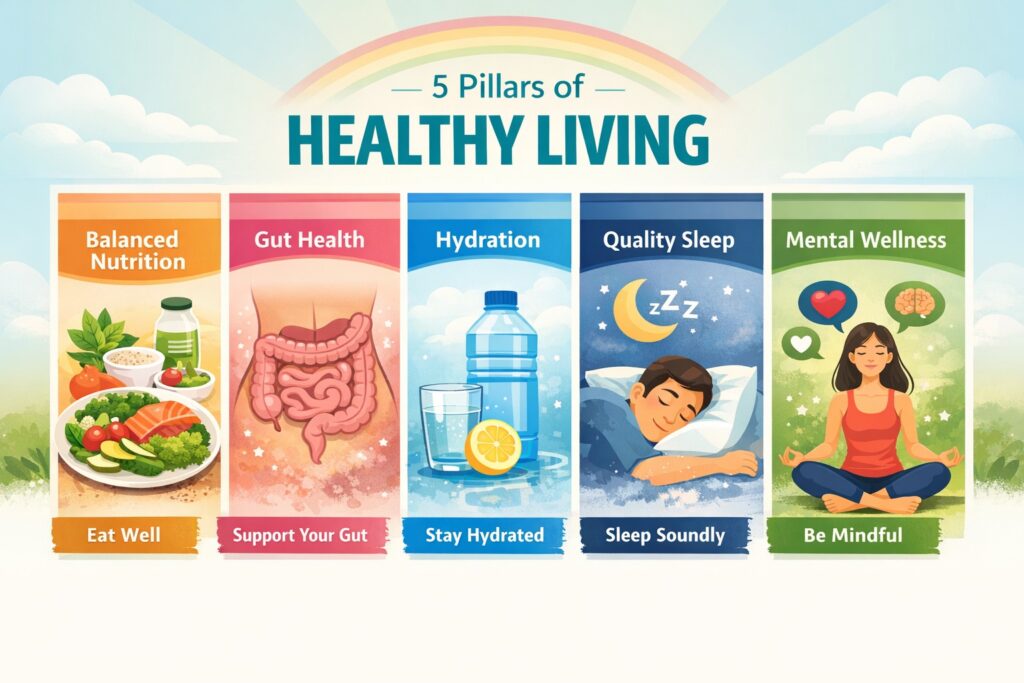
1. Healthy Nutrition at Everyday Life
Nutrition is one of the fundamental pillars of overall health and wellness. To be healthy, the body needs a balanced consumption of macronutrients (carbohydrates, proteins and fats) and vitamins and minerals.
A healthy diet helps to maintain:
- Immune system function
- Healthy physical development among children and adolescents.
- Brain development
- Hormonal balance
- Energy production
Key Components of a Balanced Diet
| Nutrient | Main Function | Healthy Sources |
|---|---|---|
| Carbohydrates | Primary energy source | Whole grains, fruits, vegetables |
| Proteins | Tissue growth and repair | Eggs, legumes, dairy, fish |
| Healthy fats | Brain and hormone health | Nuts, seeds, olive oil |
| Fiber | Digestive health | Whole grains, fruits, vegetables |
| Vitamins & minerals | Immune and metabolic support | Fruits, vegetables, dairy |
The world health organization (WHO) recommends a healthy diet to be mixed with fruits, vegetables, whole grains and moderate protein but containing little sugar and processed foods.
Practical Nutrition Tips
- Take at least 5 portions of vegetables and fruits per day.
- Use refined grains less in preference of whole grains.
- Decrease the intake of sweet drinks.
- Consist of protein in all meals.
A healthy diet allows to maintain the energy level, digestion and health. Having families adopt healthier eating habits can be achieved by selecting nutrient-rich foods like fruits, vegetables, whole grains and protein food. Also, you can read our step-by-step guide to Best Anti-Inflammatory Foods to Eat Daily to read about the foods that will help you maintain wellness in the long run.
Knowing your daily requirement of nutrients would be useful. Protein Intake Calculator and Carbohydrate Intake Calculator are helpful tools that can be used to estimate the needs of macronutrients on a daily basis depending on personal lifestyle and activity levels.
Healthy Diet vs Poor Diet
| Feature | Healthy Diet | Poor Diet |
|---|---|---|
| Food types | Fruits, vegetables, whole grains | Ultra-processed foods |
| Nutrient density | High | Low |
| Sugar intake | Limited | Excessive |
| Long-term impact | Supports wellness | May increase health risks |
Source: World Health Organization
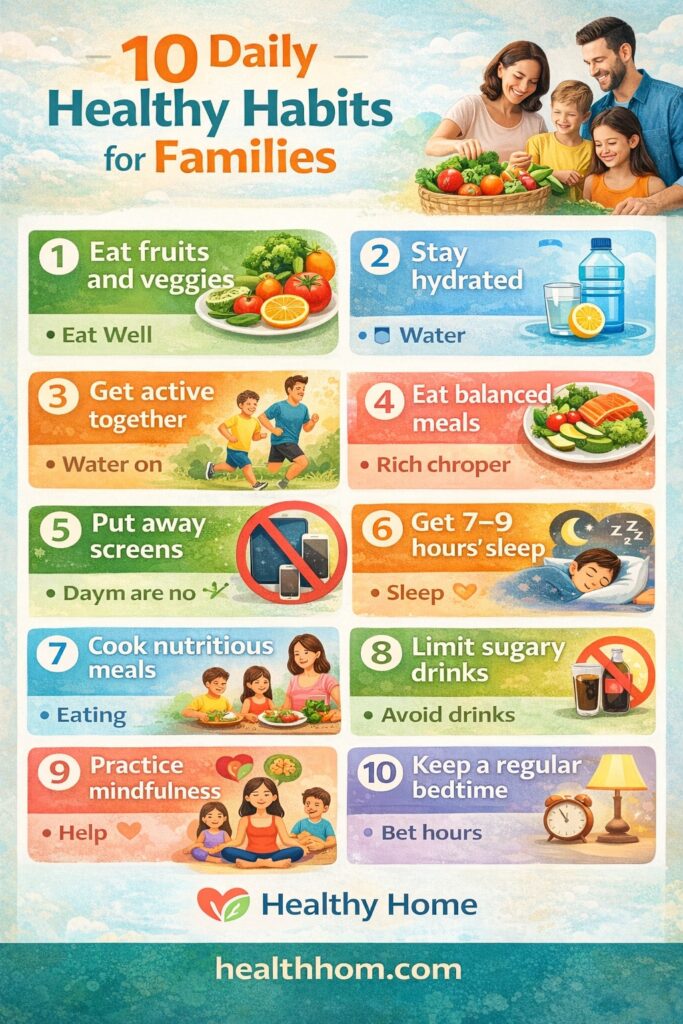
2. Gut Health and Wellness, the Human Microbiome
Millions of microorganisms are present in the digestive system which are referred to as the gut microbiome. The microbes are significant in digestion, immunity and even mental health.
Studies indicate that a healthy gut microbiome can be used to maintenance of the following:
- Nutrient absorption
- Immune defense
- Metabolic health
- Mood regulation
An imbalance in gut bacteria may contribute to digestive discomfort and other health concerns.
Foods That Support Gut Health
| Food Type | Benefit |
|---|---|
| Fermented foods | Provide beneficial bacteria |
| High-fiber foods | Feed healthy gut bacteria |
| Fruits and vegetables | Improve microbial diversity |
| Whole grains | Support digestion |
Examples of gut-friendly foods:
- Yogurt
- Kefir
- Sauerkraut
- Kimchi
- Whole grains
- Bananas
According to a study published in Nature Reviews Gastroenterology (2021), Research suggests that dietary diversity may support a healthier gut microbiome.
The dietary changes that would help to improve the digestive system and the health of adolescents in the long run include promoting fiber-rich and fermented foods.
The digestive system is significant in the absorption of nutrients and immunity. Fiber food and fermented food may serve as a solution to a healthy gut microbiome. The article on Best Fermented Foods to Teen Gut Health can help you learn more about the benefits of fermented foods in digestion and gut health.
Those families who are concerned with the state of their digestive system can also read our Family Microbiome Reset: A 7-Day Gut Health Plan to offer a practical approach to the diet that helps to maintain the gut-friendly diet.

3. Hydration and Body Function
Water is vital in almost all the physiological processes that are carried out in the body. Adequate hydration is also characterized to regulate the body temperature, transfer nutrients and keep cells healthy.
Fatigue, headaches and loss of concentration may be caused even by mild dehydration.
Recommended Daily Water Intake
| Age Group | Approximate Daily Water Need |
|---|---|
| Children (4–8 years) | 1.2 – 1.5 liters |
| Adolescents | 1.6 – 2.6 liters |
| Adults | 2 – 3 liters |
(Source: National Academies of Sciences, Engineering, and Medicine, 2020)
Signs of Dehydration
- Dry mouth
- Fatigue
- Headache
- Dark-colored urine
Hydration Tips for Families
- Promote the intake of water by children during the day.
- Fruits and vegetables contain a lot of water, add them to your meal.
- Stop drinking too much sugar-containing beverages and sodas.
- Take water prior to and following physical exercise.
A daily water intake calculator can be used to make people estimate what they should drink in a day with regard to the weight and the level of activity.

4. Sleep and Body Recovery
Among the most overlooked aspects of health is sleep. The body carries out some of the most important roles during sleep including cell repair, hormone regulation and memory consolidation.
Lack of sleep may have an impact on mood, immunity, metabolism and academic performance among children.
Recommended Sleep Duration
| Age Group | Recommended Sleep |
|---|---|
| Preschool children | 10–13 hours |
| School-age children | 9–11 hours |
| Teenagers | 8–10 hours |
| Adults | 7–9 hours |
(Source: American Academy of Sleep Medicine, 2016)
Benefits of Quality Sleep
- Improved concentration
- More effective emotional management.
- Stronger immune function
- Positive growth and development.
How to have a Better Quality of Sleep.
- Have a regular sleeping pattern.
- Reduce the time spent in front of the screen prior to sleep.
- Provide a conducive sleeping condition.
- Promote the loosening of bedtime habits.
Healthy sleep habits can be formed at early age to contribute to long term wellbeing.
Sleep is critical towards cognitive, emotional and physical restoration. It is possible to develop healthy sleeping habits that can greatly enhance the general state of wellbeing. To get further strategies, you can read our elaborate article on Sleep Optimization, which details how to go about to improve the quality of sleep in a practical manner.
5. Mental Wellness and Mindfulness
Physical health is equally important as mental health. Emotional wellbeing may be influenced by stress, academic pressure and overexposure to digital devices both in children and adults.
Mindfulness techniques can assist a person to be more conscious of his/her thoughts and feelings, thus bringing about relaxation and minimizing stress.
Benefits of Mindfulness
The study conducted by the Journal of Child and Family Studies (2020) revealed that mindfulness can help to improve:
- Emotional regulation
- Attention and focus
- Stress management
You can also read 7 Daily Habits to Reduce Anxiety Naturally to understand simple stress-management strategies.
Simple Mindfulness Practices
| Practice | Duration | Benefit |
|---|---|---|
| Deep breathing | 5 minutes | Reduces stress |
| Guided meditation | 10 minutes | Improves focus |
| Gratitude journaling | 5 minutes | Enhances positivity |
| Nature walks | 15 minutes | Improves mood |
Families may practice mindfulness together to have a supportive including calm home environment.
indfulness practices can be used to decrease stress and enhance emotional balance. The short meditation practices and simple breathing exercises can be part of the everyday routine. Such 5-Minute Mindfulness Exercises with Kids are the exercises that allow families to adopt straightforward relaxation methods that are applicable to children and adolescents.
6. Physical Activity: Lifelong Health
Exercise is helpful in cardiovascular activity, muscle building, and enhancing mental wellbeing.
The World Health Organization (2020) suggests that children and adolescents are supposed to perform at least 60 minutes of moderate or vigorous physical activity per day.
Advantages of Physical Exercise.
- Improves heart health
- Helps to maintain normal weight.
- Skeletal muscles and bones become stronger.
- Boosts mental wellbeing
Simple Activities for Families
- Walking or cycling together
- Outdoor sports
- Yoga or stretching
- Recreational games
It is better to encourage children to be active to promote healthy habits throughout their lives.
Monitoring fundamental health metrics can enable people to be more familiar with their health condition in general. BMI Calculator and Body Fat Calculator are some of the tools that may offer useful information about body composition and weight management.
7. Healthy Habits and a Healthy Family
A healthy living is simplified when the whole family is involved. Establishing regular routines promotes success in the long run.
Daily Healthy Habit Checklist
| Habit | Suggested Practice |
|---|---|
| Balanced meals | Include vegetables and protein in each meal |
| Hydration | Drink water regularly |
| Physical activity | At least 30–60 minutes daily |
| Sleep routine | Maintain consistent sleep schedule |
| Mindfulness | Practice relaxation or breathing exercises |
Parents can be very instrumental as they can be observed to set healthy examples and promote good habits.
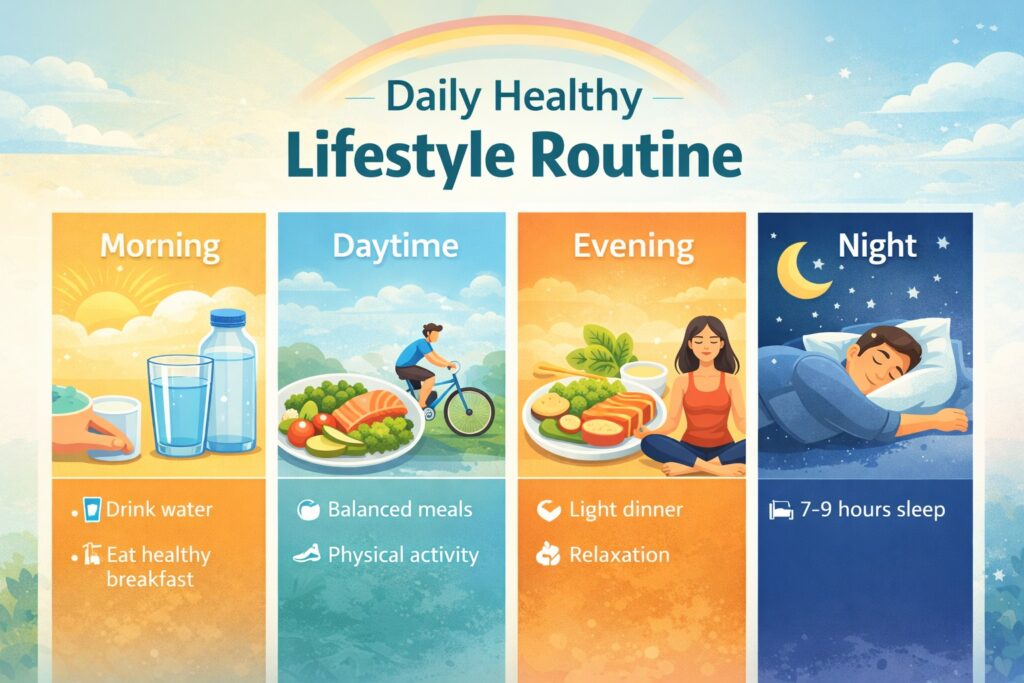
A. Professional Advice to Live a Healthy Life.
It is not necessary to change radically to build the healthy lifestyle. Minimal and routine practices may make a difference to the general wellbeing.
Practical Expert Tips
- Start with balanced meals
- A balanced meal should include vegetables, fruits, whole grains, and a source of protein.
- Maintain regular hydration
- Good hydration, drinking lots of water throughout the day, particularly in warm weather and during physical exercise.
- Develop a regular sleeping pattern.
- Going to sleep and waking up at the same time every day assists in the regulation of the inner clock of the body.
- Stay physically active
- Take regular moderate forms of physical exercises like walking, cycling, stretching or sports.
- Limit ultra-processed foods
- Limiting foods rich in added sugar, salt and all those with unhealthy fats will help in promoting long term health.
- Train stress management skills.
- Emotional balance can be achieved through short meditation sessions, mindfulness or deep breathing.
- Discuss the family involvement.
- The family is more likely to follow healthy habits when they are practiced as a family.
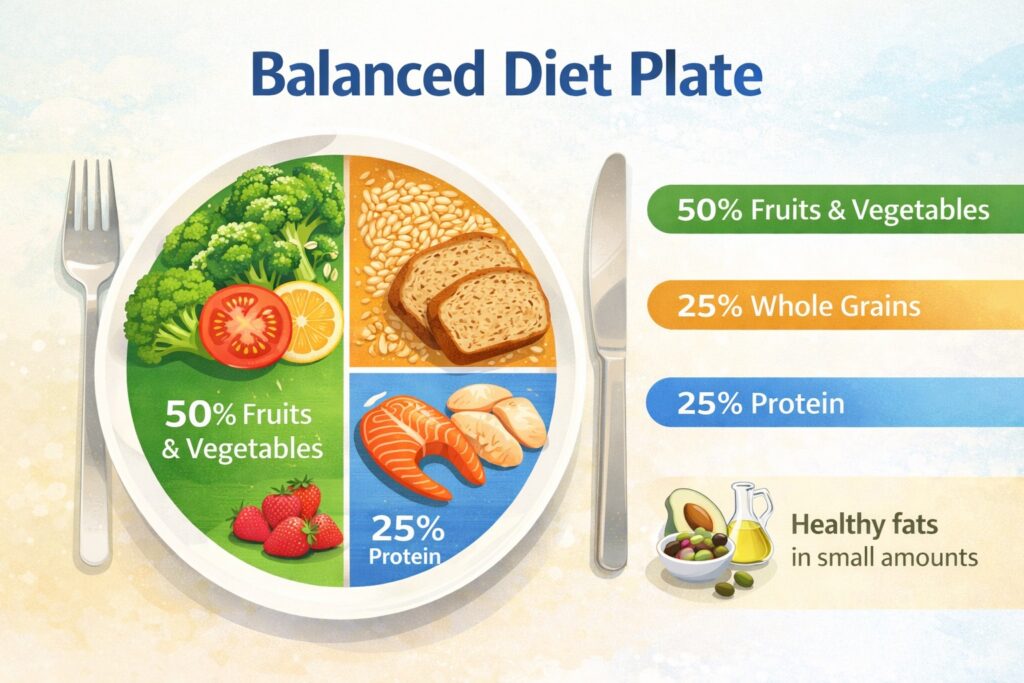
B. Daily Healthy Lifestyle Checklist
| Healthy Habit | Daily Goal | Why It Matters |
|---|---|---|
| Eat balanced meals | Include fruits, vegetables, protein, and whole grains | Supports overall nutrition |
| Drink enough water | 6–8 glasses or as needed | Maintains hydration |
| Physical activity | 30–60 minutes daily | Improves heart and muscle health |
| Sleep routine | 7–9 hours for adults | Supports recovery and brain health |
| Limit screen time | Reduce unnecessary screen exposure | Supports mental wellbeing |
| Practice mindfulness | 5–10 minutes daily | Helps manage stress |
Screen Time and Digital Balance
The high screen time can impact the quality of sleep, the level of mental health and physical activity, particularly in young persons and adolescents. The health specialists advise that recreational screen time should be limited and family time is encouraged outside screen time, reading and interaction.
Frequently Asked Questions:
Why Trust Healthy Home
Content on Healthy Home is developed using evidence-based public health research and reviewed by a Public Health professional with experience in maternal, child, and adolescent health programs.
Information is based on guidance from organizations such as:
- World Health Organization
- UNICEF
- Centers for Disease Control and Prevention
- Other global public health institutions
Concluding Points on Healthy Living Guide:
Wellness is achieved through small regular habits that are practiced on a daily basis. Combined with regular physical exercise, proper nutrition, proper hydration, proper sleep and mindfulness, these elements promote wellbeing long-term among individuals and families.
These habits can be acquired at an early age and would help to establish a sustainable way of life which would advantage both the physical and emotional health.
Minor changes in everyday life includes eating healthy, exercising, consuming sufficient water and being mindful can produce significant health outcomes in the long run.
When constructed collectively, these habits will enable families to develop a lifestyle that would enable them to maintain physical and emotional health both in the short and long term.
Related Health Articles from Healthy Home
- 10 Evergreen Gut Friendly Foods That Support Gut Health Naturally – Healthy Home – Science-Based Family Health Tips for Kids, Teens & Parents (healthhom.com)
- 12 Science-Backed Benefits of Morning Walk on Empty Stomach (2026 Guide) – Healthy Home – Science-Based Family Health Tips for Kids, Teens & Parents (healthhom.com)
- Improve Lifespan Naturally: 8 Science-Backed Ways to Live Longer – Healthy Home – Science-Based Family Health Tips for Kids, Teens & Parents (healthhom.com)
- 7 Daily Habits to Reduce Anxiety Naturally (Science-Based Guide) – Healthy Home – Science-Based Family Health Tips for Kids, Teens & Parents (healthhom.com)
- 7 Natural Foods to balance women’s hormones – Healthy Home – Science-Based Family Health Tips for Kids, Teens & Parents (healthhom.com)
Trusted References and Research Sources:
- The World Health Organization provides global guidance on healthy diets and disease prevention: World Health Organization – Healthy Diet Guidelines
- UNICEF publishes resources on child nutrition and development. Healthy diet (unicef.org)
- The Centers for Disease Control and Prevention provides public health guidance on nutrition and physical activity. Centers for Disease Control and Prevention – Nutrition Basics
- The National Institutes of Health Office of Dietary Supplements offers scientific information about vitamins and minerals. NIH Office of Dietary Supplements – Evidence-Based Supplement Information
- The Harvard T. H. Chan School of Public Health explains balanced nutrition through the Healthy Eating Plate model.
Harvard T.H. Chan School of Public Health – Healthy Eating Plate Guide - The medical information website WebMD offers practical articles about diet, fitness, and healthy lifestyle choices for everyday readers. Healthy Eating Plate • The Nutrition Source (harvard.edu)
For more detail, please visit to my website as mentioned below:


About the Author – “Mr. Bibhu Ranjan Mund”, Master in Public Health (MPH) from IIHMR University, Jaipur (Rajasthan- IHMR-U/12/2021 -23/0015) has experience of 18 years in Public Health activities like maternal health, child health, adolescent health, nutrition and community wellness programs. Through “Healthy Home”, he shares evidence-based health and wellness guidance designed to support families in making informed lifestyle decisions. This content is for educational purposes only and does not replace professional medical advice. Connect LinkedIn – https://www.linkedin.com/in/bibhu-ranjan-mund-b72171358/
Reviewed by Public Health Expert (MPH)