
Last Updated on August 3, 2026 by Bibhu Ranjan Mund, MPH
This article explains the causes, symptoms, diagnosis, treatment and prevention of fatty liver disease in children. It is a practical guide for parents based on current evidence.
Reviewed by Bibhu Ranjan Mund, MPH (Public Health Expert) with more than 18 years of experience in maternal, infant, child, and adolescent health programs. Content is based on evidence-informed guidelines aligned with organizations such as the World Health Organization, UNICEF, Centers for Disease Control and Prevention, and National Institutes of Health.
Research Archive
Mund BR. Fatty Liver Disease in Children: Symptoms, Causes, Treatment & Prevention. Healthy Home. 2026.
DOI: https://doi.org/10.5281/zenodo.20906555
Zenodo Record:
https://zenodo.org/records/20906555
Medical Disclaimer: This content is for informational and educational purposes only and is not intended as medical advice, diagnosis, or treatment. Always seek the advice of a qualified healthcare professional regarding any medical condition or concerns.
Quick Summary
- Fatty liver disease in children has increased now throughout the worldwide.
- Excess fat accumulation in the liver can affect its normal functioning.
- Childhood obesity, sugary beverages, processed foods and physical inactivity are major risk factors
- In early stage, many children may not have any symptoms for the disease.
- If we are able to detect early, it may helps to prevent the liver damage in future.
- The treatment of this disease is to perform regular physical activity and healthy eating habits.
- Here, the role of parent is very important in prevention with recovery as they have to guide their children.
What is Fatty Liver Disease in Children?
It occurs when excess fat deposits in a child’s liver. Sometimes it is linked to obesity, unhealthy eating patterns, excessive sugar intake, and lacking physical activities. Most of the symptoms don’t show in the children in initial phase. But, if left untreated, it may leads to liver inflammation and long-term health complications. So, early diagnosis early is important along-with changing the lifestyle.
Introduction
In past decades, fatty liver disease was said to be a health issue for the adults who were overweight or taking alcohol frequently. But, today Pediatricians are observing a concerning trend that the children even eight or nine years old are diagnosed with fatty liver disease.
Many Indian parents are surprised if they hear such diagnosis in their children. They are thinking that, how my child develops such which is a disease commonly shown in adults.
This is due to the changing in modern lifestyles. Now the children are spending more time on screen, social media, drink sugary drinks from outside, consume packaged snacks, less physical activity etc. which the early generations were performing. These lifestyles many not harm initially, but gradually it may affect the metabolism and liver health.
Research also suggests that excessive screen time and digital device use can reduce the physical activity and may contribute to unhealthy lifestyle habits among children. So, parents may should focus on sleep, behavior and overall health.
As a public health professional, I have observed this trend as a concern due to fatty liver disease sometimes develops silently. A child may be healthy from outside appearance, but may have excess fat inside the liver. So, precaution is the best method to prevent from it before any symptoms appear as after any symptoms appear, it may already affect the liver health.
The important point is that the fatty liver disease in children may be prevented or even reversed, if timely diagnosed and managed. So, it is very much important to know the cause, warning signs and practical prevention methods may help the families to protect their children for a long-term health.
What Is Fatty Liver Disease?
Among the important organs in human body, liver is one of the them. It helps to remove toxins, produce the essential proteins, process the nutrients and also regular in metabolism.
When too much fat deposits inside the liver cells, the fatty liver disease develops gradually. Fatty liver disease is generally diagnosed when excessive fat deposits within the liver cells, sometimes exceeding approximately 5% of liver tissue.
In children, Metabolic Dysfunction-Associated Steatotic Liver Disease (MASLD) is the newer international terminology replacing Non-Alcoholic Fatty Liver Disease (NAFLD). However, many doctors and research papers still use NAFLD.
Childhood fatty liver disease is mainly associated with:
- Excess body weight than normal
- Poor dietary habits with lifestyle
- Insulin resistance
- Less physical activity daily
- Metabolic disorders
| Healthy Liver | Fatty Liver |
|---|---|
| Less than 5% fat | More than 5% fat |
| Normal liver function | Fat accumulation affects function |
| Lower metabolic risk | Higher metabolic risk |
| Healthy energy metabolism | Increased risk of insulin resistance |
Why Is Fatty Liver Disease Increasing Among Children?
Many factors contribute for increasing among children. Let us take an think about a situation of a child in urban school day:
A child may be in a habit of wake up late, skip the breakfast in the morning time due to late rise, during school time sit in a constant place for several hours, attend coaching class and return home in late evening. Then busy in watching the videos in mobiles or play mobile games. During these time, may take chips, biscuits, noodles or any type of sugary drinks.
All of the above habits may not cause fatty liver disease alone. But if such habits combinedly continues for months and years, it may be suitable to deposit fats in the liver.
Key Points :
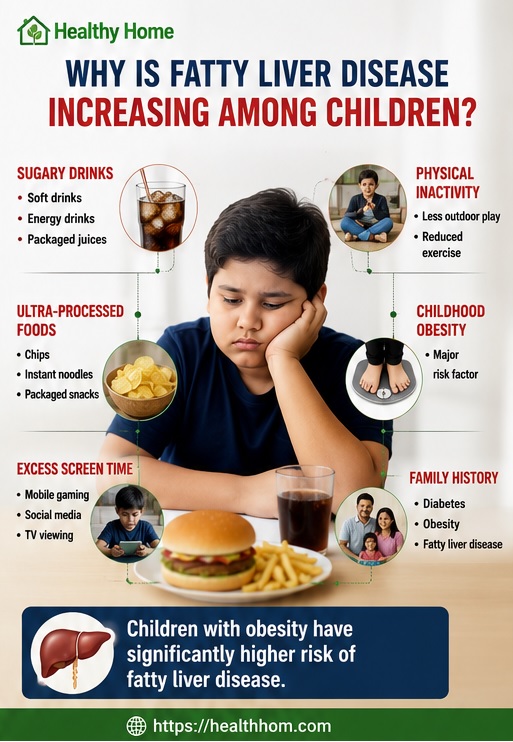
1. Childhood Obesity
The most important risk factor is excess body weight during childhood. Parents should concern about unhealthy weight gain and childhood obesity prevention strategies to maintain healthy family habits.
Statistics show that the child with obesity is mostly vulnerable to develop fatty liver disease in children rather who are healthy and within the normal weight range as per age and height criteria.
2. Sugary Drinks
Many types of easily available in shops as in packaged forms like soft drinks, juices, flavored milk drinks, energy drinks and sweetened drinks may have large amounts of fructose.
And research suggests that excessive fructose intake may lead to liver fat deposition.
3. Ultra-Processed Foods
Those foods with high in sugar, refined carbohydrates, unhealthy fats and additives mostly contribute to the metabolic dysfunction in the body.
4. Physical Inactivity
Now the children move less due to online classes and increasing indoor activities than past decades.
So, the limited physical activity causes to decrease the spending of extra calorie and hence leads to insulin resistance. Limiting screen use with social media and encouraging outdoor play can help the children to stay physically active and maintain a healthy weight.
5. Family History
Genetics may be also a factor which can increase the susceptibility.
Children whose parents are already having obesity, diabetes or fatty liver disease may be in the higher risk position.
Global Statistics on Fatty Liver Disease in Children
| Indicator | Findings | Source | Publication Year |
| Global prevalence among children | Approximately 7–10% | Journal of Hepatology | 2023 |
| Prevalence among children with obesity | Up to 38% | Lancet Gastroenterology | 2024 |
| Increase in childhood obesity worldwide | More than fourfold since 1990 | WHO | 2024 |
| Estimated children affected globally | Tens of millions | Nature Reviews Gastroenterology | |
| Boys affected more frequently than girls | Consistently observed in studies | Pediatric Liver Research Reviews | 2023 |
Key Facts at a Glance:
- Around 7–10% of children worldwide may have fatty liver disease.
- Up to 38% of children with obesity may be affected.
- Childhood obesity increases the risk.
- Early stages often show no symptoms.
- Lifestyle modification remains the primary treatment.
Indian Perspective
Like many developed and developing countries, India is also in a trend of nutrition transition.
Now the traditional home-prepared meals are gradually changing to processed snacks, sugary drinks, fast foods and also foods from online delivery apps. Due to urbanization and increasing academic pressures & competitions, children are not able to have adequate physical activity.
Many Indian studies shows that between 2022 and 2025, the rate of childhood overweight, obesity, metabolic disorder have increased which are the risk factors for fatty liver disease in children.
I my observation from last 18 years of public health activities throughout Odisha, many Indian parents think that their children may be slightly overweight but are in a good health. In reality, healthy growth is important, but overweight shouldn’t be ignored at all.
Early Signs and Symptoms
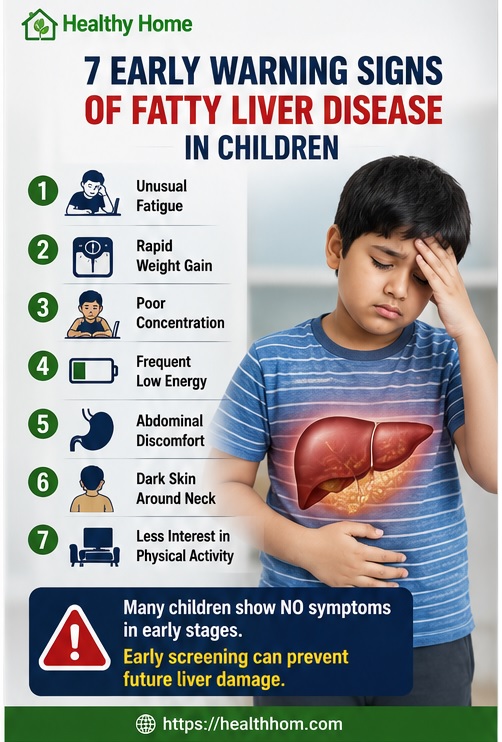
The main challenging part is that most of the children have no symptoms of fatty liver disease. If symptoms appear, it is likely:
- Fatigue
- Reduced energy levels frequently
- Difficulty in concentration of activities. Poor concentration also sometimes influenced by sleep problems, excessive screen exposure, and digital distractions.
- Mild abdominal discomfort
- Pain in the upper right abdomen
- Severe weight gain from previous
- Dark skin around the neck
Parents can observe the changes before diagnosis by Doctors. If a child was previously active and now avoiding in participating in sports activity, feel tired after school hour, stomach discomfort, then the parents should visit to doctor for medical consultation.
A Real-Life Example
During my community health activity at urban area of Jeypore (Koraput), one mother of 12 year old boy worried about her son’s increasing body weight.
She expressed that, her son enjoys online game till late night, drink soft drinks, take chips, not participate in outdoor play with friends. Her husband thought that this is normal weight gain and will lose weight soon.
But, during a routine health screening at respective School by the Doctors and Paramedical of Rashtriya Bal Swasthya Karyakram (RBSK), Govt. of Odisha, they suspect it and suggested for a blood test for liver function. After test, it was found with increased liver enzymes and subsequently Ultrasound confirm that a fatty liver disease.
The good thing is that the RBSK team had suspected early so that the disease was detected early and obeyed the advice of Doctor. After that the parents were serious about the healthy behavior of their son and guide to reduce the sugary drinks, increased the physical activity, regularly taken the balanced diet, limit the screen time. Gradually, his liver health improved within few months.
Such type of cases are increasing day by day in India and this is just one example.
Which Children Are Most at Risk?
Children may have higher risk if they:
- Are overweight or obese
- Spend more than 2 hours daily on screens
- Consume sugary drinks regularly
- Have diabetes or prediabetes
- Have parents with obesity
- Sleep less than recommended for age
Risk Factors Parents Should Not Ignore
The risk increases if a child has:
- Obesity
- Overweight status
- Type 2 diabetes
- Prediabetes
- High cholesterol
- High triglycerides
- Sedentary lifestyle
- Family history of metabolic disease
- Sleep disorders
- Polycystic ovary syndrome (adolescents)
How Doctors Diagnose Fatty Liver Disease
Diagnosis may involves many steps like:
1. Medical History
Doctors ask many past history such as
- Weight history
- Family history
- Eating habits
- Physical activity levels
2. Physical Examination
Assessment suggested by doctors are:
- Body mass index (BMI)
- Waist circumference
- Signs of insulin resistance
3. Blood Tests
Doctors may advice:
- ALT
- AST
- Blood glucose
- Lipid profile
4. Imaging Tests
Ultrasound is commonly used to identify liver fat deposition.
In few cases, advanced imaging techniques may be recommended by physicians.
5. FibroScan
Many hospitals now use FibroScan to assess the liver stiffness and fat deposition.
Author’s Public Health Perspective
From the public health research findings, it is clear that fatty liver disease is not just a simple liver problem. It reflects the lifestyle patterns which affect the entire body.
If one is with fatty liver disease, may be with risk of diabetes, cardiovascular issues, hypertension and metabolic syndrome in future life. So, to prevent this one should change the unhealthy to healthy lifestyle in early stage of life including childhood.
Can Fatty Liver Disease in Children Be Reversed?
As I have visited so many communities for awareness activities in Odisha, most common question arises from parents after diagnosis that “Is it possible to reverse the fatty liver disease in children?”
The answer is yes, if detected early it may be possible. Some chronic diseases can require lifelong medication, but this fatty liver disease in children sometimes may be prevented by lifestyle improvements with obeying the suggestion of doctor.
Doctors say, our liver has an ability to heal itself if excess fat deposition is reduced. But the timing of liver problem matters. If the condition lead to liver inflammation, fibrosis or advanced liver disease, it may difficult to treat. So it is wise to live healthy and early detection with proper intervention matters a lot.
What Happens If Fatty Liver Disease Is Left Untreated?
Many Indian parents think that their child feels normal and the condition is not serious. In fact, fatty liver disease can progress silently. The complications may be:
- Liver inflammation
- Liver fibrosis
- Cirrhosis in adulthood
- Type 2 diabetes
- High blood pressure
- Heart disease
- Metabolic syndrome
- Reduced quality of life
Many studies show that childhood liver health can influence the adult health in later stage of life. So, today’s unhealthy habits can become tomorrow’s chronic diseases.
Treatment of Fatty Liver Disease in Children
At present, there is no single drugs which can cure the fatty liver disease in children. So that most of the liver specialists focus on lifestyle modifications.
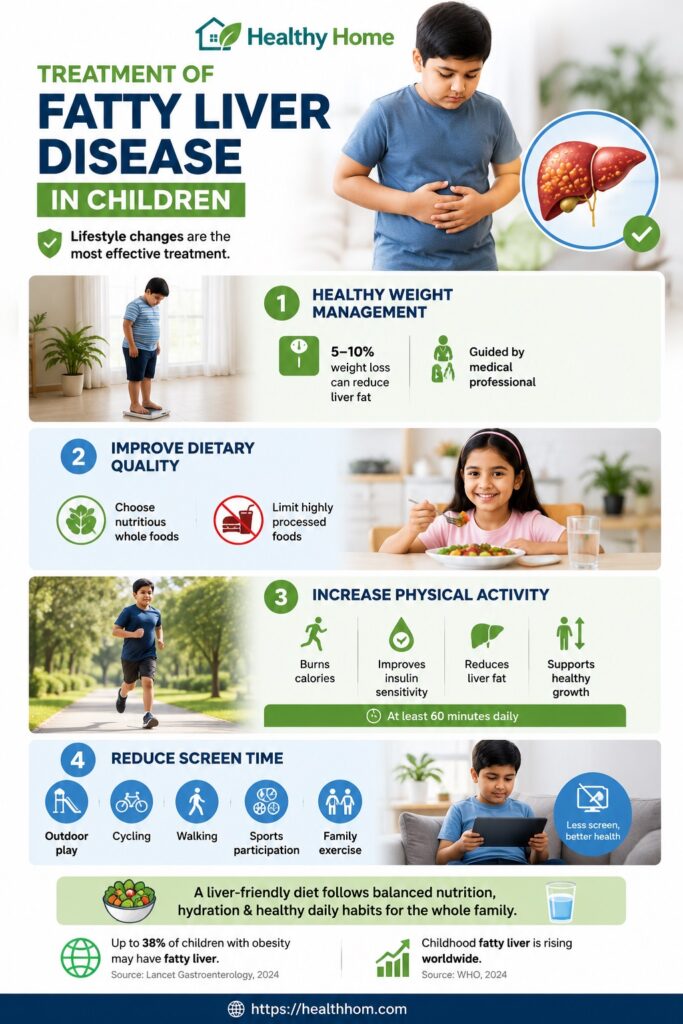
1. Healthy Weight Management
Just moderate level weight lose may also be able to improve the liver health.
If the child is overweight, losing of approximately 5–10% of body weight guided by medical professional may also reduce the liver fat.
The main goal is not the weight loss at once.
Children need proper nutrition for growth and development.
2. Improve Dietary Quality
Parents sometimes focus only on reducing calories. But a better option is to improve the food quality including reducing calories.
So, they may go with nutritious alternatives instead of highly processed foods which can have a meaningful outcome.
3. Increase Physical Activity
Regular movement and physical activities helps to:
- Burn excess calories
- Improve the insulin sensitivity
- Reduce liver fat from body
- Support a healthy growth
Children required to have at least 60 minutes of moderate level physical activity daily.
4. Reduce Screen Time
If the child is acquainted with excessive screen use, may be associated with sedentary behavior.
So that, the families can encourage them for:
- Outdoor play
- Cycling
- Walking
- Sports participation
- Family exercise daily basis
A healthy liver-friendly diet follows the same principles of overall family wellness, focusing the balanced nutrition, hydration, and healthy daily habits.
Foods That Support Liver Health
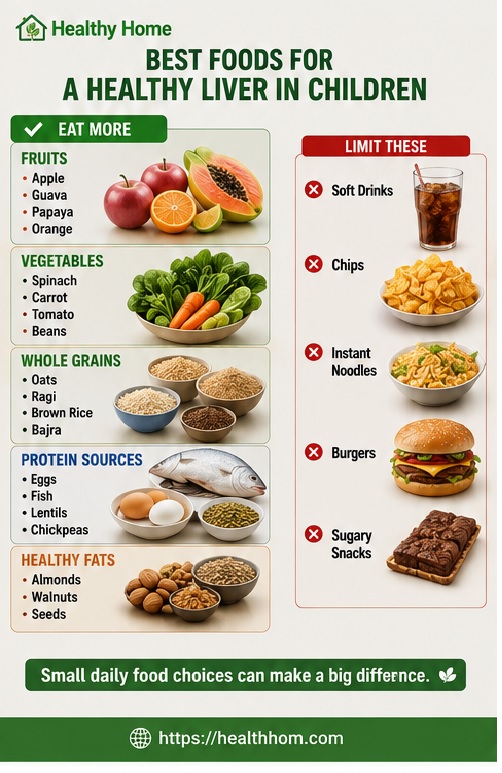
During my regular community health activities in Odisha, many parents ask regarding the daily diet for their children. So, they should focus on balanced diet, healthy & sustainable eating not to restrictive diets. Recommended Foods:
From fruit category:
- Apples
- Guava
- Papaya
- Orange
- Pear
- Berries
Whole fruits are more preferable than fruit juices.
Out of vegetables variety of colors may choose:
- Spinach
- Carrot
- Tomato
- Cabbage
- Cauliflower
- Pumpkin
- Beans
Whole Grains which are locally available in India
- Whole wheat
- Oats
- Brown rice
- Millets
- Ragi
- Jowar
- Bajra
Protein Sources for both Veg and Non-Vegetarian category
- Lentils
- Beans
- Chickpeas
- Soy products
- Eggs
- Fish
- Lean chicken
Healthy Fats
- Nuts
- Seeds
- Groundnuts
- Almonds
- Walnuts
Foods That Should Be Limited
No food should be completely denied forever. But the below mentioned categories may be limited.
High-Sugar Foods
- Soft drinks
- Energy drinks
- Packaged juices
- Candies
- Chocolates with high sugar content
Ultra-Processed Snacks
- Chips
- Instant noodles
- Packaged cakes
- Cream biscuits
- Fried packaged snacks
Fast Foods
- Burgers
- French fries
- Pizza
- Fried chicken
Excess Refined Carbohydrates
- White bread
- Sugary breakfast cereals
- Bakery products
Practical Indian Family Tips
In India, the parents face challenges when they started a new category of foods or change their unhealthy eating to healthy one. Children may not respond initially as their favorite foods have been suddenly removed. So, the parents to change the healthy patterns gradually.
Example From One Family From Semiliguda
During my visit schedule at Semiliguda (Koraput) at Anganwadi Centre, I found that a mother of 13 year old so was diagnosed with fatty liver disease.
The mother was worried about the diagnosis. After the proper counselling by the Health Workers, the mother suddenly not denied to take soft drinks by her son, but she reduced the consumption from daily to weekly and then fortight basis.
Simultaneously, she started to provide the home-made lemon juice, coconut water and fruit juices. Also taken the advice from doctors and performed as suggested. Within a few month, her son’s eating became a healthier routine.
Such types of example shows an important learning that, gradual changes may work better than any strict restriction at once.
Sample One-Day Healthy Meal Plan
Breakfast
- Vegetable upma or poha
- Boiled egg
- Milk
Mid-Morning Snack
- Apple or guava
Lunch
- Chapati
- Dal
- Mixed vegetables
- Salad
Evening Snack
- Roasted chana
- Coconut water
Dinner
- Chapati
- Vegetable curry
- Paneer or fish
Before Bed
- Warm milk if needed
Physical Activities Children Actually Enjoy
Parents think that exercise means a heavy struggle to follow it. But the following may the children enjoy.
- Cricket
- Football
- Badminton
- Cycling
- Swimming
- Dancing
- Skating
- Walking pets
- Family evening walks
Any above activity shouldn’t be forced to a child, if dislike by him or her and best choice to be focused.
Prevention Starts at Home
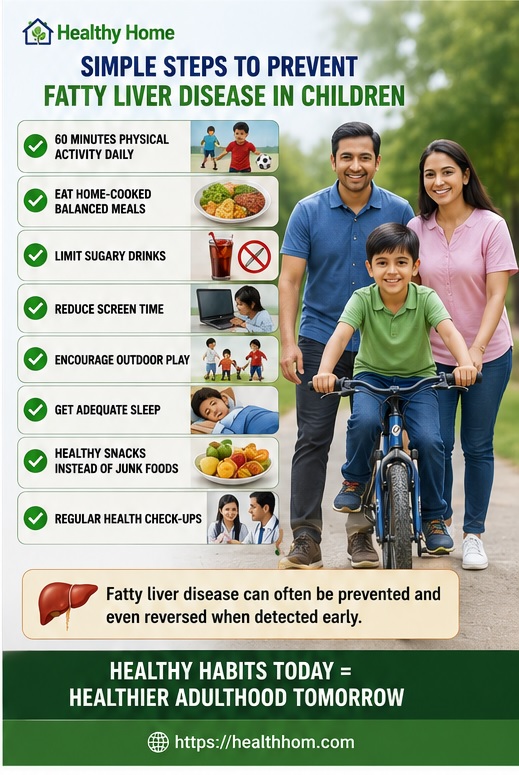
Prevention of fatty liver disease in children does not require any costly supplements or special diets. Simple daily habits matter a lot.
Family Prevention Checklist
- Eat together whenever possible
- Encourage daily physical activity
- Limit sugary drinks
- Promote adequate sleep in time
- Reduce excessive screen time
- Take healthy snacks
- Visit for regular health check-ups
When Should Parents Consult a Doctor?
Consult a pediatrician if your child:
- Gains weight rapidly
- Feels tired most days
- Has dark skin around the neck
- Drinks sugary beverages daily
- Is overweight or obese
- Has a family history of diabetes
The Role of Schools
Schools can also contribute to prevent it. School authorities may create a healthy environments like:
- Availability of nutritious canteen for children even low cost local products may be focused.
- Physical education programs on daily basis even a short period.
- Health education sessions may be conducted every week. In India, there is a School Health and Awareness Programme (SH&WP) is being implemented by Govt. of India through Health and Family Welfare Department and School & Mass Education Department. In this programme every Tuesday has been dedicated as “Health and Wellness Day” where the trained School Health & Wellness Ambassadors (Teachers) are usually orient the students from class-6th and onwards on 11 (eleven) themes of Health and Hygiene. This programme should be focused.
Public health experts focused that only parents can’t be able to decrease the prevalence of fatty liver disease in children. Here, the role of communities, schools, healthy care facilities and policy makers are much important.
Myth vs Fact About Fatty Liver Disease
| Myth | Fact |
|---|---|
| Only adults get fatty liver disease | Children can also develop it |
| A chubby child is always healthy | Excess weight can increase risk |
| Symptoms always appear early | Many children have no symptoms |
| Medicines alone can cure it | Lifestyle changes are essential |
Expert Interpretation of Recent Research
As per recent scientific evidence, the childhood fatty liver disease is associated with metabolic health. The research team focus on:
- Gut microbiome changes
- Insulin resistance
- Sleep quality
- Ultra-processed food consumption
- Sedentary lifestyles
One important finding from recent studies is that sugary drinks contribute to fat deposition as compared to other dietary sources of sugar. So, it is necessary to limit the sweetened drinks by the children and focus on home-made drinks.
Frequently Asked Questions
Is fatty liver disease can be seen commonly in Indian children?
No. But now it is increasingly commonly worldwide, for the children who are overweight or obesity.
Can a child have fatty liver disease without appearance of symptoms?
Yes. Many children have no symptoms during the early stages.
Does fatty liver disease permanently affect the children?
May not be. If detected early, it may sometimes be reversed through proper medical care and healthy lifestyle changes.
Are always medicines required to treat the fatty liver disease in children?
The primary treatment is lifestyle modification, but the doctors may recommend medications as per condition of the disease.
Can children with normal weight develop fatty liver disease?
Yes. Generally obesity increases the risk of disease, but some normal weight children can also develop the condition due to the genetics or metabolic factors.
How frequently one child should be screened for such disease?
Children with obesity, diabetes or any risk factors should discuss about the screening frequencies with their pediatrician.
Author’s View
As I am working in public health in Odisha, I believe that fatty liver disease in children should be more focused as of now receives. Many Indian parents are already aware about the obesity and diabetes, but not fully known about pediatric fatty liver disease.
The important thing is that prevention strategies can work for the disease if implemented consistently. The whole goal is not the perfect in anything, also the children don’t need any expensive diet or more exercise sessions.
The only matter is to create a homely environment and choose them the better healthy choice from locally available sources. Small consistent step such as less sugary drinks, extra outdoor game, one more green vegetable plate may gradually help the healthy outcome.
If the families will change these, then children obviously learn and get success in healthy life.
Concluding Points
Now fatty liver disease in children is not a rare condition in India even in world which is emerging as a growing public health concern.
As the disease may develops silently, the parent should recognize the linked risk factors like obesity, poor dietary habits, low physical activity and excessive screen time.
The key point is the early identification and treatment as soon as possible. Adequate sleep even if study pressure, regular physical activity, healthy balanced eating are the most suitable step to reverse the fatty liver diseease before going to any complication.
So, if you protect your child from disease today, it may likely as investment for adulthood.
Screen Time in Children and Adolescents: Health Effects, WHO Guidelines & Practical Parenting TipsChild Health and Development Guide: Growth Milestones, Immunity and Daily Care
Trusted Reference Sources:
- World Health Organization (WHO) – Obesity and Overweight Factsheet (2025), WHO Obesity and Overweight Factsheet
- Global Epidemiology of NAFLD and NASH – Systematic Review (Hepatology, 2023), Global Epidemiology of NAFLD and NASH (Hepatology 2023)
- Free Full-Text Version (PMC), Global Epidemiology of NAFLD and NASH
- American Academy of Pediatrics (AAP) Childhood Obesity Clinical Practice Guideline (2023), AAP Clinical Practice Guideline for Childhood Obesity
- European Society for Paediatric Gastroenterology, Hepatology and Nutrition (ESPGHAN), ESPGHAN Pediatric Fatty Liver Disease Guidance
- Indian Academy of Pediatrics (IAP), Obesity & Metabolic Health Resources
- Centers for Disease Control and Prevention (CDC) – CDC Childhood Obesity Facts


About the Author – “Bibhu Ranjan Mund”, Master in Public Health (MPH) from IIHMR University, Jaipur (Rajasthan) has more than 18 years of experience in Public Health activities in maternal health, child health, adolescent health, nutrition and community wellness programs under National Health Mission, Health & Family Welfare Department, Odisha. He is the founder of “Healthy Home” and translates the evidence based public health information into a practical source so that families may able to apply in everyday life. All the information are for educational purposes only and not replaces the professional medical advice. ORCID Researcher ID – 0009-0003-0158-4992. Connect LinkedIn – https://www.linkedin.com/in/bibhu-ranjan-mund-b72171358/