Last Updated on March 22, 2026 by Bibhu Ranjan Mund, MPH
Reviewed by Public Health Expert (MPH), with experience in maternal and child health programs.
Medical Disclaimer:
This article is for educational purposes only and does not replace professional medical advice. Always consult a qualified healthcare provider for diagnosis or treatment.
Affiliate Disclosure: Some of the products recommended in this article may contain Amazon affiliate links. If you make a purchase through these links, we may receive a small commission. This supports our platform and helps us continue sharing reliable health information, without affecting your purchase price.
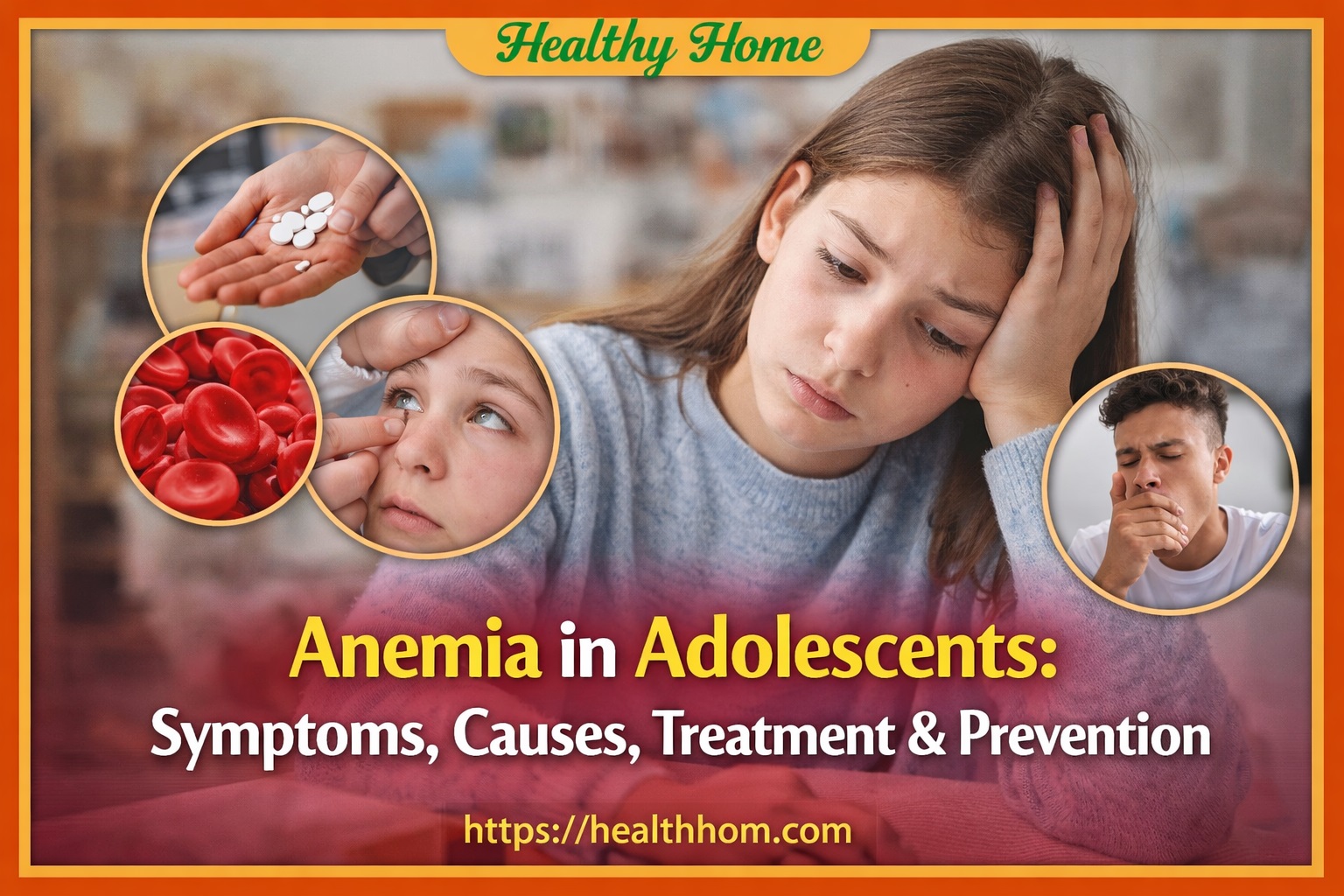
Anemia in Adolescents : Adolescence (10- 19 years) is a very crucial phase of fast growth as far as physical, mental and reproductive powers are concerned. At this age, the body requires proper nutrients, in particular, the body requires enough iron to aid growth. Nevertheless, millions of teenagers around the globe are becoming anaemic, and this is a phenomenon when blood does not contain sufficient healthy haemoglobin to deliver oxygen to the body effectively.
Menstruation, poor diet, infections and socio-economic factors are some of the causes of anemia in adolescent girls. When left untreated it may interfere with growth, brain development, school performance, reproductive health and future maternal outcomes.
According to the global health reports, anemia is a major national health issue among adolescents in all parts of the world especially low and middle-income nations.
Global and India Adolescent Anemia Statistics
| Indicator | Estimate | Source | Publication Year |
|---|---|---|---|
| Global adolescents (10–19 years) | ~1.2 billion | WHO | 2023 |
| Adolescent girls with anemia globally | ~29–30% | WHO Global Health Observatory | 2022 |
| Adolescents in India | ~253 million | UNICEF India | 2023 |
| Anemia among girls (15–19 years) in India | ~59% | NFHS-5 | 2021 |
| Anemia among boys (15–19 years) in India | ~31% | NFHS-5 | 2021 |
What Anemia in Adolescents Is?
Anemia is a condition where:
- There is a reduced number of red blood cells.
Or
- The level of hemoglobin is lower than it is supposed to be with age and gender.
This diminishes the ability of the body to transport oxygen thus leaving adolescents weak, fatigued, and unhealthy.
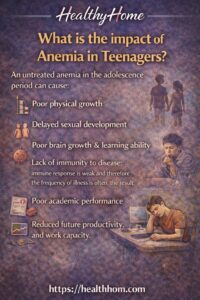
What is the impact of Anemia in Teenagers?
An untreated anemia in the adolescence period can cause:
- Poor physical growth
- Delayed sexual development
- Poor brain growth & learning ability.
- Lack of immunity to disease: immune response is weak and therefore the frequency of illness is often, the result.
- Poor academic performance
- Reduced future productivity and work capacity.
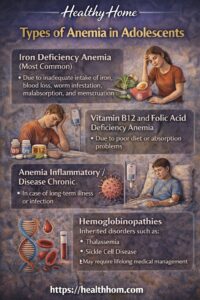
Types of Anemia in adolescents:
1️. Iron Deficiency Anemia (Most Common).
- Due to inadequate consumption of iron, hemorrhage, infestation by worms, malabsorption and menstruation.
2️. Vitamin B12 and Folic Acid Deficiency Anemia.
- As a result of inappropriate diet consumption or absorption problems.
3️. Anemia Inflammatory / Disease Chronic.
- In case of long term illness or infection.
4️. Hemoglobinopathies Inherited disorders such as:
- Thalassemia
- Sickle Cell Disease
They may require lifelong medical management.
Common Types of Anemia in Adolescents
| Type of Anemia | Main Cause | Examples |
|---|---|---|
| Iron deficiency anemia | Low iron intake or blood loss | Poor diet, menstruation |
| Vitamin deficiency anemia | Lack of B12 or folate | Poor dietary diversity |
| Anemia of chronic disease | Long-term illness | infections, inflammatory diseases |
| Genetic anemia | Inherited blood disorders | Thalassemia, sickle cell disease |
Source: WHO Anaemia Fact Sheet – 2023
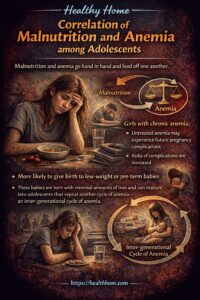
Correlation of Malnutrition and Anemia among Adolescents.
Malnutrition and anemia go hand in hand and feed off one another.
Girls with chronic anemia:
- Untreated anemia may experience future pregnancy complications
- Risks of complications are increased.
- More likely to give low-birth-weight or premature babies are more likely to give birth to low-weight or pre-term babies
These babies are born with minimal amounts of iron and can mature into adolescents that repeat another cycle of anemia- an inter-generational cycle of anemia.
Relationship Between Malnutrition and Anemia
| Nutritional Issue | Possible Relationship with Anemia |
|---|---|
| Iron deficiency | Reduced hemoglobin production |
| Poor dietary diversity | Lack of essential micronutrients |
| Parasitic infections | Blood loss or reduced absorption |
| Food insecurity | Insufficient nutrient intake |
Source: UNICEF Adolescent Nutrition Report – 2022
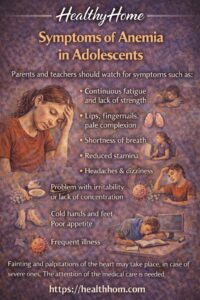
Anemia in Teenagers : Symptoms
Parents and teachers should watch for symptoms such as:
- Continuous fatigue and lack of strength.
- Lips, fingernails, pale complexion.
- Shortness of breath
- Reduced stamina
- Headaches & dizziness
- Problem with irritability or lack of concentration.
- Cold hands and feet Poor appetite
- Frequent illness
- Poor school performance
Fainting and palpitations of the heart may take place, in case of severe ones. The attention of the medical care is needed.
Common Signs and Symptoms of Anemia in Adolescents
| Category | Examples |
|---|---|
| Physical symptoms | Fatigue, pale skin, dizziness |
| Respiratory symptoms | Shortness of breath |
| Cognitive symptoms | Poor concentration |
| General symptoms | Weakness, headaches |
Source: WHO Health Topic: Anaemia – 2023
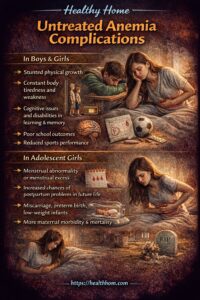
Untreated Anemia Complications.
Unless it is diagnosed early, anemia can lead to the following:
In Boys & Girls
- Stunted physical growth
- Constant body tiredness and weakness.
- Cognitive issues and disabilities in learning and memory.
- Poor school outcomes
- Reduced sports performance
In Adolescent Girls
- Menstrual abnormality or menstrual excess.
- Increased chances of postpartum problems in future life.
- Miscarriage, preterm birth, low-weight infants.
- More maternal morbidity and mortality.
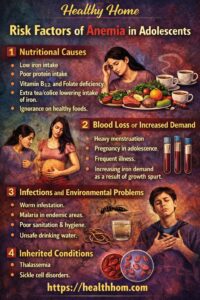
Risk Factors of Anemia in Adolescents.
1️. Nutritional Causes
- Low iron intake
- Poor protein intake
- Vitamin B 12 and Folate deficiency.
- Extra tea/coffee lowering intake of iron.
- Ignorance on healthy foods.
2️. Blood Loss or Increased Demand.
- Heavy menstruation
- Pregnancy in adolescence
- Frequent illness
- Increasing iron demand as a result of growth spurt.
3️. Infections and Environmental Problems.
- Worm infestation
- Malaria in endemic areas
- Poor sanitation & hygiene
- Unsafe drinking water
4️. Inherited Conditions
- Thalassemia
- Sickle cell disorders
Major Risk Factors for Adolescent Anemia
| Risk Category | Examples |
|---|---|
| Nutritional | Low iron intake, poor diet |
| Physiological | Rapid growth, menstruation |
| Environmental | Poor sanitation, infections |
| Socioeconomic | Poverty, food insecurity |
Source: WHO Global Nutrition Report – 2022
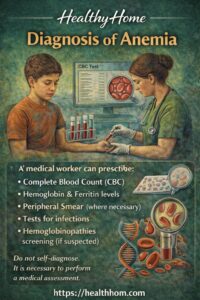
Diagnosis of Anemia
A medical worker can prescribe:
| Test | Purpose |
|---|---|
| Complete Blood Count (CBC) | Measures red blood cells and hemoglobin |
| Serum Ferritin | Indicates iron stores |
| Peripheral smear | Examines blood cell structure |
| Hemoglobin electrophoresis | Detects genetic blood disorders |
Source: WHO Clinical Guidelines on Anaemia – 2020
Do not self-diagnose. It is necessary to perform a medical assessment.
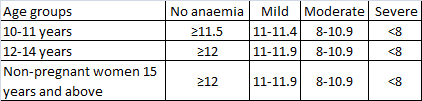
Hemoglobin Levels Used to Classify Anemia (Adolescents)
| Hemoglobin Level | Classification |
|---|---|
| ≥12 g/dL | Normal |
| 11 – 11.9 g/dL | Mild anemia |
| 8 – 10.9 g/dL | Moderate anemia |
| < 8 g/dL | Severe anemia |
Source: WHO Guidelines for Diagnosis of Anaemia – 2020 (Educational reference only)
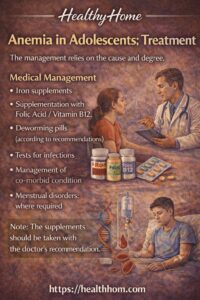
Anemia in Adolescents: Treatment.
The management relies on the cause and degree.
Medical Management:
(Affiliate Disclosure: As an Amazon Associate, I earn from qualifying purchases. This does not affect your price.)
A doctor may recommend:
- Iron supplements – Check on Amazon
- Supplementation with Folic Acid / Vitamin B12 – Check on Amazon
- Deworming pills (according to recommendations) – Check on Amazon
- Management of co-morbid condition.
- Menstrual disorders: where required
Note: The supplements should be taken with the doctor’s recommendation.
Age group wise hemoglobin level to identify anemia in human:
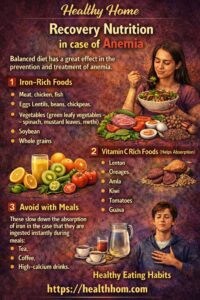
Recovery Nutrition in case of Anemia.
Balanced diet has a great effect in the prevention and treatment of anemia.
Iron-Rich Foods
- Meat, chicken, fish
- Eggs Lentils, beans, chickpeas
- Vegetables (green leafy vegetables – spinach, mustard leaves, methi).
- Soybean
- Whole grains
Vitamin C Rich Foods (Helps Absorption)
- Lemon
- Oranges
- Amla
- Kiwi
- Tomatoes
- Guava
Foods That Help or Reduce Iron Absorption
| Food Type | Effect on Iron Absorption | Examples |
|---|---|---|
| Enhances absorption | Improves iron uptake | Citrus fruits, tomatoes |
| Neutral | Minimal effect | grains, vegetables |
| Reduces absorption | May inhibit iron absorption | tea, coffee |
Source: WHO Nutrition Guidelines – 2023
Avoid with Meals
These slow down the absorption of iron in the case that they are ingested instantly during meals:
- Tea
- Coffee
- High-calcium drinks
Healthy Eating Habits
- Eat regularly
- Chew well
- Drink 8–10 glasses of water daily
- Avoid junk foods
- Eat locally available foods that are nutritious.
Examples of Iron-Rich Foods
| Food Category | Examples |
|---|---|
| Animal sources | Meat, fish, eggs |
| Plant sources | Lentils, beans, chickpeas |
| Green vegetables | Spinach, mustard leaves |
| Fortified foods | Fortified cereals |
Source: FAO Human Nutrition Guidelines – 2021
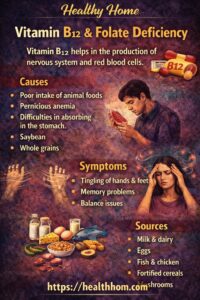
Vitamin B12 & Folate Deficiency
Vitamin B12 helps in the production of nervous system and red blood cells.
Causes
- Poor intake of animal foods
- Pernicious anemia
- Difficulties in absorbing in the stomach.
Symptoms
- Tingling of hands & feet
- Memory problems
- Balance issues
Sources
- Milk & dairy
- Eggs
- Fish & chicken
- Fortified cereals
- Mushrooms
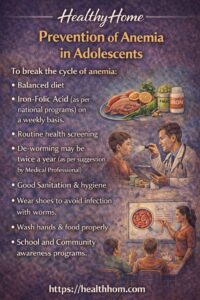
Prevention of Anemia in Adolescents
To break the cycle of anemia:
- Balanced diet
- Iron-Folic Acid (as per national programs) on a weekly basis.
- Routine health screening
- De-worming may be twice a year (as per suggestion by Medical Professional )
- Good sanitation & hygiene
- Wear shoes to avoid infection with worms.
- Wash hands & food properly
- School and Community awareness programs.
Public Health Strategies to Reduce Adolescent Anemia
| Strategy | Description |
|---|---|
| Balanced diet | Adequate intake of iron-rich foods |
| Iron-Folic Acid supplementation | Implemented in many national programs |
| Deworming programs | Reduces parasite-related blood loss |
| Nutrition education | Improves dietary habits |
Source: Ministry of Health & Family Welfare, India – 2023
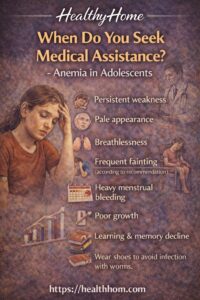
When Do You Seek Medical Assistance?
See a physician in case the adolescent has:
- Persistent weakness
- Pale appearance
- Breathlessness
- Frequent fainting
- Heavy menstrual bleeding
- Poor growth
- Learning & memory decline
Concluding Points :
- Anemia is widespread, though preventable.
- It has an impact on development, brain performance and sex.
- Diagnosis and nutrition are essential at very young age.
- Good health in adolescence results in healthy next generation.
FAQs:
A small video from youtube on this topic may be referred as below:
https://www.youtube.com/embed/tG4b3eU1Nzc?si=gd-591rczQK5JLor
Related Health Articles from Healthy Home
- Iron Supplementation for Adolescents: Benefits, Dosage & Safety
- What is Millet? Nutrition Benefits & Why It’s Good for Health
- How Food Affects Mental Health in Children & Teenagers
- Healthy Lifestyle in Adolescents: Tips, Habits & Health Promotion
- Healthy Lunch Box Ideas for Kids: Nutritious & Easy Recipes
Trusted References and Research Sources:
- WHO Guidelines on Prevention and Treatment of Anaemia in Adolescents (PDF)
- Global Burden of Anaemia Among Adolescents – Research Study (PMC)
- WHO Fact Sheet: Anaemia Overview, Causes & Public Health Impact
- WHO Health Topic: Anaemia – Symptoms, Risks & Management
- Government of India ICDS Guideline: Prevention of Anaemia in Adolescent Girls (PDF)
- Hospital-Based Study on Anaemia in Adolescents – Research PDF
- PubMed Study: Prevalence and Determinants of Anaemia in Adolescents
- PubMed Research: Anaemia, Nutrition Deficiency & Health Outcomes in Teens
- WHO Anaemia Alliance – About Anaemia & Global Response Initiative
For more detail, please visit to my website as mentioned below:


About the Author – “Bibhu Ranjan Mund”, Master in Public Health (MPH) from IIHMR University, Jaipur (Rajasthan- IHMR-U/12/2021 -23/0015) has experience of 18 years in Public Health activities like maternal health, child health, adolescent health, nutrition and community wellness programs. Through “Healthy Home”, he shares evidence-based health and wellness guidance designed to support families in making informed lifestyle decisions. This content is for educational purposes only and does not replace professional medical advice. Connect LinkedIn – https://www.linkedin.com/in/bibhu-ranjan-mund-b72171358/