
Last Updated on August 16, 2026 by Bibhu Ranjan Mund, MPH
Learn 12 natural remedies for cough. What works for dry and wet cough, when to see a doctor and safe remedies for families?
Reviewed by Bibhu Ranjan Mund, MPH (Public Health Expert) with more than 18 years of experience in maternal, infant, child and adolescent health programs. Content is based on evidence-informed guidelines aligned with organizations such as the World Health Organization, UNICEF, Centers for Disease Control and Prevention and National Institutes of Health.
Research Archive:
Mund, B. R. (2026). 12 Natural Remedies for Cough That May Help Adults & Children: An Evidence-Informed Family Health Guide (Version 1.0). Healthy Home (healthhom.com). https://doi.org/10.5281/zenodo.21967282
Medical Disclaimer: This content is for informational and educational purposes only and is not intended as medical advice, diagnosis, or treatment. Always seek the advice of a qualified healthcare professional regarding any medical condition or concerns.
Executive Summary
- In general, most coughs are due to viral infections and can improve within 1–3 weeks.
- Honey, warm fluids, ginger and saltwater gargling have many evidence to get relief from symptoms.
- If you stay hydrated, it helps to loosen mucus and soothe the irritated throat.
- Dry cough and wet cough both need different strategies for management.
- Home remedies are easy to follow and manage the symptoms, but it is not a medical replacement during urgency.
- Children less than 1 year of age should not be given honey due to the risk of infant botulism.
- Ask for medical advice if your cough continues for more than 3 weeks along-with difficulty in breathing, blood coughing or persistent high fever.
What is the best natural remedy for cough?
The best natural remedies for cough include honey (for people over 1 year of age), warm fluids, ginger, steam inhalation, saltwater gargles, adequate hydration and proper rest. These remedies can soothe the throat, reduce irritation and help to loosen mucus. But severe coughs should always be evaluated by a healthcare professional.
Global Burden of Cough and Respiratory Infections
Respiratory infection is a one of the most common reasons that the people visit to doctor throughout the globe. Most coughs are harmless and caused by viral infections, they can disrupt sleep, affect work or school and create anxiety if they linger for weeks.
| Statistic | Latest Data | Source | Publication Year |
|---|---|---|---|
| Acute respiratory infections is among the leading causes of illness worldwide | Millions of cases annually | World Health Organization (WHO) | 2024 |
| The common cold affects adults several times each year and children even more frequently | Adults: 2–3 colds/year; Children: 6–8 colds/year | U.S. Centers for Disease Control and Prevention (CDC) | 2024 |
| Pneumonia is a leading infectious cause of death in children under five globally | Hundreds of thousands of deaths annually | WHO & UNICEF | 2024 |
| Honey is recommended for symptom relief in children older than one year with acute cough | Clinical guideline recommendation | National Institute for Health and Care Excellence (NICE) | 2024 |
Author’s Note: These numbers show that while cough is very common. But, it should not be ignored if visible warning signs like difficulty in breathing, chest pain or continued fever.
Introduction
It was a midnight when my neighbor came and knocked on the door with her six year old son. The son was coughing since last two days. Like many parents, she looked worried as the cough was having a wrong symptom.
A cough may seem like very small problem for us, but it may lead to disturb your sleep, problem in appetite, lack of concentration and like this so many family healthy routines.
In many Indian households, they have a practice to provide a cup of warm turmeric milk, ginger tea or a full spoon of honey soon after appearance of symptoms of cough. These traditional remedies have been suggested by our elders from previous generations. Like this, modern research also supports some of these practices and few have a little scientific evidence.
As a public health professional, I have seen many families have either ignore a continued cough for too long or start antibiotics on their own soon after appearance of symptoms. Both the approaches may be problematic for many people. Most cough is due to viral infections which improve naturally and antibiotics do not work against such viruses. But, if cough persists or have warning signs, need proper medical care.
Many simple, cost effective and home remedies may help to reduce the discomfort, soothe the throat and early recovery. So, awareness and applying these remedies can help to care yourself and others who need.
In this article, we will discuss about the natural cough remedies, understand the difference between dry and wet cough and learn practical tips for everyday family life.
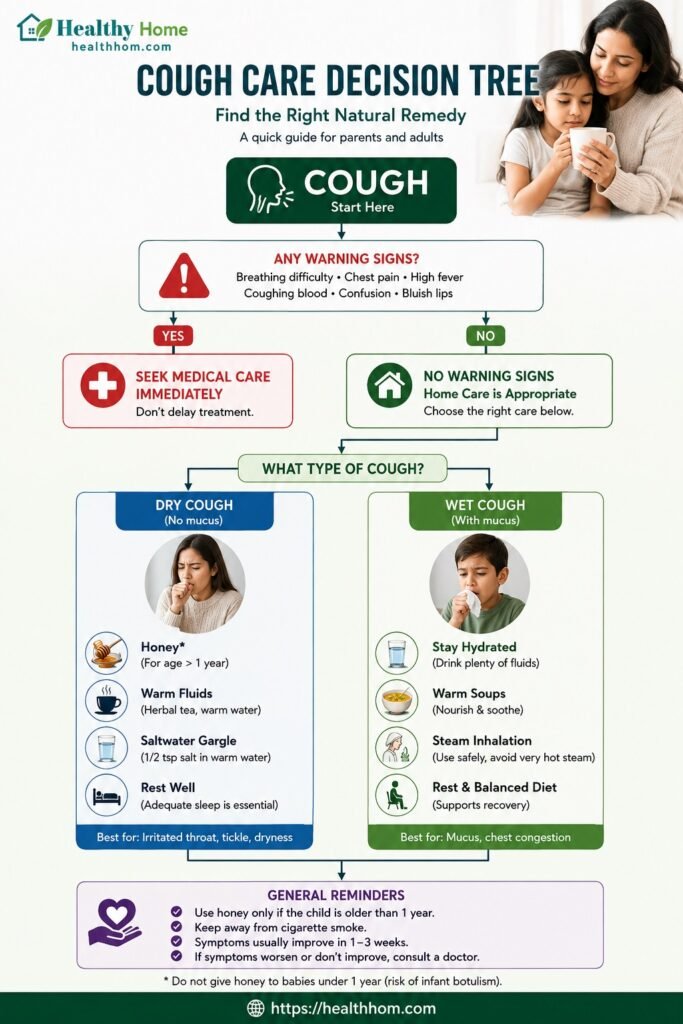
Why Do We Cough?
You can imagine that if you inhale dust while sweeping your home or taking a sip of water that goes down the wrong pipe. So, your body responds immediately with a cough to clear the airway. In this sense, coughing is not your enemy, it is the lungs’ built-in cleaning system.
A cough can develop for many reasons, like:
- Viral infections such as the common cold or influenza
- COVID-19 and other respiratory viruses
- Allergies to dust
- Air pollution and cigarette smoke
- Asthma
- Gastroesophageal reflux disease (acid reflux)
- Post-nasal drip from sinus infections or allergies
- Pneumonia or bronchitis
- Certain medications
Dry Cough vs. Wet Cough: Why It Matters
Many people thought that all coughs are to be treated in same way. So it’s important to know the types of cough which helps you to choose the most appropriate home care.
| Feature | Dry Cough | Wet (Productive) Cough |
|---|---|---|
| Mucus | No | Yes |
| Feeling | Tickling, irritating | Chest congestion |
| Common causes | Viral infection, allergy, asthma, acid reflux | Cold, bronchitis, pneumonia |
| Main goal | Soothe throat and reduce irritation | Help loosen and clear mucus |
| Helpful remedies | Honey, warm drinks, steam | Hydration, steam, warm soups |
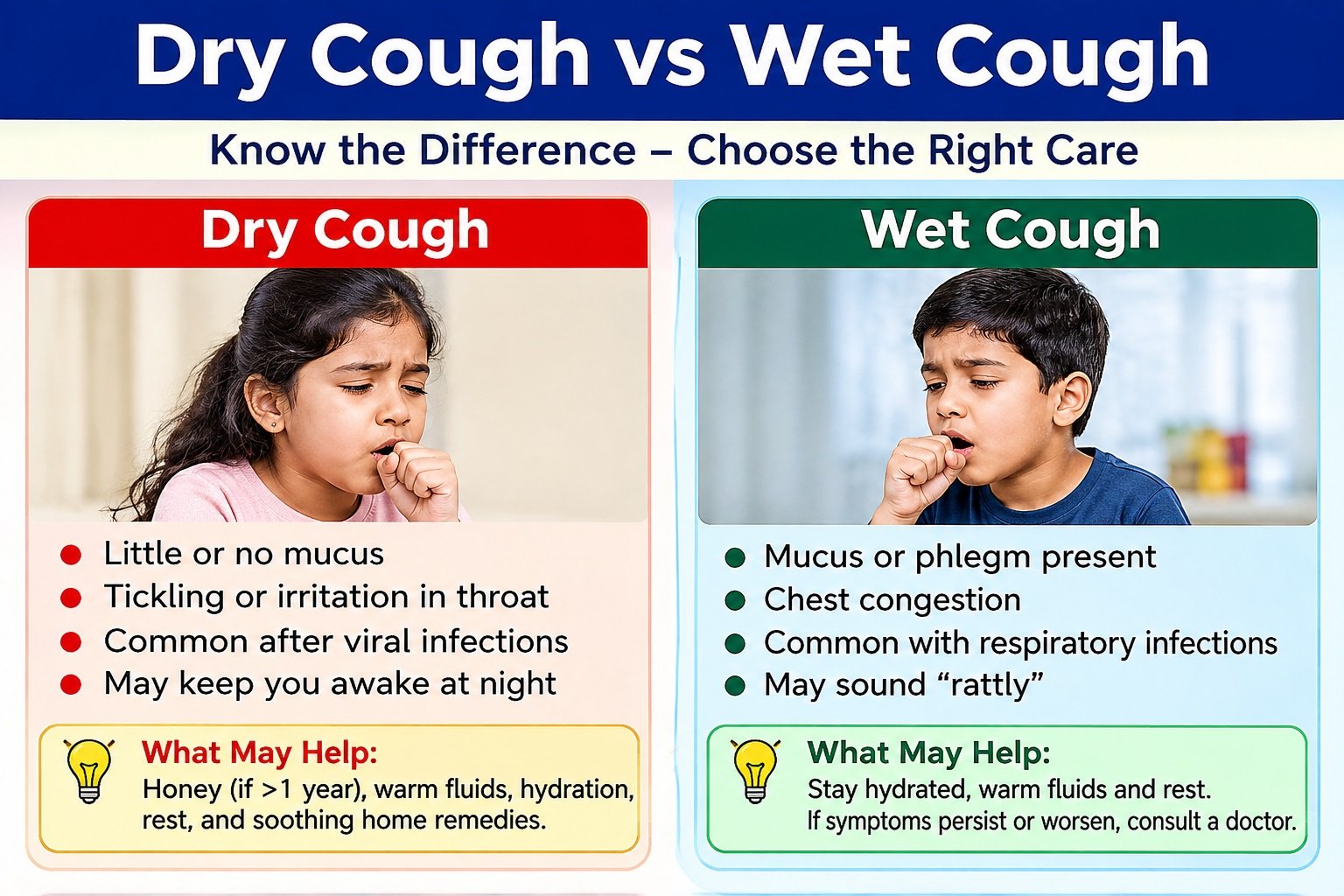
For example, after recovering from a cold, many people continue to have a dry cough for several weeks. This doesn’t mean the infection is still active. The airways may simply remain sensitive for some time.
A productive cough which cause mucus may help your body to clear the secretions. In most cases, the goal is not to suppress it completely but to pass the mucus out.
When Can Natural Remedies Help?
Natural remedies may be beneficial for mild, uncomplicated coughs caused by viral infections, throat irritation, seasonal weather changes or minor allergies. But, they do not cure the underlying illness.
You may benefit from home remedies if:
- Your cough started with a common cold.
- You have mild throat irritation without severe breathing difficulty.
- Your symptoms are gradually improving.
- You do not have a high fever lasting several days.
- You are otherwise healthy.
Few conditions need proper medical evaluation after home remedies, if you experience:
- Difficulty in breathing or shortness of breath
- Chest pain
- Coughing up blood
- High fever which continues
- Cough more than three weeks without any improvement
I have learnt from public health sector in Odisha that, many families think about a quick cure for cough. But, actually early recovery is possible if you take adequate rest, suggested hydration, supportive care and patience. Nature has the ability to heal, but it also takes time.
Natural Remedies for Cough
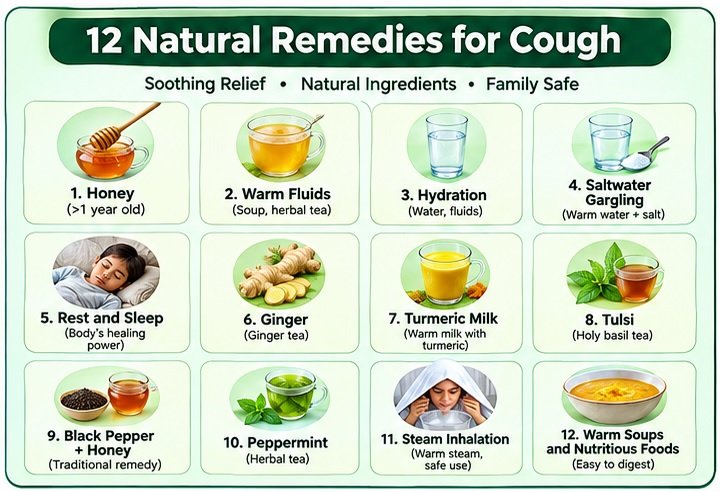
5 Better Supported Natural Remedies for Cough
1. Honey: A Remedy That Science Supports
Honey is the best home remedy which is both traditional and research tested.
You can go to your childhood period, that your mother or grandmothers who had provided you a full spoon honey before bedtime during your coughing. It may feel like a family ritual. But, today research also suggests this advice.
Honey forms a sooth coating over the throat so as to reduce the irritation and help to calm the cough. It also has a natural antimicrobial and antioxidant properties. Its biggest benefit is to relief the symptom not cure the infection.
Several clinical studies have shown that honey can limit the frequency and severity of nighttime coughing in children for more than one year of age and improve quality sleep for both children and their parents. Due to this evidence, many countries in their healthcare guidelines have recommend honey as a first option for uncomplicated cough.
Practical Tip
Honey can be taken 1–2 teaspoons 30 minutes before bedtime. Some people also used to mix it with warm water or like to add fresh lemon over it.
Indian Family Tip
In many Indian families, honey is mixed with a small amount of ginger juice, but research supports honey. Many families also combine these so as to get comfort during seasonal colds.
Important Safety Note
Honey should not be given to the infants (who are less than one year of age) due to the risk of infant botulism which is a rare but serious illness.

2. Warm Fluids: Comfort in Every Sip
It is one of the simplest remedies which are not thought by many people.
When you have a cough, if you stay hydrated it will help to keep the throat moist. Also warm drinks can create a soothing sensation which may reduces irritation temporarily.
You may think about how your throat feels after slowly sipping warm lemon water or any homemade vegetable soup. You may feel immediate relief for a limited time.
Warm fluids may be:
- Warm water
- Herbal tea
- Ginger tea
- Clear vegetable soup
- Chicken soup
- Thin dal soup
- Warm lemon water
Real Life Example
An office worker need not to pay extra money to purchase costly cough syrups for entire day. So he may carry a bottle of warm water or herbal tea which helps to reduce throat irritation during long meetings or during travelling.
Public Health Observation
Many people limit their water intake when they feel sick as they have no interest in drinking. Mild dehydration can make throat irritation worse and mucus thicker, making coughing even more uncomfortable.

3. Stay Hydrated: Your Body Needs Water to Heal
Hydration is one of the most effective for cough remedy which are generally forgotten by many.
When you are dehydrated, mucus becomes thicker and harder to clear. Drinking enough fluids keeps mucus thin and you feel comfort. Maintaining regular fluid intake is an important part of everyday family health; our hydration routine for different climates and activity levels explains practical ways to stay hydrated throughout the day.
What Counts?
- Water
- Coconut water
- Lemon water
- Herbal tea
- Soups
- Oral rehydration solutions (if needed)
Author’s Observation
During health awareness sessions at different communities in Odisha, I have tried to inform the families that cough can be improved simply by drinking enough water throughout the day.

4. Saltwater Gargling: One of the Simplest Remedies
It is the oldest remedies and the best method by Indians. If you do gargling with warm saltwater, it can reduce throat irritation and help to reduce mucus from the back of the throat.
How to Prepare
Mix:
- Half a teaspoon of salt
- One glass of warm water
Gargle for about 30 seconds and repeat several times a day if needed.
Why It Works
Saltwater helps to reduce swelling in throat tissues and washes away irritants.
Family Tip
Many parents suggest their older children to gargle after returning from school during the winter season during a common sore throat.

5. Rest and Healthy Food: The Remedy We May Ignore
In the modern busy society, many people continue their as usual work even if they fell uneasy. Like parents manage their household activities, professionals attend their regular meetings and students prepare for their exams etc. without any rest of body.
A cough is a sign that your immune system is working hard. Adequate sleep and rest allow the body to focus its energy on healing.
Practical Suggestions
- For an adult, take sleep for at-least 7–9 hours.
- Children may need more sleep hours during illness.
- Reduce the physical activity until you recover.
- Avoid smoking.
Public Health Observation
One common mistake I have seen during my years of working under public health that people attend their regular work schedule just after recover from viral illness. The fever may have controlled, but the body is still recovering. So, extra rest may allows the speedy recovery period.
Include More Food:
- Fresh fruits rich in vitamin C (oranges, guava, amla, kiwi)
- Colourful vegetables
- Protein-rich foods such as eggs, fish, pulses, soy products, paneer and lean chicken
- Yogurt (if it suits you)
- Nuts and seeds
- Whole grains
Families looking for affordable ways to include protein in everyday Indian meals can also have high-protein Indian diet plan for families.
Foods That May Irritate Some People
Some individuals find temporary relief by limiting:
- Very spicy foods
- Deep fried foods
- Excess sugary drinks
- Alcohol
- Smoking and tobacco products
Author’s Opinion :Variety of nutritious foods can be taken instead of depending only costly superfood.
For families who want to improve everyday meals rather than rely on individual foods, healthy nutrition guide for families covers balanced eating, gut health and practical meal planning.

Traditional Remedies With Limited Evidence
6. Ginger: More Than Just a Kitchen Spice
Ginger is used in Indian kitchens from generations as a traditional spice. Ayurveda and modern research also suggests that it has compounds with anti-inflammatory properties.
Ginger tea may provide warmth and comfort when the throat feels irritated, but the evidence of ginger can treats acute cough is limited. Fresh ginger also adds warmth to drinks, so that it can be a best choice during winter months.
Easy Home Preparation
- Slice fresh ginger.
- Boil it in water for 5–10 minutes.
- Add a little honey after cooling slightly.
- Drink warm.
Author’s Observation
During community health programs, I have observed that many Indian families prepare ginger tea if they see the first sign of a cold. As there is no single remedy which prevent illness, it is important to stay hydrated and drink warm ginger tea so as to get comfort.
Use With Caution
People who are taking blood thinning medicines or those with certain bleeding disorders should consult their doctor before consuming large amounts of ginger regularly.

7. Turmeric Milk: Tradition Meets Practical Comfort
If you ask to any Indian family, what is their first drink during cold, the answer is “Haldi Doodh” i.e. “Turmeric Milk“.
Turmeric contains curcumin which is a natural compound and under study for anti-inflammatory and antioxidant properties. Curcumin is not proved for the best treatment method for cough, but warm turmeric milk can provide comfort, hydration and a soothing bedtime routine.
Simple Recipe
- One cup of warm milk
- Half a teaspoon of turmeric powder
- A pinch of black pepper to improve curcumin absorption
You can drink it before bedtime if suits your digestion process.
Real Parenting Experience
Many parents say that turmeric milk does not totally cure the cough, but it helps the children to get relax before having sleep. Better sleep i.e. early recovery.
Expert Interpretation
The benefit may be a combination of warm fluid, relaxation, hydration and turmeric’s anti-inflammatory properties not the turmeric only.

8. Tulsi (Holy Basil): A Household Favorite
Tulsi is planted in many Indian families homes both as a sacred plant and for its traditional household remedy.
Tulsi leaves have compounds which are studied for their antioxidant and anti-inflammatory properties. Many families take tulsi tea during seasonal illnesses. But strong evidence for cough relief is till now limited.
Easy Tulsi Tea
Boil:
- Fresh tulsi leaves
- Water
- Small piece of ginger
Author’s Perspective
Traditional remedies like tulsi may provide temporary relief if taken with proper hydration and rest.

9. Traditional Remedy: Honey with Black Pepper, What We Know
This remedy is commonly suggested by grandparents in India.
This is a very simple idea that:
- Honey soothes the throat.
- Black pepper may stimulate saliva and improve the sensation of throat comfort.
Till now scientific evidence for black pepper is not accepted, but the combination is very much popular since long.
Preparation
Mix:
- One teaspoon honey
- Small quantity of fresh black pepper with grinding
Take once or twice daily as per feasibility.
Who Should Avoid It?
If the people are suffering from severe acidity, mouth ulcers or sensitive stomachs, they should not use it.

A Few Remedies That Sound Natural, but Aren’t Always Safe
During the cough season arrives, social media advertises about few “miracle cures.” But as a public health personnel, I believe it’s important to stay away from misinformation.
You should avoid these common mistakes:
- Taking antibiotics without the prescription of doctor.
- Infant up-to one year shouldn’t be given honey.
- Drinking too hot liquids which burn the throat.
- Using always more herbal supplements without knowing its possible side effects.
- Should not ignore a cough which is continuing from several weeks or associated with breathlessness.
Natural does not always mean that it is harmless. Herbal products can also interact with medicines or may cause allergic reactions.
Key Takeaway
Above first eight remedies i.e. honey, warm fluids, ginger, turmeric milk, steam inhalation, saltwater gargles, tulsi and black pepper with honey are not so costly, these are widely available and also easy to consume in daily life. They provide comfort, support in hydration and help to heal your body naturally.
But, home remedy can’t alternative for appropriate medical care for serious infections or chronic lung diseases.
10. Peppermint: Cooling Relief for an Irritated Throat
Throat feels cooler and breath becomes easier if you use peppermint lozenge. This refreshing is due to menthol which is a natural compound found in peppermint.
Menthol doesn’t cure a cough, but it may be used for temporary soothing of throat irritation and easier breathing.
How to Use Peppermint Naturally
- Drink warm peppermint tea.
- Inhale peppermint steam only if suggested by doctor.
- Use sugar free peppermint lozenges if suits for your age.
A Practical Tip
If you’re speaking for long hours like a teacher, public speaker or customer service professional may take warm peppermint tea between sessions which may help to reduce throat irritation.
Use With Caution
Peppermint may worsen heartburn or reflux symptoms in some people. If you notice heartburn after taking peppermint tea, you should avoid it.

Comfort Measures
11. Steam Inhalation: Helpful, But Use It Safely
Steam inhalation has been used since long to get relief from nasal congestion and breathing feel easier during colds. The warm moisture may help to loose the mucus and reduce throat irritation temporarily.
But, you should take it as safety measure like:
Avoid Hot Steam Burns
In India every year, hospitals are treating the children and adults for burns caused by bowls of boiling water accidentally tipping over.
So, instead:
- You should avoid bowls of boiling water for steam inhalation, particularly for children.
- You can use a warm shower or humidified which may provide both comfort and safety from the risk of burn.
When It Helps Most
Steam is particularly useful when cough is associated with:
- Blocked nose
- Thick mucus
- Sinus congestion
It is less effective for dry cough caused by allergies or acid reflux.

12. Warm Soups: Nourishment and Comfort in One Bowl
When you are ill, you may not feel good to eat a meal. So, in this situation, warm soups are the best choice because as they can provide hydration, nutrition and comfort.
Options are:
- Vegetable soup
- Tomato soup
- Chicken soup
- Lentil (dal) soup
- Clear broth
Why They Help
Warm soups:
- Keep you hydrated.
- Provide vitamins and minerals.
- Help loosen mucus.
- Are easy to swallow when your throat is sore.
Indian Family Context
In many Indian homes, light moong dal soup, vegetable broth or homemade chicken soup is prepared for family members so as to recover from illness.
These choices can also fit into a broader balanced eating pattern like healthy nutrition guide for families have the practical ideas for nutritious everyday meals.

Natural Remedies for Children: What Parents Should Know
Parents may worry when their children suffer from cough and it’s a natural to everyone. But, every cough may not require medicine.
For children with a simple viral infection:
- Provide plenty of fluids.
- Give warm soups or age appropriate warm drinks.
- Use honey only if the child is older than one year.
- Keep the child away from cigarette smoke.
- Ensure adequate sleep.
Cough is only one part of children’s overall health. For practical guidance on nutrition, immunity, sleep, growth and daily care, see our complete child health and development guide.
A Parenting Example
During my community health awareness program at Jeypore (Odisha), a mother informed that her five year old daughter was having cough after a cold. She provided medicines as prescribed by doctor and also focused on warm fluids, homemade soup and honey. Within a week, she felt good. Recovery may take some time, but if parents provide supportive care, it is also important as medicines.
What parents should NOT do
- Don’t give honey under 1 year.
- Don’t give adult cough medicines to children.
- Don’t use antibiotics without medical advice.
- Don’t use boiling water steam inhalation around children.
- Don’t give multiple herbal preparations simultaneously.
- Seek medical care for breathing difficulty or other danger signs.

Special Considerations for Older Adults
Older adults may take longer to recover from respiratory infections because of age related changes in immunity or chronic health conditions.
Seek medical advice early if an older adult has:
- High fever
- Breathlessness
- Chest pain
- Confusion
- Persistent cough
- Poor appetite or dehydration
Simple measures such as hydration, nutritious meals and adequate rest are essential, but they should not delay medical evaluation if needed.
When Home Remedies Are Not Enough
Natural remedies are supposed to provide comfort & relax, but not to replace any medical care.
You should consult doctor if you have:
- A cough lasting more than two to three weeks
- Difficulty in breathing or wheezing
- High fever that does not improve
- Chest pain
- Coughing up blood
- Unexplained weight loss
- Severe weakness
- A persistent cough in someone with asthma, COPD or heart disease
Children, pregnant women, older adults and people with weakened immune systems should seek medical advice sooner if symptoms are concerning.
Public Health Perspective: In my field experience, many families either go for antibiotics for every cough or wait for longer period to start the medicines. But, a balanced approach may works like use of home care for mild symptoms and to recognize the warning signs for proper medicine.
Common Myths About Natural Remedies for Cough
There is no shortage of advice by neighbors when someone develops a cough. But, not all of it is accurate. Following are few myths and facts.
Myth 1: Every cough needs antibiotics.
Fact: Most coughs are caused by viral infections such as the common cold or influenza. Antibiotics do not work against viruses and should only be taken when prescribed for a bacterial infection.
Public Health Observation: Antibiotic misuse is a growing global concern because it contributes to antimicrobial resistance, so that it is hard to treat infection in the future.
Myth 2: Green or yellow mucus always means you need antibiotics.
Fact: The colour of mucus only cannot determine whether an infection is viral or bacterial. Many viral infections also produce coloured mucus.
Myth 3: The stronger the cough syrup, the faster the recovery.
Fact: Cough syrups may provide temporary symptom of relief, but they do not cure the underlying infection. Rest, hydration and time are also important to cure.
Myth 4: Natural remedies work instantly.
Fact: Most home remedies can reduce discomfort and can’t eliminate a cough overnight. Recovery takes time and improvement is gradual.
Myth 5: If the fever is cured, the cough should disappear immediately.
Fact: After a viral infection, the airways may remain sensitive for several weeks. This is known as a post viral cough and it improves on its own.
Myth 6: More herbal remedies mean faster healing.
Fact: If you take multiple herbal products without proper guidance, it may increase the risk of side effects or interactions with medicines. More is not always better.
Cough Red Flags:
- Difficulty in breathing or fast breathing
- Blue/grey lips or face
- Chest pain
- Coughing up blood
- High fever
- Severe weakness or confusion
- Dehydration
- Unexplained weight loss
- Symptoms getting worse rather than better
- Persistent cough in someone with asthma, COPD or heart disease
Frequently Asked Questions (FAQs)
What is the best natural remedy for cough?
Honey (for people over one year of age), warm fluids, ginger, steam inhalation, saltwater gargles and adequate hydration are the most natural remedies to get relief from cough symptoms.
Does honey really help with a cough?
Yes. Honey can reduce the night time cough which has been suggested by many studies also. It also improve the sleep in adults and children (more than 01 year).
Can I give honey to my baby?
No. Honey should not be given to infants less than one year due to the risk of infant botulism.
Is turmeric milk effective for cough?
Turmeric milk may soothe the throat and provide comfort, but it should be thought as supportive care not as a pure cure.
Which is better for cough, hot or cold drinks?
Warm drinks are more soothing for sore throats and may help to loosen mucus.
Is ginger scientifically proven?
Research suggests ginger has anti-inflammatory properties and may help to relieve throat irritation, but more studies are needed.
How long does a normal cough last?
Most coughs caused by viral infections improve within 1–3 weeks, although some post viral coughs may last longer.
Should I stop coughing completely?
Not always. A productive (wet) cough helps to remove mucus from the lungs, so completely suppressing it may not be helpful.
Conclusion
A cough can disturb your sleep, may affect your working time, worry your family. But, in most cases, it is your body’s natural way of protecting and clearing the airways.
Throughout my years of service in public health, I have seen two common reactions: some people panic and immediately take antibiotics and others ignore the symptoms with a hope it will disappear on its own. But, the healthiest approach lies in between two reactions.
Simple measures such as honey (for those over one year of age), warm fluids, ginger, saltwater gargles, steam used safely, proper hydration, nutritious meals and adequate rest can provide relief for many common coughs. These remedies are affordable, easy to follow. Most important is to recognize the waring signs of cough which requires proper medication.
Patience, good nutrition, plenty of fluids and timely medical care can be the easy solution for better relief.
Key References
- World Health Organization (WHO): Pneumonia – Fact Sheet
- A comprehensive overview of pneumonia, including causes, prevention, treatment, and global burden in children. World Health Organization (WHO): Guideline on Management of Pneumonia and Diarrhoea in Children up to 10 Years of Age (2024)
- Updated WHO guideline with evidence-based recommendations for diagnosing and managing childhood pneumonia. U.S. Centers for Disease Control and Prevention (CDC): Manage Common Cold
- Guidance on managing common cold symptoms, appropriate antibiotic use, honey for cough relief, and when to seek medical care. National Institute for Health and Care Excellence (NICE): Cough (Acute) – Antimicrobial Prescribing Guideline
- Evidence-based recommendations on the assessment and treatment of acute cough, including when antibiotics are or are not indicated. American Academy of Pediatrics (AAP): HealthyChildren.org – Honey for Cough and Cold Symptoms
- Parent-focused guidance explaining why honey may help relieve cough in children older than one year and why it should never be given to infants. Cochrane Library: Evidence on Honey and Other Treatments for Acute Cough
- Systematic reviews evaluating the effectiveness and safety of honey and other interventions for acute cough in children and adults. National Center for Complementary and Integrative Health (NCCIH): Herbs at a Glance
- Evidence summaries on herbal products such as ginger and peppermint, including their uses, benefits, and safety considerations. Indian Council of Medical Research (ICMR): Dietary Guidelines for Indians
- National dietary recommendations that support healthy eating patterns for immunity, recovery, and overall health. Ministry of Health & Family Welfare (MoHFW), Government of India
- Official public health advisories, respiratory infection guidance, and information on antimicrobial stewardship and infectious disease prevention.


About the Author – “Bibhu Ranjan Mund”, Master in Public Health (MPH) from IIHMR University, Jaipur (Rajasthan) has more than 18 years of experience in Public Health activities in maternal health, child health, adolescent health, nutrition and community wellness programs under National Health Mission, Health & Family Welfare Department, Odisha. He is the founder of “Healthy Home” and translates the evidence based public health information into a practical source so that families may able to apply in everyday life. All the information are for educational purposes only and not replaces the professional medical advice. ORCID Researcher ID – 0009-0003-0158-4992. Connect LinkedIn – https://www.linkedin.com/in/bibhu-ranjan-mund-b72171358/