Last Updated on March 22, 2026 by Bibhu Ranjan Mund, MPH
Mental Well-being in Adolescents: Learn how to nurture adolescent mental well-being by understanding causes, risk factors, warning signs and practical prevention tips.
Reviewed by Bibhu Ranjan Mund, MPH (Public Health Expert) with experience in maternal, infant, child, and adolescent health programs. Content is based on evidence-informed guidelines aligned with organizations such as the World Health Organization, UNICEF, Centers for Disease Control and Prevention, and National Institutes of Health.
Last reviewed on: 22 March 2026.
Medical Disclaimer: This content is for informational and educational purposes only and is not intended as medical advice, diagnosis, or treatment. Always seek the advice of a qualified healthcare professional regarding any medical condition or concerns.
Affiliate Disclosure: This article contains affiliate links. If you purchase through these links, we may earn a small commission at no extra cost to you.
Introduction: The Importance of Mental Well-being in Adolescents
Adolescence is a very important stage of life. It is the period during which children are transitioning into adulthood and a lot of physical, emotional, and social changes take place in children. In the modern rapidly changing and competitive environment, teenagers are under pressure of the studies and exams, social networks, friendship, family demands and career-related concerns.
Quick Fact Table:
| Key Fact | Insight |
|---|---|
| Adolescence is a critical developmental stage | Emotional and social skills develop rapidly |
| Mental health problems often begin early | Early support improves outcomes |
| Schools and families play key roles | Supportive environments promote wellbeing |
Source: WHO Promoting Adolescent Well-Being Report 2022
Positive mental health also assists teenagers in knowing their emotions, dealing with stress, developing confidence and healthy relationships. Mental stress would influence their schooling, behaviour and development at large without proper support. Schools, communities and families should collaborate to promote mental health among adolescents and provide them with a secure environment in which they can be heard and supported.
Global Statistics on Adolescent Mental Health
| Indicator | Global Estimate | Source |
|---|---|---|
| Adolescents worldwide (10–19 years) | ~1.2 billion | UNICEF |
| Adolescents experiencing mental health conditions | ~1 in 7 adolescents | WHO |
| Leading causes of illness among adolescents | Anxiety and depression | WHO |
| Suicide among adolescents | One of the leading causes of death among youth | WHO |
Source: WHO Adolescent Mental Health Fact Sheet 2023, UNICEF Adolescent Well-Being Report 2022
What Is Mental Well-being among Adolescents?
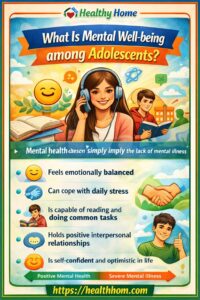
Mental health does not simply imply the lack of mental illness. It is a condition when an adolescent:
- Feels emotionally balanced
- Can cope with daily stress
- Is capable of reading and doing common tasks.
- Holds positive interpersonal relationships.
- Is self-confident and optimistic in life.
Mental health is a continuum which can be described as positive mental health to severe mental illness.
Mental Well-being vs Mental Health Disorder
| Feature | Positive Mental Well-being | Mental Health Disorder |
|---|---|---|
| Emotional state | Stable and balanced emotions | Persistent distress or mood changes |
| Daily functioning | Able to manage school and relationships | Difficulty performing daily activities |
| Stress response | Can cope with normal stress | Stress may become overwhelming |
| Social interaction | Maintains friendships | Withdrawal from others |
Source: WHO Adolescent Well-Being Framework 2022
Why Adolescent Mental Health Have To Be Prioritised?
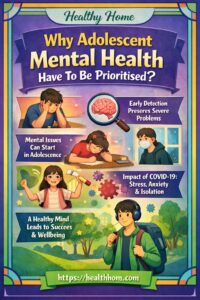
- Adolescence is a period when mental issues can start.
- This is because early detection can help avoid severe health conditions in the future.
- Mental health problems, which are left untreated, may influence learning, working and relationships.
- The COVID-19 pandemic enhanced stress, anxiety and isolation in teenagers.
- Mental health contributes to the development of adolescents.
An adolescent with a healthy mind can cope with stress and be productive and a contributor to the society.
Indications of a Good Mental State
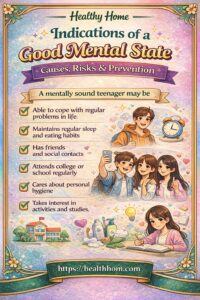
A mentally sound teenager may be
- Able to cope with regular problems in life.
- Maintains regular sleep and eating habits
- Has friends and social contacts.
- Attends college or school regularly.
- Cares about personal hygiene.
- Takes interest in activities and studies.
Indicators of Good Mental Well-being
| Indicator | Description |
|---|---|
| Emotional stability | Ability to manage emotions |
| Healthy relationships | Positive connections with peers and family |
| Regular daily routine | Balanced sleep, study and recreation |
| Self-confidence | Positive self-image and motivation |
Source: UNICEF School Mental Health Framework 2021
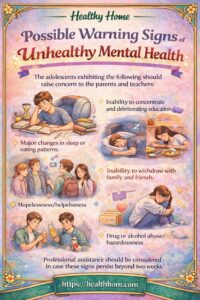
Possible Warning Signs of Unhealthy Mental Health
The adolescents exhibiting the following should raise concern to the parents and teachers:
- Inability to concentrate and deteriorating education quality.
- Major changes in sleep or eating patterns
- Inability to withdraw with family and friends.
- Hopelessness/ helplessness.
- Many-day levels of irritability, anger or sadness.
- Drug or alcohol abuse/hazardousness.
- Self-harming behaviour.
Professional assistance should be considered in case these signs persist beyond two weeks.
Warning Signs of Mental Health Challenges
| Category | Possible Indicators |
|---|---|
| Emotional | Persistent sadness or irritability |
| Behavioral | Withdrawal from social activities |
| Academic | Declining school performance |
| Physical | Changes in sleep or appetite |
Source: WHO Helping Adolescents Thrive Toolkit 2021
Teenagers and Common Mental Health Problems
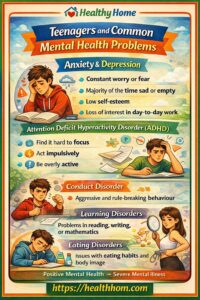
Anxiety and Depression
The most prevalent mental disorders among teenagers are anxiety and depression. These may cause:
- Constant worry or fear
- Majority of the time sad or empty.
- Low self-esteem
- Loss of interest in day-to-day work.
Attention Deficit Hyperactivity Disorder (ADHD).
ADHD is a disorder that influences the behaviour, activity and attention. Adolescents with ADHD may:
- Find it hard to focus
- Act impulsively
- Be overly active
Symptoms can be controlled with the help of adequate support and counselling, and even medication.
Conduct Disorder
It is a condition that is associated with repetitive aggressive or rule-breaking behaviour. Teenagers can not follow the rules and respect the rights of others.
Learning Disorders
Learning disorders are the problems of reading, writing or mathematics in spite of the normal intelligence. Early intervention and academic assistance are necessary.
Eating Disorders
Such disorders as anorexia, bulimia and binge-eating disorder influence not only physical but also mental health. These demand medical and psychological assistance.
The abuse of alcohol, tobacco, or drugs may aggravate mental health and be more likely to engage in risky behaviour among adolescents.
Common Mental Health Conditions in Adolescents
| Mental Health Condition | General Description |
|---|---|
| Anxiety disorders | Persistent worry or fear |
| Depression | Low mood and loss of interest |
| ADHD | Difficulty with attention and impulse control |
| Eating disorders | Disturbances in eating behaviors |
| Substance misuse | Harmful use of alcohol or drugs |
Source: WHO Mental Health and Adolescents Report 2022
Severe Mental Health Disorders among the adolescents
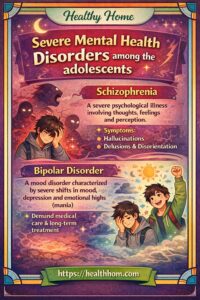
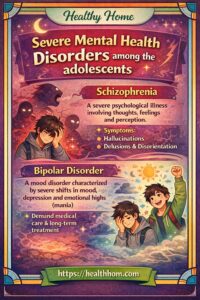
Late adolescence may show some severe mental illnesses which include:
Schizophrenia
A severe psychological illness involving thoughts, feelings and perception. The symptoms can be hallucinations, delusions and disorientation.
Bipolar Disorder
A mood disorder characterized by severe shifts in mood, depression and emotional highs (mania). These disorders demand medical care and treatment over a long period.
Suicidal and Self-Harming Behaviour in Adolescents.
Deep emotional distress is manifested through self-harm and suicidal thoughts and must not be disregarded. Warning Signs Include:
- Discussing worthlessness and hopelessness.
- Withdrawal from loved ones
- Sudden mood changes
- Injuries or scars which have no explanations.
- Covering the wounds with long sleeves.
Important Note:
Having an open discussion on mental health or suicide is not a risk factor. Rather, it makes teenagers feel their support and promotes help-seeking.
In case you or your acquaintance require an urgent assistance (India):
- Kiran Mental Health Helpline: 1800-599-0019 (24×7)
- AASRA: +91-22-27546669
- Go to the closest government hospital/ mental health professional.
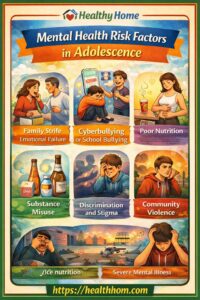
Mental Health Risk Factors in Adolescence
- Family strife or emotional failure.
- Cyberbullying or school bullying.
- Poor nutrition
- Substance misuse
- Discrimination and stigma in society.
- Insecurity or unfounded
- violence in the community.
Risk Factors vs Protective Factors
| Risk Factors | Protective Factors |
|---|---|
| Family conflict | Supportive family environment |
| Bullying or cyberbullying | Positive peer relationships |
| Social isolation | Participation in sports or hobbies |
| Substance misuse | Healthy lifestyle habits |
| Community violence | Safe school and community environments |
Source: UNICEF Adolescent Well-Being Strategy 2022
Factors that Favor Mental Well-being
- Strong family bonds
- Favourable peer associations.
- Good self-esteem
- Conducive school environment.
- Sports, art or cultural activity.
- Communal relation and culture.
Communities, Schools and Families Role
- Parents are expected to be open communicative and emotional.
- Schools ought to provide favourable learning conditions and give counselling services.
- Early warning signs should be trained on teachers.
- Strigmas and ignorance need to be decreased by means of the media and education of the communities.
Role of Families, Schools and Communities
| Stakeholder | Role in Supporting Mental Well-being |
|---|---|
| Parents | Provide emotional support and open communication |
| Schools | Promote safe learning environments |
| Teachers | Identify early warning signs |
| Communities | Create safe recreational spaces |
| Health professionals | Provide counselling and mental health services |
Source: WHO School Mental Health Guidelines 2021
The Timing of Seeking Professional Help
Request help with a mental professional in case:
- The symptoms take over two weeks.
- Behaviour influences school performance/relationship.
- It has indications of self-harm or suicidal ideation.
Problems can be avoided in the long-term with early assistance.
When to Seek Professional Help
| Situation | Suggested Action |
|---|---|
| Symptoms lasting more than two weeks | Consider consulting a professional |
| Academic or social functioning affected | Seek guidance from school counselors |
| Signs of self-harm or distress | Immediate professional support required |
Source: WHO Helping Adolescents Thrive Toolkit 2021

Healthy Habits that Support Mental Well-being
| Healthy Habit | Potential Benefit |
|---|---|
| Regular physical activity | Supports emotional wellbeing |
| Balanced diet | Supports overall health |
| Adequate sleep | Improves concentration and mood |
| Social connection | Builds support networks |
| Mindfulness or relaxation practices | Helps manage stress |
Source: WHO Mental Health Promotion Guidelines 2021
Key Takeaways:
- An individual may develop a mental health issue one in every five individuals.
- Mental disorders are not weaknesses, but rather medical conditions.
- The best things to save life are early support and free discussions.
- Teenagers require affection, empathy and expert assistance where necessary.
A small video from youtube on this topic is as mentioned below: https://www.youtube.com/embed/QTdVC6tk4Fo?si=XWqE52jXMVfkxWSc
Related Health Articles from Healthy Home
- Social Media Addiction in Adolescents: Causes, Effects & Prevention
https://healthhom.com/social-media-addiction/ - Mindfulness Techniques for ADHD Management in Children and Adolescents
https://healthhom.com/mindfulness-and-adhd/ - How to Minimize the Risk of Worm Infestation: Causes, Symptoms & Prevention
https://healthhom.com/how-to-minimize-the-risk-of-worm-infestation/ - Impact of Anaemia in Adolescents: Long-Term Health Risks of Malnutrition
https://healthhom.com/impact-of-anaemia-in-adolescents-long-term-risks-of-malnutrition/ - Healthy Food Choices for Families: Balanced Diet Tips for All Ages
https://healthhom.com/healthy-food/
Trusted References and Research Sources:
- Adolescent Well-Being: A Definition and Conceptual Framework – PMC (nih.gov)
- Promoting adolescent well-being (who.int)
- UNICEF-Child-Adolescent-Mental-Health-Psychosocial-Wellbeing-Life-Course-2022.pdf
- Rethinking mental wellness among adolescents: an integrative review protocol of mental health components – PMC (nih.gov)
- Promoting adolescent well-being (who.int)
- Helping Adolescents Thrive Toolkit (who.int)
- Promoting and protecting mental health in schools and learning environments.pdf (unicef.org)
FAQs:
For more detail, please visit to my website as mentioned below:


About the Author – “Bibhu Ranjan Mund”, Master in Public Health (MPH) from IIHMR University, Jaipur (Rajasthan- IHMR-U/12/2021 -23/0015) has experience of 18 years in Public Health activities like maternal health, child health, adolescent health, nutrition and community wellness programs. Through “Healthy Home”, he shares evidence-based health and wellness guidance designed to support families in making informed lifestyle decisions. This content is for educational purposes only and does not replace professional medical advice. Connect LinkedIn – https://www.linkedin.com/in/bibhu-ranjan-mund-b72171358/