Last Updated on March 22, 2026 by Bibhu Ranjan Mund, MPH
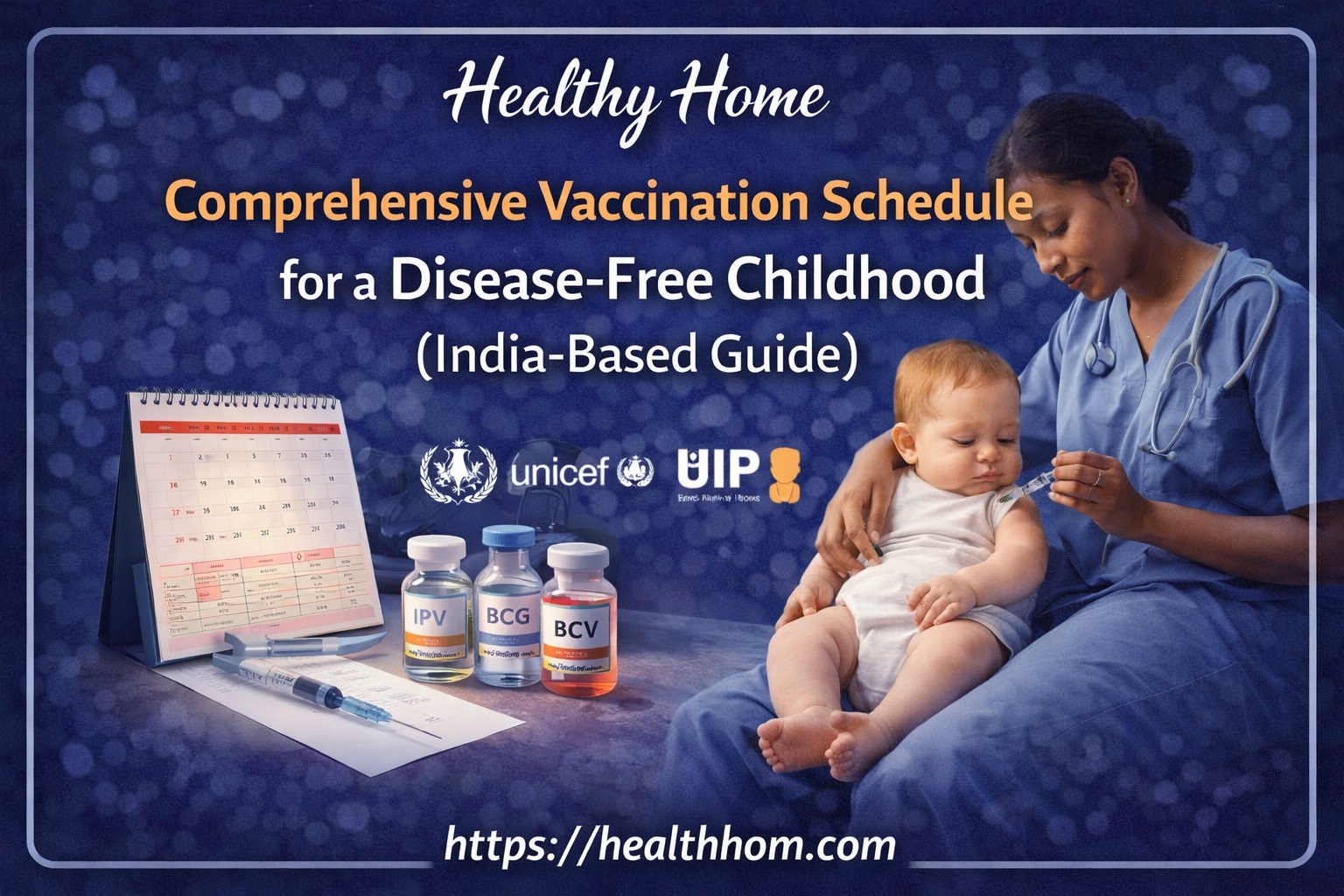
Vaccination timetable in India, its benefits, frequently asked Questions and WHO-UNICEF recommendations towards a disease-free childhood.
Reviewed by Bibhu Ranjan Mund, MPH (Public Health Expert) with experience in maternal, infant, child, and adolescent health programs. Content is based on evidence-informed guidelines aligned with organizations such as the World Health Organization, UNICEF, Centers for Disease Control and Prevention, and National Institutes of Health.
Last reviewed on: 22 March 2026.
Medical Disclaimer: This content is for informational and educational purposes only and is not intended as medical advice, diagnosis, or treatment. Always seek the advice of a qualified healthcare professional regarding any medical condition or concerns.
Affiliate Disclosure: This article contains affiliate links. If you purchase through these links, we may earn a small commission at no extra cost to you.
Introduction:
Birth is a happy event as it is marked by the introduction of a child to the world. Newborns are more vulnerable to infections because their immune system is still developing.
It is important that vaccination, proper nutrition and care are essential in developing a child immunity and ensuring healthy disease-free childhood. The bulk of necessary vaccines are free under the Universal Immunization Programme (UIP) in India through government hospitals, Primary Health Centres (PHCs) and Anganwadi services.
The guide will explain the importance of vaccination, the way in which the infant develops immunity and give out a clear vaccination schedule in accordance with WHO, UNICEF and India UIP.
Global Impact of Childhood Vaccination
| Indicator | Global Estimate | Source | Year |
|---|---|---|---|
| Children protected through routine vaccination each year | ~4 million deaths prevented annually | World Health Organization Global Immunization Data | 2023 |
| Children receiving basic vaccines globally | ~85% coverage | UNICEF | 2023 |
| Countries implementing national immunization programs | 190+ countries | World Health Organization Global Immunization Data | 2023 |
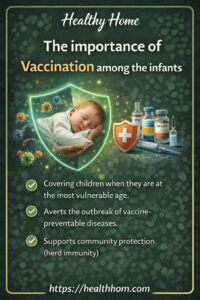
The importance of Vaccination among the infants
Immunization assists the immune system in identifying and destroying dangerous germs before a child is exposed to these germs. They substantially decrease the threat of severe diseases like measles, polio, diphtheria, tetanus, hepatitis, encephalitis and so on.
In accordance with the suggested vaccination program:
- Covering children when they are at the most vulnerable age.
- Averts the outbreak of vaccine-preventable diseases.
- Supports community protection (herd immunity)
Examples of Vaccine-Preventable Childhood Diseases
| Disease | Transmission | Public Health Impact | Source | Year |
|---|---|---|---|---|
| Measles | Airborne virus | Highly contagious childhood disease | World Health Organization | 2023 |
| Polio | Fecal-oral transmission | Can cause paralysis in children | WHO | 2023 |
| Diphtheria | Respiratory droplets | Affects throat and breathing | WHO | 2023 |
| Pertussis (Whooping cough) | Respiratory infection | Severe cough illness in infants | WHO | 2023 |
Understanding Herd Immunity
| Concept | Explanation | Source | Year |
|---|---|---|---|
| Individual protection | Vaccinated person gains immunity | World Health Organization | 2023 |
| Community protection | High vaccination coverage protects vulnerable groups | WHO | 2023 |
| Reduced disease spread | Pathogens have fewer hosts to infect | WHO | 2023 |
Three Preparatory Measures to Infant Immunity
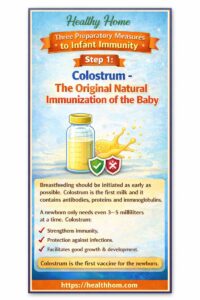
Step 1: Colostrum -The Original Natural Immunization of the Baby
Breastfeeding should be initiated as early as possible. Colostrum is the first milk and it contains antibodies, proteins and immunoglobulins.
A newborn only needs even 3- 5 milliliters at a time. Colostrum:
- Strengthens immunity
- Protection against infections.
- Facilitates good growth and development.
Colostrum is the first vaccine for the newborn.
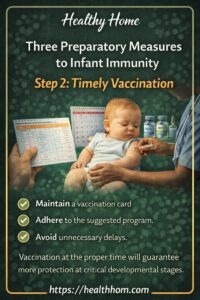
Step 2: Timely Vaccination
The vaccines make the immune system to become friendly and efficient in fighting the diseases. The important childhood vaccines are provided free at the government health centers in India.
Parents should:
- Maintain a vaccination card
- Adhere to the suggested program.
- Avoid unnecessary delays
Vaccination at the proper time will guarantee more protection at critical developmental stages.
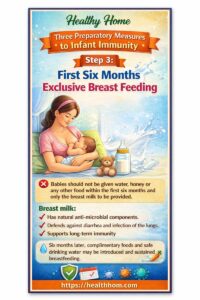
Step 3: First Six months Exclusive Breast Feeding
Babies should not to be given water, honey or any other food within the first six months and only the breast milk to be provided.
Breast milk:
- It has natural anti-microbial components.
- Defends against the diarrhea and infection of the lungs.
- Supports long-term immunity
Six months later, complimentary foods and safe drinking water may be introduced and sustained breastfeeding.
Key Sources of Early Immunity in Infants
| Immunity Source | How It Helps the Infant | Source | Year |
|---|---|---|---|
| Colostrum | Provides maternal antibodies | UNICEF | 2022 |
| Breastfeeding | Supports immune system development | UNICEF | 2022 |
| Vaccination | Helps immune system recognize pathogens | World Health Organization | 2023 |
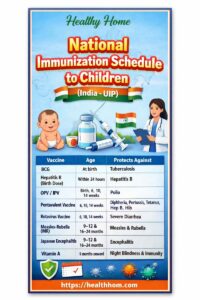
National Immunization Schedule to Children (India- UIP)
India Universal Immunization Programme (UIP) – Key Childhood Vaccines
| Vaccine | Recommended Age | Disease Protection | Program | Source | Year |
|---|---|---|---|---|---|
| BCG | At birth | Tuberculosis | UIP India | Ministry of Health and Family Welfare | 2023 |
| Hepatitis B | Birth dose (within 24 hours) | Hepatitis B infection | UIP | MoHFW | 2023 |
| OPV | Birth, 6, 10, 14 weeks | Polio | UIP | MoHFW | 2023 |
| Pentavalent | 6, 10, 14 weeks | DPT + Hep B + Hib | UIP | MoHFW | 2023 |
| Rotavirus | 6, 10, 14 weeks | Severe diarrhea | UIP | MoHFW | 2023 |
| Measles-Rubella | 9–12 months, 16–24 months | Measles & Rubella | UIP | MoHFW | 2023 |
Japanese Encephalitis vaccine is suggested in the endemic places.
Note: Vaccine availability and timing may vary slightly by state and local health authority. Always consult your nearest PHC or pediatrician.
Typical Vaccination Visit Timeline (India)
| Child Age | Vaccination Visit | Health Service |
|---|---|---|
| Birth | BCG, Hepatitis B, OPV | Hospital / PHC |
| 6 weeks | First infant vaccine set | PHC / Anganwadi / Sub-Centre / Immunization clinic |
| 10 weeks | Second dose vaccines | PHC / Anganwadi / Sub-Centre / Immunization clinic |
| 14 weeks | Third infant dose | PHC / Anganwadi / Sub-Centre / Immunization clinic |
| 9 months | MR vaccine + Vitamin A | PHC / Anganwadi / Sub-Centre / Immunization clinic |
Source: Ministry of Health and Family Welfare – UIP Schedule (2023)
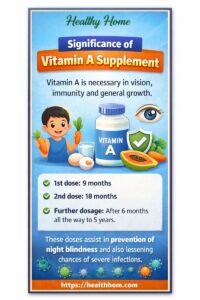
Significance of Vitamin A Supplement
Vitamin A is necessary in vision, immunity and general growth.
- 1st dose: 9 months
- 2nd dose: 18 months
- Further dosage: After 6 months all the way to 5 years.
These doses assist in prevention of night blindness and also lessening chances of severe infections.
Vitamin A Supplementation Schedule (India)
| Dose | Age | Program | Source | Year |
|---|---|---|---|---|
| 1st dose | 9 months | Child health program | Ministry of Health and Family Welfare | 2023 |
| 2nd dose | 16–18 months | Routine supplementation | MoHFW | 2023 |
| Subsequent doses | Every 6 months until age 5 | National program | MoHFW | 2023 |
General Vaccine Safety Monitoring
| Safety Measure | Purpose | Source | Year |
|---|---|---|---|
| Clinical trials before approval | Assess safety and effectiveness | World Health Organization | 2023 |
| Post-marketing monitoring | Detect rare side effects | WHO | 2023 |
| National immunization monitoring systems | Track vaccine coverage and safety | Ministry of Health and Family Welfare | 2023 |
FAQs:
Related Health Articles from Healthy Home
- Early Childhood Development – Learn about key stages, milestones, and factors influencing a child’s growth in this guide on Early Childhood Development
- Global Developmental Delay – Understand causes, symptoms, diagnosis, and early intervention strategies for Global Developmental Delay in Children
- What Makes Humans Unique – Explore the biological, cognitive, and emotional traits that define humanity in Why a Human Child Is So Unique and What Makes Us Human
- Infancy to Toddler Development – A comprehensive overview of physical, emotional, and cognitive changes from birth to toddlerhood in Precious Infancy to Toddler Stage
- Food Supplementation for Growth & Nutrition – Learn how nutritional supplementation supports maternal and child health through Food Supplementation and Its Importance
Trusted References and Research Sources:
- National Immunization Schedule.pdf (mohfw.gov.in)
- Immunization_Schedule_CHART.pdf (ima-india.org)
- Immunization and Child Health | UNICEF India
- Know your child’s immunization schedule | UNICEF India
- Vaccines and immunization (who.int)
For more detail, please visit to my website as mentioned below:


About the Author – “Bibhu Ranjan Mund”, Master in Public Health (MPH) from IIHMR University, Jaipur (Rajasthan- IHMR-U/12/2021 -23/0015) has experience of 18 years in Public Health activities like maternal health, child health, adolescent health, nutrition and community wellness programs. Through “Healthy Home”, he shares evidence-based health and wellness guidance designed to support families in making informed lifestyle decisions. This content is for educational purposes only and does not replace professional medical advice. Connect LinkedIn – https://www.linkedin.com/in/bibhu-ranjan-mund-b72171358/