
Last Updated on March 22, 2026 by Bibhu Ranjan Mund, MPH
Baby’s First Two Years from Infancy to toddler is the important period of milestone & brain development in all respect. Precious Infancy to Toddler
Reviewed by Bibhu Ranjan Mund, MPH (Public Health Expert) with experience in maternal, infant, child, and adolescent health programs. Content is based on evidence-informed guidelines aligned with organizations such as the World Health Organization, UNICEF, Centers for Disease Control and Prevention, and National Institutes of Health.
Last reviewed on: 22 March 2026.
Medical Disclaimer: This content is for informational and educational purposes only and is not intended as medical advice, diagnosis, or treatment. Always seek the advice of a qualified healthcare professional regarding any medical condition or concerns.
Affiliate Disclosure: This article contains affiliate links. If you purchase through these links, we may earn a small commission at no extra cost to you.
The most valuable and potent period of life of a baby is the first two years of his life. This stage is characterized by rapid development of the brain, increase in immunity, emotional attachment and exceptional physical, cognitive and social strides in children. A happy, confident and healthy child is formed with the help of the right care, love, nutrition and environment.
This article contains an explanation of what parents ought to know between birth and 24 months, feeding, sleep, milestones, emotional care, safety, vaccinations, red flags, and key parenting practices.
Global Early Childhood Development Snapshot
| Indicator | Global Estimate | Source | Year |
|---|---|---|---|
| Brain growth achieved by age 2 | ~80% of adult brain size | World Health Organization | 2023 |
| Children at risk of not reaching developmental potential | ~250 million (LMICs) | UNICEF | 2023 |
| Exclusive breastfeeding under 6 months | ~48% globally | World Health Organization | 2023 |
| Neonatal period (first 28 days) risk | Highest mortality risk period in childhood | UNICEF | 2022 |
The early life after the birth is very critical. Newborn care should be recommended as:
- Be with the baby and mother, in case you can.
- Begin to touch the skin of the child at birth.
- Check proper positioning and latch of breastfeeding.
- Breastfeed the baby during the first hour.
- Delayed cord clamping (at least 1 minute after birth) is better than iron status and health of babies.
- Take colostrum (original thick yellow milk) — it improves immunity.
- Frequent breastfeeding (812 times/day) during the first days.
- Newborns can be child with black/dark green stool (meconium) first of all – it is normal.
- Wet diapers generally increase from day 5 onwards.
- A majority of babies gain birth weight within a period of day 10.
Treat your newborn with care, keep them warm and act as fast as possible to the baby. The attachment affects the early bonding that provides your baby with the feeling of security and love.
Essential Newborn Care at Birth
| Care Practice | Recommended Action | Source | Year |
|---|---|---|---|
| Skin-to-skin contact | Immediate and uninterrupted | World Health Organization | 2023 |
| Early breastfeeding | Within 1 hour | UNICEF | 2023 |
| Delayed cord clamping | At least 1 minute | World Health Organization | 2023 |
| Thermal care | Keep baby warm, dry | WHO | 2023 |
Birth to 6 Months: Infant Feeding, Bonding and Early Development.
The six months will be the beginning of the lifetime health.
- Feeding
- 6 months of exclusive breastfeeding (no water, liquids or food except upon medical recommendation).
- Breast milk is anti-protective against infections, brain developmental, and immuno-genic.
- Keep on breastfeeding to 2 years or more.
- Development & Stimulation
- Your baby benefits from:
- Talking softly and lovingly
- Gentle touch and cuddling
- Eye contact and smiling
- Toys of bright colors, safe due to age.
- Singing or soothing sounds
- No lack of responsiveness in interrelation.
- Safety & Care
- Shake baby- Shaken Baby Syndrome is fatal.
- Do not have a screen time (mobiles, TV, tablets).
- Make sure that there is safe back sleeping, firm mattress, no pillows or heavy blankets.
Safe Sleep Practices
| Recommended | Avoid |
|---|---|
| Back sleeping position | Stomach sleeping |
| Firm mattress | Soft bedding |
| Room-sharing | Bed-sharing |
| Light sleep clothing | Heavy blankets |
Source: WHO Safe Sleep Practices (2023) and American Academy of Pediatrics Policy (2022)
Feeding Recommendations Across First Two Years
| Age | Feeding Guidance | Source | Year |
|---|---|---|---|
| 0–6 months | Exclusive breastfeeding | World Health Organization | 2023 |
| 6–12 months | Add complementary foods + continue breastfeeding | WHO Infant and Young Child Feeding | 2023 |
| 12–24 months | Family foods + continued breastfeeding (if possible) | UNICEF | 2023 |
6-12 Months: Learning and Curiosity and First Milestones – Precious Infancy to Toddler
A half year baby is more aggressive and inquisitive. This stage promotes learning, motor development and emotion development.
- Feeding
- Continue breastfeeding.
- Complementary foods should be added at 6 months:
- Iron-rich cereals
- Need mashed fruits and vegetables.
- Mashed puree and protein foods.
- Provide different kinds of textures, colors, and tastes.
- Finger foods should be encouraged at 8-9 months in case safe.
- Development & Play
- Most babies may: Sit with or without support
- Crawl or attempt movement
- Babble may be pronounced as mama or dada.
- Be interested and also listen to voices.
- Recognize familiar people
- Provide:
- Safe play space
- Age-appropriate toys
- Lots of love and interaction
- Do not use baby walkers they can cause more injury. Floor play which is supervised or Push-toys are safer.
Typical Developmental Progression (0–24 Months)
| Age Range | Physical | Communication | Social |
|---|---|---|---|
| 0–6 months | Lifts head, rolls | Coos, smiles | Recognizes caregiver |
| 6–12 months | Sits, crawls | Babbles | Stranger anxiety |
| 12–24 months | Walks, climbs | 5–50+ words | Imitates others |
Sources:
- World Health Organization Child Motor Development (2023)
- UNICEF Developmental Milestones (2023)
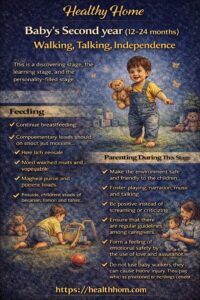
Baby Second year (12-24 months) Walking, Talking, Independence
This is a discovering stage, the learning stage, and the personality-filled stage.
- What Infants Should Use By the Time they are One – Many children begin to:
- Walk independently Climb and explore
- Use meaningful words, develop vocabulary.
- Be emotional, loving and interested.
- Acquire social behavior by means of interaction.
- Parenting During This Stage
- Make the environment safe and friendly to the children.
- Foster playing, narration, music and talking.
- Be positive instead of screaming or criticizing.
- Ensure that there are regular guidelines among caregivers.
- Form a feeling of emotional safety by the use of love and assurance.
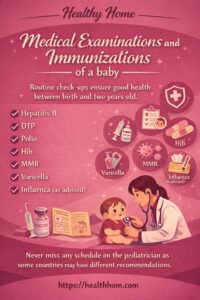
Medical Examinations and Immunizations
Routine check-ups with a child can be used to maintain good health. The vaccinations that are normally recommended between the age of birth and two years old may include:
- Hepatitis B
- DTP
- Polio
- Hib
- MMR
- Varicella
- Influenza (as advised)
Never miss any schedule on the pediatrician as some countries may have different recommendations.
Common Vaccines in First Two Years (May Vary by Country)
| Vaccine | Protects Against | Source | Year |
|---|---|---|---|
| Hepatitis B | Liver infection | World Health Organization | 2023 |
| DTP | Diphtheria, Tetanus, Pertussis | WHO | 2023 |
| Polio | Poliomyelitis | WHO | 2023 |
| Hib | Haemophilus influenzae | WHO | 2023 |
| MMR | Measles, Mumps, Rubella | UNICEF | 2023 |
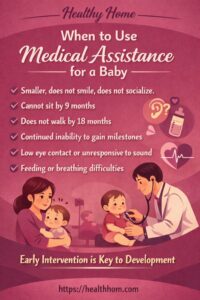
Caution: When to use medical assistance.
Request the advice of a pediatrician whenever your child:
- Smaller, does not smile, does not socialize.
- Cannot sit by 9 months
- Does not walk by 18 months
- Demonstrates continued inability to gain milestones.
- Has low eye contact or non responsive to sound.
- Suffers feeding or breathing disability.
Early intervention is very beneficial to development.
Developmental Concerns Requiring Consultation
| Age | Observation | Suggested Action |
|---|---|---|
| 6 months | No social smile | Consult healthcare provider |
| 9 months | Not sitting | Seek developmental screening |
| 18 months | Not walking | Discuss with pediatrician |
| Any age | No response to sound | Hearing evaluation |
WHO Developmental Screening Recommendations (2023)
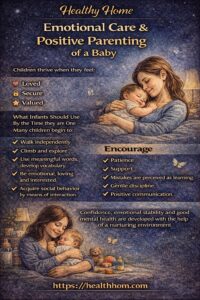
Emotional Care & Positive Parenting
Children thrive when they feel:
- Loved
- Secure
- Valued
Avoid
- Shaming in public
- Comparing your child and other children.
- Constant criticism
Encourage:
- Patience
- Support
- Mistakes are perceived as learning.
- Gentle discipline
- Positive communication
Confidence, emotional stability and good mental health are developed with the help of a nurturing environment.
Positive Parenting vs Stressful Practices
| Encouraged | Avoid |
|---|---|
| Responsive caregiving | Public shaming |
| Consistent routines | Harsh punishment |
| Emotional reassurance | Constant comparison |
| Gentle discipline | Yelling |
UNICEF Parenting for Early Childhood (2022)
Growth Monitoring Indicators
| Indicator | Why It Matters | Source | |
|---|---|---|---|
| Weight-for-age | Nutritional status | World Health Organization Growth Standards | 2023 |
| Length/Height | Physical growth | WHO | 2023 |
| Head circumference | Brain development indicator | WHO | 2023 |
Concluding Points:
The two years that your baby will spend are invaluable. When you give your child the proper nutrition, emotional affection, medical care, secure environment, and caring giving, it becomes stronger physically, mentally and emotionally. wait, take pleasure in every success, and delight in every moment.
FAQs:
Related Health Articles from Healthy Home:
- Early Childhood Development – Complete Guide:
Understanding Early Childhood Development - Global Developmental Delay – Child Health Resource:
Global Developmental Delay in Children - Pre-Pregnancy Planning – Women’s Health Guide:
Pre-Pregnancy Planning for Women - Healthy Lunch Box Ideas – Child Nutrition:
Healthy Lunch Box Ideas for Kids - Human Development & Evolution – Educational Article:
Why the Human Child Is Unique and What Makes Us Human
Trusted References and Research Sources:
1. UNICEF – Child Development Milestones:
Your Baby’s Developmental Milestones
2. Healthline – Baby Development Stages:
Baby Development Stages by Month
3. PubMed Central – Infant Development Study:
Infant Development and Early Life Research
4. WHO – Essential Newborn Care Guidelines:
Essential Newborn Care Practices (WHO)
5. ResearchGate – Infant Development Study:
Infant Development: The First 3 Years of Life
6. WHO – Motor Development Milestones:
Child Motor Development Milestones (WHO)
7. WebMD – Baby Milestones Guide:
Baby Milestones in the First Year
PubMed – Infant Growth and Development Study:
Infant Growth and Development Research
9. PubMed Central – Early Childhood Development Study:
Early Childhood Development and Health Outcomes
Reference: WHO for Baby’s First Two Years and its link as mentioned below: https://www.unicef.org/parenting/child-development/your-babys-developmental-milestones
For more detail, please visit to my website as mentioned below:


About the Author – “Bibhu Ranjan Mund”, Master in Public Health (MPH) from IIHMR University, Jaipur (Rajasthan- IHMR-U/12/2021 -23/0015) has experience of 18 years in Public Health activities like maternal health, child health, adolescent health, nutrition and community wellness programs. Through “Healthy Home”, he shares evidence-based health and wellness guidance designed to support families in making informed lifestyle decisions. This content is for educational purposes only and does not replace professional medical advice. Connect LinkedIn – https://www.linkedin.com/in/bibhu-ranjan-mund-b72171358/